birds

SUPER SURPRISE # 9

SUPER SURPRISE THURSDAY # 9

Everyone put your hands over your eyes! Ok? You ready? Open your eyes and Surprise!! We have a spectacular bird for Super Surprise Thursday! Let’s not delay and meet this bird!

MEET THE AFRICAN FISH EAGLE!

Range/Habitat: Sub-Saharan Africa/lakes, rivers, grasslands, swamps
Diet: Carnivore: fish, some water fowl and small mammals

Length/Weight: 25-29”/4 ½ -8 lbs

Conservation Status: Common


Fun Facts:

  • African Fish Eagles are also known as the African Sea Eagle.
  • They are related to the majestic Bald Eagle.
  • African fish eagles swoop down and catch feet with talons. Their talons (or feet) have special spiricules on them to help them grip slippery and wet fish.
  • Female African fish eagles are larger than the males.
  • They are the national bird of Zimbabwe and Zambia.
  • African fish eagles mate for life.
  • Their loud cry is known as the “voice of Africa”.

These regal looking relatives of the Bald Eagle are pretty awesome! They’re so awesome that they are the national bird of not one but two countries! And who wouldn’t want to be the national animal of two countries?


Listen to their awesome call:

http://www.bushcampcompany.com/DIDYOUKNOW_ww/2010/mp3/Fish%20eagle.mp3


Categories: Animals, birds, Children, education, Environment | Tags: , , , , | Leave a comment

FEATHERY FRIDAY # 8

FEATHERY FRIDAY # 8

Have you ever seen the cartoon where there’s a coyote and a roadrunner? Did you know that there are real roadrunners? Well they are real and they’re pretty cool! So let’s meet our feathery friend the…

MEET THE GREATER ROADRUNNER!

Range/Habitat: Southwestern United States-Northern Mexico/desert and scrub

Diet: Carnivore: lizards, snakes, scorpions and spiders

Length/Weight: 22”/12 oz

Conservation Status: Common


Fun Facts:

  • The Greater Roadrunner can fly but spends most of its time on the ground.
  • They can reach speeds of up to 18 mph! That is one fast bird.
  • Greater roadrunners generally walk/run to catch their prey.
  • They use their large beaks to attack prey.
  • They have long tails that they lay flat when running.
  • Greater roadrunners have black skin under their feathers. They expose the skin to the sun to absorb heat.

We all love watching the coyote roadrunner cartoons, but the real roadrunner is just as fun! They are fast and furious little birds. How fast can you run? You should try and be a roadrunner for the day!


Categories: Animals, birds, Children, education, Environment | Tags: , , , , | 4 Comments

FEATHERY FRIDAY # 7

FEATHERY FRIDAY #7

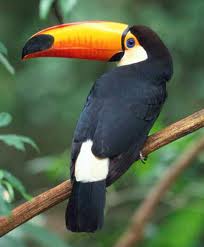
Whew! We’ve made it to another Friday and we’re so happy that it’s full of feathers! Our bird friends come in so many shape and sizes and today’s bird has a giant beak! Who is this amazing bird with the big ole beak?

MEET THE TOCO TOUCAN

Range/Habitat: North Eastern-Central South America (Bolivia-Peru-Argentina)/woodland, forest, groves

Diet: Omnivore: insects, fruits, frogs

Length/Weight: 21-23”/20 oz

Conservation Status: Common

Fun Facts:

  • Toco Toucans are the largest of all toucans.
  • They have large orange bills with a black spot. The bills can get up to 7 ½” long (about the length of a pencil).
  • Their bills are serrated (like a knife) and this helps them grasp and tear fruit.
  • Their large bills also enable the toucan to get fruit from out of reach branches.
  • Toco toucans nest in trees.
  • You can see Toco toucans in small flocks of up to 6 birds.
  • Both female and male toucans incubate the eggs.

Toco Toucans are really pretty birds with their shiny black feathers and large orange beaks! And man does that beak come in handy when you’re trying to get the fruit on the end of the branch! They also have a really cool call. Take a listen and Happy Feathery Friday!

http://www.youtube.com/watch?v=kgQggP7__-M

Categories: Animals, birds, Children, education, Environment | Tags: , , , , | Leave a comment

FEATHERY FRIDAY # 7

FEATHERY FRIDAY #7

Wow! We had a great World Rhino Day yesterday! And it was also Elephant Appreciation Day! Edmond still needs to get Ellie a present. We’re glad it’s Friday, because that means it’s time to meet a bird! Today’s bird is named after the sound of its call. It sounds very sad, hopefully they’re not! Who is it?

MEET THE MOURNING DOVE!

Range/Habitat: North-Central America and Caribbean/urban areas-farms-woodlands and grasslands

Diet: Herbivore: seeds

Length/Weight: 9-13”/4-6oz

Conservation Status: Common

Fun Facts:

  • Mourning doves get their names from the call they make, which sounds sad and mournful.
  • These little birds are great fliers and can fly fast, up to 55 mph!
  • Males glide, spiral and do other aerial acrobatics above females to attract them.
  • Mourning doves’ wings make a whistling sound when they land and take off.
  • Both parents take care of the eggs and chicks. They can lay up to 6 clutches in a year!

These doves may sound mournful, but they are special! They’re very common and can be easy to spot in places like your back yard! In fact we may go out and see if we can find some! How about you? Bird watching is a great way to spend a morning or afternoon!

Here’s what they sound like:  http://www.allaboutbirds.org/guide/Mourning_Dove/sounds

Categories: Animals, birds, Children, education, Environment | Tags: , , , , | Leave a comment

FEATHERY FRIDAY # 6

FEATHERY FRIDAY #6

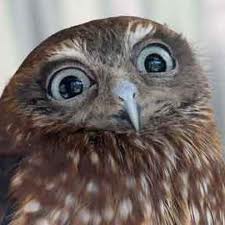
Today’s Feathery Friday animal is quite special! Who, you say? Well it’s a bird you think would say who but this one doesn’t! Whooooo is it then?

MEET THE BOOBOOK OWL!

Range/Habitat: Australia-South New Guinea/forests, grasslands, farmlands

Diet: Carnivore: insects, birds

Length/Weight: 12-14”/6-10oz

Conservation Status: Common

Fun Facts:

  • The Boobook owl is named after the call it makes.
  • They are nocturnal like other owls, but often feed at dusk and dawn too!
  • They are specialists at catching prey in mid-air.

This funny little owl doesn’t make the typical who call! That’s what makes it so special! Listen to it here:

http://www.owlpages.com/sounds/Ninox-boobook-1.mp3

Categories: Animals, birds, Children, education, Environment | Tags: , , , , | Leave a comment

SUPER SURPRISE THURSDAY # 6

SUPER SURPRISE THURSDAY #6

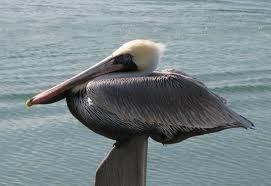
We have a special bird for today’s Super Surprise Thursday! This bird was once endangered but has made a good recovery thanks to all the people who worked hard to save them. They still have trouble with trash like fishing lines and hooks though. So who is the awesome bird? We bet some of you guessed the Bald Eagle, but you’d be wrong…

MEET THE BROWN PELICAN!

Range/Habitat: North-South America and Caribbean/ shallow coastal waters, estuaries and bays

Diet: Carnivore: fish, crustaceans

Length/Weight: 3 ¼-5ft/ 6-12 lb

Conservation Status: Common

Fun Facts:

  • The Brown Pelican is the smallest of all pelican species.
  • They are plunge divers. They fly above the surface of the water and then drop or plunge into the sea to catch their prey.
  • They are very social and are often seen flying together in flocks!
  • Brown pelicans have a greenish skin on their face that is brighter during mating season.
  • Brown pelicans like to nest in trees, shrubs and mangroves.
  • Both parents incubate eggs. They usually have 2-3 chicks. One chick can eat up to 150 lbs of food by the time they are 10 months old! That’s a bunch of fish for little guys!
  • Ever heard the limerick: “The Brown Pelican: His pouch can hold more than his belly can”? Well it is true! The pouch can hold up to 3 gallons and the stomach can hold around 1 gallon.
  • Brown pelicans are the state bird of Louisiana.

We love Brown pelicans! They are really majestic birds, despite being a bit funny looking with their big bills and pouches. We’re so happy to hear that people also love these birds enough to help save them!


Check out this video of Julie Scardina with a Brown Pelican on the Today Show!

http://www.dailymotion.com/video/xl2nhr_nbc-today-show-soaring-sea-animals-fly-into-studio-1a_news

Categories: Animals, birds, Children, education, Environment | Tags: , , , , | Leave a comment

ALEX the African Grey Parrot

Today’s Feathery Friday animal is the African Grey Parrot and the most famous one ever was a bird named Alex. He was very adept at language and counting and picking out shapes and colors. Dr Irene Pepperberg worked very hard with Alex and learn all kinds of cool stuff about how birds think and behave! We’ve found some great videos that will give you a better idea of just how special Alex was! Check them out!

http://www.pbs.org/newshour/rundown/2011/05/a-new-take-on-bird-brains.html?utm_source=feedburner&utm_medium=feed&utm_campaign=Feed%3A+pbs%2Fnewshour-headlines+%28newshour-headlines%29


Categories: Animals, birds, Children, education, Environment | Tags: , , , , | Leave a comment

FEATHERY FRIDAY #5

FEATHERY FRIDAY#5

We’re very excited about today’s Feathery Friday! This bird is known to be very smart and great at imitating human speech. Wonder if they can do a good elephant or horse impression? Let’s meet today’s fabulous feathery friend…

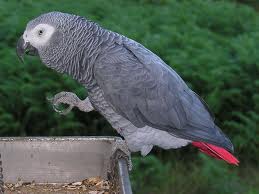
MEET THE AFRICAN GREY PARROT!

Range/Habitat: West-Central Africa/lowland rainforest and farmland

Diet: Herbivore: fruit, nuts, leaves

Length/Weight: 13”/14 oz

Conservation Status: Common- Near Threatened

Fun Facts:

  • African Grey Parrots are highly social birds that live in flocks.
  • There are two subspecies (types) of African grey parrots: the Congo, who is larger and has a bright red tail and the Timneh, who is smaller and darker and has a maroon tail.
  • When flying in large flocks African greys call to each other and communicate by flashing their bright red tails.
  • They have a long life span. They can live up to 60+ years.
  • They are highly intelligent and have been compared to human toddlers.
  • African greys are highly vocal and are amazing at mimicking sounds and language!
  • Alex is an African Grey Parrot that worked with Dr Irene Pepperberg and was known to do things such as sort colors, shapes and count! We’re going to write a separate post about Alex- he was a very special bird!

African grey parrots are very special birds! They’re very smart and social, a great combination! If you could teach a parrot to say one thing, what would it be? Ellie would teach him to trumpet like her!


Categories: Animals, birds, Children, education, Environment | Tags: , , , , | Leave a comment

Animals go Back to School…

We’ve got another post today for Super Surprise Thursday! It’s all about how animals learn in zoos and aquariums in honor of all the kids going back to school!

Well, it’s that time of year again- BACK TO SCHOOL; time for kids pack up their backpacks and lunch boxes and head into a classroom. It’s time to pull out the pens, pencils and crayons and learn all kinds of fascinating information. We hope kids learn all about animals and nature during the year!

We know that kids get very excited about the beginning of the school year, but what about animals? Do you think they learn? Would it be unusual to see an orangutan sitting at a desk or a crow with glasses on, solving math problems? Well, maybe not! Animals learn too! Has anyone ever taught their dog to sit or shake hands? If you have taught your dog some of those tricks, then they learned something. Cool!

We thought it would be fun to look at some ways that animals learn in honor of this awesome time of year! Zoos and aquariums often use training to teach animals! The training is a great way to give the animals enrichment and it also helps keepers take care of the animals. What’s enrichment? Well, enrichment is a way to teach and entertain animals. Here’s an example, gorillas in Africa spend much of their day foraging or searching for food, but they don’t have to do that in a zoo.  Zoo keepers will put food in objects or scatter it around the enclosure so the gorillas have to search for it. It keeps the gorillas busy and it’s more like what gorillas would do in the wild.  Here’s a great explanation from Zoo Atlanta on enrichment:  http://www.zooatlanta.org/home/enrichment

Training also helps keepers take care of wild animals. You can’t just walk up to a tiger and give them a pill or walk up to a rhino ask them to get on a scale! Keepers work to train animals using positive reinforcement! They can train animals to show their mouths, sit on scales, and even to be given shots.  We’ve found some great websites on training animals in zoos and aquariums! Let’s check them out!

The St Louis Zoo does a great job taking care of their animals through training! http://www.stlzoo.org/animals/enrichmenttraining/animaltraining.htm Who knew it takes 3 people to give a giraffe a manicure? And who knew they needed manicures?

Disney also has a great site all about enrichment and training! Tons of great info! http://www.animalenrichment.org/guests.html

The National Zoo has a list of the items they use for enrichment: http://nationalzoo.si.edu/Animals/Primates/Enrichment/default.cfm

Here’s a great video about training:

http://www.youtube.com/watch?v=F7FE-UA2Z38&playnext=1&list=PLEF90075590A06F31


Animals have almost as much to learn as you do! Whew!  Did you know that there are chimpanzees that know sign language, that there are birds that can count and that there are animals that use tools? We’ll be writing about these amazing animals soon! Now it’s time to get back to your homework!

Categories: Animals, Atlanta, birds, Children, education, Environment, Local, mammals | Tags: , , , , | Leave a comment

FEATHERY FRIDAY #4

FEATHERY FRIDAY#4

It’s FRIDAY and we have another great Feathery friend for you to meet today! As summer wraps up here, we’re dreaming of cooler temperatures and today’s bird loves the cold! Is it a penguin? Nope this bird lives in the Northern Hemisphere…

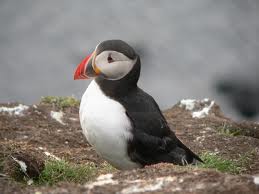
MEET THE ATLANTIC PUFFIN!

Range/Habitat: North Atlantic and Arctic Oceans from Northern Europe-Iceleand-Newfoundland / ocean and rocky coasts

Diet:  Carnivore: fish, mollusks, crustaceans

Length/Weight: 11-12”/ 1 lb

Conservation Status: Common

Fun Facts:

  • The Atlantic Puffin is a highly social bird that lives in large colonies on rocky coasts and islands.
  • They have bright orange beaks that are brighter during mating season. They also have bright orange feet. They’ve been called the “sea parrot” because of their bright coloration.
  • Male and female Atlantic Puffins incubate eggs.
  • Atlantic Puffins spend their winters out in the open ocean.
  • They are excellent swimmers and divers. They can dive up to 200 ft deep.
  • Atlantic Puffins can fly unlike penguins.
  • They can catch several fish at one time.
  • Atlantic Puffins are the Provincial (official) bird of Newfoundland, Canada.


Atlantic Puffins sure are snappy looking birds with their bright orange beaks and feet! And they can fly and swim! We wish we could fly and swim!


Categories: Animals, birds, Children, education, Environment | Tags: , , , , | Leave a comment

Blog at WordPress.com.