Posts Tagged With: reptiles

SUPER SURPRISE THURSDAY #5

SUPER SURPRISE THURSDAY#5

We’ve made it to another Thursday and that means we have a Super Surprise animal today! Who will it be? Is it a lion or a bear or this guy…

MEET THE EGYPTIAN COBRA!
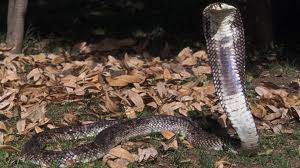
Range/Habitat: Northwest Africa and East Africa/ desert and grasslands

Diet:  Carnivore: small mammals, snakes, birds and eggs

Length: 3 ½-8ft

Conservation Status: Common

Fun Facts:

  • The Egyptian Cobra is highly venomous snake.
  • They are nocturnal (active at night).
  • They are known to be aggressive and are quick to defend themselves.
  • They will “stand up” and spread open their hoods to make themselves look bigger.
  • Egyptian cobras are highly territorial and will often fight each other for territory.
  • Their venom is fatal to humans if not treated.

Egyptian cobras are quite intimating but are awesome! Remember that every animal has a place on this earth and even the ones that seem scary belong in their habitat! Just think, if we didn’t have snakes, we’d have tons and tons of rats and mice! They’re all part of the food web!

Recently an Egyptian Cobra made the news when she escaped from enclosure at the Bronx Zoo. Luckily she was found curled up in a corner of the reptile house!

http://cityroom.blogs.nytimes.com/2011/03/31/bronx-zoo-cobra-found-alive/

Categories: Animals, Atlanta, Children, education, Environment | Tags: , , , , | Leave a comment

REPTILIAN TUESDAY #5

REPTILIAN TUESDAY#5

Happy Tuesday! We hope everyone enjoyed Labor Day! We’re back with a funny looking reptile that has horns! What? Yep, we said horns! Some say it even looks like a dinosaur, but it’s not! Who is this awesome lizard? Let’s find out…

MEET THE JACKSON’S CHAMELEON!

Range/Habitat: East Africa-Kenya/Tanzania/ High altitude mountainous regions

Diet:  Carnivore: insects

Length: 8-12”

Conservation Status: Common

Fun Facts:

  • Male Jackson’s Chameleons have 3 bony horns on the front of their head.
  • They use the horns to fight other males for territory.
  • Female Jackson’s Chameleons do not have horns.
  • Like other chameleons, they can change their color depending on their mood, health and surroundings.
  • They are bright green. Their ability to camouflage with their habitat is their primary defense mechanism.
  • Jackson’s chameleons do not lay eggs; females incubate the eggs inside her body and give birth to live young.
  •  Baby chameleons are brown and turn green around the age of 4 months.

These crazy chameleon look kind of like triceratops or a rhino to us! We think they are fantastic! What do you think?

Categories: Animals, Children, education, Environment | Tags: , , , , , | Leave a comment

REPTILIAN TUESDAY #1

REPTILIAN TUESDAY

Happy Tuesday! It’s Reptilian Tuesday and it’s the day where you get to learn all about reptiles! Reptiles get such a bad rap. 😦  They’re called scary, slimy and icky, but these animals are none of those things! Reptiles are very different from our mammal friends, but are just as amazing! So what does it take to make it as a reptile? Well let’s list some of their great characteristics!

These are the characteristics that make a reptile a reptile:

  • Reptiles are cold-blooded (ectothermic). They cannot control their own body temperature; it is regulated by the animal’s environment.
  • Reptiles are covered in scales.
  • Reptiles lay eggs.

Can you name some of your favorite reptiles?

Ellie’s favorite reptile is the Loggerhead Sea Turtle and Edmond’s favorite is the Tokay Gecko.

For our first Reptilian Tuesday we are featuring a venomous reptile!

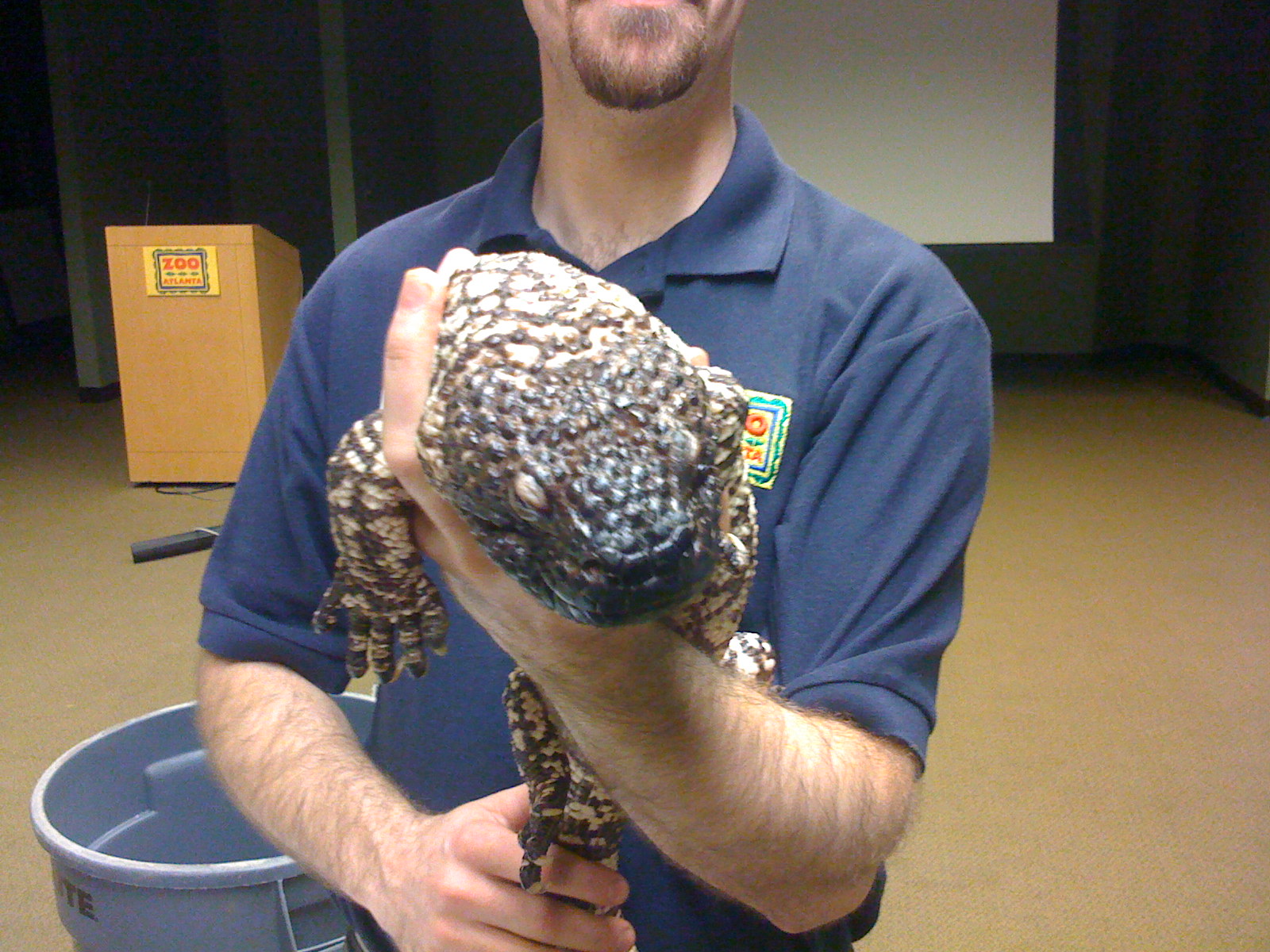
MEET THE GILA MONSTER!

Gila Monster at Zoo Atlanta

Range: South West US and Mexico

Habitat: Scrub and semi-desert and rocky outcrops near water

Diet: Carnivore: bird and reptile eggs and small mammals

Size: 14-20 inches

Conservation Status: Vulnerable

Fun facts:

  • They are one of two venomous lizards in the whole world (the other is the Mexican Beaded Lizard.)
  • They brightly colored to ward of predators.
  • They have a forked tongue like a snake and it helps them “smell” for prey.
  • They inject venom into their prey when they bite. They have special glands in their lower jaw that stores the venom.
  • Their tails store fat so they can survive when food is scarce or when they hibernate in the winter.
  • They are not harmful to humans, despite their bad reputation! So Gila Monsters aren’t so monstrous after all!


Categories: Animals, Children, education, Environment | Tags: , , , | Leave a comment

Blog at WordPress.com.