Monthly Archives: April 2012

RABBIT WEEK DAY # 5

RABBIT WEEK # 5

It’s the last day of Rabbit week and we have one more for you! We’re heading to Europe to meet today’s special hare. You may recognize this rabbit from the book “Alice in Wonderland” as the March Hare! Are you ready to meet the last rabbit of the week?

MEET THE EUROPEAN HARE!
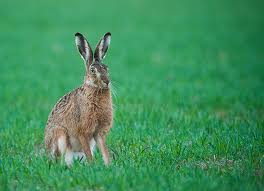
Range/Habitat: Europe-North-South America/ grasslands, farms

Diet: Herbivore: grass, herbs, bark

Length/Weight: 19-28”/ 5 ½-15 lbs

Conservation Status: Common- Near Threatened in areas


Fun Facts:

  • European hares are also known as the brown hare.
  • European hares are nocturnal (active at night).
  • They are also solitary.
  • European hares have fluffy cottontails.
  • They have a tawny-rust colored fur.
  • They are the fastest land mammal in the United Kingdom.
  • European hares hide in depressions in the earth instead of burrows.
  • European hares box during mating season.


We think these hares are super cute, but man can they box! Check it out! Do any of our readers have some in their backyard? We hope you have enjoyed Rabbit week! We’re back to our regularly schedule programming next week :)! We hope you have a hoppy weekend!


Categories: Animals, Children, education, Environment, mammals, nature, rabbits, science, wildlife | Tags: , , , , , , , , | 2 Comments

RABBIT WEEK # 4

RABBIT WEEK # 4

Have you enjoyed meeting the rabbits so far? We just love how each rabbit is so different! And do we have a different rabbit for you today! We’re heading to the Southwestern U.S. desert to find this very fast rabbit with extra large ears!

MEET THE BLACK-TAILED JACKRABBIT!

   Range/Habitat: Southwestern United States-Mexico/ desert-shrub

   Diet: Herbivore: grasses, herbs, cacti

   Length/Weight: 18 ½-25”/ 9-13 lbs

   Conservation Status: Common


Fun Facts:

  • Black-tailed jackrabbits are also known as the American Desert Hare.
  • They are actually hares.
  • Black-tailed jackrabbits have long legs that help them move fast! They can reach speeds of up to 35 mph!
  • They are the 3rd largest hare in North America.
  • Black-tailed jackrabbits are nocturnal (active at night).
  • Black-tailed jackrabbits have huge ears. They can regulate the blood flow in their ears, which can help heat them up at night or cool them down during the day.
  • They get most of their water from the plants they eat instead of drinking it.

Wow, did you see that jackrabbit go by? They sure are fast! It is hard to miss those giant ears as they go by!

Categories: Animals, Children, education, Environment, mammals, nature, rabbits, science, wildlife | Tags: , , , , , , , , | 2 Comments

APRIL CRAFT- BUNNY BOOKMARK!

APRIL CRAFT!

Materials Needed:

  • Cardstock (white or cream)
  • Crayons, markers or colored pencils
  • Bunny bookmark pattern
  • Glitter, cotton balls & glue (optional)

Directions:

Print bookmark on cardstock and cut out! Color your bunny and his carrot! You can add glitter or cotton to the tail with glue! Make it your own! As usual- please send us a picture of your final craft on our Facebook page or Tweet us @EllieandEdmond! Happy Easter everyone!  

Categories: Animals, Children, crafts, education, Environment, nature, rabbits, wildlife | Tags: , , , , , , , | 2 Comments

RABBIT WEEK DAY # 3

RABBIT WEEK # 3

Here comes Peter Cottontail hoping down the bunny trail… Who else thinks of this song when you think of rabbits? We just love this song and every time we see today’s rabbit it pops in our head! That’s right; we’re taking a stroll in our own backyard to see today’s rabbit! Do you have guess on who it is?

MEET THE EASTERN COTTONTAIL!

   Range/Habitat: Southeastern Canada- Central America-parts of Europe/ forests,

grasslands, suburbs

   Diet: Herbivore: grass, bark, twigs

   Length/Weight: 15-19”/2 ¼-3 ¼ lb

   Conservation Status: Common


Fun Facts:

  • Eastern Cottontails have reddish brown fur.
  • They are mostly solitary animals.
  • Eastern cottontails have fluffy white tails.
  • They are most active at dawn and dusk (crepuscular).
  • Eastern cottontails use burrows dug by other animals.
  • Eastern cottontails thump the ground often as a warning

We love to see Eastern Cottontails out in the yard munching on some clover. You have to be very quite because they can move fast! Hop! Hop! Hop!

Categories: Animals, backyard, Children, education, Environment, mammals, nature, rabbits, science, wildlife | Tags: , , , , , , , , , | 4 Comments

RABBIT WEEK DAY # 2

RABBIT WEEK # 2

We’re heading to the chilly Arctic today to meet today’s rabbit! Actually this animal is a hare! Hares are members of the lagomorph family. They usually have larger ears than rabbits and live in nests above ground vs burrows. Hares also have babies that are born with hair and open eyes. Today’s hare lives in a very snowy climate! Put on your cold weather coat and snow shoes and let’s meet today’s hare!

MEET THE ARCTIC HARE!

Range/Habitat: N Canada- Greenland/ snowy arctic tundra

Diet: Herbivore: grasses, moss, lichen, shrubs

Length/Weight: 17- 26”/ 6 ½-15 lbs

Conservation Status: common


Fun Facts:

  • Arctic hares are built to live in cold climates.
  • They have thick coats of fur that turn brown-gray in the summer and white in the winter to help them camouflage.
  • Arctic hares have large feet that help them walk in the snow.
  • Arctic hares have smaller ears to help them regulate their body heat, smaller ears lose less heat!
  • They hide in rocky outcrops and crevices.
  • Arctic hares are fast, they can go as fast as 40 mph!


Arctic hares have beautiful white coats! It has to be hard to see them in all of that snow! These hardy rabbits have some great adaptations for living in a harsh climate! Now, who’s ready to warm up with hot apple cider? It’s Edmond’s specialty!


Categories: Animals, Children, education, Environment, mammals, nature, rabbits, science, wildlife | Tags: , , , , , , , , | 2 Comments

RABBIT WEEK!!

RABBIT WEEK!

April theme week is here and we are celebrating rabbits! We’re featuring a rabbit a day along with a special craft and an interview with one of our rabbit pals! So are you ready to get this week started? We sure are! Rabbits are classified as lagomorphs and include hares and picas. They have large ears and four incisors in the upper jaw. They range in size and live all over the world except Antarctica. Besides being amazing animals, they are just plain cute! We’re heading south of the border (as we like to say in the U.S.) to some volcanoes outside of Mexico City to meet today’s rabbit!

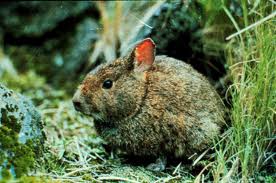
MEET THE VOLCANO RABBIT!

   Range/Habitat:  Central Mexico/ forests, mountains

   Diet: Herbivore: grasses

   Length/Weight: 9- 12 ½”/ 13-21 oz

   Conservation Status: endangered


Fun Facts:

  • Volcano rabbits live in pine forests near volcano peaks.
  • Volcano rabbits are one of the smallest rabbits in the world.
  • They live in small groups of 2-5.
  • Volcano rabbits have small rounded ears.
  • They build their burrows.
  • Volcano rabbits are mostly active at dusk and dawn (crepuscular).


How cute are these Volcano Rabbits? You would think with a name like that, they would breathe fire, but nope! There are efforts to make sure these little rabbits have enough habitat in their native Mexico! That is great news!


Categories: Animals, Children, education, Environment, mammals, nature, rabbits, science, wildlife | Tags: , , , , , , , , | 2 Comments

Blog at WordPress.com.