birds

FEATHERY FRIDAY # 18

FEATHERY FRIDAY# 18

Happy Feathery Friday! Whoooo is excited to meet today’s bird? We sure are! This little resident of Europe and Asia is a cute and stealthy hunter! Do you have your night goggles on? Let’s meet…

MEET THE TAWNY OWL!
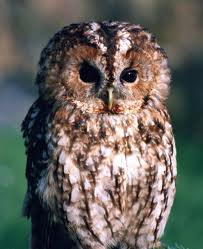
Range/Habitat: Europe-Asia/woodlands-suburban

Diet: Carnivore: mammals, birds, reptiles

Length/Weight: 14 ½-15 ½”/16-20 oz

Conservation Status: Common


Fun Facts:

  • Tawny Owls are nocturnal (active at night).
  • They mate for life.
  • Tawny owls’ plumage is streaked and provides excellent camouflage. It kind of looks like tree bark.
  • They do not have very good night vision; instead they use their excellent sense of hearing to locate their prey.
  • Tawny owls nest in holes in trees.
  • Both female and male owls take care of chicks.


Tawny owls are fluffy little owls! They have a very haunting call! We bet if you live where they live it would be fun to sit up at night and listen for them! We’re getting our blankets and flashlights ready, are you?

Check out their call:

http://www.owlpages.com/sounds/Strix-aluco-4.mp3


Categories: Animals, birds, Children, education, Environment, nature | Tags: , , , , , | Leave a comment

FEATHERY FRIDAY # 17

FEATHERY FRIDAY# 17

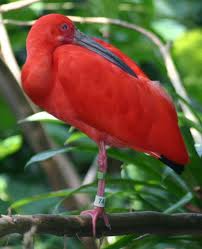
We’re into brightly colored animals this week! Yesterday was Gold Frogs and today’s Feathery Friday bird is scarlet! These beautiful birds are pretty amazing! You ready to meet them?

MEET THE SCARLET IBIS!

Range/Habitat: Central America-Northern South America/estuaries, mangroves, swamps, marshes

Diet: Carnivore: frogs, crabs, fish, and crustaceans

Length/Weight: 22-27”/28-33 oz

Conservation Status: Common

Fun Facts:

  • Scarlet Ibis are born grey and turn red as they eat crustaceans that cause the scarlet plumage.
  • They live in large flocks.
  • Scarlet ibis wade in water looking for prey. They use their long beaks to find prey.
  • They roost in trees at night.
  • Scarlet ibis are the national bird of Trinidad.

Scarlet ibis are bright and beautiful birds! Just like flamingos they get their color from the food they eat! They’re so fancy that they’re the national bird of a country! Wow!

Categories: Animals, birds, Children, education, Environment, nature | Tags: , , , , , | Leave a comment

FEATHERY FRIDAY # 16

FEATHERY FRIDAY# 16

This Feathery Friday brings you a king of bird! They’re not big or on the top of the food chain, but they are called kings! Who wants to meet this royal bird? We do!

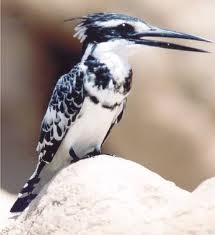
MEET THE PIED KINGFISHER!

Range/Habitat: Africa-Southwest Asia/near water- fresh and ocean

Diet: Carnivore: fish

Length/Weight: 10”/ 3 ¼ oz

Conservation Status: Common


Fun Facts:

  • Pied Kingfishers are fluffy bird with feathery crests on their heads.
  • They are speedy fliers.
  • Pied kingfishers can hover over water before diving to catch their prey.
  • Male and female pied kingfishers help rear chicks. Young adult birds act as helpers in rearing chicks too.


Pied kingfishers are neat birds! They make a great sound too! Check it out!

http://www.junglewalk.com/popup.asp?type=a&AnimalAudioID=12818


Categories: Animals, birds, Children, education, Environment, nature | Tags: , , , , , | Leave a comment

FEATHERY FRIDAY #14

FEATHERY FRIDAY# 14

Happy Feathery Friday everyone! We hope you have had a wonderful week! We’re excited for you to meet today’s bird! This bird is called a creeper but they’re not creepy at all! Let’s meet this fun little bird!

MEET THE BROWN CREEPER!

Range/Habitat: Western United States-Alaska-Canada-Newfoundland/forests

Diet: Omnivore: insects, some seeds

Length: 5-5 ½”

Conservation Status: Common


Fun Facts:

  • Brown creepers are small little songbirds.
  • They climb up trees in a spiral pattern looking for insects in the bark. When they’re done with one tree they fly to the bottom of another one and climb it in a spiral!
  • Brown creepers have stiff tails to help them balance.
  • Both male and female parents rear the chicks!
  • Brown creepers are the only member of the treecreeper family in North America.

Brown creepers are cute little birds that like to climb trees! They go around and around and around looking for bugs! Birds are so diverse! Some eat on the ground, some eat at the tops of the trees and some spiral around the trunks! Neat!

Here what they sound like:

http://www.allaboutbirds.org/guide/Brown_Creeper/sounds


Categories: Animals, birds, Children, education, Environment, nature | Tags: , , , , , | Leave a comment

SUPER SURSPRISE THURSDAY #14

SUPER SURPRISE

THURSDAY# 14

For all our bird loving friends we have an extra bird for you this week on Super Surprise Thursday! This bird is one of our favorites! They are funny birds who spend most of their time on the ground looking for food! Are you ready to meet them…

MEET THE SOUTHERN GROUND HORNBILL!

Range/Habitat: Southern Africa/ savannas

Diet:  Omnivore: rodents, lizards, plants

Height/Weight: 30-40”/ 7 ½-10lbs

Conservation Status: Common

Fun Facts:

  • Southern Ground Hornbills are the largest of all hornbills.
  • They feed mostly on the ground but can fly.
  • Southern ground hornbills are known to collect multiple food items in their bills and lay them on the ground and eat them one by one.
  • They have black feathers with red faces. Females have bright blue wattles and males have red wattles.
  • Southern ground hornbills have long life spans, up to 40 years.
  • Southern ground hornbills live in small groups.

These beautiful birds are really neat! We met a pair at Zoo Atlanta named Zazu and Gumby. They are so fun to watch! They like to show off their food to guests!

Categories: Animals, birds, Children, education, Environment, nature | Tags: , , , , , | Leave a comment

FEATHERY FRIDAY # 13

FEATHERY FRIDAY# 13

Happy Feathery Friday! Who loves woodpeckers? We do! We have a very different and special woodpecker for you today! To find this little bird, you must look down and not up! Are you ready to meet them?

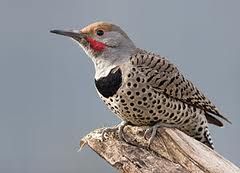
MEET THE NORTHERN FLICKER!

Range/Habitat: North-Central America/ woodlands, yards, parks

Diet: Herbivore: ants, insects and berries

Length/Weight: 30-35 cm/100-175 g

Conservation Status: Common


Fun Facts:

  • Northern Flickers are members of the woodpecker family.
  • They have long slightly curved bills that they use to get their favorite food item- ants!
  • Northern flickers often feed on the ground, drilling into the ground to find ants.
  • They have long tongues to help them get insects from the ground.
  • Both male and female Northern flickers take care of the eggs and chicks.
  • In the eastern part of their range they have yellow bottoms and in the west they have red bottoms.


Nothern Flickers are really neat woodpeckers! We love that instead of pecking into trees for food they peck into the ground! Each animal finds its own niche in the food chain! What would happen if birds all ate the same food? They would run out! So they each have their own way of finding and eating tasty things like ants!


Here’s what they sound like!

http://www.allaboutbirds.org/guide/Northern_flicker/sounds


Categories: Animals, birds, Children, education, Environment, nature | Tags: , , , , , | Leave a comment

FEATHERY FRIDAY # 12

FEATHERY FRIDAY# 12

It’s another fabulous Feathery Friday and we have a resident of the Amazon rainforest for today’s animal. Are you ready this little bird with two different names? Well, let’s do this…

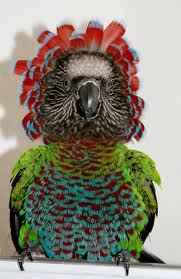
MEET THE RED FANNED PARROT!

Range/Habitat: Northern South America/Amazon Rainforest

Diet: Herbivore: fruit, seeds, flowers, nuts

Length/Weight: 14”/ 8 oz

Conservation Status: Common


Fun Facts:

  • Red Fanned Parrots are also known as the Hawk-headed parrot.
  • They have red feathers on the back of their necks. They raise the feathers up when threatened or alarmed. It gives them an appearance of being larger than they are.
  • They have long tail feathers also that resemble some birds of prey.
  • Red fanned parrots are found in pairs or small groups.
  • They often nest in tree hollows.


Red Fanned Parrots are really neat little birds! We think they look like lions with their feathers up! We wonder if they know how to roar? We doubt it J!


Categories: Animals, birds, Children, education, Environment, nature | Tags: , , , , , | Leave a comment

FRIGHTENING FEATHERY FRIDAY # 11

FRIGHTENING

FEATHERY FRIDAY # 11

Phew! We’ve made it through our week of SCARY animals! Now we have Frightening Feathery Friday and a dark and beautiful bird! Don’t worry this bird is not really scary, but they are often associated with Halloween. So let’s meet this bird…

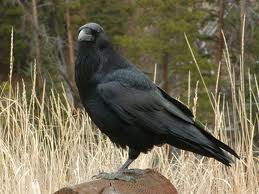
MEET THE COMMON RAVEN!

Range/Habitat: North & Central America-Europe-Asia and North Africa/woodlands, open fields and urban areas

Diet: Omnivores: small mammals, insects, fruit

Length/Weight: 26”/ 2 ½ lbs

Conservation Status: Common


Fun Facts:

  • Common Ravens are the largest member of the crow family in North Hemisphere.
  • They are highly intelligent and very social.
  • Common ravens have very large brains and are known to be great at problem solving.
  • Common ravens mate for life. They can live up to 15 years old in the wild and have been known to live longer in captivity.
  • They have large bills to eat many different types of prey.
  • Common ravens are admired in many cultures. They are even kept by royalty at The Tower of London!


These beautiful birds are really smart and have adapted well to live near and around people! It’s easy to see why people love them so much with their haunting calls and shiny black feathers! Did you know that there is a very famous poem about them by Edgar Allan Poe called “The Raven”? We hope you have enjoyed our week of spooky, creepy and awesome animals! We sure had fun learning about them!

Here are some of the many sounds that ravens make!

http://www.allaboutbirds.org/guide/Common_raven/sounds

Learn about the Tower of London Ravens:

http://www.castles.me.uk/ravens-in-the-tower-of-london.htm

Categories: Atlanta, birds, Children, education, Environment, nature | Tags: , , , , , | Leave a comment

FEATHERY FRIDAY # 10

FEATHERY FRIDAY # 10

It’s Feathery Friday yet again and we have wild and crazy bird for you today! Ok, they may not be very crazy but they are wild and wonderful! Who is this loony bird? Come find out!

MEET THE COMMON LOON!

Range/Habitat: North America-Greenland-Western Europe/sea coasts and large lakes

Diet: Carnivore: fish

Length/Weight: 28-35”/6 ½-10lbs”

Conservation Status: Common


Fun Facts:

  • Common loons are also known as the Great Northern Loon.
  • Common Loons are made for life in the water. They have webbed feet and water proof feathers.
  • They are excellent swimmers and divers. They can dive to great depths.
  • They take extra care to keep their dense feathers clean, this is called preening. They have to do this because the feathers keep them warm in the cold waters where they live.
  • Common loons are often found in pairs.
  • They are very clumsy on land.
  • Common loons use their bills to spear fish.
  • Both the female and male take care of the chicks. Chicks can swim at a very young age. Sometimes you’ll even see the chicks riding on the back of the mothers back.
  • Common loons are very vocal birds and make several different types of calls.
  • Common loons are the provincial bird of Ontario, Canada and are the state bird of Maine.

These noisy birds are very pretty with their black heads and spots.  We love the special adaptations they have for living in cold waters. People, elephants and horses don’t do well in cold water! What do you do stay warm when it gets cold? We like to put on scarves!

Here are two loons calling to each other:


Categories: Animals, birds, Children, education, Environment, nature | Tags: , , , , , | Leave a comment

FEATHERY FRIDAY # 9

FEATHERY FRIDAY # 9

We love our fine feathered friends and we love brightly colored ones even more! Today’s Feathery Friday friend lives right here in the Southern United States (that’s where we live)!

MEET THE PAINTED BUNTING!

Range/Habitat: Southern United States/woodlands, brushy areas

Diet: Omnivore: seeds, insects

Length: 5 ½ “

Conservation Status: Near threatened

Fun Facts:

  • Painted Buntings are very colorful birds. They are often called the most colorful bird in North America.
  • They often pair for life.
  • They are shy and hard to see in the wild, despite their bright colors.
  • Male Painted buntings are highly territorial.
  • Painted buntings are a member of the cardinal family.
  • They are migrating birds. They spend their winters in Mexico.

These bright and colorful birds sure are beautiful! If you’re live in the Southern United States, you’d be lucky to see one of these birds in the wild! Can you name all the colors you see on these birds?

Categories: Animals, birds, Children, education, Environment | Tags: , , , , | Leave a comment

Blog at WordPress.com.