Environment

SUPER SURPRISE THURSDAY #5

SUPER SURPRISE THURSDAY#5

We’ve made it to another Thursday and that means we have a Super Surprise animal today! Who will it be? Is it a lion or a bear or this guy…

MEET THE EGYPTIAN COBRA!
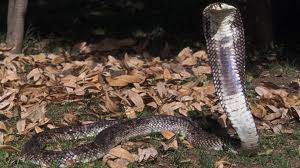
Range/Habitat: Northwest Africa and East Africa/ desert and grasslands

Diet:  Carnivore: small mammals, snakes, birds and eggs

Length: 3 ½-8ft

Conservation Status: Common

Fun Facts:

  • The Egyptian Cobra is highly venomous snake.
  • They are nocturnal (active at night).
  • They are known to be aggressive and are quick to defend themselves.
  • They will “stand up” and spread open their hoods to make themselves look bigger.
  • Egyptian cobras are highly territorial and will often fight each other for territory.
  • Their venom is fatal to humans if not treated.

Egyptian cobras are quite intimating but are awesome! Remember that every animal has a place on this earth and even the ones that seem scary belong in their habitat! Just think, if we didn’t have snakes, we’d have tons and tons of rats and mice! They’re all part of the food web!

Recently an Egyptian Cobra made the news when she escaped from enclosure at the Bronx Zoo. Luckily she was found curled up in a corner of the reptile house!

http://cityroom.blogs.nytimes.com/2011/03/31/bronx-zoo-cobra-found-alive/
Categories: Animals, Atlanta, Children, education, Environment | Tags: , , , , | Leave a comment

WATERY WEDNESDAY #5

WATERY WEDNESDAY#5

Woohoo it’s another Watery Wednesday! We’ve found another fish that gets its name from a mammal. (Remember the Wolffish?) This one won’t roll over, sit or shake paws for you though. Can you guess what shark it is? Let’s meet…

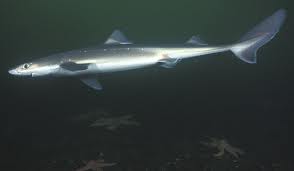
MEET THE SPINY DOGFISH!

Range/Habitat: Coastal waters-worldwide (generally under 59 degrees)

Diet: Carnivore: crustaceans, anemones, fish

Length: 3 ¼ ft- 5 ft

Conservation Status: Vulnerable

Fun Facts:

  • The Spiny dogfish is a small, slow moving, bottom dwelling shark.
  • They have venomous spines on both dorsal (top) fins that are used for defense and can cause painful wounds.
  • They are often found swimming in large schools. They often feed together in large groups or “packs”. This feeding behavior is most likely where the name dogsfish came from. (Wild dogs also feed in packs or groups.)
  • They are known to be aggressive and voracious eaters.
  • They have one of the longest known gestation periods (time of pregnancy) of any shark (or any vertebrate for that matter) around 24 months (2+ years). That is longer than an elephant!

The Spiny dogfish is a cool and strange looking little shark, but with those venomous spines we’re glad this shark doesn’t shake fins ;)!

Categories: Animals, Children, education, Environment | Tags: , , , , , | Leave a comment

REPTILIAN TUESDAY #5

REPTILIAN TUESDAY#5

Happy Tuesday! We hope everyone enjoyed Labor Day! We’re back with a funny looking reptile that has horns! What? Yep, we said horns! Some say it even looks like a dinosaur, but it’s not! Who is this awesome lizard? Let’s find out…

MEET THE JACKSON’S CHAMELEON!

Range/Habitat: East Africa-Kenya/Tanzania/ High altitude mountainous regions

Diet:  Carnivore: insects

Length: 8-12”

Conservation Status: Common

Fun Facts:

  • Male Jackson’s Chameleons have 3 bony horns on the front of their head.
  • They use the horns to fight other males for territory.
  • Female Jackson’s Chameleons do not have horns.
  • Like other chameleons, they can change their color depending on their mood, health and surroundings.
  • They are bright green. Their ability to camouflage with their habitat is their primary defense mechanism.
  • Jackson’s chameleons do not lay eggs; females incubate the eggs inside her body and give birth to live young.
  •  Baby chameleons are brown and turn green around the age of 4 months.

These crazy chameleon look kind of like triceratops or a rhino to us! We think they are fantastic! What do you think?

Categories: Animals, Children, education, Environment | Tags: , , , , , | Leave a comment

FEATHERY FRIDAY #4

FEATHERY FRIDAY#4

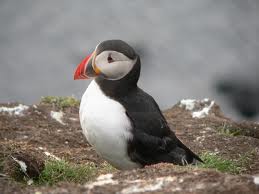
It’s FRIDAY and we have another great Feathery friend for you to meet today! As summer wraps up here, we’re dreaming of cooler temperatures and today’s bird loves the cold! Is it a penguin? Nope this bird lives in the Northern Hemisphere…

MEET THE ATLANTIC PUFFIN!

Range/Habitat: North Atlantic and Arctic Oceans from Northern Europe-Iceleand-Newfoundland / ocean and rocky coasts

Diet:  Carnivore: fish, mollusks, crustaceans

Length/Weight: 11-12”/ 1 lb

Conservation Status: Common

Fun Facts:

  • The Atlantic Puffin is a highly social bird that lives in large colonies on rocky coasts and islands.
  • They have bright orange beaks that are brighter during mating season. They also have bright orange feet. They’ve been called the “sea parrot” because of their bright coloration.
  • Male and female Atlantic Puffins incubate eggs.
  • Atlantic Puffins spend their winters out in the open ocean.
  • They are excellent swimmers and divers. They can dive up to 200 ft deep.
  • Atlantic Puffins can fly unlike penguins.
  • They can catch several fish at one time.
  • Atlantic Puffins are the Provincial (official) bird of Newfoundland, Canada.


Atlantic Puffins sure are snappy looking birds with their bright orange beaks and feet! And they can fly and swim! We wish we could fly and swim!


Categories: Animals, birds, Children, education, Environment | Tags: , , , , | Leave a comment

SUPER SURPRISE THURSDAY #4

SUPER SURPRISE THURSDAY#4

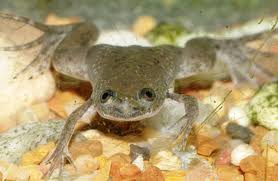
What you say- it’s Thursday! And we have an awesome amphibian for your surprise! Can you name some animals that are amphibians? If you said frogs, salamanders or toads you’re right! Hhhmmm… we wonder which one we’ll meet today….

MEET THE AFRICAN CLAWED TOAD!

Range/Habitat: Southern Africa/lakes, ponds

Diet:  Carnivore: fish, invertebrates

Length: 2 ¼”-5”

Conservation Status: Common

Fun Facts:

  • The African Clawed Toad has 3 “fingers” on its front legs that they use to dig prey out of mud.
  • They have flat bodies and extra large webbed back feet to help them swim.
  • They’re often found on the bottom of lakes and ponds.
  • Their eyes and nostrils are on top of their heads.
  • African clawed toads have stitch-like marks on their backs that detect vibrations made by prey. This helps them locate prey in murky dark waters.

These terrific toads have some neat adaptations to help them survive in their habitats. We also think they’re kind of cute! Do you?

Categories: Animals, Children, education, Environment | Leave a comment

WATERY WEDNESDAY #4

WATERY WEDNESDAY#4

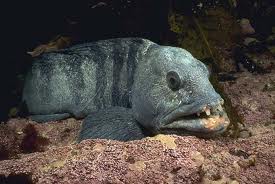
It is Wednesday and what a wild looking animal have we found today! This fish lives in cold waters and is named after a very famous predator that lives on land! Who is this fish? Let’s find out…

MEET THE NORTHERN WOLFFISH!

Range/Habitat: North Atlantic-Arctic Oceans from Canada to Iceland/offshore rocky and soft bottoms

Diet:  Carnivore: mollusks, sea urchins, crabs and lobsters

Length/Weight: up to 5 ft/ up to 53lb

Conservation Status: Common/Near Threatened in Canada

Fun Facts:

  • The Northern Wolffish has large pointy incisors and a bony plate in its upper mouth to crush its prey.
  • They are solitary predators.
  • They have a large head with a menacing look.
  • They prefer rocky or muddy sea floors to live in.
  • Male Wolffish guard the eggs until they’ve hatched.

With big scary looking teeth, it’s no wonder that the wolfish is named after a wolf. We wouldn’t want to meet one of these guys in a back alley of the ocean, even though they are harmless to humans.

Categories: Animals, Children, education, Environment | Leave a comment

REPTILIAN TUESDAY #4

REPTILIAN TUESDAY#4

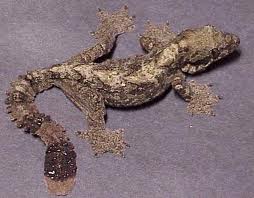
Whew! Did everyone make it through yet another Monday? We hope learning about the narwhal helped! We have another crazy animal for Reptilian Tuesday! This one FLIES! You heard us; this lizard glides through the trees! First you met a whale with a giant tusk and now a flying lizard! Who knew nature could be so awesome?

MEET THE KUHL’S FLYING GECKO!

Range/Habitat: Southeast Asia (including Thailand, Indonesia, and India)/Tropical forests

Diet:  Carnivore: insects

Length: 7-8”

Conservation Status: Common

Fun facts:

  • The Kuhl’s Flying Gecko has special flaps of skin down its body that it uses to help it glide from one tree to another.
  • They also have webbed that help them glide.
  • Their tails are flat and frilly! This adaptation also helps them glide around in the trees!
  • Kuhl’s flying gecko are arboreal (they live in the trees).
  • These geckos also have special toe pads that allow them to grip to almost any surface!
  • Their coloration helps them blend in or camouflage with the trees that they live in.

Who knew there was a flying lizard in the world? We were so excited to learn about this amazing reptile! Do you think an elephant and horse could ever fly?

Categories: Animals, Children, education, Environment | Leave a comment

MAMMAL MONDAY #4

MAMMAL MONDAY#4

Rise and shine another Monday has arrived! We have a really amazing mammal to get this week started! This animal could have been featured on Watery Wednesday since it calls the ocean its home, but we wanted to start off the week with this special creature! It’s been called the unicorn of the sea! A unicorn you say, but unicorns aren’t real! You’re right, unicorns aren’t real, but this wild looking whale is real! Come find out more about…

MEET THE NARWHAL!

Range/Habitat: Arctic/Arctic Ocean

Diet:  Carnivore: cod, mollusks, crustaceans

Length/Weight: 13-20 ft/ 2000-3,500 lbs

Conservation Status: Near Threatened


Fun facts:

  • The Narwhal is often called the unicorn of the sea.
  • They have the most northerly range of any mammal on the planet.
  • Narwhals have a modified upper incisor tooth that grows up to 9ft long.
  • This tooth looks like a horn. It grows through the upper mouth and is seen mostly in male Narwhals, but females can have small tusks.  Scientists aren’t completely sure what the purpose of the tusk is, but think it might be for attracting females.
  • The long tusk is made of ivory, just like an elephants tusks! Tusks are spiraled.
  • Narwhals have a thick layer of blubber, like other arctic animals that help keep them warm in the cold water.
  • Narwhals swim in groups called pods. Pods can include as many as 1000 individuals.
  • Narwhals are very communicative and use a wide range sounds, including clicks and whistles.
  • They suck food through their powerful lips and tongue.


Narwhals are amazing animals! They survive in very cold waters and grow this awesome long tusk that makes them look unique!  If you could pick a crazy adaptation like tusks what would it be? We’re still deciding on what we would like!

Categories: Animals, Children, education, Environment, mammals | Leave a comment

FEATHERY FRIDAY #3

FEATHERY FRIDAY#3

We’ve made it to another Fabulous Feathery Friday! And you’ll need to put on your glasses to see this tiny little Bee…

MEET THE BEE HUMINGBIRD!

Range/Habitat: Cuba

Diet:  Omnivore: nectar and tiny insects

Length/Weight: 2 ¼“ / 1/16 oz (about the weight of a penny)

Conservation Status: Near Threatened

Fun facts:

  • The Bee Hummingbird is the smallest bird in the world! It weighs about as much as a penny.
  • It has a long tube-like tongue it uses to suck in nectar from flowers.
  • Male Bee Hummingbird’s heads are iridescent (kind of like glitter), the females are not.
  • They can beat their wings at 80x per second. It is so fast that it can’t be seen by the human eye! (It can’t be seen by the elephant or horse eye either.) 😦
  • They are just barely larger than a bee.
  • Bee Hummingbird nests are only about 1” in diameter (just slightly larger than a quarter).
  • Bee Hummingbird eggs are about the size of a pea.

This teeny tiny bird has made our Feathery Friday! We’d loved to see one and their eggs; pretty sure we’ll need to use our magnifying glass!

Categories: Animals, Children, education, Environment | Tags: , , , , | Leave a comment

SUPER SURPRISE THURSDAY #3!

SUPER SURPRISE THURSDAY#3

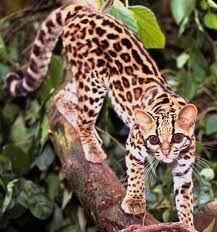
SURPRISE!! It’s Thursday, and we have a special little mammal for today’s Super Surprise! If you’re a bird or a rodent living in rainforest of Central and South America you don’t want to be caught by surprise by this stealthy feline!

MEET THE MARGAY!

Range/Habitat: Central-South America- Mexico to Argentina/Rainforest

Diet:  Carnivore: mice, rodents, birds and occasional fruit

Length/Weight: 18-31”/ 5 ½-8 ¾ lbs

Conservation Status: Near Threatened

Fun facts:

  • The Margay is an excellent climber. It is arboreal (it spends most of its time in trees).
  • They have large flexible paws that help them climb and grip branches. They have even been known to hang from a branch by one paw! WOW!
  • Their back ankles are able to turn 180 degrees, also helping them grip tree branches.
  • They are able to run head first down a tree (very unusual for cats-just ask your pet cat how hard this is). Clouded leopards are the only other cat known to do this.
  • They have long tails to help them balance.
  • Margays are nocturnal (active at night).
  • Margays have large eyes and ears to help them see and hear at night.
  • They have been observed mimicking (making similar sounds) monkey sounds to lure monkeys closer to them.

These special felines are amazing! They have some special adaptations to help them survive life in the trees. Can your pet cat make bird sounds to lure birds? Our cat friend can’t do that!

Categories: Animals, Children, education, Environment, Uncategorized | Leave a comment

Blog at WordPress.com.