mammals

ENDANGERED SPECIES WEEK!

ENDANGERED SPECIES WEEK-

African Wild Dog!

We’re going to meet some endangered species this week as we get ready for Endangered Species Day! We’re kicking it off with the African Wild Dog!

wild dog


African Wild Dog Fun Facts:

  • African wild dogs live in sub-Saharan Africa on the savanna or in woodlands.
  • African wild dogs can grow up to 55 1/2 inches long and weigh up 74 lbs.
  • They are carnivores and hunt in groups to take down prey, including antelopes, wildebeest and birds.
  • African wild dogs are listed by the IUCN as endangered. They are losing their habitat and can get diseases from domestic dogs.
  • They roam large home territories of 600-900 square miles.
  • African wild dogs are highly social and live in packs.
  • A pack is dominated by a monogamous breeding pair of dogs.
  • They are also called the painted dog.

IMG_1623


  • Each African Wild dog has its own unique coat coloration pattern.
  • Female African wild dogs can have up to 10 pups in a litter. Only the dominate female in a pack with give birth.
  • They are highly vocal and communicate sounds not heard in any other member of the canine family.
  • African Wild dogs are crepuscular. They are known to travel at night.
  • They are distance runners and can maintain a speed of 35 mph for up to 2 miles!

These awesome canines are so fascinating, from their funny feet to their complex social system the African Painted dog definitely deserved protection and respect. You can learn more on how to protect these wild canines at the African Wildlife Federation.


wild dog2


Categories: adventure, Animals, Children, conservation, education, endangered species, Environment, mammals, nature, science, Uncategorized, wildlife | Tags: , , , , , , , | 2 Comments

A Horse of a Different Stripe!

A Horse of a Different Stripe!

This week is very special, Wednesday is National Bird Day and Thursday is Cinco De Rhino- so we decided to feature a relative of the rhino and a bird friend of theirs today and tomorrow!

Today Edmond is doing a cheer for Zebras!

Let’s all join him!

IMG_1387

Z is for Zebra! Zebras are the only member of the horse family that has stripes! Those stripes help with camouflage and insect repellent! No two zebras stripes are the same!


E is for excellent runner! They can reach speeds up to 35 mph!

E is for excellent families! Zebras are highly social animals and they are very protective of their families!


B is black! Zebras have black skin underneath their white and black fur!

B is black! Zebras have black skin underneath their white and black fur!


R is for Running! They can reach speeds of up to 35 mph!

R is for Running! They can reach speeds of up to 35 mph!


A is for Amazing eyesight! Zebras have excellent sight day and night!

A is for Amazing eyesight! Zebras have excellent sight day and night!


Zebras are attracted stripes! We love their awesome stripes!

Zebras are attracted stripes! We love their awesome stripes!


zebra

Edmond wanted to try out zebra stripes :)!

Categories: adventure, Animals, Children, conservation, education, Environment, mammals, nature, science, wildlife | Tags: , , , , , , , , , | 2 Comments

NATIONAL DOLPHIN DAY!

NATIONAL DOLPHIN DAY!

dolphin2

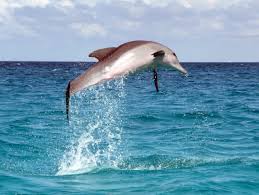
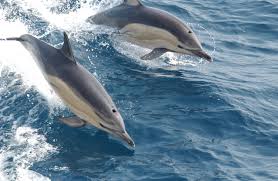
It’s National Dolphin Day! We’ve got some fun facts and pictures for you to celebrate!

dolphin7

Dolphin Fun Facts:

  • There are 42 species of dolphins in the world; 38 live in oceans and 4 live in freshwater rivers.
  • All dolphins are carnivores. Some species can eat up 30 lbs of fish a day.
  • They have a two to three chambered stomachs. Most of the chambers store food and one digests their food.
  • Dolphins use echolocation to locate prey and communication with each other. The melon is a fatty rich structure on their heads that help them with echolocation.
dolphin5

  • Their communication includes clicks and whistles.
  • Dolphin communication can be very complicated and scientists know that dolphins even name each other.
  • Like all mammals, dolphins have hair. They are born with a few chin hairs that fall out as they grow older.
  • Dolphins can swim up 25 miles per hour.

dolphin3

  • Dolphins are highly social and live in groups called pods.
  • They are considered to be highly intelligent too.
  • Dolphins are obligate breathers. They must think to breathe. They use their blowholes to breathe.
  • Dolphins sleep with one 1/2 of their brain asleep, so they can continue to breathe.

dolphindolphin2


Dolphins are fascinating creatures. There is much that scientists don’t know about their complex behavior and groups! We think they are just fantastic! Learn how to draw a dolphin here in our video!

Categories: adventure, Animals, Children, conservation, education, Environment, mammals, nature, oceans, science, wildlife | Tags: , , , , , , , , , , | 1 Comment

THAT IS ONE BIG DOLPHIN!

THAT IS ONE BIG DOLPHIN!

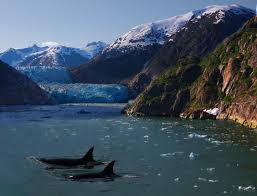
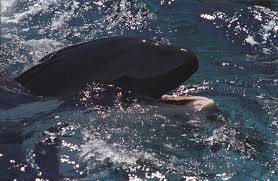
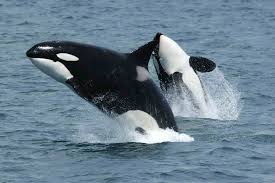
It’s time to meet one of the oceans most iconic animals! These black and white predators are known around the world and today you are going to learn more about them along with us!

orca3

  • Orcas live in oceans all around the world.

IMG_0217

  • They can grow up to 32 ft long and weigh up to 6 tons. That is the average weight of an adult male elephant!
  • Orcas are carnivores. They eat fish, seals, squid and even other whales.
  • They are listed as data deficient by the IUCN.
  • Orcas are also known as killer whales.

orca2orca

  • Scientists believe that orcas will eventually be split in to either subspecies or different species. There are orcas that stay in one location all year round (resident). There are orcas that live in smaller groups that travel where the food is abundant (transient). And there are orcas that hunt mainly very far from shore (offshore).
  • These carnivores live in pods and often hunt together as a group.

IMG_1025

  • Orcas have earned the nickname wolves of the sea, because of their group hunting techniques.
  • They can swim up to 33 mph!
  • Orcas have up to a 4″ layer of blubber to help keep them warm in cold waters.
  • Their teeth are 4″ long! Watch out for those chompers!
  • Orcas, like other toothed dolphins and whales, use echolocation to detect prey.
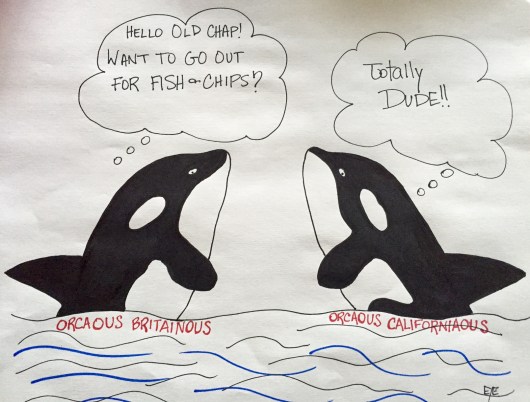
  • They are highly vocal. Pods are known to have their own unique language, dialect and culture. Scientists say the orcas’ dialects are very distinctive, like humans from the United Kingdom vs humans from Scotland.

FullSizeRender(41)

  • They have the 2nd heaviest brain of any marine mammal- our friend the sperm whale has the heaviest!

IMG_1024

Orcas are super cool! They are highly social and intelligent! Cultures around the world have told myths and stories of the killer whales for centuries. The Kwakwaka’wakw people believed that orcas were the rulers of the seas and sea lions were their slaves! Wow!


Categories: adventure, Animals, Children, conservation, education, Environment, mammals, nature, oceans, science, wildlife | Tags: , , , , , , , , , , | 1 Comment

LITERARY WHALE!

LITERARY WHALE!

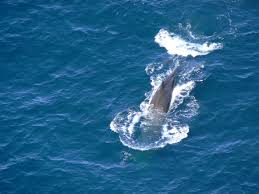
We’re super excited to meet some cetaceans this week! Edmond even put on his snorkel gear to get closer to these great animals! Today we meet a whale made famous in the book Moby Dick!

8D17BA1A-2624-4D14-8492-BD259C8D83D9

  • Sperm whales are found in oceans all around the world. IMG_0217
  • Sperm whales are toothed whales and carnivores. They eat fish and squid!
  • Sperm whales are listed as vulnerable by the IUCN.
  • Sperm whales can grow up to 59 feet long and weigh up to 45 tons. They are longer than a school bus!  IMG_1019(1)
  • Sperm whales are in fact the largest of the toothed whales!
  • Sperm whales are known to battle and sometimes eat giant squid. Scientists have even observed squid suction cup wounds and scares.
  • Sperm whales are very vocal and they use echolocation to help them find prey.

IMG_0998

  • Sperm whales are known to dive to very deep depths- as deep as 3,200 feet down.
  • Their large squarish shaped heads are filled with a substance called spermaceti. Scientists are still unsure of it’s exact use, but they think it helps the whale maintain its buoyancy when it dives to deep depths.
  • These amazing whales can hold their breath for up to 90 minutes.
  • Female sperm whales live in pods in warmer waters all year round. They raise their young together.

sperm whalesperm whale2

whales8

  • Sperm whales may be one of the best known species of whales on earth. The book “Moby Dick” is the story of the struggle with a famed white sperm whale and a whaler. IMG_1020

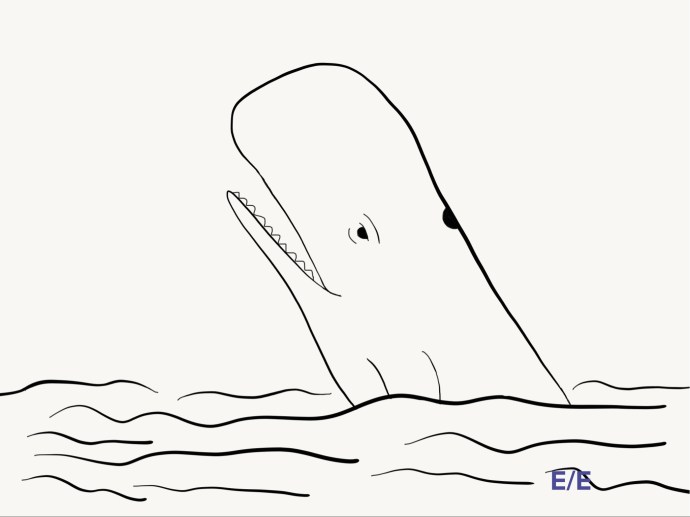
We love these giants of the deep! They are such amazing creatures. Many cultures in the South Pacific revere their teeth as sacred. We have a sperm whale coloring sheet for you too!IMG_1021


Categories: adventure, Animals, Children, conservation, education, Environment, mammals, nature, oceans, science, wildlife | Tags: , , , , , , , , , , | 1 Comment

THREE CHEERS FOR GORILLAS!

THREE CHEERS FOR GORILLAS!

This week were celebrating APE-RIL! That’s right we’re going ape for our primate friends! We’ll be cheering on gorillas, meeting a lesser ape and visiting bonobos!

Edmond is ready to give three cheers for gorillas! Let’s all join him!

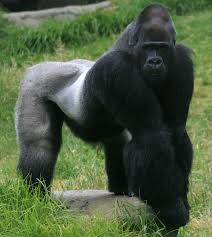
gorilla

IMG_0911

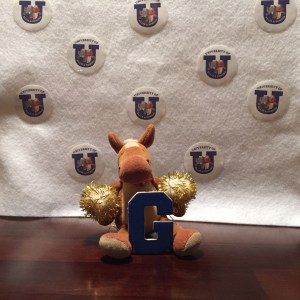
GIVE US A G! G is for gorillas! Gorillas are great apes! There are 4 subspecies, Eastern Lowland, Western lowland, mountain and cross river.


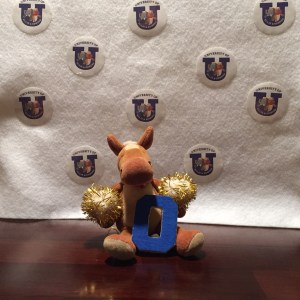
GIVE US AN O! O is for the oldest gorilla is in charge. Gorilla live in family groups where the oldest silverback male is in charge.

GIVE US AN O!
O is for the oldest gorilla is in charge. Gorilla live in family groups where the oldest silverback male is in charge.


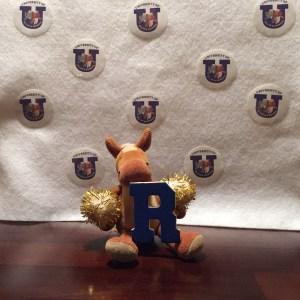
GIVE US A R!  R is for roots, shoots, fruits and leaves. Gorillas are herbivores!

GIVE US A R!
R is for roots, shoots, fruits and leaves. Gorillas are herbivores!


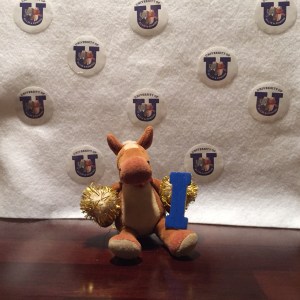
GIVE US AN I! I is for intelligent. Gorillas are intelligent and are even known to have different cultures in different areas.

GIVE US AN I!
I is for intelligent. Gorillas are intelligent and are even known to have different cultures in different areas.


GIVE US AN L! L is for Lowland gorillas. If you ever meet a gorilla in a zoo it is a Western Lowland gorilla. They have the most numbers in the wild too.

GIVE US AN L!
L is for Lowland gorillas. If you ever meet a gorilla in a zoo it is a Western Lowland gorilla. They have the most numbers in the wild too.


GIVE US AN L! L is for loss. Gorillas are endangered due to habitat loss. Recycling your cell phone can help gorillas! Learn more here!

GIVE US AN L!
L is for loss. Gorillas are endangered due to habitat loss. Recycling your cell phone can help gorillas! Learn more here!


GIVE US AN A! A is for Africa. All species of gorillas live in Africa.

GIVE US AN A!
A is for Africa. All species of gorillas live in Africa.


Categories: adventure, Animals, Children, conservation, education, Environment, mammals, nature, science, wildlife | Tags: , , , , , , , , , , | 1 Comment

THREE CHEERS FOR SLOTHS!

THREE CHEERS FOR SLOTHS!

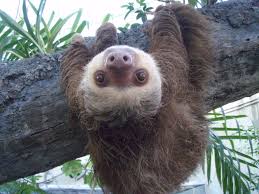
sloth

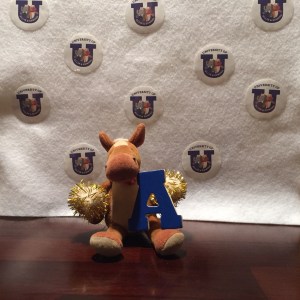
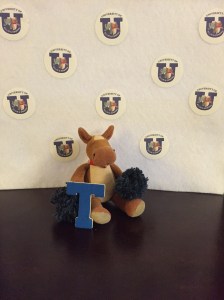
We all know and love this folivore- the sloth! Edmond is doing one of his cheers for them today!

GIVE ME A S! S is for Slooooow! Sloths are slooooow moving!

GIVE ME A S!
S is for Slooooow! Sloths are slooooow moving!


GIVE ME A L! L is for leaves! Sloths eat leaves from their treetop homes. They even get their water from the leaves they eat!

GIVE ME A L!
L is for leaves! Sloths eat leaves from their treetop homes. They even get their water from the leaves they eat!


GIVE ME AN O! O is for olive colored fur! Sloths have a greenish tint to their fur, because algae grows in it.

GIVE ME AN O!
O is for olive colored fur! Sloths have a greenish tint to their fur, because algae grows in it.


GIVE ME A T! T is for turn! Sloths can turn their heads 270 degrees, very much like owls!

GIVE ME A T!
T is for turn! Sloths can turn their heads 270 degrees, very much like owls!


GIVE ME A H! H is for high up in the tree tops! Sloths spend most of their lives high up in the trees. They do come down once a week to poop!

GIVE ME A H!
H is for high up in the tree tops! Sloths spend most of their lives high up in the trees. They do come down once a week to poop!

GIVE US THREE CHEERS FOR SLOTHS! ONE OF OUR FAVORITE FOLIVORES!!  WOOHOO!

index

Categories: adventure, Animals, Children, conservation, education, Environment, mammals, nature, science, wildlife | Tags: , , , , , , , , , | 2 Comments

PANDAMANIA!

PANDAMANIA!

Happy World Panda Day! Our friend Petunia Panda is sharing some great panda facts for you and we’ll have a great video for you to watch on Youtube and Instagram!

IMG_0640

IMG_0641

IMG_0642

IMG_0643

IMG_0644

IMG_0645

IMG_0646

IMG_0647

IMG_0649IMG_0649

IMG_0653See how well a panda dances on Instagram and YouTube!

Categories: adventure, Animals, Children, conservation, education, Environment, mammals, nature, science, wildlife | Tags: , , , , , , , , , , | 1 Comment

We Have the Right Whale

We Have the Right Whale

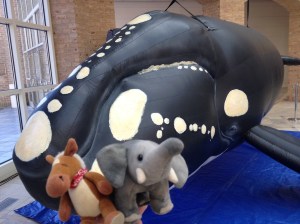
whales1

This week we’re meeting some plankton eaters! And today we’re meeting a whale that winters off the Georgia coast! In fact they are our state marine mammal! Woohoo! Let’s learn some cool stuff about these giants of the ocean!

right whale

Right whale fun facts:

  • Right whales are divided into two species, the Northern and the Southern. We’re meeting the North Atlantic right whale today!
  • These whales inhabit the ocean waters of the coast of North America.

FullSizeRender(37)

  • North Atlantic right whales grow up to 52 feet in length and weigh up to 70 tons! Wow!
  • North Atlantic right whales are critically endangered. There are around 400 of these amazing creatures left.
  • These baleen whales are carnivores. They feed on plankton like krill. They skim these tiny prey from the water using their baleen.
  • They feed generally in spring through fall in the cold waters of the Northern Atlantic Ocean near Canada.

IMG_0552

  • Female north Atlantic right whales are larger than the males.
  • Females migrate to the waters off of Georgia and Florida to calve. They have one baby at a time.
  • Northern right whales are slow swimmers and tend to stay near the surface.
  • They are often in danger of boat strikes. In their protected habitats, boats must keep slow speeds.
  • Scientist believe these giants live up to 50 years and maybe even up to 100 years.
  • There are great conservation efforts going on to protect these whales. They are one of the most endangered whale in the ocean today. Fortunately they have been protect since the 1930s, but recovery has been slow. You can learn more about those efforts from the NOAA website on them.

right whale2right whale3


Protecting the earth’s creatures and the habitats we share starts with all of us. These whales along with other ocean dwelling animals can be found with plastic in their stomachs. Make sure your plastic goods go into a recycling bin and never into wild habitats! Let’s do it for the Right Whale!

Categories: adventure, Animals, Children, conservation, education, Environment, mammals, nature, oceans, science, wildlife | Tags: , , , , , , , , , , | 1 Comment

HOLEY MOLEY!!

HOLEY MOLEY!!

We’re on day three of our you choose week and we had a friend vote for moles! So of course we narrowed down to the star nosed mole! This crazy looking creature is sure to be popular, so let’s get moving and head underground to meet this wild animal!

star nosed mole2

Fun Facts:

  • The first thing you notice on a star nosed mole is the nose. It is compromised of 22 finger like projections, 11 on each nostril. Those projections are called tendrils.
  • Star nosed moles live in wetlands and moist habitats along the coast of Northeastern North America.FullSizeRender(36)
  • Star nosed moles can grow up to 8 inches and weigh up to 2 oz.
  • They are insectivores. They have 44 teeth to crunch up insect exoskeletons.
  • Star nosed mole nose projections are full of extremely sensitive receptors called Eimer’s organs. Other moles have these receptors, but the star nosed mole has 25,000 of them; more than any other animal!
  • IMG_0436
  • Star nosed moles are functionally blind, so those crazy looking tendrils give them a picture of their environment and of their prey! It can tell if a prey is edible in 8 milliseconds! WOW!
  • They can smell underwater too!
  • Their tendrils have no muscles or bones in them. They are not used as a scent organ. The mole has nostrils that use for smell.
  • Star nosed moles dig shallow tunnels in the wet ground. They are also excellent swimmers, using those wide front feet and back feet to help them swim.
  • They tend to be out on the ground more than other moles who stay in their burrows.

star nosed mole

We could on days and days about the star nosed moles. Those tendrils are unique in the animal kingdom. Scientists have been studying these critters for years and continue to learn so many things about them. They even think they may be able to pick up slight electrical fields! WOW! Our earth is full of so many crazy creatures that are so fascinating!

Categories: adventure, Animals, Children, conservation, education, Environment, mammals, nature, science, wildlife | Tags: , , , , , , , , , | 2 Comments

Blog at WordPress.com.