reptiles

REPTILIAN TUESDAY #12

REPTILIAN TUESDAY # 12

We hope everyone had a wonderful Halloween and enjoyed the pictures we posted on Facebook and all the tweets we posted about bats and owls! We’re excited to finish the week off with all kinds of wonderful animals and today we have a very flat one! Flat you say? Flat! Come meet….

MEET THE PANCAKE TORTOISE!

Range/Habitat: E Africa (Tanzania/Kenya)/rocky outcrops and savannas

Diet: Herbivore: grasses, leaves, fruit

Length/Weight: 5 ½”-7”/ 1 lb

Conservation Status: Vulnerable


Fun Facts:

  • Pancake Tortoises have flat carapaces (top shell) that are flexible. This is a very unusual adaptation.
  • Pancake tortoises can squeeze into narrow crevices. This helps protect them from predators.
  • They don’t move to far from their shelter.
  • Pancake tortoises are actually quick and agile climbers.
  • They live in small colonies and share their shelters.
  • They can live up to 25 years old.
  • Pancake tortoises are crepuscular (most active at dusk and dawn).

Pancake tortoises are really neat little tortoises with their flat shells and ability to climb. And they have pancake in their name and who doesn’t love pancakes!

Categories: Animals, Children, education, Environment, nature, reptiles | Tags: , , , , , | Leave a comment

REPTILIAN TUESDAY # 8

REPTILIAN TUESDAY# 8

Who’s excited to meet another reptile on this Reptilian Tuesday? We definitely are and we have a great tortoise for you today! Tortoises may be slow but they sure are awesome! Besides who won that race with the hare? Let’s meet this great animal…

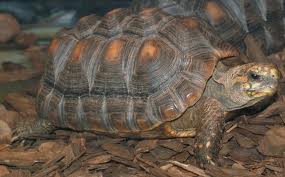
MEET THE RED FOOTED TORTOISE!

Range/Habitat: North-Central South America/forest edges, savannas, grasslands

Diet: Herbivore: leaves, flowers, plants and the occasional bug

Length/Weight: 16-20”/up to 25 lbs

Conservation Status: Endangered


Fun Facts:

  • Red Footed Tortoises have red- yellowish spots on their legs and their scutes. Scutes are the coverings on turtles and tortoise shells; they are made up of keratin, the same protein that makes up your nails and hair.
  • They can live up to 50 years.
  • Male red footed tortoises are smaller around the mid-section; it looks like they have a waist. If you look at them from above they have an hourglass shape.
  • Female red footed tortoises lay eggs. They can lay up to 15 eggs per clutch.


Red footed tortoises are really neat! They are popular to keep as pets. Would you like a tortoise as a pet? You have to do your homework and learn how to take care of them. Exotic pets, like tortoises and snakes need special habitats, food and care. We met a red footed tortoise at Zoo Atlanta who’s shell was misshapen and heavy because his owner fed him dog food. It’s really important to know how to take care of your pet!


Categories: Animals, Children, education, Environment, reptiles | Tags: , , , , | Leave a comment

REPTILIAN TUESDAY # 8

REPTILIAN TUESDAY # 8

Man have we found an amazing reptile for today’s Reptilian Tuesday! Have you ever seen a lizard with umbrella shaped skin around its neck? We hadn’t either! It is one wild and crazy guy! Let’s meet…

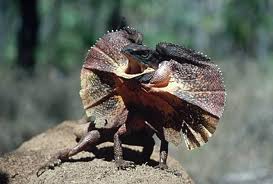
MEET THE FRILLED LIZARD!

Range/Habitat: South New Guinea and North Australia/woodlands

Diet: Carnivore: insects, small vertebrates, arthropods

Length/Weight: 23 ½”- 32”/ 1 lb

Conservation Status: Common


Fun Facts:

  • Frilled lizards have a flap a skin around their necks. The frill has cartilage (the tissue that makes up your ears and nose) rods in it. It’s sort of like an umbrella around their neck.
  • The frill is brightly colored and can be 9 -14” wide when fully spread out.
  • Frilled lizards spread their frill out and hiss when threatened by a predator.
  • They are arboreal (live in the trees) and are great climbers.
  • When on the ground they can run on just two legs!
  • Frilled lizards are highly territorial.

Frilled lizards are crazy looking when they spread out their frills! But it is a fantastic adaptation to help protect themselves from predators! We would definitely stay away from a guy like that, wouldn’t you?

Check out this video from the BBC showing them running!

http://www.youtube.com/watch?v=utD66Z5Qb74


Categories: Animals, Children, education, Environment, reptiles | Tags: , , , , | Leave a comment

Our road trip to the Georgia Sea Turtle Center

We recently went on a road trip to the coast of Georgia to meet sea turtles.  We were so excited to go to Jekyll Island and to the Georgia Sea Turtle Center, where they work very hard to help injured and sick sea turtles. They also do a great job of educating people (and elephants and horses) about sea turtles and how we can help protect them.

We started off the day riding around Jekyll on bikes. Ok, we were in a bag on the back of a bike, but riding no less.  We love seeing the ocean and coastal waters of our home state!
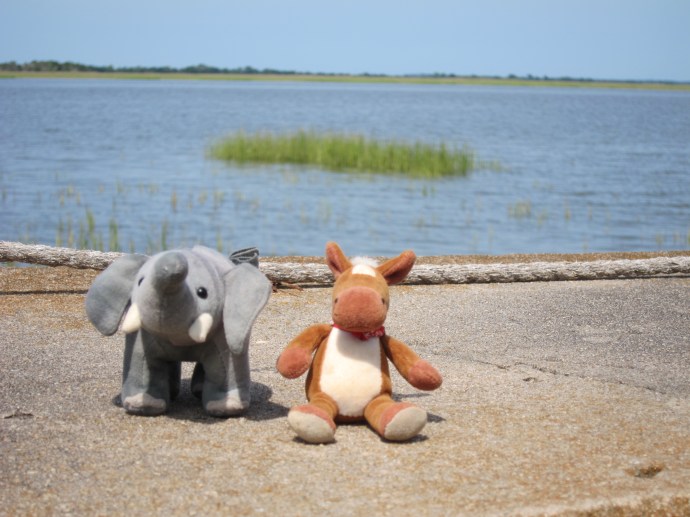
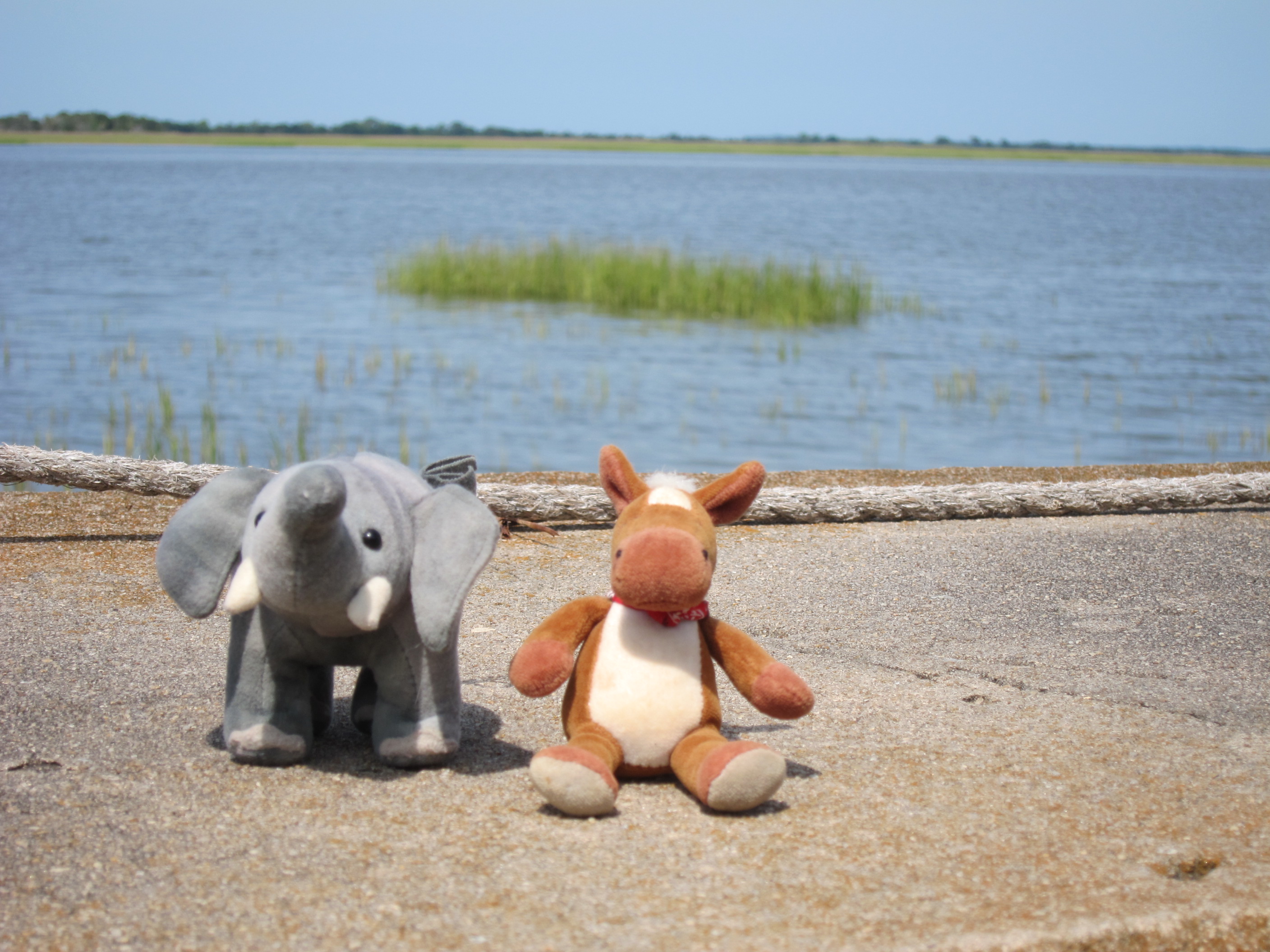
Here we are in front of the water on Jekyll Island

As we watched the water we saw a few dolphins swim by us! That was awesome! Unfortunately they were too fast to get pictures.

After riding around and seeing all the big beautiful houses that are part of the Jekyll Island Club, we made it to the Sea Turtle Center.
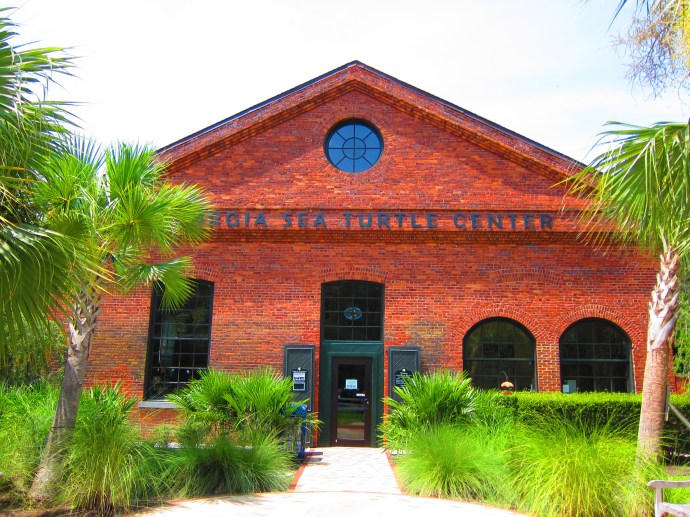
Georgia Sea Turtle Center

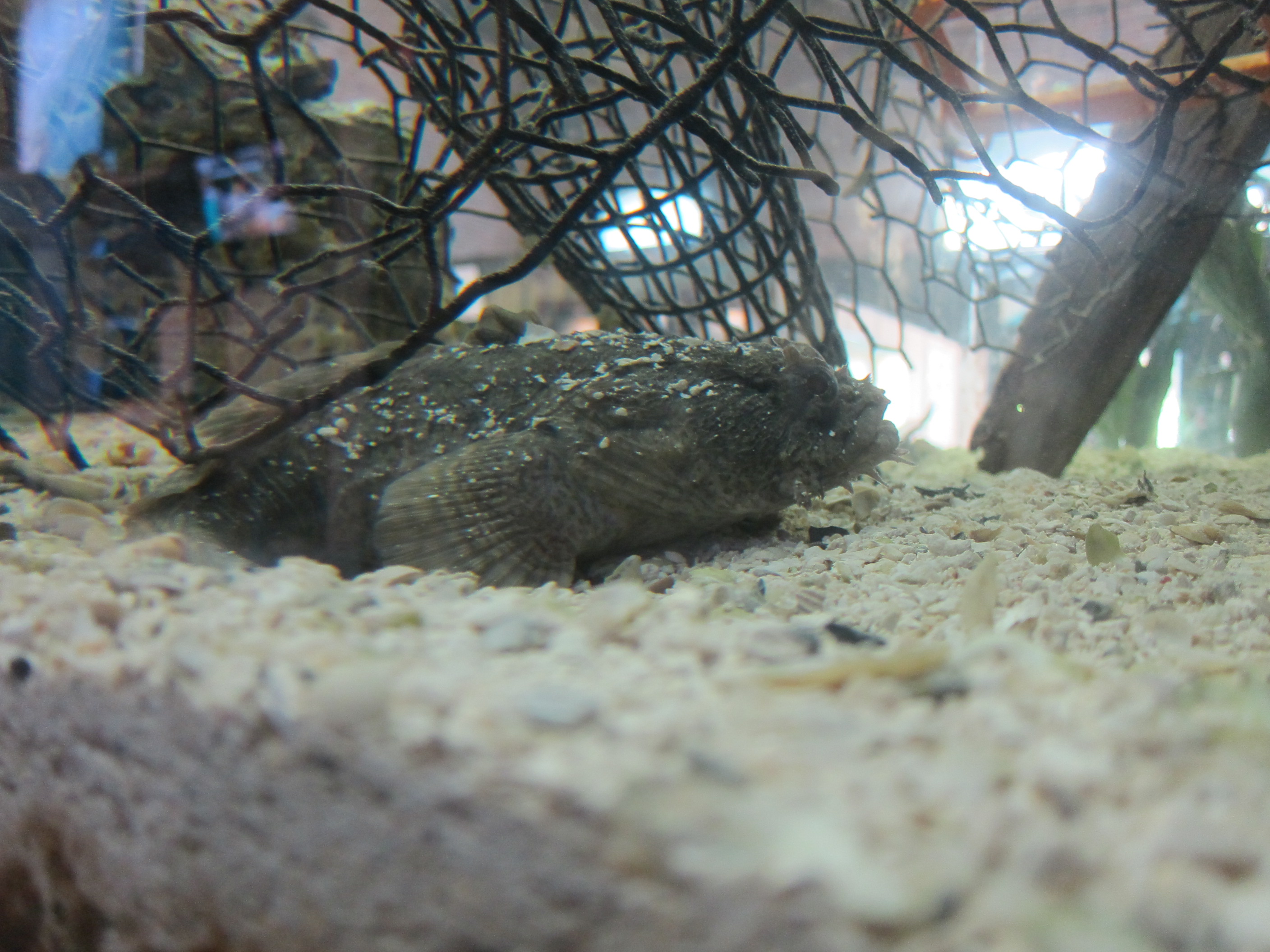
As we entered the center, we were so excited to meet some sea turtles. Little did we know that they had such a great exhibit room with loads of information! We first spotted this funny fish in an aquarium.

Fish in aquarium!

We aren’t sure what kind of fish it is, but we love his googly eyes! Do any of you have any idea what kind of fish he is?

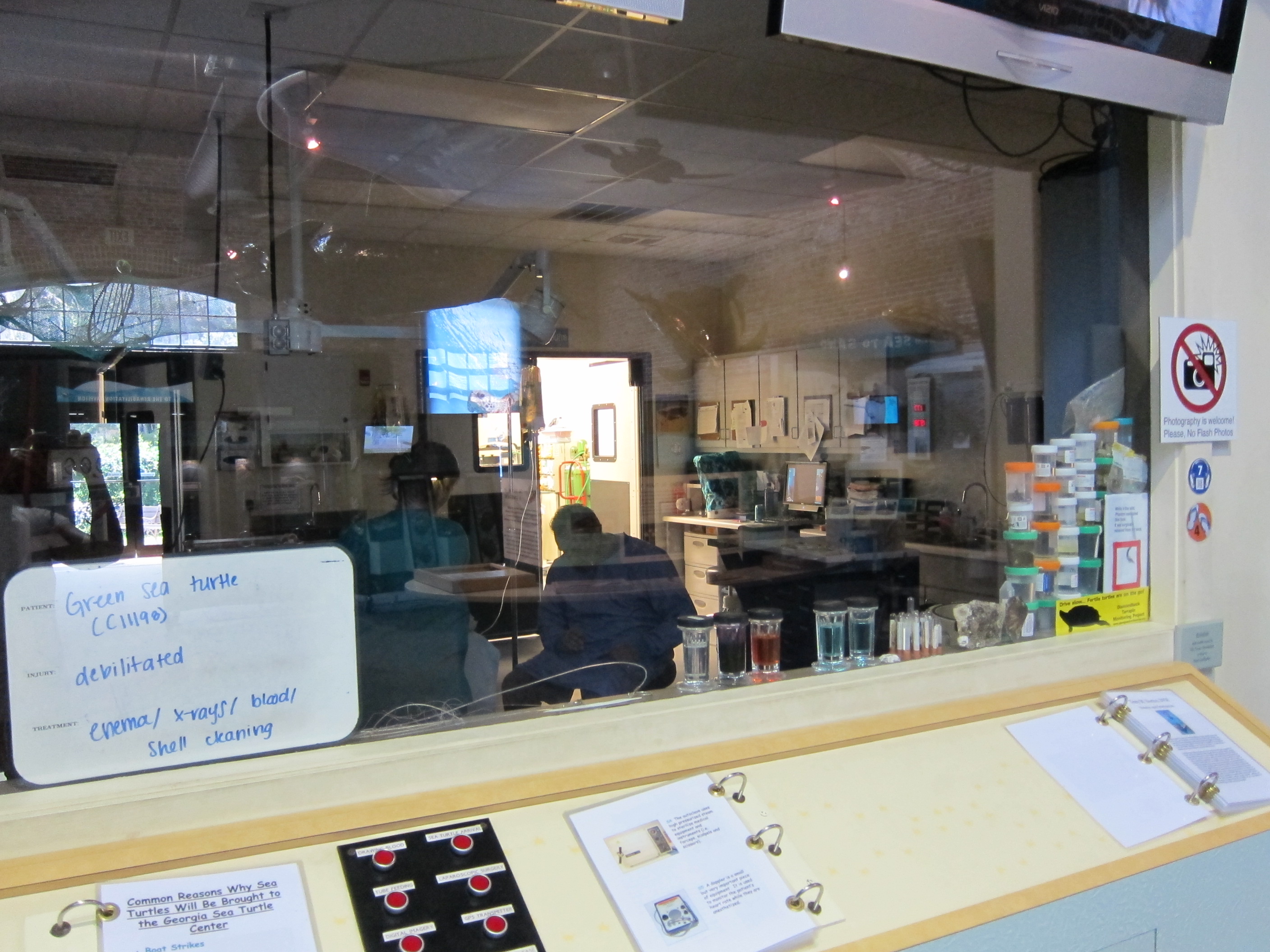
Right next to that fish’s aquarium was a giant window that looked into the turtle hospital exam room.  It was great to be able to see an actual an exam being done on a Green sea turtle.  The center also had a nice lady sitting there to answer any questions we had.

Sea Turtle Center exam and surgery room

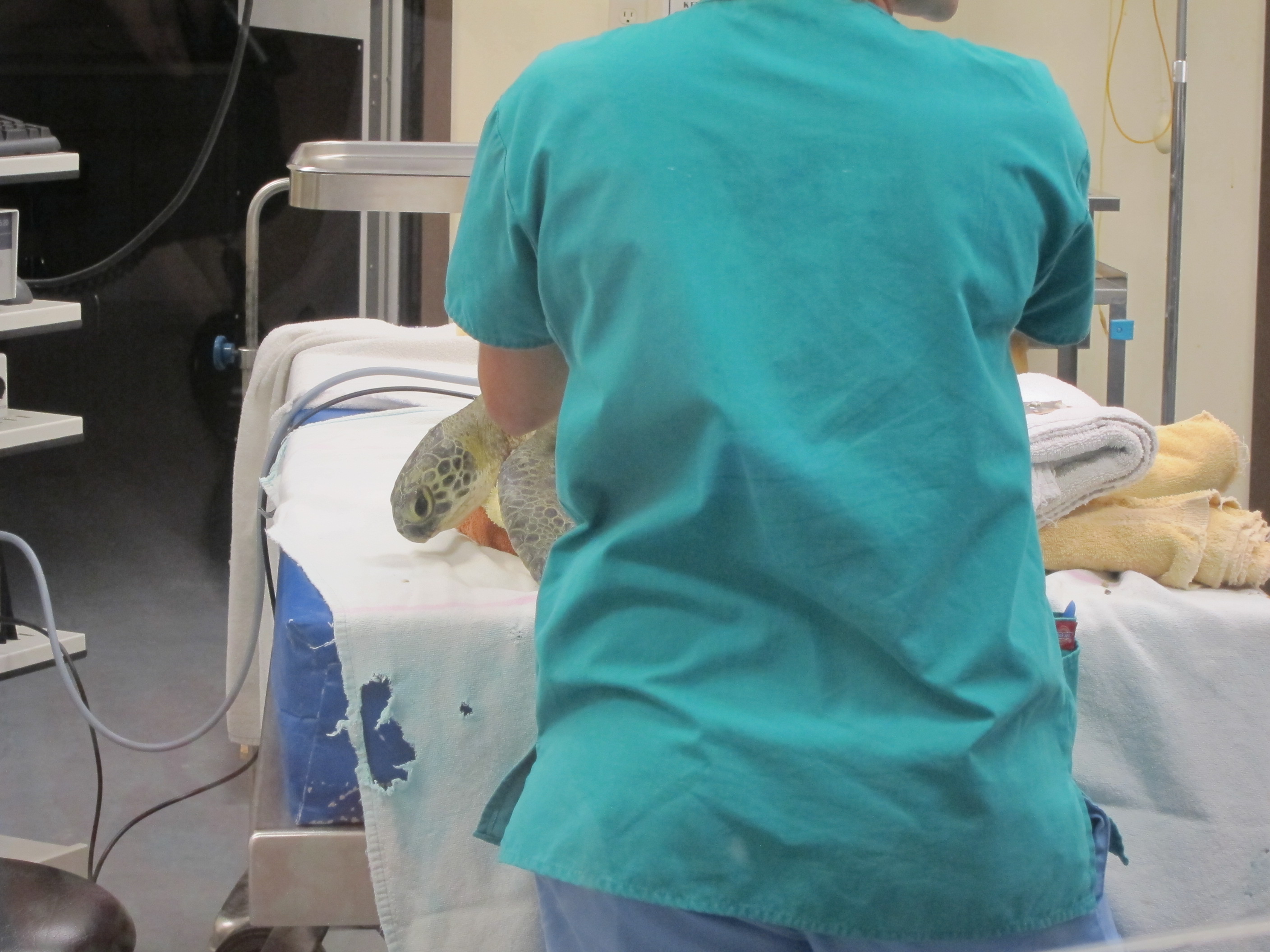
If you look closely you’ll see that they were doing an exam on a Green sea turtle. The sign also says the turtle was getting a shell cleaning. Sea turtles often have a problem with excessive barnacles growing on their shell (also called the carapace). This can slow the turtle down so it is important to clean them off their shells.
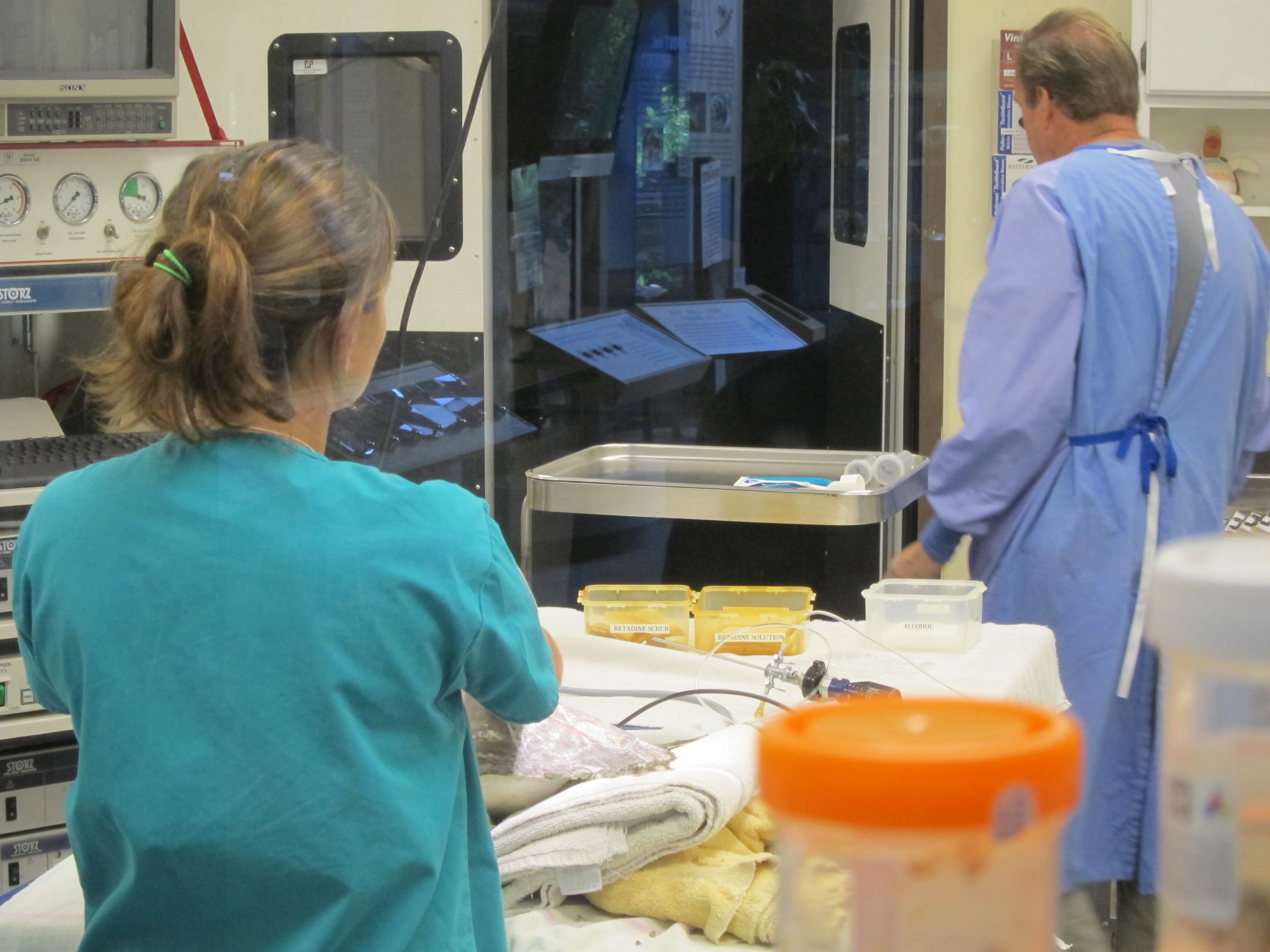
Staff giving the exam

Green Sea Turtle during his exam. It was good to see the vet staff working so hard to make sure this turtle gets the best care they can give it.

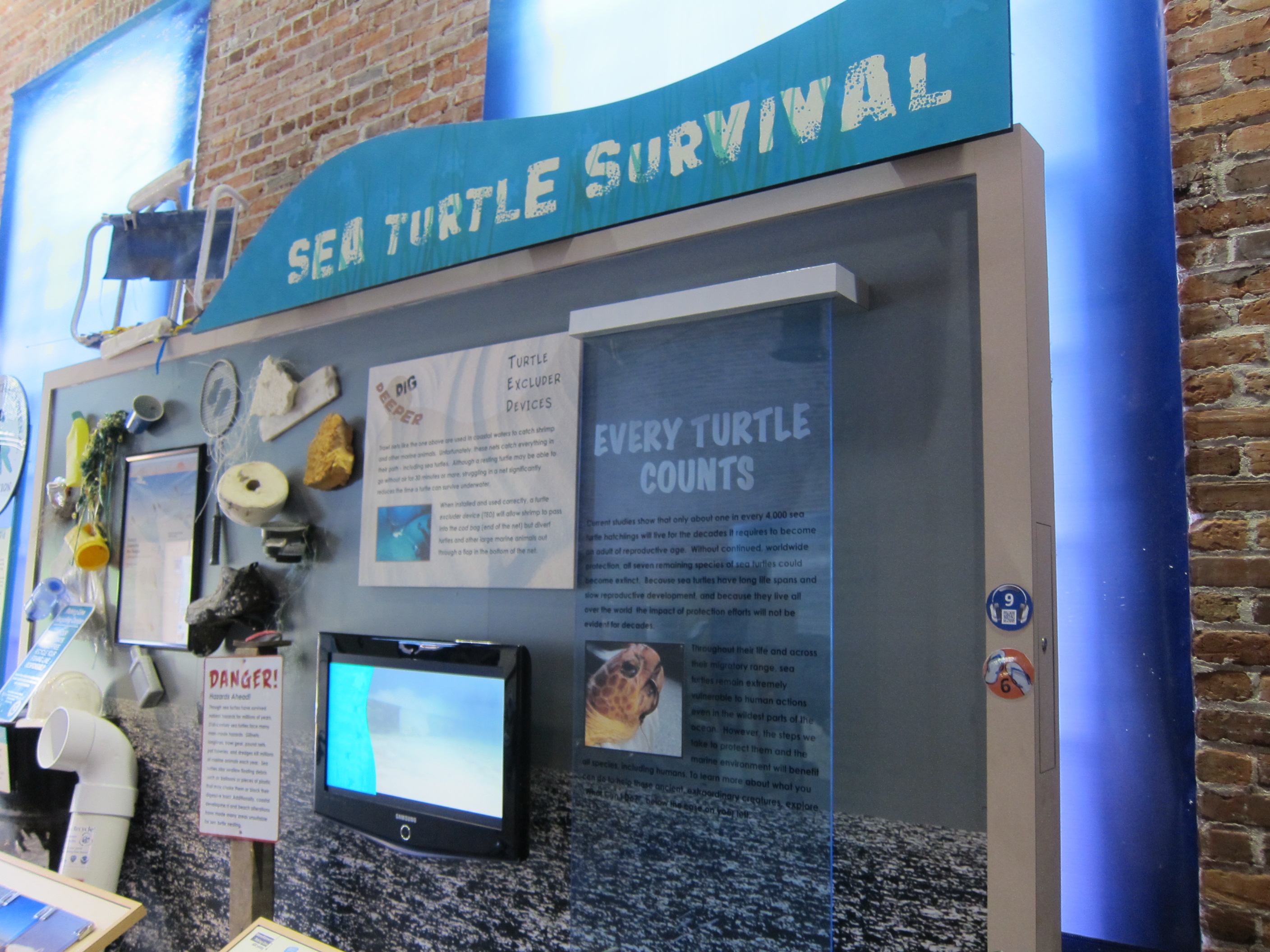
The center has so much great information! This picture shows one of the informational stations!

Information on sea turtle survival

It told us all about the threats to sea turtles, including trash.  Did you know that sea turtles and other marine animals mistake people’s trash for food?  LOne of the sea turtle’s favorite prey is jellyfish.  If they come across plastic grocery bags in the water they mistake them for jellies and eat the bag.  Obviously plastic bags are not food! They also get fish hooks caught in their mouths and throats! Both plastic bags and fish hooks are something we can prevent the turtles from eating by disposing of them properly.

Info on how to help sea turtles

You can even adopt a sea turtle at the center! No silly you can’t bring it home and put it in your bathtub, but giving to the center helps them take care of the turtles!

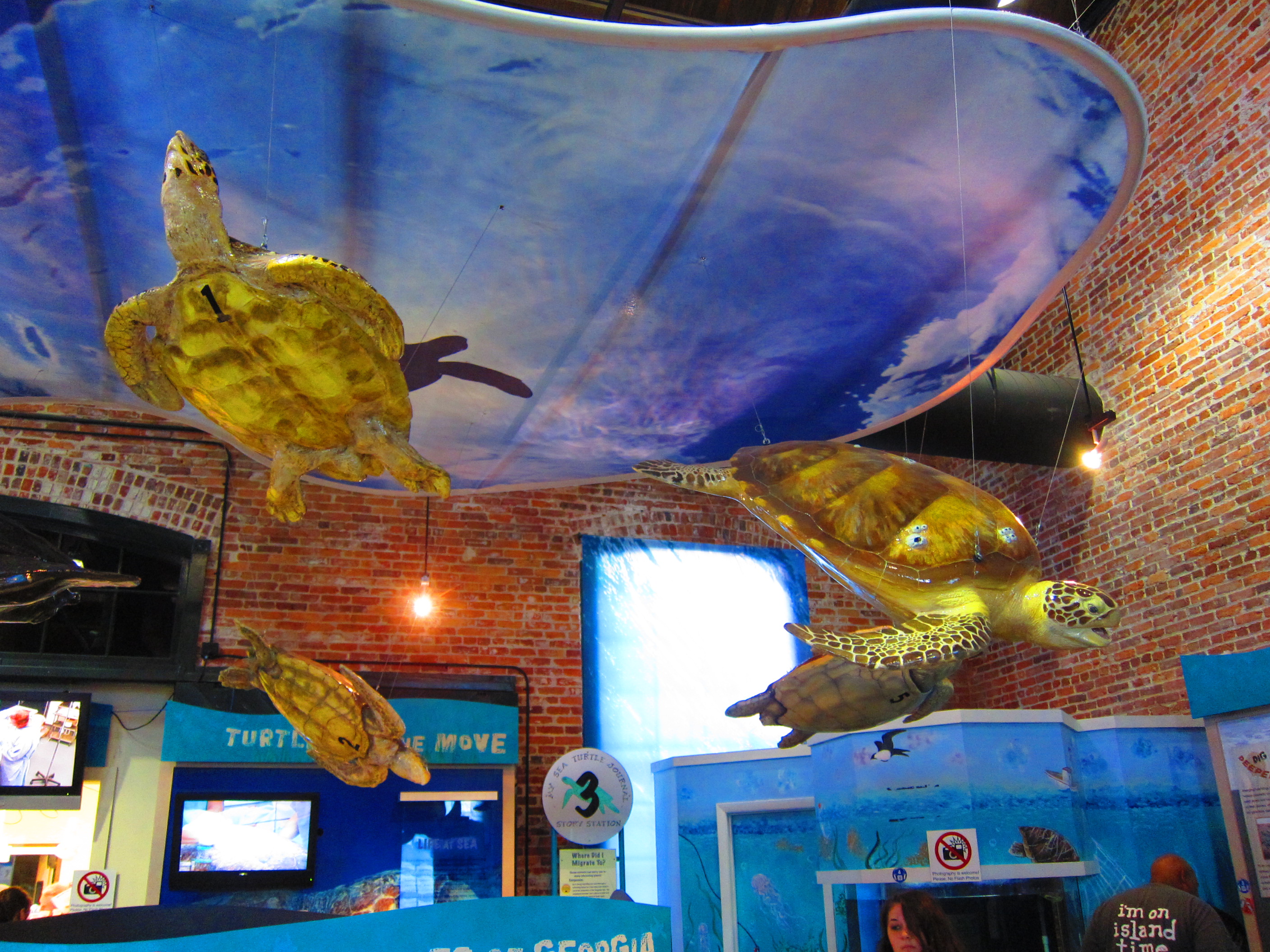
Did you know that there are 7 species of sea turtles? They are Loggerhead, Green, Leatherback, Hawksbill, Kemp’s Ridley, Olive Ridley and Flatback. The center has replicas of each one hanging from the ceiling and cool information about each one below them!
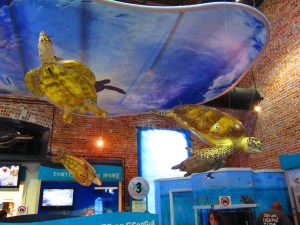
Sea Turtle replicas
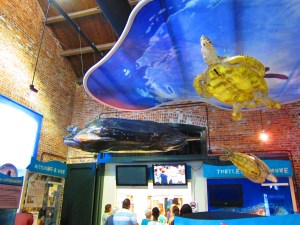
More sea turtles

Do you know which species is the biggest? If you said Leatherback, you’re right! We met a Leatherback  laying her eggs in Indonesia once- it was AWESOME!
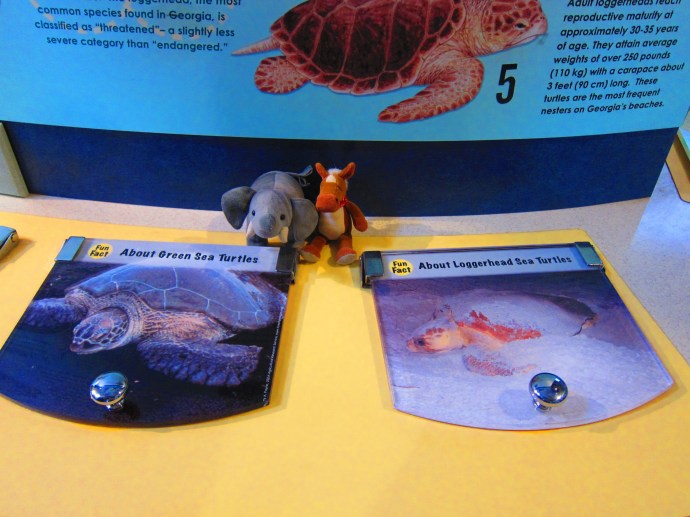
Here we are learning fun facts about Loggerhead and Green Sea Turtles

Not only could you view a sea turtle getting an exam, but they had a very small turtle at the center. Her name was Kathy.
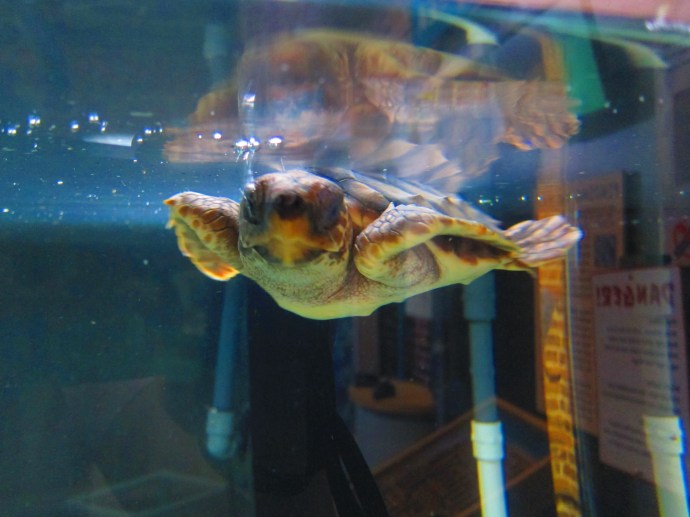
Young sea turtle Kathy.

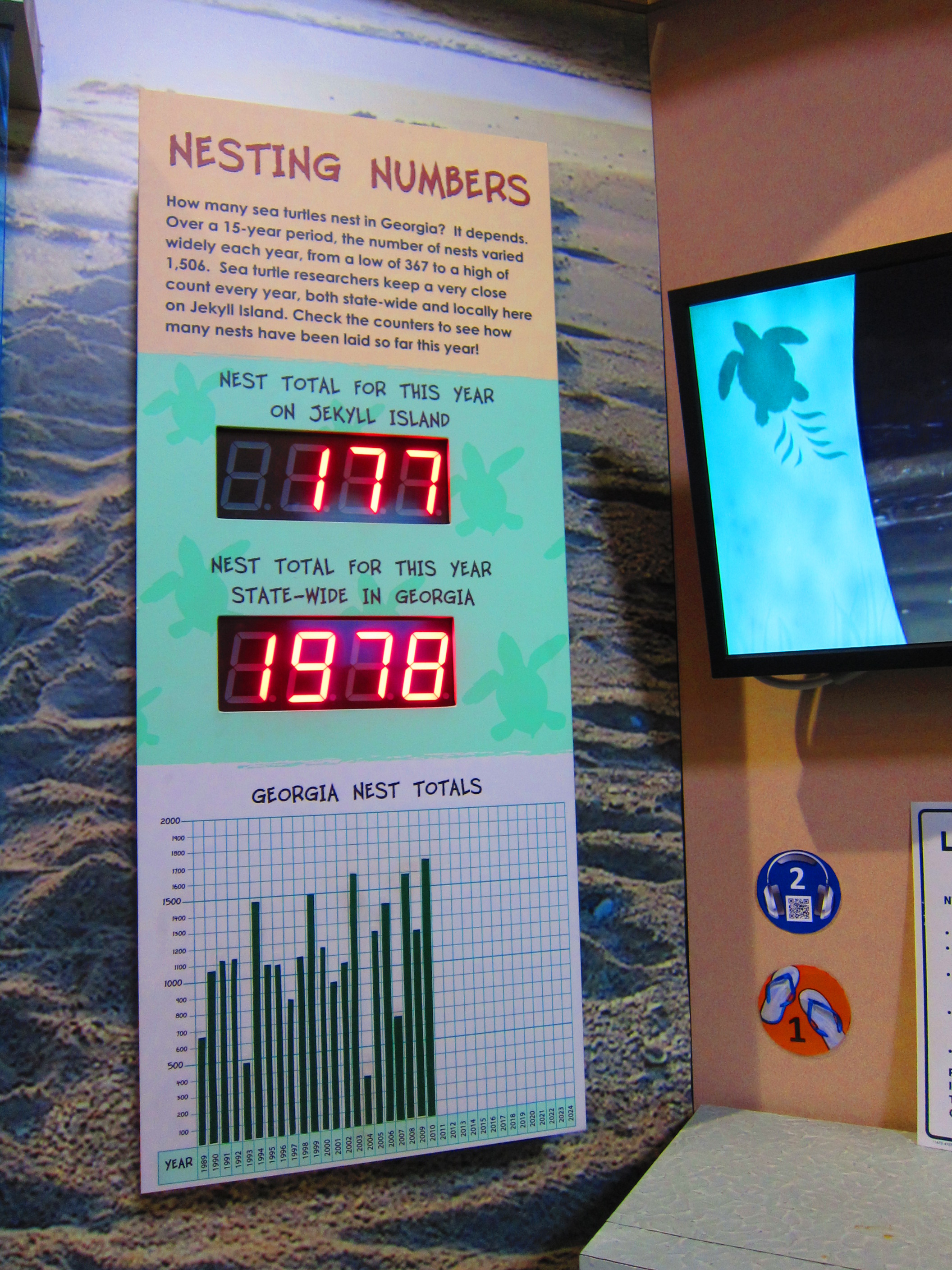
The Center and other researchers from the Georgia coast record how many sea turtle nests are laid each year. Did you know that sea turtles come back to the same shore where they hatched to lay their eggs when they are adults?  As of late August there were almost 2000 nests in Georgia! Wow that is a bunch of baby turtles (also called hatchlings).  Did you know there are numerous volunteers and workers who protect and check on the nests during nesting season?We love people who help wildlife.
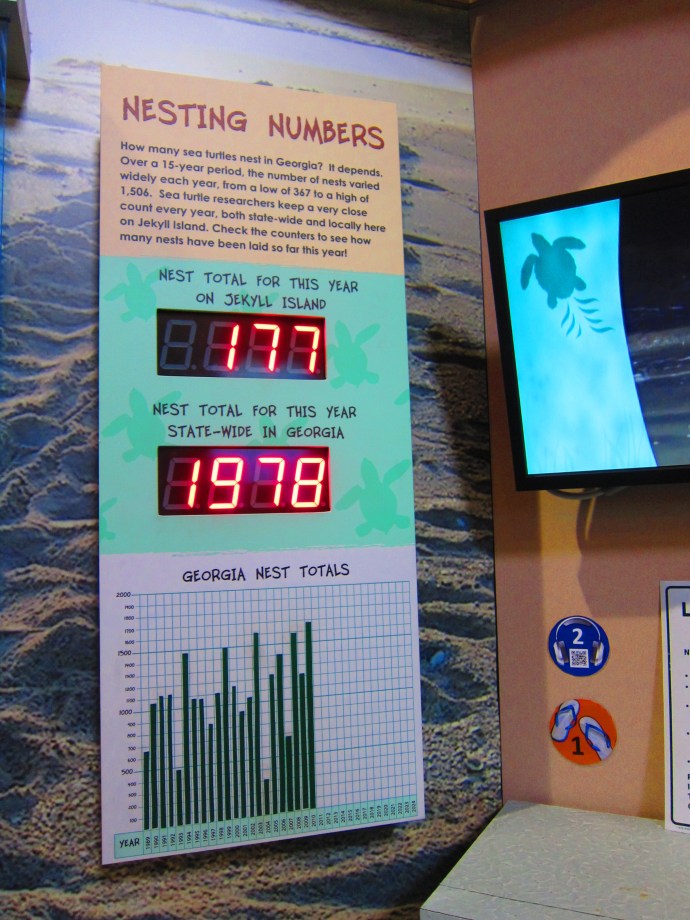
Sign showing how many nests there are in Georgia

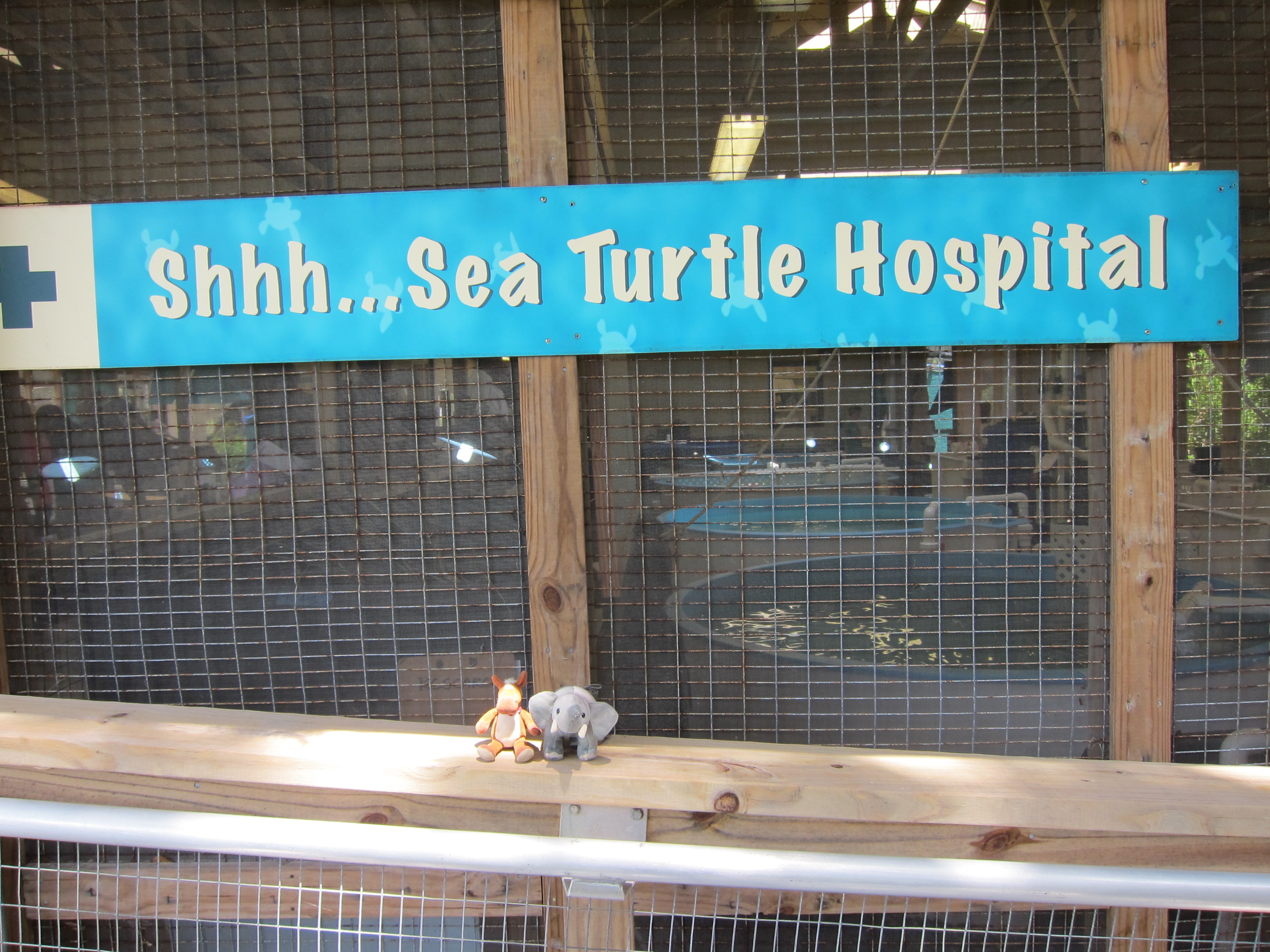
We went outside the main center to the hospital where sick and injured turtles are cared for and housed.

Here we are outside the Sea Turtle Hospital! Be very quiet!

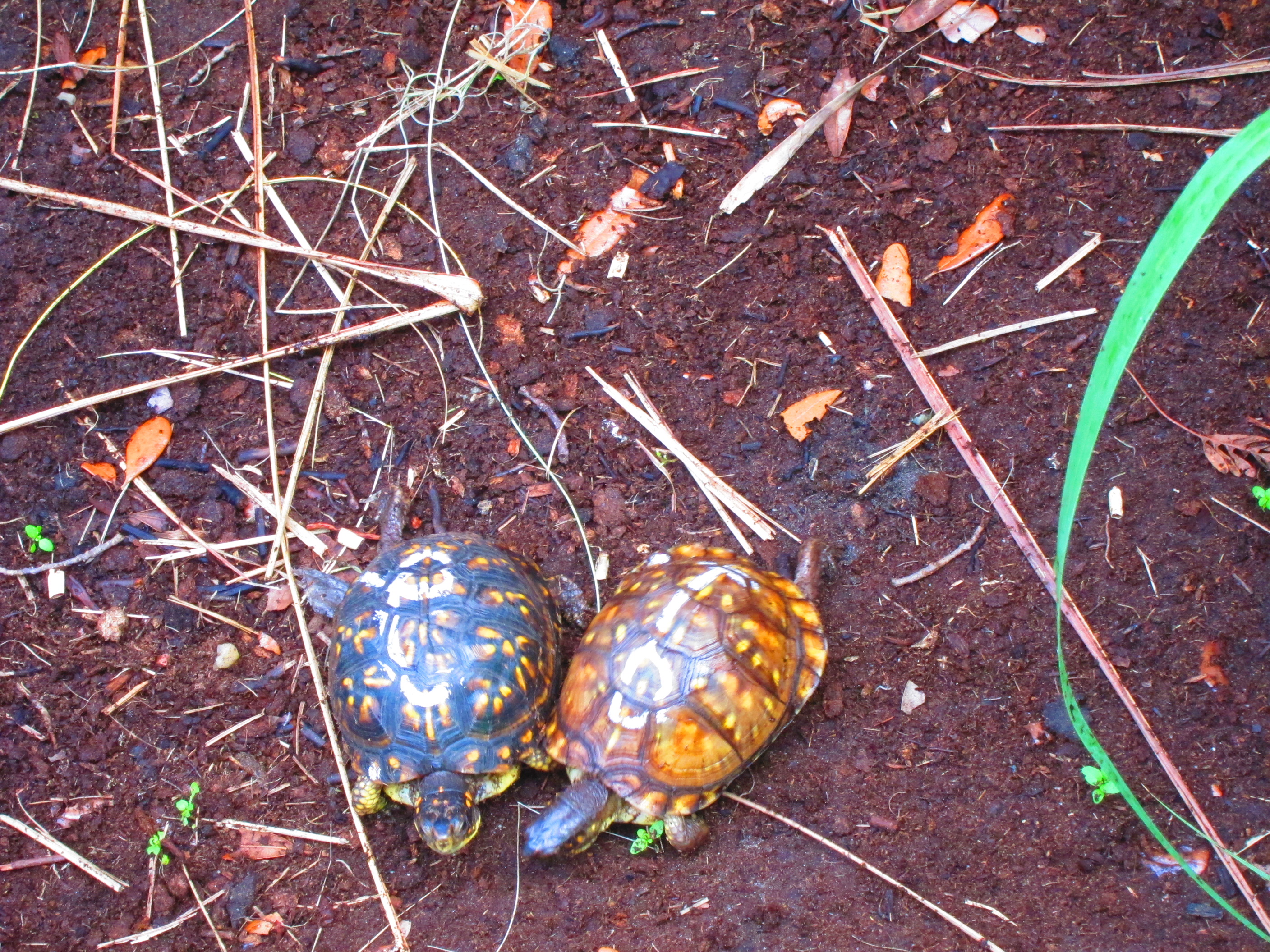
We also discovered that the center has a few other turtles, including box turtles and terrapins.

Box turtles in a yard next to the hospital

A very teeny tiny terapin! It was only about the size of a half dollar!

The sea turtles in the hospital had all kinds of injuries and illnesses.  We took a few pictures in the hospital, but we wanted to be extra quiet for the patients.
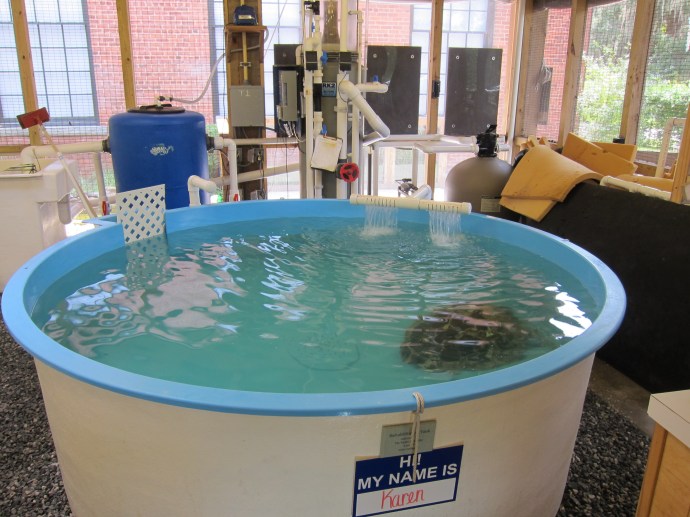
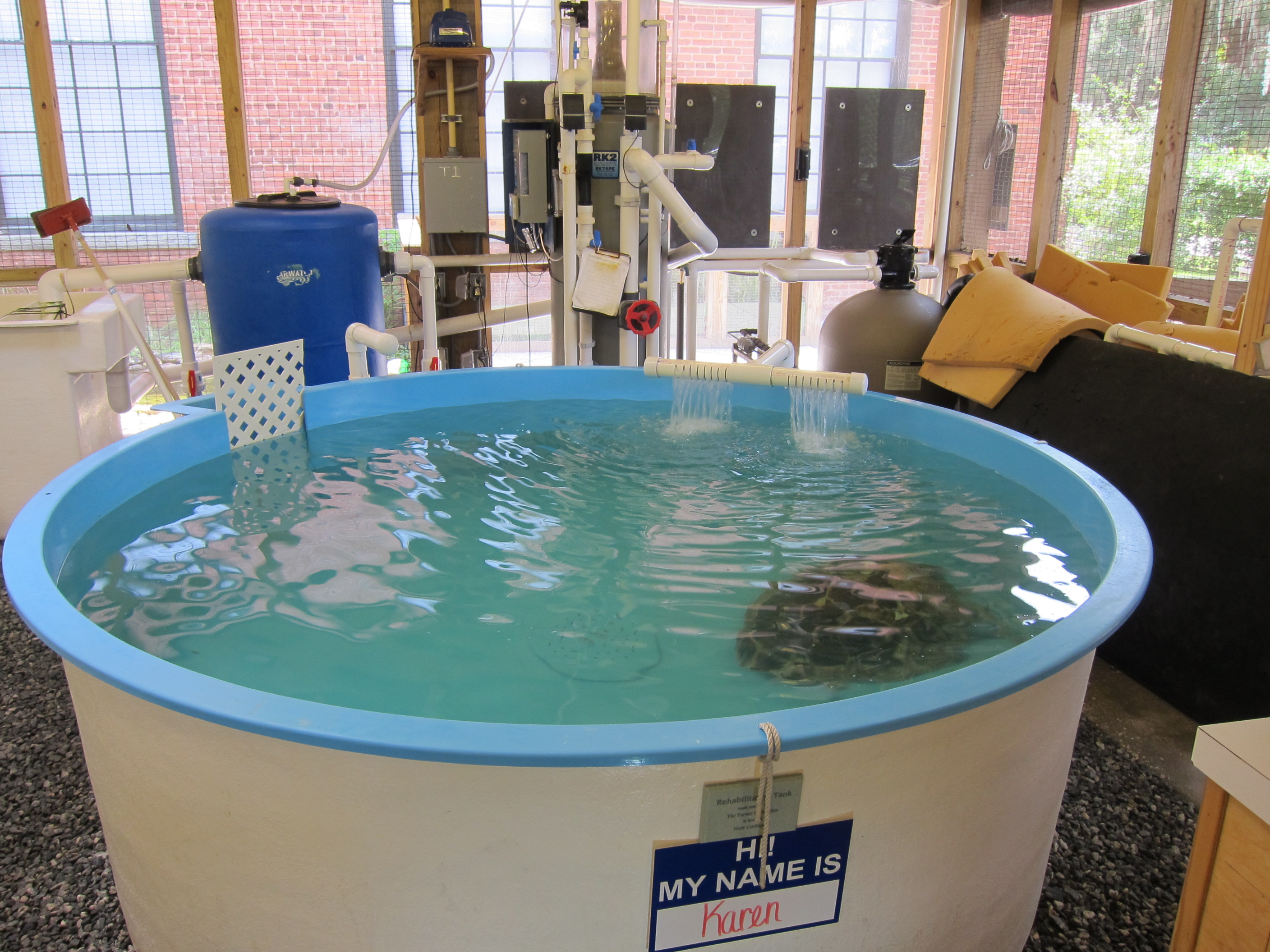
Karen the sea turtle in her tank

Each turtle has a sheet that explains their illness and treatment. Humbolt had eaten a hook 😦

The turtles have to be kept in smaller tubs to keep them from swimming too much. They need their rest; just like you do when you’re not feeling well.  Here’s a list of some of their current patients, http://www.georgiaseaturtlecenter.org/our-patients/sea-turtle-patients/current-patients/.

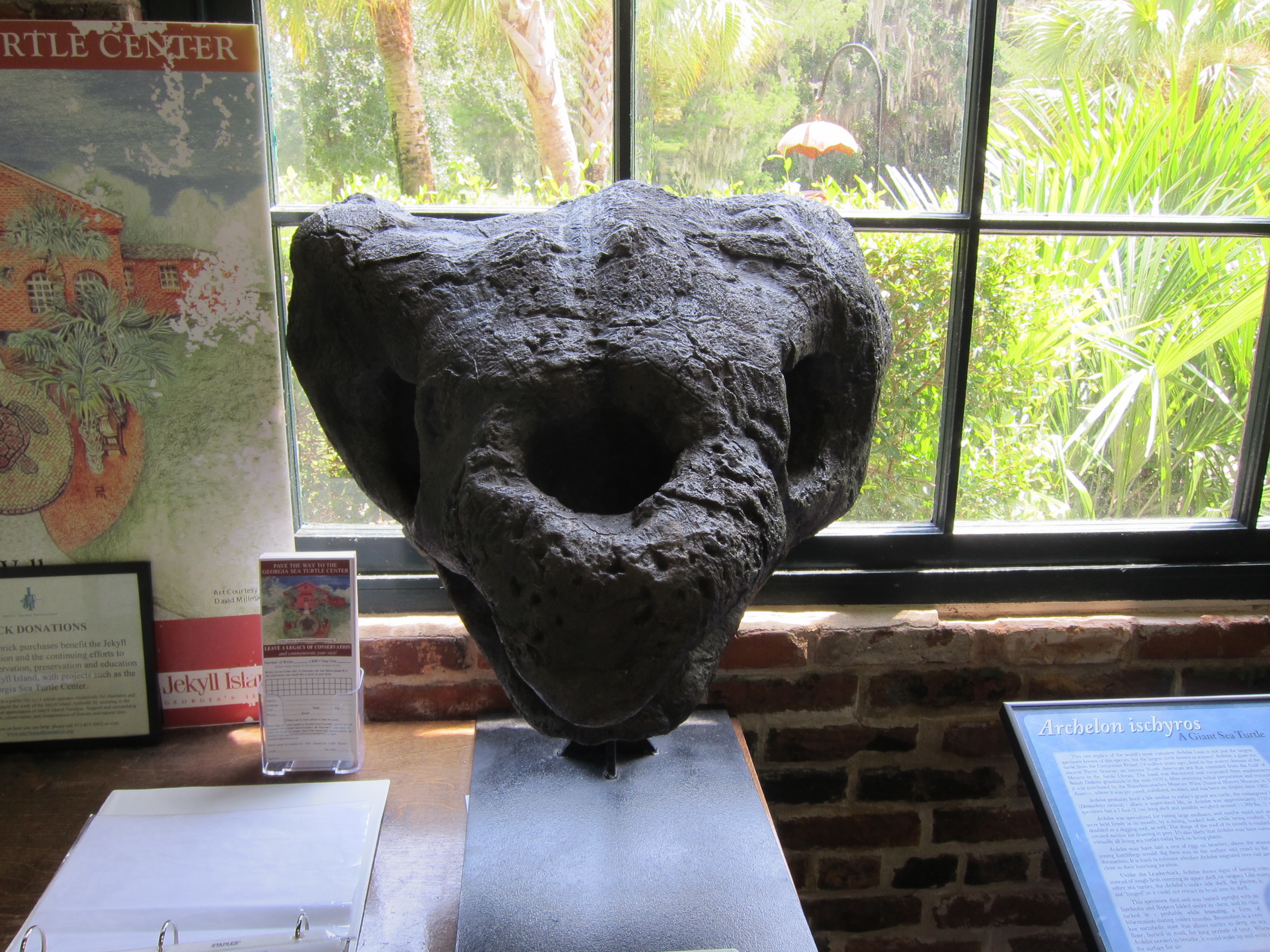
As we exited the Center we looked up in the gift shop and saw an enormous turtle hanging above us! Imagine our surprise! It was a replica of an ancient sea turtle from the Crustaceous period. This turtle swam in the oceans around 74 million years ago.  It was called Archelon ischyros. This turtle was 7 feet long and weighed around 11,300 lbs! That is one big turtle! Anyone have a truckload of jellies handy?
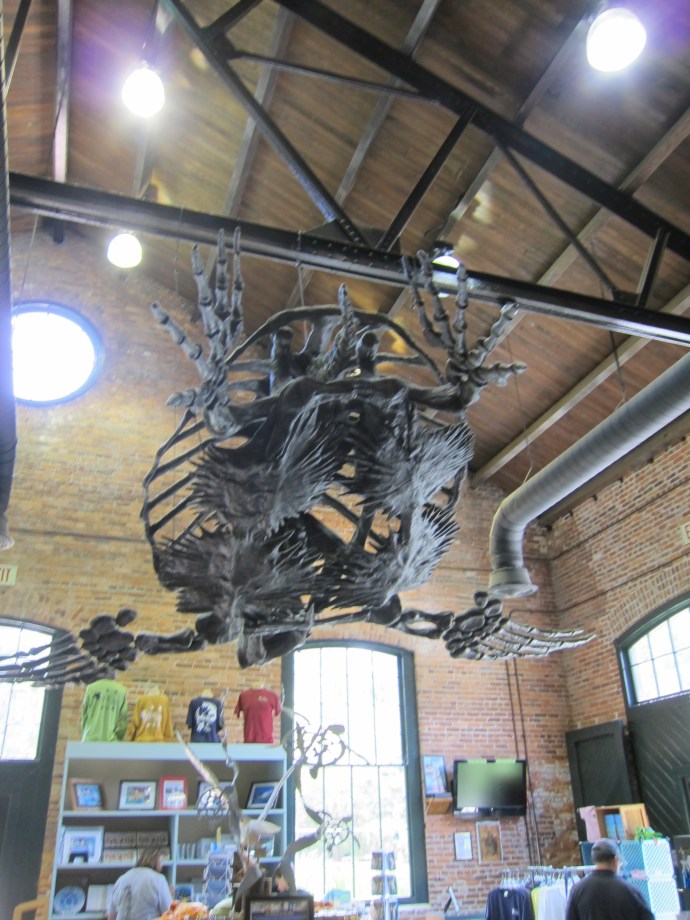
Archelon ischyros hanging in the gift shop

The skull of the giant sea turtle! My what a big beak you have!
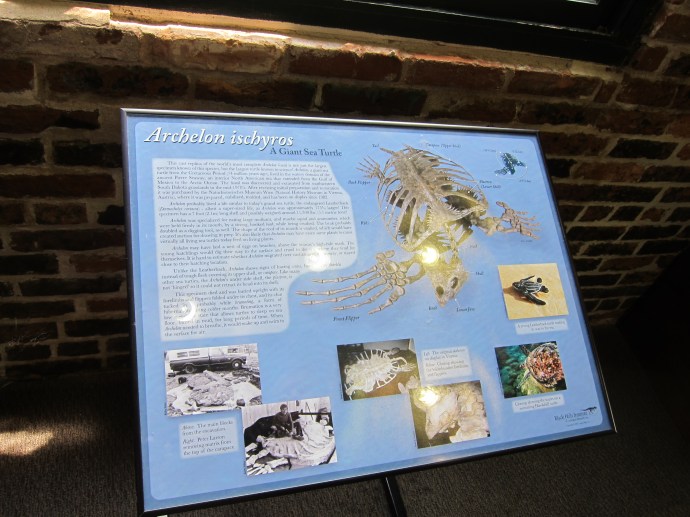
Info on the giant sea turtle! This fossil was found in South Dakota! WOW!

We had the best day at the Georgia Sea Turtle Center! We hope everyone makes a trip to visit this very special place! Say hi to the turtles for us if you go! As we left we decided to take a few fun shots!

The center has turtle stepping stones! FUN!

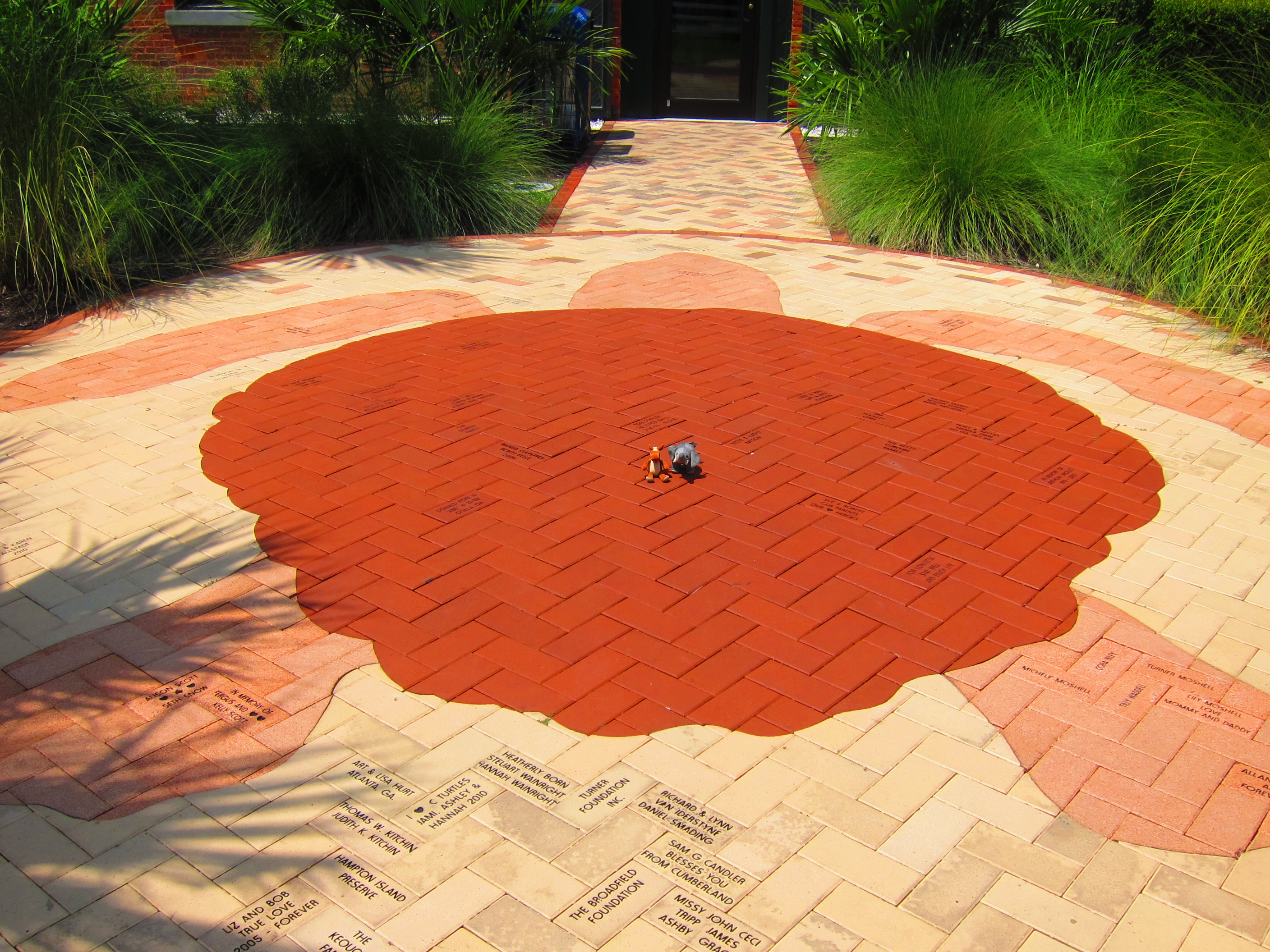
A sea turtle made out of bricks at the entrance!We look very little :)!

Categories: Animals, Atlanta, Children, education, Environment, fish, Local, reptiles | Tags: , , , , , , | 1 Comment

REPTILIAN TUESDAY #7

MEET THE SPINY DAB LIZARD!

Range/Habitat: N Africa/deserts

Diet: Omnivore: insects/plants

Length: 12-16”

Conservation Status: Common

Fun Facts:

  • The Spiny Dab Lizard is also known as the Spiny tailed lizard or Uromastyx.
  • Their tales are covered with spiny scales.
  • They’re often found in burrows in the desert. They will stick their tails out of the entrance of the burrow to protect it.  
  • Males are very territorial.
  • They hibernate during the winter months.
  • Spiny dab lizards change their color according to the temperature of the environment. They are yellowish/gray during the winter and orange/green or red during the warmer months!
  • They come out during the day to warm themselves in the sun. They are more active during warmer periods.


Animals have some great adaptations! These awesome lizards not only have spiny tails but they can change their color! We wish we could change colors! What color would you want to be? Ellie wants to be purple :)! 

Categories: Animals, Children, education, Environment, reptiles | Tags: , , , , | Leave a comment

REPTILIAN TUESDAY #6

REPTILIAN TUESDAY #6

We’re loving trees this week! Yesterday’s mammal of the day was a Clouded leopard (they’re arboreal) and today’s reptile also lives in the trees. In fact tree is part of their name. Cool! So who is this super fabulous tree loving snake… Let’s find out!

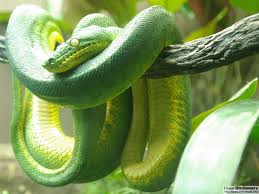
MEET THE EMERALD TREE BOA!

Range/Habitat: Northern South America- Bolivia, Peru, Brazil/ rainforests

Diet: Carnivore: small mammals, birds

Length: 5-6 ½ ft

Conservation Status: Common

Fun Facts:

  • Emerald Tree Boas are an arboreal snake (they live in trees) and they have many adaptations to live in the trees.
  • Emerald tree boas are a bright green color and it helps them camouflage with the leaves of the trees.
  • They have prehensile tails. They can hang from their tails.
  • They curl around branches and rest during the day, because they are primarily nocturnal (active at night).
  • They will curl around branches and hang their heads lower than their bodies to lunge at prey.
  • Emerald Tree Boas are constrictors, meaning they squeeze their prey before swallowing them whole! They don’t have venom, but they do have long teeth to help grab their prey.
  • Emerald tree boas have special pits around their mouths to detect the heat given off by other animals. This heat sensing ability helps them tract prey.
  • Young Emerald tree boas are not green; they are brown, red and orange. They turn green around 1 year of age.

Wow! You have to have lots of cool adaptations to live in the trees! Thank goodness Emerald Tree Boas have plenty! What fun adaptations would you have if you had to live in a tree?

Categories: Animals, Children, education, Environment, reptiles | Tags: , , , , | Leave a comment

Blog at WordPress.com.