Posts Tagged With: animals

WATERY WEDNESDAY # 20

WATERY WEDNESDAY# 20

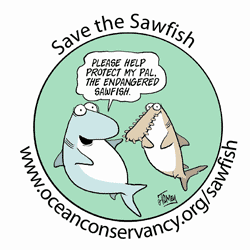
Happy Watery Wednesday! We have a very special and strange looking member of the shark and ray family for you today! These beautiful fish have a very special built-in tool on the front of their face! Do you have your goggles and wetsuit? Let’s dive in!

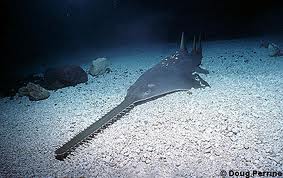
MEET THE SMALLTOOTH SAWFISH!
Range/Habitat: Eastern Atlantic Ocean (subtropical-tropical)/shallows, near coastline

Diet: Carnivore: fish, mollusks

Length/Weight: up to 20ft/550-660 lbs

Conservation Status: Critically endangered


Fun Facts:

  • Smalltooth Sawfish have a saw-like snout with 24-32 pairs of pointed “teeth”.
  • Smalltooth sawfish have long flat bodies.
  • They use their saw-like snout to dig prey out of the sand and to slash through schools of fish. They then eat the injured fish!
  • Their gills and mouth are on the bottom of their bodies.
  • Smalltooth sawfish have spiracles on top of their bodies. These help move water over their gills while they rest on the bottom of the ocean floor.
  • Smalltooth sawfish skeletons are made of cartilage (the same tissue that makes up human ears and noses). They are related to sharks and rays!


We think Smalltooth sawfish is a very special and odd looking fish! These neat fish are endangered. The Ocean Conservancy is working very hard to make sure they will be around for a long time! Our oceans wouldn’t be the same without these great fish!


Categories: Animals, Children, education, Environment, fish, nature | Tags: , , , , , | Leave a comment

REPTILIAN TUESDAY # 20

REPTILIAN TUESDAY # 20

Happy 2012 everyone! We hope all our fans and supporters had a fabulous holiday! We’re back with loads of fun and fresh ideas! We’ll be celebrating animal holidays, coming up with crafts and having theme weeks once a month! We look forward to sharing all this fun, adventure and education with you! First up in 2012, a small turtle from Africa! Who wants to meet this cute little reptile? We do!

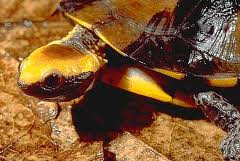
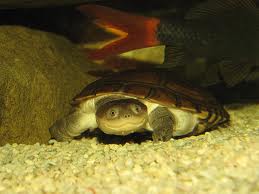
MEET THE AFRICAN HELMETED TURTLE!

Range/Habitat: Africa (South of Sahara)/ marshes, watering holes and rain pools

Diet: Omnivore: frogs, mollusks, invertebrates

Length: 6-7”

Conservation Status: common


Fun Facts:

  • African Helmeted Turtles have flat carapaces (top shells).
  • They are very slow and sluggish, even for turtles.
  • African helmeted turtles have glands that release a strong musky odor when they are threatened by predators.
  • They are also called the marsh terrapin.
  • African helmeted turtles aestivate during the dry season. Aestivation is a period of inactivity.


These tiny little turtles sure are neat, but be careful they can be a bit stinkyJ! But then again being stinky can be good, if it helps you keep predators away! Would you like to be stinky?

Categories: Animals, Children, education, Environment, nature, reptiles | Tags: , , , , , | Leave a comment

ORGANIZING WEEK

Hello everyone!

We are taking the week off from animal posts to do some research and get organized! We’re coming up with some fabulous ideas for the new year! We’re thinking of doing some theme weeks, maybe one a month and would love to hear your ideas! Please leave us your ideas in the comments! Thank you so much!

We are going to be posting about our animal adventures in St Thomas this week and we’ll be tweeting and posting fun stuff on Facebook, so check us out there!

Have a fabulous week and a wonderful New Years! We’ll be back in full animal mode next week!

Thank you for your support! We look forward to a great 2012!

Elle and Edmond!

Categories: Animals, Atlanta, Children, education, Environment, nature | Tags: , , , , , | Leave a comment

FEATHERY FRIDAY # 19

FEATHERY FRIDAY# 19

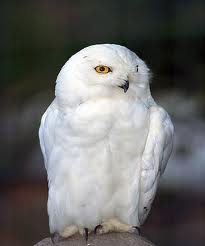
Well, who has enjoyed our trip to the Arctic this week? We sure have had fun! We have one more special arctic animal for today’s Feathery Friday and this bird is a beauty covered in all white! Let’s put on our parkas and meet…

MEET THE SNOWY OWL!

Range/Habitat: Arctic Circle/ tundra-open land

Diet: Carnivore: lemmings, rabbits, waterfowl

Length/Weight: 22- 28”/ 2 ¼-5 ½ lbs

Conservation Status: Common

Fun Facts:

  • Snowy owls are covered in long white feathers. The feathers cover every part of them including their feet and beak.
  • They are most active at dusk and dawn, but are diurnal (active during the day) during the summer when there is little darkness.
  • Females are larger than males and have molted or spotted brown colors on their feathers. This helps them blend in with the ground.
  • Snowy owls nest on the ground.
  • They have excellent hearing and eyesight.
  • Snowy owls mate for life and both the male and female take care of the chicks.
  • Snowy owls are ambush predators!

You may recognize the snowy owl from Harry Potter; he had one that delivered his mail. We need an owl to deliver our mail. In all seriousness, snowy owls are really neat birds! They have fabulous thick coats of feathers to keep them warm and large appetites. One owl can eat up to 5 lemmings in a day! Yum!

Here’s a snowy owl call:

http://www.allaboutbirds.org/guide/Snowy_Owl/sounds/ac

Categories: Animals, birds, Children, education, Environment, nature | Tags: , , , , , , | Leave a comment

SUPER SUPER SURPRISE THURSDAY # 19

SUPER SURPRISE

THURSDAY# 19

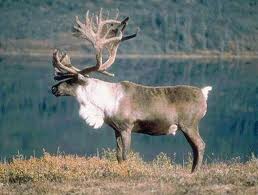
We couldn’t talk arctic animals without including this special hoofed animal! That’s right! We’ve found one of the most famous arctic dwellers of all! Do you have your sleigh ready?

MEET THE REINDEER!

Range/Habitat: North America-Europe-Asia/Tundra-forest

Diet:  Herbivore: grasses, moss, lichen

Length/Weight: 4- 7 ¼ ft/ 260-660 lb

Conservation Status: common


Fun Facts:

  • Reindeer are also called caribou.
  • They vary in color and size depending on where they live. Reindeer that live closest to the arctic are white in color.
  • Both female and male reindeer have antlers. Males lose their antlers in the winter.
  • Reindeer antlers are covered in a layer of fur called velvet.
  • Their noses are specialized to warm cold air before it enters their lungs.
  • Reindeers have a four chambered stomach!
  • One of their favorite foods is called reindeer moss.
  • Reindeers are the only mammal that can see ultraviolent light!
  • Some reindeer populations migrate. They can migrate up to 3,000 miles in one year! Whew, they must be tired!


Besides being really neat, reindeer are famous for pulling Santa’s sleigh! We were hoping to meet a real reindeer this year, but we weren’t able to. We are making some antlers out of pipe cleaners though! What’s your favorite thing about reindeer?


We found a coloring sheet too:

http://www.edupics.com/coloring-page-reindeer-i8663.html

Categories: Animals, Children, education, Environment, mammals, nature | Tags: , , , , , | Leave a comment

WATERY WEDNESDAY #19

WATERY WEDNESDAY# 19

We’ve got our wet suits on, we’re bundled up and we’re head to the cold arctic waters to find a whale on this Watery Wednesday! Are you ready to meet the white whale? Let’s go…

MEET THE BELUGA WHALE!

Range/Habitat: Arctic Ocean

Diet: Carnivore: fish, mollusks, crustaceans

Length/Weight: 13-18ft/ 1-1 ½ tons

Conservation Status: Threatened


Fun Facts:

  • Beluga whales are white to ivory in color. This helps them blend in with the arctic ice.
  • Beluga whales are highly social and can be seen in groups called pods.
  • They are very vocal too. They make all kinds of sounds, including clicks, whistles, and squeaks.
  • They are often called the sea canary because they are so vocal.
  • Beluga whales use echolocation to find prey. Echolocation is when an animal sends out a sound wave and it come back (echoes) to the animal giving them the distance and size of the object.
  • Beluga whales have large melons on top of their head that is full of oils, tissue and fats. It is thought that the melons help them with echolocation and sound production.
  • Baby beluga whales are gray when they are born and turn white by the age of 5.
  • Beluga whales can swim backwards and turn their heads, unlike most other whales.
  • They have a mouth full of teeth used to eat their prey, but they also use suction to suck up their prey.


Beluga whales are a very special member of the whale family! Their closest relative is the narwhal (Here’s our post about them: https://ellieandedmond.wordpress.com/wp-admin/post.php?post=117&action=edit ). Want to hear some of the sounds they can make? You should try out your Beluga whale impression after you watch the video! Edmond will be trying his all day, much to the dismay of Ellie J!

Listen hear:

http://www.youtube.com/watch?v=SvsvcnzFy-g

Categories: Atlanta, Children, education, Environment, mammals, nature | Tags: , , , , , | Leave a comment

TOOTHY TUESDAY # 19

TOOTHY TUESDAY # 19

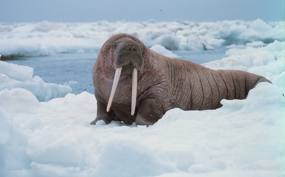
Well, well, well, did you know that there are no reptiles in the arctic? It seems it is too cold for our cold-blooded friends in the arctic! Instead of having Reptilian Tuesday we’re going to have Toothy Tuesday! Do you have your coats on? It’s time to meet an animal with big teeth!

MEET THE WALRUS!

Range/Habitat: Arctic/water, shoreline

Diet: Carnivore: shrimp, sea-snails, fish

Length/Weight: 9 ¾-12 ft/ 1 ¼ -2 ¼ tons

Conservation Status: data deficient

Fun Facts:

  • Walrus are large marine mammals with flippers.
  • Walrus eat prey off the bottom of the oceans and use suction to eat.
  • They can stay underwater for up to 25 minutes and can dive down to 330ft deep.
  • They are highly social and often are seen in large groups, called herds.
  • Male walruses are twice the size of females.
  • They have rough wrinkly skin and very whiskery faces.
  • Walruses have tusks of ivory. They can grow up to 3 ft 3” long.

Walruses sure are huge and cute! How can you not like their whiskery faces? These blubbery mammals are loud, social and full of personality! They are one of our favorites!

Here’s some walrus sounds:


Categories: Animals, Children, education, Environment, mammals, nature | Tags: , , , , , | Leave a comment

MAMMAL MONDAY # 19

MAMMAL MONDAY# 19

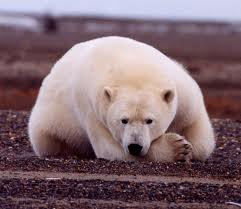
Do you have your coat on for this Mammal Monday? Well, if you don’t you better grab it because all this week we are heading to the chilly arctic circle! In honor of the holiday and the fat guy who lives at the North Pole, we’ve decide to spotlight animals who live there too! First up, a large and in charge bear! Are you all bundled up? Let’s go!

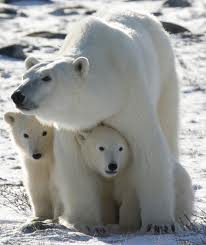
MEET THE POLAR BEAR!

Range/Habitat: Arctic/ice, shoreline

Diet: Carnivore: seals, carrion

Length/Weight: 7-11ft/800- 1500lb

Conservation Status: Vulnerable


Fun Facts:

  • Polar bears are the largest members of the bear family and the largest land carnivore on earth.
  • They have two coats of fur, an outer translucent coat that absorbs the sun’s heat and a dense undercoat.
  • Polar bears have black skin that helps them absorb heat.
  • They also have a thick layer of blubber to help them stay warm.
  • Polar bears have rough pads on their paws that help prevent them from slipping and sliding on the ice.
  • They are excellent swimmers and are often seen in open waters.
  • They use their large front paws to swim.
  • Polar bears can smell a seal from a half mile away.
  • Female polar bears dig dens in winter and stay there to give birth to 1 to 3 cubs.
  • Polar bear cubs stay with their moms until around the age of 2. They spend that time learning to hunt and be polar bears!


Polar bears are amazing animals! They are built to live in the cold arctic! These large and in-charge bears are a protected species! We hope to have them around for a very long time!


Categories: Animals, Children, education, Environment, mammals, nature | Tags: , , , , , | Leave a comment

FEATHERY FRIDAY # 18

FEATHERY FRIDAY# 18

Happy Feathery Friday! Whoooo is excited to meet today’s bird? We sure are! This little resident of Europe and Asia is a cute and stealthy hunter! Do you have your night goggles on? Let’s meet…

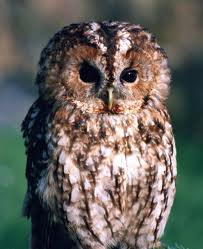
MEET THE TAWNY OWL!

Range/Habitat: Europe-Asia/woodlands-suburban

Diet: Carnivore: mammals, birds, reptiles

Length/Weight: 14 ½-15 ½”/16-20 oz

Conservation Status: Common


Fun Facts:

  • Tawny Owls are nocturnal (active at night).
  • They mate for life.
  • Tawny owls’ plumage is streaked and provides excellent camouflage. It kind of looks like tree bark.
  • They do not have very good night vision; instead they use their excellent sense of hearing to locate their prey.
  • Tawny owls nest in holes in trees.
  • Both female and male owls take care of chicks.


Tawny owls are fluffy little owls! They have a very haunting call! We bet if you live where they live it would be fun to sit up at night and listen for them! We’re getting our blankets and flashlights ready, are you?

Check out their call:

http://www.owlpages.com/sounds/Strix-aluco-4.mp3


Categories: Animals, birds, Children, education, Environment, nature | Tags: , , , , , | Leave a comment

WATERY WEDNESDAY #18

WATERY WEDNESDAY# 18

Woohoo it’s Watery Wednesday again and we have a reptile that lives in the shallows of rivers and ponds! What? Yep, we have a reptile for Watery Wednesday! Come meet this little turtle…

MEET THE TWIST NECKED TURTLE!

Range/Habitat: Northern South America/river-ponds

Diet: Carnivore: insects, snails, tadpoles

Length: 5 ½-6 ½”

Conservation Status: Common


Fun Facts:

  • Twist necked turtles do not pull their heads backwards into their shells, they pull them sideways.
  • They are relatively bad swimmers, and usually stay in shallow waters.
  • Twist necked turtles have very flat carapaces (top shells).

These neat little turtles have a very special adaptation as they pull their head in sideways and not backwards. They are one of the very few turtles who are able to do this on the planet! Neat! What kind of special adaptation do you have? Can you touch your nose with your tongue or make silly faces? Ellie can touch her back with her trunk!


Categories: Animals, Children, education, Environment, nature, reptiles | Tags: , , , , | Leave a comment

Blog at WordPress.com.