Posts Tagged With: environment

FEATHERY FRIDAY # 7

FEATHERY FRIDAY #7

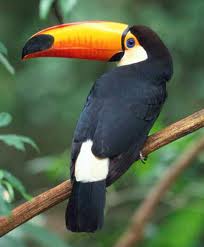
Whew! We’ve made it to another Friday and we’re so happy that it’s full of feathers! Our bird friends come in so many shape and sizes and today’s bird has a giant beak! Who is this amazing bird with the big ole beak?

MEET THE TOCO TOUCAN

Range/Habitat: North Eastern-Central South America (Bolivia-Peru-Argentina)/woodland, forest, groves

Diet: Omnivore: insects, fruits, frogs

Length/Weight: 21-23”/20 oz

Conservation Status: Common

Fun Facts:

  • Toco Toucans are the largest of all toucans.
  • They have large orange bills with a black spot. The bills can get up to 7 ½” long (about the length of a pencil).
  • Their bills are serrated (like a knife) and this helps them grasp and tear fruit.
  • Their large bills also enable the toucan to get fruit from out of reach branches.
  • Toco toucans nest in trees.
  • You can see Toco toucans in small flocks of up to 6 birds.
  • Both female and male toucans incubate the eggs.

Toco Toucans are really pretty birds with their shiny black feathers and large orange beaks! And man does that beak come in handy when you’re trying to get the fruit on the end of the branch! They also have a really cool call. Take a listen and Happy Feathery Friday!

http://www.youtube.com/watch?v=kgQggP7__-M

Categories: Animals, birds, Children, education, Environment | Tags: , , , , | Leave a comment

WATERY WEDNESDAY # 7

WATERY WEDNESDAY #7

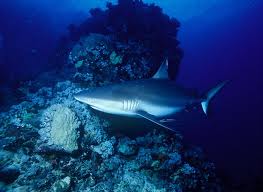
It’s Watery Wednesday and we have a shark for today’s animal! SHARK! Even though sharks get a bad rep, they are very important to the world’s oceans. So they deserve love and respect too, just maybe from a distance!

MEET THE BULL SHARK

Range/Habitat: Worldwide oceans/sub-tropical-tropical waters and some fresh water systems

Diet: Carnivore: fish, invertebrates, smaller sharks

Length/Weight: up to 11ft/500 lbs +

Conservation Status: Common

Fun Facts:

  • Bull sharks are one of the few sharks known to swim in rivers. They’ve been seen in the Mississippi, Hudson and Amazon rivers.
  • They have 5 gill slits, which they use to take oxygen from the water.
  • Bull sharks are large and stout. They’re named after the large and stout bull.
  • Adult bull sharks have no natural predators.
  • They have a bite force of 200lbs! Watch out for those teeth!

Bull sharks are amazing and powerful animals. You definitely don’t want to go swimming with one, but then again you wouldn’t want to walk up to a wild elephant either! These sharks are very important to our oceans! So let’s give a shout out to Bull Sharks!

Categories: Animals, Children, education, Environment, fish | Tags: , , , , | Leave a comment

MAMMAL MONDAY # 7

MAMMAL MONDAY #7

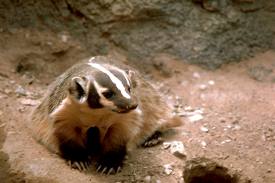
It’s just another Mammal Monday, but today’s animal isn’t just another ordinary animal. Actually, are there any ordinary animals? We think they’re all special! This animal, that is part of the same family as the weasel lives in the Americas, but it has some close cousins in Europe and Africa! So who is it?

MEET THE AMERICAN BADGER!

Range/Habitat: South Canada-USA-N Mexico/grasslands and farms

Diet: Carnivore: small mammals, snakes

Length/Weight: 16-28”/8 ½ -26 lbs

Conservation Status: Common


Fun Facts:

  • The American Badger is smaller than its Eurasian cousin.
  • They are solitary animals and nocturnal.
  • American badgers have large claws on their front paws. They use to them to dig burrows and to dig out prey.
  • They are known to use a different den each night during the summer months.
  • American badgers do not hibernate but are less active in winter.
  • They have a musky smell.

American Badgers are known as efficient predators and to have bad dispositions. They are also beneficial to farmers because they help keep the rodent population down. Even though they smell have a bad reputation, we think they’re pretty awesome!

Categories: Animals, Children, education, Environment, mammals | Tags: , , , , | 2 Comments

Our road trip to the Georgia Sea Turtle Center

We recently went on a road trip to the coast of Georgia to meet sea turtles.  We were so excited to go to Jekyll Island and to the Georgia Sea Turtle Center, where they work very hard to help injured and sick sea turtles. They also do a great job of educating people (and elephants and horses) about sea turtles and how we can help protect them.

We started off the day riding around Jekyll on bikes. Ok, we were in a bag on the back of a bike, but riding no less.  We love seeing the ocean and coastal waters of our home state!
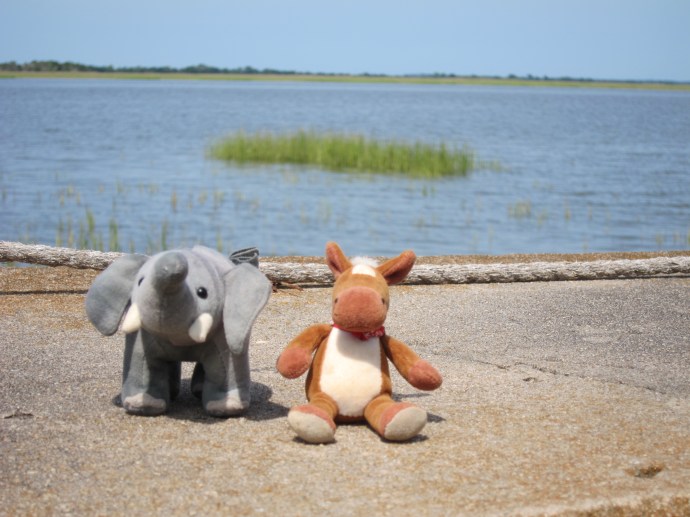
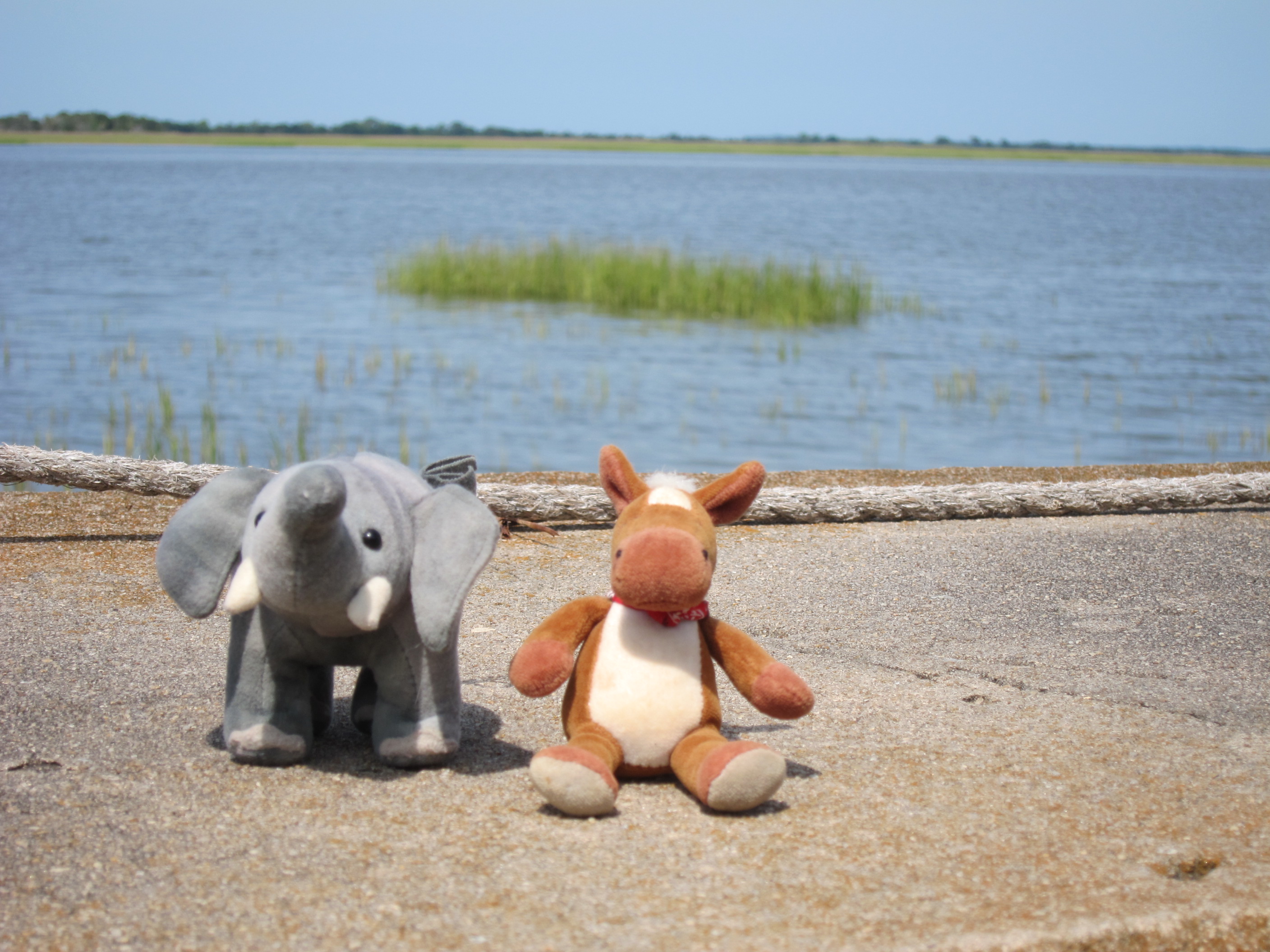
Here we are in front of the water on Jekyll Island

As we watched the water we saw a few dolphins swim by us! That was awesome! Unfortunately they were too fast to get pictures.

After riding around and seeing all the big beautiful houses that are part of the Jekyll Island Club, we made it to the Sea Turtle Center.
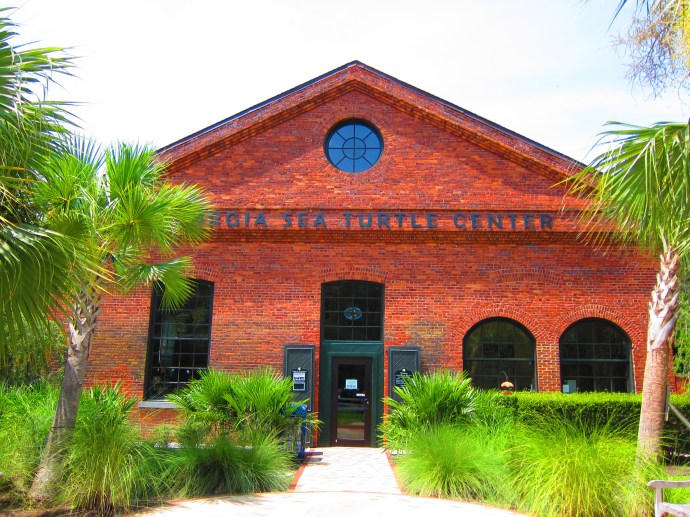
Georgia Sea Turtle Center

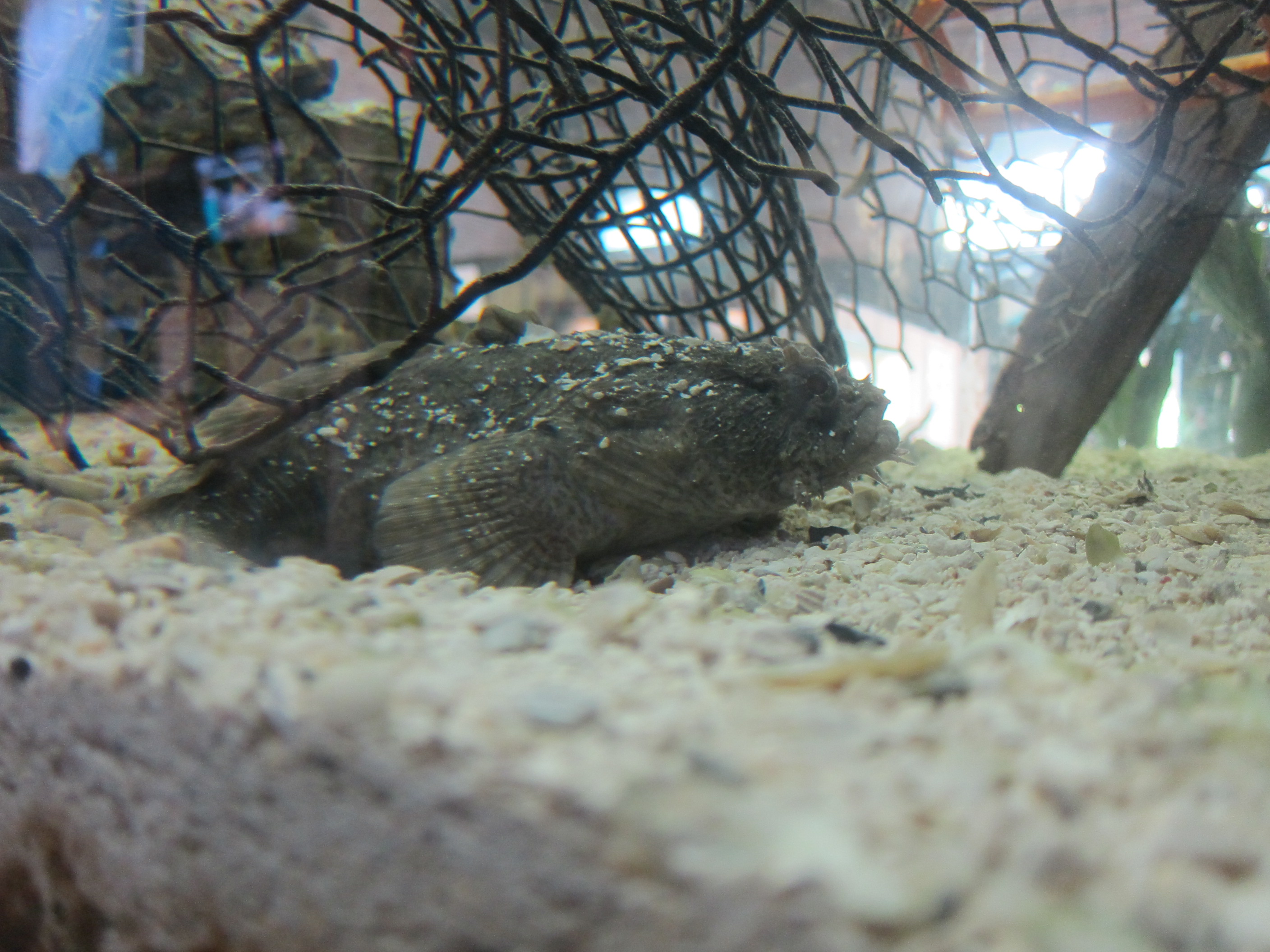
As we entered the center, we were so excited to meet some sea turtles. Little did we know that they had such a great exhibit room with loads of information! We first spotted this funny fish in an aquarium.

Fish in aquarium!

We aren’t sure what kind of fish it is, but we love his googly eyes! Do any of you have any idea what kind of fish he is?

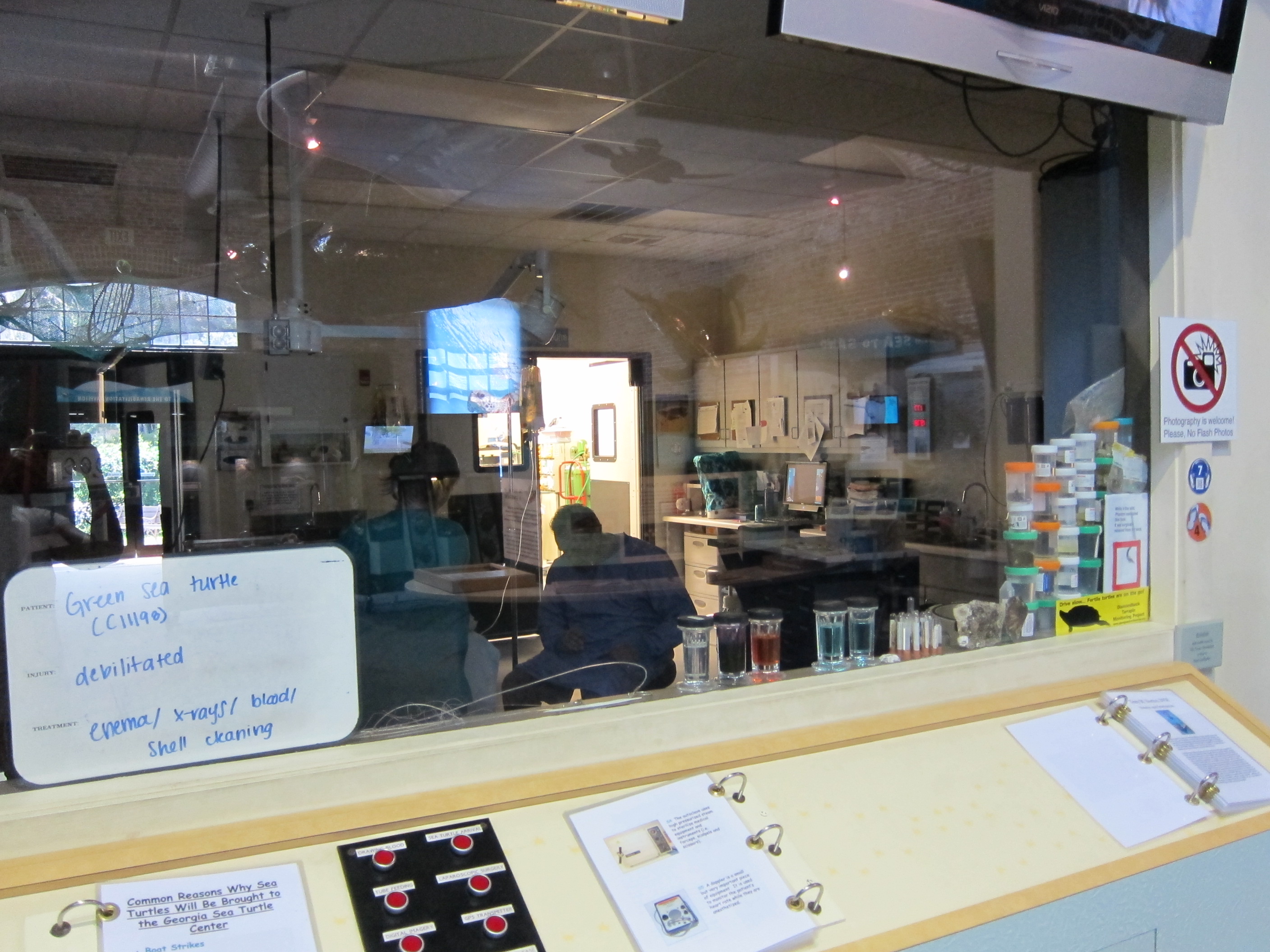
Right next to that fish’s aquarium was a giant window that looked into the turtle hospital exam room.  It was great to be able to see an actual an exam being done on a Green sea turtle.  The center also had a nice lady sitting there to answer any questions we had.

Sea Turtle Center exam and surgery room

If you look closely you’ll see that they were doing an exam on a Green sea turtle. The sign also says the turtle was getting a shell cleaning. Sea turtles often have a problem with excessive barnacles growing on their shell (also called the carapace). This can slow the turtle down so it is important to clean them off their shells.
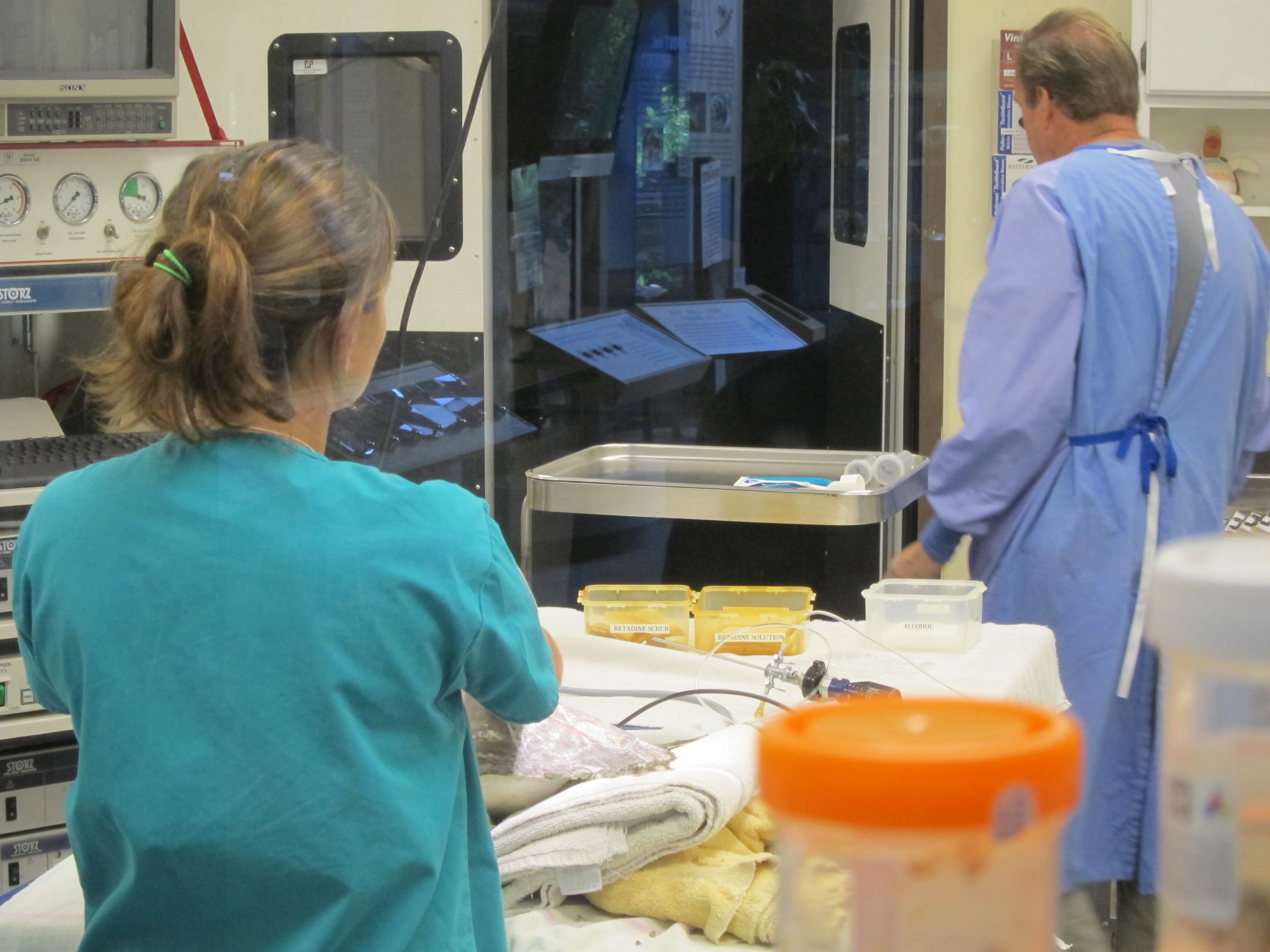
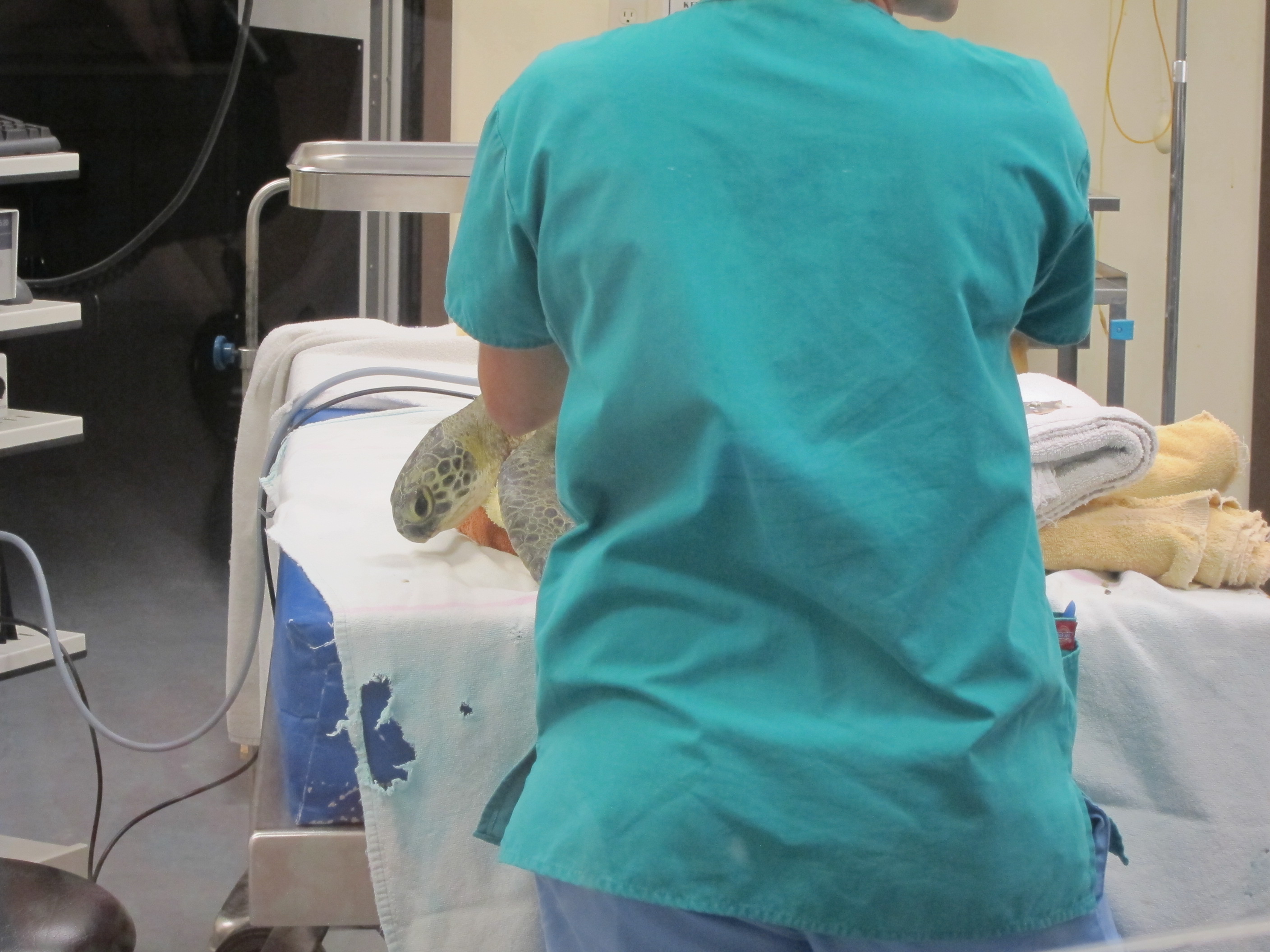
Staff giving the exam

Green Sea Turtle during his exam. It was good to see the vet staff working so hard to make sure this turtle gets the best care they can give it.

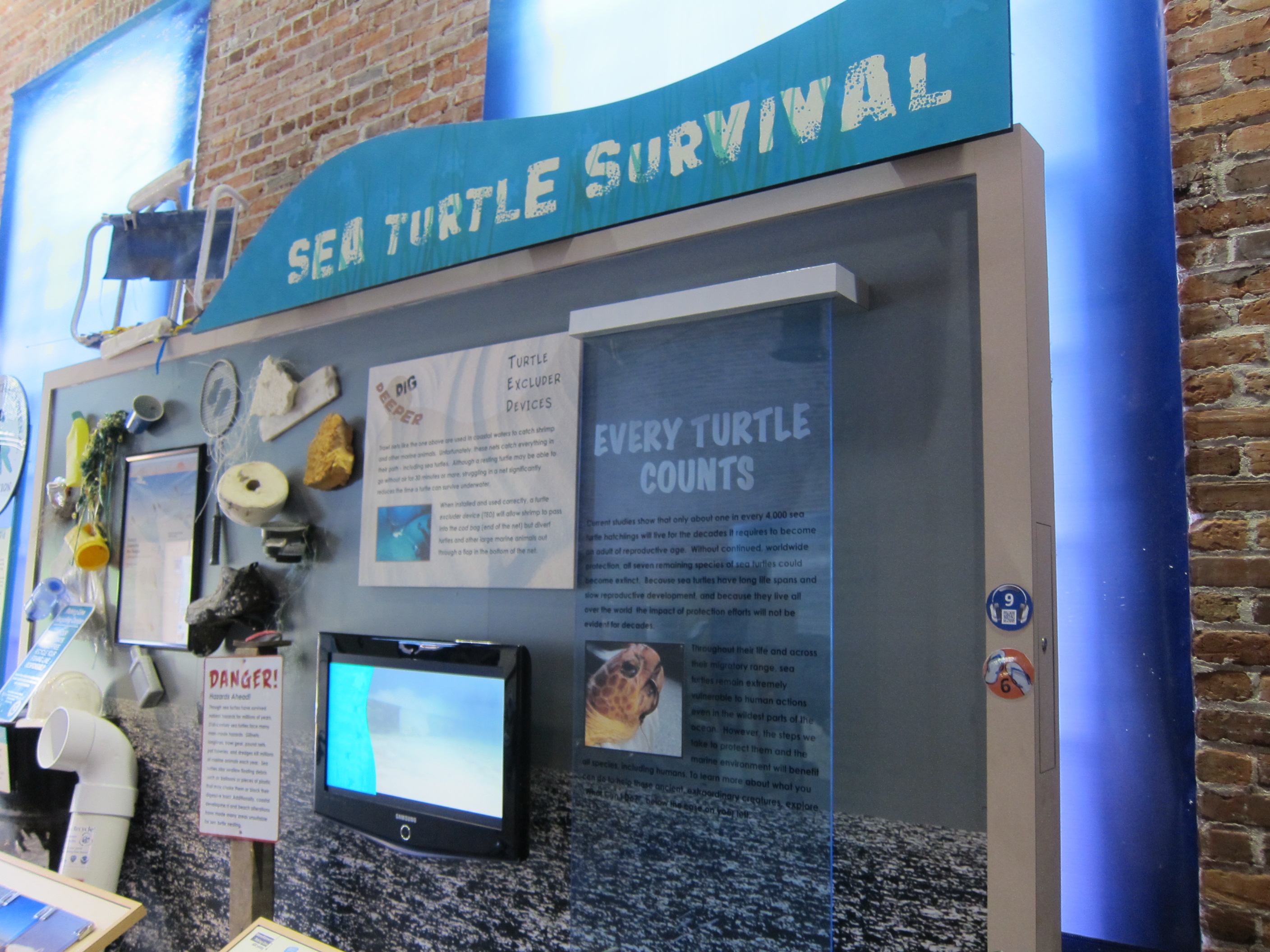
The center has so much great information! This picture shows one of the informational stations!

Information on sea turtle survival

It told us all about the threats to sea turtles, including trash.  Did you know that sea turtles and other marine animals mistake people’s trash for food?  LOne of the sea turtle’s favorite prey is jellyfish.  If they come across plastic grocery bags in the water they mistake them for jellies and eat the bag.  Obviously plastic bags are not food! They also get fish hooks caught in their mouths and throats! Both plastic bags and fish hooks are something we can prevent the turtles from eating by disposing of them properly.

Info on how to help sea turtles

You can even adopt a sea turtle at the center! No silly you can’t bring it home and put it in your bathtub, but giving to the center helps them take care of the turtles!

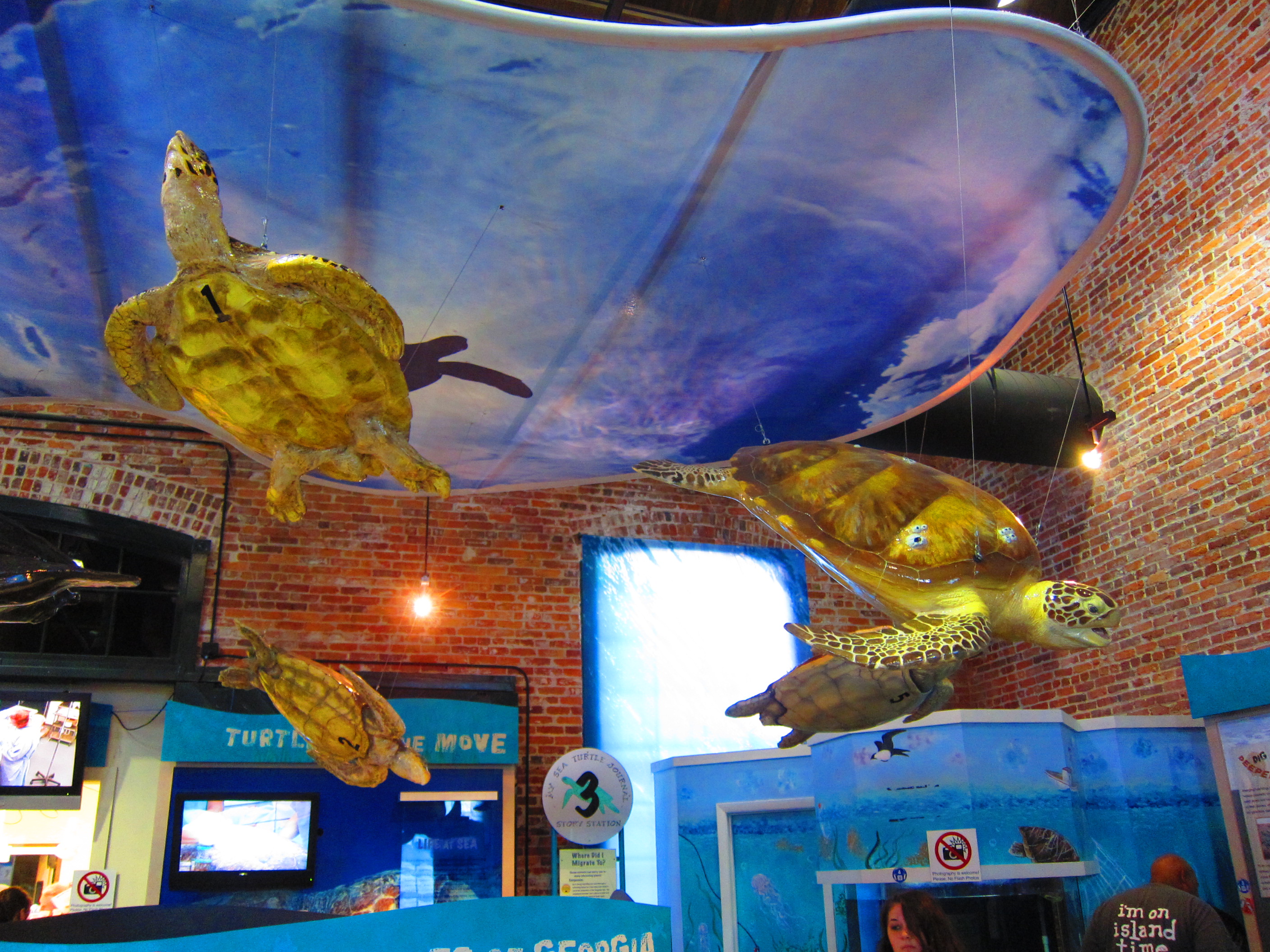
Did you know that there are 7 species of sea turtles? They are Loggerhead, Green, Leatherback, Hawksbill, Kemp’s Ridley, Olive Ridley and Flatback. The center has replicas of each one hanging from the ceiling and cool information about each one below them!
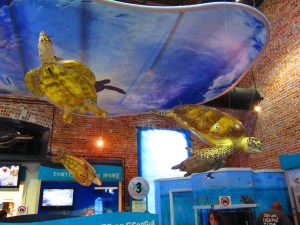
Sea Turtle replicas
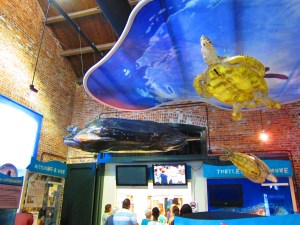
More sea turtles

Do you know which species is the biggest? If you said Leatherback, you’re right! We met a Leatherback  laying her eggs in Indonesia once- it was AWESOME!
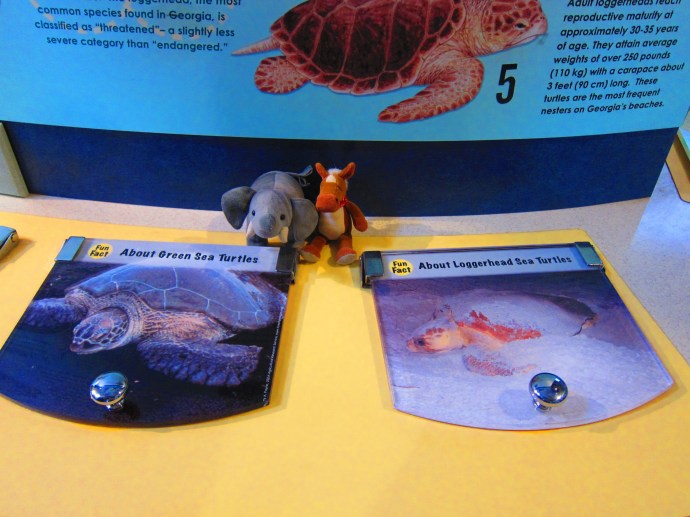
Here we are learning fun facts about Loggerhead and Green Sea Turtles

Not only could you view a sea turtle getting an exam, but they had a very small turtle at the center. Her name was Kathy.
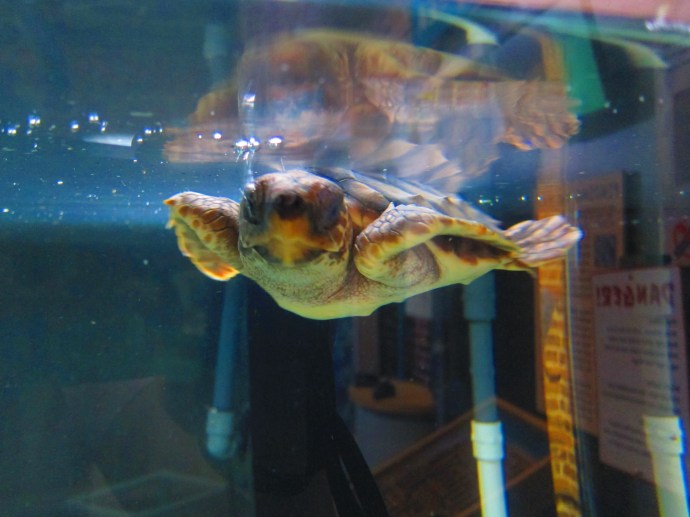
Young sea turtle Kathy.

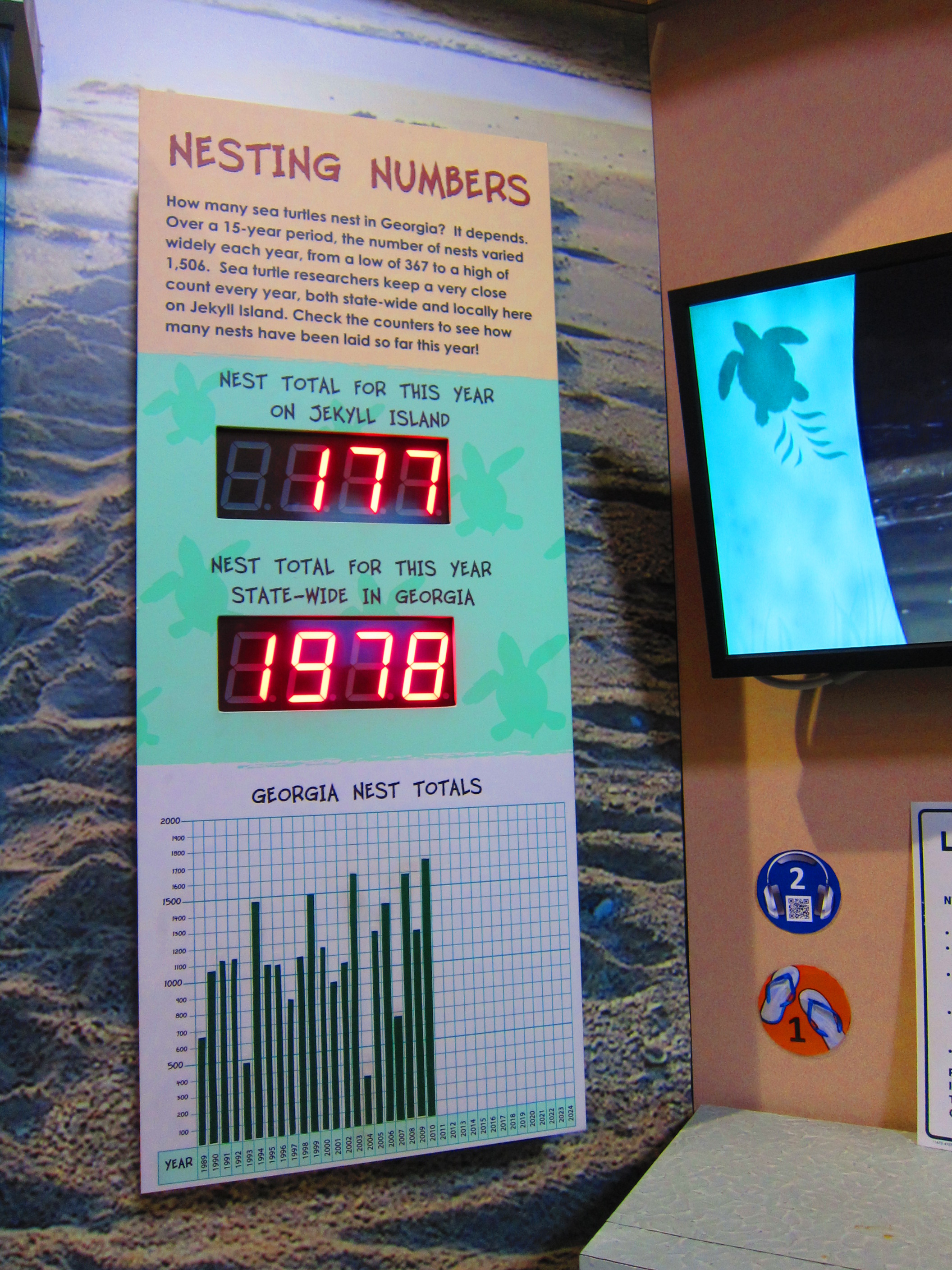
The Center and other researchers from the Georgia coast record how many sea turtle nests are laid each year. Did you know that sea turtles come back to the same shore where they hatched to lay their eggs when they are adults?  As of late August there were almost 2000 nests in Georgia! Wow that is a bunch of baby turtles (also called hatchlings).  Did you know there are numerous volunteers and workers who protect and check on the nests during nesting season?We love people who help wildlife.
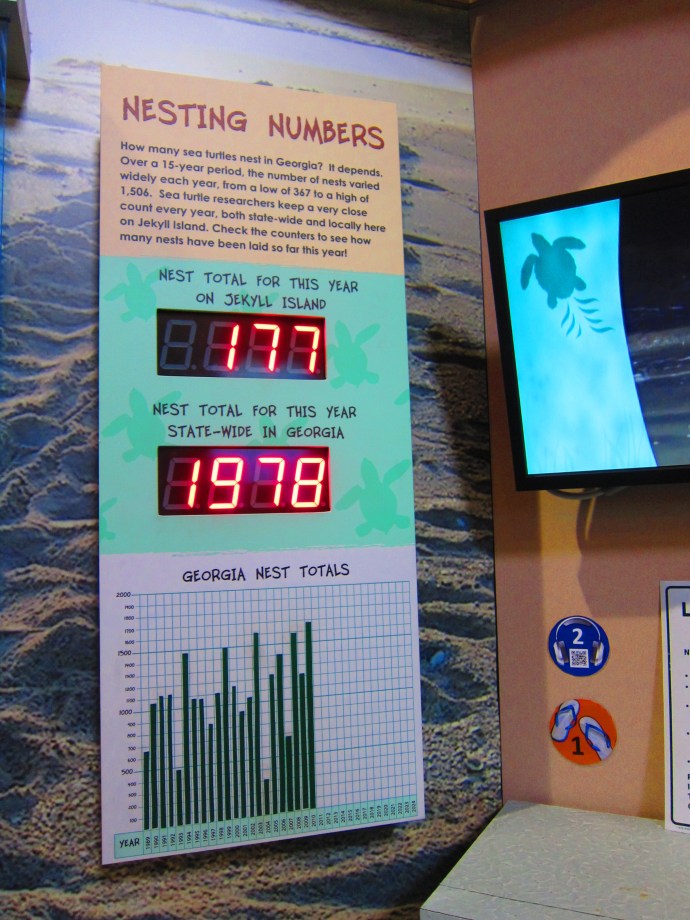
Sign showing how many nests there are in Georgia

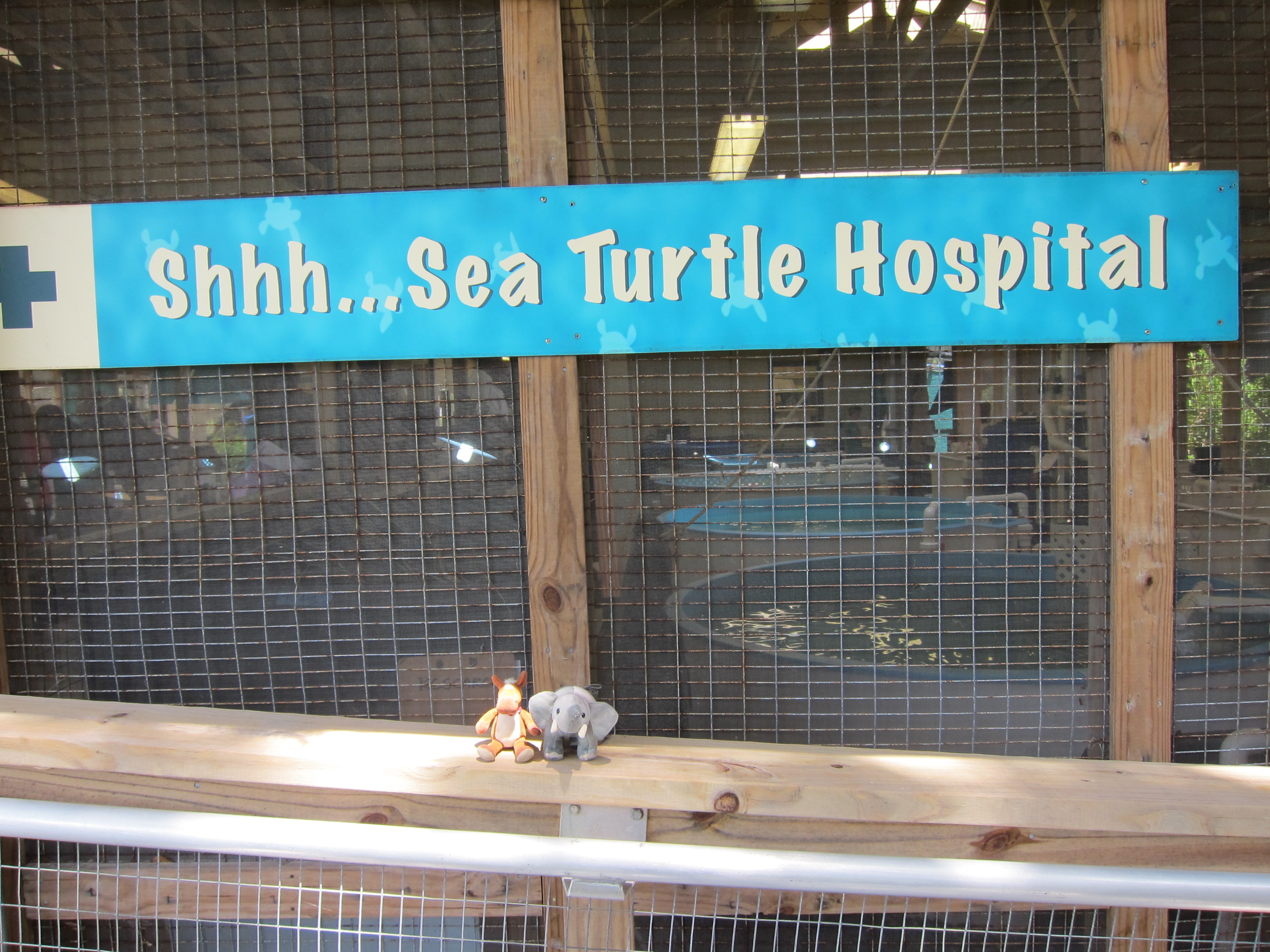
We went outside the main center to the hospital where sick and injured turtles are cared for and housed.

Here we are outside the Sea Turtle Hospital! Be very quiet!

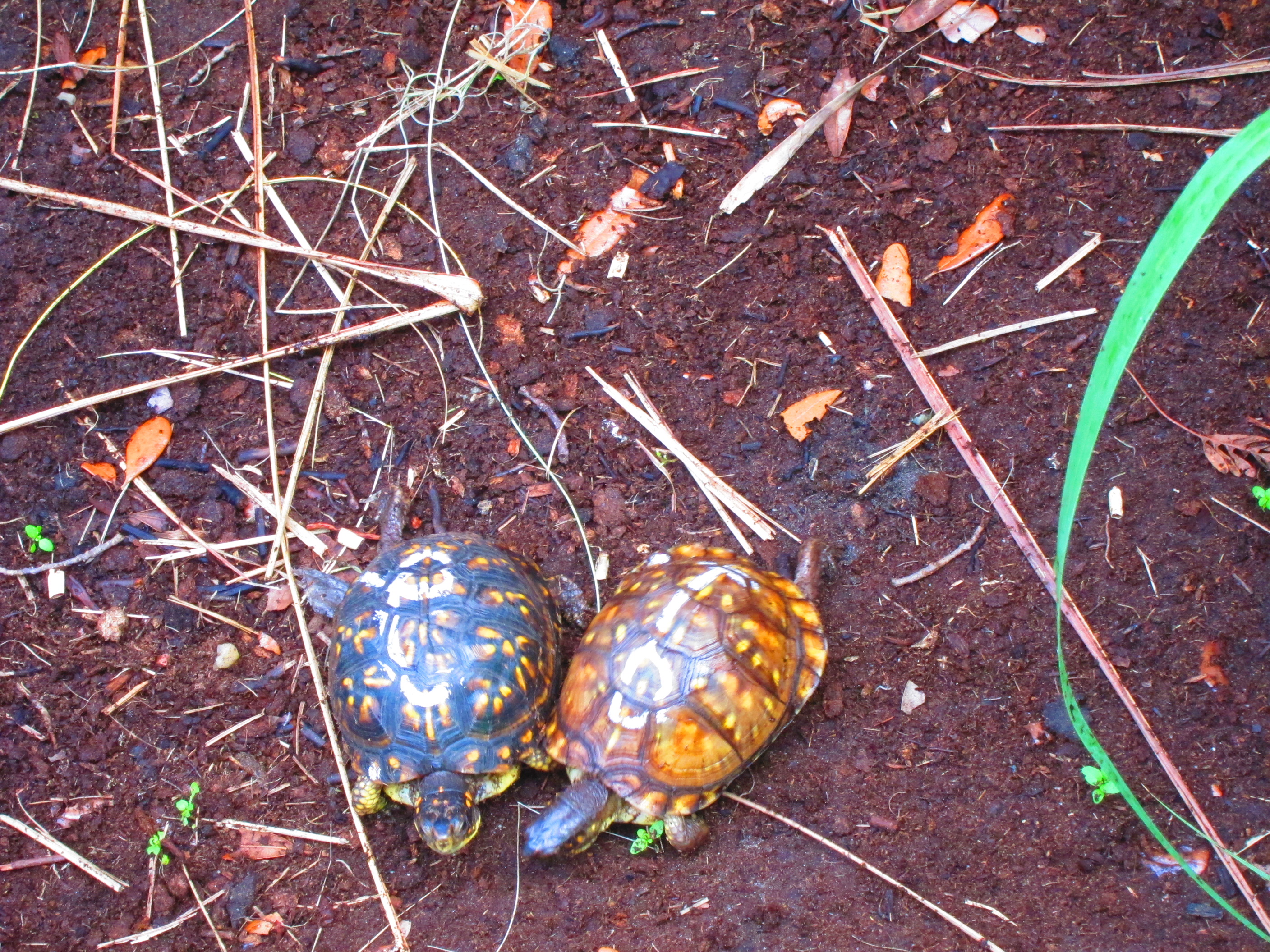
We also discovered that the center has a few other turtles, including box turtles and terrapins.

Box turtles in a yard next to the hospital

A very teeny tiny terapin! It was only about the size of a half dollar!

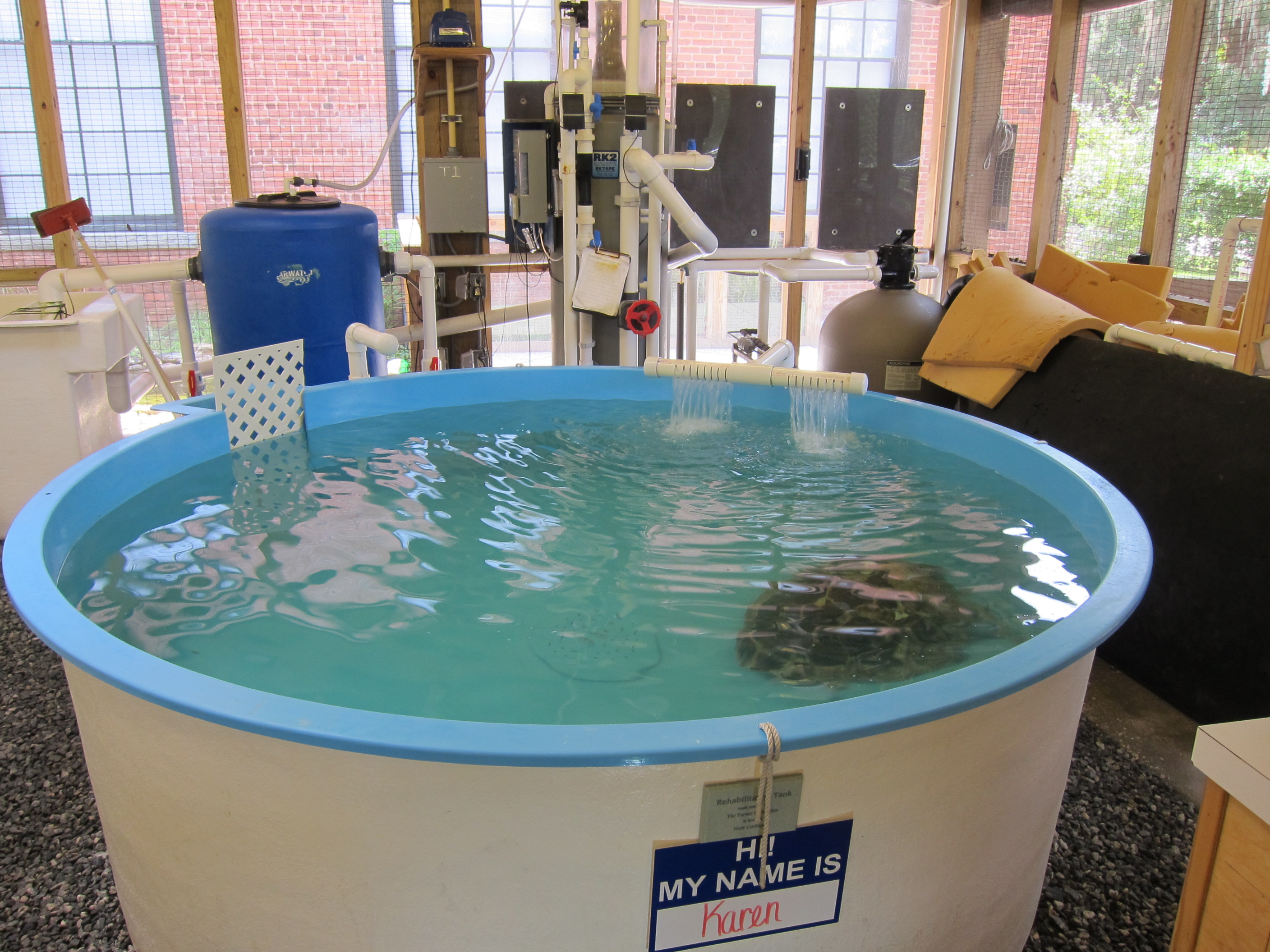
The sea turtles in the hospital had all kinds of injuries and illnesses.  We took a few pictures in the hospital, but we wanted to be extra quiet for the patients.
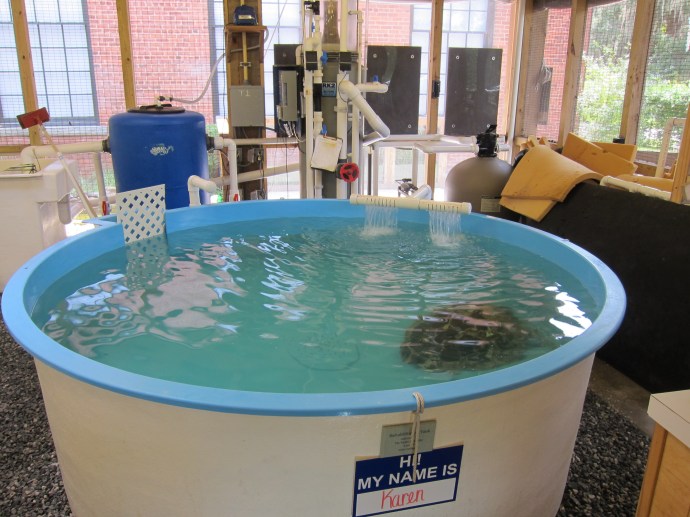
Karen the sea turtle in her tank

Each turtle has a sheet that explains their illness and treatment. Humbolt had eaten a hook 😦

The turtles have to be kept in smaller tubs to keep them from swimming too much. They need their rest; just like you do when you’re not feeling well.  Here’s a list of some of their current patients, http://www.georgiaseaturtlecenter.org/our-patients/sea-turtle-patients/current-patients/.

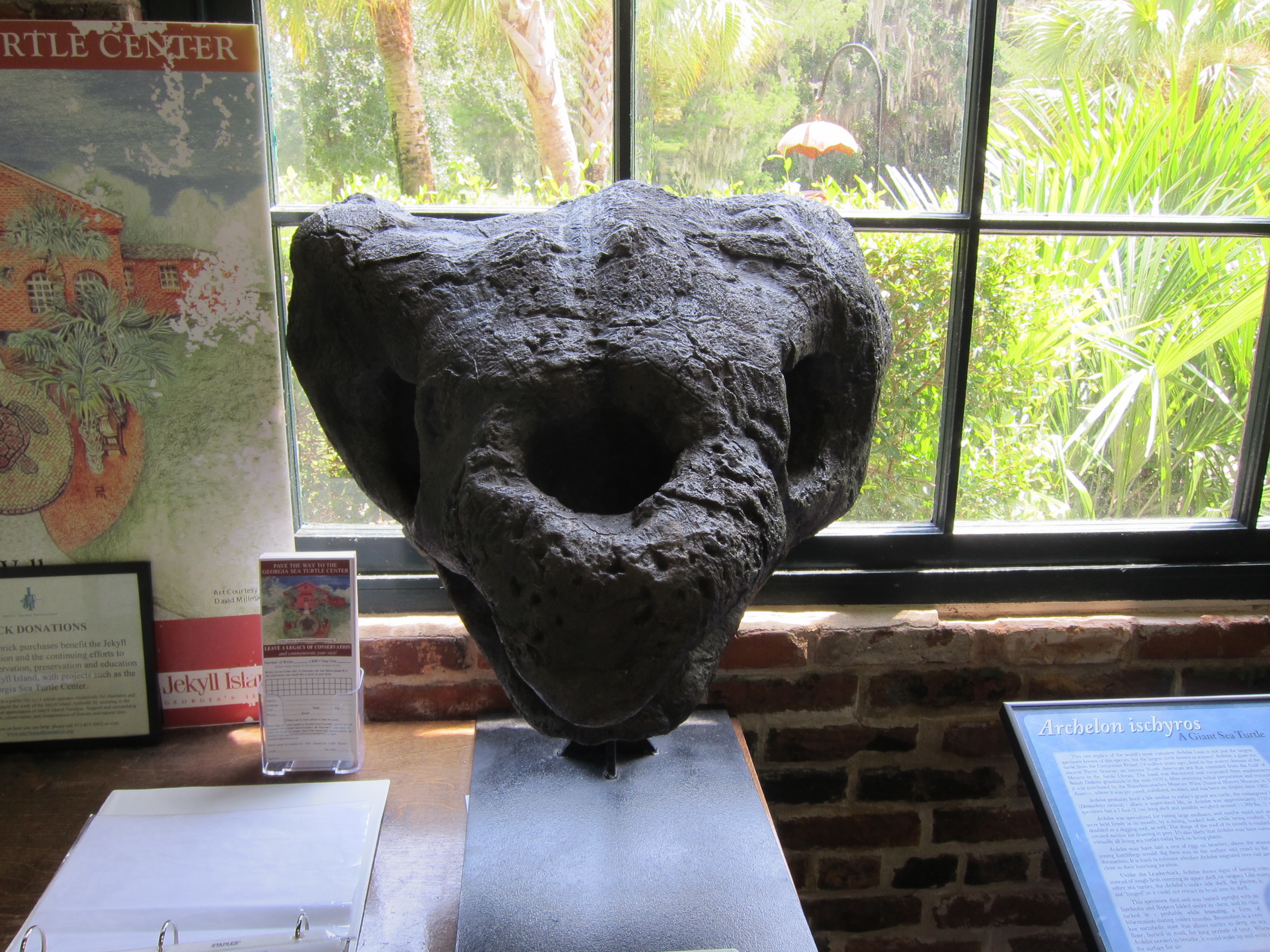
As we exited the Center we looked up in the gift shop and saw an enormous turtle hanging above us! Imagine our surprise! It was a replica of an ancient sea turtle from the Crustaceous period. This turtle swam in the oceans around 74 million years ago.  It was called Archelon ischyros. This turtle was 7 feet long and weighed around 11,300 lbs! That is one big turtle! Anyone have a truckload of jellies handy?
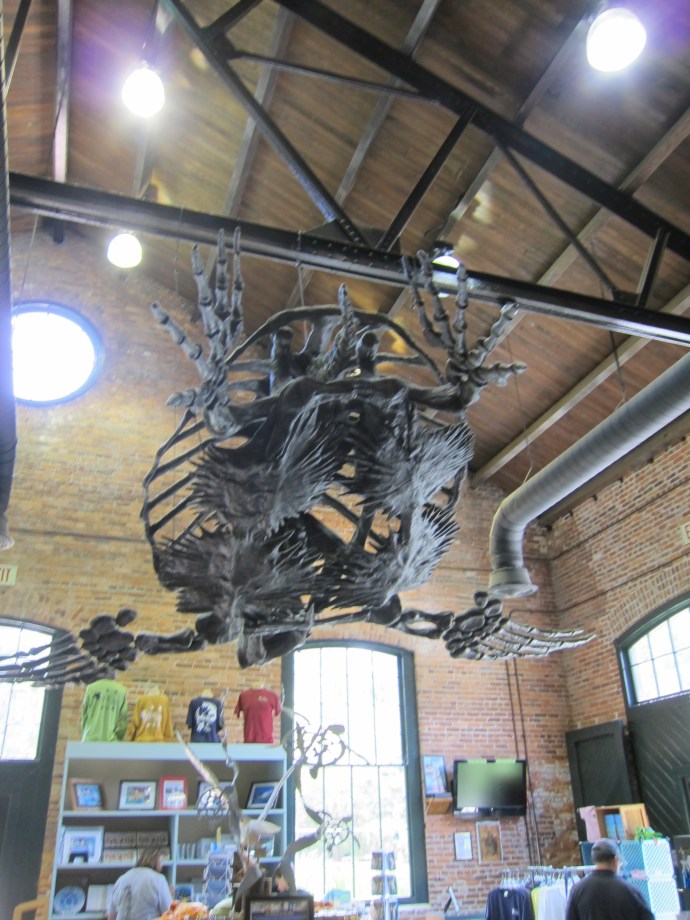
Archelon ischyros hanging in the gift shop

The skull of the giant sea turtle! My what a big beak you have!
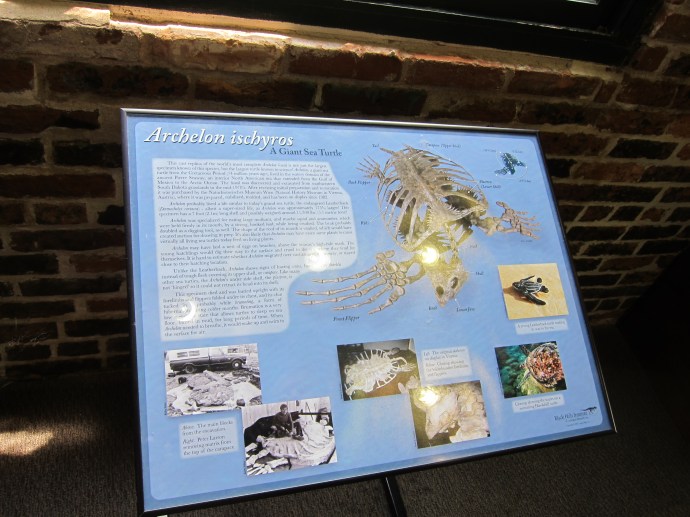
Info on the giant sea turtle! This fossil was found in South Dakota! WOW!

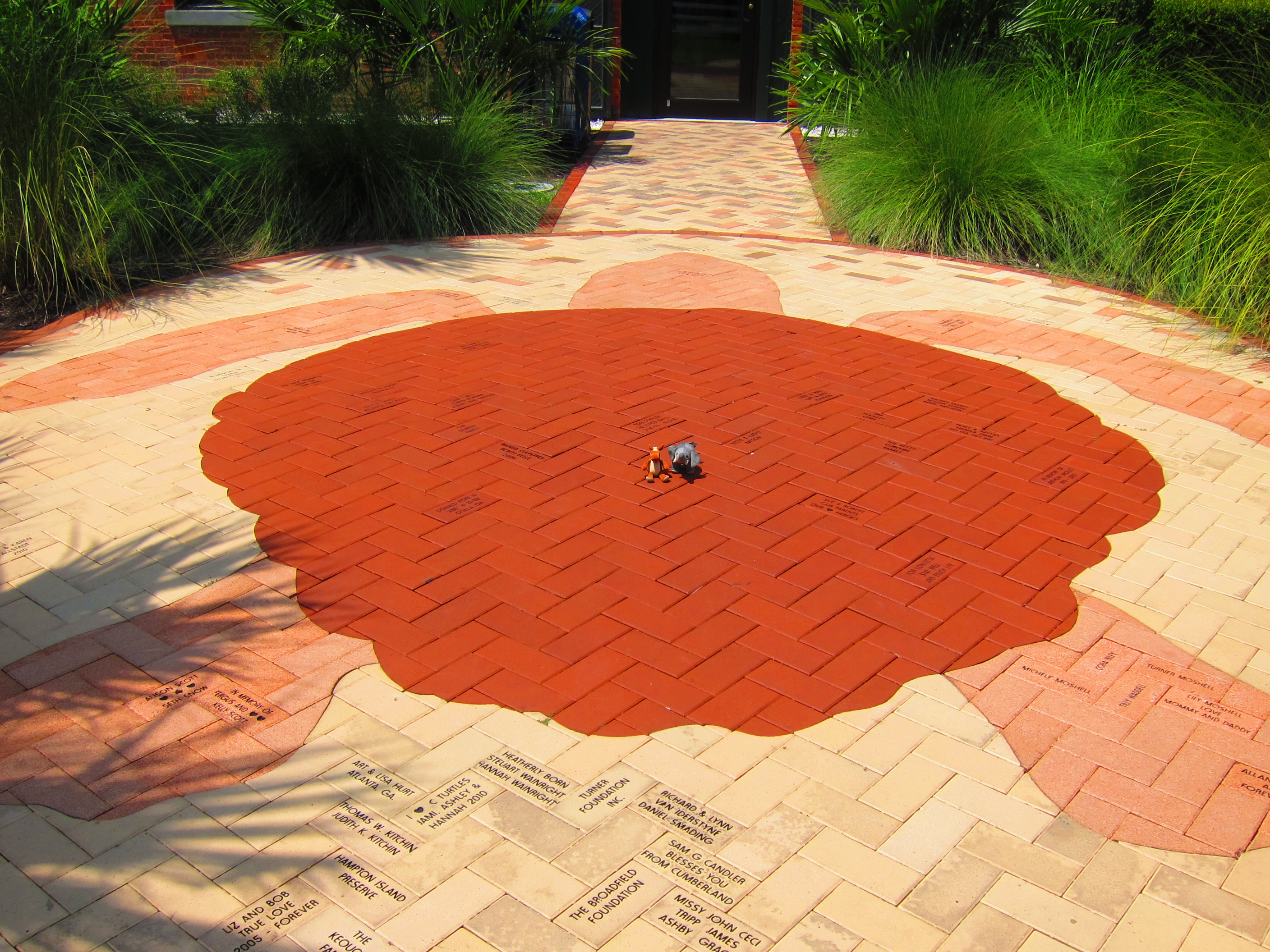
We had the best day at the Georgia Sea Turtle Center! We hope everyone makes a trip to visit this very special place! Say hi to the turtles for us if you go! As we left we decided to take a few fun shots!

The center has turtle stepping stones! FUN!

A sea turtle made out of bricks at the entrance!We look very little :)!

Categories: Animals, Atlanta, Children, education, Environment, fish, Local, reptiles | Tags: , , , , , , | 1 Comment

FEATHERY FRIDAY # 7

FEATHERY FRIDAY #7

Wow! We had a great World Rhino Day yesterday! And it was also Elephant Appreciation Day! Edmond still needs to get Ellie a present. We’re glad it’s Friday, because that means it’s time to meet a bird! Today’s bird is named after the sound of its call. It sounds very sad, hopefully they’re not! Who is it?

MEET THE MOURNING DOVE!

Range/Habitat: North-Central America and Caribbean/urban areas-farms-woodlands and grasslands

Diet: Herbivore: seeds

Length/Weight: 9-13”/4-6oz

Conservation Status: Common

Fun Facts:

  • Mourning doves get their names from the call they make, which sounds sad and mournful.
  • These little birds are great fliers and can fly fast, up to 55 mph!
  • Males glide, spiral and do other aerial acrobatics above females to attract them.
  • Mourning doves’ wings make a whistling sound when they land and take off.
  • Both parents take care of the eggs and chicks. They can lay up to 6 clutches in a year!

These doves may sound mournful, but they are special! They’re very common and can be easy to spot in places like your back yard! In fact we may go out and see if we can find some! How about you? Bird watching is a great way to spend a morning or afternoon!

Here’s what they sound like:  http://www.allaboutbirds.org/guide/Mourning_Dove/sounds

Categories: Animals, birds, Children, education, Environment | Tags: , , , , | Leave a comment

WATERY WEDNESDAY # 7

WATERY WEDNESDAY #7

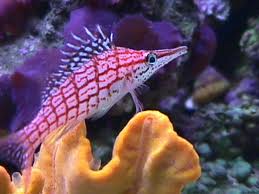
Woohoo, it’s Watery Wednesday and again we’ve found another inhabitant of the coral reef.  Did you know that coral reefs are like the rainforest of the ocean? Coral reefs have such diversity of life, including fish, crustaceans (like crabs), invertebrates and the coral themselves.  Today’s fish has beautiful colors and patterns! So who is it? Let’s find out!

MEET THE LONGNOSE HAWKFISH!

Range/Habitat: Indian-Pacific Oceans/coral reefs

Diet: Carnivore: invertebrates, small fish, zooplankton

Length: up to 5”

Conservation Status: Common

Fun Facts:

  • Longnose hawkfish have long snouts that they use to catch prey.
  • They are ambush predators.
  • Longnose hawkfish have spines on their dorsal fins.
  • They squeeze into small crevices to protect themselves from predators.
  • The Longnose hawkfish can be solitary or found in small groups with one male and a few females.


Longnose Hawkfish have beautiful patterns of redish stripes and spots! We personally love the pattern they have on their bodies, it’s so colorful! What’s your favorite animal pattern? Do you love leopard spots, zebra stripes or maybe giraffe spots?


Categories: Animals, Children, education, Environment, fish | Tags: , , , , | Leave a comment

REPTILIAN TUESDAY #7

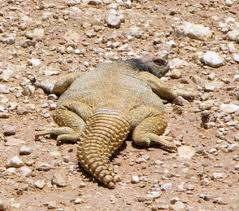
MEET THE SPINY DAB LIZARD!

Range/Habitat: N Africa/deserts

Diet: Omnivore: insects/plants

Length: 12-16”

Conservation Status: Common

Fun Facts:

  • The Spiny Dab Lizard is also known as the Spiny tailed lizard or Uromastyx.
  • Their tales are covered with spiny scales.
  • They’re often found in burrows in the desert. They will stick their tails out of the entrance of the burrow to protect it.  
  • Males are very territorial.
  • They hibernate during the winter months.
  • Spiny dab lizards change their color according to the temperature of the environment. They are yellowish/gray during the winter and orange/green or red during the warmer months!
  • They come out during the day to warm themselves in the sun. They are more active during warmer periods.


Animals have some great adaptations! These awesome lizards not only have spiny tails but they can change their color! We wish we could change colors! What color would you want to be? Ellie wants to be purple :)! 

Categories: Animals, Children, education, Environment, reptiles | Tags: , , , , | Leave a comment

MAMMAL MONDAY # 7

MAMMAL MONDAY #7

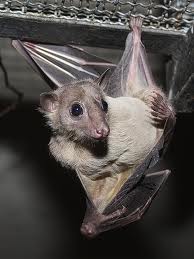
Happy Mammal Monday! We’re excited to be featuring a mammal that flies! Can you believe there are mammals that can fly like birds? Us either- but they are fantastic! Let’s meet one!

MEET THE EGYPTIAN ROUSETTE!

Range/Habitat: N Africa-West and East Coast Africa

Diet: Fruigivore: fruit

Length/Weight: 5 ½ – 6 ½ “/ 3-4oz

Conservation Status: Common

Fun Facts:

  • Egyptian Rousettes are also known as the Egyptian Fruit Bat.
  • They are the only fruit bats to use echolocation. (This is when an animal sends out a sound. They judge how far away something is, by how long it takes for the sound to come back to them.)
  • These bats roost in caves instead of trees. They often hang together to keep warm! Snuggly!
  • Like most bats the Egyptian Rousette is nocturnal (active at night).
  • They have a wingspan of about 2 feet.
  •  They are dark brown to gray.

We love flying mammals, especially bats! Did you know there are about 1,100 species of bats in the world? We better get to reading about these special mammals! Do you have a favorite bat?

Categories: Animals, Children, education, Environment, mammals | Tags: , , , , | Leave a comment

FEATHERY FRIDAY # 6

FEATHERY FRIDAY #6

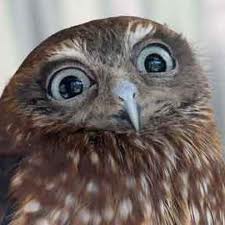
Today’s Feathery Friday animal is quite special! Who, you say? Well it’s a bird you think would say who but this one doesn’t! Whooooo is it then?

MEET THE BOOBOOK OWL!

Range/Habitat: Australia-South New Guinea/forests, grasslands, farmlands

Diet: Carnivore: insects, birds

Length/Weight: 12-14”/6-10oz

Conservation Status: Common

Fun Facts:

  • The Boobook owl is named after the call it makes.
  • They are nocturnal like other owls, but often feed at dusk and dawn too!
  • They are specialists at catching prey in mid-air.

This funny little owl doesn’t make the typical who call! That’s what makes it so special! Listen to it here:

http://www.owlpages.com/sounds/Ninox-boobook-1.mp3

Categories: Animals, birds, Children, education, Environment | Tags: , , , , | Leave a comment

SUPER SURPRISE THURSDAY # 6

SUPER SURPRISE THURSDAY #6

We have a special bird for today’s Super Surprise Thursday! This bird was once endangered but has made a good recovery thanks to all the people who worked hard to save them. They still have trouble with trash like fishing lines and hooks though. So who is the awesome bird? We bet some of you guessed the Bald Eagle, but you’d be wrong…

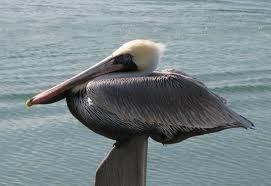
MEET THE BROWN PELICAN!

Range/Habitat: North-South America and Caribbean/ shallow coastal waters, estuaries and bays

Diet: Carnivore: fish, crustaceans

Length/Weight: 3 ¼-5ft/ 6-12 lb

Conservation Status: Common

Fun Facts:

  • The Brown Pelican is the smallest of all pelican species.
  • They are plunge divers. They fly above the surface of the water and then drop or plunge into the sea to catch their prey.
  • They are very social and are often seen flying together in flocks!
  • Brown pelicans have a greenish skin on their face that is brighter during mating season.
  • Brown pelicans like to nest in trees, shrubs and mangroves.
  • Both parents incubate eggs. They usually have 2-3 chicks. One chick can eat up to 150 lbs of food by the time they are 10 months old! That’s a bunch of fish for little guys!
  • Ever heard the limerick: “The Brown Pelican: His pouch can hold more than his belly can”? Well it is true! The pouch can hold up to 3 gallons and the stomach can hold around 1 gallon.
  • Brown pelicans are the state bird of Louisiana.

We love Brown pelicans! They are really majestic birds, despite being a bit funny looking with their big bills and pouches. We’re so happy to hear that people also love these birds enough to help save them!


Check out this video of Julie Scardina with a Brown Pelican on the Today Show!

http://www.dailymotion.com/video/xl2nhr_nbc-today-show-soaring-sea-animals-fly-into-studio-1a_news

Categories: Animals, birds, Children, education, Environment | Tags: , , , , | Leave a comment

Blog at WordPress.com.