Posts Tagged With: mammals

DAY 42… We meet another tamandua

Day #42 (4/23/2014) Southern Tamandua

We were so excited to see one of Professor Tamanadua’s wild relatives while we are here in South America! Tamanduas are such great creatures, even if they are a bit stinky :)!
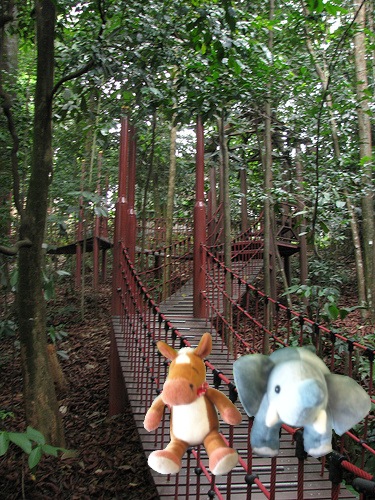
e & e rainforest2
Their range/habitat: Central- South America/forest-scrub
Their length/weight: 2-8 ft/ 4 1/2- 7 lbs Conservation Status: common
Their diet: Insectivore: ants, termites
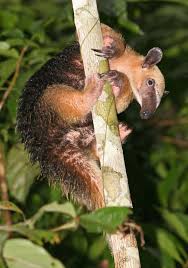
tamandua1

• Southern Tamanduas are also known as lesser anteaters.
• They are arboreal.
• Southren Tamanduas have a strong musty odor to help protect them predators.
• Southren tamanduas have no teeth. They use a long tongue to catch their insect prey!
• They are nocturnal.
• Southern tamanduas have long claws for climbing and digging for prey.
• They have a partially prehensile tail that helps them grip branches in trees and balance when they stand up on their hind legs.
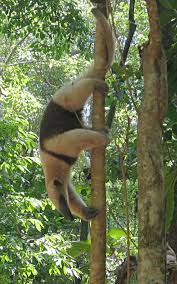
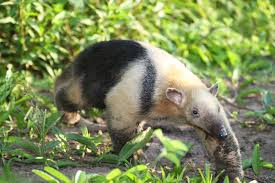
tamandua2  tamandua3


Tamanduas and anteaters are one of natures coolest animals. Those long claws, noses and tongues make them unusual and fascinating! One tamandua can eat up to 9,000 termites in one sitting! Nom! Nom! Nom!

-Ellie and Edmond
 

Categories: adventure, Animals, Children, conservation, education, Environment, mammals, nature, science, wildlife | Tags: , , , , , , , , , | Leave a comment

Day #38- We meet an Echidna

Day #38 (7/10/2014) Short Beaked Echidna

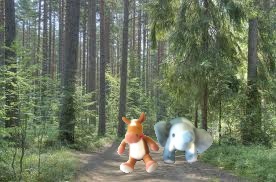
e e desert

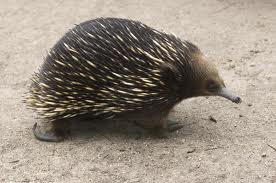
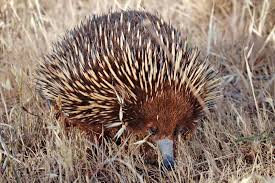
We had such fun watching platypuses the other day. We headed off to our next stop on our short trip to Australia. We were on a mission to find the other monotreme (mammal that lays eggs) that lives in Australia too.  We hiked for a quiet a while during the morning and finally hit the jackpot! We spotted an echidna! We were so excited!echinda3
Their range/habitat: Australia-New Guinea/deserts-forests
Their length/weight: 14-39″/9-15lbs  Conservation Status: common
Their diet: Insectivores– ants, worms, termites

echinda2
• Echidnas are also known as spiny anteaters.
• They are considered one of the oldest species on earth.
• Echidnas can live up to 50 years.
• Echidnas are solitary.
• They have a poor sense of sight, but an excellent sense of smell and hearing.
• Echidna snouts are also called beaks.
• They are excellent diggers.
• Echidnas have 6” tongues!

echinda


Echidnas may just be one of the most alien creatures that we have ever seen. They have remained nearly unchained since prehistoric times. They are just crazy and weird! Australia is an island full of these creatures. We can’t wait to see what we find tomorrow!

-Ellie and Edmond
Categories: adventure, Animals, Children, conservation, education, Environment, mammals, nature, science, wildlife | Tags: , , , , , , , , , | Leave a comment

Day 37- Australia for the week…

We’re traveled the east coast of Australia yesterday to find our Guess the Animal.  It’s a large continent with wild and strange animals that are found no other place on earth! If you guessed the Platypus yesterday then you were right! We were looking for the mammal that lays eggs! WHAAAAT? You heard right, this mammal lays eggs! This adventure just gets crazier!

e e woods

Platypus…

   Range/Habitat: Eastern Australia-Tasmania/rivers-streams-rainforest

   Diet: Carnivore: worms, shrimp, crayfish

   Length/Weight: 16-23 ½”/ 1 ¾-5 ½ lbs

   Conservation Status: common

Platypus


  • Platypus are strange looking mammals, with long slender bodies, webbed feet and a duck-like bill for a mouth.
  • They have long tails that look like beaver tails.
  • Platypus are built for water. They are excellent swimmers and can dive to deep depths looking for prey.
  • They eat about 20% of their body weight a day (about 2lbs), so they can spend up to 12 hours a day feeding.
  • Platypus have no teeth!
  • Male platypus have venomous spurs in the back feet. The venom is not fatal to humans, but can be very painful.
  • Platypus can detect the electrical fields of other animals. They use this extra sense to find their prey!
  • They are one of two mammals on earth that lay eggs. Do you know the other one?
  • Platypus moms to provide milk to their offspring.

platypus

Platypus are one of our favorites, with their crazy looking bill mouths and their webbed feet! They are much loved in Australia too! You can find a platypus on the back of their 20 cent coins! Neat! Edmond wants to be on a coin! Ellie told him he’d have to learn to lay eggs first!

-Ellie and Edmond

Categories: adventure, Animals, Children, conservation, education, Environment, mammals, nature, science, Uncategorized, wildlife | Tags: , , , , , , , , | Leave a comment

GUESS THE ANIMAL!!

GUESS THE ANIMAL!!
We’re in Australia for the week and we went exploring to find a very special animal today! Look at the picture, read the clues and tell us who you think it is?

platypus

  • They are mammals.
  • They are very odd looking.
  • They are one of two monotremes in the world!

WHO IS IT?

Categories: adventure, Animals, Children, conservation, education, Environment, mammals, nature, science, wildlife | Tags: , , , , , , , , , | 3 Comments

SUMMER BREAK!

SUMMER BREAK!

swow fun

It’s officially summer break here at the University of E&E! So our word of the week is FUN! I’m sharing a word search with you of all the previous science words of the week- click on link below- print and enjoy! Ellie and Edmond will have some fun summer activities and interviews posted later in the week for everyone! Now time for this professor to find a nice pool and eat all the ant snacks I can!

SCIENCE WORDS OF THE WEEK

Categories: adventure, Animals, Children, conservation, education, Environment, nature, science, Uncategorized, wildlife | Tags: , , , , , , , , , | Leave a comment

SLOTHS!!!

SLOTHS!!

sloths

Cutest baby sloths ever!

We almost missed sloth week! Who doesn’t love these relatives of the armadillo and anteater? These slow, arboreal and adorable mammals are one of our favorites! They live in the rainforests of South America hanging out in the trees! They are sooooooo slothy that algae grows in their fur! We secretly have a theory that at night, they don capes and fly around sprinkling thoughts of cute sloths all over people as they sleep! Hahaha! What’s your favorite thing about sloths?

sloth coloring sheet

Categories: adventure, Animals, Children, conservation, education, Environment, mammals, nature, science, wildlife | Tags: , , , , , , , , , | Leave a comment

GUESS THE ANIMAL!

GUESS THE ANIMAL!

We headed to the tip of the African continent to find today’s animal! Make sure you read the clues after you look at the picture. We are looking for a specific answer (a species- not just a general animal name).

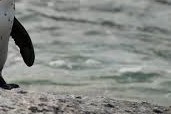
african penguin

  • These birds live in a temperate climate.
  • They live on the beaches of South Africa.
  • They make a call that sounds like a donkey.

WHO IS IT?

Categories: adventure, Animals, Children, conservation, education, Environment, mammals, nature, science, wildlife | Tags: , , , , , , , , , | 2 Comments

BACK ON THE ROAD!

Day 36- We’re back on the road to Africa this week…

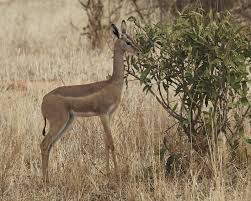
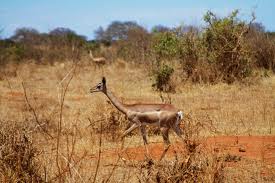
We packed our good old trunk with the necessities and boarded the E&E plane to Africa this week! So nice to be back on the road. We thought we would do a safari and look for what animals we could find! After we landed we headed out to camp and unloaded in our cabin for the week. We were excited to see what animals we could find! Luckily one of our first sights was the amazing gerenuk  (Gair-uh-nook)

e & e safari van


Range/Habitat: East Africa/dry and bushy scrub

Diet: Herbivore: leaves

Length/Weight: 4 ½ -5 ¼ ft/62-115 lb

Conservation Status: Near Threatened

gerenuk3

  • Gerenuks are part of the antelope family.
  • They have long slender bodies, necks and small faces.
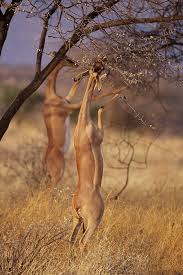
  • Gerenuks can curve their spines into an S shape, which enables them to stand on their hind legs.
  • Because they can stand on their hind legs, they can eat leaves that other animals can’t reach.
  • Gerenuks are also called the giraffe gazelle.
  • They have large ears and eyes that help them hear and see predators.
  • Only male gerenuks have horns.
  • They get all of their water supply from the leaves they eat, so they can survive in dry habitats.

gerenuk2  gerenuk


Gerenuks are kind of funny looking with their long thin bodies and giant ears. We think it’s super cool that they can stand up on their hind legs to eat! What a neat adaptation!  They are called the giraffe gazelle, but they’re not related to the giraffe- because we know that’s the okapi! So many fun names! Edmond said he’s going to write a song about gerenuks and okapis- he is so silly!

Ellie


Categories: adventure, Animals, Children, conservation, education, Environment, mammals, nature, science, wildlife | Tags: , , , , , , , , , | 4 Comments

WORLD GIRAFFE DAY!!

WORLD GIRAFFE DAY!!

giraffe

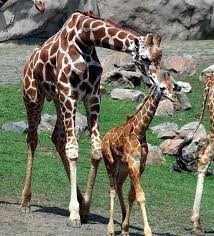
Woohoo- it’s World Giraffe Day and we are so excited! We love the tallest mammal on earth! They’re lanky, graceful and have funny horn like things on their heads! Come learn some fun stuff about giraffes with us and tell us why you love them!

ee giraffe

  • All giraffes live in Africa, in desert or savannas.
  • Giraffes can grow up to 19ft tall.
  • Their tongues are 21″ long.
  • They have ossicones on their heads. These ossicones are actually part of the skull.
  • Giraffes are herbivores and eat all throughout the day.
  • A giraffe’s heart is the size of a basketball.
  • Giraffes can run up to 35 miles per hour.
  • Giraffes have the same number of vertebrae in their neck as do humans- 7!
  •  A giraffe’s foot is the size of a dinner plate.

giraffe3  giraffe2


Giraffes are such special creatures. Many people are drawn to them; maybe it’s the spots, maybe the knobby knees or maybe it’s the ossicones. Whatever it is you love about giraffes, make sure you take time today to learn how you can help protect them in the wild.  Check out the World Giraffe Day website! We’ve made a giraffe coloring sheet for you too!


giraffe coloring sheet

Categories: adventure, Animals, Children, conservation, education, Environment, nature, science, wildlife | Tags: , , , , , , , , , | 5 Comments

GUESS THE ANIMAL!!

GUESS THE ANIMAL!!

While we were bird watching Africa we spotted this large animal hiding in the trees! Can you guess who we spotted looking over the savannas?

leopard (2)

  • This large cat can carry large prey up trees.
  • They have rosettes.
  • They have white spots on the back of their ears.

WHO IS IT?

Categories: adventure, Animals, Children, conservation, education, Environment, mammals, nature, science, wildlife | Tags: , , , , , , , , , | Leave a comment

Blog at WordPress.com.