Posts Tagged With: mammals

MONSTROUS MAMMAL MONDAY #11

MONSTROUS MAMMAL MONDAY# 11

We’re featuring animals this week that are considered creepy or scary in honor of Halloween coming up. People often get so scared of our animal friends and they get a bad reputation.  Sometimes they may even be a little scary, but we love all animals! Sometimes we just love them from a distance J! Today’s animal is a bat with sharp pointy teeth and a really bad reputation! Let’s meet them! And by the way they’re not monsters!


MEET THE COMMON VAMPIRE BAT!

Range/Habitat: Mexico-South America/roost in caves, mines, trees

Diet: Hematophagy: blood of mammals such as cattle, pigs and tapirs

Length/Weight: 2 ¾”-3 ¾”/ around 1 oz

Conservation Status: common


Fun Facts:

  • Common Vampire Bats are one of three bats that’s only source of food is the blood of other animals.
  • They have sharp thin-pointed teeth they use to bite animals.
  • Their teeth are so sharp that often the animals do not feel the bite.
  • Common vampire bats are strong fliers.
  • They have strong forelimbs and legs that help them get around on the ground. In fact they are very agile and speedy.
  • Common vampire bats have heat seeking receptors in their nose to help them locate veins closest to the skin.
  • Common vampire bats are nocturnal (active at night).
  • Common vampire bats live in large groups of usually several hundred individuals. They are known to have strong family bonds. There is even evidence of females adopting young bats that are orphaned.

We’ll admit these bats are a little creepy. But all animals have a place in this world. So we respect them all, again from a distance!

 

Categories: Animals, bats, Children, education, Environment, nature | Tags: , , , , , , | Leave a comment

VAMPIRE BAT CRAFT!

Vampire Bat Sock Puppet

What’s scarier than a bat that drinks blood to survive? Making your own out of a sock, some felt, googly eyes and glue! Vampire bats are real and they’re pretty creepy little flying mammals! But this harmless version is loads of fun to make and play with!

Materials:

Materials you'll need for your bat!

One brown sock (black will do)

Brown stiff felt

White felt

Red felt

Googly eyes

Hot glue (to be used only by an adult) or thick tacky glue

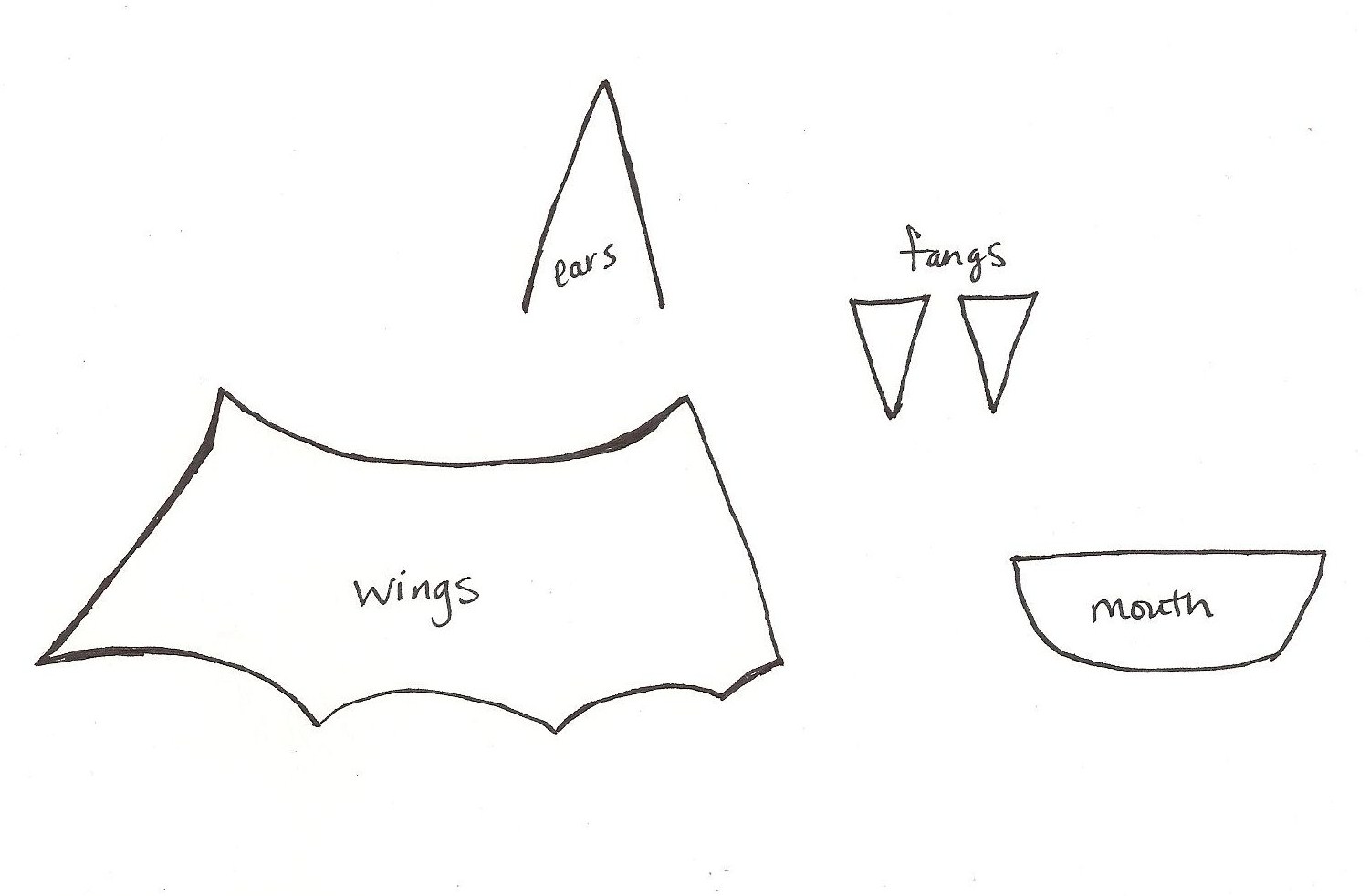
Patterns for wings, fangs, ears and mouth (provided)

Instructions:

1)      Cut out the patterns for the wing, ear, fangs and mouth

2)      Trace wing and ear patterns on brown felt and cut out. Remember you need two wings and two ears.

3)      Trace fangs on white felt and cut out.

4)      Trace mouth on red felt and cut out.

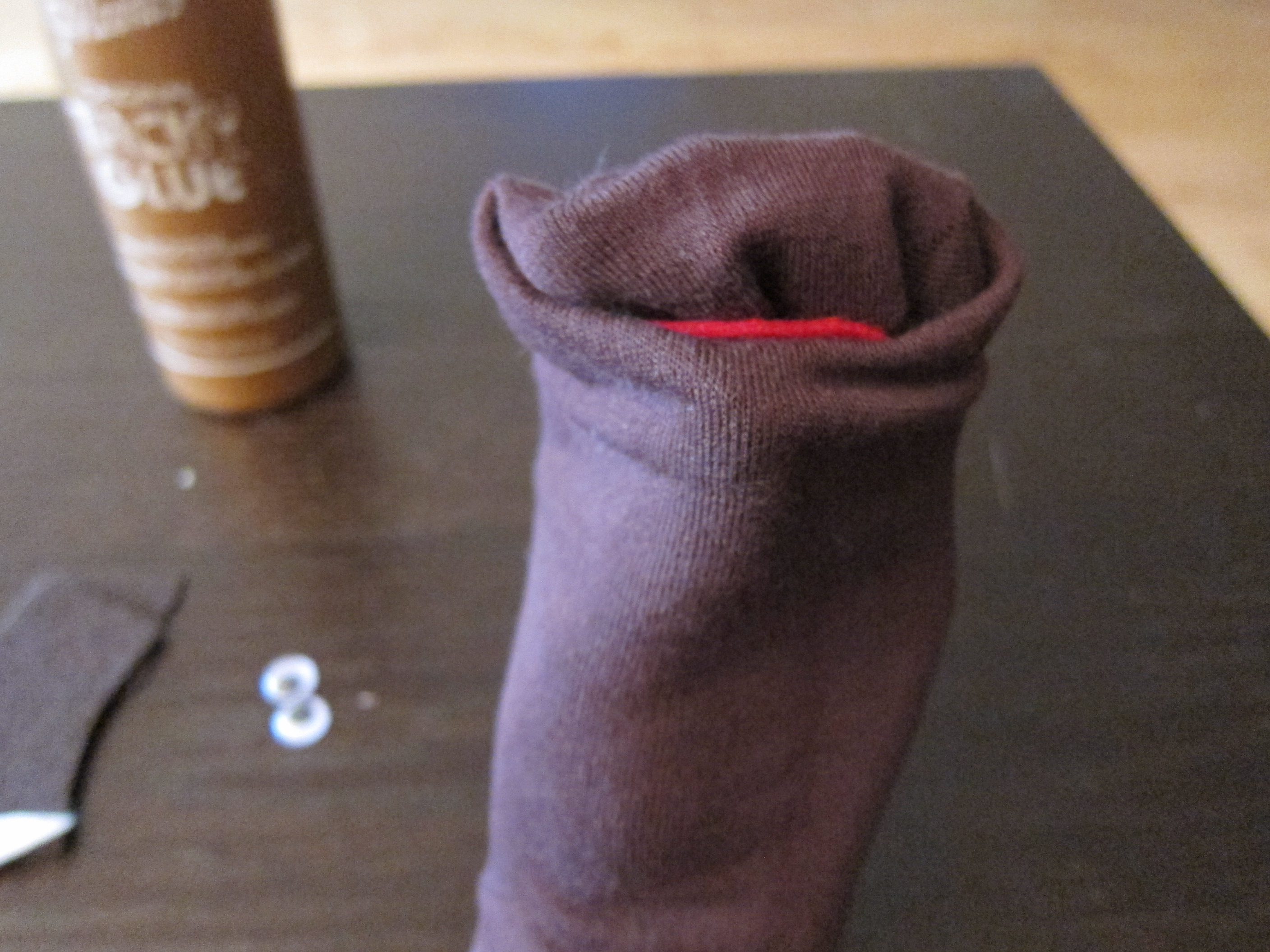
5)      Determine what part of the sock you want to be on top. Tuck the end of the sock in and glue the red mouth on the bottom. If using a glue gun, have an adult use it. If using tacky glue, you will have to hold the felt pieces for few minutes until they’re secure.

Put your hand in and see where you want the mouth to go.

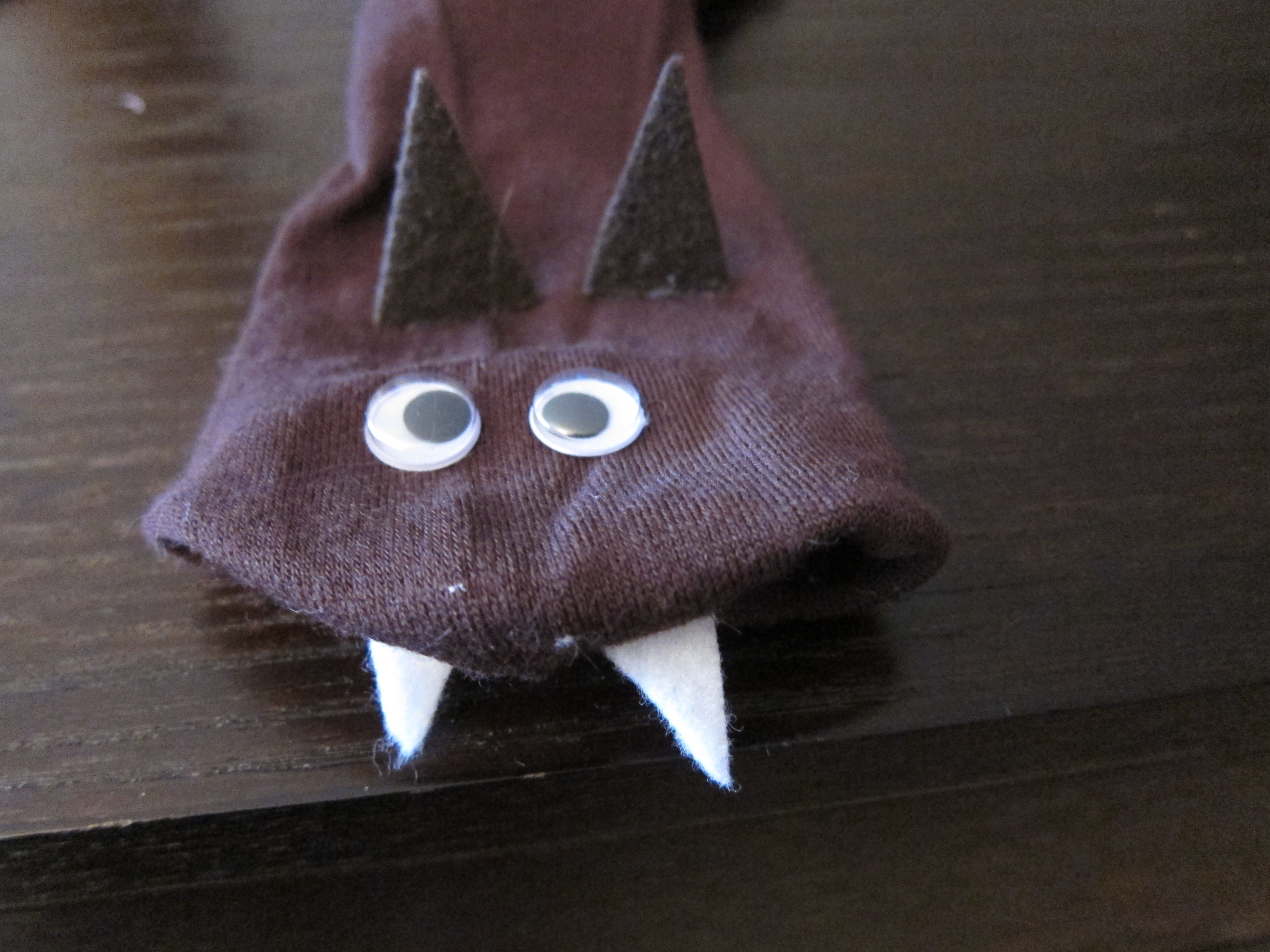
6)      Then glue the fangs on the top edge of the sock.

glue the fangs on

7)      Next glue the eyes on top of the sock.

glue on the eyes

8)      Then glue the ears about an inch and half behind the eyes.

glue on the ears

9)      Glue the wings on the sides of the sock about inch and a half behind the ears.

glue on the wings

Once the glue has cooled, your bat is complete!

Here we are with our finished bat!

Now you can put your hand in and make him fly and bite people! (Ok, don’t really have him bite people!) We couldn’t find a sock to fit Edmond’s hooves, so Ellie is playing with our vampire bat sock puppet using her trunk! We would love to see pictures of your completed bats! Post them on our Facebook page!  http://www.facebook.com/pages/Ellie-and-Edmond/254090144618348

Categories: Animals, bats, Children, crafts, education, Environment, mammals, nature | Tags: , , , , , , , , , | Leave a comment

MAMMAL MONDAY # 10

MAMMAL MONDAY# 10

Happy Mammal Monday! We have a very special friend today. It’s our first primate! These adorable little monkeys sport a wild hairdo! Let’s get ready to meet…


MEET THE COTTON TOP TAMARIN!

Range/Habitat: Northwest South America/rainforest, forest

Diet: Omnivore: fruit, plants, insects

Length/Weight: 8-10”/14-16 oz

Conservation Status: endangered


Fun Facts:

  • Cotton Top Tamarins are small New World monkeys. New World monkeys live in Central and South America.
  • They live in family troops of 10-12 monkeys that are made up of a mated pair and their offspring.
  • Cotton top tamarins often give birth to twins.
  • Like other tamarins, cotton top dads and older siblings help raise the babies. They carry the babies on their backs.
  • Cotton top tamarins are arboreal (they live in the trees).
  • Their tails are very long, 13-16”.  That’s longer than its body! The tail helps them balance while they get around in the trees.
  • Cotton top tamarins are very vocal and have lots of different calls, to express danger, fear, joy and playfulness.
  • They use calls to warn each other of predators. There are different warning calls for predators in the air and predators on the ground.


These little monkeys are about the size of a squirrel, but have much better hairdosJ! How great is it that they dad and siblings help with the babies? We think these monkeys are super great!

Categories: Animals, Children, education, Environment, mammals | Tags: , , , , | 1 Comment

MAMMAL MONDAY # 9

MAMMAL MONDAY# 9

Wow, it’s Monday again? Where did the weekend go? We have a great mammal for you today! This special mammal could have been featured on Watery Wednesday, but we just couldn’t wait for you to meet this animal, so let’s do it!

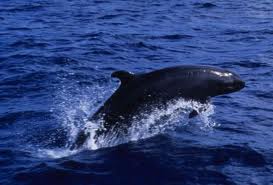
MEET THE FALSE KILLER WHALE!

Range/Habitat: worldwide/temperate-tropical waters

Diet: Carnivores: salmon, tuna, barracuda

Length/Weight: 16-20ft/1- ½ tons

Conservation Status: lower risk


Fun Facts:

  • False Killer Whales are one of the largest members of the dolphin family.
  • They are agile and fast swimmers.
  • False killer whales get their name because they resemble Orcas (aka Killer Whales).
  • They don’t have a beak (like a bottlenose dolphin).
  • You often see them swimming in groups of 10-20 whales. A group of whales is called a pod.
  • False killer whales prefer deep oceans, but can be seen in shallows near land.
  • They are very social and use clicks and whistles to communicate with each other.
  • Like other members of the dolphin family, they use echolocation to locate their prey.


These whales have a funny name, but they sure are cool. People communicate by talking, but these whales use clicks and whistles. We think everyone should try making up their own False Killer Whale language and practice making clicks and whistle sounds! We’re going to try today! Edmond thinks he’ll be better than Ellie at this challenge!


Categories: Animals, Children, education, Environment, mammals | Tags: , , , , | Leave a comment

SUPER SURPRISE # 8

SUPER SURPRISE THURSDAY # 8

Rise and shine for Super Surprise Thursday! We have a riddle for you this morning! What do you get when you cross a kangaroo, a squirrel and rabbit? You get this crazy animal!

MEET THE SPRINGHARE!

Range/Habitat: Central-East South Africa/dry savannah

Diet: Omnivore: seeds, bulbs, plants, insects

Length/Weight: 10 ½”-16”/6 ½-8lbs

Conservation Status: Common


Fun Facts:

  • Springhares are not actually hares (a relative of the rabbit). They are rodents.
  • Springhares have large long hind that are built for jumping.
  • They can jump up to 6 ½ ft in one single bound.
  • Springhares have long bushy tails that help them when jumping and give them support when they sit.
  • They have large front claws for digging burrows.
  • Springhares are nocturnal (active at night).

These adorable animals may look like a kangaroo and a squirrel and rabbit, but they’re none of these! These rodents are pretty fabulous and are great jumpers! Edmond says he’s a good jumper, but I don’t believe him! How far can you jump? You should go outside and practice jumping like a springhare!


Categories: Animals, Children, education, Environment, mammals | Tags: , , , , | Leave a comment

MAMMAL MONDAY # 8

MAMMAL MONDAY# 8

It’s Monday and we hope everyone had great weekend! Monday means it’s time to meet another mammal! Who’s excited? We are! This mammal has some very special adaptations to help them eat the leaves that others can’t! So let’s meet…

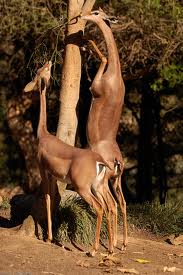
MEET THE GERENUK!

Range/Habitat: East Africa/dry and bushy scrub

Diet: Herbivore: leaves

Length/Weight: 4 ½ -5 ¼ ft/62-115 lb

Conservation Status: Near Threatened

Fun Facts:

  • Gerenuks are part of the antelope family.
  • They have long slender bodies, necks and small faces.
  • Gerenuks can curve their spines into an S shape, which enables them to stand on their hind legs.
  • Because they can stand on their hind legs, they can eat leaves that other animals can’t reach.
  • Gerenuks are also called the giraffe gazelle.
  • They have large ears and eyes that help them hear and see predators.
  • Only male gerenuks have horns.
  • They get all of their water supply from the leaves they eat, so they can survive in dry habitats.

Gerenuks are kind of funny looking with their long thin bodies and giant ears. We think it’s super cool that they can stand up on their hind legs to eat! What a neat adaptation!  They are called the giraffe gazelle, but they’re not related to the giraffe. Do you remember which antelope is? *answer below


*Okapi: ( http://wp.me/p1Gkpi-16 )

Categories: Animals, Children, education, Environment, mammals | Tags: , , , , | Leave a comment

SUPER SURPRISE # 7

SUPER SURPRISE THURSDAY #7

We didn’t have a Super Surprise animal last week because it was World Rhino Day! We hope you enjoyed learning all about rhinos on our Facebook page and our Twitter account!* Today’s animal is very special as it is naked mammal! Naked you say? Yep, it’s a naked animal. Let’s see who it is!

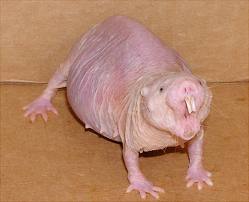
MEET THE NAKED MOLE RAT

Range/Habitat: East Africa/tropical grassland-deserts

Diet: Herbivores: roots-tubers

Length/Weight: 3-3 ½”/1- 2 oz (about as much as 4 to 5 quarters)

Conservation Status: Common


Fun Facts:

  • Naked Mole Rats are a very funny looking mammal. They are almost hairless, except for a few pale hairs and whiskers.
  • They are very social and live in colonies of up to 70-100 individuals.
  • Naked mole rats have a very unusual social structure. There is a queen naked mole rat and workers.
  • The queen is the dominant female and is the only naked mole rat to bread (have babies) in the colony.
  • Worker naked mole rats dig the elaborate tunnel systems that they live in. They also gather food.
  • Naked mole rats rarely surface from their underground tunnels.
  • They have tiny ears and eyes. They can’t hear or see well.
  • Naked mole rats have large teeth that they use for digging and eating.

We know naked mole rats aren’t the cutest animal on the planet; in fact they’re pretty bizarre looking! But even the bizarre animals are cool! Sometimes even more cool that the cute ones!


Categories: Animals, Children, education, Environment, mammals | Tags: , , , , | Leave a comment

MAMMAL MONDAY # 7

MAMMAL MONDAY #7

It’s just another Mammal Monday, but today’s animal isn’t just another ordinary animal. Actually, are there any ordinary animals? We think they’re all special! This animal, that is part of the same family as the weasel lives in the Americas, but it has some close cousins in Europe and Africa! So who is it?

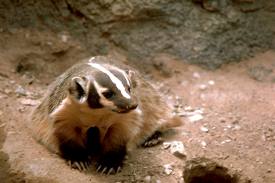
MEET THE AMERICAN BADGER!

Range/Habitat: South Canada-USA-N Mexico/grasslands and farms

Diet: Carnivore: small mammals, snakes

Length/Weight: 16-28”/8 ½ -26 lbs

Conservation Status: Common


Fun Facts:

  • The American Badger is smaller than its Eurasian cousin.
  • They are solitary animals and nocturnal.
  • American badgers have large claws on their front paws. They use to them to dig burrows and to dig out prey.
  • They are known to use a different den each night during the summer months.
  • American badgers do not hibernate but are less active in winter.
  • They have a musky smell.

American Badgers are known as efficient predators and to have bad dispositions. They are also beneficial to farmers because they help keep the rodent population down. Even though they smell have a bad reputation, we think they’re pretty awesome!

Categories: Animals, Children, education, Environment, mammals | Tags: , , , , | 2 Comments

MAMMAL MONDAY # 7

MAMMAL MONDAY #7

Happy Mammal Monday! We’re excited to be featuring a mammal that flies! Can you believe there are mammals that can fly like birds? Us either- but they are fantastic! Let’s meet one!

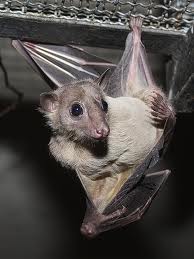
MEET THE EGYPTIAN ROUSETTE!

Range/Habitat: N Africa-West and East Coast Africa

Diet: Fruigivore: fruit

Length/Weight: 5 ½ – 6 ½ “/ 3-4oz

Conservation Status: Common

Fun Facts:

  • Egyptian Rousettes are also known as the Egyptian Fruit Bat.
  • They are the only fruit bats to use echolocation. (This is when an animal sends out a sound. They judge how far away something is, by how long it takes for the sound to come back to them.)
  • These bats roost in caves instead of trees. They often hang together to keep warm! Snuggly!
  • Like most bats the Egyptian Rousette is nocturnal (active at night).
  • They have a wingspan of about 2 feet.
  •  They are dark brown to gray.

We love flying mammals, especially bats! Did you know there are about 1,100 species of bats in the world? We better get to reading about these special mammals! Do you have a favorite bat?

Categories: Animals, Children, education, Environment, mammals | Tags: , , , , | Leave a comment

Mammmal Monday #6

MAMMAL MONDAY#6 (sort of…)

We had a holiday last Monday, so we didn’t post a mammal. In order to make it up for our fans we picked one of our favorite mammals. This shy, reclusive and hard to spot mammal is quite the climber, which is a good thing since they live in the trees. Who is this special mammal? Let’s find out…

MEET THE CLOUDED LEOPARD!

Range/Habitat: South/Southeast Asia (China/India/Nepal/Malaysia)/foothill mountains

Diet: Carnivore: birds, boars, monkeys, deer

Length/Weight: 23- 43”/ 33-50lb

Conservation Status: Vulnerable

Fun Facts:

  • The Clouded leopard is the smallest of all big cats.
  • Clouded leopards are nocturnal (they are active at night) and arboreal (they live in the trees).
  • They have some great adaptations for living in trees. Their back ankles can rotate, allowing them to grip on branches and trees. They can also hang upside down off branches.
  • Clouded leopards can also climb down trees head first, kind of like a squirrel.
  • Their tails are as long as their bodies which help them balance while climbing.
  • They get their name from the cloud like spots that they have on their bodies.
  •  Because they are so shy and reclusive, they are hard to study in the wild.
  • They have the largest canine teeth (those are the sharp pointy ones) compared to their body size, of all the wild cats.

These shy and special cats are one of our very favorites. We think they have such beautiful coats. We met one who lives at Zoo Atlanta, his name is Moby.  He’s a great climber too!


Categories: Animals, Children, education, Environment, mammals | Tags: , , , , , , , , , , , , , , , , | Leave a comment

Blog at WordPress.com.