Posts Tagged With: reptiles

YEAR OF THE DRAGON # 1

NEW YEAR MONDAY

Happy Chinese New Year! It’s the Year of the Dragon and we’re celebrating with a dragon themed week! That’s right folks, all the animals we feature this week will have dragon in their name! Pretty awesome! Believe us when we say that finding these five animals wasn’t easy, there are no mammals or birds with dragon in their names! But we did find some reptiles! So are you ready to meet your first dragon? Let’s do this!

MEET THE THAI WATER DRAGON!

Range/Habitat: Thailand-Cambodia-Vietnam-Chinese/rainforests

Diet: Omnivore: insects, vegetation

Length: 2 ½-3 ft

Conservation Status: common


Fun Facts:

  • Thai Water Dragons are also known as Chinese water dragons.
  • They are arboreal (spend most of their time in trees).
  • Thai water dragons are excellent swimmers! They often drop into water to escape predators.
  • They have a raised hump on their neck and a row of spikes down their backs.
  • Male Thai water dragons are often brighter in color than females. Their color brightens during mating season.
  • Thai water dragons are ambush predators.
  • Their tails make up nearly two-thirds of their length.


We think Thai water dragons are pretty neat! Not only are they cute, but they can climb trees and swim too! Wow, these reptiles are athletic and amazing! And they’re pretty cute for dragons J!


Categories: Animals, Children, dragons, education, Environment, nature, reptiles | Tags: , , , , , , , | Leave a comment

REPTILIAN TUESDAY # 22

REPTILIAN TUESDAY # 22

We have a tiny little lizard with a really loooong tail for this Reptilian Tuesday! They’re pretty cute! Who’s ready to meet them? We are!!!!

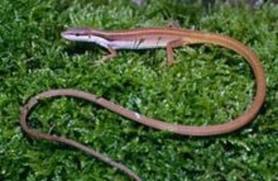
MEET THE LONG TAILED SKINK!

Range/Habitat: Southeast Asia/ rainforest

Diet: Insectivore: spiders, insects

Length: 12-14”

Conservation Status: common


Fun Facts:

  • Long tailed skinks are olive brown with two black stripes down each side.
  • Long tailed skinks have extremely long tails, as their name implies! They can be 2 times the length of their bodies.
  • They are diurnal (active during the day).
  • Like other lizards they can lose their tails if caught.


These cute, little slender bodied lizards are fun with their very long tails! We wonder what they do with those long tails. Edmond thinks they secretly use them as lassos and grab the insects they eat with them- but that is not true!

Categories: Children, education, Environment, nature, reptiles | Tags: , , , , , | Leave a comment

REPTILIAN TUESDAY # 21

REPTILIAN TUESDAY # 21

Who’s ready to meet a ssssssnake for Reptilian Tuesday? Ssssssshhhh… this snake burrows underground so we need to be very quiet so we can observe this pretty reptile!

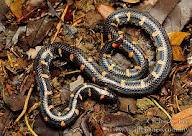
MEET THE RED TAILED PIPE SNAKE!

Range/Habitat: Southeast Asia/ wetlands, swamps

Diet: Carnivore: snakes, eels

Length: 28-39”

Conservation Status: common


Fun Facts:

  • Red tailed pipe snakes get their name from the red patch on the bottom of their tails.
  • They raise their tails to mimic venomous snakes when threatened by predators.
  • They have shiny black, almost iridescent bodies.
  • Red tailed pipe snakes are excellent swimmers.
  • Red tail pipe snakes burrow underground.
  • They are constrictors and are non venomous.


Red tailed pipe snakes are small and beautiful snakes. Snakes are all so diverse in their size, coloration and habitat. They are all so important for their ecosystems too! Have you thanked a snake today? Do so from a distance J!


Categories: Animals, Children, education, Environment, nature, reptiles | Tags: , , , , , | Leave a comment

REPTILIAN TUESDAY # 20

REPTILIAN TUESDAY # 20

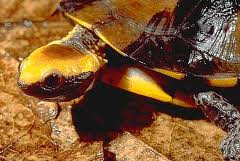
Happy 2012 everyone! We hope all our fans and supporters had a fabulous holiday! We’re back with loads of fun and fresh ideas! We’ll be celebrating animal holidays, coming up with crafts and having theme weeks once a month! We look forward to sharing all this fun, adventure and education with you! First up in 2012, a small turtle from Africa! Who wants to meet this cute little reptile? We do!

MEET THE AFRICAN HELMETED TURTLE!

Range/Habitat: Africa (South of Sahara)/ marshes, watering holes and rain pools

Diet: Omnivore: frogs, mollusks, invertebrates

Length: 6-7”

Conservation Status: common


Fun Facts:

  • African Helmeted Turtles have flat carapaces (top shells).
  • They are very slow and sluggish, even for turtles.
  • African helmeted turtles have glands that release a strong musky odor when they are threatened by predators.
  • They are also called the marsh terrapin.
  • African helmeted turtles aestivate during the dry season. Aestivation is a period of inactivity.


These tiny little turtles sure are neat, but be careful they can be a bit stinkyJ! But then again being stinky can be good, if it helps you keep predators away! Would you like to be stinky?

Categories: Animals, Children, education, Environment, nature, reptiles | Tags: , , , , , | Leave a comment

SUPER SURPRISE THURSDAY #18

SUPER SURPRISE

THURSDAY# 18

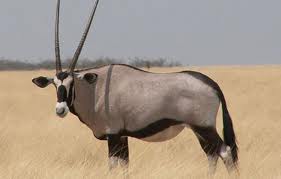
Hello! Have we found a lovely member of the antelope family for you on this Super Surprise Thursday! This desert dweller is made to live in the hot climate! Do you have your sunglasses? Well let’s meet this animal!

MEET THE GEMSBOK

Range/Habitat: South Western Africa/desert, scrub

Diet:  Herbivore: grass, shrubs, wild melon and cucumber

Length/Weight: 5 ¼-7 ¾ ft/ 220-460lb

Conservation Status: Common

Fun Facts:

  • Gemsboks are also called the Southern Oryx.
  • Gemsboks are adapted to live in dry climates.
  • They live in herds of around 25 individuals that include females, several males and one dominate male.
  • They eat mainly during dusk and dawn to avoid the hottest part of the day.
  • Gemsboks have long beautiful ringed horns.
  • Gemsboks also have beautiful black and white markings on their face.
  • Herds gather in shaded areas during the heat of the day to stay cool.
  • Gemsboks can go weeks without water.

We think Gemsboks are graceful and beautiful antelopes! Gemsboks have some fabulous adaptations for living in the desert! What would you bring with you to survive in the desert? Ellie is bringing water and mud for sunscreen and Edmond wants a giant bag of apples!

We found a fun coloring sheet you can print of the Gemsbok:

http://www.janbrett.com/mural_hhl/mural_hhl_gemsbok.htm

Categories: Animals, Atlanta, Children, education, Environment, mammals, nature | Tags: , , , , , | Leave a comment

WATERY WEDNESDAY #18

WATERY WEDNESDAY# 18

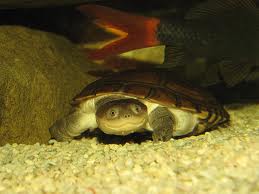
Woohoo it’s Watery Wednesday again and we have a reptile that lives in the shallows of rivers and ponds! What? Yep, we have a reptile for Watery Wednesday! Come meet this little turtle…

MEET THE TWIST NECKED TURTLE!

Range/Habitat: Northern South America/river-ponds

Diet: Carnivore: insects, snails, tadpoles

Length: 5 ½-6 ½”

Conservation Status: Common


Fun Facts:

  • Twist necked turtles do not pull their heads backwards into their shells, they pull them sideways.
  • They are relatively bad swimmers, and usually stay in shallow waters.
  • Twist necked turtles have very flat carapaces (top shells).

These neat little turtles have a very special adaptation as they pull their head in sideways and not backwards. They are one of the very few turtles who are able to do this on the planet! Neat! What kind of special adaptation do you have? Can you touch your nose with your tongue or make silly faces? Ellie can touch her back with her trunk!


Categories: Animals, Children, education, Environment, nature, reptiles | Tags: , , , , | Leave a comment

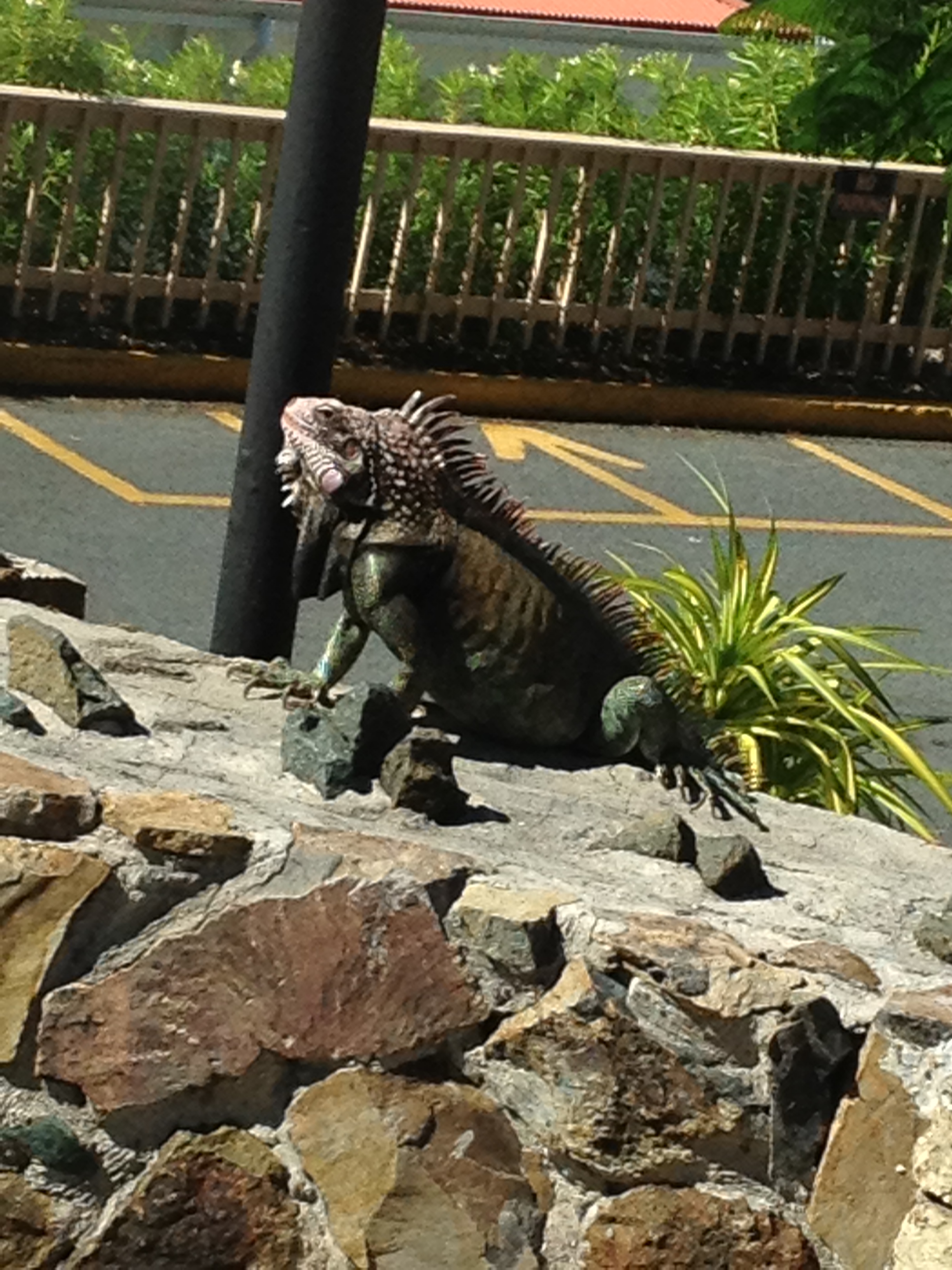
GREEN IGUANA DAY!

Green Iguana in St Thomas

HAPPY GREEN IGUANA DAY!

We’re celebrating green iguanas today! We saw so many while we were in St Thomas, so we thought we would post fun facts throughout the day! Checkout our twitter account: http://twitter.com/#!/EllieandEdmond and our Facebook page: http://www.facebook.com/pages/Ellie-and-Edmond/254090144618348 for fun facts and pictures!

Categories: Animals, Children, education, Environment, nature, reptiles | Tags: , , , , | Leave a comment

REPTILIAN TUESDAY #17

REPTILIAN TUESDAY # 17

Reptilian Tuesday brings us a reptile that deserves respect and a lot of distance. Yes, we’ve found a very venomous snake that is beautiful as it is scary. So let’s meet…

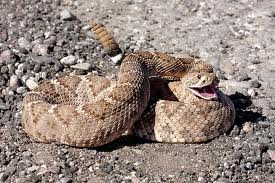
MEET THE WESTERN DIAMONDBACK RATTLESNAKE!

Range/Habitat: Southwestern United States-North Mexico/desert-scrub-forest

Diet: Carnivore: small mammals, birds, lizards

Length: 3-6ft

Conservation Status: common

Fun Facts:

  • Western Diamondback Rattlesnakes are heavy, stocky snakes with a diamond pattern on their backs.
  • They have very dangerous venom and are dangerous to humans.
  • Western Diamondback Rattlesnakes have a segmented rattle on the end of their tails that they rattle to warn predators.
  • The rattles get longer after the snake sheds its skin. They can get up to 10 segments long.
  • Western diamondback rattlesnakes have no rattles when they are born.
  • They are ambush predators.
  • Western diamondback rattlesnakes are pit vipers; they have heat sensing pits between their eyes.

Western diamondback rattlesnakes are definitely a snake you should stay away from. They are an important part of the ecosystem though and are to be respected! Every animal has their place on our planet, cute or not!

Categories: Animals, Children, education, Environment, nature, reptiles | Tags: , , , , | Leave a comment

REPTILIAN TUESDAY # 16

REPTILIAN TUESDAY # 16

Well have we an odd reptile for you today! So we all know snakes have no legs right? And we all know lizards have 4 legs! But that last statement is not true! Yep folks, there are lizards out there with NO legs! What? Come meet this legless lizard!

MEET THE SLOW WORM!

Range/Habitat: Europe-Western Asia-Northern Africa/woodlands, yards

Diet: Carnivore: slugs, invertebrates

Length: 12-16”

Conservation Status: common


Fun Facts:

  • Slow worms are not worms or snakes, they are lizards without legs.
  • Slow worms are active at dawn and dusk.
  • They have long life spans; they can live up to 50 years.
  • Unlike snakes, slow worms have eyelids.
  • Young slow worms have a metallic stripe that the females keep throughout their lives.
  • They can lose their tails if caught by a predator, just like other kinds of lizards.
  • Slow worms hibernate in the winter.


Slow worms are a funny lizard. They slither around like a snake, but they aren’t snakes! Crazy! They are considered to be very beneficial to have in a garden because they eat pests that can destroy crops! How helpful of them!

Categories: Animals, Children, education, Environment, nature, reptiles | Tags: , , , , , | Leave a comment

REPTILIAN TUESDAY # 15

REPTILIAN TUESDAY # 15

We’ve found another special reptile today! This snake could easily have been featured on Watery Wednesday too! Yep, we found a snake that calls the ocean its habitat! Neat! Come meet…

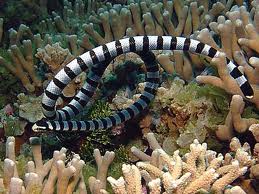
MEET THE BANDED SEA KRAIT!

Range/Habitat: Southern-South Eastern Asia/ tropical oceans-coral reefs

Diet: Carnivore: fish, eels

Length: 3 ¼-6 ½ ft

Conservation Status: Common


Fun Facts:

  • Banded Sea Kraits are members of the sea snake families. They spend most of their lives in the ocean.
  • Banded sea kraits are highly venomous. They are more deadly than most land snakes.
  • They are not harmful to humans, because they have short fangs and are very docile.
  • Banded sea kraits have paddle shaped tails that help them swim.
  • They come on shore to lay their eggs.


Sea kraits are incredible snakes! Did you know there were snakes that lived in the ocean? We saw one while we snorkeling in Indonesia! It was awesome! If you could go snorkeling what animals would you like to see?

Categories: Animals, Children, education, Environment, nature, reptiles | Tags: , , , , , | Leave a comment

Blog at WordPress.com.