birds

SUPER SURPRISE THURSDAY # 44

SUPER SURPRISE THURSDAY  #44

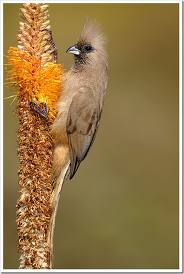
We’re jetting to Central Africa today to meet one gorgeous feathery friend. These very social birds can be found in large flocks and are named after a mammal. Grab your binoculars and let’s head out on the savanna!

MEET THE SPECKLED MOUSEBIRD!
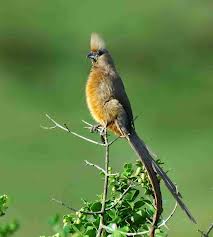
   Range/Habitat: Central-Eastern Africa/ savannas, grasslands

   Diet: Frugivore: fruits, seeds

   Length/Weight: 12-16”/ 1 5/8- 2 5/8 oz

   Conservation Status: common


Fun Facts:

  • Speckled Mousebirds are considered living fossils and are related to long line of ancient birds.
  • They get the name mousebird from their long tails and furry like feathers.
  • Speckled Mousebirds have a crest of feathers on their head.
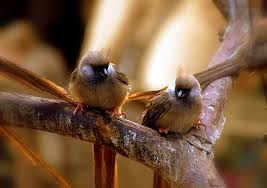
  • Speckled Mousebirds are very social and live in family flocks of 4-20 individuals.
  • They sleep in a cluster at night to keep warm.
  • Male and female speckled mousebirds take care of chicks, as do older offspring.
  • They are very flexible and acrobatic and can be seen eating upside down!

Wow, these funny looking birds sure are fun! They are so social! You can see them puff up their feathers and get a little sun bath too to warm themselves during the day! Now that is our kind of bird!


Categories: adventure, africa, Animals, birds, Children, conservation, education, Environment, nature, science, wildlife | Tags: , , , , , , , , | 2 Comments

ANIMAL INTELLIGENCE DAY # 4

ANIMAL INTELLIGENCE DAY #4 

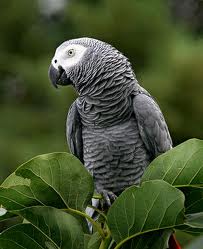
Our last day of meeting animal smarties takes us to the rainforests of Africa to find a very special bird. This bird is known to be very smart and great at imitating human speech.  Wonder if they can do a good elephant or horse impression?

MEET THE AFRICAN GREY PARROT!

   Range/Habitat: West-Central Africa/lowland rainforest and farmland

   Diet: Herbivore: fruit, nuts, leaves

   Length/Weight: 13”/14 oz

   Conservation Status: Common- Near Threatened

Fun Facts:

  • African Grey Parrots are highly social birds that live in flocks.
  • There are two subspecies (types) of African grey parrots: the Congo, who is larger and has a bright red tail and the Timneh, who is smaller and darker and has a maroon tail.
  • When flying in large flocks African greys call to each other and communicate by flashing their bright red tails.
  • They have a long life span. They can live up to 60+ years.
  • They are highly intelligent and have been compared to human toddlers.
  • African greys are highly vocal and are amazing at mimicking sounds and language!
  • Alex is an African Grey Parrot that worked with Dr Irene Pepperberg and was known to do things such as sort colors, shapes and count! We’re going to write a separate post about Alex- he was a very special bird!
African grey parrots are very special birds! They’re very smart and social, a great combination! If you could teach a parrot to say one thing, what would it be? Ellie would teach him to trumpet like her! Alex the African Grey was a very famous parrot who could things we never thought parrots could do! Check out this short video! Unfortunately, Alex passed away, but the Alex Foundation continues research to show how smart parrots really are!


Categories: africa, Animals, birds, Children, conservation, education, Environment, nature, rainforests, science, wildlife | Leave a comment

ANIMAL INTELLIGENCE WEEK DAY # 3

ANIMAL INTELLIGENCE

 DAY # 3

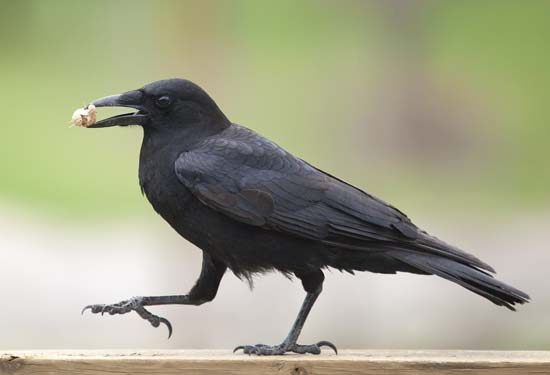
Today’s smarty is a dark and mysterious bird. They can be found all over the world in your backyard and ours. These amazing feathery friends have some astonishing intelligence capabilities! Let’s take a stroll in our backyard to meet the dark and lovely bird!

MEET THE CROW!

   Range/Habitat: Worldwide/ farmland, parks, woodlands, suburbs

   Diet: Omnivore: insects, carrion, seeds, eggs

   Length/Weight: 16-21”/11-22 oz

   Conservation Status: Common


Fun Facts:

  • New Caledonian Crows use tools. They have also been known to make tools.
  • One group of crows has learned to place nuts in the street and have cars crush open the nuts. They wait til the red light appears and then get their prize.
  • They hide and store food and must remember where they stored it.
  • Crows have a variety of calls and vocalizations. These calls vary by the region that the crows live in.
  • Crows have been known to answer the calls of other species of birds.
  • They can recognize human faces and remember them years later.
  • Crows almost always live near humans.
  • They can be very sneaky. One group of crows will even pull up fishing lines left by ice fishermen.


Crows are super smart! We can’t believe that they even recognize human faces, check out the study here! Not only could these birds remember the researchers, they eventually taught other crows that those researchers posed a threat! Wow! Remind us not to make any crows in our neighborhood mad! Here’s a video of the crows in Japan using cars to crack nuts!


Categories: adventure, Animals, birds, Children, conservation, education, Environment, nature, science, wildlife | Tags: , , , , , , , , | Leave a comment

FEATHERY FRIDAY GREATEST HITS!!

FEATHERY FRIDAY GREATEST HITS!!

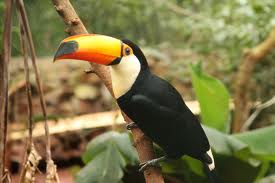
On this Feathery Friday we went in search of a beautiful beaked bird! Whew! We’ve made it to another Friday and we’re so happy that it’s full of feathers! Our bird friends come in so many shape and sizes and today’s bird has a giant beak! Who is this amazing bird with the big ole beak?
MEET THE TOCO TOUCAN

   Range/Habitat: North Eastern-Central South America (Bolivia-

Peru-Argentina)/woodland, forest, groves

   Diet: Omnivore: insects, fruits, frogs

   Length/Weight: 21-23”/20 oz

   Conservation Status: Common


Fun Facts:

  • Toco Toucans are the largest of all toucans.
  • They have large orange bills with a black spot. The bills can get up to 7 ½” long (about the length of a pencil).
  • Toco Toucan bills are serrated (like a knife) and this helps them grasp and tear fruit.
  • Their large bills also enable the toucan to get fruit from out of reach branches.
  • Toco toucans nest in trees.
  • You can see Toco toucans in small flocks of up to 6 birds.
  • Both female and male toucans incubate the eggs.

Toco Toucans are really pretty birds with their shiny black feathers and large orange beaks! And man does that beak come in handy when you’re trying to get the fruit on the end of the branch! They also have a really cool call. Take a listen and Happy Feathery Friday!


Categories: adventure, Animals, birds, Children, conservation, education, Environment, nature, rainforests, science, wildlife | Tags: , , , , , , , , | Leave a comment

FEATHERY FRIDAY GREATEST HITS!

FEATHERY FRIDAY GREATEST HITS!

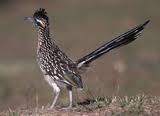
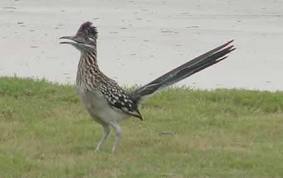
We went to the desert on this day to meet a famous bird! Have you ever seen the cartoon where there’s a coyote and a roadrunner? Did you know that there are real roadrunners? Well they are real and they’re pretty cool! So let’s meet our feathery friend the…
MEET THE GREATER ROADRUNNER!

   Range/Habitat: Southwestern United States-Northern Mexico/desert and scrub

   Diet: Carnivore: lizards, snakes, scorpions and spiders

   Length/Weight: 22”/12 oz

   Conservation Status: Common


Fun Facts:

  • Greater Roadrunners can fly but spends most of its time on the ground.
  • They can reach speeds of up to 18 mph! That is one fast bird.
  • Greater roadrunners generally walk/run to catch their prey.
  • They use their large beaks to attack prey.
  • They have long tails that they lay flat when running.
  • Greater roadrunners have black skin under their feathers. They expose the skin to the sun to absorb heat.

We all love watching the coyote roadrunner cartoons, but the real roadrunner is more fun! They are fast and furious little birds. How fast can you run? You should try and be a roadrunner for the day!


Categories: adventure, Animals, birds, Children, conservation, education, Environment, nature, science, wildlife | Tags: , , , , , , , , | Leave a comment

SUPER SURPRISE THURSDAY GREATEST HITS!

SUPER SURPRISE THURSDAY GREATEST HITS!

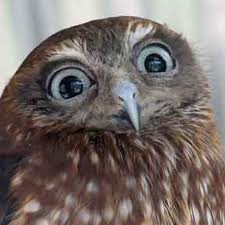
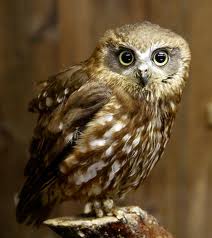
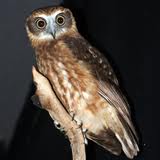
We went to Australia to meet this feathery animal! Who is it, you say? Well it’s a bird you think would say who but this one doesn’t! Whooooo is it then?

MEET THE BOOBOOK OWL!

   Range/Habitat: Australia-South New Guinea/forests, grasslands, farmlands

   Diet: Carnivore: insects, birds, mammals

   Length/Weight: 12-14”/6-10oz

   Conservation Status: Common


Fun Facts:

  • Boobook owls are named after the call it makes.
  • They are nocturnal like other owls, but often feed at dusk and dawn too!
  • Boobook owls are specialists at catching prey in mid-air.
  • They have grey beaks and feet.
  • Both females and males take care of the chicks.

This funny little owl doesn’t make the typical who call! That’s what makes it so special! Listen to it here.


Categories: adventure, Animals, birds, Children, conservation, education, Environment, nature, science, wildlife | Tags: , , , , , , , , | 1 Comment

FEATHERY FRIDAY # 43

FEATHERY FRIDAY #43

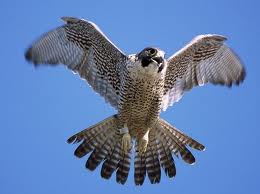
We’re off to the Big Apple today to meet one fast and freewheeling bird! These city dwellers live all over the world and are amazingly adaptable! Let’s grab a yellow cab and goooooo!

MEET THE PEREGRIN FALCON!

   Range/Habitat: Worldwide/ coasts, cities, mountains, wetlands

   Diet: Carnivore: birds

   Length/Weight: 13 ½-20”/ 1 ¼-3 ¼ lb

   Conservation Status: common


Fun Facts:

  • Peregrine Falcons are one of the fastest birds in the world.
  • Peregrine Falcons can reach speeds of up 145 mph.
  • They have the widest distribution of any diurnal land bird.
  • Peregrine Falcons are diurnal (active during the day).
  • Female peregrine falcons are larger than males.
  • They “dive” while flying to catch their prey.
  • Peregrine Falcons often nest in high places, such as skyscrapers, towers and cliffs.

These magnificent birds sure are amazingly fast! Don’t blink because you may miss them. They’re also a great success story! Peregrine falcons were almost wiped out in the Eastern U.S., but with the ban of DDT, they have made a great comeback. We just love that they love to nest on skyscrapers!


Categories: adventure, Animals, birds, Children, conservation, education, Environment, nature, science, wildlife | Tags: , , , , , , , | Leave a comment

FEATHERY FRIDAY # 42

FEATHERY FRIDAY #42

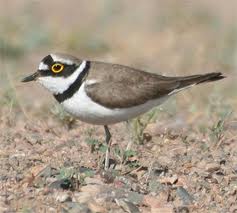
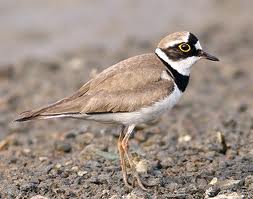
Today’s little bird lives all over the northern hemisphere, so we’re putting on our coats and going to Greenland. We’ve never been to this big island nation, but this little bird was a good excuse to go! Grab your coat and let’s head out!

MEET THE RINGED PLOVER!

   Range/Habitat: Greenland-N Europe-Asia/ wetlands, coast lines, arctic

   Diet: Carnivore: invertebrates

   Length/Weight: 7-8”/ 1 ¾-2 ½ oz

   Conservation Status: common


Fun Facts:

  • Ringed plovers have a collar of white feathers around their neck.
  • They forage for food at night.
  • Ringed plovers have excellent eyesight.
  • They spend their winters on land in wetland habitats.
  • Male and female ringed plovers take care of the chicks.
  • Ringed plovers perform a “broken wing” behavior to distract predators from the nest.

These neat little shore birds are such fun to watch! They’re cute too with their patterns and collar!

Categories: adventure, Animals, birds, Children, conservation, education, Environment, nature, science, wildlife | Tags: , , , , , , , | Leave a comment

OLYMPIC ANIMALS DAY # 5

OLYMPIC ANIMALS DAY #5

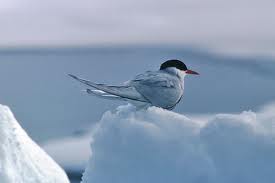
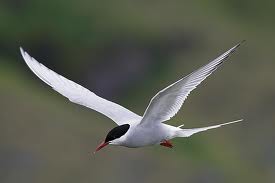
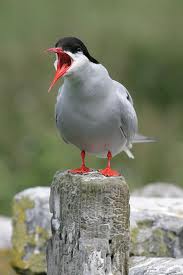
It’s the last day of our Olympic Animals Week and we’re off to the Arctic to meet a bird who knows how to fly! We’ll need a plane to keep up with these birds, because they migrate from one end of the earth to the other! Whew! Are you ready?

MEET THE ARCTIC TERN!

   Range/Habitat: Arctic-Antarctica/ oceans

   Diet: Carnivore: fish, crustaceans

   Length/Weight: 13-14”/ 3 3/8- 4 oz

   Conservation Status: common

Fun Facts:

  • Arctic terns have one of the longest migrations of any bird on the planet.
  • They can fly 10,000-12,000 miles twice a year.
  • Arctic terns spend most of their lives in daylight.
  • They nest in Antarctica in the summer.
  • Arctic terns dive for their food.
  • When they are molting, they cannot fly.
  • They can live up to 20-30 years.

Wowzers! We get tired just thinking about all the flying these amazing birds do in a year! Can you imagine? Arctic terns definitely deserve the gold medal in long distance flying! We hope you’ve enjoyed Olympic Animals Week! Please tell your friends and family about our blog :)!


Categories: adventure, Animals, birds, Children, education, Environment, nature, oceans, Olympics, science, wildlife | Tags: , , , , , , , , | 1 Comment

FEATHERY FRIDAY # 41

FEATHERY FRIDAY# 41

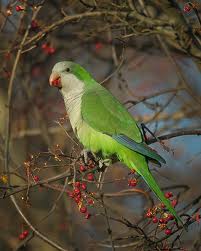
We’re off to the rainforest of Central and South America today to meet the little parakeet that could. These brightly colored birds are so adorable. Are you ready to meet them?

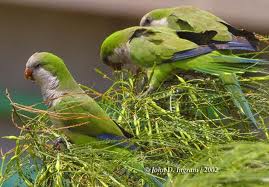
MEET THE MONK PARAKEET!

   Range/Habitat: Central-South America/ rainforests, grasslands, suburbs

   Diet: Herbivore: seeds, fruits, berries

   Length/Weight: 11 ½”/ 4 oz

  Conservation Status: common


Fun Facts:

  • Monk parakeets are also known as the Quaker parrot.
  • They have long green tails and gray/white faces.
  • Monk parakeets are highly intelligent and social.
  • They build colonies of nests.
  • Monk parakeets build their nests next to or on top of each other, creating one large structure.
  • They have been introduced in many other places, where they are expanding their numbers.

Monk parakeets are adorable! They now live in the US as far as the Northeast. While they are cute, they can out-compete native birds for space and food. It’s very important for bird owners to know it is never a good idea to release their pets into the wild, because they can take over. Monk parakeets are now banned in many states because of this problem.


Categories: adventure, Animals, birds, Children, education, Environment, nature, rainforests, science, wildlife | Tags: , , , , , , , | 3 Comments

Blog at WordPress.com.