education

SUPER SURPRISE THURSDAY #2

SUPER SURPRISE THURSDAY #2

We’re so excited for another Super Surprise Thursday! Will today’s animal be a bird? Will it be a reptile? Or will it be mammal? It’s none of those! It’s an animal that it right at home on our Watery Wednesdays! Come meet today’s fish that takes its name from two different mammals!

MEET THE FOXFACE RABBITFISH!

Range/Habitat: Indo-Pacific Oceans/Coral Reefs

Diet:  Herbivore: algae

Length: 9-16”

Conservation Status: Common

Fun facts:

  • It’s called the Foxface Rabbitfish, because its small face resembles a fox and its diet and mouth are “rabbit-like”.
  • Foxface rabbitfish are very shy.
  • They have a single row of flat teeth for eating algae off coral reefs.
  • They have several rows of venomous spines along their dorsal fins and rear fins.  These are used to protect them from predators.
  • They are not harmful to humans, but being poked by a spine can hurt- OUCH.

Wow- the foxface rabbitfish has a funny name! If you could re-name it, what would you call it? We like bumble bee algae eating fishJ!

Categories: Animals, Children, education, Environment | Leave a comment

WATERY WEDNESDAY #2

WATERY WEDNESDAY #2

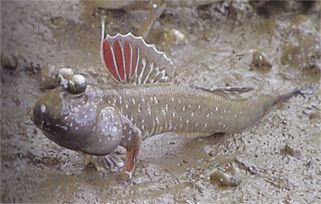
This Watery Wednesday brings us a very special little fish. This fish is amphibious meaning it not only lives in the water but can come out and spend time on land. Who could this special fish be? Let’s find out…

MEET THE ATLANTIC MUDSKIPPER!

Range/Habitat: West Africa, Indo-Pacific Oceans/mangroves, swamps and intertidal waters

Diet:  Carnivore: crabs, insects and small invertebrates

Length: 6-10”

Conservation Status: Common

Fun facts:

  • Mudskippers are amphibious, meaning they spend time in water and on land.
  • They can breathe in and out water. They use their gills in water and breathe through their skin and the lining of their mouth out on land.
  • They have to keep their skin moist on land in order to breathe.
  • They use their front (pectoral) fins to climb out of the water. The fins are modified to help them maneuver on land.
  • They also skip or jump across the muddy coast.
  • They have funny large eyes on top of their heads that help them see all around them.

Mudskippers are amazing little fish! Have you ever seen a fish on land before?


Categories: Animals, Children, education, Environment | Leave a comment

Reptilian Tuesday #2

REPTILIAN TUESDAY #2

It’s our second Reptilian Tuesday and we have a special little lizard just waiting for you to learn about it! It’s an insectivore. What’s an insectivore you ask? It’s an animal whose diet consists of insects. Do you like to eat bugs? Yeah, us neither! Well let’s get right to it and…

MEET THE TOKAY GECKO!

Range/Habitat: Southeast Asia/ rainforests- trees

Diet:  insectivore: roaches, centipedes and other insects

Length: 7-14”

Conservation Status: Common

Fun facts:

  • Tokay geckos are the 2nd largest gecko species on earth.
  • They are solitary and males are very territorial.
  • Tokay geckos are nocturnal; they are active and hunt at night.
  • Tokay geckos get their name from the loud call that the males make.
  • Like other lizards, Tokay geckos can release their tail when caught by a predator. They can release the whole tail or just parts. The tail will regenerate in about 3 weeks.
  • They have expanded adhesive toe pads for gripping and climbing. They’re mostly arboreal, meaning they live in trees.

These great geckos are considered to be good luck in parts of the world and are welcome in households because they eat bug! That’s one helpful gecko!


Categories: Animals, Children, education, Environment | Leave a comment

Mammal Monday #2

MAMMAL MONDAY #2

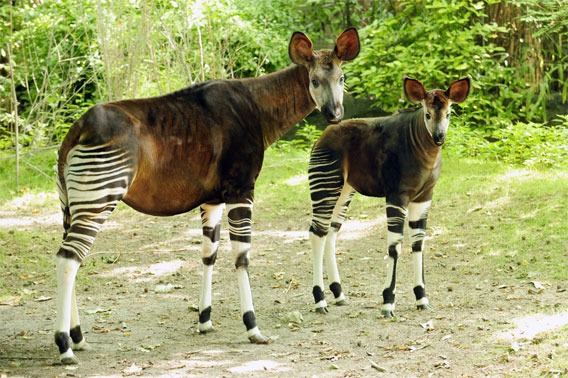
You have the Monday morning blues? Well after learning about today’s mammal those blues will be disappear! Have you ever wonder what animals are lurking in the rainforests, hiding just out of the sight? Could it be a leopard? Or is it a monkey in the trees? Or is it today’s quiet, shy, solitary and secretive Okapi?

MEET THE OKAPI!

Range/Habitat: Central Africa-Democratic Republic of Congo/tropical rainforests

Diet:  herbivores: twigs, shoots, fruits, leaves

Length/Height/Weight: 6 ½-7 1/4 ft : 12-16 ½ in : 440 lb-770lb

Conservation Status: Lower Risk


Fun facts:

  • The Okapi was not identified until 1900.
  • The Okapi is the closest living relative of the giraffe.
  • Okapi are very shy and secretive.
  • Okapi have long black prehensile tongues. They use their tongues to grab leaves and branches.
  • They have stripes on their legs and rear end.
  • Male okapis have two skin covered horns that are called ossicones. Giraffes also have ossicones. They are actually part of the skull.
  • Every okapi’s stripe pattern in different!

These relatives of the giraffe are very special! We’re so glad that someone discovered them in the rainforests! And we’re sticking our tongue out to the Monday blues too!


Categories: Animals, Children, education, Environment | 1 Comment

FEATHERY FRIDAY #1

FEATHERY FRIDAY

It’s everyone’s favorite day of the week- FRIDAY! And Friday means feathers! Yep it’s our bird friends turn to take the spotlight! Did you know there are about 10,000 species of birds? Goodness who knew that there were so many? And each one is so different. Some birds are flightless, some swim in the water, some are small and some are very small. They eat everything from worms, seeds, nectar, fish, rodents, snakes and fruit.  They inhabit every continent on earth and every habitat from deserts, to rainforests, to the icy Arctic. So what’s so special about birds? How are they different from mammals, reptiles and fish? Well let’s find out.

These are the characteristics that make a bird a bird…

  • Birds are warm-blooded or endothermic- meaning they regulate their own body temperature.
  • Birds are vertebrates (they have a backbone).
  • Birds lay eggs.
  • Birds are covered in feathers.
  • Bird’s bones are hollow and light weight.

Do you have a favorite bird?

Ellie’s favorite bird is the African grey parrot and Edmond’s the Southern ground hornbill!

Are you ready to meet today’s bird?


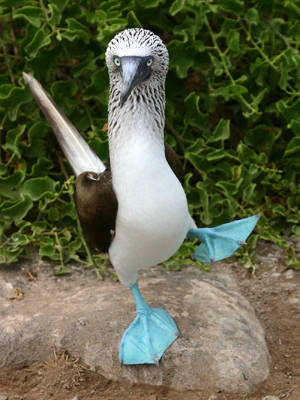
MEET THE BLUE FOOTED BOOBY!

Range/Habitat: South America to the Galapagos Islands, spend day in ocean and on rocky shores at night

Diet: Carnivores: fish, squid, sardines, anchovy

Size/Weight: 32-34in, 3 ½ lbs

Conservation Status: Common

Fun facts:

  • Blue footed boobies are excellent swimmers and divers.
  • The name booby comes from the Spanish word bobo meaning “fool or clown”. They were named that because they are so clumsy when walking on land.
  • They use their bright blue webbed feet to keep their chicks warm.
  • Both parents take care of the chicks.
  • The male booby performs a dance to attract a female.  Often the male with the bluest feet gets the girl!

Not only do the birds have funny looking feet and a funny sounding name, we think they are FUN!

Check out the video of the male doing his mating dance!

We’re going to be doing the Blue footed booby dance all day!


Categories: Animals, Children, education, Environment | Leave a comment

SUPER SURPRISE THURSDAY!

SUPER SURPRISE THURSDAY

It’s almost the weekend and we’ve decided that Thursday would be a surprise! That’s right what’s better than a surprise? Maybe a giant bag of hay, but that’s just us! We’ll be featuring all kinds of animals on Thursdays- including reptiles, mammals, birds, fish, the occasional insect and amphibians! Speaking of amphibians we picked a great one out of the grab bag for today’s animal.

What is an amphibian you ask? Well we shall tell you! Amphibians are a class of animals that include frogs, newts and salamanders. They are very special because they live not just on land but usually spend part of their lives in water too.

These are some of the characteristics that make an amphibian an amphibian:

  • Amphibians are cold blooded.
  • Amphibians’ life cycle is very different than other animals.
  • They start out as eggs and then as use external (outside the body) gills that change into internal (inside the body) ones as they grow.
  • They develop their limbs as they grow.
  • Their skin has no hair or scales to protect it. They absorb water and air through their skin.
  • Here’s an illustration of the life cycle of a frog.

Do you have a favorite amphibian?

Ellie’s favorite is the Green treefrog and Edmond’s is the Chinese giant salamander.

Are you ready to meet today’s animal?

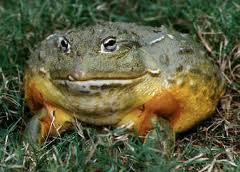
MEET THE GOLIATH FROG!

Habitat/Range: Streams and rainforests in Central Africa- Cameroon/Guinea

Diet: Carnivore: small reptiles, insects and mammals

Size: 4-16”, 6-7.5 lbs

Conservation Status: Vulnerable/Endangered

Fun facts:

  • Goliath frogs are the largest frog in the world!
  • They have been around for about 250 million years, even before the dinosaurs.
  • They are mute- meaning that they don’t make sound.
  • They can jump up to 10 ft in one leap.

Man, that is one big and bodacious frog!

Categories: Animals, Children, education, Environment, Uncategorized | Leave a comment

Reptile Day at Fernbank Natural History Museum

We decided to go on an adventure to Fernbank Natural History Museum! We’ve been here before, but once we heard they were having Reptile day on July 30th we couldn’t pass up the opportunity to meet some rockin’ reptiles. Luckily our friend Ayden and his mom came with us!

The dinos look watch over reptile day!

Fernbank is already one of our favorite places in Atlanta with its awesome dinosaurs, its IMAX theater and its new Fernbank NatureQuest, this place is one learning adventure after another! We walked in and the great hall was filled with different environmental groups and animal lovers! And they brought all kinds of reptiles!

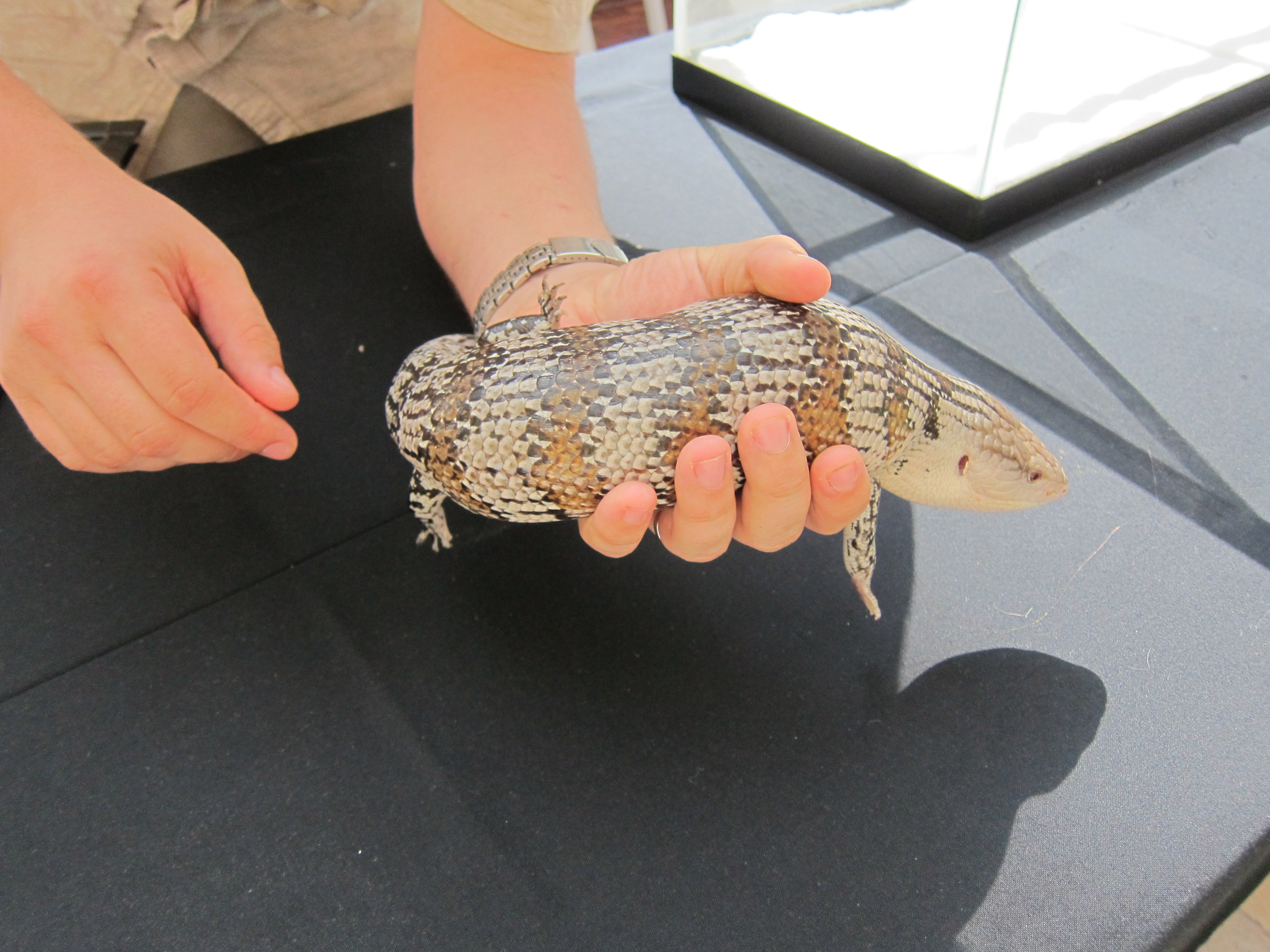
Our friend Ayden was excited as we were to meet all the animals! Our first stop was to see a Blue Tongue Skink.We weren’t able to touch him, being an elephant and a horse, but people could and according to our friends he was very smooth and cool! Blue Tongue Skinks are native to Australia. They’re omnivores and eat insects, fruit and flowers and the best part is they have a blue tongue (sadly the skink wouldn’t show us his though).

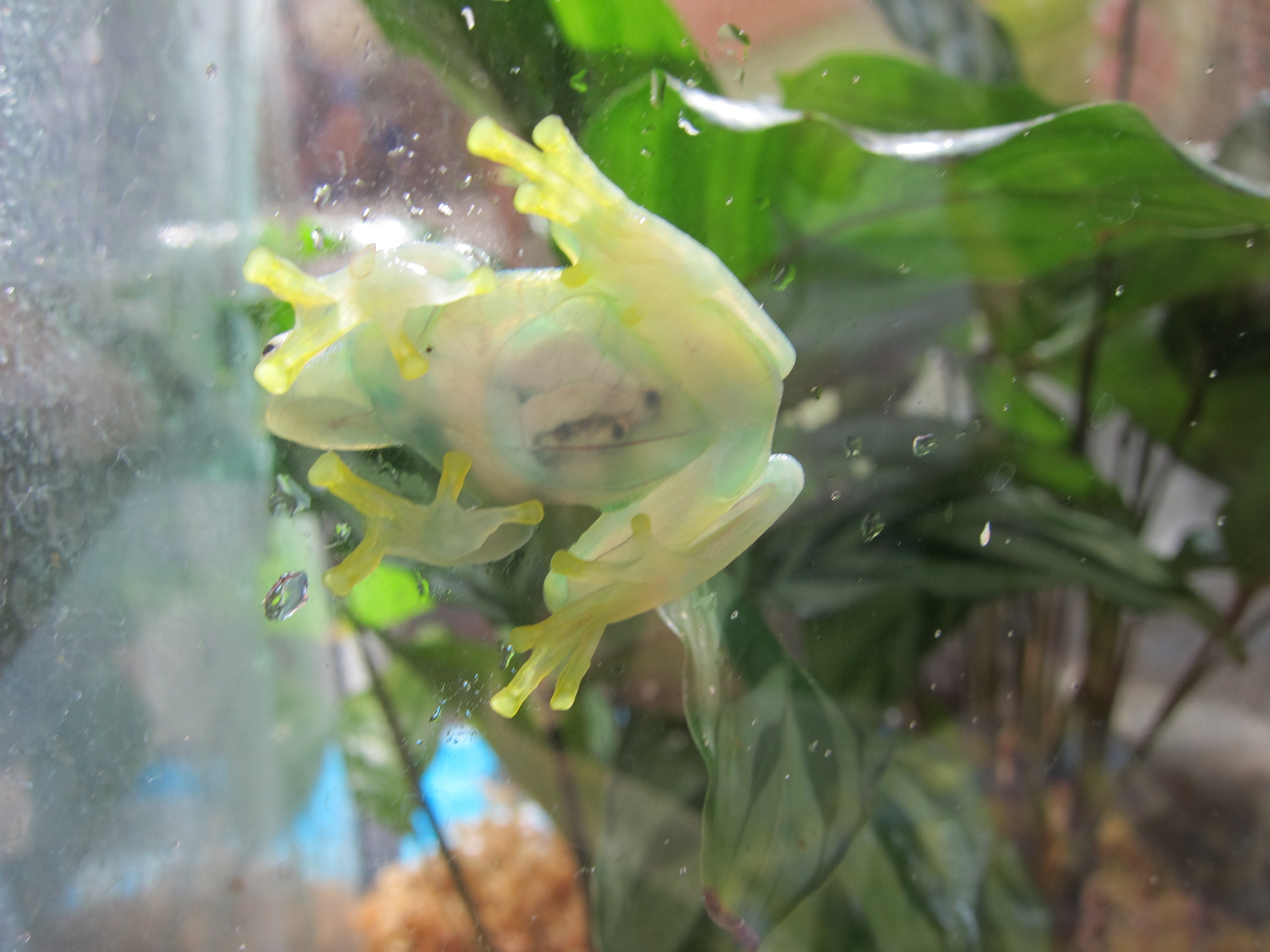
As we wandered around the exhibits we stopped by to check out the frogs The Atlanta Botanical Gardens brought! Ok, so frogs aren’t reptiles they’re amphibians, but let’s face it- they’re super cool! We saw several different kinds of frogs but our favorite was the Glass Frog!
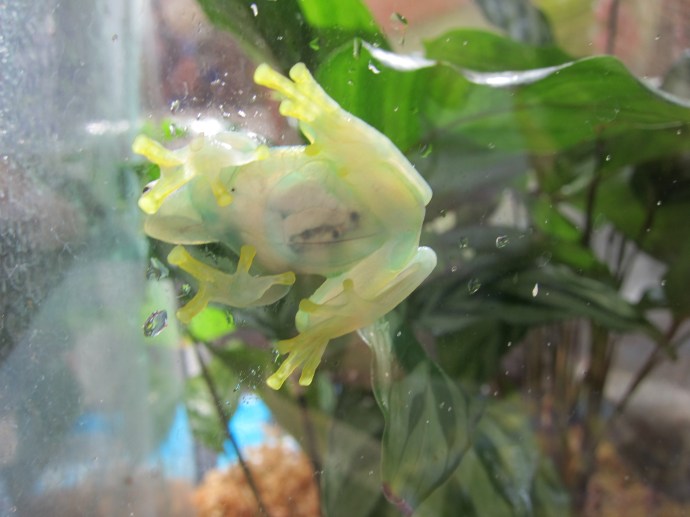
Look close and you can see his internal organs!

His skin is very transparent so you could see his internal organs (or insides as Edmond likes to call them)! The Atlanta Botanical Gardens does some great work to help frogs in the wild! We’re definitely going to have to go and check it out!

The next animal we saw was a Red-tailed rat snake and we were so lucky to watch him put his tongue out! Did you know that snakes “smell” with their tongues? Because snakes don’t smell through their nostrils; they use their forked tongues to gather particles in the air. They then analyze the particles using a special organ called the Jacobson’s organ! Pretty neat! We wondered what the snake smelled…
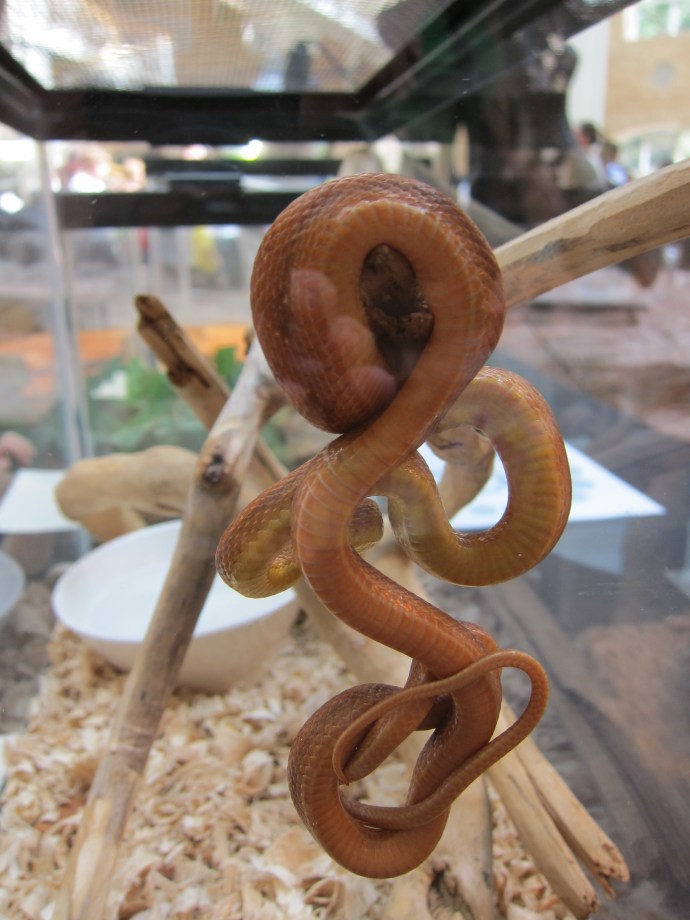
This snake was all twisted up in knots! I know this elephant can’t do that, can you? Snakes skeletons are very flexible and enable them to slither, climb and ball up.
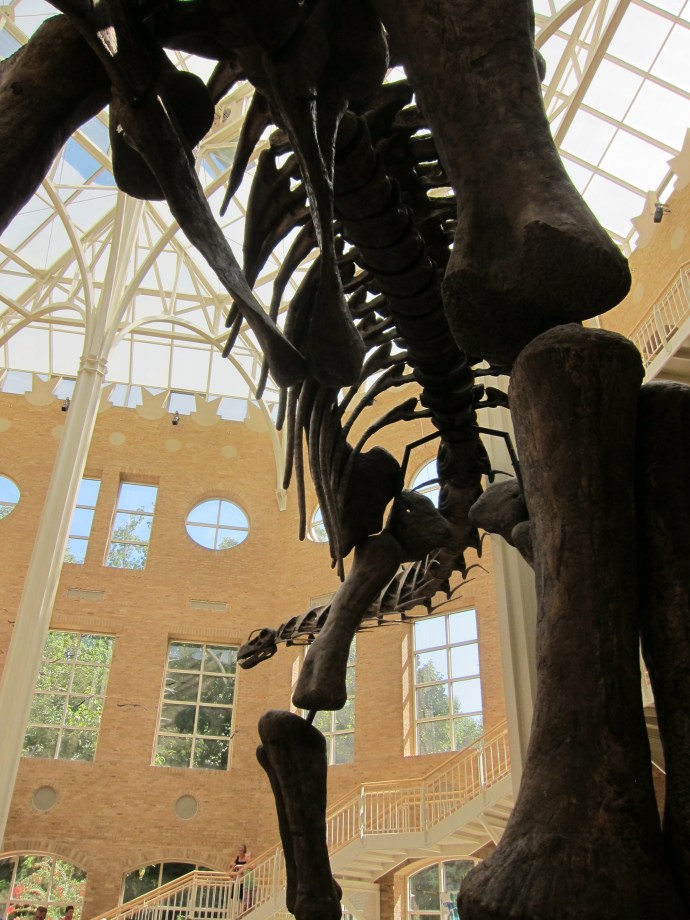
Here’s picture of Argentinosaurus! That is one BIG dino!

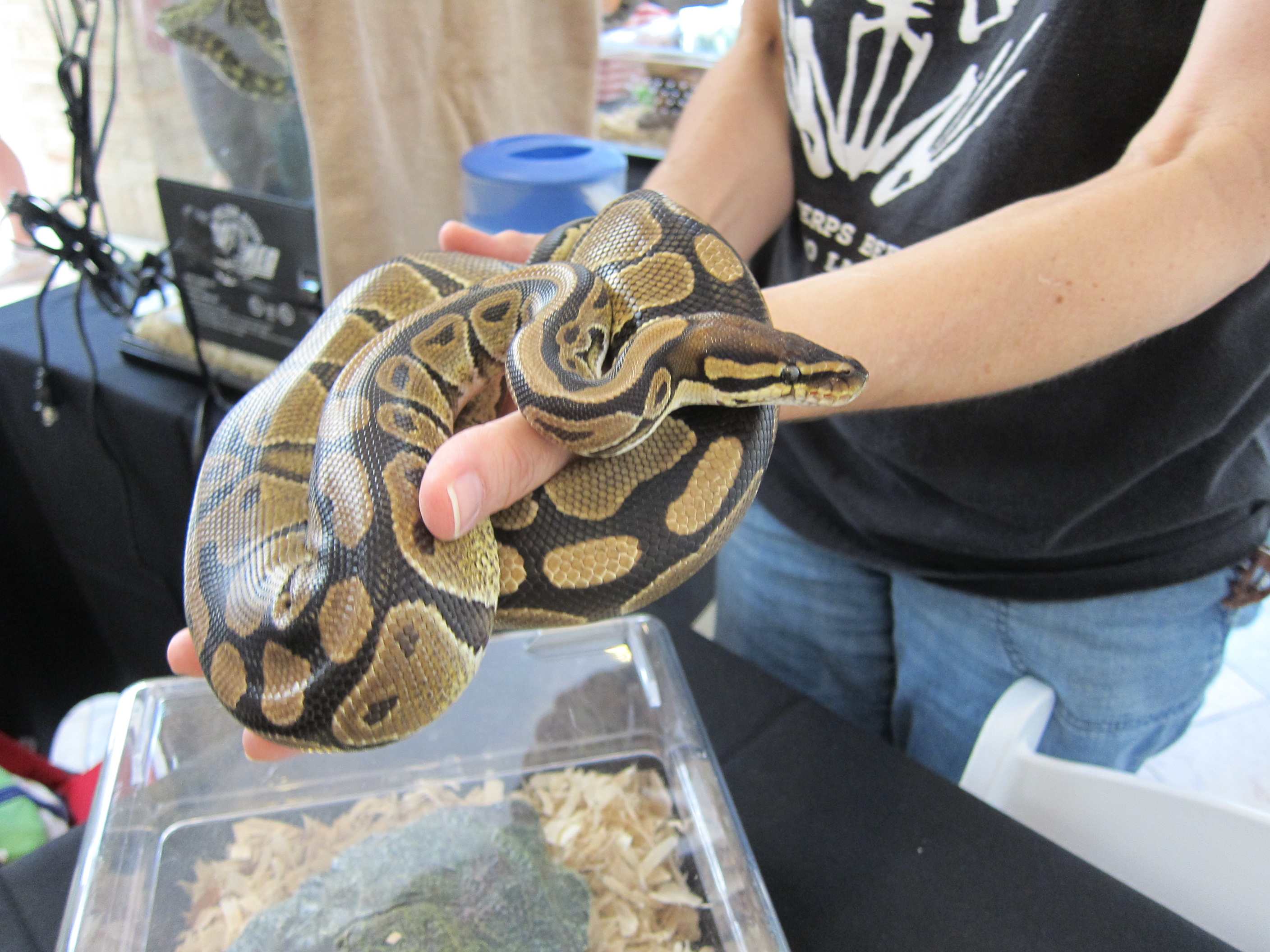
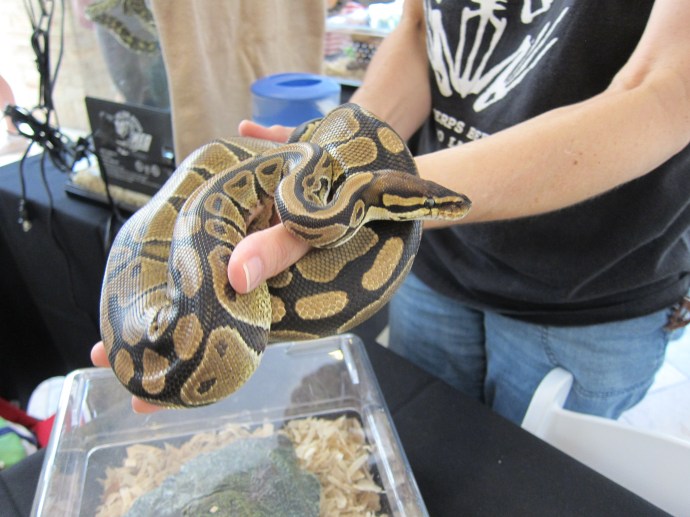
We then were able to meet a ball python. Again our human friends were allowed to touch but no such luck for an elephant and a horse :(. These snakes are from Africa and are called ball pythons because when threatened they ball up to protect themselves. That is a neat adaptation!
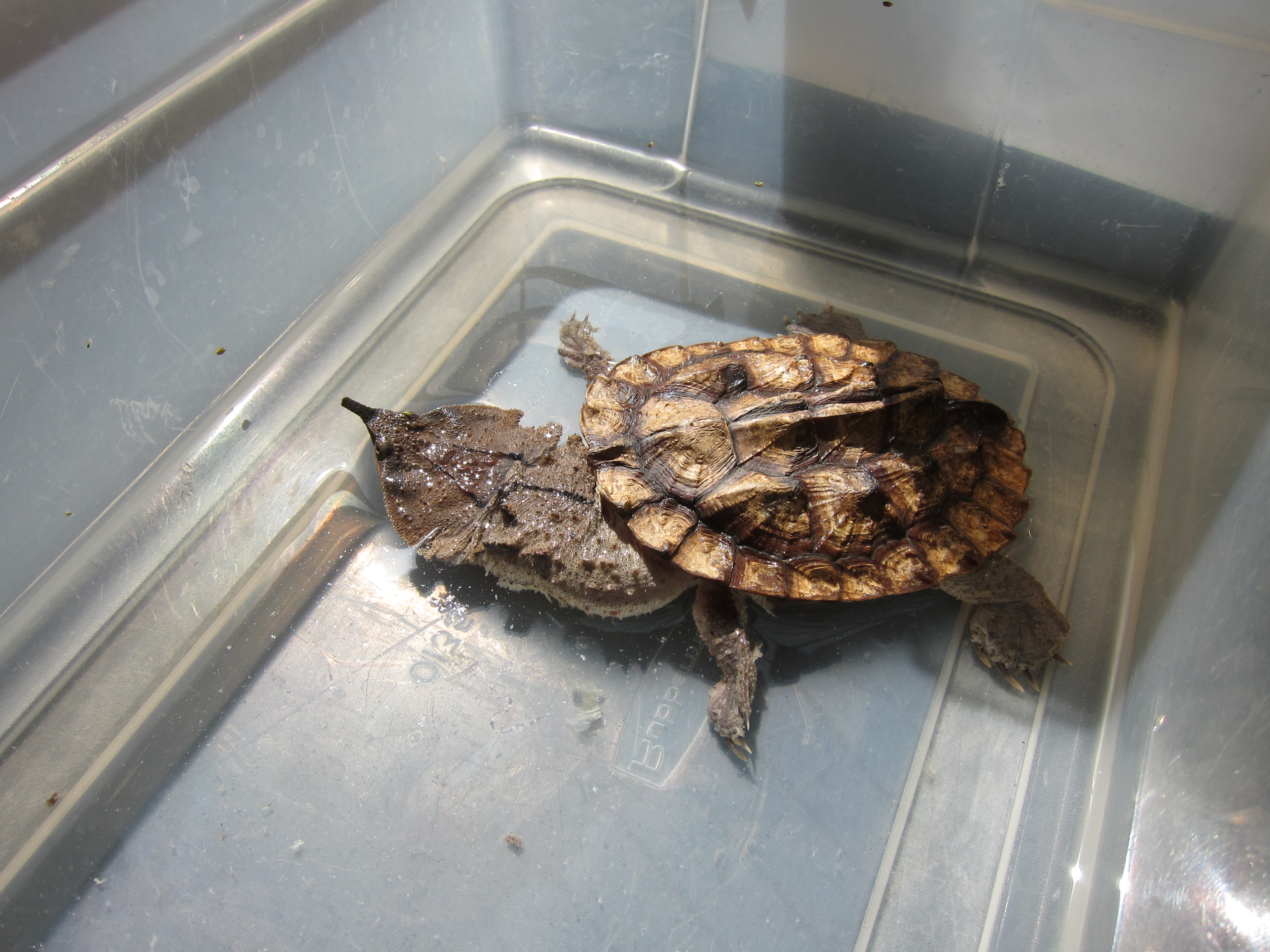
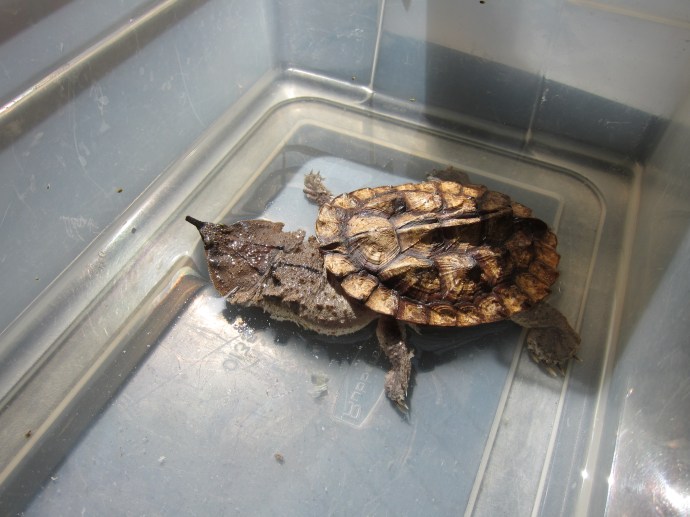
There were some really amazing turtles and tortoises there too! Including some really big ones, but our favorite was the mata mata. We’d never seen one before and we thought it was so funny looking! Turns out this master of camouflage is from parts of South America. They use their leaf like appearance to blend in with the rocky bottoms of streams and creeks. It’s an ambush predator and lays in wait for a fish to swim by so they can them suck up! They can’t chew so the fish is swallowed whole! WOW!
We decided to end our day with a couple of snapshots!

We are very little compared to this giant dino 🙂

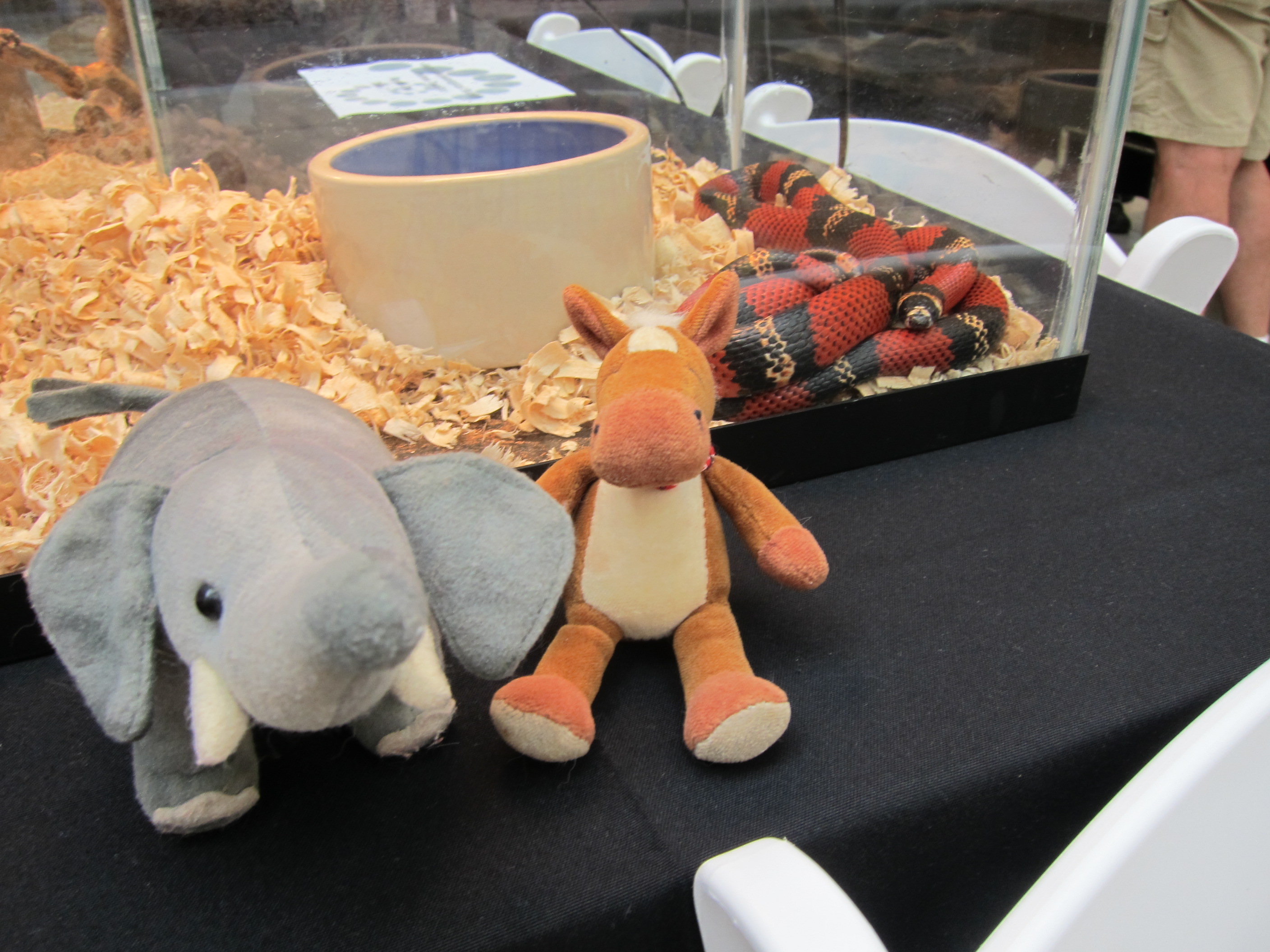
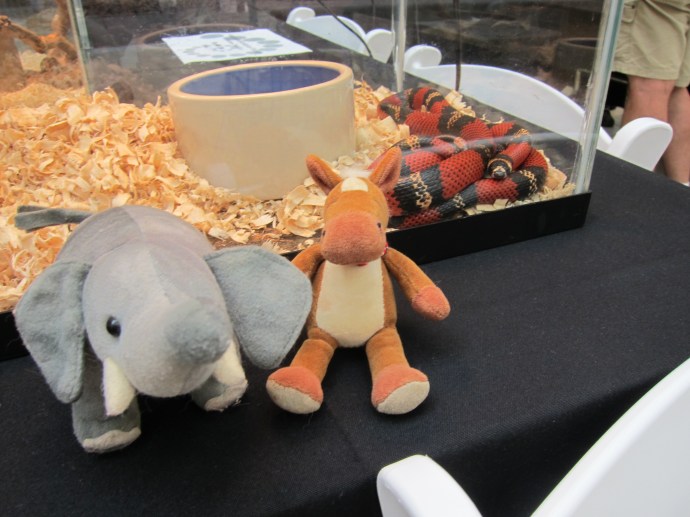
We made one last stop to snap our picture with an Andean Milk Snake! It was such a fun day at Fernbank’s Reptile Day. The only bad part was we wanted to meet Giggy A Dinosuar, hopefully we can meet up next time!
Categories: Animals, Atlanta, Children, education, Local, Uncategorized | 1 Comment

REPTILIAN TUESDAY #1

REPTILIAN TUESDAY

Happy Tuesday! It’s Reptilian Tuesday and it’s the day where you get to learn all about reptiles! Reptiles get such a bad rap. 😦  They’re called scary, slimy and icky, but these animals are none of those things! Reptiles are very different from our mammal friends, but are just as amazing! So what does it take to make it as a reptile? Well let’s list some of their great characteristics!

These are the characteristics that make a reptile a reptile:

  • Reptiles are cold-blooded (ectothermic). They cannot control their own body temperature; it is regulated by the animal’s environment.
  • Reptiles are covered in scales.
  • Reptiles lay eggs.

Can you name some of your favorite reptiles?

Ellie’s favorite reptile is the Loggerhead Sea Turtle and Edmond’s favorite is the Tokay Gecko.

For our first Reptilian Tuesday we are featuring a venomous reptile!

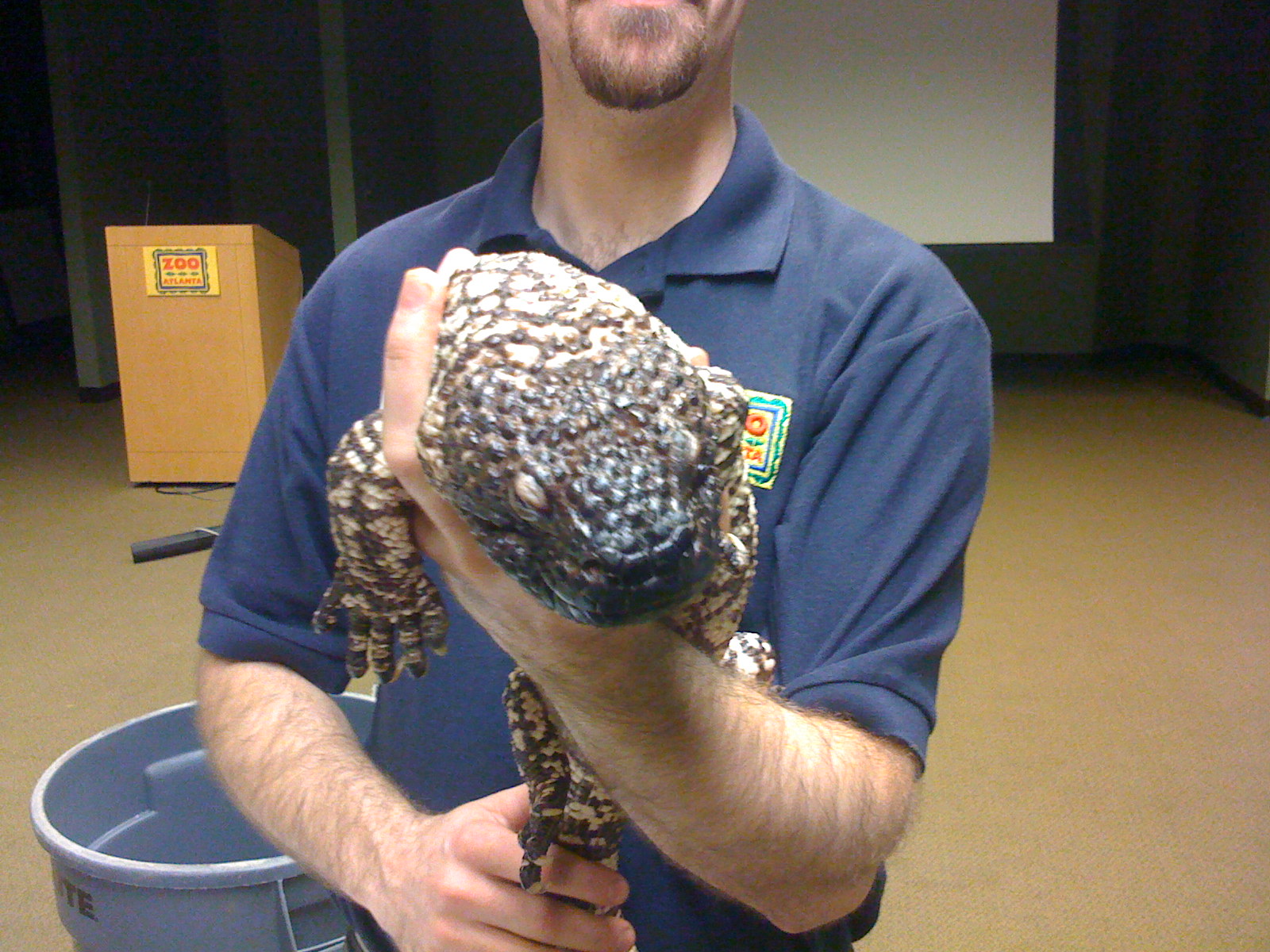
MEET THE GILA MONSTER!

Gila Monster at Zoo Atlanta

Range: South West US and Mexico

Habitat: Scrub and semi-desert and rocky outcrops near water

Diet: Carnivore: bird and reptile eggs and small mammals

Size: 14-20 inches

Conservation Status: Vulnerable

Fun facts:

  • They are one of two venomous lizards in the whole world (the other is the Mexican Beaded Lizard.)
  • They brightly colored to ward of predators.
  • They have a forked tongue like a snake and it helps them “smell” for prey.
  • They inject venom into their prey when they bite. They have special glands in their lower jaw that stores the venom.
  • Their tails store fat so they can survive when food is scarce or when they hibernate in the winter.
  • They are not harmful to humans, despite their bad reputation! So Gila Monsters aren’t so monstrous after all!


Categories: Animals, Children, education, Environment | Tags: , , , | Leave a comment

Hi!!

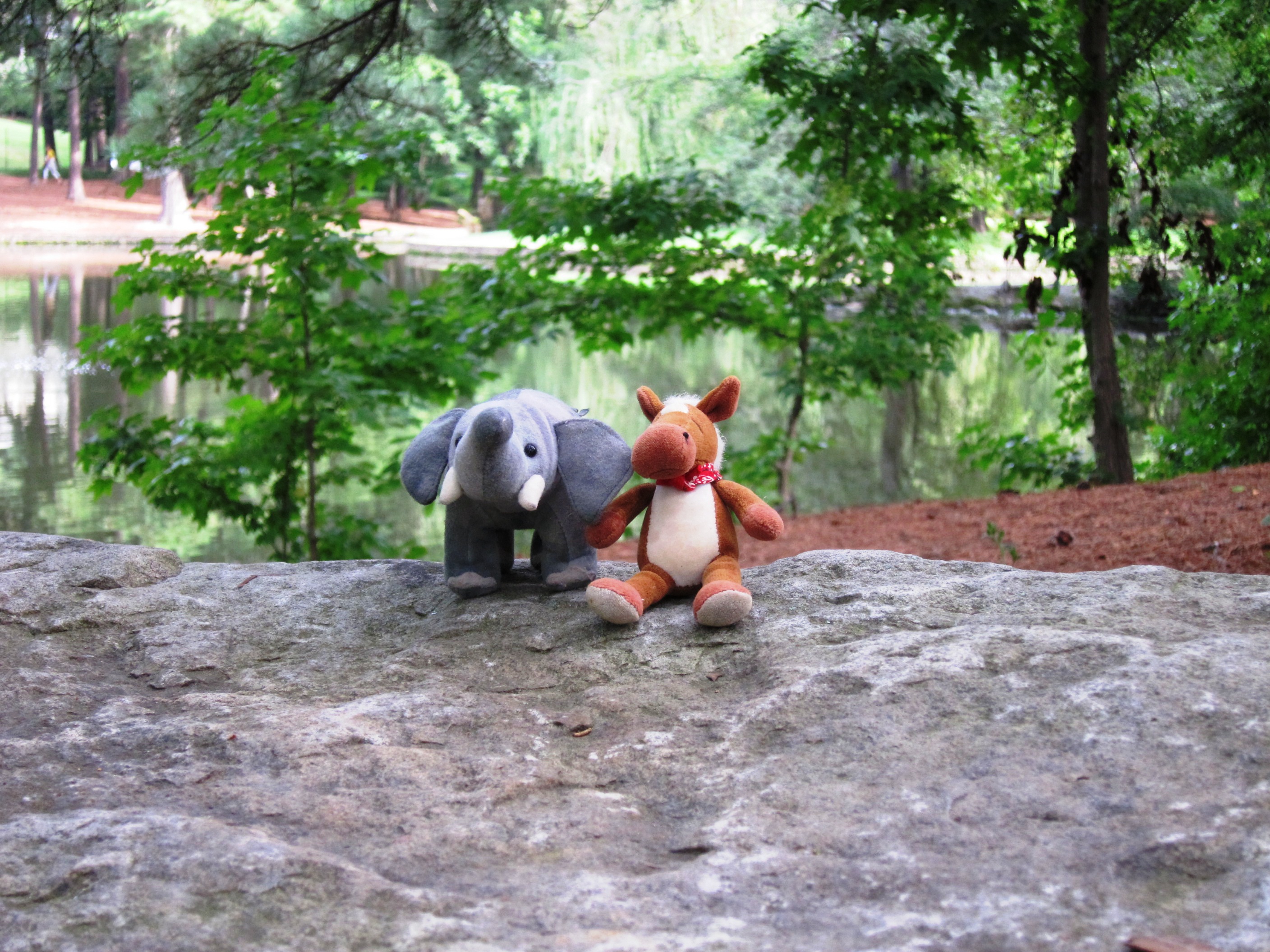
Hi! We're hanging at Duck Pond Park in Buckhead!

Hello! We wanted to start our blog with an introduction! My name is Ellie the Elephant and I’m Edmond the Horse. We’re best friends, explorers, travelers, educators, and animal lovers.  Our goal in life is go on as many adventures as possible and explore tons of cool places. We’ve traveled all around the planet including, Indonesia, Israel, Trinidad, New York City, Vancouver and San Francisco! Our favorite thing to do when we travel is to find wildlife and explore zoos and aquariums. Our passion is animals- naturally. We love to meet our fellow animal friends and learn about their habitats, lives and families.  And because we have so much fun together we’ve decided to write about the awesome animals we meet! We’ve been to so many fabulous places around the world but have yet to check out our own home town Atlanta. So that’s where our adventures will focus, but don’t worry we’ll be heading out of town some too! We’re excited to share with you and hope that our excursions will inspire you to go explore the world around you. And if you have any tips or places you’d like us to visit, leave a comment and we’ll see if we can get there!

Ellie and Edmond!

Categories: Animals, Atlanta, Children, education, Environment, Local | Tags: , , , | 2 Comments

Blog at WordPress.com.