Uncategorized

Day 37- Australia for the week…

We’re traveled the east coast of Australia yesterday to find our Guess the Animal.  It’s a large continent with wild and strange animals that are found no other place on earth! If you guessed the Platypus yesterday then you were right! We were looking for the mammal that lays eggs! WHAAAAT? You heard right, this mammal lays eggs! This adventure just gets crazier!
e e woods

Platypus…

   Range/Habitat: Eastern Australia-Tasmania/rivers-streams-rainforest

   Diet: Carnivore: worms, shrimp, crayfish

   Length/Weight: 16-23 ½”/ 1 ¾-5 ½ lbs

   Conservation Status: common

Platypus


  • Platypus are strange looking mammals, with long slender bodies, webbed feet and a duck-like bill for a mouth.
  • They have long tails that look like beaver tails.
  • Platypus are built for water. They are excellent swimmers and can dive to deep depths looking for prey.
  • They eat about 20% of their body weight a day (about 2lbs), so they can spend up to 12 hours a day feeding.
  • Platypus have no teeth!
  • Male platypus have venomous spurs in the back feet. The venom is not fatal to humans, but can be very painful.
  • Platypus can detect the electrical fields of other animals. They use this extra sense to find their prey!
  • They are one of two mammals on earth that lay eggs. Do you know the other one?
  • Platypus moms to provide milk to their offspring.

platypus

Platypus are one of our favorites, with their crazy looking bill mouths and their webbed feet! They are much loved in Australia too! You can find a platypus on the back of their 20 cent coins! Neat! Edmond wants to be on a coin! Ellie told him he’d have to learn to lay eggs first!

-Ellie and Edmond

Categories: adventure, Animals, Children, conservation, education, Environment, mammals, nature, science, Uncategorized, wildlife | Tags: , , , , , , , , | Leave a comment

SUMMER BREAK!

SUMMER BREAK!

swow fun

It’s officially summer break here at the University of E&E! So our word of the week is FUN! I’m sharing a word search with you of all the previous science words of the week- click on link below- print and enjoy! Ellie and Edmond will have some fun summer activities and interviews posted later in the week for everyone! Now time for this professor to find a nice pool and eat all the ant snacks I can!
SCIENCE WORDS OF THE WEEK

Categories: adventure, Animals, Children, conservation, education, Environment, nature, science, Uncategorized, wildlife | Tags: , , , , , , , , , | Leave a comment

WORLD SEA TURTLE DAY!

WORLD SEA TURTLE DAY!

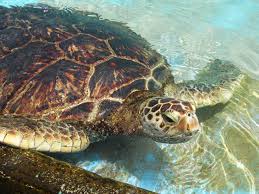
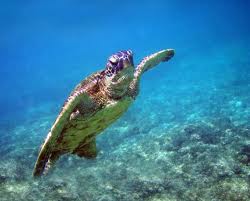
While the computer was down at HQs we missed World Sea Turtle Day! We so love these amazing reptiles that we could pass up a time to celebrate them and teach you some fun facts! We have seen 2 species in the wild- green sea turtles in the Caribbean and a Leatherback female laying her eggs on an island near Indonesia.

066

  • There are seven species of sea turtles: loggerhead, green, leatherback, flatback, Kemp’s ridley, Olive’s ridley, hawksbill.
  • Six out of the seven of these are threatened or endangered.
  • Sea turtles can not pull their head or limbs into their shells.
  • Sea turtles spend their whole lives in the ocean, except when the female comes ashore to lay her eggs.
  • Sea turtles are found in oceans all around the world.
  • Sea turtles eat everything from algae and grass to jellyfish and shellfish.
  • Sea turtles do not have teeth.
  • Their sizes range from 600 lbs to 1,300 lbs.
  • sea turtle


sea turtle4sea turtle5


Sea turtles are being affected by humans. Their often mistake trash for food. The babies get distracted by lights on the beach as they head towards the ocean. And turtles are often hit by boats. We can help our sea turtle friends by making sure our trash never enters the ocean or is left on the beaches. If you live where there may be nests, turn your lights off at night. For other tips on how you can help sea turtles- check out the Sea Turtle Conservancy!     Enjoy this sea turtle coloring sheet too!

sea turtle coloring page


Categories: adventure, Animals, Children, conservation, education, Environment, nature, oceans, science, turtles, Uncategorized, wildlife | Tags: , , , , , , , , , , | 3 Comments

IT Troubles

Hi everyone! We’re having some major IT troubles here at the University of E&E! Our new laptop is having a big issue and hopefully will have the problem resolved by this weekend! Until then we can’t get our regular posts up. Thanks for your patience with this! Remember to check out trivia on Facebook and Twitter! We’ll see ya in a few days! And for kicks enjoy this Blue Footed Booby coloring sheet! Image


Categories: adventure, Animals, Children, education, Environment, nature, science, Uncategorized, wildlife | Tags: , , | Leave a comment

SCIENCE WORD OF THE WEEK!

SCIENCE WORD OF THE WEEK!

swow crepuscular

Welcome back to class everyone! Ellie and Edmond had some technology issue’s in Africa- so they will be posting their adventures there this week! But we’re here at the University and ready to learn our new word of the week!

Crepuscular: an animal is active during twilight- dawn or dusk. Many animals are most active during the dawn and dusk, like lions. These times are great to avoid the heat of the day. Also it’s a good time for animals who often are prey to hide in the darker light.

rabbit swow

Categories: adventure, Animals, Children, conservation, education, Environment, nature, science, Uncategorized, vocabulary, wildlife | Tags: , , , , , , , , , | Leave a comment

SCIENCE WORD OF THE WEEK

SCIENCE WORD OF THE WEEK!!

swow carnivore

WE’RE BACK! We are so happy to be back after our much needed spring break! Don’t forget to enter Spring Photo Contest– the deadline has been extended til April 13th.

We are so happy to have students back here in class at the University of E&E! It’s my favorite day of the week where we learn a new science word and today’s word is:

Carnivore \ˈkär-nə-ˌvr\– a carnivore is an animal that eats meat. There are many different animals that eat meat as the primary source of their diet. There are even plants that are carnivores!

How many carnivores can you name?

carnivore cartoon

Categories: adventure, Animals, Children, conservation, education, Environment, nature, science, Uncategorized, vocabulary, wildlife | Tags: , , , , , , , , | 5 Comments

World Frog Day!

World Frog Day!!

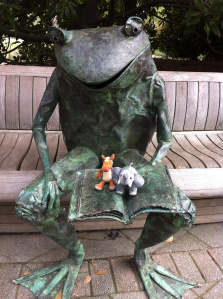
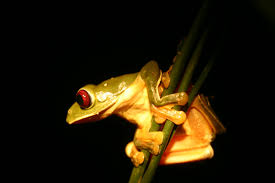
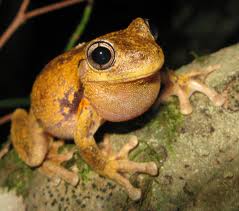
Somehow we missed World Frog Day yesterday, so we’re celebrating this amazing amphibians today! Frogs come in all colors and sizes.  Let’s tell you why we love frogs!

eefrog

  • Frogs are amphibians
  • They live on all continents except Antarctica.
  • The Goliath Frog is the larges species of frog in the world.
  • Wood frogs can “freeze” solid and survive the winter.
  • The Golden Dart Frog is the most toxic frog in the world.

frog

  • Bullfrog tadpoles are toxic.
  • Frogs are cold blooded.
  • There are about 4,900 species of frogs in the world.
  • A group of frogs is called an army. A group of toads is called a knot.
  • Frogs do have ears! They are located right behind their eyes.
  • Frogs have been around for 200 million years.

frog4

frog3   frog2


Last year we interviewed a frog scientist from the Atlanta Botanical Gardens! Read that interview here! Tell us what you love about frogs!

Categories: adventure, amphibians, Animals, Children, conservation, education, Environment, nature, science, Uncategorized, wildlife | Tags: , , , , , , , , , , | Leave a comment

BIRDS OF FEATHER WEEK- BUILD A NEST!!

BIRDS OF A FEATHER WEEK- BUILD A NEST!!

It’s the last day of our Birds of Feather Week! Today we’re sharing three birds who are wonderful architects! The males of these species work hard building and decorating nests to attract a female! Whew- it must be hard work!


Male Adelie penguins build nests from rocks. The carefully choose these rocks and if you’re a smart Adelie penguin then you steal the best rocks from your neighbor! Check out this funny video! Cheeky penguin!

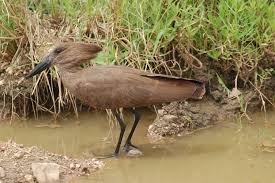
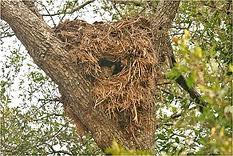
Male Hamerkops build nests to improve the lady Hamerkops. The bigger the better is the rule with Hamerkops!

hamerkop  hamerkop2

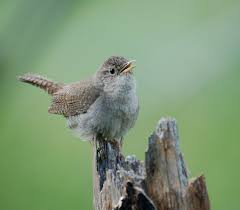
Male house wrens will build up to 12 nests to impress the females. These ladies must be very picky!

house wren

Lastly the Bower bird decorates their nests elaborately to attract a female! Maybe they should have their own HGTV show!

bowerbird

We just love the way these birds work to attract their mates! Way to go hard working birds and Happy Valentine’s Day!

Categories: adventure, Animals, birds, Children, conservation, education, Environment, nature, science, Uncategorized, wildlife | Tags: , , , , , , , , , | Leave a comment

YEAR OF THE HORSE!!

Happy Year of the Horse!

I am so excited for the Chinese New Year this year! We celebrated dragons two years ago and last year was the year of the snake, but this year is the YEAR OF THE HORSE!! I’m going to be putting on my tap shoes and dancing all over to celebrate! Ellie and I will be going to meet some of my wild relatives this week, but first up I want to tell you a bit about horses in general!

IMG_3621

  • My earliest relatives were around 45-55 million years ago.

edmond history

  • We were domesticated around 4,000 years ago.
  • We horses have a single toe on each foot. The outside of our hooves is like a human’s fingernail and must be trimmed.
  • We horses walk on our tip toes and so does my best friend Ellie!

edmond with hoof

  • I am an ungulate- meaning I have hooves. Ellie is also an ungulate.
  • There is one species of domestic horse and 4,000 breeds.
  • Horses have the largest eye of any land mammal on earth. We have a 350 degree range of vision.
  • The only wild species of horse is the Przewalski’s horse! We’re going to visit them later in the week.
  • I can sleep standing up or sitting down.
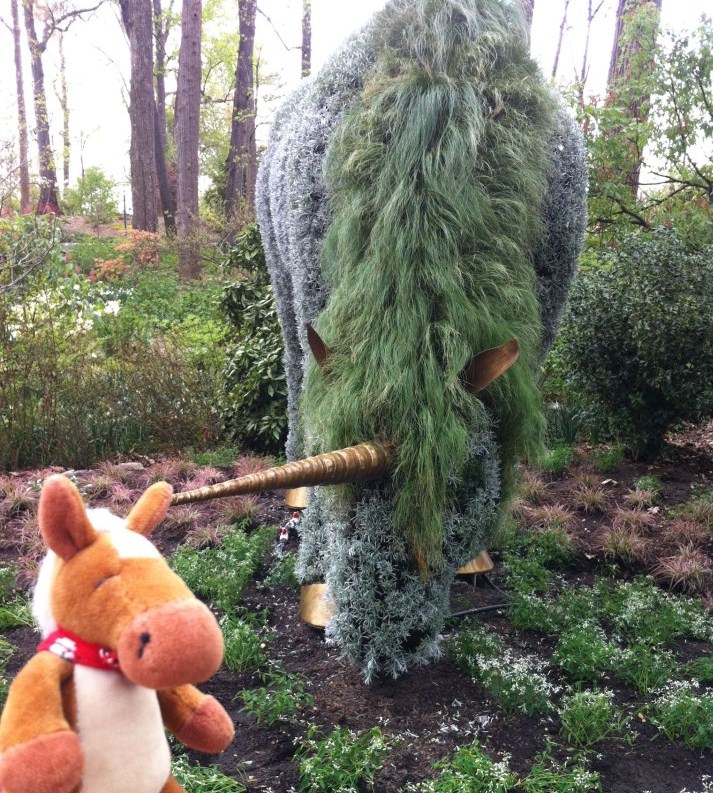
  • My relatives include the tapir and the rhino! Those rhinos are really unicorns!

edmond unicorn

Image

We horses have co-existed with humans for thousands of years. We have been friends, workers and therapy for people. Being a horse is a great honor and I am so excited to be celebrating this new year! Ellie and I are packing the travel trunk to go meet some of my relatives, including the zebra and the Przewalski’s wild horse. I have a special horse craft to share with you too. High hooves for everyone!!


Categories: adventure, Animals, Children, conservation, education, Environment, horses, mammals, nature, science, Uncategorized, wildlife | Tags: , , , , , , , , , | 2 Comments

University of E&E

University of E&E

 e e u graphic

Welcome new students to the University of E&E (where animals teach about animals)

We here at the University of Ellie and Edmond strive to teach as many as we can about animals. We want to instill a fascination, appreciation and respect for the animals that we all share this planet earth with. We want to introduce you to one of our most esteemed professors- Professor T. Tamandua! Professor Tamandua will be sharing the Science Word of the Week with you, along with 2 o’clock trivia that we post on Twitter, Facebook and Instagram during the week! (A tamandua is a lesser anteater. They live in South America and have a very strong odor to protect themselves.) Have a seat, sit back and let’s learn!

Professor Tamandua

 Hello students! I am so glad you could join me here at the University! Today’s word is Ectothermic!

Ectothermic (ek-tuh-thurm)   An animal that regulates its body temperature by using the outside environment. Fish, reptiles and amphibians are ectothermic. Invertebrates are also ectothermic. Another word for Ectothermic is Cold-Blooded.

Can you name some ectothermic animals?

 endothermic cartoon


TRIVIA!!

Here are the trivia questions for the week! Can you answer them all? (scroll down if you get stuck)

Squirrels cannot vomit. True of False

All species of armadillos can roll into balls when threatened. True or False

Naked mole rats are neither moles nor rats. True or False

A _________ has the longest hair of any mammal. A) musk ox B) polar bear C) arctic fox

Stingrays are related to ________. A) dolphins B) sharks C) tuna


False! Squirrels can vomit! Flying squirrels, rabbits, rats and horses are among the animals that cannot vomit though!

False! Only the 3 banded armadillos can roll into balls to protect themselves.

True. Naked mole rats are rodents, but not moles or rats. Time for a name change for the only mammal that lives in a colony with a queen!

A-Musk Ox have the longest hair of any mammal on earth! That keeps them warm in those cold arctic temps!

B- Sharks. Both rays and sharks are cartilaginous (their skeletons are made of cartilage) fish!


Thanks for stopping by for this week’s lesson! See you next Sunday!

Professor Tamandua.

Categories: adventure, Animals, Children, conservation, education, Environment, nature, science, Uncategorized, wildlife | Tags: , , , , , , , , | Leave a comment

Blog at WordPress.com.