Posts Tagged With: animals

WATERY WEDNESDAY #5

WATERY WEDNESDAY#5

Woohoo it’s another Watery Wednesday! We’ve found another fish that gets its name from a mammal. (Remember the Wolffish?) This one won’t roll over, sit or shake paws for you though. Can you guess what shark it is? Let’s meet…

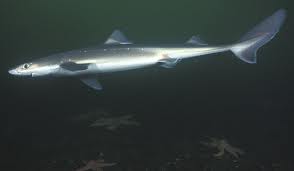
MEET THE SPINY DOGFISH!
Range/Habitat: Coastal waters-worldwide (generally under 59 degrees)

Diet: Carnivore: crustaceans, anemones, fish

Length: 3 ¼ ft- 5 ft

Conservation Status: Vulnerable

Fun Facts:

  • The Spiny dogfish is a small, slow moving, bottom dwelling shark.
  • They have venomous spines on both dorsal (top) fins that are used for defense and can cause painful wounds.
  • They are often found swimming in large schools. They often feed together in large groups or “packs”. This feeding behavior is most likely where the name dogsfish came from. (Wild dogs also feed in packs or groups.)
  • They are known to be aggressive and voracious eaters.
  • They have one of the longest known gestation periods (time of pregnancy) of any shark (or any vertebrate for that matter) around 24 months (2+ years). That is longer than an elephant!

The Spiny dogfish is a cool and strange looking little shark, but with those venomous spines we’re glad this shark doesn’t shake fins ;)!

Categories: Animals, Children, education, Environment | Tags: , , , , , | Leave a comment

REPTILIAN TUESDAY #5

REPTILIAN TUESDAY#5

Happy Tuesday! We hope everyone enjoyed Labor Day! We’re back with a funny looking reptile that has horns! What? Yep, we said horns! Some say it even looks like a dinosaur, but it’s not! Who is this awesome lizard? Let’s find out…

MEET THE JACKSON’S CHAMELEON!

Range/Habitat: East Africa-Kenya/Tanzania/ High altitude mountainous regions

Diet:  Carnivore: insects

Length: 8-12”

Conservation Status: Common

Fun Facts:

  • Male Jackson’s Chameleons have 3 bony horns on the front of their head.
  • They use the horns to fight other males for territory.
  • Female Jackson’s Chameleons do not have horns.
  • Like other chameleons, they can change their color depending on their mood, health and surroundings.
  • They are bright green. Their ability to camouflage with their habitat is their primary defense mechanism.
  • Jackson’s chameleons do not lay eggs; females incubate the eggs inside her body and give birth to live young.
  •  Baby chameleons are brown and turn green around the age of 4 months.

These crazy chameleon look kind of like triceratops or a rhino to us! We think they are fantastic! What do you think?

Categories: Animals, Children, education, Environment | Tags: , , , , , | Leave a comment

FEATHERY FRIDAY #4

FEATHERY FRIDAY#4

It’s FRIDAY and we have another great Feathery friend for you to meet today! As summer wraps up here, we’re dreaming of cooler temperatures and today’s bird loves the cold! Is it a penguin? Nope this bird lives in the Northern Hemisphere…

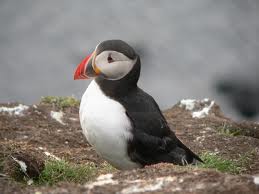
MEET THE ATLANTIC PUFFIN!

Range/Habitat: North Atlantic and Arctic Oceans from Northern Europe-Iceleand-Newfoundland / ocean and rocky coasts

Diet:  Carnivore: fish, mollusks, crustaceans

Length/Weight: 11-12”/ 1 lb

Conservation Status: Common

Fun Facts:

  • The Atlantic Puffin is a highly social bird that lives in large colonies on rocky coasts and islands.
  • They have bright orange beaks that are brighter during mating season. They also have bright orange feet. They’ve been called the “sea parrot” because of their bright coloration.
  • Male and female Atlantic Puffins incubate eggs.
  • Atlantic Puffins spend their winters out in the open ocean.
  • They are excellent swimmers and divers. They can dive up to 200 ft deep.
  • Atlantic Puffins can fly unlike penguins.
  • They can catch several fish at one time.
  • Atlantic Puffins are the Provincial (official) bird of Newfoundland, Canada.


Atlantic Puffins sure are snappy looking birds with their bright orange beaks and feet! And they can fly and swim! We wish we could fly and swim!


Categories: Animals, birds, Children, education, Environment | Tags: , , , , | Leave a comment

FEATHERY FRIDAY #3

FEATHERY FRIDAY#3

We’ve made it to another Fabulous Feathery Friday! And you’ll need to put on your glasses to see this tiny little Bee…

MEET THE BEE HUMINGBIRD!

Range/Habitat: Cuba

Diet:  Omnivore: nectar and tiny insects

Length/Weight: 2 ¼“ / 1/16 oz (about the weight of a penny)

Conservation Status: Near Threatened

Fun facts:

  • The Bee Hummingbird is the smallest bird in the world! It weighs about as much as a penny.
  • It has a long tube-like tongue it uses to suck in nectar from flowers.
  • Male Bee Hummingbird’s heads are iridescent (kind of like glitter), the females are not.
  • They can beat their wings at 80x per second. It is so fast that it can’t be seen by the human eye! (It can’t be seen by the elephant or horse eye either.) 😦
  • They are just barely larger than a bee.
  • Bee Hummingbird nests are only about 1” in diameter (just slightly larger than a quarter).
  • Bee Hummingbird eggs are about the size of a pea.

This teeny tiny bird has made our Feathery Friday! We’d loved to see one and their eggs; pretty sure we’ll need to use our magnifying glass!

Categories: Animals, Children, education, Environment | Tags: , , , , | Leave a comment

REPTILIAN TUESDAY #1

REPTILIAN TUESDAY

Happy Tuesday! It’s Reptilian Tuesday and it’s the day where you get to learn all about reptiles! Reptiles get such a bad rap. 😦  They’re called scary, slimy and icky, but these animals are none of those things! Reptiles are very different from our mammal friends, but are just as amazing! So what does it take to make it as a reptile? Well let’s list some of their great characteristics!

These are the characteristics that make a reptile a reptile:

  • Reptiles are cold-blooded (ectothermic). They cannot control their own body temperature; it is regulated by the animal’s environment.
  • Reptiles are covered in scales.
  • Reptiles lay eggs.

Can you name some of your favorite reptiles?

Ellie’s favorite reptile is the Loggerhead Sea Turtle and Edmond’s favorite is the Tokay Gecko.

For our first Reptilian Tuesday we are featuring a venomous reptile!

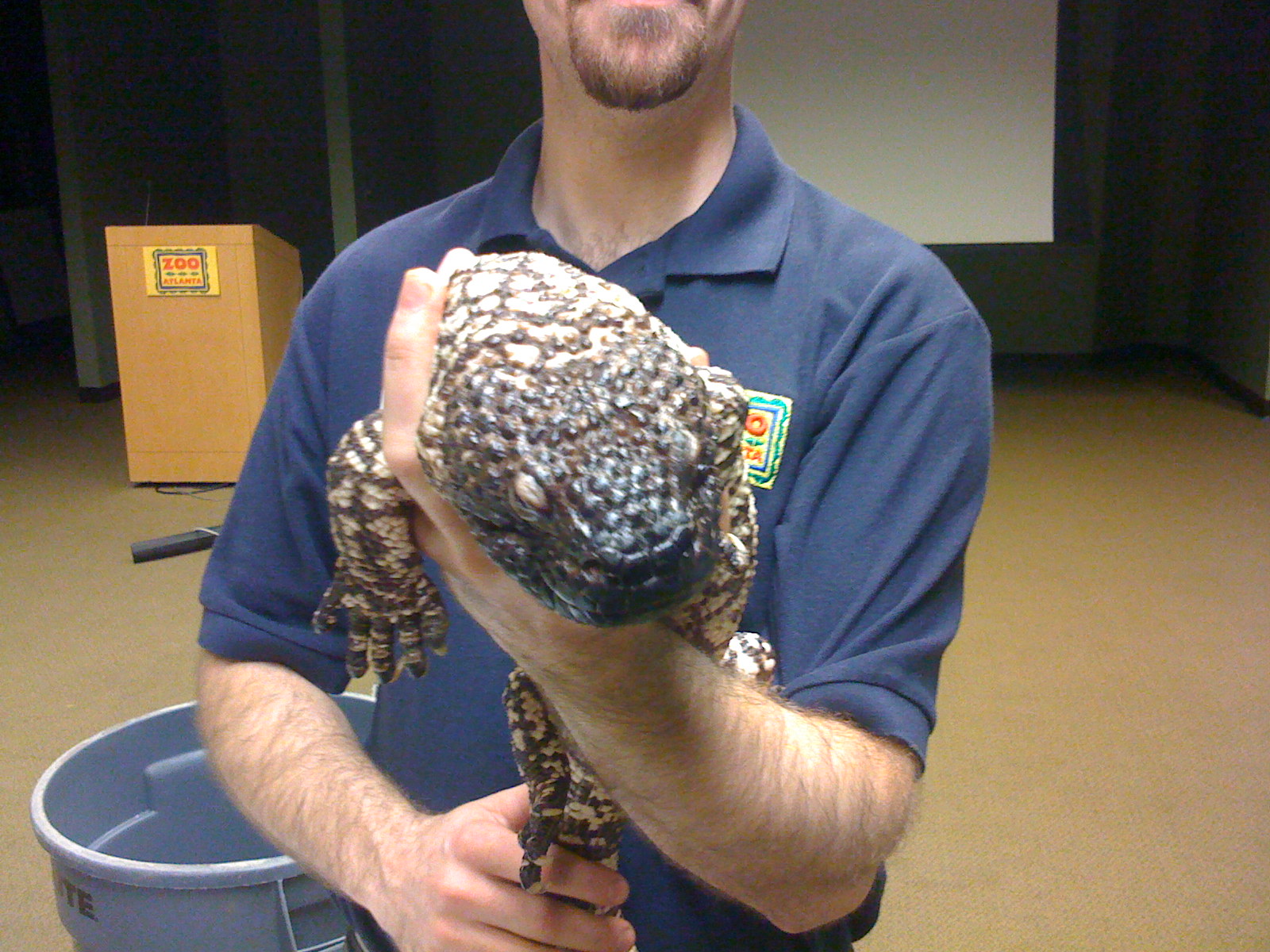
MEET THE GILA MONSTER!

Gila Monster at Zoo Atlanta

Range: South West US and Mexico

Habitat: Scrub and semi-desert and rocky outcrops near water

Diet: Carnivore: bird and reptile eggs and small mammals

Size: 14-20 inches

Conservation Status: Vulnerable

Fun facts:

  • They are one of two venomous lizards in the whole world (the other is the Mexican Beaded Lizard.)
  • They brightly colored to ward of predators.
  • They have a forked tongue like a snake and it helps them “smell” for prey.
  • They inject venom into their prey when they bite. They have special glands in their lower jaw that stores the venom.
  • Their tails store fat so they can survive when food is scarce or when they hibernate in the winter.
  • They are not harmful to humans, despite their bad reputation! So Gila Monsters aren’t so monstrous after all!


Categories: Animals, Children, education, Environment | Tags: , , , | Leave a comment

Hi!!

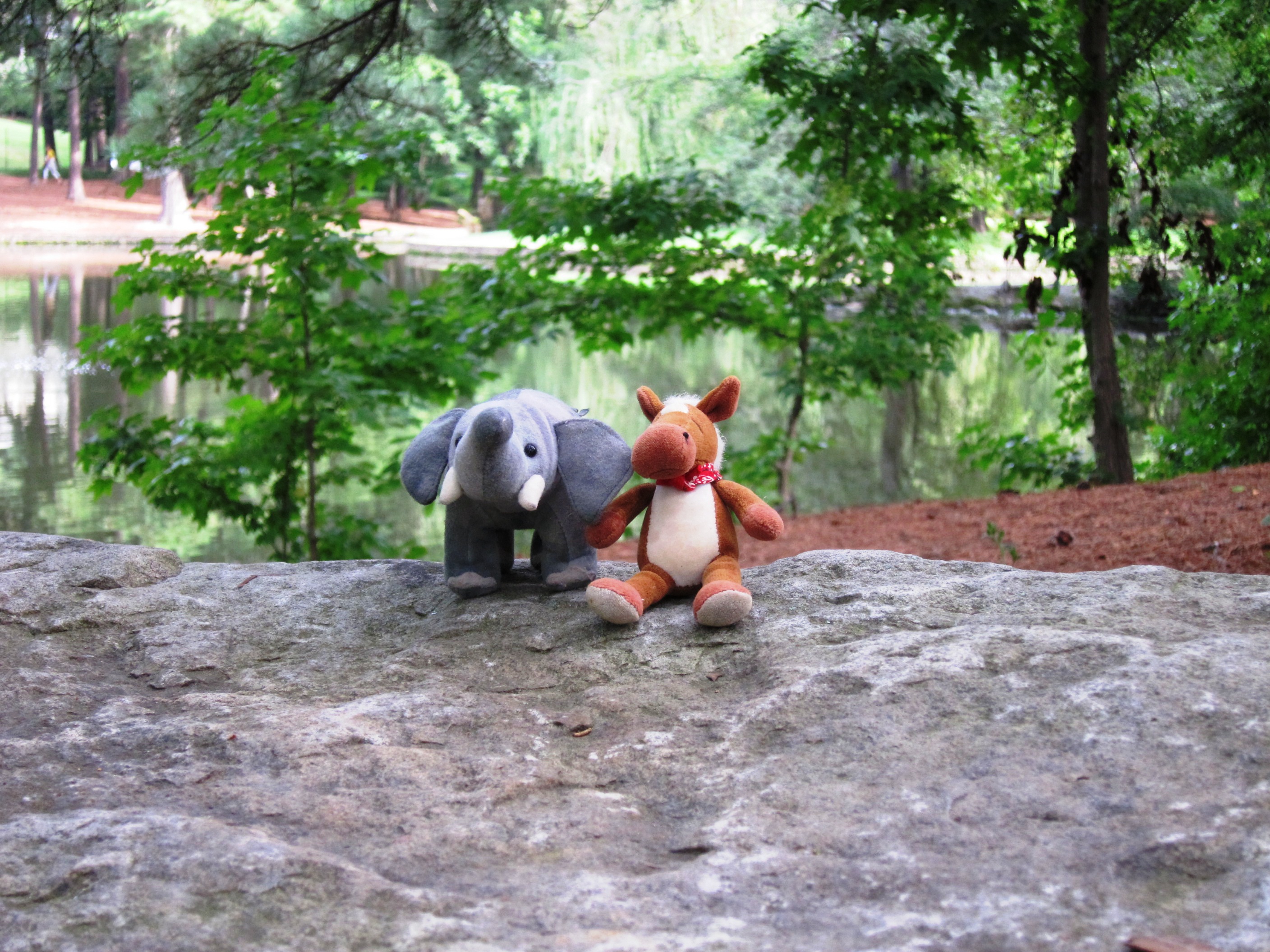
Hi! We're hanging at Duck Pond Park in Buckhead!

Hello! We wanted to start our blog with an introduction! My name is Ellie the Elephant and I’m Edmond the Horse. We’re best friends, explorers, travelers, educators, and animal lovers.  Our goal in life is go on as many adventures as possible and explore tons of cool places. We’ve traveled all around the planet including, Indonesia, Israel, Trinidad, New York City, Vancouver and San Francisco! Our favorite thing to do when we travel is to find wildlife and explore zoos and aquariums. Our passion is animals- naturally. We love to meet our fellow animal friends and learn about their habitats, lives and families.  And because we have so much fun together we’ve decided to write about the awesome animals we meet! We’ve been to so many fabulous places around the world but have yet to check out our own home town Atlanta. So that’s where our adventures will focus, but don’t worry we’ll be heading out of town some too! We’re excited to share with you and hope that our excursions will inspire you to go explore the world around you. And if you have any tips or places you’d like us to visit, leave a comment and we’ll see if we can get there!

Ellie and Edmond!

Categories: Animals, Atlanta, Children, education, Environment, Local | Tags: , , , | 2 Comments

Blog at WordPress.com.