Posts Tagged With: environment

WATERY WEDNESDAY # 31

WATERY WEDNESDAY# 31

It’s Wednesday and it’s time to meet an animal who lives in a watery environment! We’re off to find a little fish with a fun name that spends part of its life in fresh water and part of its life in the ocean! Are you ready to jump in?

MEET THE COMMON JOLLYTAIL!

   Range/Habitat: South Australia-New Zealand-South America/ wetlands,

estuaries, ocean

   Diet: Carnivore: small fish

   Length: up to 8”

   Conservation Status: common


Fun Facts:

  • Common jollytails are also known as common galaxias or whitebaits.
  • They are clear and olive gray in color.
  • Common jollytails have small cylindrical shaped bodies.
  • They lay their eggs in freshwater habitats.
  • When the common jollytail hatches they head out to the ocean.
  • After about 7 months the common jollytail then heads back to a freshwater habitat, where they spend the rest of their lives.

These little fish sure are cute! We think it’s so cool they are able to live in both freshwater and salt water environments. Do you know any other fish who do that?


Categories: Animals, Children, education, Environment, fish, nature, science, wildlife | Tags: , , , , , , , | 4 Comments

REPTILIAN TUESDAY # 31

REPTILIAN TUESDAY # 31

We just love Tuesdays because it is the day of the week to spotlight a reptilian friend and we know our reptile friends don’t always get love! We’re going to Europe today to find this small lizard who nests in the sand dunes! Are you ready? Let’s do this!

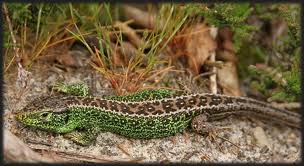
MEET THE SAND LIZARD!

   Range/Habitat: Europe-Central Asia/ grasslands, sand dunes

   Diet: Carnivore: insects, spiders

   Length: 7-9”

   Conservation Status: common


Fun Facts:

  • Sand lizards are colorful. Their color varies by habitat and region.
  • Male sand lizards turn bright green during mating season.
  • They have short legs.
  • Like other small lizards, they will drop their tail if caught by a predator.
  • Sand lizards hibernate in the winter.
  • Sand lizards are the only egg laying lizard in the United Kingdom.

These cute little lizards lay their eggs in sand soil, hence the name! We think it’s cool that these lizards look different depending on where they live! It’s all about camouflage baby!


Categories: Animals, Children, education, Environment, nature, reptiles, science, wildlife | Tags: , , , , , , , | 2 Comments

MAMMAL MONDAY # 31

MAMMAL MONDAY # 31

Who loves cats? We love cats! We’re heading to the grasslands of Africa to meet today’s mammal! We’ll need our night vision goggles, because these cats are active at night! Don’t worry, these cats aren’t big enough to pounce on us!

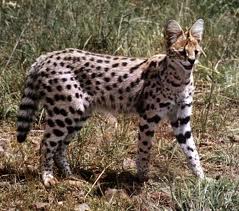
MEET THE SERVAL!

   Range/Habitat: Africa/ grasslands, wetlands

   Diet: Carnivore: rats, rodents, frogs & birds

   Length/Weight: 23-39”/ 20-40 lbs

   Conservation Status: common

Fun Facts:

  • Servals are covered in spots.
  • Servals are solitary and nocturnal (active at night).
  • They have very long legs.
  • Servals also have very large ears and excellent hearing.
  • Servals can leap up to 13 ft horizontally; we bet they’d win the long jump competition. They can also jump about 3 ½ ft high.
  • They are considered to be very intelligent.
  • Servals can purr.

Servals are beautiful and graceful predators. They are considered to be very beneficial to local farmers because they are excellent are rodent control. Servals are now part of the pet trade. These cats can be large, wild and destructive and do not make good pets, because they aren’t domestic cats. Remember, to do your homework before getting any pet :)!

Categories: Animals, Children, education, Environment, mammals, nature, science, wildlife | Tags: , , , , , , , , | 4 Comments

FEATHERY FRIDAY # 30

FEATHERY FRIDAY# 30

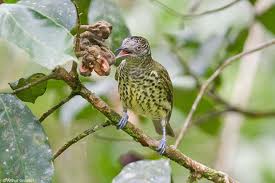
Woohoo, we’ve made it to Friday and you know what that means! It’s time to meet another feathery friend! We met a bird who lives by the shore yesterday and today we’re heading to the rainforests of South America! We’re going way up in the canopy again, so pull on your zipline gear and let’s go! Wheeeeeeeee…

MEET THE SHARPBILL!

   Range/Habitat: South America/ rainforest

   Diet: Omnivore: insects, fruits, invertebrates

   Length: 6 ½”

   Conservation Status: Common


Fun Facts:

  • Sharpbills have long sharp pointy beaks.
  • Sharpbills are rarely seen.
  • They are a small stocky bird.
  • Sharpbills have bright orange-red eyes.
  • They have a scaly face.
  • They are known to travel in flocks of other birds.


We think Sharpbills are just so beautiful. There is not much known about these little shy birds! It’s hard for scientist to learn about animals that live in the canopy of the rainforest, because it is not easy to access. If you could spend your life way high up in the trees would you?


Categories: Animals, birds, Children, education, Environment, nature, science, wildlife | Tags: , , , , , , , | 1 Comment

SUPER SURPRISE THURSDAY # 30

SUPER SURPRISE

THURSDAY# 30

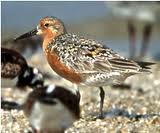
We’re heading to the shore to meet today’s Super Surprise animal! Any guess on if it’s a bird, mammal or reptile? Well it’s small and has feathers and looks for bugs and snails in the sand! Did that give you any guesses? Let’s grab our beach blankets and head down to the water!

MEET THE RED KNOT!

   Range/Habitat: Worldwide-except Antarctica/ ocean coastlines

   Diet: Carnivore: eggs, snails, spiders, crustaceans

   Length/Weight: 9-10”/ 3-8 oz

   Conservation Status: Common


Fun Facts:

  • Red knots are a member of the sandpiper family.
  • They probe in the mud and shallows for prey.
  • Red knots have gray plumage. Their face and underbelly turn red during breading season.
  • Red knots have one of the longest migrations of any bird, up to 9,300 miles. They travel from the arctic to South America.
  • Red knots in America spend part of their migration in the Delaware Bay to eat horseshoe crab eggs.


We just can’t think of a better way to spend an afternoon than to sit on the beach and watch the shore birds run around! Watch out for those seagulls though, they can be pushy! Do you have a favorite shore bird?


Categories: Animals, birds, Children, education, Environment, nature, science, wildlife | Tags: , , , , , , , | 2 Comments

WATERY WEDNESDAY # 30

WATERY WEDNESDAY# 30

It’s time to pull on your wetsuit and put on your goggles and head into the ocean to meet today’s Watery Wednesday animal! Today’s fish has a skeleton made of cartilage and a mouth full of teeth! Maybe we’ll skip the wetsuits and watch these fish from our submarine :)!

MEET THE BLUE SHARK!

   Range/Habitat: tropical-temperate waters/worldwide

   Diet: Carnivore: squid, fish

   Length: up to 12 ft

   Conservation Status: Near threatened


Fun Facts:

  • Blue sharks are called the “wolves of the sea”.
  • Blue sharks are a beautiful cobalt blue color.
  • They have long pectoral fins.
  • Blue sharks are very fast swimmers and feeders.
  • They have sharp triangular teeth.
  • They migrate seasonally from cooler to warmer waters.
  • Blue sharks have large litters of live pups, up to 100.


Blue sharks are known to be aggressive towards people, so they are best left alone. We think they are such beautiful and graceful predators. Like other sharks, blue sharks are threatened. We need to make sure that our oceans have these apex predators swimming around for a long time!

We found a nice shark cage to watch these wonderful creatures! Who's joining us?


Categories: Animals, Children, education, Environment, fish, nature, science, Watery Wednesday | Tags: , , , , , , , | 2 Comments

REPTILIAN TUESDAY # 30

REPTILIAN TUESDAY # 30

It’s that time of the week when we meet a reptile and that can only mean it is Reptilian Tuesday! We’re going to the land down under today mates to meet a very beautiful snake! Do you have your Australian accent ready? Let’s go!

MEET THE CARPET PYTHON!

   Range/Habitat: South New Guinea-Australia/ rainforest-scrub-desert

   Diet: Carnivore: lizards, birds, small mammals

   Length: 6 ½ ft

   Conservation Status: common


Fun Facts:

  • Carpet Python have bold patterns of gray, reddish brown and black.
  • Carpet pythons live in all kinds of habits.
  • They have many different color variations.
  • They are active day and night.
  • Carpet pythons are non-venomous constrictors.
  • They are semi-arboreal (spend part of their lives in trees).

Well mates, don’t you think these pythons are gorgeous! We think nature has some of the patterns out there, way better than any paisley we’ve seen! And the best patterns look best when worn by the animal that was born with it!

*If you like this post tell us :)! We love the feedback & if you know someone with kids or who loves animals please share it!

Categories: Animals, Children, education, Environment, nature, reptiles, science, wildlife | Tags: , , , , , , , | 2 Comments

MAMMAL MONDAY #30

MAMMAL MONDAY # 30

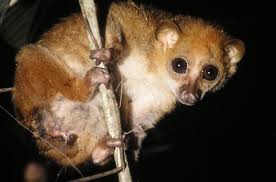
We’re back to our regularly scheduled programming and you know what that means- it’s Mammal Monday! We’re traveling to the rainforests of Central Africa to find a primate that lives high in the trees! Grab your binoculars and let’s hop into a hot air balloon to see if we can spot this little guy!

MEET THE POTTO!

   Range/Habitat: West-Central Africa/ rainforests

   Diet: Omnivore: fruit, sap, insects

   Length/Weight: 12-16”/1 ¾-3 lbs

   Conservation Status: common


Fun Facts:

  • Pottos are primates. They are members of the prosimian family that includes loris and lemurs.
  • Pottos are nocturnal (active at night).
  • They are arboreal (live in the trees). They spend most of their lives in the canopy of the rainforests!
  • Pottos have pointy neck vertebrates that are covered by spiny skin on the back of their necks. This may be for protection, but scientists are unsure.
  • They have very thick fur.
  • They remain immobile in the trees to avoid predators.
  • Pottos have a life span of up to 25 years.


Pottos are so super cute! These little primates have very unusual hands that help them grip the branches very high in the trees! Did you know that the canopy of the rainforests contain the most life? Scientists haven’t even found all the species that live there! Wow! Recycling paper is a great way to preserve the trees of the rainforests!


Categories: Animals, Children, education, Environment, mammals, nature, science, wildlife | Tags: , , , , , , , | 2 Comments

RABBIT WEEK DAY # 5

RABBIT WEEK # 5

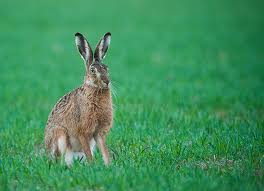
It’s the last day of Rabbit week and we have one more for you! We’re heading to Europe to meet today’s special hare. You may recognize this rabbit from the book “Alice in Wonderland” as the March Hare! Are you ready to meet the last rabbit of the week?

MEET THE EUROPEAN HARE!

Range/Habitat: Europe-North-South America/ grasslands, farms

Diet: Herbivore: grass, herbs, bark

Length/Weight: 19-28”/ 5 ½-15 lbs

Conservation Status: Common- Near Threatened in areas


Fun Facts:

  • European hares are also known as the brown hare.
  • European hares are nocturnal (active at night).
  • They are also solitary.
  • European hares have fluffy cottontails.
  • They have a tawny-rust colored fur.
  • They are the fastest land mammal in the United Kingdom.
  • European hares hide in depressions in the earth instead of burrows.
  • European hares box during mating season.


We think these hares are super cute, but man can they box! Check it out! Do any of our readers have some in their backyard? We hope you have enjoyed Rabbit week! We’re back to our regularly schedule programming next week :)! We hope you have a hoppy weekend!


Categories: Animals, Children, education, Environment, mammals, nature, rabbits, science, wildlife | Tags: , , , , , , , , | 2 Comments

RABBIT WEEK # 4

RABBIT WEEK # 4

Have you enjoyed meeting the rabbits so far? We just love how each rabbit is so different! And do we have a different rabbit for you today! We’re heading to the Southwestern U.S. desert to find this very fast rabbit with extra large ears!

MEET THE BLACK-TAILED JACKRABBIT!

   Range/Habitat: Southwestern United States-Mexico/ desert-shrub

   Diet: Herbivore: grasses, herbs, cacti

   Length/Weight: 18 ½-25”/ 9-13 lbs

   Conservation Status: Common


Fun Facts:

  • Black-tailed jackrabbits are also known as the American Desert Hare.
  • They are actually hares.
  • Black-tailed jackrabbits have long legs that help them move fast! They can reach speeds of up to 35 mph!
  • They are the 3rd largest hare in North America.
  • Black-tailed jackrabbits are nocturnal (active at night).
  • Black-tailed jackrabbits have huge ears. They can regulate the blood flow in their ears, which can help heat them up at night or cool them down during the day.
  • They get most of their water from the plants they eat instead of drinking it.

Wow, did you see that jackrabbit go by? They sure are fast! It is hard to miss those giant ears as they go by!

Categories: Animals, Children, education, Environment, mammals, nature, rabbits, science, wildlife | Tags: , , , , , , , , | 2 Comments

Blog at WordPress.com.