Posts Tagged With: science

FARM DAY AT CHATTAHOOCHEE NATURE CENTER!

Farm Day at Chattahoochee Nature Center!

We received a lovely invitation to go to the Chattahoochee Nature Center recently and luck would have it that we were able to go to their Farm Day! Man, were we excited! We’d never been to the Chattahoochee Nature Center before! We arrived early in the afternoon and we weren’t alone, the center was jamming! After meeting our new friend Rebecca who invited us we went to check out the main building!

They have a lovely display all about fresh water systems! Know why? Well, the center is located on the Chattahoochee River just north of Atlanta! The Chattahoochee River and surrounding area is home to loads of amazing animals, including turtles, owls, snakes, catfish and beavers! The center has a great area where you can not only learn about some of these animals, you can see them!
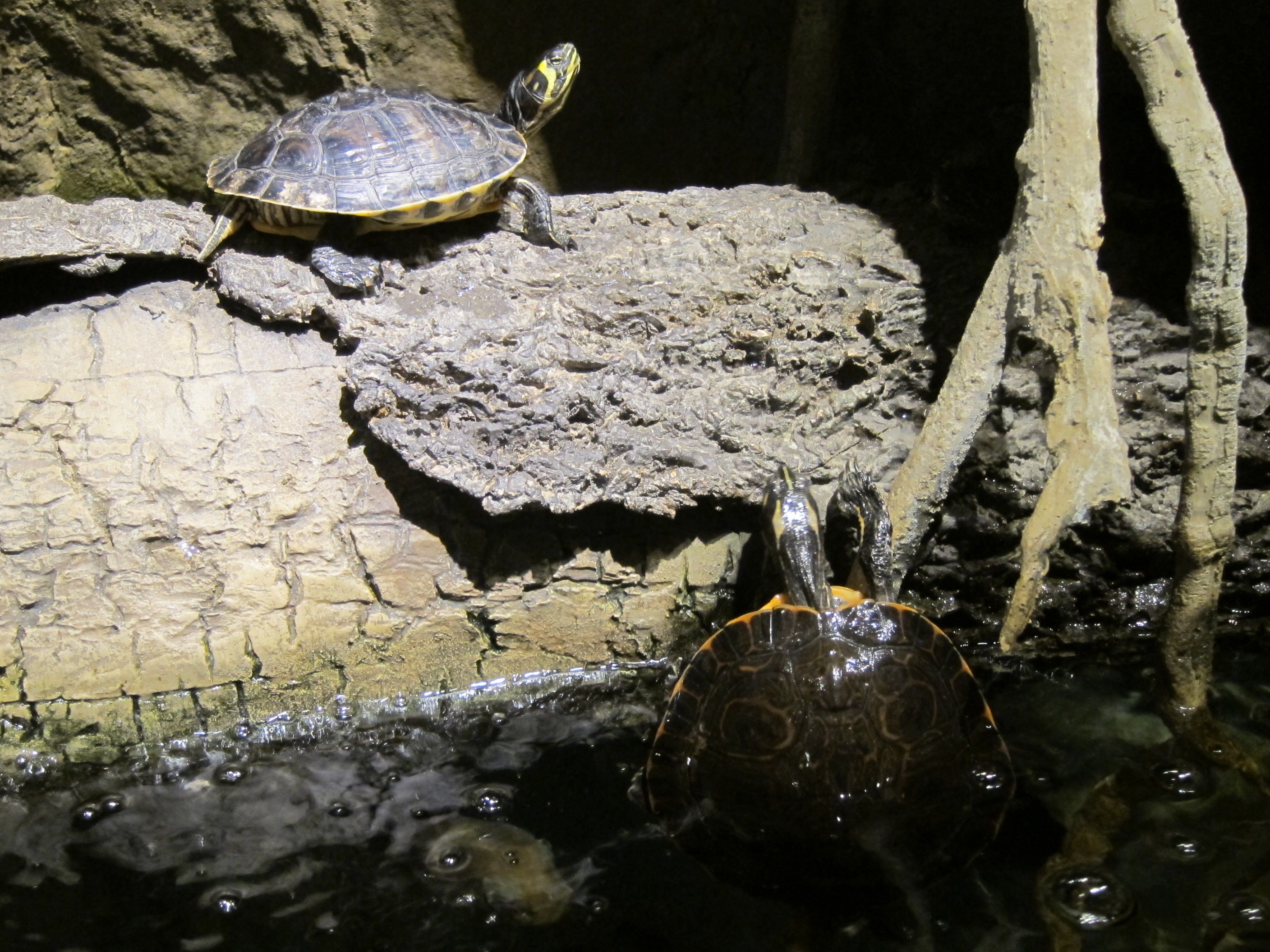
One turtle was hanging on the log and one was trying to get up there!

Owl!

One of favorite things in this area was the animals made of junk! Yep, they had an otter made from a dust buster & a beaver made of clothespins! FUN!

Heron made of parts!

An otter made from a hand held vac! So cute!

Beaver made out of clothespins! FUN!

As we headed outside we found an alligator snapping turtle that you can touch, don’t worry he wasn’t real. We’re adventurous, but not insane :)!
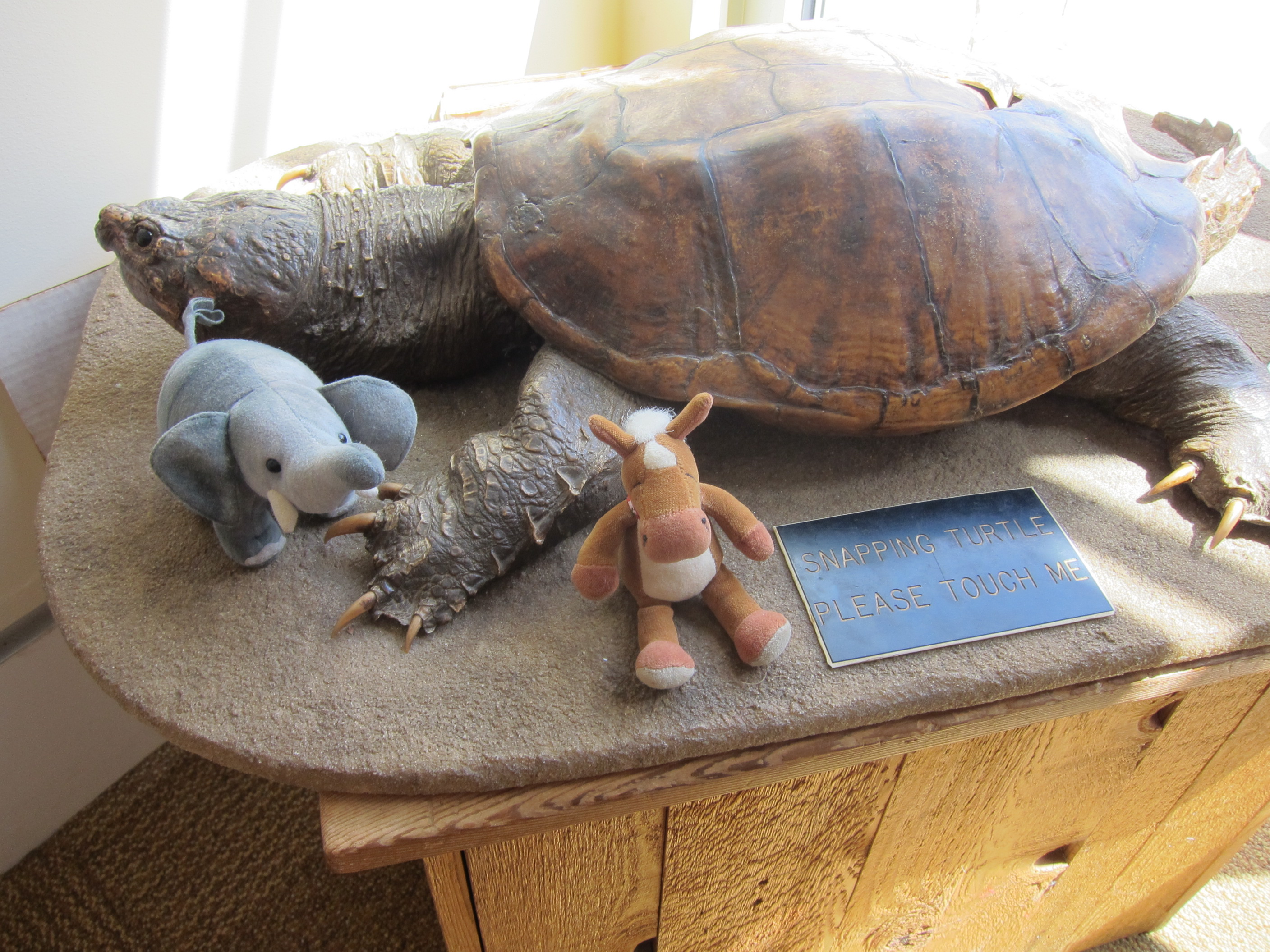
Here we are with the snapping turtle! Look the sign says you can touch!

We were excited to meet the farm animals that were at the center that day, so we waited in a line for our turn.  While we waited, one of the center’s naturalist introduced us to a red shoulder hawk!

Red Shoulder Hawk! He was sooo pretty!

These birds are native to Georgia and came to the center because someone had taken him when he was little to be a pet. Trust us when we say hawks are not pets, they belong in the wild. It is also illegal in the state of Georgia to take a native animal from the wild.

Whew, when we finally made it to the front of the line we made sure we read the rules!
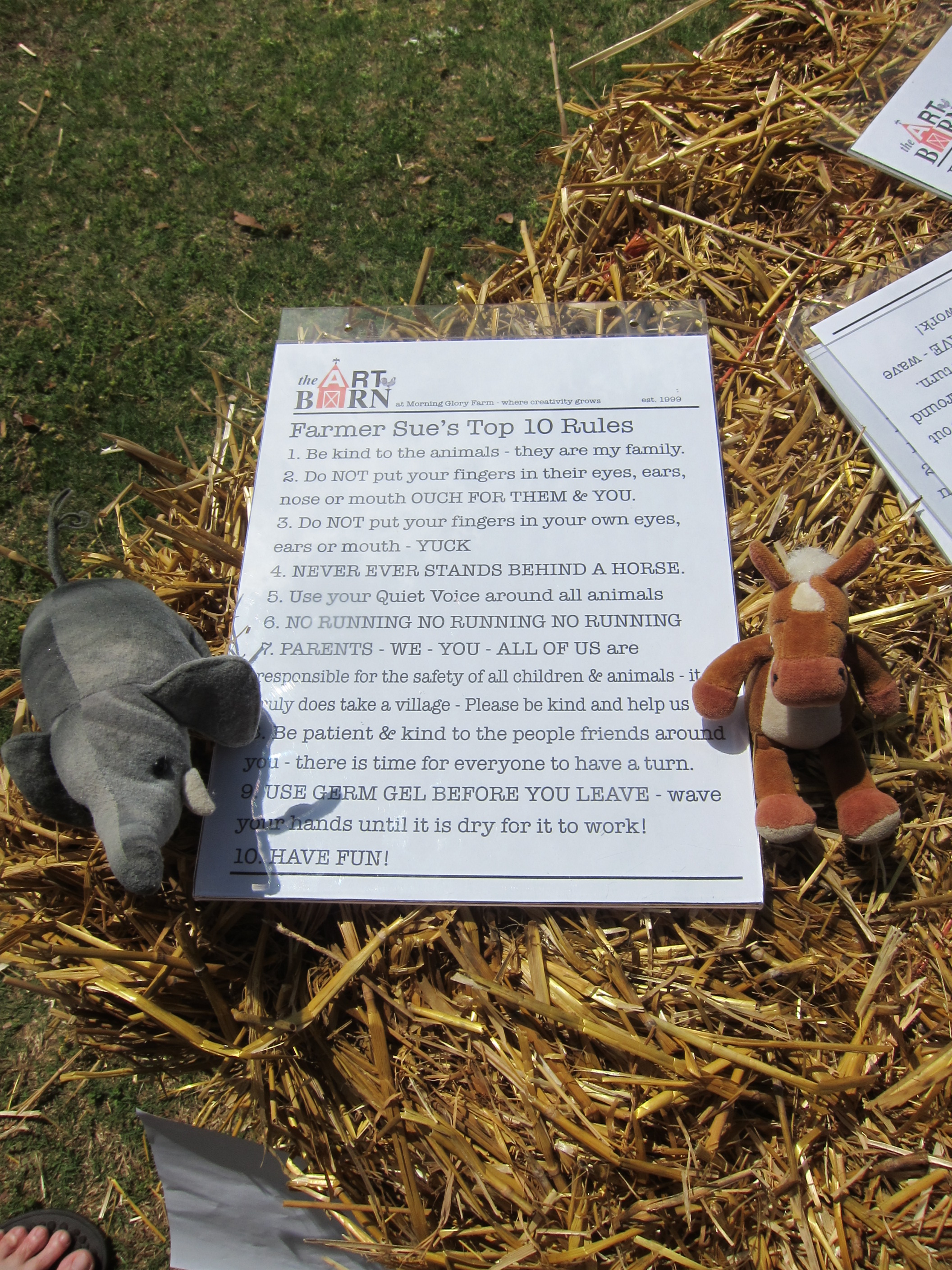
Farmer Sue's rules!

The animals for Farm Day had come from The Art Barn, a working farm not too far from the center! It’s run by Farmer Sue!
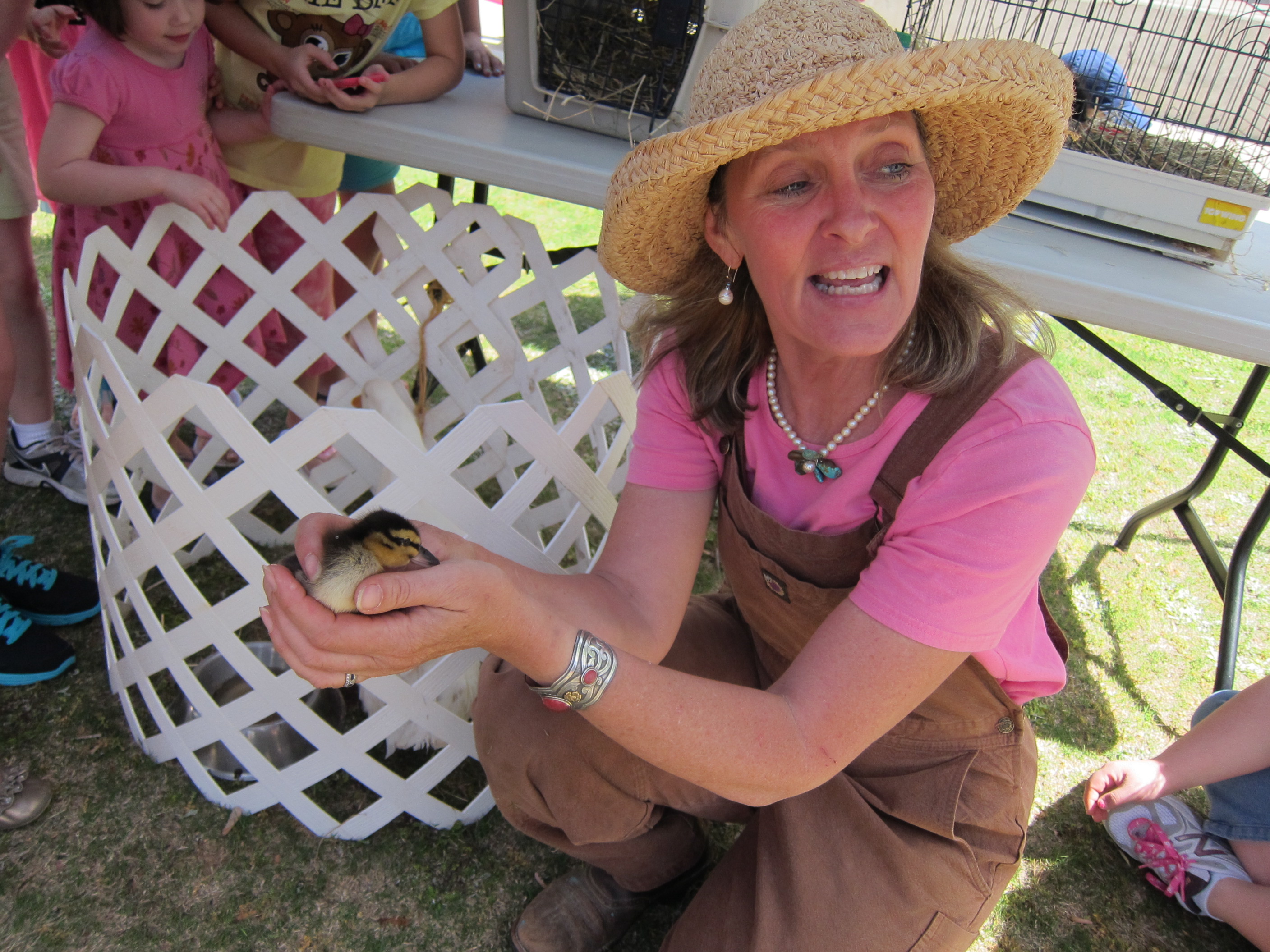
Farmer Sue with a duckling!

They had ducks, chickens, giant rabbits, a goat and a sheep! We loved the giant rabbits Godiva and Butterscotch!

Here we are with Butterscotch the Bunny! HE WAS HUGE!

The black sheep was super cute too, he just kept eating grass- our favorite! We wanted to join him for a browse but it was bit crowded!

A very hungry and wooly sheep!

There was a miniature horse too, but we were unable to get a good picture of his face and we figure you guys wouldn’t like rump pictures :)!

We decided to walk around the rest of the center’s grounds. They had lemonade and arts and crafts and loads of nature trails to explore. We found this excellent hollow tree stump that you can play in!
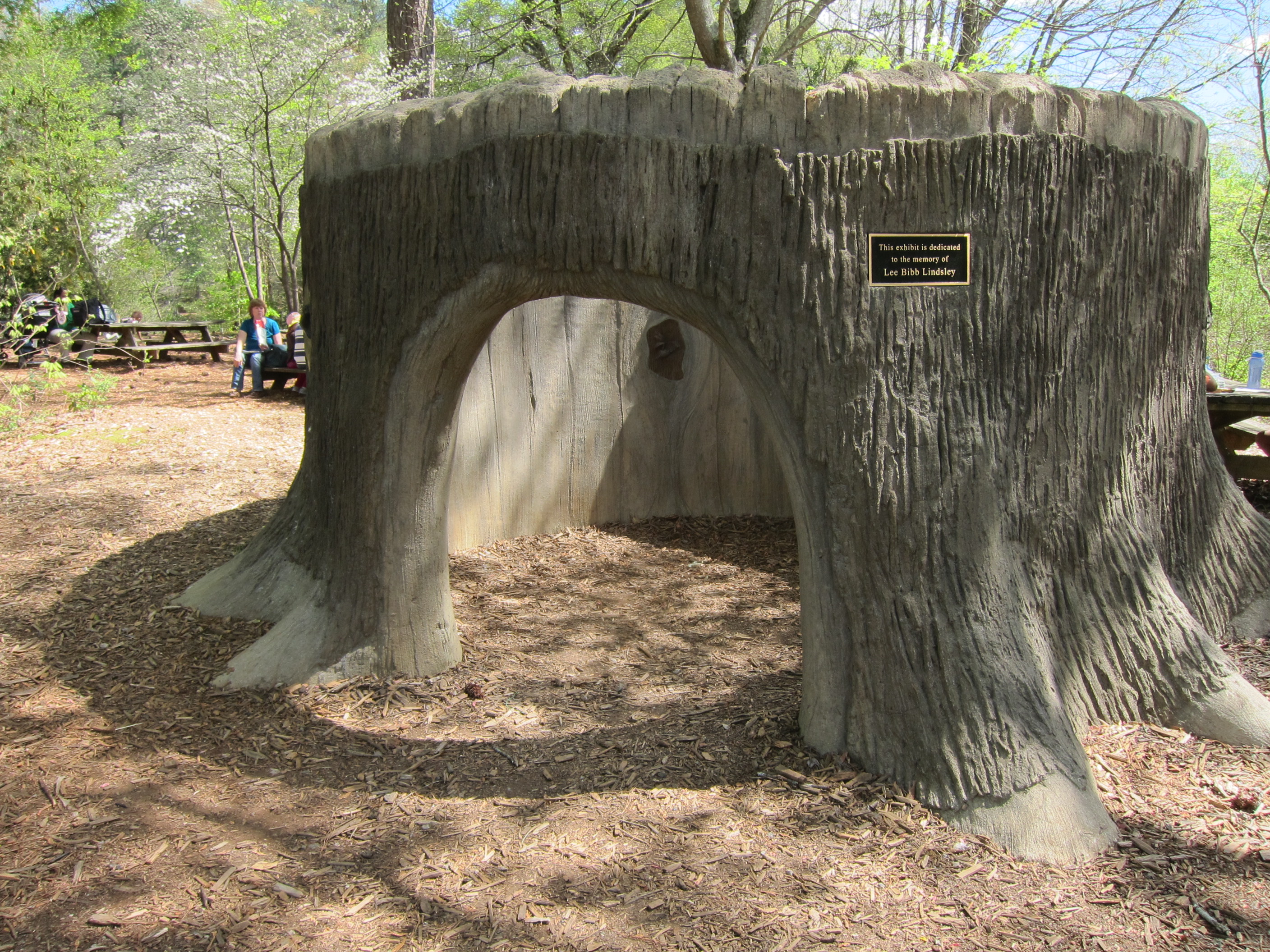
Cool isn't it?

As we strolled around we found out that the center has a bunch of aviaries with native birds. Can you say Bald Eagles? Yep, they have two of them and man, are they beautiful. Unfortunately they were up so high that we couldn’t get a good picture; so you’ll just have to go for yourself and see them! We also spotted barn and barred owls, turkey and black vultures in the aviaries.

They also have a lovely area for a beaver. We got a great shot of him and man was he sleeeepy!
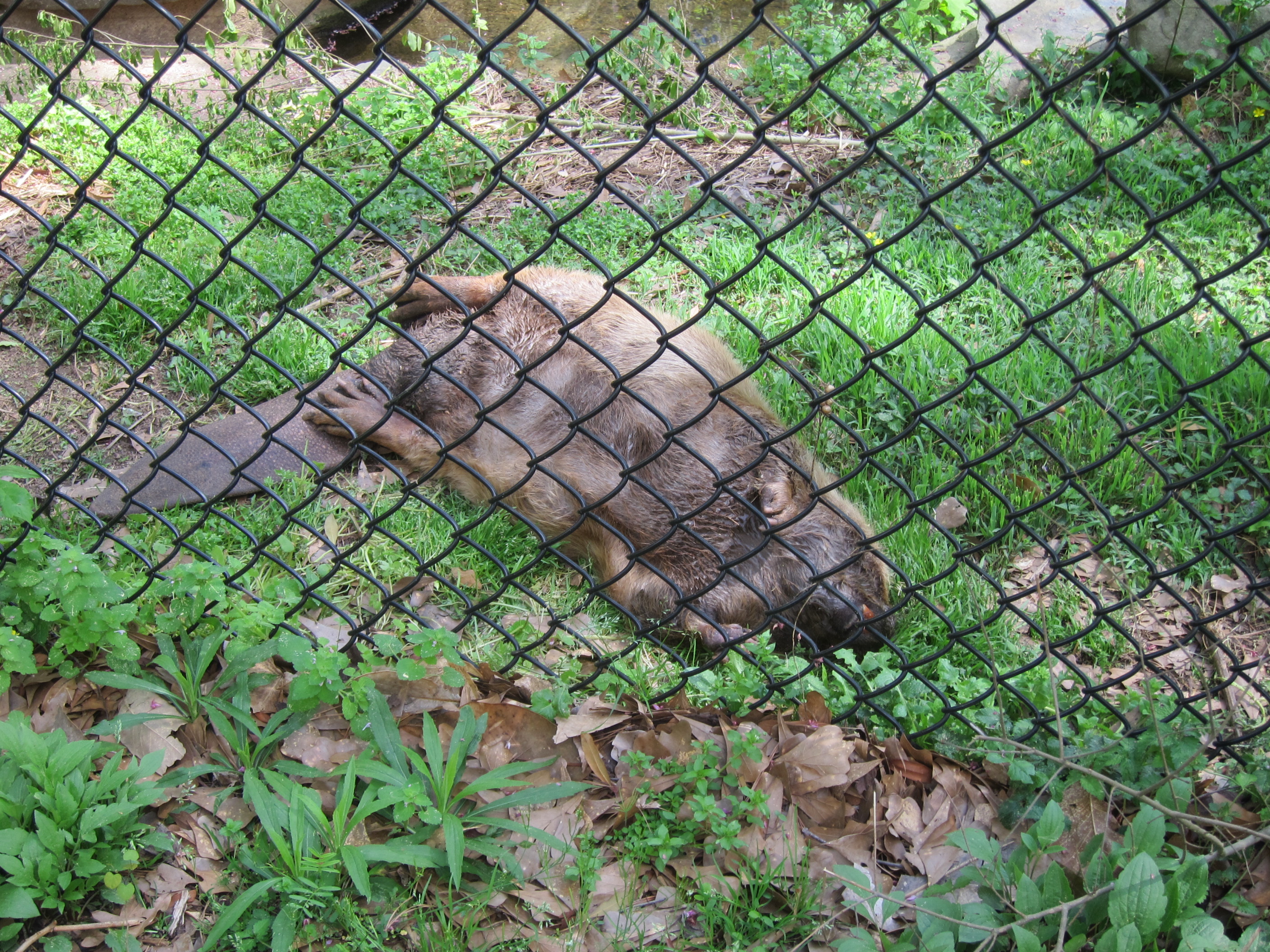
One very sleepy beaver!

Trust us, he was breathing.

The grounds of the center are so beautiful! We saw all kinds of trees and flowers in bloom! One of our favorites is the dogwood. We wonder where the dogwood got its name, it doesn’t bark! Haha!

Dogwood blossoms are so pretty

We decided to chill for a bit by the river, it was so peaceful.

We decide to take a break!

We made our way back just in time for another animal encounter! This time the naturalist brought out a Virginia Opossum (and yes you pronounce the O)!
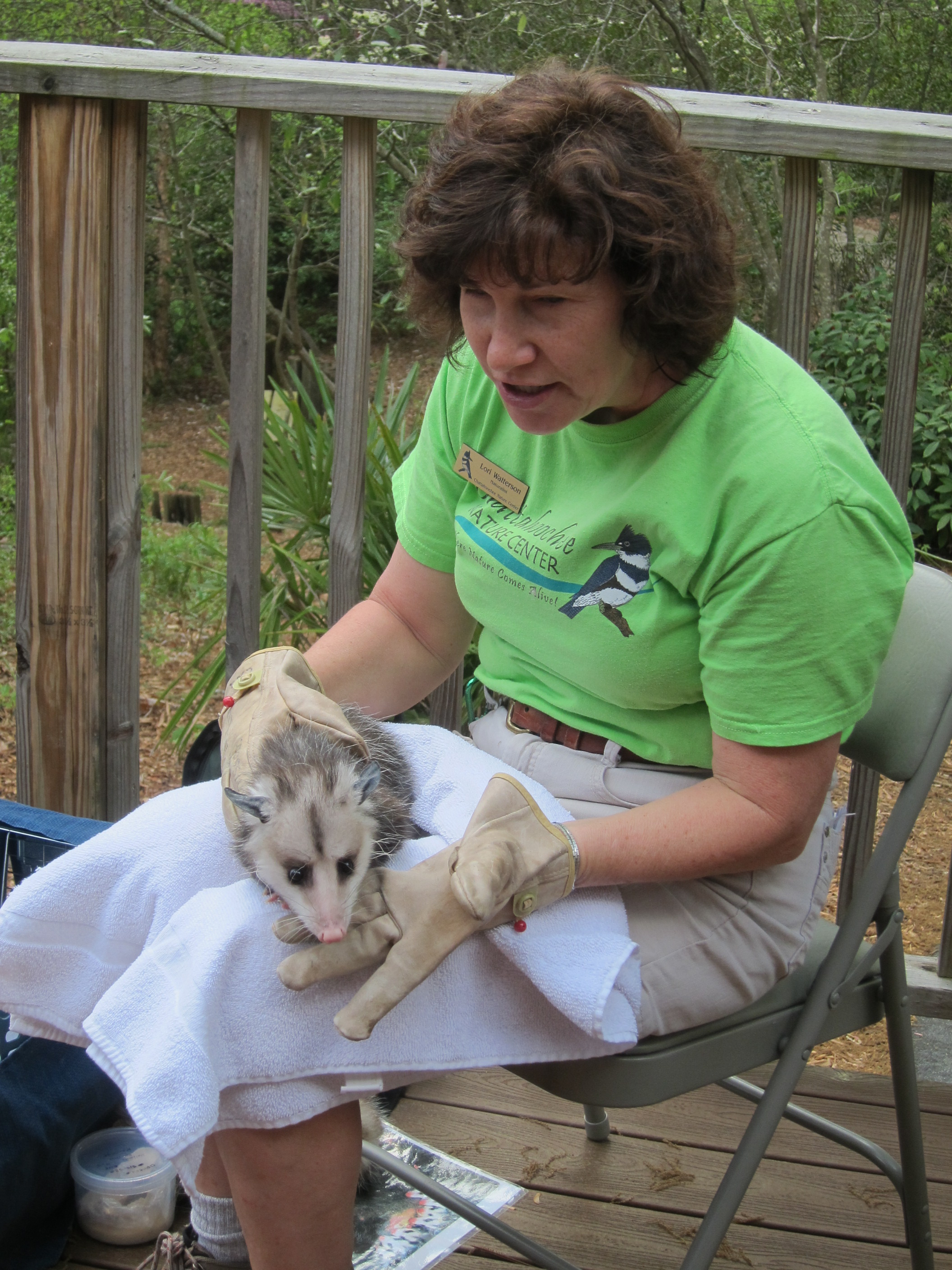
Time to meet an Opossum!

This little one was only about 8 months old.  Did you know that the Virginia Opossum is the only marsupial in North America? They are just so cool!  You can learn more about opossums here.

We were pretty tired from all the excitement and decided to head home. We did stop by the membership booth to learn about becoming members.
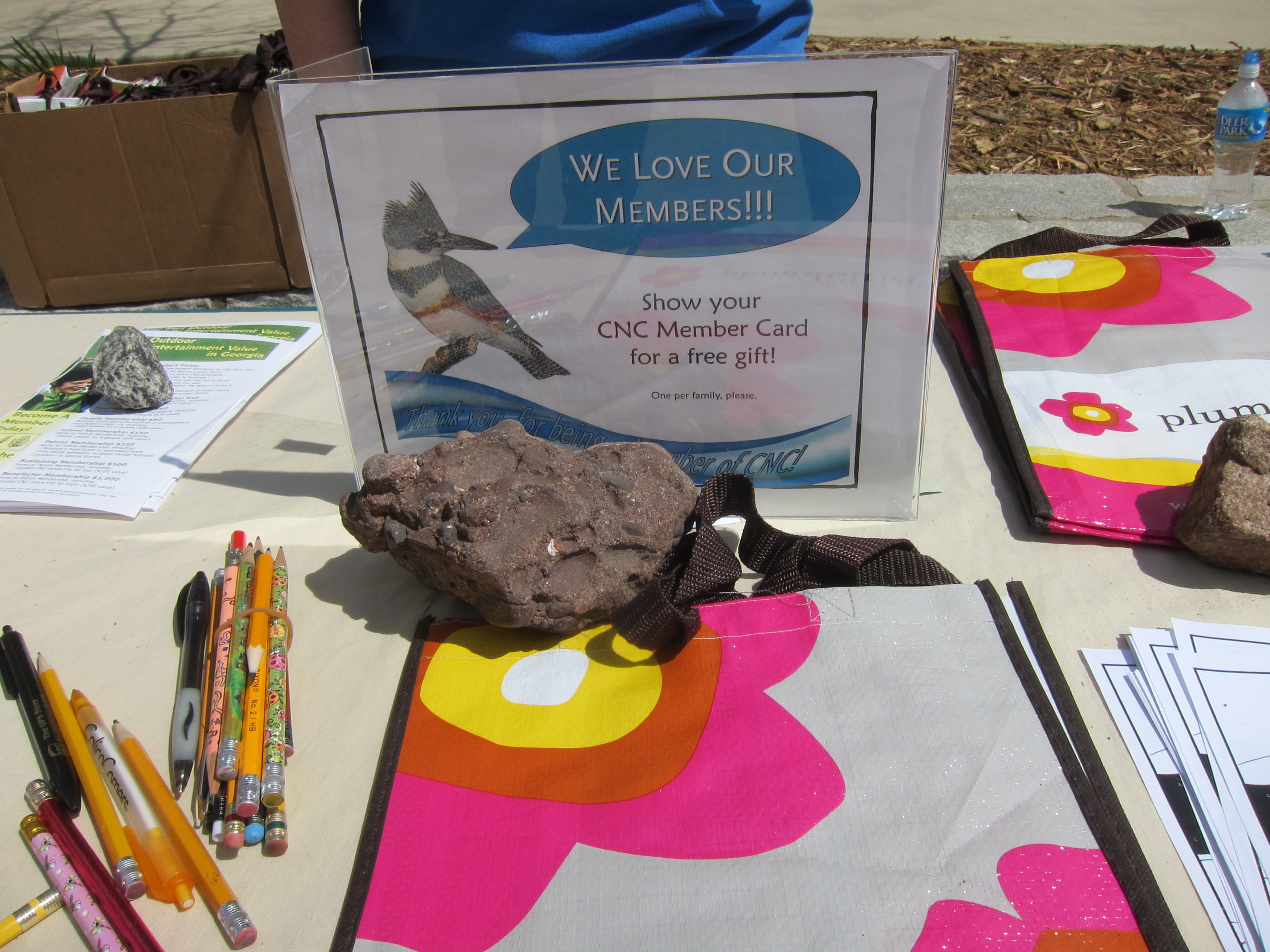
Become a member!

As we left, we saw that they had fun imprints on the sidewalk just outside the front door! We liked the kingfisher one! The center’s summer camp is called Camp Kingfisher! We wonder if they let elephants and horses come?

We loved the sidewalk imprints!

There’s so much to see and do at the Chattahoochee Nature Center! It’s a great place to learn and explore. Check out their website, they have loads of fun events coming up! Bring a picnic lunch and spend the day at this special place!
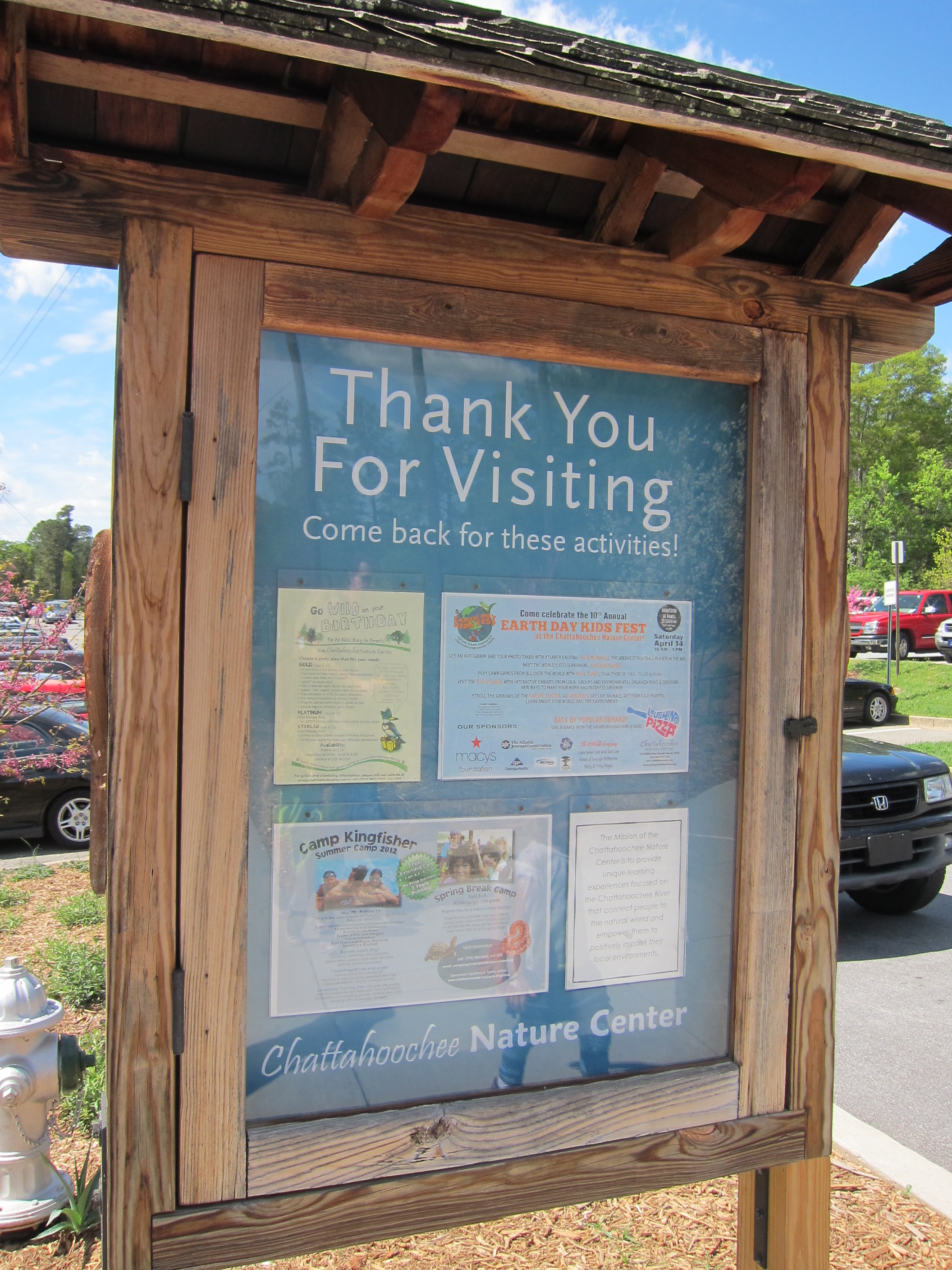
Thanks for the great afternoon!


Categories: Animals, Atlanta, backyard, birds, Children, education, Environment, mammals, marsupial, nature, science, wildlife | Tags: , , , , , , , , , | 5 Comments

FEATHERY FRIDAY # 29

FEATHERY FRIDAY# 29

Who’s excited for Friday? WE ARE! We only had to step into our own backyard to find today’s bird! So grab your binoculars and come visit us as we head on a bird watching expedition!

MEET THE RED SHOULDER HAWK!

   Range/Habitat: North America-Mexico/forests, suburbs-near water

   Diet: Carnivore: rodents, small reptiles, birds

   Length/Weight: 17-24”/ 19-25 oz

   Conservation Status: Common


Fun Facts:

  • Red Shoulder Hawks are raptors.
  • They have long legs and long yellow legs.
  • Red shoulder hawks swoop down from tree perches to catch their prey.
  • They are diurnal (active during the day).
  • Red shoulder hawks are known as a “buteo” hawk, meaning they have broad wings and tails.
  • Both the male and female red shoulder hawk take care of the chicks.
  • You can hear listen to their call.


The Red Shoulder Hawk is one of the most common hawks in North America! They can be confused with the Red Tailed Hawk who is broader and larger. Bird watching can be such a fun way to spend an afternoon, grab a bird guidebook and your binoculars and see what you can find!


Categories: Animals, backyard, birds, education, Environment, nature, science, wildlife | Tags: , , , , , , , | 2 Comments

SUPER SURPRISE THURSDAY # 29

SUPER SURPRISE

THURSDAY# 29

Do you have your coats? We’re heading to the mountains of South East Asia today to meet some sheep! It’s Super Surprise Thursday, so let’s head out on today’s adventure!

MEET THE BLUE SHEEP!

   Range/Habitat: South East Asia/ mountains

   Diet: Herbivore: grasses, shrubs

   Length/Weight: 4- 5 ft/ 55-175 lbs

   Conservation Status: Common


Fun Facts:

  • Blue sheep are also called the Bharal.
  • Their slate gray fur has a tinge of blue to it.
  • Blue sheep’s color is perfect to help them camouflage in their rocky mountain habitats.
  • Both male and female Blue sheep have horns. The females have slightly smaller ones.
  • Their horns turn upwards and outwards.
  • Blue sheep are excellent climbers.


These beautiful sheep sure are cool! We just love that they can rock climb too! Have you ever been rock climbing? An elephant and horse aren’t really meant for sure adventures, so we’ll watch from the bottom.


Categories: Animals, Children, education, Environment, mammals, nature, science, wildlife | Tags: , , , , , , , | 1 Comment

WATERY WEDNESDAY # 29

WATERY WEDNESDAY# 29

We weren’t sure we could find a crazier fish than last week’s walking catfish, but we were wrong! This ocean dwelling fish has some big pointy teeth that are a bit scary! But don’t you worry they live down in the deep depths of the ocean! Who wants to board our deep sea submersible?

MEET THE SLOAN’S VIPERFISH!

   Range/Habitat: Tropical-subtropical oceans around the world

   Diet: Carnivore: fish, invertebrates

   Length/Weight: up to 14”/ up to 1 oz

   Conservation Status: Common


Fun Facts:

  • Sloan’s viperfish live deep in the ocean.
  • They are bluish-black in color.
  • Sloan’s viperfish hold the record for largest teeth relative to head size for a fish!
  • Their teeth are so big that they won’t fit into their mouths.
  • They have a long ray that hangs in front of their mouths. It acts a lure for prey.
  • Sloan’s viperfish have photophores (emits light) along their bodies and mouths that attract prey.


And you thought walking fish were weird, well how about a fish with light emitting cells and super giant teeth? The world’s oceans are home to most alien and fascinating creatures! The craziest part is that we haven’t even begun to explore the vast waters! Who else wonders what’s down there?

Categories: Animals, Children, education, Environment, fish, nature, science, wildlife | Tags: , , , , , , , | 4 Comments

REPTILIAN TUESDAY # 29

REPTILIAN TUESDAY # 29

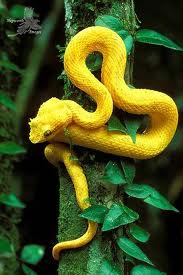
We’re off the rainforest again today, but this time in Central and South America! We’re off to find a brightly colored snake that is best seen from a distance and since they live in the trees, that won’t be hard! We hope you kept your binoculars from yesterday because we’re looking up again!

MEET THE EYELASH PIT VIPER!

   Range/Habitat: Central America-South America/ rainforest

   Diet: Carnivore: frogs, lizards, rodents

   Length: 18- 30”

   Conservation Status: common


Fun Facts:

  • Eyelash Pit Vipers are arboreal (spend most of their life in trees).
  • Eyelash pit vipers have modified scales above their eyes. These are thought to help them camouflage.
  • They have prehensile tails that they can use to hang on tree branches.
  • Eyelash pit vipers have good binocular (3D) vision to help them navigate through the trees.
  • They vary in color; from orange to yellow to green.
  • Eyelash pit vipers are nocturnal (active at night).
  • They are venomous!

Who says a snake can’t be beautiful? We sure think they are, especially from a distance J! These ambush predators hang out in trees looking for their next meal! We’re glad we don’t live up there with them!


Categories: Animals, Children, education, Environment, nature, reptiles, science, wildlife | Tags: , , , , , , , | 3 Comments

MAMMAL MONDAY # 29

MAMMAL MONDAY # 29

It’s Monday again and we trust that everyone had a good weekend! We’ve found a really cute resident of the rainforests of Southeast Asia to make your Monday a great Mammal Monday! Grab your binoculars because these rodents live up in the trees!

MEET THE PREVOST’S SQUIRREL!

   Range/Habitat: Southeast Asia/ rainforest

   Diet: Omnivore: fruit, seeds, nuts, ants & termites

   Length/Weight: 5-11’/ 5-18 oz

   Conservation Status: least concern


Fun Facts:


  • Provost’s squirrels are also known as the tri-colored squirrel.
  • Provost’s squirrels are brightly colored with chestnut, black and a body length white stripe on each side.
  • They are solitary.
  • They are tree dwelling squirrels.
  • Provost’s squirrels are crepuscular (active at dawn and dusk).
  • They have long tails that help with balance.


We love these squirrels and their fancy coloration! The rainforests are full of such wonderful creatures! There are so many ways to help the rainforests too, especially recycling! Recycling paper and aluminum cans is easy and it helps our squirrel friends here keep their home J!


Categories: Animals, Children, education, Environment, mammals, nature, science, wildlife | Tags: , , , , , , , | 2 Comments

FEATHERY FRIDAY # 28

FEATHERY FRIDAY# 28

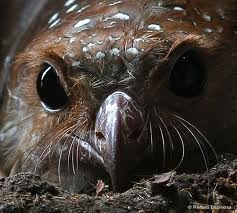
Man o Man have we found a nifty bird for you today! These birds use echolocation, just like bats to help them get around at night! In fact they are very similar to bats in many ways, except that they are feathery J! We’re off to the rainforests of Northern Central American to meet this bird. Grab your night vision goggles, because they won’t be out during the day!

MEET THE OILBIRD!

   Range/Habitat: Northern Central & South America/ rainforest

   Diet: Herbivore: fruit

  Length/Weight: 16- 19”/ 13-17 oz

  Conservation Status: Common


Fun Facts:

  • Oilbirds are nocturnal (active). They are the only nocturnal fruit eating bird in the world.
  • They live in colonies.
  • Oilbirds roost in caves or underground during the day.
  • They use echolocation to fly at night. They send out sounds that bounce of objects and help the bird navigate.
  • Oilbirds can travel up to 45 miles a night to find food.
  • They love the fruit of oil palms and laurel trees.


Oilbirds are super cool! Not only do they fly at night, but they use echolocation. We wonder if they have bat friends or if bats wonder what these crazy birds are doing out at night.

Categories: Animals, birds, Children, education, Environment, nature, science, wildlife | Tags: , , , , , , , | 4 Comments

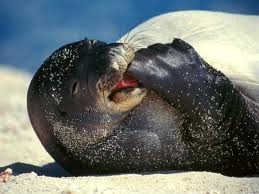
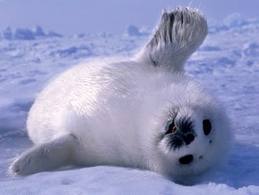
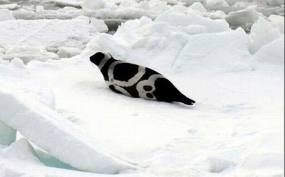
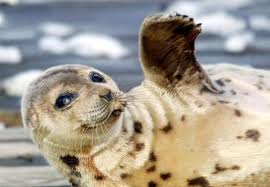
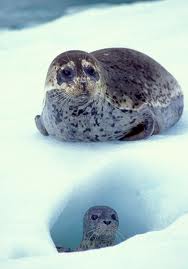
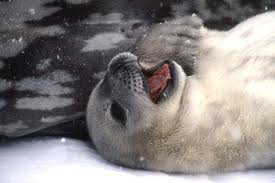
HAPPY INTERNATIONAL DAY OF THE SEAL!!

HAPPY INTERNATIONAL DAY OF THE SEAL!!

That’s right folks it’s a day to celebrate seals, our pinniped friends! Did you know that the word pinniped comes from the Latin meaning fin-footed? Cool! We’ll be posting fun facts on our Facebook page http://www.facebook.com/pages/Ellie-and-Edmond/254090144618348 and on our Twitter feed @EllieandEdmond!

We’ll leave you with some super cute seal pictures to start your day! YAY!

Categories: Animals, Children, education, Environment, mammals, nature, science, wildlife | Tags: , , , , , , , | Leave a comment

WATERY WEDNESDAY # 28

WATERY WEDNESDAY# 28

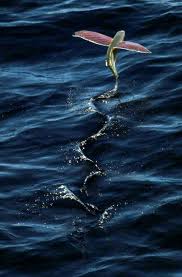
You just never know what kind of creature Watery Wednesday will bring you! We found a fish that can fly today! That’s right folks; this fish can leap out of the ocean and glide in the air! What? Well let’s hope aboard the Ellie and Edmond boat and check them out!

MEET THE TROPICAL TWO-WINGED FLYING FISH!

   Range/Habitat: tropical- sub-tropical oceans worldwide

   Diet: Carnivore: crustaceans, plankton

   Length: up to 7”

   Conservation Status: Common


Fun Facts:

  • Tropical two-winged flying fish have large wing-like pectoral (side) fins.
  • They can propel themselves out of the water and glide in the air.
  • Tropical two-winged flying fish can glide up to 12 seconds at a time.
  • They can reach speeds of up to 40 mph. They do this avoid predators.
  • They are dark blue and silver.

We promise you’re not seeing things! These crazy fish can fly and they can go fast! How cool would it be to see a school of them gliding by at top speeds?


Categories: Animals, Children, education, Environment, fish, nature, science, wildlife | Tags: , , , , , , , | 1 Comment

REPTILIAN TUESDAY # 28

REPTILIAN TUESDAY # 28

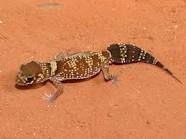
Bark! Bark! It’s Reptilian Tuesday and we have fascinating lizard for you today! They make a pretty cool sound for a little animal, in fact it made remind you of a certain four-legged friend that you may have! Put on your sunglasses and your sunscreen because we’re heading to the desert of Southern Africa!

MEET THE COMMON BARKING GECKO!

   Range/Habitat: Southern Africa/ desert

   Diet: Insectivores: termites/ants

   Length: 2 ¼-4”

   Conservation Status: common


Fun Facts:

  • Common Barking Geckos live in complex burrow systems that they dig themselves.
  • The males make a barking sound at dusk.
  • They bark to attract females.
  • Common barking geckos are nocturnal (active at night).
  • They are often heard in the desert but rarely seen.


Not much is known about these little guys, except that they make a lot of noise for a reptile. You can hear them as the sunsets of the Kalahari Desert. We think it’s super cool that they dig complex burrows for themselves.


Categories: Animals, Children, education, Environment, nature, reptiles, science, wildlife | Tags: , , , , , , , | Leave a comment

Blog at WordPress.com.