Posts Tagged With: science

Flat as a Pancake!

Flat as a Pancake!

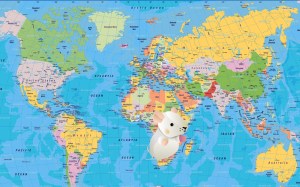
Since it was World Turtle Day yesterday, we decided to meet a one today! These flatties live in the deserts of Africa! So let’s find the pancake tortoise!

e e desert

MEET THE PANCAKE TORTOISE!

   Range/Habitat: E Africa (Tanzania/Kenya)/rocky outcrops and savannas

   Diet: Herbivore: grasses, leaves, fruit

   Length/Weight: 5 ½”-7”/ 1 lb

   Conservation Status: Vulnerable


Fun Facts:

  • Pancake tortoises live in East Africa in rocky outcrops and savannas.
  • They are herbivores. They eat grasses, leaves and fruit.
  • Pancake tortoises can grow up to 7″ long and weigh up to 1 lb.
  • They are listed as Vulnerable by the IUCN.
pancake tortoise2

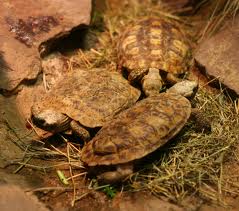
  • Pancake Tortoises have flat carapaces (top shell) that are flexible. This is a very unusual adaptation.
  • Pancake tortoises can squeeze into narrow crevices. This helps protect them from predators.
  • They don’t move to far from their shelter.

IMG_1865

  • They live in small colonies and share their shelters.
  • They can live up to 25 years old.
  • Pancake tortoises are crepuscular (most active at dusk and dawn).

Pancake tortoises are really neat little tortoises with their flat shells and ability to climb. And they have pancake in their name and who doesn’t love pancakes!

pancake tortoise

Categories: adventure, Animals, Children, conservation, education, Environment, nature, reptiles, science, turtles, wildlife | Tags: , , , , , , , , , , | 1 Comment

Happy World Turtle Day!

Happy World Turtle Day!

Let’s Shellabrate!

002

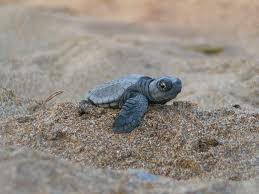
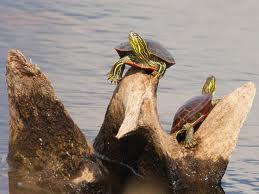
It’s World Turtle Day and we’re having a Shellabration with fun facts and photos! Tell us what you love about turtles and tortoises!

  • Turtles have been on the earth for about 200 million years.
  • Box turtles can live to be over a 100 years old.
  • Turtles live on every continent except Antarctica.
  • There are around 300 species of turtle and tortoises in the world. 

turtle

  • There are seven species of sea turtles. The Leatherback is the largest.
  • The top shell is called the carapace and the bottom shell is the called the plastron.

turtle2

  • Turtles and tortoises are attached to their shells.
  • The shells are part of their skeleton.

IMG_1850

  • Scutes are made up of keratin, the same protein that makes up human hair and nails.turtle4
  • Turtles don’t have ears.
  • There are about 250 species of turtles.
  • Some sea turtles can dive as deep as 3,000 feet.
  • Turtles are reptiles.turtle7
  • Turtles lay eggs.
  • Hatchlings have a special tooth that they use to crack open their eggs.

IMG_1851

We think turtles are just the coolest! It’s fun to find them when you are walking around ponds, lakes and rivers! One day we’ll travel to Professor Baxter Bird’s home islands- the Galapagos to meet their esteemed tortoise residents!
 

turtle6

turtle5

Categories: adventure, Animals, Children, conservation, education, Environment, nature, reptiles, science, wildlife | Tags: , , , , , , , , , , | 1 Comment

ENDANGERED SPECIES QUIZ

ENDANGERED SPECIES QUIZ!

We’ve got an endangered species quiz to test your knowledge on this Endangered Species Day!

Leatherback turtles often mistake plastic bags for jellies.  True or False

Leatherback turtles often mistake plastic bags for jellies.
                             True or False


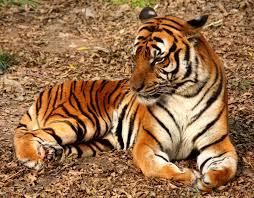
All species of tigers are not endangered.  True or False

All species of tigers are not endangered.
                    True or False


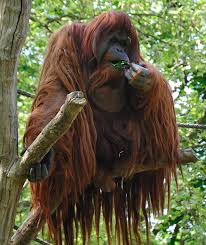
Using products with sustainable palm oil can protect orangutans. True or False

Using products with sustainable palm oil can protect orangutans.
             True or False


WHICH ONE OF THESE IS THE ENDANGERED SPECIES?

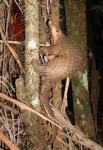
Pangolin

Pangolin

arctic fox

Arctic fox

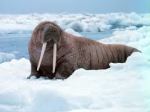
Walrus

Walrus


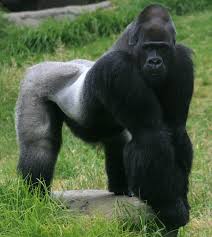
Recycling which one will help protect gorilla habitats? A) cell phones B) paint C) toothbrushes

Recycling which one will help protect gorilla habitats?
A) cell phones
B) paint
C) toothbrushes


blue whale

Many ocean dwelling ocean creatures consume plastic and trash. True or False


Plovers and other shore birds get caught in trash left by raccoons.  True or False

Plovers and other shore birds get caught in trash left by raccoons.
True or False


Pesticides do no harm to frogs and other amphibians. True or False

Pesticides do no harm to frogs and other amphibians.
True or False


Together we can all make a difference to help protect the endangered species of the world.  True or False

Together we can all make a difference to help protect the endangered species of the world.
True or False


Categories: adventure, Animals, Children, conservation, education, endangered species, Environment, nature, science, wildlife | Tags: , , , , , , , , , , | 1 Comment

That is One Big Parrot!

That is One Big Parrot!

We are off to land down under to meet one extraordinary parrot! Who else is excited?

e & e rainforest2


  • Kakapos live on two islands south of New Zealand. They live in forest and scrublands.
  • Kakapos are herbivores. They eat stems, fruit, shoots and bark. Their favorite fruit is the rimu berry!

kakapo

  • They can grow up to 25 inches and weigh up to 8 lbs.
  • Kakapos are listed by the IUCN as critically endangered. There are only 125 birds left in the wild.
  • Kakapos are the heaviest parrot in the world.

IMG_1788

  • They are nocturnal and solitary.
  • Males make a “boom” sound during mating season. Their mating calls can be heard up to 3 miles away.

kakapo3

  • Kakapos have an excellent sense of smell.
  • They are also excellent climbers and can be seen in the tallest parts of the tree.
  • Kakapos are also called the owl parrot!

IMG_1789


We love these fat little parrots! There is great organization helping protect these birds from man introduced parrots, like rats and cats; Kakapo Recovery! There may only be only a few birds left, but this group is helping!

kakapo2

Categories: adventure, Animals, birds, Children, conservation, education, endangered species, Environment, nature, science, wildlife | Tags: , , , , , , , , , | 1 Comment

ENDANGERED SPECIES WEEK!

ENDANGERED SPECIES WEEK-

African Wild Dog!

We’re going to meet some endangered species this week as we get ready for Endangered Species Day! We’re kicking it off with the African Wild Dog!

wild dog


African Wild Dog Fun Facts:

  • African wild dogs live in sub-Saharan Africa on the savanna or in woodlands.
  • African wild dogs can grow up to 55 1/2 inches long and weigh up 74 lbs.
  • They are carnivores and hunt in groups to take down prey, including antelopes, wildebeest and birds.
  • African wild dogs are listed by the IUCN as endangered. They are losing their habitat and can get diseases from domestic dogs.
  • They roam large home territories of 600-900 square miles.
  • African wild dogs are highly social and live in packs.
  • A pack is dominated by a monogamous breeding pair of dogs.
  • They are also called the painted dog.

IMG_1623


  • Each African Wild dog has its own unique coat coloration pattern.
  • Female African wild dogs can have up to 10 pups in a litter. Only the dominate female in a pack with give birth.
  • They are highly vocal and communicate sounds not heard in any other member of the canine family.
  • African Wild dogs are crepuscular. They are known to travel at night.
  • They are distance runners and can maintain a speed of 35 mph for up to 2 miles!

These awesome canines are so fascinating, from their funny feet to their complex social system the African Painted dog definitely deserved protection and respect. You can learn more on how to protect these wild canines at the African Wildlife Federation.


wild dog2


Categories: adventure, Animals, Children, conservation, education, endangered species, Environment, mammals, nature, science, Uncategorized, wildlife | Tags: , , , , , , , | 2 Comments

Arrows!

Arrows!

We’re off to meet one more need member of the crab family! This strange looking little creature is one wild crab!

arrowhead crab3

  • Arrow crabs live in the tropical oceans near reefs.
  • Arrow crabs are carnivores- they eat duster worms and small invertebrates.
  • They have long thin legs, with some species that have legs reaching up to 10inches.
  • They are also known as the spider crab.
  • Males are larger than females.
  • Arrow crabs have long thin, bumpy carapaces.

IMG_1593

  • Arrow crabs are nocturnal.
  • They are very territorial.
  • Arrow crabs will molt their exoskeleton when they grow larger!

arrowhead crab2

arrowhead crab


We love these crazy looking crabs! We bet you thought they were a weird spider too! Neat aren’t they?


Categories: adventure, Animals, Children, conservation, education, Environment, nature, oceans, science, wildlife | Tags: , , , , , , , , , | 2 Comments

Three Cheers for Hermits!

Three Cheers for Hermit Crabs!

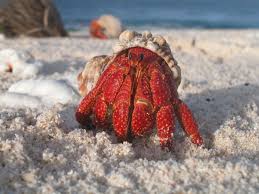
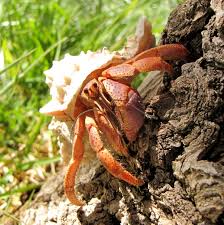
hermit crab

Edmond is cheering for hermit crabs today! Come learn more about these little crustaceans!


H is for Hiding! Hermit crabs hide in the shells of other animals.

H is for Hiding!
Hermit crabs hide in the shells of other animals.


E is for empty! Hermit crabs use the empty shells of gastropods to protect their bodies. When they grow, they must find a larger shell.

E is for empty! Hermit crabs use the empty shells of gastropods to protect their bodies. When they grow, they must find a larger shell.


R is for respiration! Hermit crabs use gills to breathe!

R is for respiration! Hermit crabs use gills to breathe!


M is for many species! There are around 1100 species of hermit crabs on earth.

M is for many species! There are around 1100 species of hermit crabs on earth.


I is for invertebrates! Hermit crabs have no backbones!

I is for invertebrates! Hermit crabs have no backbones!


T is for terrestrial! Some hermit crabs live on land! While some live in water!

T is for terrestrial! Some hermit crabs live on land! While some live in water!


C is for Coconut! The largest terrestrial invertebrate is a hermit crab- the coconut crab!

C is for Coconut! The largest terrestrial invertebrate is a hermit crab- the coconut crab!


R is roommates! Some hermit crabs put anemones on their shells for camouflage and protection.

R is roommates! Some hermit crabs put anemones on their shells for camouflage and protection.


A is for antennae. Hermit crabs have antennae on their head for feeling and sensing their environment.

A is for antennae. Hermit crabs have antennae on their head for feeling and sensing their environment.


B is for back in the day. Hermit crabs have been around since the Late Cretaceous period!

B is for back in the day. Hermit crabs have been around since the Late Cretaceous period!


indexhermit crab2

Categories: adventure, Animals, Children, conservation, education, Environment, nature, oceans, science, wildlife | Tags: , , , , , , , , , | 1 Comment

THAT IS ONE BIG CRAB!

THAT IS ONE BIG CRAB!

We’re crabby here at the University this week! Hahaha! We’re meeting members of the arthropod family!

Today we’re meeting a big ocean dwelling crab today!

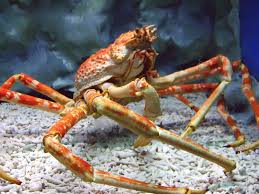
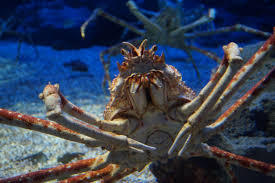
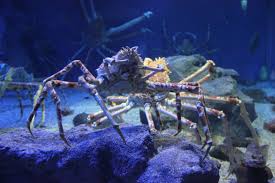
japanese spider crab3

Japanese Spider Crab Fun Facts:

  • Japanese Spider Crabs live in the deep depths of the Pacific Ocean off the coast of Japan.
  • Their bodies can be 15″ in diameter and their legs can reach up to 15ft in diameter! They can weigh up to 44 lbs.
  • They are listed as data deficient by the IUCN.
  • They are omnivores and eat algae, mollusks and carrion.
  • Japanese spider crabs are one of the largest members of the arthropod family.
  • They are thought to live up to 100 years old.

IMG_1575

  • Japanese spider crabs are members of the decorator crab family and attach anemones or sponges to the top shell (carapace) to help them camouflage.
  • They have hard bumpy exoskeletons that help protect them from predators.
  • Like other arthropods, Japanese spider crabs molt those exoskeletons when they grow.

IMG_1576

japanese spider crab2

  japanese spider crab

We can’t say that Japanese spider crabs are the cutest animals we’ve ever met… but they are amazing! They live in such deep parts of the ocean that it is fairly dark! The ocean is full of wild animals! Hehehe!

Categories: adventure, Animals, Children, conservation, education, Environment, nature, oceans, science, wildlife | Tags: , , , , , , , , , | 1 Comment

NATIONAL BIRD DAY!

NATIONAL BIRD DAY!!

Professor Baxter is sharing some fun facts about his bird friends for us today! Woohoo, we do love our feathered friends!

IMG_1405IMG_1408

IMG_1409

IMG_1410(1)IMG_1411

IMG_1412

IMG_1415IMG_1414

IMG_1413

IMG_1416IMG_1417

IMG_1418

IMG_1419IMG_1420(2)

WOW! Birds have so many fascinating adaptions! With over 9,000 species they very greatly! We love them from the tiniest bee hummingbird to the ostrich!

Categories: adventure, Animals, birds, Children, conservation, education, Environment, nature, science, wildlife | Tags: , , , , , , , | 1 Comment

A Very Helpful Bird!

A Very Helpful Bird!

Today we meet a little bird that plenty of animals of the African Savannah know.. the Red-billed oxpecker! These little birds play a vital role out their on the plains, come learn more about them and find out why!

red billed oxpecker

  • Red-billed oxpeckers live in sub-Saharan Africa near savannas.

IMG_0261

  • They grow up to 9 inches long and weigh up to 1.75 ounces.
  • They are listed is least concern by the IUCN.
  • Red-billed oxpeckers insectivores. They eat ticks, fleas and other parasites off the skin of large mammals.
  • They will also feed off the blood of a wound on those same large mammals.
  • Red-billed oxpeckers have light brown feathers.IMG_1403
  • They use a scissor like motion to grab those insects off the animals.
  • Red-billed oxpeckers are known to digest earwax from their host animals. Scientists say it may help them with digestion.
  • Red-billed oxpeckers are social and vocal.

red billed oxpecker2 red billed oxpecker3


Red-billed oxpeckers are interesting little birds. They do share a symbiotic relationship with their host animal, even if they do take in some blood. One bird can eat hundreds of ticks in a day and we know every animal is better off without all those creepy critters!

Categories: adventure, Animals, birds, Children, conservation, education, Environment, nature, science, wildlife | Tags: , , , , , , , , , , | 1 Comment

Blog at WordPress.com.