Posts Tagged With: science

GUESS THE ANIMAL WEEK- DAY #5

GUESS THE ANIMAL WEEK- DAY #5

It’s the last day of our Guess the Animal week- we sure hope you’ve had fun trying to figure out who are animals are! You have one more chance to figure out who this is! Let’s see how smart you are!

giraffe

  • I have spots.
  • My tongue is black.
  • I have ossicones.

WHO AM I?

Categories: adventure, Animals, Children, conservation, education, Environment, nature, science, wildlife | Tags: , , , , , , , | 2 Comments

GUESS THE ANIMAL WEEK- DAY #4

GUESS THE ANIMAL WEEK- DAY #4

Do you have on your thinking caps today? Get them on and check out the picture and tell us who you think the animal is!!

male lion

  • I am a large cat.
  • I live in social groups.
  • I live in Africa.

WHO AM I?

Categories: adventure, Animals, Children, conservation, education, Environment, nature, science, wildlife | Tags: , , , , , , , , | Leave a comment

GUESS THE ANIMAL WEEK- DAY #3

GUESS THE ANIMAL WEEK- DAY #3

It’s Day 3 and we’ll see if any of your smarties out there can guess today’s animal!

hammerhead

  • I am a cartilaginous fish.
  • I have a funny shaped head.
  • I can be seen in schools.

WHO AM I?

Categories: adventure, Animals, Children, conservation, education, Environment, nature, science, wildlife | Tags: , , , , , , , , | 2 Comments

GUESS THE ANIMAL WEEK- DAY #2

GUESS THE ANIMAL WEEK- DAY #2

We’re on day two of guess the animal and we had several people get yesterday’s post correct! Check out today’s picture, read the clues and tell us who this animal is!

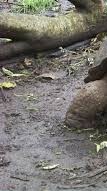
galapagos tortoise

  • I am a large reptile.
  • I live on islands near South America.
  • I was studied by Charles Darwin!

WHO AM I?

Categories: adventure, Animals, Children, conservation, education, Environment, nature, science, wildlife | Tags: , , , , , , , , | Leave a comment

GUESS THE ANIMAL WEEK!

GUESS THE ANIMAL WEEK!!!

We thought we’d devote a whole week to testing your animal guessing skills! So get ready to look at the picture closely, read the clues carefully and tell us who you think the animal is in the comments below!

  • vulture I have a bald head.
  • I am a bird.
  • I am thought of as the garbage man of the animal world.

WHO AM I?


Categories: adventure, Animals, birds, Children, conservation, education, Environment, nature, science, wildlife | Tags: , , , , , , , , , | 5 Comments

FEATHERY FRIDAY #83

FEATHERY FRIDAY #83

It’s Feathery Friday yet again and we have wild and crazy bird for you today! Ok, they may not be very crazy but they are wild and wonderful! Who is this loony bird? Come find out!

E & E lake

MEET THE COMMON LOON!

   Range/Habitat: North America-Greenland-Western Europe/sea coasts and

large lakes

   Diet: Carnivore: fish

   Length/Weight: 28-35”/6 ½-10lbs”

   Conservation Status: Common


Fun Facts:

  • Common loons are also known as the Great Northern Loon.
  • Common Loons are made for life in the water. They have webbed feet and water proof feathers.
  • They are excellent swimmers and divers. They can dive to great depths.
  • They take extra care to keep their dense feathers clean, this is called preening. They have to do this because the feathers keep them warm in the cold waters where they live.
  • Common loons are often found in pairs.
  • They are very clumsy on land.
  • Common loons use their bills to spear fish.
  • Both the female and male take care of the chicks. Chicks can swim at a very young age. Sometimes you’ll even see the chicks riding on the back of the mothers back.
  • Common loons are very vocal birds and make several different types of calls.
  • Common loons are the provincial bird of Ontario, Canada and are the state bird of Maine.

These noisy birds are very pretty with their black heads and spots.  We love the special adaptations they have for living in cold waters. People, elephants and horses don’t do well in cold water! What do you do stay warm when it gets cold? We like to put on scarves!

Watch this video of two loons calling to each other!

common loon   common loon2


Categories: adventure, Animals, birds, Children, conservation, education, Environment, nature, science, wildlife | Tags: , , , , , , , , , | 2 Comments

SUPER SURPRISE THURSDAY # 83

SUPER SURPRISE THURSDAY #83

It’s that day of the week where you look at the picture, read the clues and tell us who the surprise animal is!

puffin

  • I am a bird.
  • I live in the North Atlantic.
  • I look like a penguin, but I am not.

WHO AM I?

Categories: adventure, Animals, birds, Children, conservation, education, Environment, nature, science, wildlife | Tags: , , , , , , , , , | 2 Comments

WATERY WEDNESDAY # 83

WATERY WEDNESDAY #83

Happy Watery Wednesday everyone! We hope it’s wonderful so far! Today’s fish is long, lean and full of teeth! But don’t worry they don’t think people are tasty and we’ll be safe in the sub!

e e deep sea

MEET THE GREAT BARRACUDA!

   Range/Habitat: tropical-sub-tropical waters worldwide/ reefs, shallows,

mangroves

   Diet: Carnivore: fish

   Length/Weight: up to 6 ½ ft/ up to 110 lbs

   Conservation Status: Common


Fun Facts:

  • Great Barracuda are long and lean fish.
  • They have powerful jaws full of sharp, knife like teeth.
  • Great barracuda are ambush predators. They stay relatively still and swim forward in one fast move to grab their prey.
  • They’re usually solitary, but juveniles often school together.
  • Great barracudas have few predators, mainly sharks.

Great barracudas are intimidating fish, with their long bodies and mouths full of teeth.  But we think they are pretty awesome! How about you?

barracuda2   barracuda

Categories: adventure, Animals, Children, conservation, education, Environment, fish, nature, science, wildlife | Tags: , , , , , , , , , , | Leave a comment

REPTILIAN TUESDAY #83

REPTILIAN TUESDAY # 83

 We’re off to Africa today to meet a breakfast tortoise! Hahaha- ok they won’t be making us breakfast and we’ll not be eating with them but they are quiet flat!  Flat you say? Flat! Come meet…

e e desert

MEET THE PANCAKE TORTOISE!

   Range/Habitat: E Africa (Tanzania/Kenya)/rocky outcrops and savannas

   Diet: Herbivore: grasses, leaves, fruit

   Length/Weight: 5 ½”-7”/ 1 lb

   Conservation Status: Vulnerable


Fun Facts:

  • Pancake Tortoises have flat carapaces (top shell) that are flexible. This is a very unusual adaptation.
  • Pancake tortoises can squeeze into narrow crevices. This helps protect them from predators.
  • They don’t move to far from their shelter.
  • Pancake tortoises are actually quick and agile climbers.
  • They live in small colonies and share their shelters.
  • They can live up to 25 years old.
  • Pancake tortoises are crepuscular (most active at dusk and dawn).

Pancake tortoises are really neat little tortoises with their flat shells and ability to climb. And they have pancake in their name and who doesn’t love pancakes!

pancake tortoise   pancake tortoise2


Categories: adventure, Animals, Children, conservation, education, Environment, nature, reptiles, science, wildlife | Tags: , , , , , , , , , | 1 Comment

MAMMAL MONDAY #83

MAMMAL MONDAY  #83

Happy Mammal Monday! We’re traveling to the land down under-Australia to find today’s animal! Australia is a large continent with wild and strange animals that are found no other place on earth and today’s mammal is no exception! In fact this mammal is a rare exception to the rule, instead of giving birth to live young it lays eggs! WHAAAAT? You heard right, this mammal lays eggs! Let’s meet…
e e woods

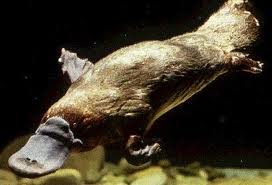
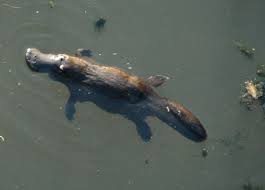
MEET THE PLATYPUS!

   Range/Habitat: Eastern Australia-Tasmania/rivers-streams-rainforest

   Diet: Carnivore: worms, shrimp, crayfish

   Length/Weight: 16-23 ½”/ 1 ¾-5 ½ lbs

   Conservation Status: common


Fun Facts:

  • Platypus are strange looking mammals, with long slender bodies, webbed feet and a duck-like bill for a mouth.
  • They have long tails that look like beaver tails.
  • Platypus are built for water. They are excellent swimmers and can dive to deep depths looking for prey.
  • They eat about 20% of their body weight a day (about 2lbs), so they can spend up to 12 hours a day feeding.
  • Platypus have no teeth!
  • Male platypus have venomous spurs in the back feet. The venom is not fatal to humans, but can be very painful.
  • Platypus can detect the electrical fields of other animals. They use this extra sense to find their prey!
  • They are one of two mammals on earth that lay eggs. Do you know the other one?
  • Platypus moms to provide milk to their offspring.

Platypus are one of our favorites, with their crazy looking bill mouths and their webbed feet! They are much loved in Australia too! You can find a platypus on the back of their 20 cent coins! Neat! Edmond wants to be on a coin! Ellie told him he’d have to learn to lay eggs first!
platypusplatypus2

Categories: adventure, Animals, Children, conservation, education, Environment, mammals, nature, science, wildlife | Tags: , , , , , , , , , | 2 Comments

Blog at WordPress.com.