africa

SUPER SURPRISE THURSDAY GREATEST HITS!

SUPER SURPRISE THURSDAY GREATEST HITS!!

We went Africa to meet one unique mammal on this Greatest Hits! Who’s excited? We are! This mammal has some very special adaptations to help them eat the leaves that others can’t! So let’s meet…

MEET THE GERENUK!

   Range/Habitat: East Africa/dry and bushy scrub

   Diet: Herbivore: leaves

   Length/Weight: 4 ½ -5 ¼ ft/62-115 lb

   Conservation Status: Near Threatened


Fun Facts:

  • Gerenuks are part of the antelope family.
  • They have long slender bodies, necks and small faces.
  • Gerenuks can curve their spines into an S shape, which enables them to stand on their hind legs.
  • Because they can stand on their hind legs, they can eat leaves that other animals can’t reach.
  • Gerenuks are also called the giraffe gazelle.
  • They have large ears and eyes that help them hear and see predators.
  • Only male gerenuks have horns.
  • They get all of their water supply from the leaves they eat, so they can survive in dry habitats.

Gerenuks are kind of funny looking with their long thin bodies and giant ears. We think it’s super cool that they can stand up on their hind legs to eat! What a neat adaptation!  They are called the giraffe gazelle, but they’re not related to the giraffe.

Categories: adventure, africa, Animals, Children, conservation, education, Environment, mammals, nature, science, wildlife | Tags: , , , , , , , , | 2 Comments

REPTILIAN TUESDAY GREATEST HITS!

REPTILIAN TUESDAY GREATEST HITS!

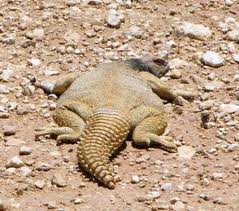
We went to North Africa to meet a great lizard on this past Reptilian Tuesday! We’re off to the desert to meet one cool lizard! Grab your sunscreen and hat and let’s head out!

MEET THE SPINY DAB LIZARD!

   Range/Habitat: N Africa/deserts

   Diet: Omnivore: insects/plants

   Length: 12-16”

   Conservation Status: Common


Fun Facts:

  • Spiny Dab Lizards is also known as the Spiny tailed lizard or Uromastyx.
  • Their tales are covered with spiny scales.
  • Spiny Dab lizards are often found in burrows in the desert. They will stick their tails out of the entrance of the burrow to protect it.
  • Males are very territorial.
  • They hibernate during the winter months.
  • Spiny dab lizards change their color according to the temperature of the environment. They are yellowish/gray during the winter and orange/green or red during the warmer months!
  • Spiny dab lizards come out during the day to warm themselves in the sun. They are more active during warmer periods.

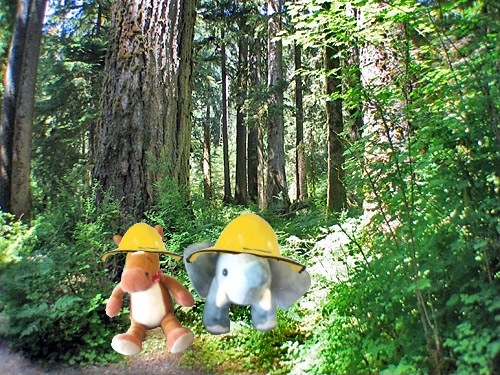
Animals have some great adaptations! These awesome lizards not only have spiny tails but they can change their color! We wish we could change colors! What color would you want to be? Ellie wants to be purple :)!


Categories: adventure, africa, Animals, Children, conservation, education, Environment, lizards, nature, reptiles, science, wildlife | Tags: , , , , , , , , , | Leave a comment

MAMMAL MONDAY GREATEST HITS

For the next two weeks, we’re sharing some of greatest hits here on Ellie and Edmond! We need a little time to focus on our book and iPad app, so we’re sharing some animals that were posted a while ago that didn’t get any love! We hope you enjoy our Greatest Hits!

MAMMAL MONDAY GREATEST HITS

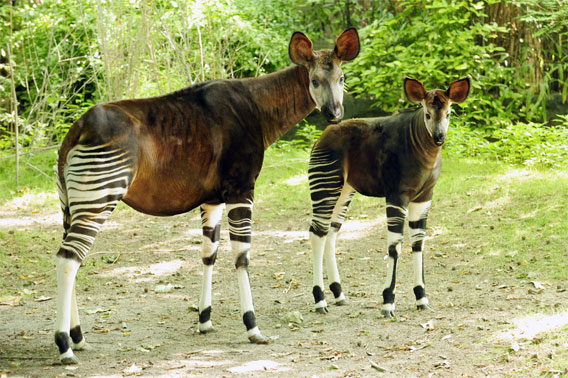
You have the Monday morning blues? Well after learning about today’s mammal those blues will be disappear! Have you ever wonder what animals are lurking in the rainforests, hiding just out of the sight? Could it be a leopard? Or is it a monkey in the trees? Or is it today’s quiet, shy, solitary and secretive Okapi?

MEET THE OKAPI!

   Range/Habitat: Central Africa-Democratic Republic of

Congo/tropical rainforests

   Diet:  herbivores: twigs, shoots, fruits, leaves

   Length/Height/Weight: 6 ½-7 1/4 ft : 12-16 ½ in : 440 lb-770lb

   Conservation Status: Lower Risk


Fun facts:

  • Okapi were not identified until 1900.
  • Okapi are the closest living relative of the giraffe.
  • They are very shy and secretive.
  • Okapi have long black prehensile tongues. They use their tongues to grab leaves and branches.
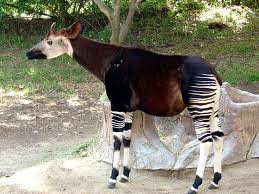
  • They have stripes on their legs and rear end.
  • Male okapis have two skin covered horns that are called ossicones. They are actually part of the skull.
  • Every okapi’s stripe pattern in different!

These relatives of the giraffe are very special! We’re so glad that someone discovered them in the rainforests! And we’re sticking our tongue out to the Monday blues too!


Categories: adventure, africa, Animals, Children, conservation, education, Environment, mammals, nature, rainforests, science, wildlife | Tags: , , , , , , , | Leave a comment

OLYMPIC ANIMALS WEEK!

OLYMPIC ANIMALS WEEK!

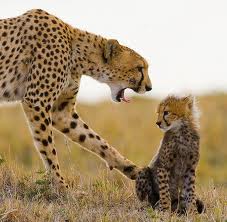
As human athletes gather in London to compete in this year’s Summer Olympic Games, we here at Ellie and Edmond headquarters want to celebrate some amazing animal athletes! And let us tell you these animals can put humans to shame! Our first animal lives in the savannahs of Africa and man are they FAST! Grab your safari outfit and let’s set off to meet…

MEET THE CHEETAH!

   Range/Habitat: Africa/ savannas-deserts

   Diet: Carnivore: gazelle, antelopes, hares

   Length/Weight: 3 ½-5 ft/ 46-160 lbs

   Conservation Status: vulnerable


Fun Facts:

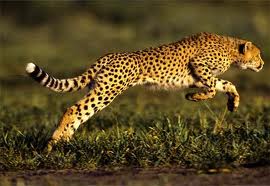
  • Cheetahs are the world’s fastest land animal.
  • They can sprint up 62 mph.
  • Cheetahs have a backbone that is flexible and acts like a spring.
  • Cheetahs have semi-retractable claws that help them accelerate.
  • Their tails work as a rudder and help the cheetah turn easily while running.
  • Cheetahs have excellent eyesight.
  • Cheetahs tan color and spots help them camouflage perfectly in the grasslands.

Cheetahs are such graceful and powerful cats! Their long, lean and muscular bodies are definitely amazing adaptations.  Who wants to have a race against a cheetah?


Categories: adventure, africa, Animals, Children, education, Environment, mammals, nature, Olympics, science, wildlife | Tags: , , , , , , , , | Leave a comment

REPTILIAN TUESDAY # 41

REPTILIAN TUESDAY # 41

We’re staying in western Africa today to meet a brightly colored lizard! Be careful where you step though, these little reptiles like to live among the leaves of the rainforest floor! Let’s be quiet and see if we can find…

MEET THE AFRICAN FIRE SKINK

   Range/Habitat: West-Central Africa/ rainforests

   Diet: Insectivore: insects, spiders

   Length: 9-14”

   Conservation Status: common


Fun Facts:

  • African Fire Skinks are also called the fire-sided skink.
  • They have red and black bands on their body and blue and black bands on their tails.
  • African fire skinks live in the leaf litter of the rainforest floor.
  • They burrow underground.
  • African fire skinks can shed their tails.
  • They can live for 15-20 years.

These skinks are so colorful. Everyone thinks lizards are green or brown, but they can come in a huge variety of colors. Do you have a favorite lizard?

Categories: adventure, africa, Animals, Children, education, Environment, lizards, nature, rainforests, reptiles, science, wildlife | Tags: , , , , , , , , , | Leave a comment

MAMMAL MONDAY # 41

MAMMAL MONDAY # 41

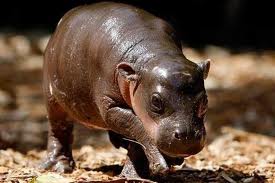
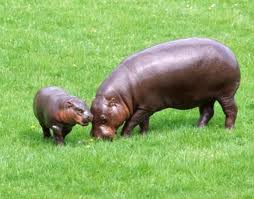
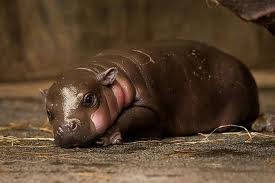
We’ve off to Western Africa to meet a rare and special species! These mammals look like a smaller version of a large and in charge animal, named the hippo! That’s right folks we’re off to the marshes to meet…

MEET THE PYGMY HIPPO!

    Range/Habitat: West Africa/ marshes, ponds

   Diet: Herbivore: grasses, shrubs, ferns

   Length/Weight: 4 ½-5 ft/ 540-600 lbs

   Conservation Status: vulnerable


Fun Facts:

  • Pygmy hippos are about 1/5 the size of the Nile Hippo.
  • They are different than their cousins though. They spend most of their time on land.
  • They only have one pair of incisors, compared to the two that large hippos have.
  • Pygmy hippos are mostly nocturnal (active at night).
  • They are solitary (spend most of their time alone).
  • Pygmy hippos have always thought to be rare.
  • They are relatively shy.
  • Pygmy hippos ooze pink fluid to protect their skin.

These round and plump relatives of the common hippo sure are cute. We wonder if we could fit one in our bathtub. Probably not… oh well.


Categories: adventure, africa, Animals, Children, education, Environment, mammals, nature, science, wildlife | Tags: , , , , , , , | 2 Comments

MAMMAL MONDAY # 41

MAMMAL MONDAY # 41

We’re off to South Africa desert today to meet a very special member of the canid family! Be on the lookout for a pair of BIG ears! Ssssshhh… we don’t want to scare them!

MEET THE BAT EARED FOX!

   Range/Habitat: Eastern-South Africa/ desert-scrub

   Diet: Omnivore: insects, termites, dung beetles

   Length/Weight: 18-26”/ 4 ½-10 lbs

   Conservation Status: common


Fun Facts:

  • Bat eared foxes have HUGE ears, over 5” long!
  • Bat eared foxes have more teeth than any other mammal, up to 48!
  • They are nocturnal (active at night).
  • Bat eared foxes locate their prey by sound.
  • They live in family groups of 2-5 individuals.
  • Bat eared foxes live in dens underground.

Aren’t these foxes so cute with their giant ears? And we thought only Ellie had big ears! Can you imagine being able to hear bugs? That is crazy!


Categories: africa, Animals, Children, education, Environment, mammals, nature, science, wildlife | Tags: , , , , , , , , | Leave a comment

FEATHERY FRIDAY # 38

FEATHERY FRIDAY# 38

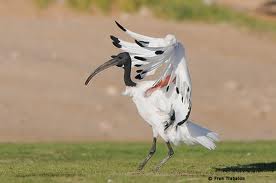
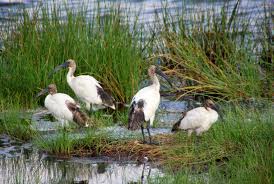
It’s time to jet off to the wetlands of Sub-Saharan Africa to meet a most regal bird! These beauties wade in the water to catch a meal, so we must too! Do you have your waders? Let’s do this!

MEET THE SACRED IBIS!

   Range/Habitat: Africa-South of the Sahara/ wetlands, swamps

   Diet: Carnivores: insects, fish, frogs

   Length/Weight: 26-35”/ 3 ¼ lb

   Conservation Status: Common


Fun Facts:

  • Sacred Ibis have white bodies with shiny, black featherless heads.
  • They are wading birds and have partially webbed feet.
  • Sacred ibis live in flocks.
  • Both the male and female Sacred Ibis take care of the eggs and chicks.
  • They can live up to 20 years.
  • Sacred Ibis were worshipped in Ancient Egypt!
  • They are an ancient species. They’ve been around the planet for about 60 million years!

Wow, these birds have been around a looooong time and they were worshipped at one time! We wonder if they’re stuck up. We think they’re great either way!


Categories: africa, Animals, birds, education, Environment, nature, science, wildlife | Tags: , , , , , , , | Leave a comment

WATERY WEDNESDAY # 36

WATERY WEDNESDAY# 36

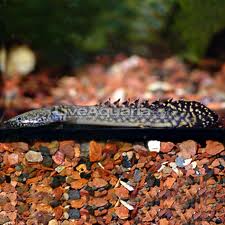
We are off to Africa today to meet a small but extraordinary fish! These little fish have been on the planet for a very long time! Let’s gear up and head out to meet these little animals!

MEET THE ORNATE BICHIR!

   Range/Habitat: Western-Central Africa/ lakes, rivers

   Diet: Carnivore: fish, crustaceans

   Length/Weight: up to 16”/ up to 18 oz

   Conservation Status: Common

Fun Facts:

  • Ornate bichirs are considered to be the most beautiful member of the bichir fish family.
  • They are beige with black markings.
  • Ornate bichirs are small and oblong.
  • They have armor like scales.
  • Ornate bichirs stalk and ambush their prey.
  • They can stay out of water and breathe regular air for short periods of time.

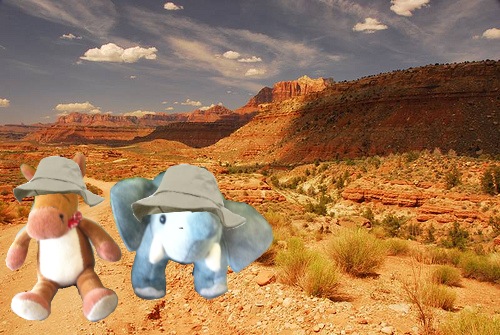
What? There’s a fish that can breathe air? That is some crazy stuff! We can tell you that this small elephant and horse cannot breathe under water, although Ellie can stick her trunk out of the water :)!


Categories: africa, Animals, Children, education, Environment, fish, nature, rivers, science, Uncategorized, wildlife | Tags: , , , , , , , | Leave a comment

REPTILIAN TUESDAY # 36

REPTILIAN TUESDAY # 36

North Africa is the place to be today! We’ve backed our bags, sunscreen and hats to find this desert dwelling reptile! These little guys like to burrow so let’s get on our hands and knees and see what we can find!

MEET THE BERBER SKINK!

   Range/Habitat: North Africa- West Asia/ desert

   Diet: Omnivore: insects, spiders, snails, plants

   Length: 16-18”

   Conservation Status: common


Fun Facts:

  • Berber skinks are also known as the Schneider’s skink.
  • They are the largest member of the skink family.
  • Berber skinks have orange scales on blue-gray backs.
  • They dig burrows under shrubs and bushes.
  • Berber skinks have long tails and short legs.
  • Female berber skinks lay 3-20 eggs. She then wraps herself around the eggs til they hatch.

These skinks sure are pretty with their colorful scales! We are such huge fans of all lizards! They are so diverse! They live in all kinds of habitats, come in all sizes and colors and have amazing adaptations! Do you have a favorite lizard?


Categories: africa, Animals, Children, education, Environment, lizards, nature, reptiles, science, wildlife | Tags: , , , , , , , | 2 Comments

Blog at WordPress.com.