frogs

AMPHIBIAN TUESDAY # 63

AMPHIBIAN TUESDAY # 63

It’s that great day when we head out to meet an amphibian! Grab your gear and get ready because we’re going to meet a little frog in South Africa.
e e grasslands

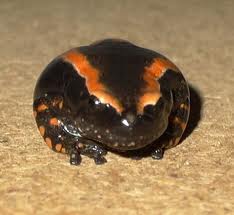
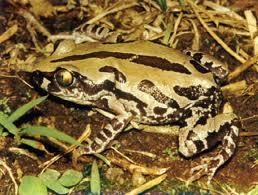
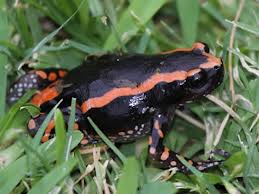
MEET THE BANDED RUBBER FROG!

banded rubber frog   Range/Habitat: Southeast Africa/ grasslands

   Diet: Insectivore: termites, ants

   Length:  1 ½- 2 ¼”

   Conservation Status: common


Fun Facts:

  • Banded Rubber Frogs have short legs.
  • They are black with pink or red stripes.
  • Banded rubber frogs inflate their bodies when threatened.
  • Banded rubber frogs walk instead of hopping or jumping.
  • They produce toxins that can be harmful to humans if threatened.

Banded rubber frogs are cute little frogs. Their bright colors help warn predators that they are toxic. Thanks we need that warning!

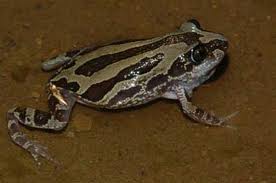
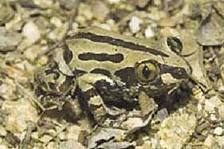
banded rubber frog2    banded rubber frog3

Categories: adventure, amphibians, Animals, Children, conservation, education, Environment, frogs, nature, science, wildlife | Tags: , , , , , , , , | 1 Comment

SUPER SURPRISE THURDSDAY # 42

SUPER SURPRISE #42

We’re hopping off to the rainforests of Madagascar to find today’s animal! They’re small and green, so everyone keep your eyes peeled and let’s head off on today’s adventure!

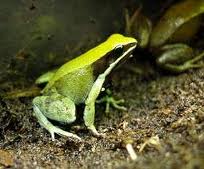
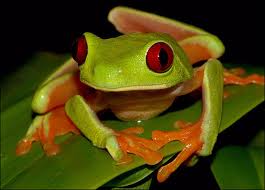
MEET THE GREEN MANTELLA!

   Range/Habitat: Madagascar/ rainforest

   Diet: Carnivore: insects, invertebrates

   Length/Weight: ¾-1 ¼ “

   Conservation Status: Endangered


Fun Facts:

  • Green Mantellas are small yellow or pale green frogs with black on their sides.
  • They are diurnal (active during the night).
  • Green mantellas have adhesive disks on their toes.
  • They secrete toxins, similar to poison dart frogs.
  • Male green mantellas use a series of clicks to attract females!

These tiny frogs are gorgeous! They are losing their rainforest homes though, remember you may not think that  recycling cans or paper helps, but it makes a big impact! So keep up the good work!


Categories: adventure, amphibians, Animals, Children, conservation, education, Environment, frogs, nature, rainforests, science, wildlife | Tags: , , , , , , , , | 1 Comment

DAD’S WEEK DAY # 2

DAD’S WEEK DAY #2

We’re staying in South America today to meet this exceptional amphibian dad! This frog was discovered Charles Darwin himself! Grab your boots and rain gear because we’re going to a mountainous rainforest to meet these amazing dads!

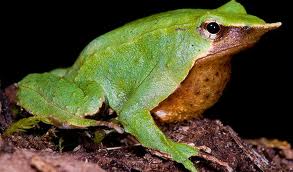
MEET THE DARWIN’S FROG!

   Range/Habitat: Southern South America/ mountain rainforest

   Diet: Carnivore: insects, small animals

   Length: up to 1 ¼ “

   Conservation Status: common

Fun Facts:

  • Darwin’s Frogs have sharp pointy snouts that look like leaves.
  • Male Darwin’s frogs attracted females with a low call that sounds like a bell.
  • They are nocturnal (active at night).
  • Female Darwin’s frogs lay around 30 eggs.
  • Male Darwin’s frogs protect the eggs for about two weeks and then scoop them up in their vocal sacs.
  • The eggs hatch in their vocal sacs, where the tadpoles eat the yolk from the egg. They emerge from dad’s vocal sac as little froglets!

These little funny look frogs are spectacular dads. It’s pretty crazy that they carry around the eggs in their mouths until they are little frogs!


Categories: amphibians, Animals, Children, earth day, Environment, frogs, nature, rainforests, science, Uncategorized, wildlife | Tags: , , , , , , , , | Leave a comment

SUPER SURPRISE THURSDAY # 37

SUPER SURPRISE THURSDAY# 37

We’re off to Africa today to meet our Super Surprise animal of the day! We’ve found an amazing amphibian friend in the grasslands and ponds! Get ready to watch them move, because they like to walk more than hop! Are you ready to go?

MEET THE BUBBLING KASSINA!

   Range/Habitat: Central-Southeast Africa/ grasslands near ponds

   Diet: Carnivore: spiders, insects

   Length: 1 ¼-2”

   Conservation Status: Common


Fun Facts:

  • Bubbling Kassinas are members of the tree frog family.
  • They are also called the Senegal Running Frog.
  • Bubbling kassinas are great at walking. They do not hop as much as other frogs.
  • They have slender limbs and slightly webbed feet.
  • Their coloration varies from yellow to grey with black and brown blotches.
  • Bubbling kassinas live on the ground.

These great frogs have amazing camouflage! People who live in Africa near these frogs love to hear them at night during the breeding season! We love hanging out at night to listen to frogs “sing” too.


Categories: amphibians, Animals, Children, education, Environment, frogs, nature, science, wildlife | Tags: , , , , , , , , | 3 Comments

SAVE THE FROGS DAY!!

SAVE THE FROGS DAY!

Today we are celebrating Save the Frogs Day! Many frogs are not doing well in the wild and it is up to us to help them out! You can check out the official Save the Frogs website to find out more on how you can help! Today we’re just going to tell you some fun frog facts & hopefully you will see why they are worth caring about!


FUN FROG FACTS:

  • Frogs have been on the planet for around 200 million years! That means they could have been hoping with the dinosaurs!
  • Frogs are amphibians!
  • The largest frog in the world is the Goliath Frog! You can read about them here!
  • The smallest frog in the world was just found a few months ago! Check them out!
  • There are about 4,900 species of frogs on our planet and scientists are sure we have not discovered them all! Man that is a ton of frogs.
  • A group of frogs is called an army! A group of toads is called a knot.
  • Toads are frogs! Toads generally have warty skin!
  • Frogs are cold blooded.
  • The most toxic vertebrate is the Golden Dart Frog.
  • Frogs absorb water through their skin.
  • Most frogs hibernate during the winter.
  • Frogs hatch from eggs.
  • Frogs ears can be found right behind their eyes!
  • Male frogs are the ones that croak, chirp, or ribbit. In fact frogs make all kinds of different sounds!

Here are two tunes by Kermit to help you celebrate! Frogs in the Glen and It’s Not Easy Being Green!


Categories: amphibians, Animals, Children, education, Environment, frogs, nature, science, wildlife | Tags: , , , , , , , , | 2 Comments

SUPER SURPRISE THURSDAY # 25

SUPER SURPRISE

THURSDAY# 25

Wow! Do we have a surprise for today’s Super Surprise animal! This amphibian has a very funny name and an even funnier life cycle! We’re boarding a plane and heading to South America! Are you in?


MEET THE PARADOXICAL FROG!

Range/Habitat: Eastern South America-Trinidad/ wetlands, rivers, lakes

Diet: Carnivore: insects

Length: 2-2 ½”

Conservation Status: Common


Fun Facts:

  • Paradoxical Frogs tadpoles have a long life span.
  • The Paradoxical frog tadpoles grow up to 10” long, about 4 times larger than their adult size.
  • Their tails shrink and get absorb as the tadpole turns into an adult.
  • Paradoxical frogs’ eyes and nostrils are on top of their heads.
  • The adult Paradoxical frog spends most of its life in the water.
  • They are nocturnal (active at night).


Can you believe there is a frog that is bigger as a tadpole (baby) than it is as an adult? That sure is different! That would be like you starting out as 6 feet tall as a baby and end up being 2 feet tall as an adult! CRAZY- but cool!

Categories: amphibians, Animals, Children, education, Environment, frogs, nature, science, wildlife | Tags: , , , , , , , | Leave a comment

SUPER SURPRISE THURSDAY # 17

SUPER SURPRISE THURSDAY# 17

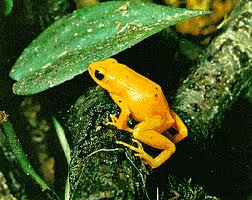
Have you ever seen a gold amphibian? No? Well we have one for you on this Super Surprise Thursday! Are you ready to travel to the mountainous rainforests of South America? Let’s go!

MEET THE GOLD FROG!

Range/Habitat: South America (Brazil)/mountainous rainforests

Diet: Carnivore: insects, small invertebrates

Length: 3/8-3/4”

Conservation Status: locally common

Fun Facts:

  • Gold frogs are also known as the Brazilian Golden Frog.
  • They are mostly ground dwellers (terrestrial).
  • Gold frogs are not good at jumping or climbing.
  • They are the smallest frog in the Southern Hemisphere; they’re about the size of a penny.
  • Gold frogs are bright orange/yellow in color.
  • They have a bony plate under the skin on their backs.
  • Gold frogs do not have a tadpole stage; they hatch from eggs as small frogs.

Gold frogs are teeny tiny. And who knew there were frogs out there that didn’t start out their lives as tadpoles? We didn’t know that! It so much fun to learn all about animals!

Categories: amphibians, Animals, Children, education, Environment, frogs, nature | Tags: , , , , , | Leave a comment

Blog at WordPress.com.