oceans

WATERY WEDNESDAY # 45

WATERY WEDNESDAY # 45

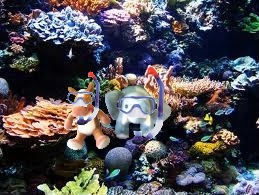
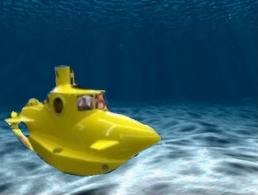
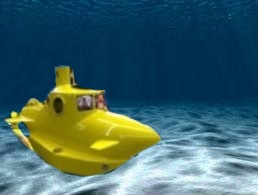
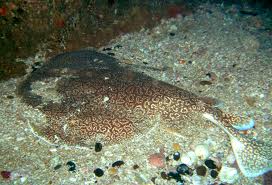
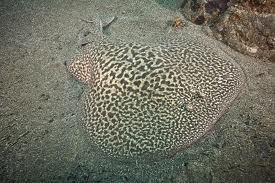
Today we’re taking the E & E sub to the Mediterranean Sea to find a creature who hides in the sand of the ocean floor and has a charge! Are you ready? We’ve got plenty of room in the sub!
MEET THE MARBLED ELECTRIC RAY!
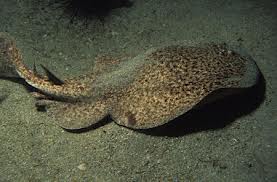
   Range/Habitat: Eastern Atlantic-Mediterranean Ocean

   Diet: Carnivore: fish

   Length/Weight: up to 23 ½”/ 22- 29 lbs

   Conservation Status: common


Fun Facts:

  • Marbled electric rays are brownish gray in color. Their coloration helps them camouflage in their habitat.
  • They rest in sand on the ocean floor.
  • Their skeletons are made of cartilage (the same tissue that makes up your ears and nose).
  • Marbled electric rays use an electrical charge to kill their prey.
  • Marbled electric rays can be harmful to humans.
  • They are diurnal (active during the day).


Wow, these rays actually use their own electrical charges to catch prey! Isn’t that cool? We just want to know where they plug themselves into to charge up at the bottom of the ocean J!


Categories: adventure, Animals, Children, conservation, education, Environment, fish, nature, oceans, science, wildlife | Tags: , , , , , , , , , | 2 Comments

WATERY WEDNESDAY # 44

 WATERY WENESDAY # 44

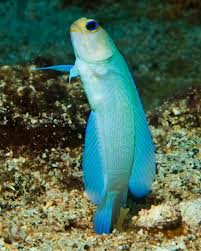
We’re going diving today to meet one cute and little fish! Look carefully because they may be hard to spot as often it is only their heads that are visible in the sea bed! Do you have your gear? Let’s dive in!

MEET THE YELLOWHEAD JAWFISH!

   Range/Habitat: Caribbean-Northern South American oceans/reefs-

coastal waters

   Diet: Carnivore: plankton, small fish

   Length: up to 4”

   Conservation Status: common


Fun Facts:

  • Yellowhead Jawfish have yellow heads and translucent blue bodies.
  • They are very small.
  • Yellowhead jawfish live in sandy ocean bottoms.
  • Yellowhead jawfish build burrows in the sand or coral.
  • They are very territorial.
  • Male yellowhead jawfish incubate the eggs in their mouths. They place the eggs in their burrow when they feed.

Yellowhead jawfish are so funny and cute! It is super cool to meet a fish dad who incubates the eggs! Fish are so amazing and different, from the very small to the very big!

Categories: adventure, Animals, Children, conservation, education, Environment, fish, nature, oceans, science, wildlife | Tags: , , , , , , , , , | Leave a comment

ANIMAL INTELLIGENCE DAY #2

ANIMAL INTELLIGENCE DAY #2

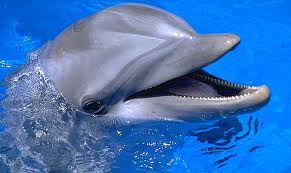
We’re going for a dip in the big blue ocean to meet today’s intelligent animal. These sleek, fast and smart mammals have adapted big brains that scientists are just beginning to understand. Just how smart these mammals are is still undetermined, but what we know about them now is pretty cool! Grab your goggles and let’s go!

MEET THE BOTTLENOSE DOLPHIN!

   Range/Habitat: Oceans worldwide, except for the polar regions

   Diet: Carnivore: fish, mollusks, crustaceans

   Length/Weight: 6 ¼- 13 ft/ up to 1,110 lbs

   Conservation Status: common


Fun Facts:

  • Bottlenose dolphins are very social and live in complex groups.
  • They make many different whistles and clicks to communicate with each other. These vocalizations are still be studied and understood by scientists.
  • Each dolphin has a signature or individual whistle that identifies them, like we have names.
  • They use tools. One group of dolphins has been seen using sponges to protect their noses from stingrays and stonefish as they look for prey.
  • Bottlenose dolphins are able to recognize themselves in a mirror.
  • They learn behaviors from their mothers and other dolphins.
  • Bottlenose dolphins have been taught to understand sign language.
  • They also use many different cooperative hunting techniques.

Bottlenose dolphins have earned a reputation for being cute show animals, but they are so much more than that. Researchers are really just beginning to understand the depths of their intelligence, both in institutions and in the wild. One dolphin Kelly, is amazing researchers at the Institute for Marine Mammal Studies, check them out!  Too bad we don’t know how to speak dolphin! Squeak, click, whistle!


Categories: adventure, Animals, Children, conservation, education, Environment, mammals, nature, oceans, science, wildlife | Tags: , , , , , , , , , | Leave a comment

WATERY WEDNESDAY GREATEST HITS!

WATERY WEDNESDAY GREATEST HITS!!

We went to a coral reef for this Watery Wednesday! Coral reefs are like the rainforests of the oceans! Reefs are full of all kinds of strange and wonderful animals and we have a strange looking fish for you today! This fish grows warts! Yep, warts! Eeew! Let’s meet the odd looking fish…

MEET THE WARTY FROGFISH!

   Range/Habitat: Western Pacific-Indian Oceans/coral reefs

   Diet: Carnivore: small fish, crustaceans

   Length/Weight: up to 4 ½”

   Conservation Status: Common


Fun Facts:

  • Warty Frogfish are relatives of anglerfish.
  • Instead of dorsal fins, they have long spines which act as lure to catch prey. If the top of the lure breaks off, they will regenerate a new one.
  • Warty frogfish are ambush predators, meaning they lay in wait for prey to swim by and then they grab them!
  • Young warty frogfish are white with yellow, orange or red. They develop their warty bumps as adults.
  • Warty frogfish are experts at mimicry and camouflage. They don’t just blend in with their surroundings, they actually look coral!

Wow, warty frogfish are some crazy looking fish and excellent at blending in with their habitats!  If you didn’t see them moving you might just miss them! Plus warty frogfish is just fun to say! Try and say it fast three times! Warty frogfish, warty frogfish, warty frogfish! Poof- now you are one :)!

Check out this video of a warty frogfish ambushing its prey!


Categories: adventure, Animals, Children, conservation, education, Environment, fish, nature, oceans, science, wildlife | Tags: , , , , , , , , | 1 Comment

WATERY WEDNESDAY GREATEST HITS!

WATERY WEDNESDAY GREATEST HITS!

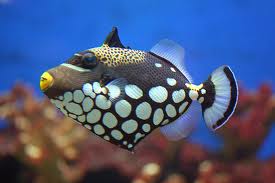
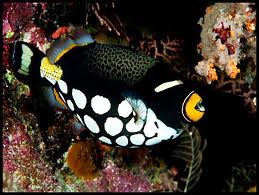
On this Water Wednesday we went to a coral reef to find a comical fish! Ok, this fish really isn’t that funny, but it is named after clowns and they’re usually funny, unless you’re scared of them! Let’s meet this fun fish…

MEET THE CLOWN TRIGGERFISH!

   Range/Habitat: Pacific-Indian Oceans/Coral reefs

   Diet: Carnivore: mollusks, crustaceans

   Length/Weight: up to 20”/up to 4 ½ lbs

   Conservation Status: Common


Fun Facts:

  • Clown triggerfish are very colorful.
  • They have strong and sharp teeth for crushing the shells of their prey.
  • Clown triggerfish can wedge in cracks and crevices of the reef when threatened by predators.
  • They usually do not use their tail fin to swim. They use their dorsal (top) and anal (bottom) fins to swim!
  • Clown triggerfish are very territorial.
  • Both male and female clown triggerfish protect the nest of eggs until they hatch.

These crazy looking Clown triggerfish sure are cool! If you could create your very own fish, what colors would you use?


Categories: adventure, Animals, Children, conservation, education, Environment, fish, nature, oceans, science, wildlife | Tags: , , , , , , , , , | Leave a comment

REPTILIAN TUESDAY GREATEST HITS!

REPTILIAN TUESDAY GREATEST HITS!

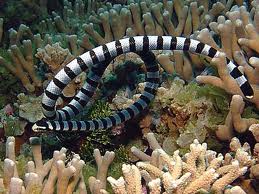
We’re going to a coral reef today to meet a very cool reptile! Let’s get our snorkel gear and take a dip! We’re off to find a reptile who lives in the ocean!

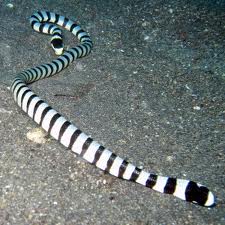
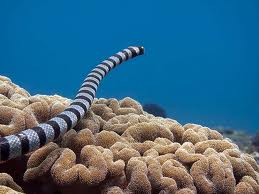
MEET THE BANDED SEA KRAIT!

   Range/Habitat: Southern-South Eastern Asia/ tropical oceans-coral reefs

   Diet: Carnivore: fish, eels

   Length: 3 ¼-6 ½ ft

   Conservation Status: Common


Fun Facts:

  • Banded Sea Kraits are members of the sea snake families. They spend most of their lives in the ocean.
  • Banded sea kraits are highly venomous. They are more deadly than most land snakes.
  • They are not harmful to humans, because they have short fangs and are very docile.
  • Banded sea kraits have paddle shaped tails that help them swim.
  • They come on shore to lay their eggs.

Sea kraits are incredible snakes! Did you know there were snakes that lived in the ocean? We saw one while we snorkeling in Indonesia! It was awesome! If you could go snorkeling what animals would you like to see?


Categories: adventure, Animals, Children, conservation, education, Environment, nature, oceans, reptiles, science, wildlife | Tags: , , , , , , , , | Leave a comment

SHARK CRAFT!!

AUGUST CRAFT

    SHARK KOOZIE!!!!

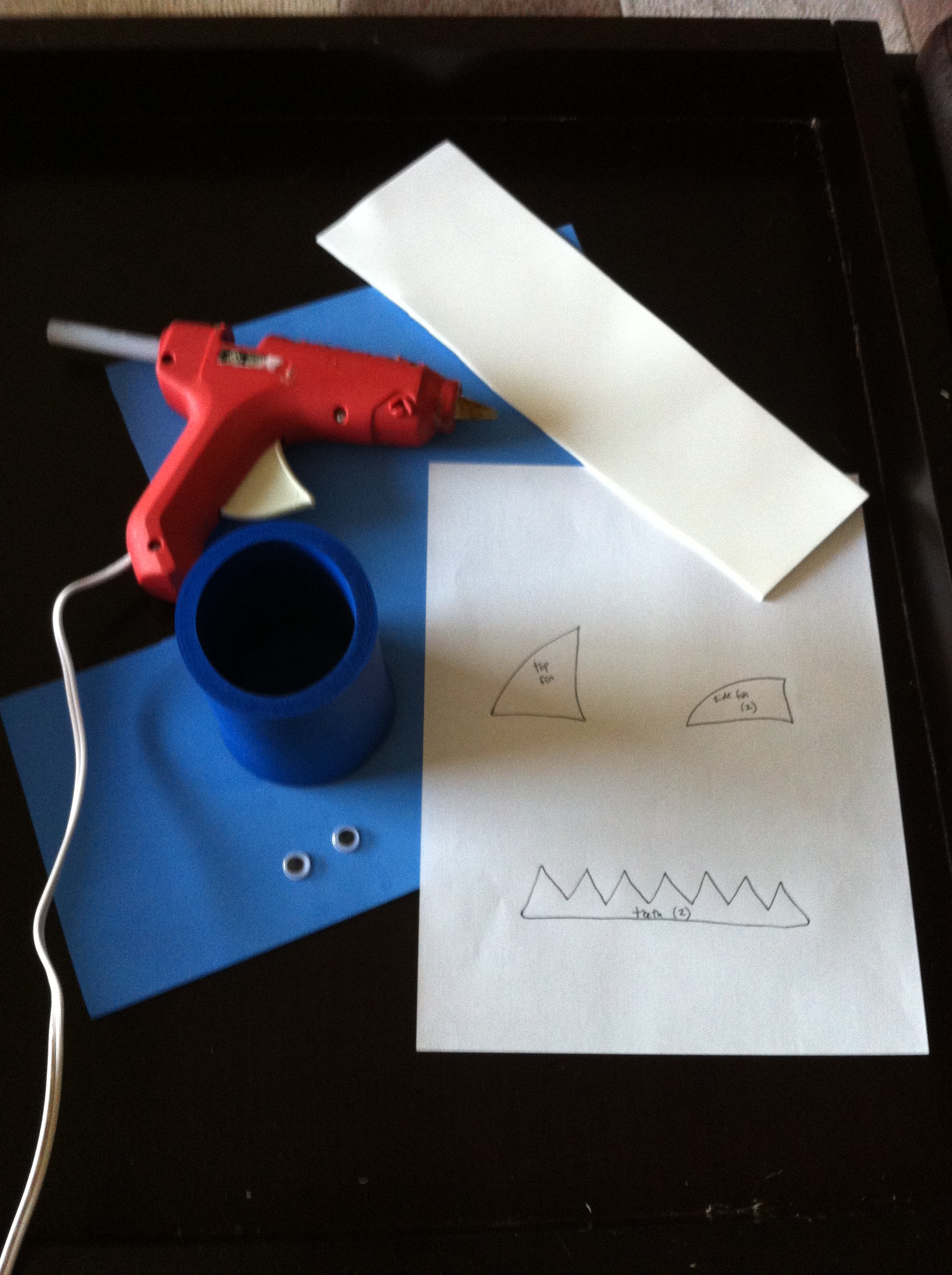
We’re celebrating Shark Week at Ellie and Edmond Headquarters, so for this month’s craft we’re making a shark koozie! This shark’s bite will keep your drink cool! Chomp!! Chomp!! As usual, if you make the craft share your pictures with us on Facebook or Twitter @EllieandEdmond.

Materials:


Blue Koozie (we purchased ours at Michael’s)

Light Blue Fun Foam

Scissors

Hot glue gun

Wiggly eyes


Instructions:

1)   Print patterns for teeth & fins (below)


2)   Cut out two rows of teeth, two side fins, two top fins

3)   Glue teeth around the opening.


4)   Glue on top fin.

5)   Glue on eyes.


6)   Glue on side fins.


Be sure to recycle your can when you are done with your beverage!


Categories: Animals, Children, crafts, education, Environment, nature, oceans, sharks, wildlife | Tags: , , , , , , , , | 4 Comments

SHAAAAARKS!!

SHAAAAARKS!!!

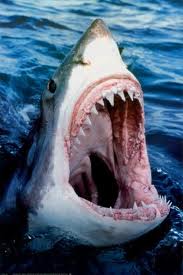
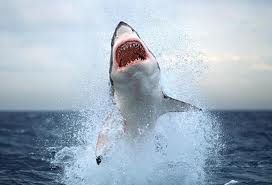
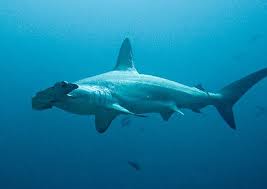
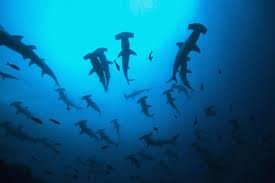
This Watery Wednesday we’re celebrating Sharks, the ocean’s top predators! These amazing animals are often feared, which is sad because they do not deserve such a terrible reputation. They come in all shapes and sizes and eat everything from large mammals to tiny plankton!

SHARK FUN FACTS:

1) Sharks have been on the planet for 400 million years.

2) Some species of sharks have not changed much in the last 64 million years!

3) There are over 400 species of sharks and they are found in every ocean on earth!

4) Sharks can smell 1 drop of blood in a million drops of water!

5) A shark skeleton is made of cartilage, the same tissue that makes up your ears and nose!

6) Whale sharks are the largest species of shark!

7) Some sharks will use thousands of teeth in a lifetime.

8) Bull sharks can live in fresh water habitats.

9) Sharks are covered in dermal denticles. They are enamel covered plates.

10) Sharks have a lateral line that is made up of jelly filled canals. This helps them detect movement or prey.

Sharks are seriously cool! They are also in serious trouble and it’s up to us to help them out! One great way to adopt a shark! No, we don’t mean bring one home!

Check out the for ways to help!


Categories: adventure, Animals, Children, conservation, education, Environment, fish, nature, oceans, science, sharks, wildlife | Tags: , , , , , , , , , , | Leave a comment

MAMMAL MONDAY # 43

MAMMAL MONDAY #43!

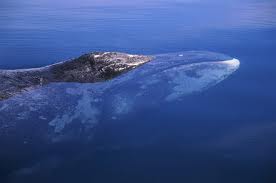
We’re taking the E & E sub to the chilly Arctic Ocean to meet a magnificent and large mammal! Thank goodness they eat very tiny animals! We’ve got room in the sub for everyone, as well as some hot apple cider!

MEET THE BOWHEAD WHALE!

   Range/Habitat: Arctic- sub-arctic ocean

   Diet: Carnivore: plankton

   Length/Weight: 45-59 ft/ 55-66 tons

   Conservation Status: common


Fun Facts:

  • Bowhead whales are baleen whales and they have the longest baleen of any whale on earth!
  • Bowhead whales have no dorsal fin!
  • They have a massive head. It makes up a third of their body weight!
  • Bowhead whales use echolocation to navigate through the ice flows.
  • They have a bow shaped mouth.
  • Bowhead whales have a very thick layer of blubber to keep them warm.
  • They can live up to 100 years!

WOW, Bowheads are some big mammals! Can you believe that they live for almost a hundred years? That is so crazy!


Categories: adventure, Animals, Children, conservation, education, Environment, mammals, nature, oceans, science, wildlife | Tags: , , , , , , , , | 3 Comments

WATERY WEDNESDAY # 42

WATERY WENESDAY # 42

We’re taking the E & E sub down to the bottom of the ocean floor to find a strange and rare member of the shark family! These sharks are harmless to humans, but their skin definitely makes them not snuggly! Come on aboard and let’s go!

MEET THE BRAMBLE SHARK!

   Range/Habitat: Indo-Pacific & W Atlantic/ deep water ocean

   Diet: Carnivore: sharks, fish, rays

   Length/Weight: up to 13 ft/ up t 490 lbs

   Conservation Status: unknown


Fun Facts:

  • Bramble sharks are deep water, bottom dwelling sharks.
  • They are considered rare.
  • Bramble sharks have thorny denticles all over there body.
  • They get their name because the thorny denticles resemble the thorns on bramble bushes.
  • Bramble sharks are a purplish-brown color.
  • Bramble sharks are slow moving.

Wow! These sharks are amazing! We really think they are kind of creepy and cool! The ocean floor has so much for us to explore and see!

Categories: adventure, Animals, Children, conservation, education, Environment, fish, oceans, science, sharks, wildlife | Tags: , , , , , , , , | Leave a comment

Blog at WordPress.com.