rainforests

MAMMAL MONDAY GREATEST HITS!

We’re doing one more week of Ellie and Edmond’s Greatest Hits as we finish up some projects at headquarters! We hope you enjoy these fun animals!

MAMMAL MONDAY GREATEST HITS!!

On this Mammal Monday we went to the rainforests of South America to find our first primate! We have a very special friend today. It’s our first primate! These adorable little monkeys sport a wild hairdo! Let’s get ready to meet…
MEET THE COTTON TOP TAMARIN!

   Range/Habitat: Northwest South America/rainforest, forest

   Diet: Omnivore: fruit, plants, insects

   Length/Weight: 8-10”/14-16 oz

   Conservation Status: endangered


Fun Facts:

  • Cotton Top Tamarins are small New World monkeys. New World monkeys live in Central and South America.
  • They live in family troops of 10-12 monkeys that are made up of a mated pair and their offspring.
  • Cotton top tamarins often give birth to twins.
  • Like other tamarins, cotton top dads and older siblings help raise the babies. They carry the babies on their backs.
  • Cotton top tamarins are arboreal (they live in the trees).
  • Their tails are very long, 13-16”.  That’s longer than its body! The tail helps them balance while they get around in the trees.
  • Cotton top tamarins are very vocal and have lots of different calls, to express danger, fear, joy and playfulness.
  • They use calls to warn each other of predators. There are different warning calls for predators in the air and predators on the ground.

These little monkeys are about the size of a squirrel, but have much better hairdos :)! How great is it that they dad and siblings help with the babies?


Categories: adventure, Animals, Children, conservation, education, Environment, mammals, rainforests, science, wildlife | Tags: , , , , , , , , , | 1 Comment

MAMMAL MONDAY GREATEST HITS

For the next two weeks, we’re sharing some of greatest hits here on Ellie and Edmond! We need a little time to focus on our book and iPad app, so we’re sharing some animals that were posted a while ago that didn’t get any love! We hope you enjoy our Greatest Hits!

MAMMAL MONDAY GREATEST HITS

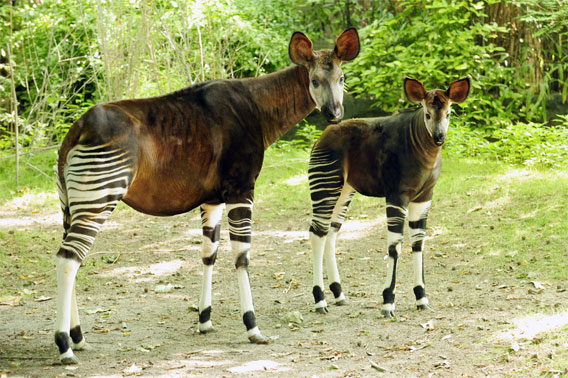
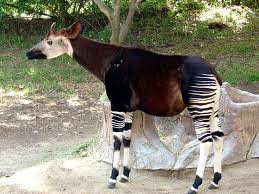
You have the Monday morning blues? Well after learning about today’s mammal those blues will be disappear! Have you ever wonder what animals are lurking in the rainforests, hiding just out of the sight? Could it be a leopard? Or is it a monkey in the trees? Or is it today’s quiet, shy, solitary and secretive Okapi?

MEET THE OKAPI!

   Range/Habitat: Central Africa-Democratic Republic of

Congo/tropical rainforests

   Diet:  herbivores: twigs, shoots, fruits, leaves

   Length/Height/Weight: 6 ½-7 1/4 ft : 12-16 ½ in : 440 lb-770lb

   Conservation Status: Lower Risk


Fun facts:

  • Okapi were not identified until 1900.
  • Okapi are the closest living relative of the giraffe.
  • They are very shy and secretive.
  • Okapi have long black prehensile tongues. They use their tongues to grab leaves and branches.
  • They have stripes on their legs and rear end.
  • Male okapis have two skin covered horns that are called ossicones. They are actually part of the skull.
  • Every okapi’s stripe pattern in different!

These relatives of the giraffe are very special! We’re so glad that someone discovered them in the rainforests! And we’re sticking our tongue out to the Monday blues too!


Categories: adventure, africa, Animals, Children, conservation, education, Environment, mammals, nature, rainforests, science, wildlife | Tags: , , , , , , , | Leave a comment

SUPER SURPRISE THURDSDAY # 42

SUPER SURPRISE #42

We’re hopping off to the rainforests of Madagascar to find today’s animal! They’re small and green, so everyone keep your eyes peeled and let’s head off on today’s adventure!

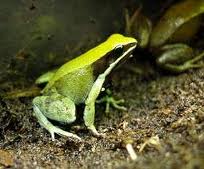
MEET THE GREEN MANTELLA!

   Range/Habitat: Madagascar/ rainforest

   Diet: Carnivore: insects, invertebrates

   Length/Weight: ¾-1 ¼ “

   Conservation Status: Endangered


Fun Facts:

  • Green Mantellas are small yellow or pale green frogs with black on their sides.
  • They are diurnal (active during the night).
  • Green mantellas have adhesive disks on their toes.
  • They secrete toxins, similar to poison dart frogs.
  • Male green mantellas use a series of clicks to attract females!

These tiny frogs are gorgeous! They are losing their rainforest homes though, remember you may not think that  recycling cans or paper helps, but it makes a big impact! So keep up the good work!


Categories: adventure, amphibians, Animals, Children, conservation, education, Environment, frogs, nature, rainforests, science, wildlife | Tags: , , , , , , , , | 1 Comment

FEATHERY FRIDAY # 41

FEATHERY FRIDAY# 41

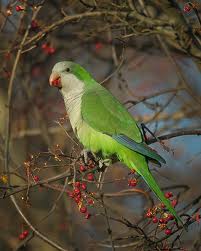
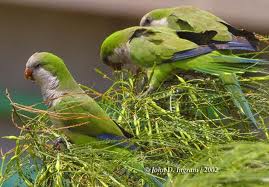
We’re off to the rainforest of Central and South America today to meet the little parakeet that could. These brightly colored birds are so adorable. Are you ready to meet them?

MEET THE MONK PARAKEET!

   Range/Habitat: Central-South America/ rainforests, grasslands, suburbs

   Diet: Herbivore: seeds, fruits, berries

   Length/Weight: 11 ½”/ 4 oz

  Conservation Status: common


Fun Facts:

  • Monk parakeets are also known as the Quaker parrot.
  • They have long green tails and gray/white faces.
  • Monk parakeets are highly intelligent and social.
  • They build colonies of nests.
  • Monk parakeets build their nests next to or on top of each other, creating one large structure.
  • They have been introduced in many other places, where they are expanding their numbers.

Monk parakeets are adorable! They now live in the US as far as the Northeast. While they are cute, they can out-compete native birds for space and food. It’s very important for bird owners to know it is never a good idea to release their pets into the wild, because they can take over. Monk parakeets are now banned in many states because of this problem.


Categories: adventure, Animals, birds, Children, education, Environment, nature, rainforests, science, wildlife | Tags: , , , , , , , | 3 Comments

REPTILIAN TUESDAY # 41

REPTILIAN TUESDAY # 41

We’re staying in western Africa today to meet a brightly colored lizard! Be careful where you step though, these little reptiles like to live among the leaves of the rainforest floor! Let’s be quiet and see if we can find…

MEET THE AFRICAN FIRE SKINK

   Range/Habitat: West-Central Africa/ rainforests

   Diet: Insectivore: insects, spiders

   Length: 9-14”

   Conservation Status: common


Fun Facts:

  • African Fire Skinks are also called the fire-sided skink.
  • They have red and black bands on their body and blue and black bands on their tails.
  • African fire skinks live in the leaf litter of the rainforest floor.
  • They burrow underground.
  • African fire skinks can shed their tails.
  • They can live for 15-20 years.

These skinks are so colorful. Everyone thinks lizards are green or brown, but they can come in a huge variety of colors. Do you have a favorite lizard?

Categories: adventure, africa, Animals, Children, education, Environment, lizards, nature, rainforests, reptiles, science, wildlife | Tags: , , , , , , , , , | Leave a comment

SUPER SURPRISE THURSDAY # 40

SUPER SURPRISE THURSDAY# 40

We’re heading back to the rainforests of Central America to meet a cute little bird with a long name! Better get your climbing gear on because these birds like the canopy! Let’s do this!

MEET THE VIOLACEOUS TROGAN!

   Range/Habitat: Southeast Mexico-Central South America/ rainforest

   Diet: Omnivore: insects, fruits, invertebrates

   Length/Weight: 9-10”/ 1 5/8-2 3/8 oz

   Conservation Status: Common


Fun Facts

  • Violaceous trogans live in the canopy (near the top) of the trees.
  • Male violaceous trogans have beautiful blue heads with a yellow breast.
  • Female violaceous trogans are mostly gray.
  • Violaceous trogans have striped tails.
  • They nest in old trees or in ant or termite mounds.

These little birds are so cute and those males are so brightly colored. They must attract a lady bird!


Categories: Animals, birds, Children, education, Environment, nature, rainforests, science, Uncategorized, wildlife | Tags: , , , , , , , | Leave a comment

REPTILIAN TUESDAY # 40

REPTILIAN TUESDAY # 40

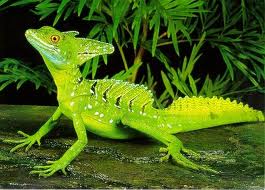
We’re off to the rainforests of Central America to meet a really cool reptile that has a special adaptation! Can you run on top of water? We didn’t think so! Let’s head out on today’s adventure!

MEET THE PLUMED BASILISK!

   Range/Habitat: Central America/ rainforests-wetlands

   Diet: Omnivore: insects, rodents, fruits

   Length: 23 ½-30”

   Conservation Status: common


Fun Facts:

  • Plumed Basilisks are arboreal (they live in trees).
  • They live near streams and rivers.
  • Plumed basilisks run across the surface of the water on their hind feet.
  • Plumed basilisks have 3 crests on body; on their head, back and tails.
  • They are excellent swimmers and can stay under water for 30 minutes.
  • Male plumed basilisks are very territorial. They preside over a territory with numerous females.

These lizards are sooo cool! Can you believe they can run on water? We wish we could do that, alas we only doggie paddle, or elephant and horse paddle in this case!


Categories: Animals, Children, education, Environment, lizards, nature, rainforests, reptiles, science, wildlife | Tags: , , , , , , , , | 2 Comments

MAMMAL MONDAY # 40

MAMMAL MONDAY # 40

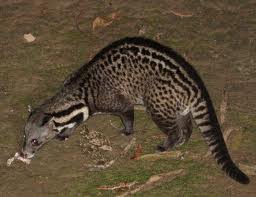
We’re taking a night hike in the Malaysian rainforest today to meet a very neat animal who looks like a cat, but isn’t! Are you ready for another great Ellie and Edmond adventure? Grab your night vision goggles and let’s go!

MEET THE MALAYAN CIVET!

   Range/Habitat: Southeast Asia/ rainforest

   Diet: Carnivores: millipedes, bugs, mice

   Length/Weight: 24-26”/ 7 ¾-10 lbs

   Conservation Status: common


Fun Facts:

  • Malayan civets are covered in dark spots and have a black and white “collar”.
  • Malayan civets have 15 bands on their long tails.
  • They are nocturnal and solitary.
  • Malayan civets are distantly related to cats and hyenas and mongooses.
  • They are mostly ground dwellers.

These cool little civets are so cute. They look like little bandits in the rainforests at night! What’s your favorite thing about them?


Categories: Animals, Children, education, Environment, mammals, nature, rainforests, science, wildlife | Tags: , , , , , , , | 2 Comments

REPTILIAN TUESDAY # 39

REPTILIAN TUESDAY # 39

We’re going to the rainforests of Southeast Asia to meet a brightly colored snake! We’re going to watch this guy from a distance though just to be safe! Let’s do this!

MEET THE BLUE CORAL SNAKE

    Range/Habitat: Southeast Asia/ rainforests

    Diet: Carnivore: snakes, lizards, frogs

    Length: 4- 4 ½ ft

    Conservation Status: common


Fun Facts:

  • Blue Coral snakes are also known as Blue Malaysian Coral Snakes.
  • They have bright blue bodies with orange undersides, head and tails.
  • Blue coral snakes are highly venomous.
  • They flip upside down and show their bright orange coloration as a warning to predators.
  • Blue coral snakes are nocturnal.

We’re definitely going to observe these snakes from a distance. It’s best to pay attention to their warning coloration too!


Categories: Animals, Children, education, Environment, nature, rainforests, reptiles, science, wildlife | Tags: , , , , , , , | 2 Comments

MAMMAL MONDAY # 38

MAMMAL MONDAY # 38

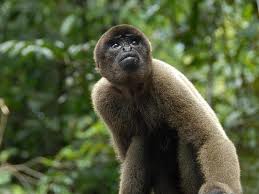
We’re back to our regular programming today after celebrating some great animal dads last week! Today we’re heading to the rainforests of South America to meet one adorable and wooly monkey! Grab your climbing gear because we’re going up!

MEET THE GRAY WOOLY MONKEY!

   Range/Habitat: Central-South America/ rainforest

   Diet: Omnivore: fruit, seeds, flowers, small animals

   Length/Weight: 20-26”/ 8 ¾-22 lbs

   Conservation Status: vulnerable

Fun Facts:

  • Gray Wooly Monkeys are arboreal (they live in the trees).
  • They have thick, soft and curly fur.
  • Gray wooly monkeys have a prehensile tail (they can hang from it). The tail has a bald spot on near the end for better gripping.
  • They live in large troops with a dominant male and lower females and males.
  • Gray wooly monkeys have stocky bodies with strong shoulders and hips. These adaptations are for a life in the trees.
  • They are known to have a gentle nature.

Gray wooly monkeys sure are cute! Don’t you just want to hug one? We sure do, but we won’t because these monkeys are best left in their rainforest home as wild monkeys! Remember though that their home is disappearing, so it’s important that we all work to make sure it is safe!

Categories: Animals, Children, education, Environment, mammals, nature, rainforests, science, wildlife | Tags: , , , , , , , , | Leave a comment

Blog at WordPress.com.