rainforests

DAD’S WEEK DAY # 2

DAD’S WEEK DAY #2

We’re staying in South America today to meet this exceptional amphibian dad! This frog was discovered Charles Darwin himself! Grab your boots and rain gear because we’re going to a mountainous rainforest to meet these amazing dads!

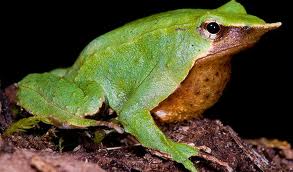
MEET THE DARWIN’S FROG!
   Range/Habitat: Southern South America/ mountain rainforest

   Diet: Carnivore: insects, small animals

   Length: up to 1 ¼ “

   Conservation Status: common

Fun Facts:

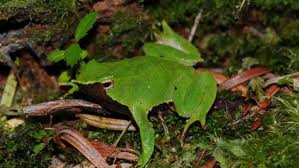
  • Darwin’s Frogs have sharp pointy snouts that look like leaves.
  • Male Darwin’s frogs attracted females with a low call that sounds like a bell.
  • They are nocturnal (active at night).
  • Female Darwin’s frogs lay around 30 eggs.
  • Male Darwin’s frogs protect the eggs for about two weeks and then scoop them up in their vocal sacs.
  • The eggs hatch in their vocal sacs, where the tadpoles eat the yolk from the egg. They emerge from dad’s vocal sac as little froglets!

These little funny look frogs are spectacular dads. It’s pretty crazy that they carry around the eggs in their mouths until they are little frogs!
     

Categories: amphibians, Animals, Children, earth day, Environment, frogs, nature, rainforests, science, Uncategorized, wildlife | Tags: , , , , , , , , | Leave a comment

DAD’S WEEK!!

DAD’S WEEK!

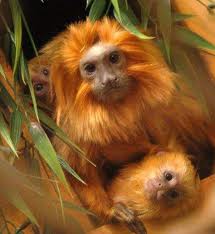
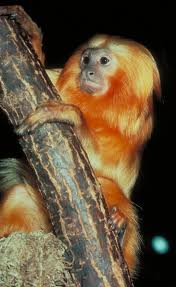
We’re celebrating great animal dads this week in honor of Father’s Day! We bet you thought that animal moms did all the work, but we’ve found some most fabulous dads too! Today we are off to the rainforests of Brazil to meet a tiny little mammal who lives in the trees! These primate dads sure are cute! We’re gearing up to zipline through the rainforest canopy! You ready?

MEET THE GOLDEN LION TAMARIN!

   Range/Habitat: Eastern South America-Brazil/ rainforest

   Diet: Omnivore: fruit, grubs, insects

   Length/Weight: 8-10”/ 14-29 oz

  Conservation Status: critically endangered


Fun Facts:

  • Golden Lion Tamarins have beautiful golden coats and fluffy manes around their faces.
  • They are diurnal (active during the day) and arboreal (live in the trees).
  • Golden Lion Tamarins live in small family groups led by a female-male breeding pair.
  • Mother Golden lion tamarins give birth to 1 or 2 offspring.
  • Father Golden lion tamarins take care of the babies and carry them on their backs. They give them to their mom when it’s time for feeding.

Father Golden Lion Tamarins are excellent dads! They not only carry the babies around on their backs, but they help raise them! Whew, that’s a good thing for mom, because if she gives birth to twins, she has twice the amount of work to do! Way to go dad! These tamarins are critically endangered, but zoos across the country are working very hard to save them. Read about their program here.


Categories: Animals, Children, education, Environment, mammals, nature, rainforests, science, wildlife | Tags: , , , , , , , | 2 Comments

REPTILIAN TUESDAY # 35

REPTILIAN TUESDAY # 35

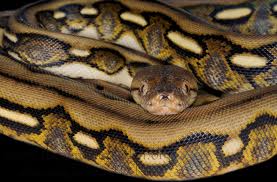
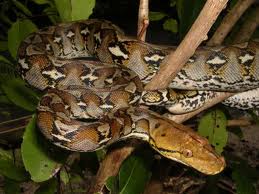
We’re heading to Southeast Asia to meet a really big and we mean BIG reptile! We shall watch this giant reptile from a distance as they are big enough to take down a human and we are but a small elephant and horse! Are you ready to head out on this most excellent adventure? Let’s do it!

MEET THE RETICULATE PYTHON!

   Range/Habitat: Southeast Asia/ rainforest, grasslands

   Diet: Carnivore: birds, mammals

   Length/Weight: 21-33ft/ up to 400 lbs

   Conservation Status: common


Fun Facts:

  • Reticulated pythons are the world’s longest snake.
  • They are excellent swimmers.
  • Reticulated pythons have large heat pits in their jaws.
  • Reticulated pythons can live up to 30 years.
  • They do have 100 teeth, but are constrictors.
  • Female reticulated pythons lay anywhere from 30-100 eggs. She will wrap herself around them until they hatch.
  • The word reticulated comes from Latin and means “net-like”. It describes their pattern.

Wow, these snakes are not just big, but HUGE! They are spectacular and so beautiful! We’ll just make sure that we watch them from a distance :)!


Categories: Animals, Children, education, Environment, nature, rainforests, reptiles, science, wildlife | Tags: , , , , , , , | 1 Comment

MOMS FEATHERY FRIDAY

MOMS FEATHERY FRIDAY

We’re off to the country of India to meet our last amazing animal mom! It is Feathery Friday, so that means this mom is a bird! These unusual and beautiful birds work hard with their males to make sure chicks are safe and sound. We’re going into the rainforest, so grab your bug repellant and let’s meet this mom!

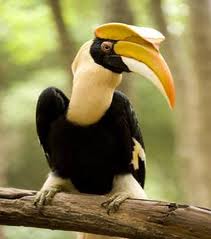
MEET THE GREAT INDIAN HORNBILL!

   Range/Habitat: Southeast Asia/ rainforest

   Diet: Omnivore: figs, reptiles, frogs

   Length/Weight: up to 5 ft/ up to 6 ½ lbs

   Conservation Status: Lower risk


Fun Facts:

  • Great Indian Hornbills live in the canopy of the rainforest.
  • They are large birds with magnificent bills and casks on top of the bills.
  • Great Indian Hornbills build nests in the hollow of a tree.
  • They seal off the opening of the nest with mud, except for a small hole.
  • Great Indian Hornbill males feed the female through the small hole.
  • She stays in the enclosed nest until the chick hatches, for about 3 months.
  • Once the chick hatches, mom breaks out and then reseals the opening for another month, feeding the chick through a small hole.


We met some amazing moms this week and now we have a bird that seals itself into a tree to incubate its egg! That is crazy! Thank goodness there is a male around to feed her nibbles while she hangs out! Way to go Great Indian Hornbills!

We hope you enjoyed our moms week and that you are able to give your mom a big hug for all that she does for you!

Categories: Animals, birds, Children, education, Environment, moms, nature, rainforests, science, wildlife | Tags: , , , , , , , , , | 2 Comments

Blog at WordPress.com.