science

FEATHERY FRIDAY # 28

FEATHERY FRIDAY# 28

Man o Man have we found a nifty bird for you today! These birds use echolocation, just like bats to help them get around at night! In fact they are very similar to bats in many ways, except that they are feathery J! We’re off to the rainforests of Northern Central American to meet this bird. Grab your night vision goggles, because they won’t be out during the day!

MEET THE OILBIRD!
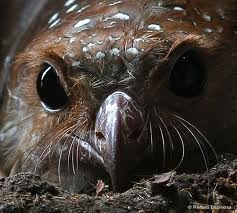
   Range/Habitat: Northern Central & South America/ rainforest

   Diet: Herbivore: fruit

  Length/Weight: 16- 19”/ 13-17 oz

  Conservation Status: Common


Fun Facts:

  • Oilbirds are nocturnal (active). They are the only nocturnal fruit eating bird in the world.
  • They live in colonies.
  • Oilbirds roost in caves or underground during the day.
  • They use echolocation to fly at night. They send out sounds that bounce of objects and help the bird navigate.
  • Oilbirds can travel up to 45 miles a night to find food.
  • They love the fruit of oil palms and laurel trees.


Oilbirds are super cool! Not only do they fly at night, but they use echolocation. We wonder if they have bat friends or if bats wonder what these crazy birds are doing out at night.

Categories: Animals, birds, Children, education, Environment, nature, science, wildlife | Tags: , , , , , , , | 4 Comments

HAPPY INTERNATIONAL DAY OF THE SEAL!!

HAPPY INTERNATIONAL DAY OF THE SEAL!!

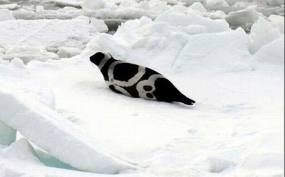
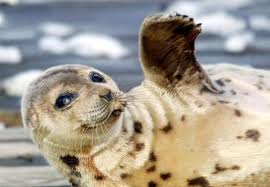
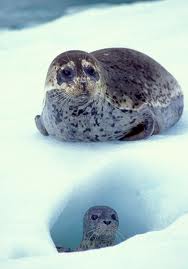
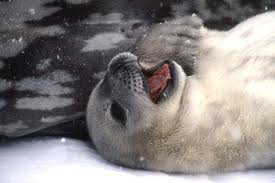
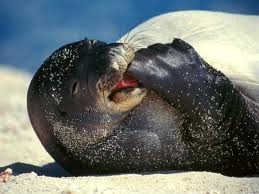
That’s right folks it’s a day to celebrate seals, our pinniped friends! Did you know that the word pinniped comes from the Latin meaning fin-footed? Cool! We’ll be posting fun facts on our Facebook page http://www.facebook.com/pages/Ellie-and-Edmond/254090144618348 and on our Twitter feed @EllieandEdmond!

We’ll leave you with some super cute seal pictures to start your day! YAY!

Categories: Animals, Children, education, Environment, mammals, nature, science, wildlife | Tags: , , , , , , , | Leave a comment

WATERY WEDNESDAY # 28

WATERY WEDNESDAY# 28

You just never know what kind of creature Watery Wednesday will bring you! We found a fish that can fly today! That’s right folks; this fish can leap out of the ocean and glide in the air! What? Well let’s hope aboard the Ellie and Edmond boat and check them out!

MEET THE TROPICAL TWO-WINGED FLYING FISH!

   Range/Habitat: tropical- sub-tropical oceans worldwide

   Diet: Carnivore: crustaceans, plankton

   Length: up to 7”

   Conservation Status: Common


Fun Facts:

  • Tropical two-winged flying fish have large wing-like pectoral (side) fins.
  • They can propel themselves out of the water and glide in the air.
  • Tropical two-winged flying fish can glide up to 12 seconds at a time.
  • They can reach speeds of up to 40 mph. They do this avoid predators.
  • They are dark blue and silver.

We promise you’re not seeing things! These crazy fish can fly and they can go fast! How cool would it be to see a school of them gliding by at top speeds?


Categories: Animals, Children, education, Environment, fish, nature, science, wildlife | Tags: , , , , , , , | 1 Comment

REPTILIAN TUESDAY # 28

REPTILIAN TUESDAY # 28

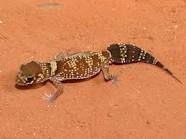
Bark! Bark! It’s Reptilian Tuesday and we have fascinating lizard for you today! They make a pretty cool sound for a little animal, in fact it made remind you of a certain four-legged friend that you may have! Put on your sunglasses and your sunscreen because we’re heading to the desert of Southern Africa!

MEET THE COMMON BARKING GECKO!

   Range/Habitat: Southern Africa/ desert

   Diet: Insectivores: termites/ants

   Length: 2 ¼-4”

   Conservation Status: common


Fun Facts:

  • Common Barking Geckos live in complex burrow systems that they dig themselves.
  • The males make a barking sound at dusk.
  • They bark to attract females.
  • Common barking geckos are nocturnal (active at night).
  • They are often heard in the desert but rarely seen.


Not much is known about these little guys, except that they make a lot of noise for a reptile. You can hear them as the sunsets of the Kalahari Desert. We think it’s super cool that they dig complex burrows for themselves.


Categories: Animals, Children, education, Environment, nature, reptiles, science, wildlife | Tags: , , , , , , , | Leave a comment

MAMMAL MONDAY # 28

MAMMAL MONDAY # 28

Happy Mammal Monday! We’re extra excited for you to meet today’s primate! We’re heading to the rainforests of Central Africa! These monkeys have brightly colored faces! Grab your bug spray and your rain gear and let’s head into the forest to see these majestic animals!

MEET THE MANDRILL!

   Range/Habitat: Western Central Africa/ rainforests

   Diet: Omnivore: fruit, seeds, invertebrates

   Length/Weight: 25-32”/24- 82 lbs

  Conservation Status: vulnerable


Fun Facts:

  • Mandrills are the largest of all monkeys.
  • They have brightly colored faces with red and blue.
  • Mandrills also have brightly colored rumps with short tails.
  • Mandrills have large 2 ½ inch canine teeth. They will bear them to other mandrills; it is most often a friendly gesture.
  • They are related to baboons, but are not baboons.
  • Mandrills store food in their cheeks while they’re foraging.
  • They spend most of their lives on the ground, but sleep in the trees.
  • Female mandrills are much smaller than the males.
  • They live in troupes. The troupes are led by a dominant male and include females, young and non-ranking males.  Troupes will also join other groups and form large hordes.

We just love the colorful Mandrill. They have a very interesting social structure and are very intelligent. Unfortunately their rainforest home is disappearing. Doing things like recycling paper can really help protect our rainforest homes! Who’s up for recycling as much paper as they can? We are!

Categories: Animals, Children, education, Environment, mammals, nature, science, wildlife | Tags: , , , , , , , | Leave a comment

March Craft/Activity!

Hey everyone! So this month’s craft is really more of an activity to get you outside! We’re a bit late with posting it, because we had some IT issues with our conversion :)! Anyways, we hope you enjoy BACKYARD BINGO! That’s right folks, we made you a bingo game to take outside to your backyard or your local park!  It’s PDF (our first) so please let us know if you have any trouble printing it!


Get outside and Enjoy!!!

Backyard bingo-1

Categories: Animals, backyard, birds, Children, crafts, education, Environment, insects, Local, mammals, nature, reptiles, science, wildlife | Tags: , , , , , , , , | 6 Comments

FEATHERY FRIDAY # 27

FEATHERY FRIDAY# 27

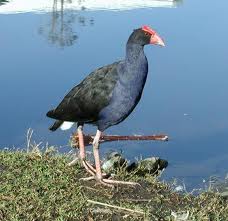
Birds come in so many bright colors and we have found a really neat one for you today! These birds are located all around the Eastern world, so let’s head to out and see if we spot a bird with purple plumage!

MEET THE PURPLE SWAMPHEN!

   Range/Habitat: Eastern Europe-Southeast Asia-Australia/ swamps, coastlines

   Diet: Omnivore: aquatic vegetation, invertebrates

   Length/Weight: 15-20”/ 18- 46oz

   Conservation Status: Common


Fun Facts:

  • Purple Swamphens have beautiful purple and black plumage.
  • They also have bright red legs and bills.
  • Purple swamphens don’t have webbed feet, but are excellent swimmers.
  • Both the male and female incubate the eggs and take their chicks.
  • Purple swamphens are regarded as noble birds in Ancient Rome
  • Hear the call.


We just love these lovely birds! If you were a bird what color would you be? Ellie loves green and Edmond wants blue!


Categories: Animals, birds, Children, education, Environment, nature, science, wildlife | Tags: , , , , , , , | 5 Comments

SUPER SURPRISE THURSDAY # 27

SUPER SURPRISE

THURSDAY# 27

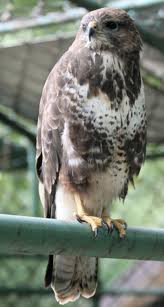
Who’s that large bird flying over the hills of the United Kingdom and other parts of Europe?  Let’s get our binoculars and head out into the woods to find this fabulous bird on Super Surprise Thursday!

MEET THE COMMON BUZZARD!

   Range/Habitat: Europe-Asia-Eastern Africa/ forests, mountains

   Diet: Carnivore: voles, mice & insects

   Length/Weight: 20-22”/ 19-36 oz

   Conservation Status: Common


Fun Facts:

  • Common Buzzard also Eurasian buzzard.
  • They are raptors.
  • Common buzzard varies in color depending on where they live.
  • They have a wing span of 48”-60”.
  • Common buzzard males perform aerial acrobatics to attract females. They also give the females materials to build a nest while flying.
  • They live up to 25 years.
  • Common buzzards have a very unique call.


Common buzzards are such beautiful birds! What fun would it be to watch the males do all those acrobatics!


Categories: Animals, birds, Children, education, Environment, nature, science, wildlife | Tags: , , , , , , , | Leave a comment

WATERY WEDNESDAY # 27

WATERY WEDNESDAY# 27

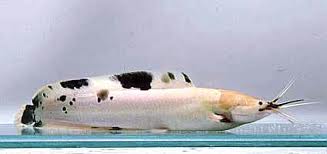
Who’s excited for Watery Wednesday? We sure are! We’re heading to the rivers and wetlands of Southeast Asia to meet a catfish who can “walk” on land! What? You read that right, these fish can come out on land! Are you excited now? Let’s go meet this fascinating fish!

MEET THE WALKING CATFISH!

   Range/Habitat: Southeast Asia/ wetlands, swamps, ponds

   Diet: Omnivore: fish, mollusks, invertebrates, weeds

   Length: up to 16”

   Conservation Status: Common


Fun Facts:

  • Walking Catfish have barbells on their faces.
  • They have long bodies.
  • Walking Catfish have the ability to crawl on the land.
  • They have specialized gills that help them breath out of water.
  • Walking catfish are nocturnal (active at night).
  • They are a tropical species.


Wow! How cool is that there are fish in the world that can use their fins to crawl across land! They do it to find a better habitat! We just love these super cool fish!


Categories: Animals, Children, education, Environment, fish, nature, science, wildlife | Tags: , , , , , , , | 4 Comments

REPTILIAN TUESDAY # 27

REPTILIAN TUESDAY # 27

Yay it’s Reptilian Tuesday and we’re packing our bags and heading to Africa to meet a lizard who is brightly colored! Who’s hoping on board with us? Grab your passports and let’s go looking for lizards!

MEET THE RAINBOW LIZARD!

   Range/Habitat: Western to Eastern Central Africa/ grasslands, desert

   Diet: Omnivore: mainly insects with occasional vegetation

   Length: 12-16”

   Conservation Status: common


Fun Facts:

  • Male Rainbow Lizards turn bright orange and blue when they bask in the sun.
  • Female Rainbow Lizards are grey all the time.
  • Rainbow lizards have sticky tongues to help them grasp insects.
  • They live in small social groups with a dominant male and females and less dominate males.
  • Dominate males sit on the highest point to bask and the other lizards of the group bask at lower points.
  • Male Rainbow Lizards bob their heads to attract females.
  • Female Rainbow Lizards lay around 25-30 eggs in a clutch.

Aren’t these lizards gorgeous with their bright colors? It sure is cool that they live in small social groups too. We do wonder how sticky their tongues are; who wants to test it out?

Categories: Animals, Children, education, Environment, nature, reptiles, science, wildlife | Tags: , , , , , , , | 2 Comments

Blog at WordPress.com.