Posts Tagged With: animals

AMERICAN ANIMALS WEEK DAY # 5

AMERICAN ANIMALS WEEK DAY #5

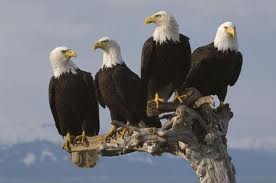
It’s the last day of our celebration of American Animals week! We’ve packed up the RV and headed to the woods of the Northeast to find our national bird! These majestic birds now fly over most of our country after almost being lost. Bring your binoculars and your best bird watching skills and let’s do this!
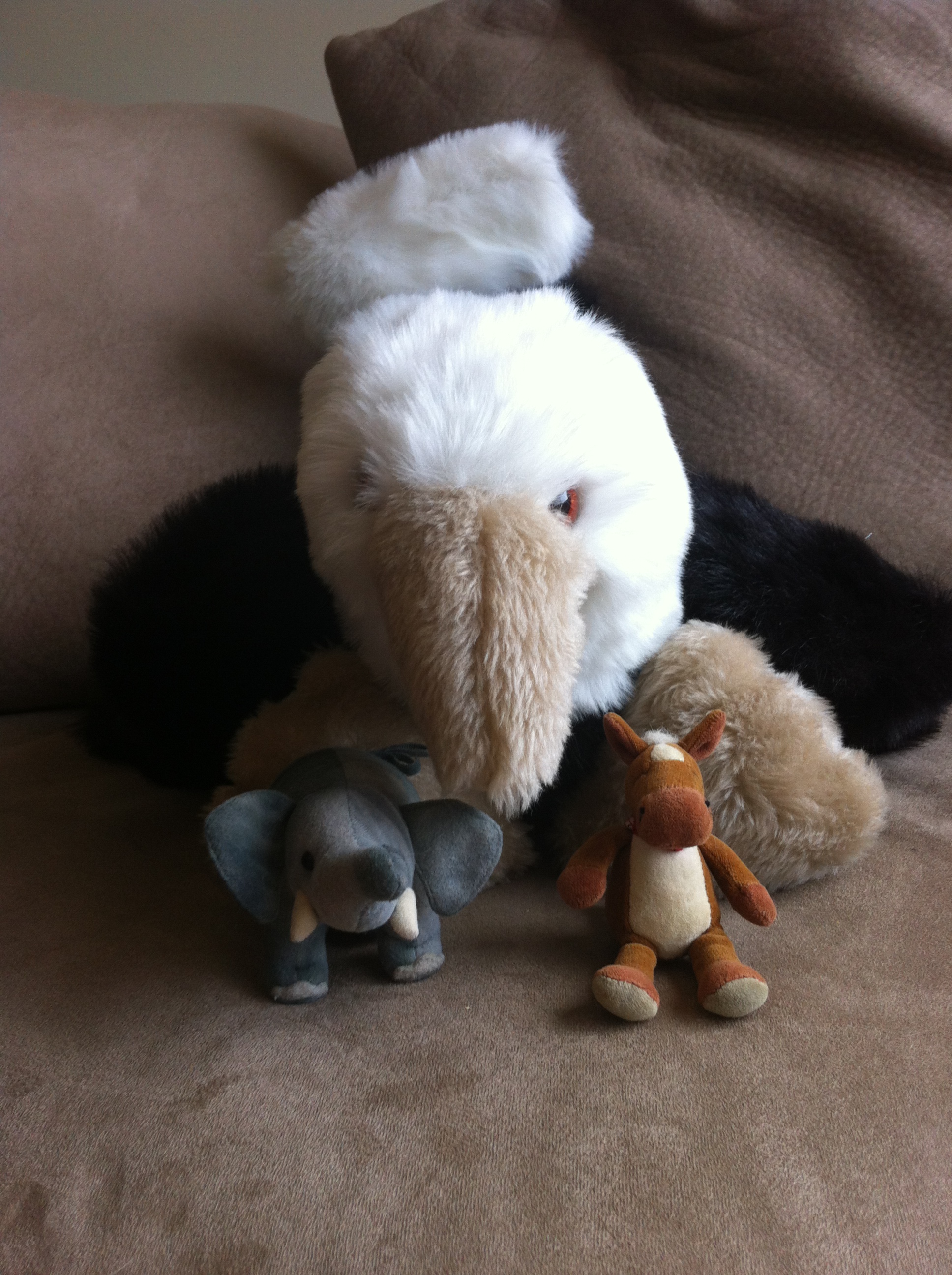
MEET THE BALD EAGLE!
   Range/Habitat: North America/ woodlands, near marshes or bodies of water

   Diet: Carnivore: fish, small birds, carrion

   Length/Weight: 28-38”/ 6 ½- 14 lbs

   Conservation Status: least concern


Fun Facts:

  • Bald Eagles have been the National Bird since 1782.
  • They have a wingspan of up to 8 ¼ feet.
  • Bald Eagles mate for life. They reinforce their pair bonds with spectacular flights that they do together.
  • Pairs build their large nests and raise their chicks together.
  • They are the only eagle native to North America.
  • Bald Eagles have excellent eyesight.
  • They can live for up to 28 years!
  • Bald eagles don’t develop their white feathers until around the age of 5!

We just love Bald Eagles and think they make a fine national bird! They are so regal. Unfortunately we almost lost these birds to pollution and habitat loss and they were near extinction in the mid 1900s. After much human effort to save them they are now living in almost every state! YAY!!!


Categories: american, Animals, birds, Children, education, Environment, nature, science, wildlife | Tags: , , , , , , , , | 2 Comments

AMERICAN ANIMALS DAY # 4

AMERICAN ANIMALS WEEK DAY # 4

We hope everyone had a lovely holiday yesterday and for those of you in other countries, we hope you had a nice WednesdayJ! We’re taking the RV to the California coast to meet a vocal and social mammal today! Grab your wetsuits because the water is cold!

MEET THE CALIFORNIA SEA LION!

   Range/Habitat: Western US-Galapagos islands/ oceans-coastlines

   Diet: Carnivore: fish, squid

   Length/Weight: up to 7 ¾ ft/ 610-860 lbs

   Conservation Status: common


Fun Facts:

  • California Sea lions are large and have a thick layer of blubber.
  • They live in large groups with a dominate male and numerous females.
  • California sea lions are very social and very vocal.
  • They are faster than any other member of the seal or sea lion family and can swim up to 25 mph.
  • California sea lions can rotate their rear flippers.
  • California sea lions can stay under water for up to 10 minutes.
  • Male California sea lions are larger and dark brown, whereas the females and juveniles are tan.
  • They can live up to 30 years.

We just love California Sea lions! They are so full of personality and smarts! We even met a one who knew to stick out his tongue! Do you love sea lions too? Here’s a great video of some divers swimming with them!


Categories: american, Animals, Children, education, Environment, mammals, nature, oceans, science, wildlife | Tags: , , , , , , , , , | 2 Comments

Happy 4th of July!!

HAPPY 4th of JULY!!

We hope everyone has a fantastic & safe holiday and to our international friends Happy Wednesday! We hope you have enjoyed meeting a few native animals so far! We’ll be back on the road tomorrow! Until then enjoy these photos of us with a bald eagle & an American alligator :)!

20120703-171925.jpg

20120703-172008.jpg

20120703-172043.jpg

Categories: american, Animals, Children, education, Environment, nature, science, wildlife | Tags: , , , , , , , | 1 Comment

AMERICAN ANIMALS DAY #2

AMERICAN ANIMALS WEEK DAY #2

It’s day two of American Animals week and we drove the RV down to the Southwestern United States to find a really cool reptile! Grab your sunscreen or mud and your sunglasses, because it’s going to be a hot one!

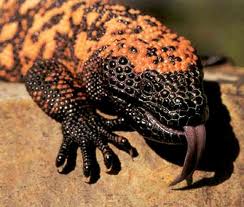
MEET THE GILA MONSTER!

   Range/Habitat: Southwestern US-desert, scrub, rocky outcrops

   Diet: Carnivore: eggs and small animals

   Length: 14-20 “

   Conservation Status: threatened


Fun Facts:

  • Gila Monsters are one of two venomous lizards in the whole world (the other is the Guatemalan Beaded Lizard.)
  • They brightly colored to ward of predators.
  • Gila Monsters have a forked tongue like a snake and it helps them “smell” for prey.
  • They inject venom into their prey when they bite. They have special glands in their lower jaw that stores the venom.
  • Gila monsters’ tails store fat so they can survive when food is scarce or when they hibernate in the winter.
  • Gila monsters have bumpy heads. Those bumps are part of their skull.
  • They are not harmful to humans, despite their bad reputation! So Gila Monsters aren’t so monstrous after all!

We think Gila monsters are super cool! These amazing reptiles are protected here! That is good news, because it sure would be a shame if we didn’t have this neat lizard to see!


Categories: american, Animals, Children, education, Environment, lizards, nature, reptiles, science, wildlife | Tags: , , , , , , , , | 2 Comments

AMERICAN ANIMALS WEEK!

AMERICAN ANIMALS WEEK

We’re celebrating all American animals this week in honor of July 4th! So we’ve packed up our RV and we’ll be driving all around our country looking for animals that are native to our home! We have room for everyone, so join us! Our first stop on this tour in the western plains to meet a very large mammal!

MEET THE AMERICAN BISON!

   Range/Habitat: Western-Northern United States/plains, mountains,

woodlands

   Diet: Herbivore: grasses, buds, shoots

   Length/Weight: 7-11ft/ 770-2000 lbs

   Conservation Status: common


Fun Facts:

  • American Bison are also known as the American Buffalo.
  • They are tall and can reach up to 6 ½ ft high at the shoulder.
  • American bison are very fast and can run up to 37 mph.
  • They have small short horns on their heads.
  • American bison have excellent hearing and sight.
  • American bison migrate to find food.
  • Female American bison live with maternal family groups with a dominate female in charge.
  • Male American bison live in bachelor groups.

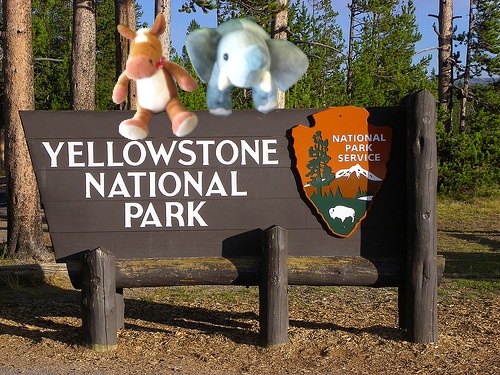
These majestic bison almost went extinct in this country. Efforts were made to save them and they now roam the American West, but there are only two truly wild herds left in Yellowstone National Park and Wood Buffalo Park in Canada. We are so glad that they’re still around! Buffalo are just too cute to miss :)!

Categories: american, Animals, Children, education, Environment, mammals, science, wildlife | Tags: , , , , , , , , | Leave a comment

FEATHERY FRIDAY # 39

FEATHERY FRIDAY# 39

We’re off to Africa today to find a colorful and most famous bird! We all know these pinkies! Have you guessed it by now? That’s right; it’s time to meet a flamingo! Grab your wellies again, we’re going wading!

MEET THE LESSER FLAMINGO!

   Range/Habitat: West-Central-Southern Africa/ wetlands, lakes

   Diet: Herbivore: blue-green algae

   Length/Weight: up to 3 ¼ ft/ up to 4 ½ lbs

   Conservation Status: Near threatened


Fun Facts:

  • Lesser flamingos are the smallest of all flamingos.
  • They are light to dark pink in coloration.
  • Lesser flamingos have long dark beaks.
  • They feed at dusk and dark.
  • Lesser flamingos live in large colonies. There have been flocks of up to 1 million birds.
  • You can see hundreds are of flamingos move together in elaborate courtship rituals.
  • Lesser flamingos build mud mounds to lay their one egg on.
  • They can live up to 50 years.

We just love flamingos! They’re long legs and bright pink feathers make them one of the most iconic birds on the planet! And yes they do sleep on one leg; it helps them conserve body heat! Hhhmm… we might practice being flamingos, but that is hard with four legs!


Categories: Animals, birds, Children, education, Environment, nature, science, wildlife | Tags: , , , , , , , | Leave a comment

SUPER SURPRISE THURSDAY # 39

SUPER SURPRISE THURSDAY# 39

We’re staying in the ocean today, but we’re not staying in the coral reef. Instead we’re heading off to the Georgia coast to meet a small and strange member of the shark family! We’re in the submarine today and we have room for others, so hop in and let’s go find…

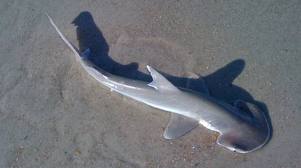
MEET THE BONNETHEAD SHARK!

   Range/Habitat: Eastern Atlantic-Western Pacific/ temperate-

tropical waters near reefs & estuaries

   Diet: Carnivore: fish, crustaceans, shrimp

   Length: 3-5 ft

   Conservation Status: Common


Fun Facts:

  • Bonnetheads are the smallest member of the hammerhead shark family.
  • They often swim in small schools.
  • Bonnetheads have broad heads that are shovel shaped.
  • They have sharp teeth in the front of their mouths and broad molars in the back.
  • Bonnetheads must swim constantly to breathe.
  • Bonnetheads are migratory.
  • The purpose of the bonnet shaped head is still debated.  It does seem to help them swim and hold prey down in the sand.
  • They can live up to 12 years.


These neat looking little sharks are great! Sharks come in so many shapes and sizes. They are fascinating creatures! Can you imagine having to continually move your entire life just to stay alive? Whew, just the thought of it makes us tired!


Categories: Animals, Children, education, Environment, fish, nature, oceans, science, sharks, wildlife | Tags: , , , , , , , , | Leave a comment

WATERY WEDNESDAY # 39

WATERY WEDNESDAY# 39

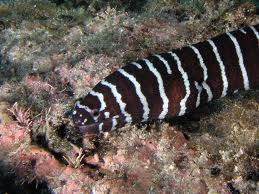
We’re going diving in the coral reefs of the Indo-Pacific Oceans today! We’re looking for a shy, unusual and beautiful fish! Make sure your diving goggles are extra clean and you have a flashlight, because these fish like to hide out! Let’s do this!

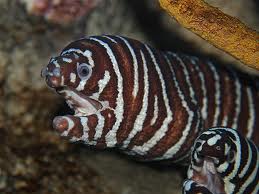
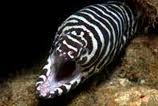
MEET THE ZEBRA MORAY!

   Range/Habitat: Pacific- Indian Oceans & Gulf of California/ coral reefs

   Diet: Carnivore: crabs, crustaceans

   Length/Weight: up to 35”/ 22lbs

   Conservation Status: Common


Fun Facts:

  • Zebra Morays are eels.
  • They have no scales or fins.
  • Zebra morays have black and white, long muscular bodies.
  • Zebra morays ooze a slime that protects their skin since they don’t have any scales.
  • They lurk in cliffs, rocks and coral; often with only their head sticking out.
  • Zebra morays are ambush predators.
  • They have blunt teeth for crushing prey!
  • Zebra morays are very territorial.

These amazing eels sure are pretty! We’re not sure we’d want to touch one though, eeeww slimy! Would you be scared if you saw one of these lurking in your neighborhood reef? We sure wouldn’t!


Categories: Animals, Children, education, Environment, fish, nature, oceans, science, wildlife | Tags: , , , , , , , , | 1 Comment

REPTILIAN TUESDAY # 39

REPTILIAN TUESDAY # 39

We’re going to the rainforests of Southeast Asia to meet a brightly colored snake! We’re going to watch this guy from a distance though just to be safe! Let’s do this!

MEET THE BLUE CORAL SNAKE

    Range/Habitat: Southeast Asia/ rainforests

    Diet: Carnivore: snakes, lizards, frogs

    Length: 4- 4 ½ ft

    Conservation Status: common


Fun Facts:

  • Blue Coral snakes are also known as Blue Malaysian Coral Snakes.
  • They have bright blue bodies with orange undersides, head and tails.
  • Blue coral snakes are highly venomous.
  • They flip upside down and show their bright orange coloration as a warning to predators.
  • Blue coral snakes are nocturnal.

We’re definitely going to observe these snakes from a distance. It’s best to pay attention to their warning coloration too!


Categories: Animals, Children, education, Environment, nature, rainforests, reptiles, science, wildlife | Tags: , , , , , , , | 2 Comments

MAMMAL MONDAY # 39

MAMMAL MONDAY # 39

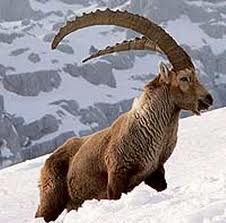
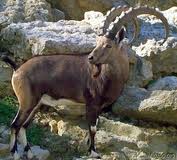
Grab your down coats and mountain climbing gear because we’re going a hike in the Alpine Mountains to meet a member of the goat family! So let’s go on another fabulous adventure!

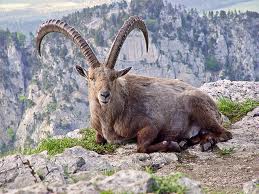
MEET THE ALPINE IBEX!

   Range/Habitat: Europe-Alps/ mountains

   Diet: Herbivore: grasses, buds, shoots

   Length/Weight: 4- 5 ½ ft/ 77-130 lbs

   Conservation Status:


Fun Facts:

  • Alpine Ibex live in high attitude habitats, up to 20,000 ft.
  • They are members of the goat family.
  • They have wooly beards.
  • Alpine Ibex have large horns on their heads. Males can have horns up to 4 ½ ft and females have smaller ones.
  • Female Alpine females have tan coats and males have rich brown coats with patches.
  • Female Alpine females live in herds. The females and offspring live in groups, while the males live in male only herds.
  • Alpine ibex males compete for females with head tosses and fights.

These amazing goats live in such a spectacular habitat! Can you imagine what it’s like to walk around with those big horns on your head? Now, who’s ready for some apple cider to warm up?


Categories: Animals, Children, education, Environment, mammals, nature, science, wildlife | Tags: , , , , , , , | 2 Comments

Blog at WordPress.com.