Posts Tagged With: environment

WATERY WEDNESDAY # 27

WATERY WEDNESDAY# 27

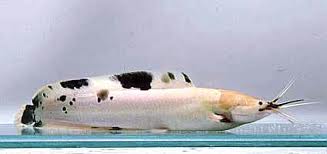
Who’s excited for Watery Wednesday? We sure are! We’re heading to the rivers and wetlands of Southeast Asia to meet a catfish who can “walk” on land! What? You read that right, these fish can come out on land! Are you excited now? Let’s go meet this fascinating fish!

MEET THE WALKING CATFISH!

   Range/Habitat: Southeast Asia/ wetlands, swamps, ponds

   Diet: Omnivore: fish, mollusks, invertebrates, weeds

   Length: up to 16”

   Conservation Status: Common


Fun Facts:

  • Walking Catfish have barbells on their faces.
  • They have long bodies.
  • Walking Catfish have the ability to crawl on the land.
  • They have specialized gills that help them breath out of water.
  • Walking catfish are nocturnal (active at night).
  • They are a tropical species.


Wow! How cool is that there are fish in the world that can use their fins to crawl across land! They do it to find a better habitat! We just love these super cool fish!


Categories: Animals, Children, education, Environment, fish, nature, science, wildlife | Tags: , , , , , , , | 4 Comments

REPTILIAN TUESDAY # 27

REPTILIAN TUESDAY # 27

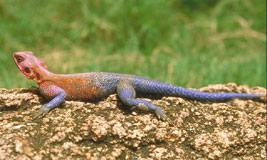
Yay it’s Reptilian Tuesday and we’re packing our bags and heading to Africa to meet a lizard who is brightly colored! Who’s hoping on board with us? Grab your passports and let’s go looking for lizards!

MEET THE RAINBOW LIZARD!

   Range/Habitat: Western to Eastern Central Africa/ grasslands, desert

   Diet: Omnivore: mainly insects with occasional vegetation

   Length: 12-16”

   Conservation Status: common


Fun Facts:

  • Male Rainbow Lizards turn bright orange and blue when they bask in the sun.
  • Female Rainbow Lizards are grey all the time.
  • Rainbow lizards have sticky tongues to help them grasp insects.
  • They live in small social groups with a dominant male and females and less dominate males.
  • Dominate males sit on the highest point to bask and the other lizards of the group bask at lower points.
  • Male Rainbow Lizards bob their heads to attract females.
  • Female Rainbow Lizards lay around 25-30 eggs in a clutch.

Aren’t these lizards gorgeous with their bright colors? It sure is cool that they live in small social groups too. We do wonder how sticky their tongues are; who wants to test it out?

Categories: Animals, Children, education, Environment, nature, reptiles, science, wildlife | Tags: , , , , , , , | 2 Comments

MAMMAL MONDAY # 27

MAMMAL MONDAY # 27

We’re back to our regularly scheduled program this morning and it’s time to meet a flying mammal from the deserts of Northern Africa! That’s right folks, we’re talking bats today and have we found a tough little one for you today! Grab your night vision goggles and let’s head out to the desert on the Mammal Monday!

MEET THE DESERT LONG EARED BAT!

   Range/Habitat: North Africa-Western Asia/deserts

   Diet: Carnivore: insects, scorpions

   Length/Weight: 2 ½-2 ¾”/ 1 oz

   Conservation Status: least concern


Fun Facts:

  • Desert Long Eared Bats are one of the few desert dwelling bat species on earth.
  • Desert long eared bats roost in groups in caves and buildings.
  • Their ears are around 1 ½” long and sit horizontally on their foreheads.
  • They are known to go into a hibernation like state during very dry periods or droughts.
  • Desert long eared bats often hunt in pairs.
  • Their main prey item are scorpions! They even eat very toxic scorpions, including their poison glands.
  • When Desert long eared bats attack a scorpion they often get stung on the face without harm, because they are immune to the venom.


WOW! Can you imagine eating a scorpion? We would definitely like to avoid having them on our menus, but these awesome bats don’t only eat them but they are immune to their venom! Animal’s adaptations just never cease to amaze us!


Categories: Animals, bats, Children, education, Environment, mammals, nature, science, wildlife | Tags: , , , , , , , , | 6 Comments

BACKYARD ANIMAL WEEK # 5

BACKYARD ANIMAL WEEK!

(FEATHERY FRIDAY)


Quack! Quack! It’s the last day of our Backyard Animal week! We sure hope you have enjoyed it! We went to our local pond to find the Feathery Friday friend. This bird is found all around the Northern hemisphere, so there’s a good chance you could have them in your backyard!

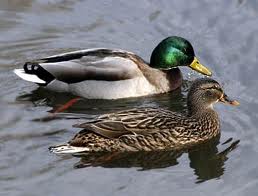
MEET THE MALLARD!

   Range/Habitat: North America-Europe-Asia/ wetlands-ponds-lakes

   Diet: Omnivores: plants, invertebrates

   Length/Weight: 20-26”/ 2 ¼-3 ¼ lb

   Conservation Status: common


Fun Facts:

  • Mallards are most abundant ducks on earth.
  • They are the ancestor of nearly all domestic ducks.
  • Mallards are very adaptable to many different habitats.
  • Male mallards have green heads with a white neck ring and a yellow bill.
  • Female mallards are molted brown in color with a bright blue patch on their wings.
  • Mallards often eat by upending (dip heads into the water and their tails stick straight up in the air).
  • Female mallards take care of the eggs and chicks.


We just love going to our local duck pond and watch the Mallards. Their funny waddling on land and quacking makes us laugh and laugh! Do you have any Mallards in your area?


Categories: Animals, backyard, birds, Children, education, Environment, nature, science, wildlife | Tags: , , , , , , , | 5 Comments

BACKYARD ANIMAL WEEK # 4

BACKYARD ANIMAL WEEK!

(SUPER SURPRISE THURSDAY)


Who’s up for some backyard bird watching? Sometimes birds are the most abundant animal in your backyard. If you’re like us though, we don’t know all of our bird friends! Today’s Super Surprise bird is one everyone should know pretty well! Do you have your binoculars? It may not be hard to spot…

MEET THE BLUE JAY!

   Range/Habitat: Central-Eastern North America/ woodlands, parks, suburban

   Diet: Omnivores: acorns, seeds, spiders

   Length: 12”

   Conservation Status: common


Fun Facts:


  • Blue jays are related to crows.
  • They are highly intelligent and social birds.
  • Blue jays can mimic speech and other birds; often you can hear them mimic hawks.
  • They are highly territorial.
  • Blue jays have bright blue plumage. They do not have pigment (cells that give fur, feathers and skin color). The color in their feathers comes from structure of the feather and how the light hits it.
  • Blue jays are considered songbirds.
  • Blue jays can be found in pairs or small family groups. They can form pairs for life.
  • They have different calls, including an alarm call to warn for predators.
  • Blue jays use mud to build their nests.

Blue jays are beautiful birds! We love to see them in our backyard. They are very smart. How cool is that they can mimic other birds and human speech? What are some of your favorite backyard birds?


Categories: Animals, backyard, birds, Children, education, Environment, nature, reptiles, science, wildlife | Tags: , , , , , , , | 2 Comments

BACKYARD ANIMAL WEEK # 3

BACKYARD ANIMAL WEEK!

(WATERY WEDNESDAY)


We’re heading to a local creek to see if we can find today’s Backyard Animal! These animals can be very loud! There’s nothing better than hearing the males call on a nice summer evening! Grab a flashlight, because this amphibian is out at night!

MEET THE NORTH AMERICAN BULLFROG!

    Range/Habitat: Western-Central & Eastern United States/ wetlands, rivers,

lakes

     Diet: Carnivore: reptiles, mammals, other frogs

     Length: 3 ½-8”

     Conservation Status: common


Fun Facts:

  • North American Bullfrogs are the largest frog in North America.
  • They spend most of their life in water.
  • North American bullfrogs have eyes and nostrils on top of their heads. This helps the frog stay underwater but still be able to see and breathe.
  • They have large ear drums.
  • Female North American bullfrogs can lay several thousand eggs at a time.
  • It can take a North American bullfrog tadpole up to 4 years to become to an adult.
  • They are nocturnal (active at night).
  • They are ambush predators.
  • North American bullfrog males are very territorial.
  • Only males call!

How awesome are the large frogs? It sure is fun to go looking for them at night! Do you have bullfrogs where you live? What animal do you like to hear on a warm summer night?


Categories: amphibians, backyard, Children, education, Environment, nature, reptiles, science, wildlife | Tags: , , , , , , , , | Leave a comment

BACKYARD ANIMAL WEEK #2

BACKYARD ANIMAL WEEK!

(REPTILIAN TUESDAY)

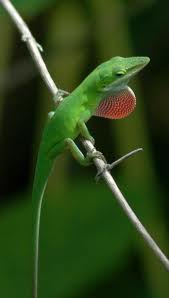
 We’re on day two of Backyard Animal Week and it’s Reptilian to say the least! This little lizard if found in backyards all around the Southeastern United States! They are small and green and we see them all the time! Who’s ready to meet this little lizard?

MEET THE GREEN ANOLE!

    Range/Habitat: Southeastern United States/ woodlands, suburbs

    Diet: Carnivore: insects

    Length: 4 ¾-8”

    Conservation Status: common


Fun Facts:

  • Green Anoles are also known as the Carolina anole.
  • They have slender bodies with long tails.
  • Like other lizards Green anoles can detach their tails when grabbed by predators.
  • Green anoles can also turn brown when stressed. This adaptation often leads people to think they are chameleons, but they are not.
  • They have pink or red throat fans (also known as dewlaps). The males use them to attract females.
  • Male green anoles are very territorial.
  • Green anoles are arboreal (spend most of their time in trees).


We just love Green anoles. It is so fun to go to a park or yard and look for them. They are very fast! We think their dewlaps are super cool! Do you have any lizards in your backyard? If so, what kind?


Categories: Animals, backyard, Children, education, Environment, nature, reptiles, science, wildlife | Tags: , , , , , , , | 7 Comments

BACKYARD ANIMAL WEEK!

BACKYARD ANIMAL WEEK!

(MAMMAL MONDAY)


It’s March Theme Week! Who’s excited? We sure are, because we are focusing on animals in your backyard! Do you ever just go out in your own backyard or to a local park and notice that there is actually quite a bit of wildlife? There are all kinds of fabulous creatures to see big and small. We often think of animals as being something you see on TV in Africa or South America, but nature is usually right outside our front door! So let’s spend the week exploring the natural world right outside in our own backyards! We’ll be focusing on animals in our backyard this week, but we would love for you to share animals in your backyard too! First up a marsupial that lives in North America!

MEET THE VIRGINIA OPOSSUM!

   Range/Habitat: North America-Central America/ woodlands, urban,

grasslands

   Diet: Omnivore: grub, eggs, fruit, carrion

   Length/Weight: 13-20”/ 4 ½-12 lbs

   Conservation Status: common

Fun Facts:

  • Virginia Opossums are the only marsupial in North America. (Marsupials are mammals that give birth to very small young. The young then develop and grow in their mother’s pouch.)
  • They are nocturnal (active at night).
  • Virginia Opossums have hairless, prehensile tails. They can hang from their tails, but for only short periods of time.
  • Virginia Opossums have opposable thumbs on their back paws.
  • They have 50 teeth, the most of any North American mammal!
  • Virginia Opossums can carry up to 13 babies in their pouches. They young leave the pouch after 70 days.
  • Their most famous trait is their ability to “play dead” when they are threatened. They lay in a coma like state and can stay that way for up to 6 hours.

Opossums get a bad rap and we admit they aren’t the cutest thing in our back yards, but they are an essential part of the urban ecosystem! Plus, they are our only marsupial and we think that’s pretty cool!

Categories: Animals, Children, education, Environment, mammals, marsupial, nature, reptiles, science, wildlife | Tags: , , , , , , , | 1 Comment

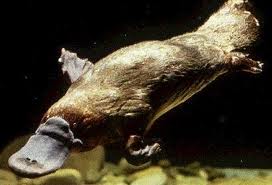
HAPPY PLATYPUS DAY!

HAPPY PLATYPUS DAY!

Happy Mammal Monday! We have traveled to the land down under-Australia to find today’s animal! Australia is a large continent with wild and strange animals that are found no other place on earth and today’s mammal is no exception! In fact this mammal is a rare exception to the rule, instead of giving birth to live young it lays eggs! WHAAAAT? You heard right, this mammal lays eggs! Let’s meet… (This was Mammal Monday #15)

MEET THE PLATYPUS!

   Range/Habitat: Eastern Australia-Tasmania/rivers-streams-rainforest

   Diet: Carnivore: worms, shrimp, crayfish

   Length/Weight: 16-23 ½”/ 1 ¾-5 ½ lbs

   Conservation Status: common


Fun Facts:

  • Platypus are strange looking mammals, with long slender bodies, webbed feet and a duck-like bill for a mouth.
  • They have long tails that look like beaver tails.
  • Platypus are built for water. They are excellent swimmers and can dive to deep depths looking for prey.
  • They eat about 20% of their body weight a day (about 2lbs), so they can spend up to 12 hours a day feeding.
  • Platypus have no teeth!
  • Male platypus have venomous spurs in the back feet. The venom is not fatal to humans, but can be very painful.
  • Platypus can detect the electrical fields of other animals. They use this extra sense to find their prey!
  • They are one of two mammals on earth that lay eggs. Do you know the other one?
  • Platypus moms to provide milk to their offspring.

Platypus are one of our favorites, with their crazy looking bill mouths and their webbed feet! They are much loved in Australia too! You can find a platypus on the back of their 20 cent coins! Neat! Edmond wants to be on a coin! Ellie told him he’d have to learn to lay eggs first!

Categories: Animals, Children, education, Environment, mammals, nature, science, wildlife | Tags: , , , , , , , | 2 Comments

FEATHERY FRIDAY # 26

FEATHERY FRIDAY# 26

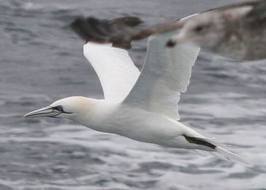
We’re so so excited for today’s Feathery Friday! We have a special water bird for you today! We’re heading to the North Atlantic Ocean to find this bird. Whose up for a little bird watching cruise? We are!

MEET THE NORTHERN GANNET!

   Range/Habitat: Northern Atlantic-Mediterranean/oceans-cliffs-shoreline

   Diet: Carnivore: fish

   Length/Weight: 32-35”/1-6 ½ lbs

   Conservation Status: Common


Fun Facts:

  • Northern Gannets have beautiful white feathers with black wingtips.
  • They have large pointed beaks that help them grab fish from the ocean.
  • Northern Gannets can dive into the water at speeds of up to 60mph.
  • They have webbed feet.
  • Northern gannets winter at sea.
  • They live in large colonies on high cliffs where they breed and build nests.
  • Northern Gannets pair bond for several breeding seasons.
  • Males and female Northern gannets take care of the chicks.
  • It takes several years for juvenile birds to turn the bright white.

How great are the Northern Gannets? They are so beautiful and man check out those diving skills! We just love sea birds!


Categories: Animals, birds, Children, education, Environment, nature, science, wildlife | Tags: , , , , , , , | Leave a comment

Blog at WordPress.com.