Posts Tagged With: oceans

FEATHERY FRIDAY # 65

FEATHERY FRIDAY #65

We’re going to Southwest Asia today to meet one nifty bird with one big beak! Grab your backpack and sunscreen and let’s head out on today’s adventure!
e e coast


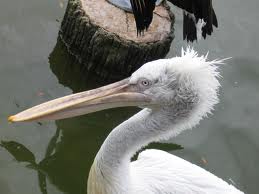
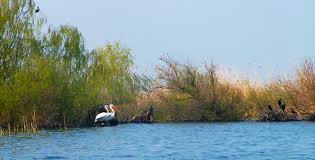
MEET THE DALMATIAN PELICAN!

dalmation pelican   Range/Habitat: Southeast Europe-South Asia/ coasts, wetlands, oceans

   Diet: Carnivore: fish

   Length/Weight: 5 ¼- 6ft/ 22 -29 lb

  Conservation Status: common


Fun Facts:

  • Dalmatian Pelicans are the largest pelican in Europe.
  • They have large broad wings.
  • Dalmatian pelicans eat about 2 ½ lbs of fish a day.
  • Dalmatian pelicans have large orange-red pouches.
  • They are known to hunt in groups. They force schools of fish into shallow waters so they are easier to catch.

Pelicans are one of our favorite birds! Those giant pouches are not only functional but make them look quite comical! They just make us smile! How about you?

dalmation pelican2   dalmation pelican3

Categories: adventure, Animals, birds, Children, conservation, education, Environment, nature, oceans, science, wildlife | Tags: , , , , , , , , , , | 1 Comment

WATERY WEDNESDAY # 65

WATERY WEDNESDAY # 65

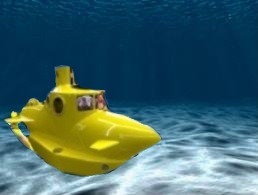
 We’re taking the E & E sub to the waters off of Europe to meet a small shark! We love those cartilaginous fish and they come in all shapes and sizes! Hop aboard and let’s go on today’s adventure!

e e deep sea

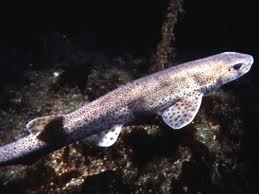
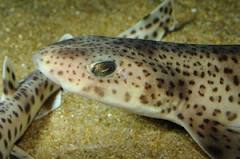
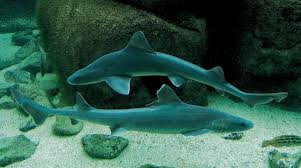
MEET THE SMALL SPOTTED CATSHARK!

small spotted catshark   Range/Habitat: Eastern North Atlantic- Mediterranean/ ocean

   Diet: Carnivore: fish, mollusks

   Length/Weight: up to 3 ¼ ft/ 6 ½ lbs

   Conservation Status: common


Fun Facts:

  • Small Spotted Catsharks are also known as the Lesser Spotted Catshark.
  • Small spotted catsharks are the most common shark in Europe.
  • They have smooth skin.
  • They have spots to help them camouflage in with the ocean floor.
  • Female small spotted catsharks lay eggs called mermaids purses.


These little sharks are great! We love that shark eggs are called mermaid purses! Hehe- can you imagine a mermaid with a purse!? We giggle every time we think of it!

small spotted catshark2   small spotted catshark3

Categories: adventure, Animals, Children, conservation, education, Environment, fish, nature, oceans, science, sharks, wildlife | Tags: , , , , , , , , , , | 1 Comment

REPTILIAN TUESDAY # 65

REPTILIAN TUESDAY # 65

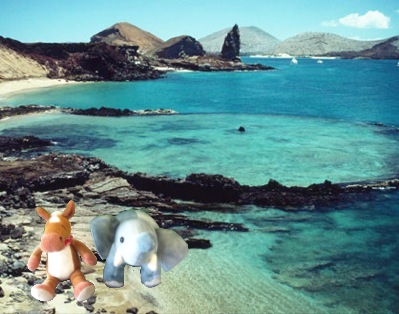
We’re off to some of the most famous islands on planet earth; where Charles Darwin himself discovered and honed his theory of evolution! Today’s reptile isn’t what most would call pretty, but man are they cool! So let’s head out to meet…

e e galapagos

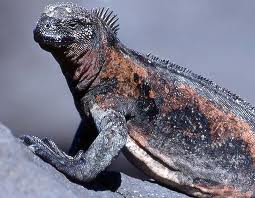
MEET THE MARINE IGUANA!

marine iguana   Range/Habitat: Galapagos Islands, coast-oceans

   Diet: herbivore: algae, seaweed

   Length/Weight: 4-5 ft/ 1-3.3 lbs

   Conservation Status: vulnerable


Fun Facts:

  • Marine Iguanas colors vary by the island they live on.
  • They have large flat tails to help them swim along the rocky coasts.
  • Marine Iguanas have razor sharp teeth to eat seaweed and algae.
  • Marine iguanas sneeze to get rid of excess salt.
  • They sun themselves on lava rocks after being the cold ocean waters.

Marine Iguanas may be one of our most favorite animal of all times! They are so prehistoric looking and wonderful! Plus what could be cooler than having the ability to sneeze salt?

 marine iguana2


Categories: adventure, Animals, Children, conservation, education, Environment, nature, oceans, reptiles, science, wildlife | Tags: , , , , , , , , , , | 1 Comment

WATERY WEDNESDAY # 64

WATERY WENESDAY # 64

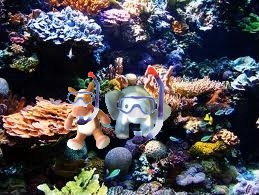
 We’re taking the E & E sub out to the coral reefs of Indonesia today! Anyone notice a theme this week? Apparently our travel budget is getting smaller and we have to stay in one area! J We’re on the lookout for a small, funny looking fish on this adventure so keep your eyes peeled!

e & e snorkeling

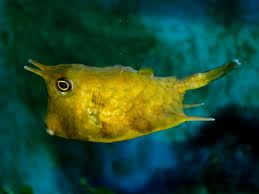
MEET THE BOXFISH!

boxfish   Range/Habitat: Pacific-Indian Oceans/ coral reefs

   Diet: Carnivore: invertebrates

   Length/Weight: up to 18”

   Conservation Status: common


Fun Facts:

  • Boxfish have rigid outer skeletons.
  • Boxfish are squared in shape.
  • They are also called the long-horned cowfish.
  • They have two hornlike projections on top of their head.
  • Boxfish swim very awkwardly because of small fins.
  • Boxfish have large eyes on top of their eyes.


Ooooooo… Boxfish sure are funny looking. We wish they had only one horn so we could rename them the unicorn fish. Hahahahaha!

boxfish2


Categories: adventure, Animals, Children, conservation, education, Environment, fish, nature, oceans, science, wildlife | Tags: , , , , , , , , , , | 2 Comments

BEAR WEEK- GUESS THE BEAR!

BEAR WEEK- GUESS THE BEAR!

Look at the picture, read the clues and then tell us what bear your think it is in the comments!

panda

  • I live in China.
  • I only eat bamboo.
  • I am the size of a stick of butter when I am born.

Who Am I?

Categories: adventure, Animals, bears, Children, conservation, education, Environment, mammals, nature, science, wildlife | Tags: , , , , , , , , , , , | 6 Comments

WATERY WEDNESDAY # 63

WATERY WENESDAY # 63

 We’re taking the E & E sub out to meet a large round fish! As always our little sub has plenty of room for everyone so let’s head out on today’s adventure!

e e deep sea

MEET THE OPAH!

opah   Range/Habitat: Tropical-temperate oceans worldwide

   Diet: Carnivore: small fish, squid

   Length/Weight: up to 6 ft/ up to 110 lbs

   Conservation Status: common


Fun Facts:

  • Opahs are also known as moonfish.
  • Opahs have bright red fins.
  • They have oval shaped bodies.
  • Opahs do not use their tail fins to swim, but instead use their pectoral (top) fin.
  • They are toothless.

Opahs are really neat looking fish and wow, are they big! It is so cool that they use that top fin to swim too!

opah2

Categories: adventure, Animals, Children, conservation, education, Environment, fish, oceans, science, wildlife | Tags: , , , , , , , , , , | 2 Comments

WATERY WEDNESDAY # 62

WATERY WENESDAY # 62

We’re taking the E & E sub out today to meet a member of the shark family! We have plenty of room for everyone, so come join us on today’s adventure to meet…

e e deep sea

MEET THE SMOOTH HOUND SHARK!

smooth hound shark   Range/Habitat: Atlantic Ocean, Mediterranean

   Diet: Carnivore: mollusks, crabs, lobsters

   Length/Weight: up to 5 1/4 ft/ 29 lbs

   Conservation Status: common


Fun Facts:

  • Smooth Hound Sharks have short snouts.
  • Smooth hound sharks have smooth skin.
  • They are often seen in schools.
  • Smooth hound sharks are nocturnal.
  • They have flat teeth for crushing their prey.

These small sharks are really cool and their mouths are on the bottom! Did you know that when a shark or ray’s mouth is on the underside it indicates that their prey lives on the bottom of the ocean floor? Pretty cool!

smooth hound shark2   smooth hound shark3


Categories: adventure, Animals, Children, conservation, entertainment, Environment, nature, science, sharks, wildlife | Tags: , , , , , , , , , , | 2 Comments

SUPER SURPRISE THURSDAY # 61

SUPER SURPRISE THURSDAY # 61

Read the clues, Guess the Animal and Share your Answer!

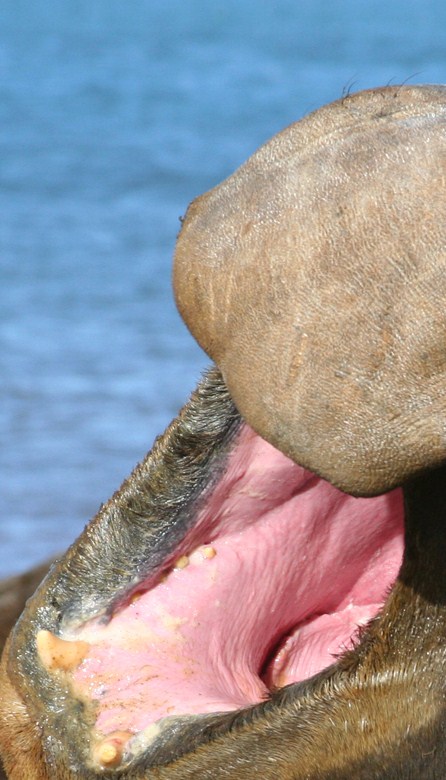
Drohender Seeelefant - 
A lurking elephant seal

  • I live near Antartica.
  • I live in a colony.
  • I have a large nose and it gives me my name!

Who Am I?

Categories: adventure, Animals, Children, conservation, education, Environment, mammals, nature, oceans, wildlife | Tags: , , , , , , , , , | 4 Comments

INTERNATIONAL POLAR BEAR DAY!

INTERNATIONAL POLAR BEAR DAY!

e e arctic

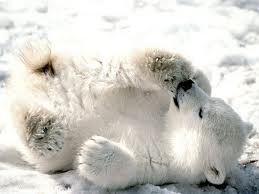
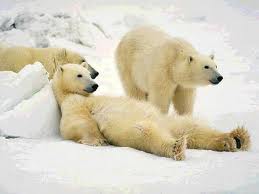
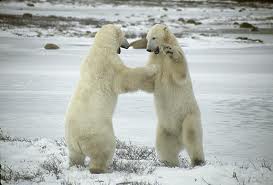
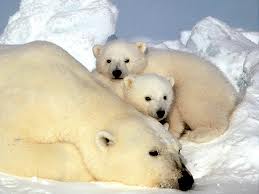
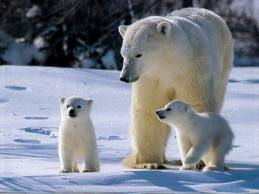
We’re celebrating one of favorite marine mammals on this very special day! These majestic bears call the icy arctic their home. We’re going to share some photos and fun facts about polar bears, as well as some great resources to help these bears as their snowy home disappears. 

polar bearpolar bear2

  • Polar Bears are excellent swimmers, they have been miles off shore.
  • They have a thick layer of fur, including on the bottoms of their paws.
  • Polar bears are carnivores.
  • Polar bears have black skin that helps them soaks up the warmth of the sun.
  • Polar bear mothers build a den to have their cubs.
  • Polar bear cubs stay with their mothers for up to two years.
  • Polar bears have no natural predators.
  • Polar bears are the largest land predator on earth.
  • Adult male polar bears can weigh up to 1,200 pounds.
  • Polar bears are protected in Norway, Canada, Russia, Denmark and the U.S.

polar bear3  polar bear4


Polar bears are endangered, mainly from habitat loss, as the arctic ice is melting. We can help these fabulous bears! You can adopt a bear (they won’t live at your house), you can donate to organizations that work with polar bears or you can learn what you can do at home to help. Check out Polar Bears International and One World One Ocean.

We love polar bears and we’ll definitely be working to make sure they are around for long time to come!

HAPPY INTERNATIONAL POLAR BEAR DAY!

polar bear8


Categories: adventure, Animals, Children, conservation, education, Environment, mammals, nature, oceans, science, wildlife | Tags: , , , , , , , , , , | 2 Comments

SUPER SURPRISE THURSDAY # 60

SUPER SURPRISE THURSDAY # 60

Are you ready to guess the animal?

brown pelican2

  • I have a pouch for a bill.
  • I live in the Western Hemisphere from Canada to South America.
  • I catch fish by diving in the water.

WHO AM I?

Categories: adventure, Animals, birds, Children, conservation, nature, oceans, wildlife | Tags: , , , , , , , , , , | 3 Comments

Blog at WordPress.com.