Posts Tagged With: reptiles

REPTILIAN TUESDAY # 46

REPTILIAN TUESDAY #46

We’re jetting off to New Guinea to find one odd looking reptile! Grab your wellies and a snack because we’re taking a walk in some freshwater rivers! Let’s do this!
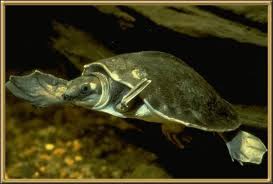
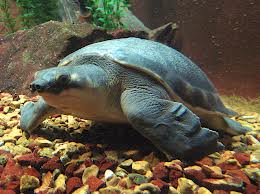
MEET THE PIG NOSED RIVER TURTLE!
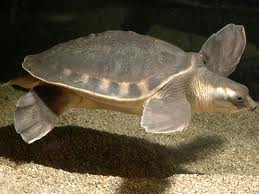
   Range/Habitat: S New Guinea-North Australia/rivers-lakes

   Diet: Omnivore: fruits, fish, snails

   Length: 28-30”

   Conservation Status: vulnerable


Fun Facts:

  • Pig nosed river turtles have a pig like snout. This helps them breathe when they are submerged in water.
  • Pig nosed river turtles are also known the Fly River turtles.
  • They have flipper like limbs that resemble a sea turtle more than a freshwater turtle.
  • Pig nosed river turtles have a soft, leathery skin on top of their carapace (top shell).
  • They are unlike any other freshwater turtle alive today.
  • Pig nosed river turtles are territorial.

We think these crazy looking turtles are so cool! They look like a pig, a sea turtle and a freshwater turtle all meshed in to one animal! If you could make a mixed up animal what you would make?
 

Categories: adventure, Animals, Children, conservation, education, Environment, nature, reptiles, rivers, science, turtles, wildlife | Tags: , , , , , , , , , | Leave a comment

REPTILIAN TUESDAY # 45

REPTILIAN TUESDAY #44

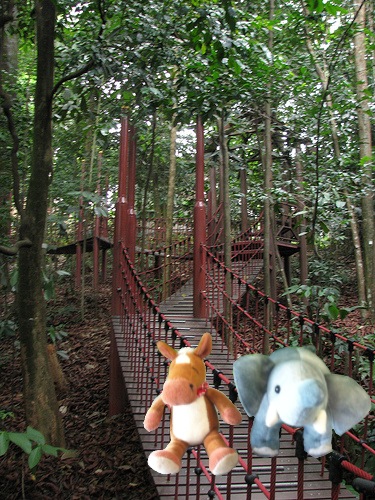
Reptilian Tuesday is taking us to the rainforests of Southeast Asia! We’re off to find a gorgeous reptile in the trees! So grab your climbing gear and your binoculars and let’s head out on today’s adventure!

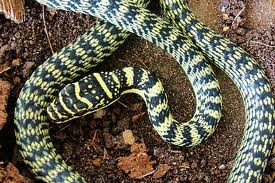
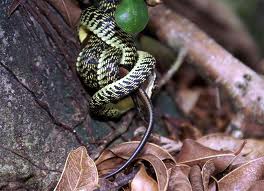
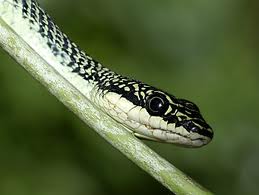
MEET THE GOLDEN TREE SNAKE!

   Range/Habitat: South-Southeast Asia/ rainforest, parks

   Diet: Carnivore: rodents

   Length: 3 ¼-4 ¼ ft

   Conservation Status: common


Fun Facts:

  • Golden tree snakes are also known as the Flying snake.
  • They can glide among the trees.
  • Golden tree snakes are arboreal (spend their lives in trees).
  • They have slender bodies.
  • They have green scales with black on the tips.
  • Golden tree snakes are venomous, but not harmful to humans.

We know snakes don’t get much love, but they are such an important part of the environment and without them we would all be in trouble!


Categories: adventure, Animals, Children, conservation, education, Environment, nature, reptiles, wildlife | Tags: , , , , , , , , | Leave a comment

REPTILIAN TUESDAY # 44

REPTILIAN TUESDAY #44

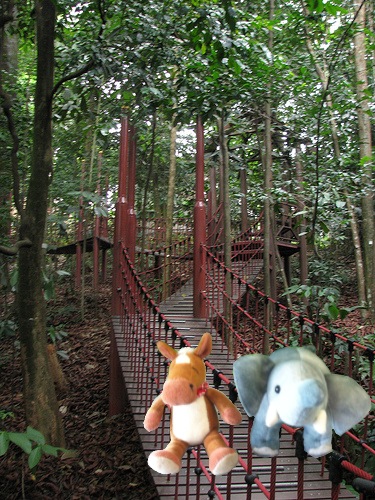
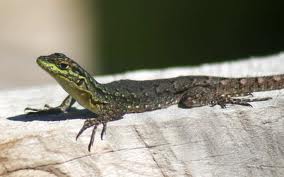
We’re off to the Southwestern area of South America to today to find a small reptile up in the trees! Let’s get on our tree climbing gear and head up to find this lizard!

MEET THE CHILEAN SWIFT LIZARD!

   Range/Habitat: Southwestern South America/ forests, suburbs

   Diet: Insectivore: flies, insects

   Length: 7 ½-12”

   Conservation Status: common


Fun Facts:

  • Chilean Swift Lizards are arboreal (spend most of their time in trees).
  • They are also known as the Thin Lizard.
  • Chilean swift lizards have scales that overlap one another.
  • They are often found in higher elevations.
  • Chilean swift lizards live in small groups that are made up of one male and several females in one tree.

These cute little lizards sure are neat! We wish would could spend some time at the tops of the trees, there are so many cool creatures living up here!


Categories: adventure, Animals, Children, conservation, education, Environment, lizards, nature, reptiles, science, wildlife | Tags: , , , , , , , , | 1 Comment

REPTILIAN TUESDAY GREATEST HITS!

REPTILIAN TUESDAY GREATEST HITS!

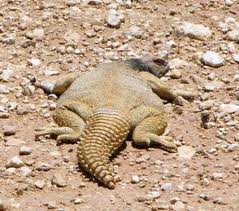
We went to North Africa to meet a great lizard on this past Reptilian Tuesday! We’re off to the desert to meet one cool lizard! Grab your sunscreen and hat and let’s head out!

MEET THE SPINY DAB LIZARD!

   Range/Habitat: N Africa/deserts

   Diet: Omnivore: insects/plants

   Length: 12-16”

   Conservation Status: Common


Fun Facts:

  • Spiny Dab Lizards is also known as the Spiny tailed lizard or Uromastyx.
  • Their tales are covered with spiny scales.
  • Spiny Dab lizards are often found in burrows in the desert. They will stick their tails out of the entrance of the burrow to protect it.
  • Males are very territorial.
  • They hibernate during the winter months.
  • Spiny dab lizards change their color according to the temperature of the environment. They are yellowish/gray during the winter and orange/green or red during the warmer months!
  • Spiny dab lizards come out during the day to warm themselves in the sun. They are more active during warmer periods.

Animals have some great adaptations! These awesome lizards not only have spiny tails but they can change their color! We wish we could change colors! What color would you want to be? Ellie wants to be purple :)!


Categories: adventure, africa, Animals, Children, conservation, education, Environment, lizards, nature, reptiles, science, wildlife | Tags: , , , , , , , , , | Leave a comment

REPTILIAN TUESDAY GREATEST HITS!

REPTILIAN TUESDAY GREATEST HITS!

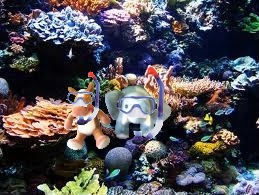
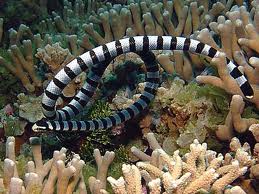
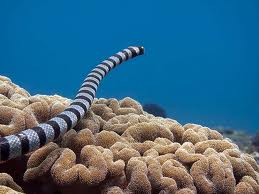
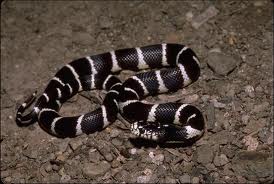
We’re going to a coral reef today to meet a very cool reptile! Let’s get our snorkel gear and take a dip! We’re off to find a reptile who lives in the ocean!

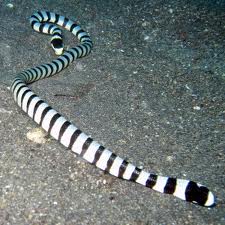
MEET THE BANDED SEA KRAIT!

   Range/Habitat: Southern-South Eastern Asia/ tropical oceans-coral reefs

   Diet: Carnivore: fish, eels

   Length: 3 ¼-6 ½ ft

   Conservation Status: Common


Fun Facts:

  • Banded Sea Kraits are members of the sea snake families. They spend most of their lives in the ocean.
  • Banded sea kraits are highly venomous. They are more deadly than most land snakes.
  • They are not harmful to humans, because they have short fangs and are very docile.
  • Banded sea kraits have paddle shaped tails that help them swim.
  • They come on shore to lay their eggs.

Sea kraits are incredible snakes! Did you know there were snakes that lived in the ocean? We saw one while we snorkeling in Indonesia! It was awesome! If you could go snorkeling what animals would you like to see?


Categories: adventure, Animals, Children, conservation, education, Environment, nature, oceans, reptiles, science, wildlife | Tags: , , , , , , , , | Leave a comment

REPTILIAN TUESDAY # 43

REPTILIAN TUESDAY #43

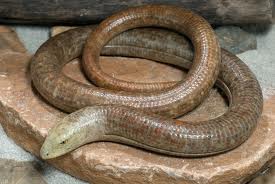
We’re taking a hike in Southern Europe to find a lizard that looks like a snake! Yep folks, we’ve heard that there are lizards in the world that don’t have legs! Are you ready to go exploring?

MEET THE EUROPEAN GLASS LIZARD!

   Range/Habitat: Southeast Europe-W. Asia/ dry grasslands, rocky areas

   Diet: Carnivore: slugs, snails, invertebrates

   Length: 3 ¼-4ft

   Conservation Status: common


Fun Facts:

  • European glass lizards are legless lizards.
  • They are grey as juveniles and brown as adults.
  • European glass lizards have movable eyelids.
  • They are diurnal (active during the day).
  • European glass lizards don’t just realize their tails, they shatter it. The tail falls off in pieces in order to fool their predators.

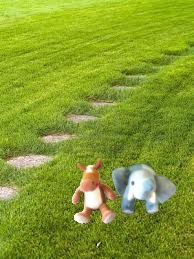
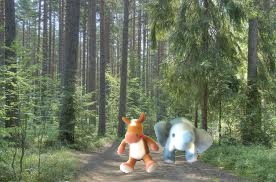
These cool lizards think they’re fooling everyone looking like a snake! They’re not fooling this elephant and horse though! How about you?


Categories: adventure, Animals, Children, conservation, education, Environment, lizards, nature, reptiles, science, wildlife | Tags: , , , , , , , , | 4 Comments

REPTILIAN TUESDAY # 42

REPTILIAN TUESDAY #42

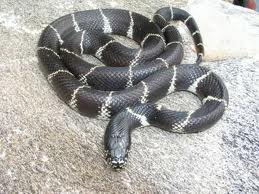
We’re going to the pine forests near our backyard to meet a useful snake! Get your walking stick out and put your hiking boots on! Let’s do this!

MEET THE COMMON KINGSNAKE!

   Range/Habitat: Western-Eastern Southern US/ forests, scrub, suburbs

   Diet: Carnivore: snakes, birds, rodents

   Length: 3 ¼-6 ½ ft

   Conservation Status: common


Fun Facts:

  • Common Kingsnakes are powerful constrictors.
  • They are excellent swimmers!
  • Common kingsnakes vary in color and pattern depending on where they live.
  • They can live up to 25 years.
  • Common kingsnakes give off a smelly, musky odor when threatened.
  • Common kingsnakes eat venomous snakes. They are immune to the venom!

Snakes shouldn’t be feared. They are an important part of the ecosystem! Kingsnakes even eat venomous snakes, so if you see one, just wave from a distance and let him go on about his merry way!


Categories: adventure, Animals, Children, conservation, education, Environment, nature, reptiles, science, wildlife | Tags: , , , , , , , | Leave a comment

OLYMPIC ANIMALS WEEK DAY #2

OLYMPIC ANIMALS DAY #2

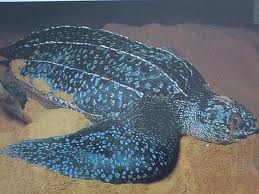
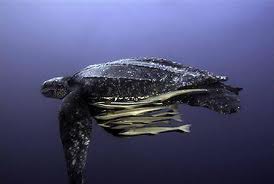
We’re taking the Ellie and Edmond sub down to depths of the ocean to meet one amazing reptile! These turtles can dive deep and swim great distances! There’s plenty of room in the sub for everyone to meet these big reptiles! Let’s go!

MEET THE LEATHERBACK TURTLES!

   Range/Habitat: Tropical-Subtropical-temperate oceans worldwide

   Diet: Carnivore: jellies, fish

   Length/Weight: 4 ½-6ft/ up to 2000lbs

   Conservation Status: critically endangered


Fun Facts:

  • Leatherback turtles are the largest of all marine turtles.
  • They have the longest migration of any marine turtle, up to 3,700 miles one way!
  • Leatherback turtles can dive down to depths of 1,300 ft!
  • They can hold their breath for up 80 minutes!
  • Leatherback turtles do not have hard carapaces (top shells); instead they have leathery ones.
  • They have large flippers to help them swim.
  • Relatives of the leatherback turtle date back 100 million years!

Wow! We love leatherback turtles! Can you believe that they swim 3,700 miles to get to their feeding & breeding grounds? You thought the 800 meter relay was hard! These turtles can do that in a blink!


Categories: adventure, Animals, Children, education, Environment, nature, oceans, Olympics, reptiles, science, wildlife | Tags: , , , , , , , , | Leave a comment

REPTILIAN TUESDAY # 41

REPTILIAN TUESDAY # 41

We’re staying in western Africa today to meet a brightly colored lizard! Be careful where you step though, these little reptiles like to live among the leaves of the rainforest floor! Let’s be quiet and see if we can find…

MEET THE AFRICAN FIRE SKINK

   Range/Habitat: West-Central Africa/ rainforests

   Diet: Insectivore: insects, spiders

   Length: 9-14”

   Conservation Status: common


Fun Facts:

  • African Fire Skinks are also called the fire-sided skink.
  • They have red and black bands on their body and blue and black bands on their tails.
  • African fire skinks live in the leaf litter of the rainforest floor.
  • They burrow underground.
  • African fire skinks can shed their tails.
  • They can live for 15-20 years.

These skinks are so colorful. Everyone thinks lizards are green or brown, but they can come in a huge variety of colors. Do you have a favorite lizard?

Categories: adventure, africa, Animals, Children, education, Environment, lizards, nature, rainforests, reptiles, science, wildlife | Tags: , , , , , , , , , | Leave a comment

REPTILIAN TUESDAY # 41

REPTILIAN TUESDAY # 41

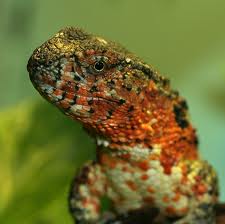
Let’s pack our bags and head off to the Far East today to find a brightly colored lizard! Grab your wellies because we’re heading into the wetlands to locate these little reptiles! Are you ready?

MEET THE CHINESE CROCODILE LIZARD!

   Range/Habitat: East Asia (China)/ wetlands

   Diet: Carnivore: fish, tadpoles, insects

   Length: 15- 18”

   Conservation Status: vulnerable


Fun Facts:

  • Chinese crocodile lizards have enlarged scales down their tails, similar looking to crocodiles.
  • They live near or in watery habitats.
  • Chinese crocodile lizards are excellent swimmers and can stay submerged for long periods of time.
  • They will “freeze” or stay perfectly still for hours to defend themselves.
  • They can even shut down on extremely cold evenings.
  • Chinese crocodile lizards are called by local people “lizards of great sleepiness”.
  • Male Chinese crocodile lizards are more colorful than the females.

Wow! These lizards are amazing! They look a bit like little dinosaurs. Watching them has made us soooo sleepy. Who else needs a nap?


Categories: Animals, Children, education, Environment, lizards, nature, reptiles, science, wetlands, wildlife | Tags: , , , , , , , , | 4 Comments

Blog at WordPress.com.