Posts Tagged With: reptiles
MOMS REPTILIAN TUESDAY
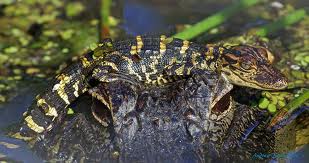
Reptiles often aren’t known for their motherly care. Most reptile babies are on their own from the minute the egg is hatched or the day they are born. One famous exception is the members of the crocodile and alligator family! We’re heading to South Georgia (our home state) to meet one responsible reptile mom! These large and in charge reptiles mean business! Are you ready to meet them?
MEET THE AMERICAN ALLIGATOR!
 Range/Habitat: Southwestern United States/ wetlands, swamps,
rivers,lakes, ponds
Diet: Carnivore: fish, deer, mammals
Length/Weight: 9 ½-16 ft/ 200-500 lbs
Conservation Status: common
Fun Facts:
- Alligators are large, territorial and fierce reptiles.
- They have been on the planet for millions of years.
- Male alligators bellow or roar to attract females.
- Female alligators lay 25- 60 eggs in a nest build of mud and vegetation.
- They guard the nest from predators, such as raccoons.
- When the baby alligators hatch they are all female or male. The temperature of the nest determines the sex of the babies.
- Once they begin to hatch, the mother helps dig open the nest.
- She protects them from predators by carrying them around on her head or in her mouth.
- Baby alligators stay with their moms for around 3 years.
Wow, you don’t want to mess with a momma alligator, especially with all those teeth! They work very hard protecting their young from a whole host of predators! Way to go alligator moms!
Elephants & Horses love to share!
Categories: Animals, Children, education, Environment, moms, nature, reptiles, science, wildlife
| Tags: animals, children, education, environment, nature, reptiles, science, wildlife |
REPTILIAN TUESDAY # 33
We’re diving into the ocean to meet today’s reptile! These special turtles spend most of their lives at sea and come ashore to lay their eggs! Are you excited yet? Grab your diving gear and let’s go!
MEET THE HAWKSBILL SEA TURTLE!
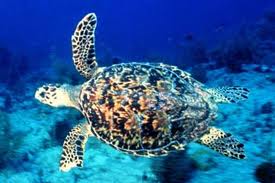 Range/Habitat: Tropical Ocean waters worldwide/ coral reefs
Diet: Carnivore: sponges, mollusks, comb jellies
Length/Weight: 23 ½-32”/ 180 lbs
Conservation Status: critically endangered
Fun Facts:
- Hawksbill Sea Turtles are one of the smaller members of the sea turtle family.
- They have serrated edge carapace (top shell).
- Hawksbill Sea turtles beautiful scutes (covering on the top shell).
- They have sharp pointy curved beaks.
- They often rest in caves and ledges in the coral reef.
- Most of the prey items that Hawksbill turtles is toxic to other animals.
- They have a long life span, up to 50 years.
Hawksbill turtles are just amazing and beautiful! Thank goodness there are organizations and people out there trying to ensure that they are swimming in our oceans for hundreds of years to come! One great way to help sea turtles is to pick up your trash when you’re on the beach! Sea turtles often mistake plastic bags for food L!
Elephants & Horses love to share!
Categories: Animals, Children, education, Environment, nature, reptiles, science, wildlife
| Tags: animals, children, education, environment, nature, reptiles, science, wildlife |
SUPER SURPRISE
THURSDAY# 32
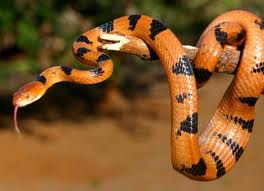
What’s up everyone? We’re heading to Africa today to meet a tiger! Ok, it’s not a real tiger, because we all know that tigers live in Asia! But we are meeting a snake that looks like tiger! So let’s back up our backpacks and our pith helmets and head to the African Savanna!
MEET THE AFRICAN TIGER SNAKE!
 Range/Habitat: Southern Africa/ grasslands
Diet: Carnivore: lizards, rodents
Length: 3 ¼-4 ft
Conservation Status: Common
Fun Facts:
- African Tiger Snakes are nocturnal (active at night).
- They are slow moving.
- They have large eyes to help them see at night.
- African tiger snakes have vertical iris.
- African tiger snakes are yellowish-brown and orange with black blotches.
- They are venomous but their venom is not dangerous to humans.
Aren’t these snakes spectacular? They have such wonderful coloration that looks just like a tiger! If you could make a snake look like another animal what pattern would you do? Ellie would like to see a giraffe snake and Edmond wants to see a zebra snake!
Elephants & Horses love to share!
Categories: Animals, Children, education, Environment, nature, reptiles, science, wildlife
| Tags: animals, children, education, environment, nature, reptiles, science, wildlife |
REPTILIAN TUESDAY # 32
It’s time to meet another reptile friend today and we’ve found a very teeny tiny lizard for you to meet. Grab your rain slicker, because we’re going to a rainforest! Don’t forget your magnifying glass, because these dudes are little!
MEET THE WESTERN PYGMY CHAMELEON!
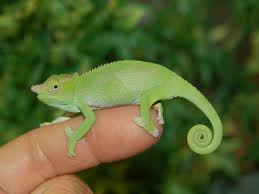 Range/Habitat: Western Central Africa/ rainforest
Diet: Insectivore: small insects
Length: 2 ¾-4”
Conservation Status: common
Fun Facts:
- Western Pygmy Chameleons are one of the world’s smallest chameleons.
- They have long sticky tongues to help them catch insects.
- Western pygmy chameleons are primarily ground dwellers.
- They are leaf-like in color and shape to help them camouflage in with their habitat.
- Western pygmy chameleons have a small horn on their snout.
- They have a limited ability to change their color.
- Like other chameleons, Western pygmy chameleon’s eyes move independently of each other.
Ok, seriously we know we think all animals are cute, but you can’t deny that these tiny little lizards are just adorable. Chameleons have the most amazing ability to camouflage too! Animals are just amazing!!
Elephants & Horses love to share!
Categories: Animals, Children, education, Environment, lizards, nature, reptiles, science, wildlife
| Tags: animals, children, education, environment, nature, reptiles, science, wildlife |
SUPER SURPRISE
THURSDAY# 31
Who’s excited to meet today’s animal? You know you are! We’re heading to the waters of South America to meet a rather large reptile! We’ll have to find a good spot to watch from a distance though, because these guys have big choppers!
MEET THE SPECTACLED CAIMAN!
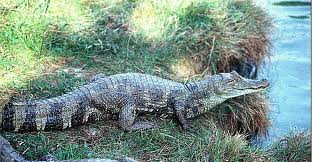 Range/Habitat: Central-South America/ fresh water- wetlands
Diet: Carnivore: fish, birds, amphibians
Length: 6 ½-8 ft
Conservation Status: Common
Fun Facts:
- Spectacled caiman rarely leave the water.
- Spectacled caiman are olive-green in color.
- They have a bony ridge in front of their eyes.
- Spectacled caiman are nocturnal (active at night).
- Male spectacled caiman are very territorial.
- They have no natural predators.
- Female spectacled caiman build nest to lay their eggs. They are very protective of the eggs and the young.
These relatives of the crocodile and alligator are pretty cool. These reptiles have a mouth full of teeth and they aren’t afraid to show them, even with their mouths closed. J
Elephants & Horses love to share!
Categories: Animals, Children, education, Environment, nature, reptiles, science, wildlife
| Tags: animals, children, education, environment, nature, reptiles, science, wildlife |
REPTILIAN TUESDAY # 31
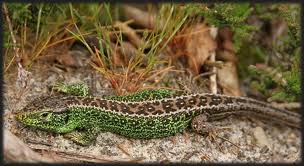
We just love Tuesdays because it is the day of the week to spotlight a reptilian friend and we know our reptile friends don’t always get love! We’re going to Europe today to find this small lizard who nests in the sand dunes! Are you ready? Let’s do this!
MEET THE SAND LIZARD!
 Range/Habitat: Europe-Central Asia/ grasslands, sand dunes
Diet: Carnivore: insects, spiders
Length: 7-9”
Conservation Status: common
Fun Facts:
- Sand lizards are colorful. Their color varies by habitat and region.
- Male sand lizards turn bright green during mating season.
- They have short legs.
- Like other small lizards, they will drop their tail if caught by a predator.
- Sand lizards hibernate in the winter.
- Sand lizards are the only egg laying lizard in the United Kingdom.
These cute little lizards lay their eggs in sand soil, hence the name! We think it’s cool that these lizards look different depending on where they live! It’s all about camouflage baby!
Elephants & Horses love to share!
Categories: Animals, Children, education, Environment, nature, reptiles, science, wildlife
| Tags: animals, children, education, environment, nature, reptiles, science, wildlife |
REPTILIAN TUESDAY # 30
It’s that time of the week when we meet a reptile and that can only mean it is Reptilian Tuesday! We’re going to the land down under today mates to meet a very beautiful snake! Do you have your Australian accent ready? Let’s go!
MEET THE CARPET PYTHON!
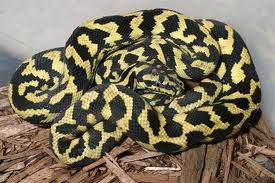 Range/Habitat: South New Guinea-Australia/ rainforest-scrub-desert
Diet: Carnivore: lizards, birds, small mammals
Length: 6 ½ ft
Conservation Status: common
Fun Facts:
- Carpet Python have bold patterns of gray, reddish brown and black.
- Carpet pythons live in all kinds of habits.
- They have many different color variations.
- They are active day and night.
- Carpet pythons are non-venomous constrictors.
- They are semi-arboreal (spend part of their lives in trees).
Well mates, don’t you think these pythons are gorgeous! We think nature has some of the patterns out there, way better than any paisley we’ve seen! And the best patterns look best when worn by the animal that was born with it!
*If you like this post tell us :)! We love the feedback & if you know someone with kids or who loves animals please share it!
Elephants & Horses love to share!
Categories: Animals, Children, education, Environment, nature, reptiles, science, wildlife
| Tags: animals, children, education, environment, nature, reptiles, science, wildlife |
We have WILD ENCOUNTER at Zoo Atlanta
Wowee! We were invited to Zoo Atlanta for a Wild Encounter with Slasher the Komodo dragon! That’s right folks, we went behind the scenes to meet and feed mice to a Komodo dragon! Zoo Atlanta is starting a new program on March 31st called Wild Encounters where you can go behind the scenes and meet a Komodo dragon, an elephant or a panda! How cool is that? Well let’s just show you!
First we met outside of Slasher’s habitat. Our guide Shelby gave us instructions and some great information about Komodo Dragons! (60/72)
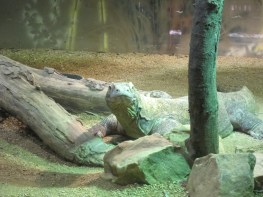
Slasher the Komodo dragon!
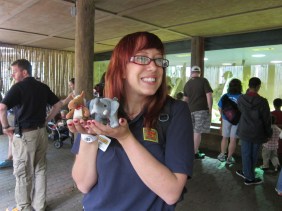
Shelby our Wild Encounter guide!
Did you know that komodo dragons live in Indonesia? They live on 3 different islands including Komodo Island. They are considered vulnerable, due to habitat loss and loss of some of the prey they eat. Slasher is a big guy and we were so excited to meet him! The humans were given booties to cover their shoes and a glove to wear on the hand that would hold the tongs!

Aren't these booties attractive?
Off we went to behind the scenes of the Komodo dragon habitat, where we were greeted by a reptile keeper. He showed us a skeleton of the Komodo dragon skull and some teeth!

Komodo dragon skull! Look at those teeth!
Wow these lizards have a mouth of serrated teeth that fall out often are replaced by teeth behind them, kind of like sharks. We finally met Slasher, where he was waiting for lunch!
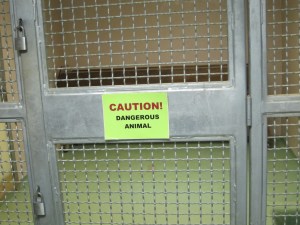
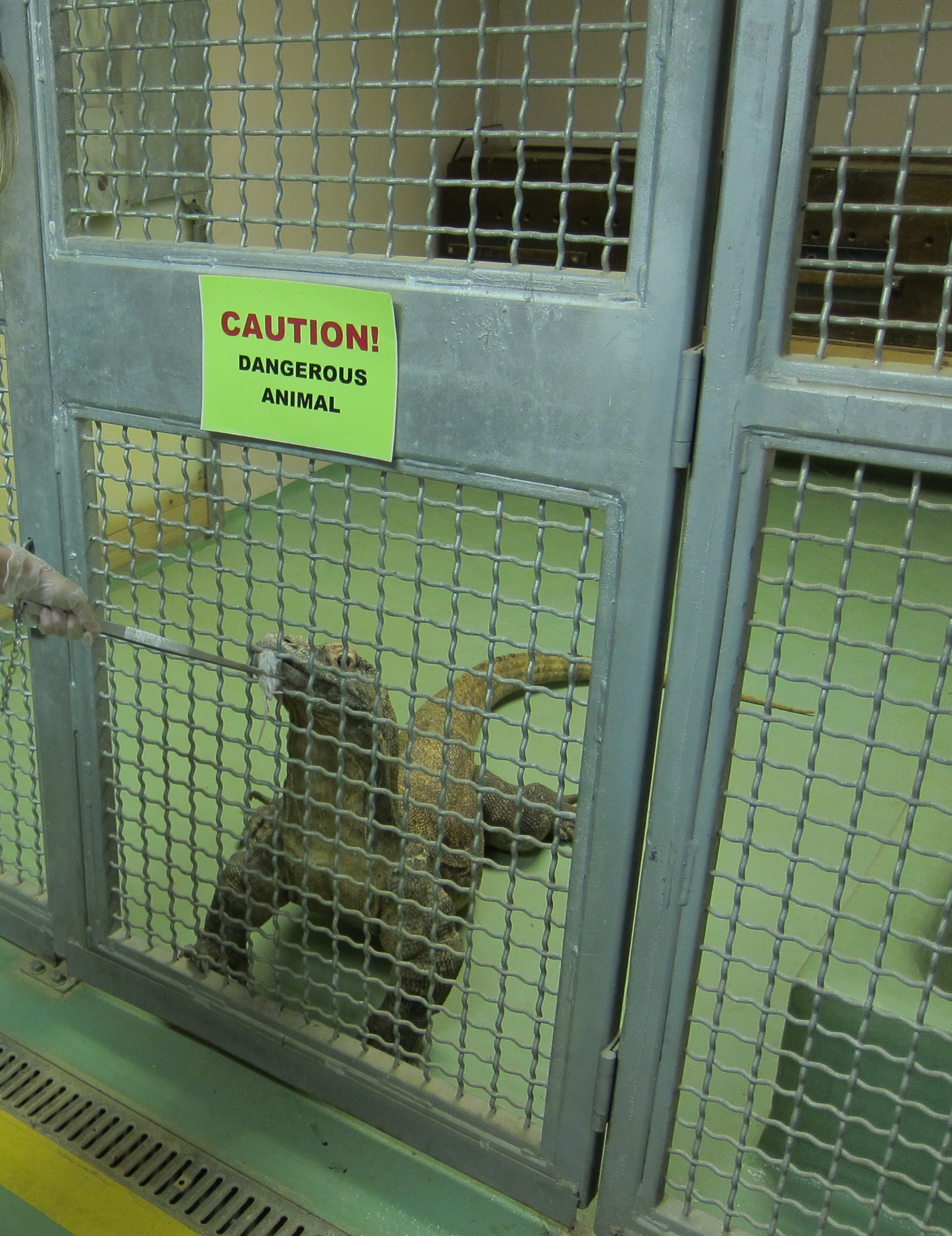
We were given a pair of tongs with a small mouse on the end to feed Slasher. Each person took turns giving Slasher one mouse and he chomped those down in one bite!
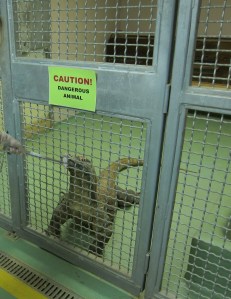
Slasher getting a mouse!
We also learned that komodo dragons have a special organ or third eye on their head that helps them detect light and dark! Isn’t that amazing? Soon, everyone had given Slasher a mouse and he went back into his habitat. It went by so fast, but WOW, it was such an amazing experience! We were so thrilled. We sat and watched him for a bit as he lounged around.
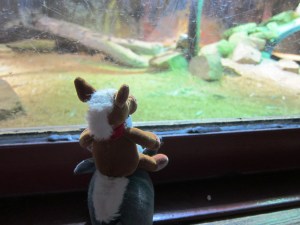
We're watching Slasher! Edmond was too short & had to sit on Ellie!
He probably was a bit sleepy after eating all those mice. Normally you would have to head all the way to Indonesia to see a komodo up close and let us tell you, that is long trek! But all you have to do to enjoy a WILD ENCOUNTER at the zoo is get in the car! Want to learn more? Of course you do! Check out the zoo’s website! Trust us- you’ll be so happy you went!
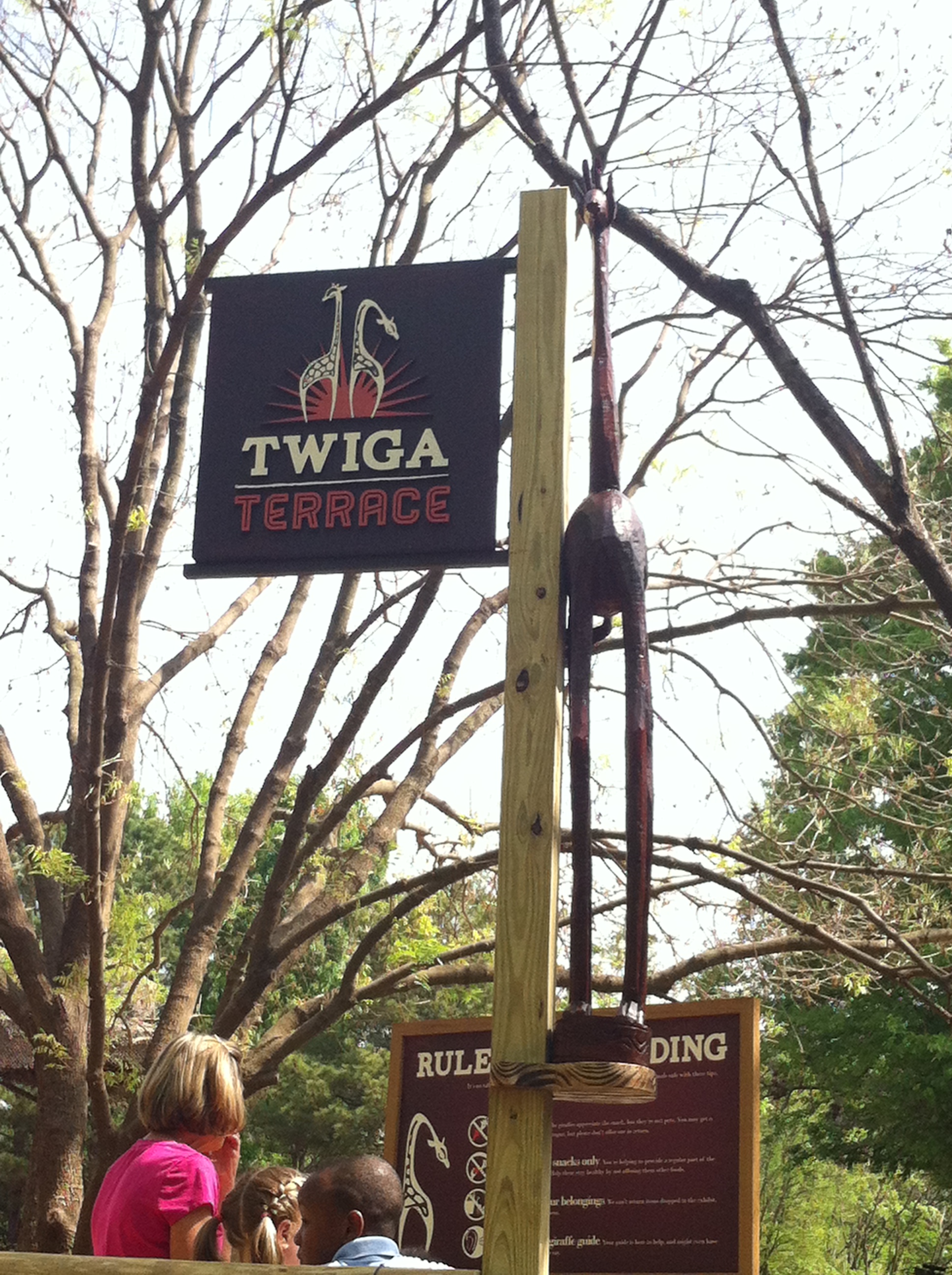
We had such a great time meeting Slasher. We didn’t want our adventure to end, so we made a stop at the new Twiga Terrace.

Welcome to Twiga Terrace!
Did you know that twiga is the Swahili word for giraffe? FUN! Zoo Atlanta is opening a new feeding station for giraffes, also on March 31st. We stopped by to see the zoo’s giraffes and give them some tasty romaine lettuce. We had a hard time not eating the lettuce ourselves. The zoo has four giraffes, Mona, Glenda, Abu and Lily (the baby)!

Hanging with the giraffes!
Glenda came on over to sniff out our lettuce and to take a nibble.

Glenda!
We could just watch giraffes for hours! They are so graceful and beautiful!
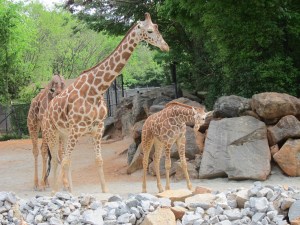
Aren't they gorgeous?
You can feed the giraffes too! Check out the zoo’s website for more info! After such an amazing day, this elephant and horse were tired! We headed home with great memories of a fabulous adventure!
It’s a great time of year to get out and enjoy Zoo Atlanta! Did you know that when you visit the zoo and feed giraffes and have Wild Encounters that you’re helping support the animals at the zoo and their wild relatives! COOL! Zoo Atlanta is one of our favorite places and hopefully one of yours!
Elephants & Horses love to share!

 Range/Habitat: Southwestern United States/ wetlands, swamps,








 The Adventures of Ellie and Edmond