Posts Tagged With: wildlife

It’s Easy Being Green!

It’s Easy Being Green!

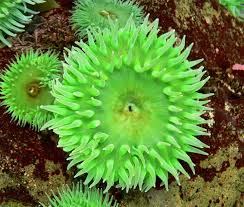
We’re off to meet an anemone today, not a frog! These brightly colored animals are found in the intertidal zones off the coast of California! Woohoo! Let’s meet them!
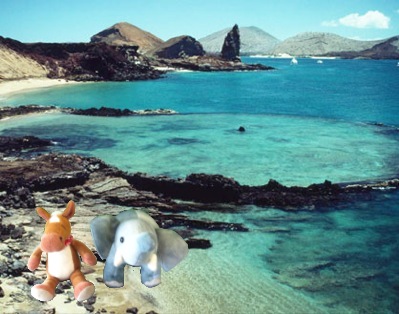
e e galapagos

Giant Green Anemone Fun Facts:

  • Giant green anemones can be found along the coast of the Pacific ocean from Canada to Central America.
  • They can grow up to 7 inches in diameter and 17 inches high.
  • Giant green anemones are carnivores and eat muscles, crabs and small fish.
  • Anemones are invertebrates.

giant green anemone

  • They have stinging cells in their tentacles, called nematocysts. Namatocysts sting and paralyzed prey.
  • A giant green anemone can up to six rows of tentacles. FullSizeRender(38)
  • Giant green anemones have a symbiotic relationship with a type of algae called zooxanthellae. The algae gets protection and the anemone gets some nutrition from the algae.
  • The anemones green color does not come from the zooxanthellae.
  • Giant green anemones spit out waste through their mouths.
  • If you ever meet a giant green anemone, their stinging cells can’t hurt human hands, but you can hurt them, so best not to touch.
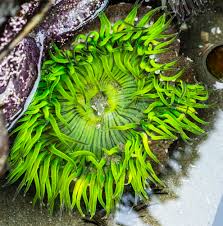
giant green anemone2Tide pools and intertidal zones are amazing places. They are special spots to visit when you are at the coast. You can find so many interesting creatures living there. We’re excited for Professor Sylvia to show us more of these great habitats tomorrow!
Categories: adventure, Animals, Children, conservation, education, Environment, nature, oceans, science, wildlife | Tags: , , , , , , , , , | 1 Comment

SCIENCE WORD OF THE WEEK!

SCIENCE WORD OF THE WEEK!

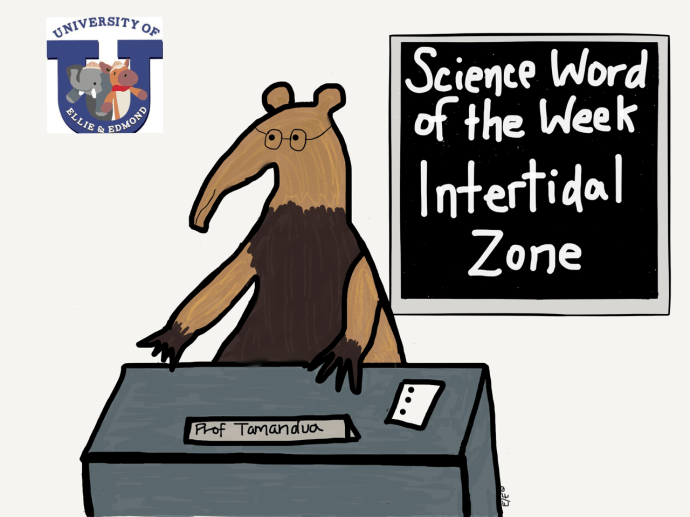
swow intertidal zone

Hello students! Welcome back from spring break! We’re starting this week off with a great word! Let’s get the learning started!

Today’s word is Intertidal Zone:  the intertidal zone is where the ocean and land meet. The intertidal zone changes during low and high tide. You can find all kinds of animals in the intertidal zone like crabs, anemones, seastars and muscles.

Categories: adventure, Animals, Children, conservation, education, Environment, nature, science, vocabulary, wildlife | Tags: , , , , , , , , , | 1 Comment

THREE CHEERS FOR SLOTHS!

THREE CHEERS FOR SLOTHS!

sloth

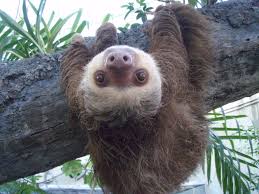
We all know and love this folivore- the sloth! Edmond is doing one of his cheers for them today!

GIVE ME A S! S is for Slooooow! Sloths are slooooow moving!

GIVE ME A S!
S is for Slooooow! Sloths are slooooow moving!
 

GIVE ME A L! L is for leaves! Sloths eat leaves from their treetop homes. They even get their water from the leaves they eat!

GIVE ME A L!
L is for leaves! Sloths eat leaves from their treetop homes. They even get their water from the leaves they eat!


GIVE ME AN O! O is for olive colored fur! Sloths have a greenish tint to their fur, because algae grows in it.

GIVE ME AN O!
O is for olive colored fur! Sloths have a greenish tint to their fur, because algae grows in it.


GIVE ME A T! T is for turn! Sloths can turn their heads 270 degrees, very much like owls!

GIVE ME A T!
T is for turn! Sloths can turn their heads 270 degrees, very much like owls!


GIVE ME A H! H is for high up in the tree tops! Sloths spend most of their lives high up in the trees. They do come down once a week to poop!

GIVE ME A H!
H is for high up in the tree tops! Sloths spend most of their lives high up in the trees. They do come down once a week to poop!

GIVE US THREE CHEERS FOR SLOTHS! ONE OF OUR FAVORITE FOLIVORES!!  WOOHOO!

index

Categories: adventure, Animals, Children, conservation, education, Environment, mammals, nature, science, wildlife | Tags: , , , , , , , , , | 2 Comments

PANDAMANIA!

PANDAMANIA!

Happy World Panda Day! Our friend Petunia Panda is sharing some great panda facts for you and we’ll have a great video for you to watch on Youtube and Instagram!

IMG_0640

IMG_0641

IMG_0642

IMG_0643

IMG_0644

IMG_0645

IMG_0646

IMG_0647

IMG_0649IMG_0649

IMG_0653See how well a panda dances on Instagram and YouTube!

Categories: adventure, Animals, Children, conservation, education, Environment, mammals, nature, science, wildlife | Tags: , , , , , , , , , , | 1 Comment

CRAZY BIRD!

CRAZY BIRD!!

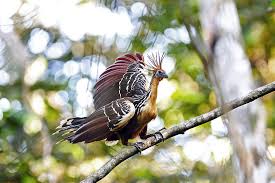
We’re meeting a bird that is a folivore today! These ancient birds are crazy looking, but they sure are cool! Let’s meet the hoatzin!

hoatzin

Hoatzin Fun Facts:

  • Hoatzin birds live in South America in swamps, marshes and mangroves.

IMG_0256(1)

  • They are folivores and eats leaves and flowers.
  • Hoatzin can grow up to 26″ long and weigh around 1 3/4 lbs.
  • They are listed as least concern by the IUCN.
  • They are the last member of an extant group of birds from 64 million years ago.
  • Hoatzin have large crests of feathers on top of their heads.
  • Hoatzin have large crops to help them digest the leaves they consume. The crops are so big they take away room for flight muscles.
  • They are not strong fliers.

IMG_0625

  • These vocal birds use a variety of calls to communicate with each other, including warning calls for predators.
  • Hoatzin live in small colonies.
  • Hoatzin chicks have claws on the end of two of their digits on their wings. Chicks use these to help them climb out of water they may go into to avoid predators.
  • They are excellent swimmers.

hoatzin2hoatzin3


Hoatzin are amazing birds. These tropical birds definitely look like dinosaurs to us! We’ll keep our distance though, no one wants to get too close to a bird’s who is called the stinkbird! Hold your trunk Ellie!

Categories: adventure, Animals, Children, conservation, education, Environment, nature, science, wildlife | Tags: , , , , , , , , , | 1 Comment

SCIENCE WORD OF THE WEEK!

SCIENCE WORD OF THE WEEK

Sketches - 27

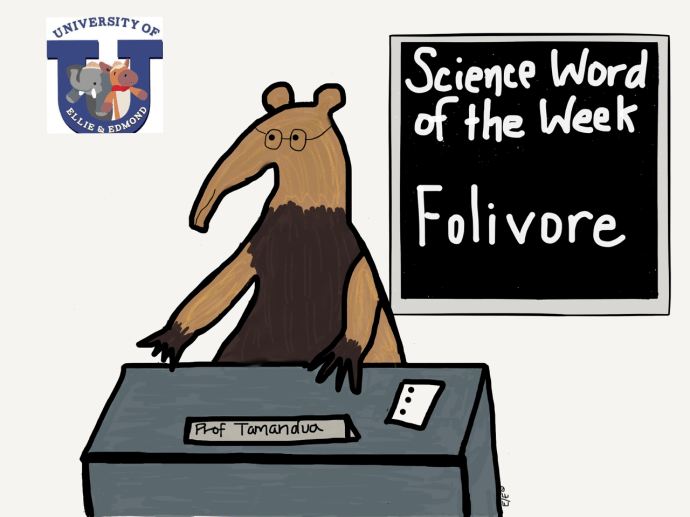
Hello students! Welcome back to vocabulary class! It has been a long break for me, but I am back and ready to learn some cool science words! Are you?

Today’s word is: Folivore: is a herbivore that specializes in eating leaves. Some examples of folivores include hoatzin, pandas, koalas, giraffes, sloths, caterpillars and iguanas.

I know Ellie and Edmond and some of the other professors are excited for you to meet some of these leaf eaters this week! Say hi to them for me!

Categories: adventure, Animals, Children, conservation, education, Environment, nature, science, wildlife | Tags: , , , , , , , , , | 1 Comment

We Have the Right Whale

We Have the Right Whale

whales1

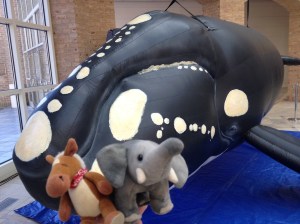
This week we’re meeting some plankton eaters! And today we’re meeting a whale that winters off the Georgia coast! In fact they are our state marine mammal! Woohoo! Let’s learn some cool stuff about these giants of the ocean!

right whale

Right whale fun facts:

  • Right whales are divided into two species, the Northern and the Southern. We’re meeting the North Atlantic right whale today!
  • These whales inhabit the ocean waters of the coast of North America.

FullSizeRender(37)

  • North Atlantic right whales grow up to 52 feet in length and weigh up to 70 tons! Wow!
  • North Atlantic right whales are critically endangered. There are around 400 of these amazing creatures left.
  • These baleen whales are carnivores. They feed on plankton like krill. They skim these tiny prey from the water using their baleen.
  • They feed generally in spring through fall in the cold waters of the Northern Atlantic Ocean near Canada.

IMG_0552

  • Female north Atlantic right whales are larger than the males.
  • Females migrate to the waters off of Georgia and Florida to calve. They have one baby at a time.
  • Northern right whales are slow swimmers and tend to stay near the surface.
  • They are often in danger of boat strikes. In their protected habitats, boats must keep slow speeds.
  • Scientist believe these giants live up to 50 years and maybe even up to 100 years.
  • There are great conservation efforts going on to protect these whales. They are one of the most endangered whale in the ocean today. Fortunately they have been protect since the 1930s, but recovery has been slow. You can learn more about those efforts from the NOAA website on them.

right whale2right whale3


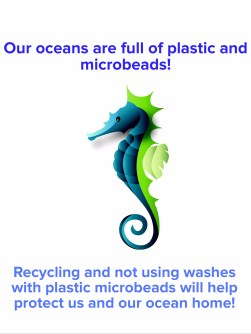
Protecting the earth’s creatures and the habitats we share starts with all of us. These whales along with other ocean dwelling animals can be found with plastic in their stomachs. Make sure your plastic goods go into a recycling bin and never into wild habitats! Let’s do it for the Right Whale!

Categories: adventure, Animals, Children, conservation, education, Environment, mammals, nature, oceans, science, wildlife | Tags: , , , , , , , , , , | 1 Comment

WORLD WILDLIFE DAY!

WORLD WILDLIFE DAY!

e e park

Today is World Wildlife Day and we here at the University are sharing ways you can help wildlife in your backyard and around the world! Each professor will be sharing their tips today and we have a great way to get involved too! So come join us and help us celebrate World Wildlife Day!

We’ll be participating in the #InOurHands campaign for the David Sheldrick Wildlife Trust! You simply draw an elephant on your hand, take a picture and share on social media. Add us and @DSWT on your tweet or tag us and the trust on Facebook! Elephants could be lost in the wild if we don’t help! To learn more about the campaign check out their website!

IMG_1424

IMG_1423

IMG_1421

IMG_1420

IMG_1422

Categories: adventure, Animals, Children, conservation, education, Environment, nature, science, wildlife | Tags: , , , , , , , , | 1 Comment

HOLEY MOLEY!!

HOLEY MOLEY!!

We’re on day three of our you choose week and we had a friend vote for moles! So of course we narrowed down to the star nosed mole! This crazy looking creature is sure to be popular, so let’s get moving and head underground to meet this wild animal!

star nosed mole2

Fun Facts:

  • The first thing you notice on a star nosed mole is the nose. It is compromised of 22 finger like projections, 11 on each nostril. Those projections are called tendrils.
  • Star nosed moles live in wetlands and moist habitats along the coast of Northeastern North America.FullSizeRender(36)
  • Star nosed moles can grow up to 8 inches and weigh up to 2 oz.
  • They are insectivores. They have 44 teeth to crunch up insect exoskeletons.
  • Star nosed mole nose projections are full of extremely sensitive receptors called Eimer’s organs. Other moles have these receptors, but the star nosed mole has 25,000 of them; more than any other animal!
  • IMG_0436
  • Star nosed moles are functionally blind, so those crazy looking tendrils give them a picture of their environment and of their prey! It can tell if a prey is edible in 8 milliseconds! WOW!
  • They can smell underwater too!
  • Their tendrils have no muscles or bones in them. They are not used as a scent organ. The mole has nostrils that use for smell.
  • Star nosed moles dig shallow tunnels in the wet ground. They are also excellent swimmers, using those wide front feet and back feet to help them swim.
  • They tend to be out on the ground more than other moles who stay in their burrows.

star nosed mole

We could on days and days about the star nosed moles. Those tendrils are unique in the animal kingdom. Scientists have been studying these critters for years and continue to learn so many things about them. They even think they may be able to pick up slight electrical fields! WOW! Our earth is full of so many crazy creatures that are so fascinating!

Categories: adventure, Animals, Children, conservation, education, Environment, mammals, nature, science, wildlife | Tags: , , , , , , , , , | 2 Comments

SUN BEARS!

SUN BEARS!!

As part of our you choose week- we’re going to meet the Sun Bear!

    sun bear

Fun Facts:

  • Sun bears are also called the dog bear or honey bear.
  • Sun bears are found in Southeast Asia in rainforests.

FullSizeRender(33)

  • Sun bears are omnivores. They eat fruit, eggs, honey and termites.
  • They can get up to 4 1/2 feet long and weigh up to 145 lbs.
  • Sun bears are listed by the IUCN as endangered.
  • They have sleek, smooth brown-black fur with a white-orangeish “sun” patch on their chest.
  • They have very loose skin around their neck.
  • Sun bears are the smallest member of the bear family.

IMG_0253

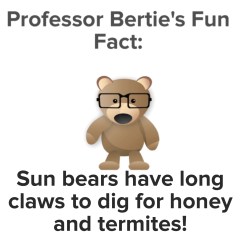
  • Sun bears have very long tongues that they can extend up to 10”. They use these tongues to get termites and honey.
  • Sun bears are nocturnal (active at night).
  • They spend most of their time in trees.

Sun bears are just so adorable. They are endangered mainly due to habitat loss. Helping protect their rainforest home by reducing, recycling and reusing! Yay for the 3 Rs!

sun bear2   sun bear3

Categories: adventure, Animals, Children, conservation, education, Environment, mammals, nature, science, wildlife | Tags: , , , , , , , , , | 2 Comments

Blog at WordPress.com.