rainforests

ORANGUTAN AWARENESS DAY!

ORANGUTAN AWARENESS DAY!

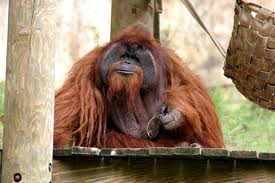
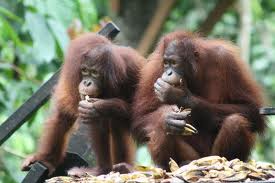
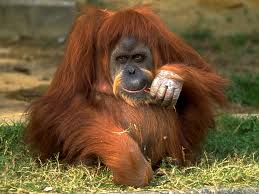
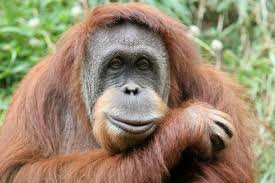
We are sporting orange today and going to the rainforests of Southeast Asia to celebrate one of the most special mammals and great apes on the planet! These amazing apes are gorgeous, intelligent and unfortunately endangered. So today we are going to share some fun facts, photos and resources and how you can help protect these special creatures!


  • Orangutans are great apes.
  • There are two species, the Bornean and the Sumantran.
  • Orangutans are solitary in the wild.
  • Orangutans are arboreal (spend most of their lives in trees.)
  • They are frugivores.
  • Orangutans are highly intelligent.
  • Baby orangutans stay with their mothers for around 8 years, the longest of any primate.
  • Orangutans have extremely long arm spans, up to 7 feet from finger tips to finger tips.
  • Orangutans’ feet are built just like hands and help them climb in the trees.

There are several organizations that are working very hard to ensure that orangutans have a future in the wild. Their rainforest home is rapidly disappearing mainly due to palm oil plantations. Cheyenne Mountain Zoo is one of the leading institutions working to solve this issue. Check out their website!


Categories: adventure, Animals, apes, Children, conservation, education, Environment, mammals, nature, orangutans, rainforests, science, wildlife | Tags: , , , , , , , , , | Leave a comment

HALLOWEEN WEEK! MONSTOROUS MAMMAL MONDAY!

HALLOWEEN WEEK!

MONSTROUS  MAMMAL MONDAY!

We’re celebrating weird, creepy and feared animals this week as Halloween approaches! These animals haunt your dreams and make you have goose bumps! Ok, these animals are not that bad, but they often have bad reputations! First up we’re off to meet a flying mammal that comes out at night! Grab your night vision goggles and let’s do this!

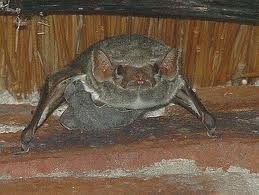
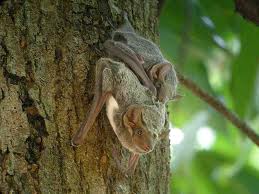
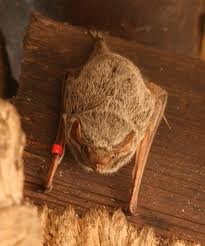
MEET THE MAURITIAN TOMB BAT!

   Range/Habitat: Central- South Africa/ scrub-savannas

   Diet: Insectivore: insects

   Length/Weight: 2 ¾-3 ½”/ 1 1/16 oz

  Conservation Status: common


Fun Facts:

  • Mauritian Tomb Bats make a variety of vocalizations (not all audible are to humans).
  • They use echolocation to find prey.
  • Mauritian Tomb Bats roosts in trees and buildings.
  • They roost in small groups instead of large colonies.
  • Mauritian Tomb Bats have good eyesight.
  • They are nocturnal (active at night).

Mauritian Tomb Bats are really cool. Well, all bats are really cool if you ask us. Most bats eat insects, some eat fruit and yes there are a few who drink blood! Wow! What’s your favorite thing about bats?

Categories: adventure, Animals, bats, Children, conservation, education, Environment, mammals, nature, rainforests, science, wildlife | Tags: , , , , , , , , , , | Leave a comment

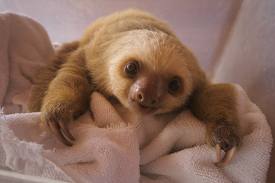
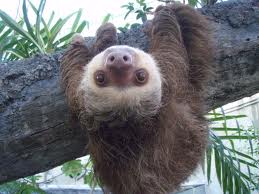
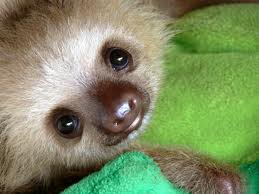
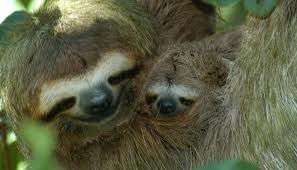
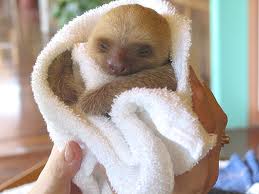
INTERNATIONAL SLOTH DAY!

Happy International Sloth Day!

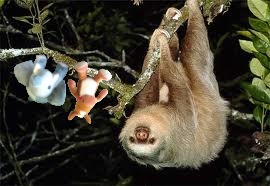
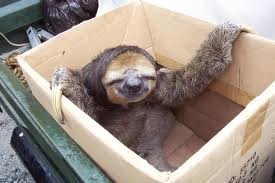
YAAAAAWN! Do you know what animal sleeps 20 hours a day and spends most of their lives upside down in a tree? If you guessed sloth you’re right!!!

We’re celebrating these sleepy creatures today with some fun facts and great photos! Are you ready to head to the rainforests of Central and South America to meet these cute and lazy animals?

  • Sloths sleep up to 20 hours a day.
  • Sloths are arboreal (they spend most of their lives in trees).
  • They only poop once a week; and they do that on the ground to keep the scent away from where they live.
  • Sloths have algae that grows on their fur. It helps keep them camouflaged in their habitats.
  • They are related to armadillos and anteaters.
  • There are two species of sloth; the three toed sloth and the two toed sloth.
  • Three toed sloths have two extra vertebrae in their necks that allow them to turn them almost all the way around.
  • Sloths eat fruit and leaves.
  • Sloths are very awkward on land, but are excellent swimmers.
  • The ancient relative of the sloth is The Giant Sloth who was almost as big as an elephant! If you are on twitter, you can talk to Rusty the Giant Sloth from the University of Iowa Natural History Museum (@RustyGiantSloth).


Sloths are listed as vulnerable species, mainly due to habitat loss. There is a wonderful Sloth Sanctuary in Costa Rica that helps protects these wonderful animals. Check them out for more info on how you two can protect our lazy friends too!


                                                                                   Who’s ready for a nap?

Categories: adventure, Animals, Children, conservation, education, Environment, mammals, nature, rainforests, science, wildlife | Tags: , , , , , , , , | Leave a comment

REPTILIAN TUESDAY # 49

REPTILIAN TUESDAY #49

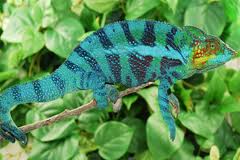
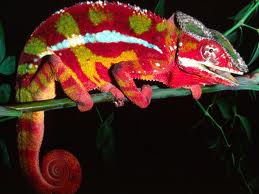
We’re jetting off to the island of Madagascar today to find one of their many species of chameleons! They may be using their camouflage super powers, so we will have to use our expert observation skills! You ready? Let’s do this!

MEET THE PANTHER CHAMELEONS!


   Range/Habitat: Madagascar/ rainforests

   Diet: Carnivore: insects, small animals

   Length: 16-20”

  Conservation Status: common


Fun Facts:

  • Male Panther Chameleons are the most colorful of all chameleons.
  • They can change color to blend in with their habitat.
  • Male Panther Chameleons also change their colors to attract females.
  • Each Panther Chameleon eye moves independently of each other. They can point them in two different directions at the same time!
  • They have long sticky tongues that they use to capture their prey!
  • Panther Chameleon tongues can be longer than their bodies!
  • They are slow movers.

Panther Chameleons are gorgeous with their bright colors. Did you know that even a blind chameleon could still blend in with its habitat? Cool, huh? We just love chameleons; how about you?


Categories: adventure, Animals, Children, conservation, education, Environment, rainforests, reptiles, science, wildlife | Tags: , , , , , , , , , | Leave a comment

MAMMAL MONDAY # 49

MAMMAL MONDAY #49

Pack your bags, because we’re going to South America today to find a resident of the rainforest! Keep your binoculars and tree climbing gear ready because this primate lives in the trees. Let’s head out on today’s animal adventure!

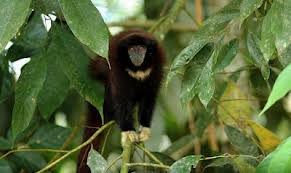
MEET THE YELLOW-HANDED TITI MONKEY!

   Range/Habitat: Northwest South America/ rainforest

   Diet: Omnivore: fruit, seeds, insects

   Length/Weight: 12-18”/ 2 ¼- 3 ¼ lbs

   Conservation Status: common


Fun Facts:

  • Yellow-handed titi monkeys have stocky bodies covered with thick black fur.
  • They have a white fur collar around their neck and bright yellow hands.
  • Yellow-handed titi monkeys have long bushy tails.
  • They are arboreal.
  • They live in small family groups.
  • Yellow-handed titi monkeys pair bond for life.
  • Male yellow-handed titi monkeys help carry the young.

These fluffy little glove wearing monkeys are so cute! Ok, they don’t really wear gloves, but their little yellow hands are great!
Categories: adventure, Animals, Children, conservation, education, Environment, mammals, nature, rainforests, science, wildlife | Tags: , , , , , , , , , | 1 Comment

REPTILIAN TUESDAY # 47

REPTILIAN TUESDAY #47

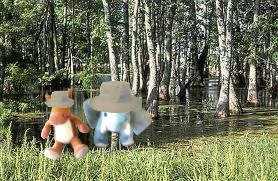
We docked the boat from our trip off the coast of South America and jumped on a plane to the northern part of the continent. We’re going on the wetlands to find one cool reptile. Grab your hats and let’s go!

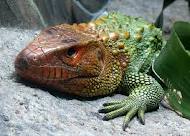
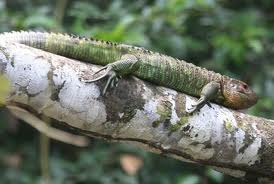
MEET THE CAIMAN LIZARD!

   Range/Habitat: Northern South America/rainforest-wetlands

   Diet: Carnivore: snails, crabs

   Length: 3- 3 ½ ft

   Conservation Status: not listed


Fun Facts:

  • Caiman lizards have large cone shaped scales on their backs and tails.
  • Male Caiman lizards have green bodies and orange throats and females have gray throats.
  • Caiman lizards have strong jaws for crushing snail shells.
  • They are excellent swimmers.
  • Caiman lizards spend most of their time in or near water.

Caiman lizards are so colorful and cool! They look like little dinosaurs, well if they had feathers they would! If you could color a lizard any color, what colors would you use?


Categories: adventure, Animals, Children, conservation, education, Environment, nature, rainforests, reptiles, science, wildlife | Tags: , , , , , , , , | 1 Comment

MAMMAL MONDAY # 44

MAMMAL MONDAY #44!

We hope you enjoyed learning about some of smarties of the animal kingdom last week! We sure had fun! It’s back to our regular scheduled programming and that means it is Mammal Monday and we’re off to the rainforests of South America to meet one cute little primate! So grab your binoculars and let’s do this!

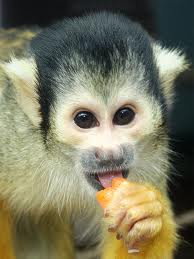
MEET THE BOLIVIAN SQUIRREL MONKEY!

   Range/Habitat: West-Central South America/ rainforest

   Diet: Omnivore: insects, fruits, seeds

  Length/Weight: 10 ½-12 ½”/ 34 oz

  Conservation Status: common


Fun Facts:

  • Bolivian Squirrel Monkeys live in large troops, with up to 40-50 individuals.
  • The troops have sub groups, males, females and juveniles.
  • They are very social and vocal.
  • Bolivian squirrel monkeys’ tails are longer than their bodies and heads combined.
  • Bolivian squirrel monkeys are arboreal (spend most of their lives in trees).
  • They spend half of their days foraging for insects.

Goodness these Bolivian squirrel monkeys adorable. Can you imagine hearing a whole troop of these monkeys in the trees? That would be so fun!


Categories: adventure, Animals, Children, conservation, education, Environment, mammals, nature, rainforests, science, wildlife | Tags: , , , , , , , , | Leave a comment

ANIMAL INTELLIGENCE DAY # 4

ANIMAL INTELLIGENCE DAY #4 

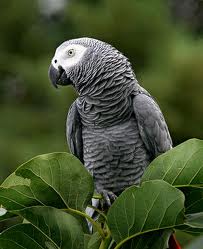
Our last day of meeting animal smarties takes us to the rainforests of Africa to find a very special bird. This bird is known to be very smart and great at imitating human speech.  Wonder if they can do a good elephant or horse impression?

MEET THE AFRICAN GREY PARROT!

   Range/Habitat: West-Central Africa/lowland rainforest and farmland

   Diet: Herbivore: fruit, nuts, leaves

   Length/Weight: 13”/14 oz

   Conservation Status: Common- Near Threatened

Fun Facts:

  • African Grey Parrots are highly social birds that live in flocks.
  • There are two subspecies (types) of African grey parrots: the Congo, who is larger and has a bright red tail and the Timneh, who is smaller and darker and has a maroon tail.
  • When flying in large flocks African greys call to each other and communicate by flashing their bright red tails.
  • They have a long life span. They can live up to 60+ years.
  • They are highly intelligent and have been compared to human toddlers.
  • African greys are highly vocal and are amazing at mimicking sounds and language!
  • Alex is an African Grey Parrot that worked with Dr Irene Pepperberg and was known to do things such as sort colors, shapes and count! We’re going to write a separate post about Alex- he was a very special bird!

African grey parrots are very special birds! They’re very smart and social, a great combination! If you could teach a parrot to say one thing, what would it be? Ellie would teach him to trumpet like her! Alex the African Grey was a very famous parrot who could things we never thought parrots could do! Check out this short video! Unfortunately, Alex passed away, but the Alex Foundation continues research to show how smart parrots really are!


Categories: africa, Animals, birds, Children, conservation, education, Environment, nature, rainforests, science, wildlife | Leave a comment

ANIMAL INTELLIGENCE WEEK!

ANIMAL INTELLIGENCE WEEK!

As children all over are heading back to school to learn and grow, we here at Ellie and Edmond headquarters want to celebrate amazingly intelligent animal friends! And you humans thought you were smart! Scientists all over the world are realizing that animals can learn language, use tools and even recognize themselves in a mirror. We’re off to the rainforests of West Africa to meet our first smarty and human kinds’ closet living relative! Let’s head out on this adventure!

MEET THE COMMON CHIMPANZEE!

   Range/Habitat: West-Central Africa/ rainforest

   Diet: Omnivore: invertebrates, fruits, nuts

   Length/Weight: 25-35”/ 60-130 lbs

   Conservation Status: critically endangered


Fun Facts:

  • Chimpanzees are highly social and live in complex social groups.
  • They can make 30 plus different kinds of calls and vocalizations.
  • Chimpanzees have a wide variety of facial expressions.
  • Chimpanzees are tool users and tool makers. They make tools from sticks and extract termites or ants with the stick. They also use things like rocks to crack open nuts.
  • They build nests to sleep in at night. They build a new one every night.
  • Chimpanzees learn tool making/using behavior from their mothers and other chimps.
  • They use cooperative and complex hunting skills to capture live prey.
  • Chimpanzees have been known to learn sign language.
  • They can recognize themselves in a mirror.

We could go on and on about these amazing apes! We still have so much to learn from them. There is even a Bonobo chimp who has learned complex language named Kanzi, read more about him here. Sadly, these apes are very endangered and it critically important that we all work to ensure their future. Jane Goodall, one of our personal heroes, has been studying and working with chimpanzees for many years. The Jane Goodall Institute is great place to learn more about how to help the apes! Also check out the movie Chimpanzee, you will love it!


Categories: adventure, Animals, apes, Children, conservation, education, Environment, mammals, nature, rainforests, science, wildlife | Tags: , , , , , , , , , | 1 Comment

FEATHERY FRIDAY GREATEST HITS!!

FEATHERY FRIDAY GREATEST HITS!!

On this Feathery Friday we went in search of a beautiful beaked bird! Whew! We’ve made it to another Friday and we’re so happy that it’s full of feathers! Our bird friends come in so many shape and sizes and today’s bird has a giant beak! Who is this amazing bird with the big ole beak?

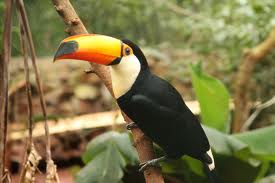
MEET THE TOCO TOUCAN

   Range/Habitat: North Eastern-Central South America (Bolivia-

Peru-Argentina)/woodland, forest, groves

   Diet: Omnivore: insects, fruits, frogs

   Length/Weight: 21-23”/20 oz

   Conservation Status: Common


Fun Facts:

  • Toco Toucans are the largest of all toucans.
  • They have large orange bills with a black spot. The bills can get up to 7 ½” long (about the length of a pencil).
  • Toco Toucan bills are serrated (like a knife) and this helps them grasp and tear fruit.
  • Their large bills also enable the toucan to get fruit from out of reach branches.
  • Toco toucans nest in trees.
  • You can see Toco toucans in small flocks of up to 6 birds.
  • Both female and male toucans incubate the eggs.

Toco Toucans are really pretty birds with their shiny black feathers and large orange beaks! And man does that beak come in handy when you’re trying to get the fruit on the end of the branch! They also have a really cool call. Take a listen and Happy Feathery Friday!


Categories: adventure, Animals, birds, Children, conservation, education, Environment, nature, rainforests, science, wildlife | Tags: , , , , , , , , | Leave a comment

Blog at WordPress.com.