Posts Tagged With: children

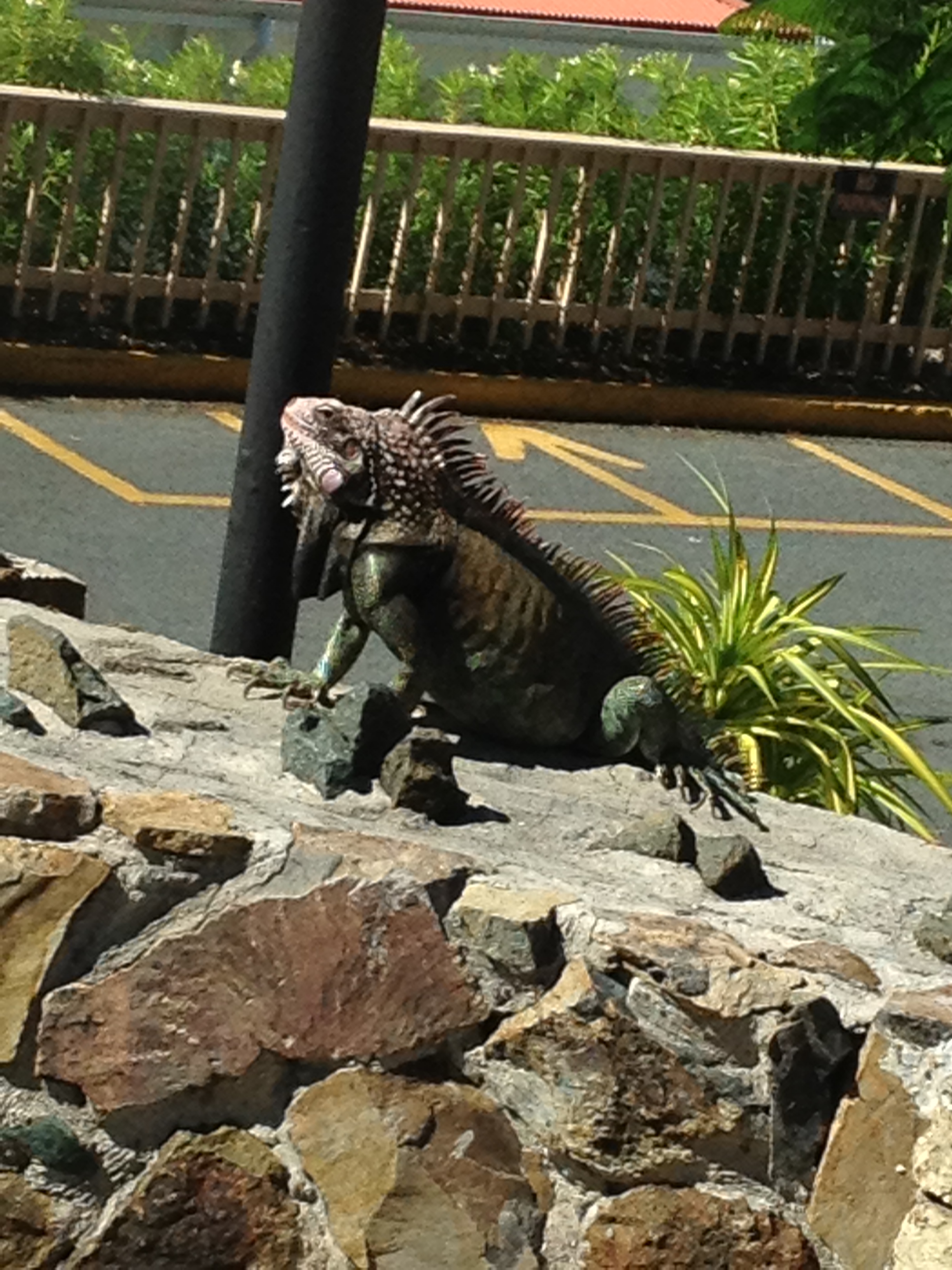
GREEN IGUANA DAY!

Green Iguana in St Thomas

HAPPY GREEN IGUANA DAY!

We’re celebrating green iguanas today! We saw so many while we were in St Thomas, so we thought we would post fun facts throughout the day! Checkout our twitter account: http://twitter.com/#!/EllieandEdmond and our Facebook page: http://www.facebook.com/pages/Ellie-and-Edmond/254090144618348 for fun facts and pictures!

Categories: Animals, Children, education, Environment, nature, reptiles | Tags: , , , , | Leave a comment

MAMMAL MONDAY #18

MAMMAL MONDAY# 18

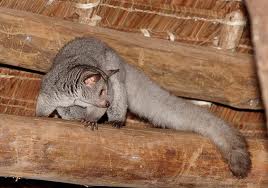
Happy Mammal Monday! We had such a fabulous adventure last week, but we’re ready for a whole new week of animals! Be sure to look out tomorrow- we’re doing something special! Today’s animal is a cute prosimian! What’s a prosimian you ask? Well, they are primates, but they don’t have all the adaptations that monkeys and apes do! Prosimians include, lemurs and aye-ayes! Are you ready to meet this furry primate?

MEET THE GREATER GALAGO!

Range/Habitat: Central-Southern Africa/woodlands

Diet: Omnivore: fruit, tree sap, insects

Length/Weight: 10-16”/2 ¼-4 ½ lbs

Conservation Status: common


Fun Facts:

  • Greater Galagos are the largest of the galago family.
  • Greater galagos are also known as Thick-tailed Bush babies.
  • They are called bush babies because of their childlike cries.
  • They are nocturnal (active at night) and have large eyes and ears that help them navigate and find food in the dark.
  • Greater galagos are arboreal (spend most of their time in trees).
  • Greater galagos have strong feet with pads to help them climb and jump.
  • They have brownish-grey fur!


Wow, these little primates have perfect adaptations for a life in the trees! But you won’t see one unless you are willing to head into the woods at night. Is anyone up for a nighttime adventure? Bring your night vision goggles and let’s go!


Categories: Animals, Children, education, Environment, mammals, nature | Tags: , , , , , | Leave a comment

FEATHERY FRIDAY # 17

FEATHERY FRIDAY# 17

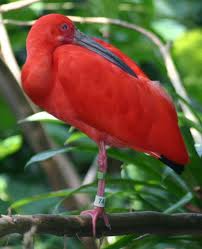
We’re into brightly colored animals this week! Yesterday was Gold Frogs and today’s Feathery Friday bird is scarlet! These beautiful birds are pretty amazing! You ready to meet them?

MEET THE SCARLET IBIS!

Range/Habitat: Central America-Northern South America/estuaries, mangroves, swamps, marshes

Diet: Carnivore: frogs, crabs, fish, and crustaceans

Length/Weight: 22-27”/28-33 oz

Conservation Status: Common

Fun Facts:

  • Scarlet Ibis are born grey and turn red as they eat crustaceans that cause the scarlet plumage.
  • They live in large flocks.
  • Scarlet ibis wade in water looking for prey. They use their long beaks to find prey.
  • They roost in trees at night.
  • Scarlet ibis are the national bird of Trinidad.

Scarlet ibis are bright and beautiful birds! Just like flamingos they get their color from the food they eat! They’re so fancy that they’re the national bird of a country! Wow!

Categories: Animals, birds, Children, education, Environment, nature | Tags: , , , , , | Leave a comment

SUPER SURPRISE THURSDAY # 17

SUPER SURPRISE THURSDAY# 17

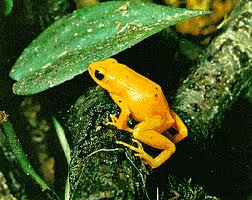
Have you ever seen a gold amphibian? No? Well we have one for you on this Super Surprise Thursday! Are you ready to travel to the mountainous rainforests of South America? Let’s go!

MEET THE GOLD FROG!

Range/Habitat: South America (Brazil)/mountainous rainforests

Diet: Carnivore: insects, small invertebrates

Length: 3/8-3/4”

Conservation Status: locally common

Fun Facts:

  • Gold frogs are also known as the Brazilian Golden Frog.
  • They are mostly ground dwellers (terrestrial).
  • Gold frogs are not good at jumping or climbing.
  • They are the smallest frog in the Southern Hemisphere; they’re about the size of a penny.
  • Gold frogs are bright orange/yellow in color.
  • They have a bony plate under the skin on their backs.
  • Gold frogs do not have a tadpole stage; they hatch from eggs as small frogs.

Gold frogs are teeny tiny. And who knew there were frogs out there that didn’t start out their lives as tadpoles? We didn’t know that! It so much fun to learn all about animals!

Categories: amphibians, Animals, Children, education, Environment, frogs, nature | Tags: , , , , , | Leave a comment

WATERY WEDNESDAY # 17

WATERY WEDNESDAY# 17

Sharks come in all shapes and sizes and we have a sleek coral reef dweller for this Watery Wednesday! So come meet this gray shark with colored tips!

MEET THE BLACKTIP REEF SHARK!

Range/Habitat: Indo-Pacific Oceans/coral reefs-shallows

Diet: Carnivore: fish, crustaceans, octopus, squid

Length/Weight: up 6 ½ ft/ over 99lb

Conservation Status: Near Threatened

Fun Facts:

  • Blacktip Reef Sharks are the most common shark in coral reefs of the Pacific Ocean.
  • Blacktip reef sharks have streamlined bodies with black color on the tips of their fins.
  • They are powerful are strong and quick swimmers.
  • Blacktip reef sharks must swim to breath. The motion moves the water over their gills that extract oxygen from the water.
  • They can be curious of divers.

Blacktip reef sharks are fast and sleek! They are very important in their coral reef habitats, because they’re apex predators (top of the food chain). Blacktip reef sharks look so sleek and smooth! Do you think they feel that way? Nope- they feel like sandpaper! Neat, huh?

Categories: Animals, Children, education, Environment, fish, nature | Tags: , , , , | Leave a comment

REPTILIAN TUESDAY #17

REPTILIAN TUESDAY # 17

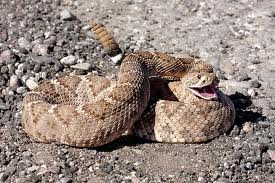
Reptilian Tuesday brings us a reptile that deserves respect and a lot of distance. Yes, we’ve found a very venomous snake that is beautiful as it is scary. So let’s meet…

MEET THE WESTERN DIAMONDBACK RATTLESNAKE!

Range/Habitat: Southwestern United States-North Mexico/desert-scrub-forest

Diet: Carnivore: small mammals, birds, lizards

Length: 3-6ft

Conservation Status: common

Fun Facts:

  • Western Diamondback Rattlesnakes are heavy, stocky snakes with a diamond pattern on their backs.
  • They have very dangerous venom and are dangerous to humans.
  • Western Diamondback Rattlesnakes have a segmented rattle on the end of their tails that they rattle to warn predators.
  • The rattles get longer after the snake sheds its skin. They can get up to 10 segments long.
  • Western diamondback rattlesnakes have no rattles when they are born.
  • They are ambush predators.
  • Western diamondback rattlesnakes are pit vipers; they have heat sensing pits between their eyes.

Western diamondback rattlesnakes are definitely a snake you should stay away from. They are an important part of the ecosystem though and are to be respected! Every animal has their place on our planet, cute or not!

Categories: Animals, Children, education, Environment, nature, reptiles | Tags: , , , , | Leave a comment

MAMMAL MONDAY # 17

MAMMAL MONDAY# 17

Happy Mammal Monday! Are you ready to meet a cute little animal that lives in the forest of Southeast Asia? This little animal is called a shrew, but it’s not actually a shrew. So let’s meet…

MEET THE PYGMY TREE SHREW!

Range/Habitat: Southeast Asia/forests

Diet: Omnivore: small animals, fruits, leaves

Length/Weight: 4 ¾-5 ½”/ 1- 2 ½ oz

Conservation Status: common

Fun Facts:

  • Pygmy tree shrews are not shrews. New research shows that are more closely related to flying lemurs and lemurs.
  • They have large brains compared to their body size.
  • Pygmy tree shrews spend most of their time on the ground foraging for food. They sleep in the roots of trees or low branches.
  • They have large eyes and ears to listen and look for predators.
  • Pygmy tree shrews are diurnal (active during the day).
  • They have glands on their stomachs that they use to mark the trees in their territory.
  • Pygmy tree shrews have long tails to help them balance.
  • They also have feet and claws that are built for climbing trees.

Wow, who knew a shrew is not really a shrew? We still have tons to learn about these little animals. Isn’t it crazy that we’re still learning so much about animals! That’s another good reason to make sure we protect these animals!

Categories: Animals, Children, education, Environment, mammals, nature | Tags: , , , , | Leave a comment

An Interview with a Reindeer Puppet Wrangler

You know Dasher and Dancer and Comet and Cupid… but do you recall the most famous reindeer of all? That’s right it’s Rudolph the Red Nosed Reindeer!

Last week we went to the Center for Puppetry Arts here in Atlanta to see “Rudolph the Red Nose Reindeer”! It is a live adaptation of the beloved TV special and we loved it! There are dancing and singing snowmen, trees, raccoons, bunnies and squirrels! Oh yeah, and reindeer! There’s a snow monster, misfit toys, a lion king and last but not least Santa! What more could you want in a puppet show? It a word, it’s fabulous!

We had a chance to interview one of the talented puppeteers from the show! And man was she nice! Here’s our interview with Allison Murphy who plays Rudolph and Mrs. Claus.


Us: What’s it like playing a reindeer?

Allison: It’s fun and new, because you don’t meet many reindeer.

Us: How did you prepare to play Rudolph? Did you talk to any live reindeer?

Allison: No, I wish I had to talk to a reindeer, but they are hard to meet in Atlanta.  (Allison did tell us that she watched the TV special to get into character.)

Us: Do you play any other animals in the show?

Allison: Not usually, I sometimes play a raccoon. I do play a dancing tree too.


Us: Ellie’s favorite character in the show is of course the spotted elephant and Edmond’s is Rudolph. Who is your favorite character?

Allison: It depends on the day. I like Charlie in a Box and Sam the snowman because he’s a good storyteller.


Us: What is your favorite part of the show? We loved it when Sam the Snowman sings “Silver and Gold” and the animals decorate the tree! There were cool special effects during that part!

Allison: I like the “We’re a Couple of Misfits” song sung by Rudolph and Herbie and I like the “Silver and Gold” scene. I get to take a break during that song. (Turns out the adolescent Rudolph puppet is pretty heavy, so Allison’s arms need a brake  J!)


Us: How long does it take to prepare/rehearse for the show?

Allison: We rehearse for 4 weeks before the show, 6 days a week, 8 hours a day.  (Wow- who knew it took so much work to put on the show!)

Us: How did you get started in puppetry?

Allison: It was accidental. I grew up watching the Muppets and Fragile Rock. I never heard of the Center for Puppetry Arts. A friend who lived in Atlanta said she could get me an audition at the Center, so I came and watched a show and was amazed. I auditioned in 2006 and I got the job. (Allison grew up in Kentucky and attended the Boston Conservatory and has a masters degree in musical theater. Trust us, she can sing and act!)

Us: What advice would you a give a kid or small horse who wants to get into puppetry?

Allison: Come to puppet shows, take workshops at the Center, make puppets, put on shows at home and be creative.  (We thought these are all fun ideas!)

Us: We love that the story of Rudolph is ultimately about “misfits” finding their place in the world. Were you ever a misfit?

Allison: I have always loved music, singing and playing with puppets. The Center is my Island of Misfit Toys, I found a place to fit in here. I think all misfits eventually find their Yukon Cornelius and Herbie.  (We just love this! It’s true all misfits find their place in life! We think being a misfit is great!)

We had such a lovely time talking to Allison. She was so nice to spend some time with a little elephant and horse. After we talked to her, she even took us back stage, and man that was so exciting! We saw how things work and the scenery up close. We couldn’t take pictures, because that ruin the magic of the show! And believe us it’s magical! We did get to take some pictures with young Rudolph and Allison though!
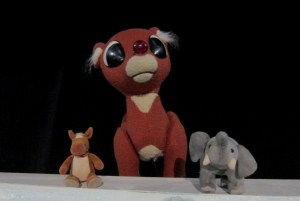
Here we are with Rudolph! YAY!
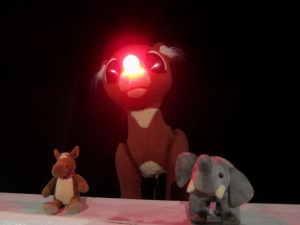
Rudolph's red nose all lit up! It is very bright! Great for guiding Santa's sleigh!

Allison, Rudolph and us!
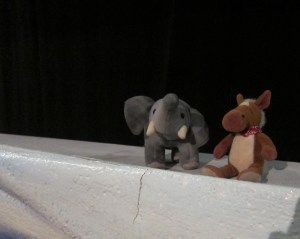
Here we are hanging on some snow scenery! Edmond wants to be a puppeteer now!

You can become a member at the Center!

You have to put “Rudolph the Red Nosed Reindeer” on your to do list this holiday season! They sold out all 91 shows last year and have already surpassed the number of people they had last year at this time. The last week of December the Center will have 3 shows a day! Whew, we bet our friend Allison and the rest of the puppeteers will be pooped by then! Good luck!

Here’s more info on the Center for Puppetry Arts and “Rudolph the Red Nosed Reindeer”:

http://www.puppet.org/

Categories: Animals, Atlanta, Children, education, Local | Tags: , , , | Leave a comment

An Adventure at Pike Nurseries!

It’s the holidays and we wanted to learn about how we could incorporate nature into our holiday celebrations. So we headed to our local Pike nursery to learn all about holiday plants and trees. We met a lovely lady named Alison who showed us around and taught us all kinds of fun stuff! So come join us on our plant adventureJ!

First up, let’s learn about poinsettias!

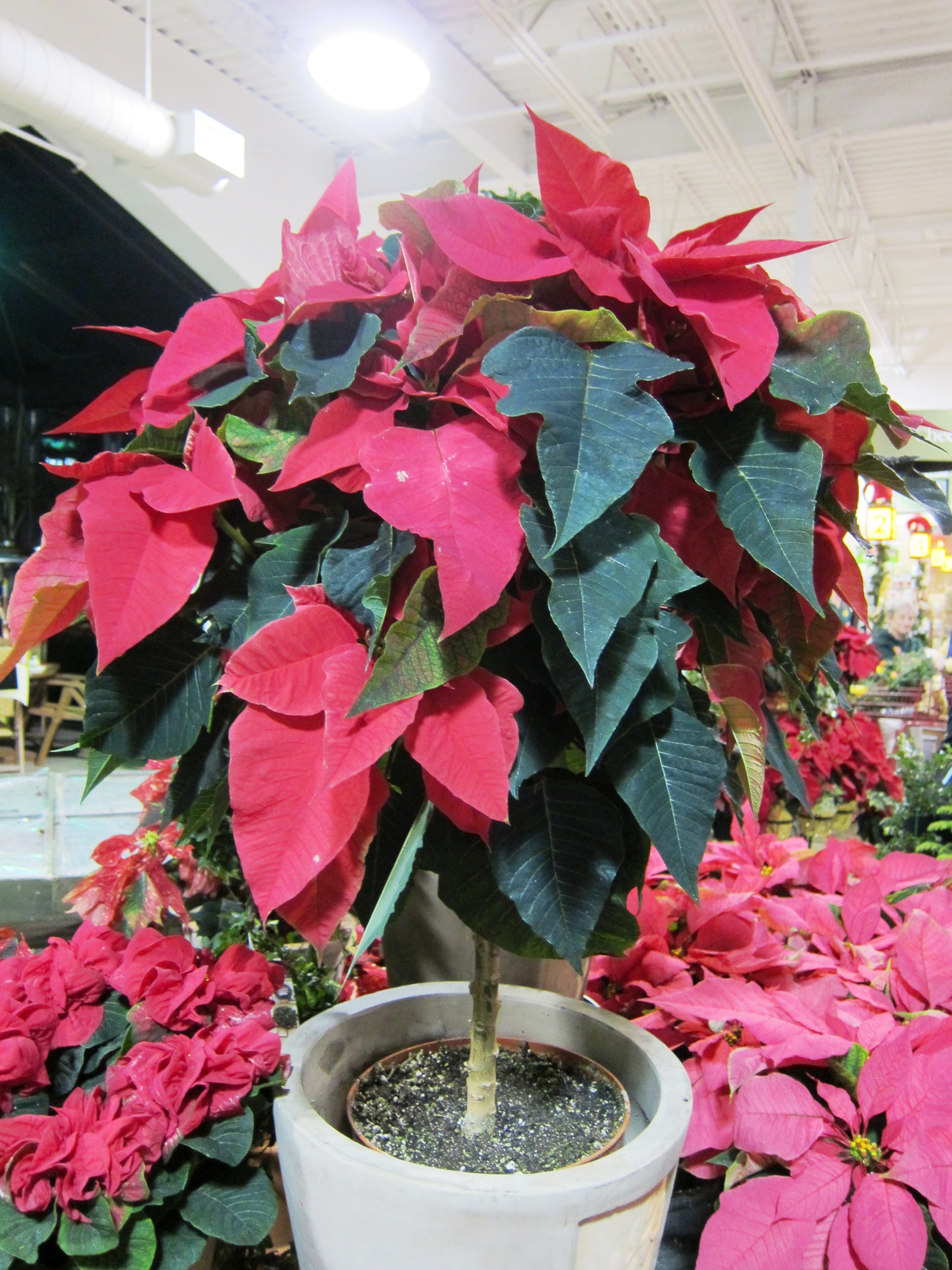
Beuatiful Poinsettia!

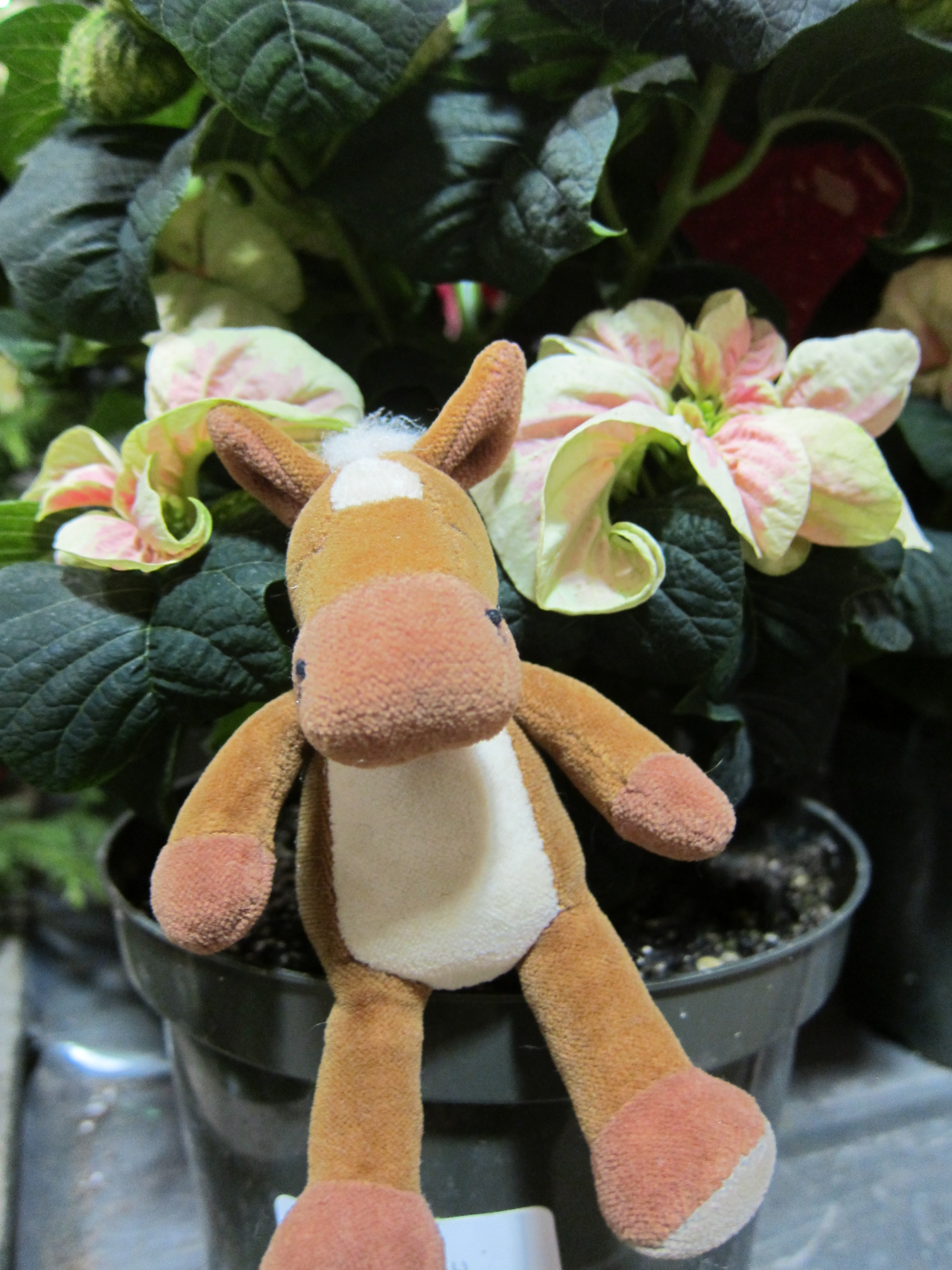
Edmond liked the white poinsettias

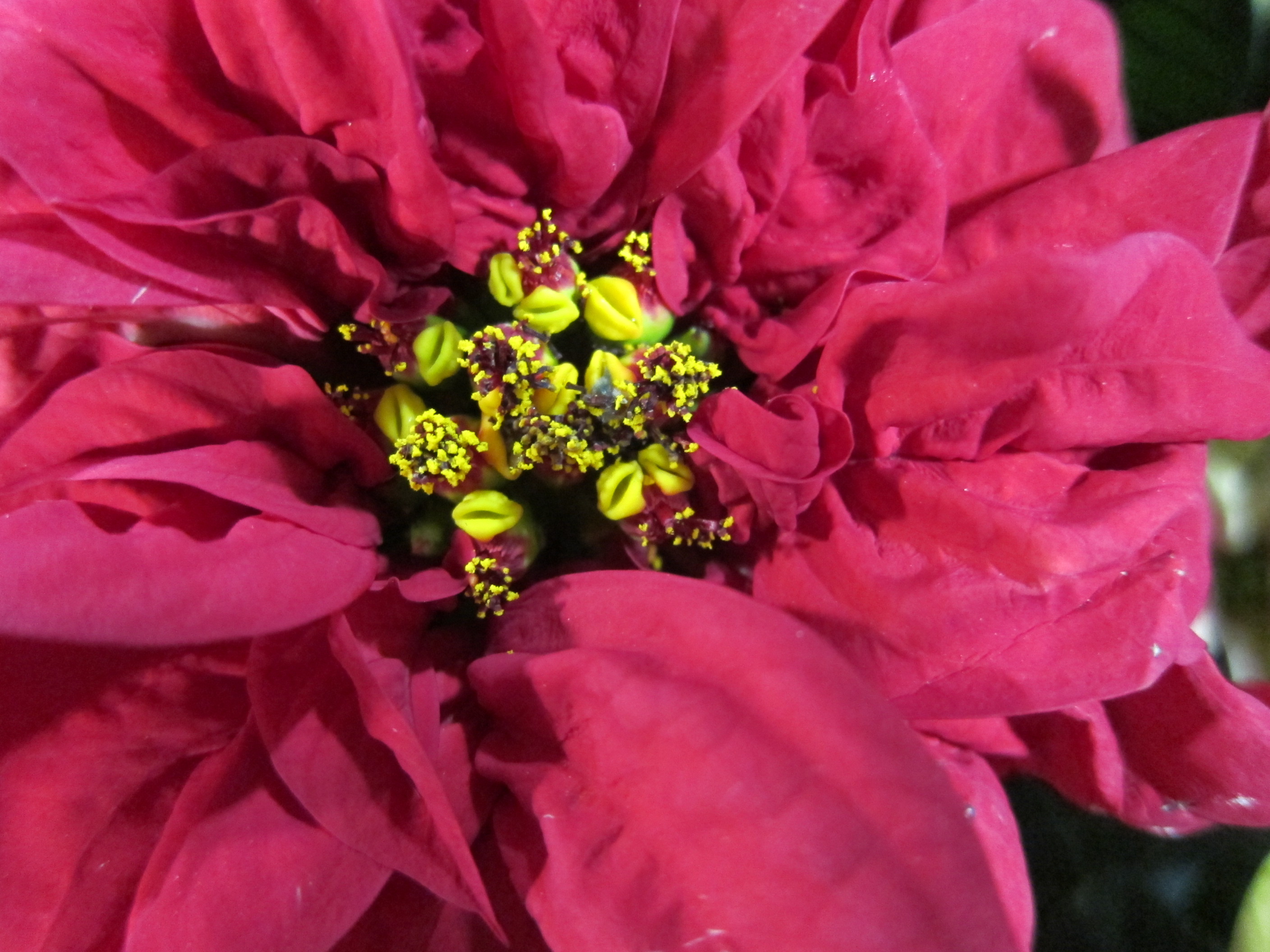
Poinsettias are tropical plants, that are native to Mexico and they are beautiful! They come in all kinds of colors (from red to pink to white) and sizes (large and small)! Did you know that the colored part of the poinsettia is actually the leaf and not the flowering part of the plant? We didn’t either! The flower of the poinsettia is in the center of the plant and looks like tiny little yellow Venus Flytraps (at least that’s what Edmond thought they looked like).

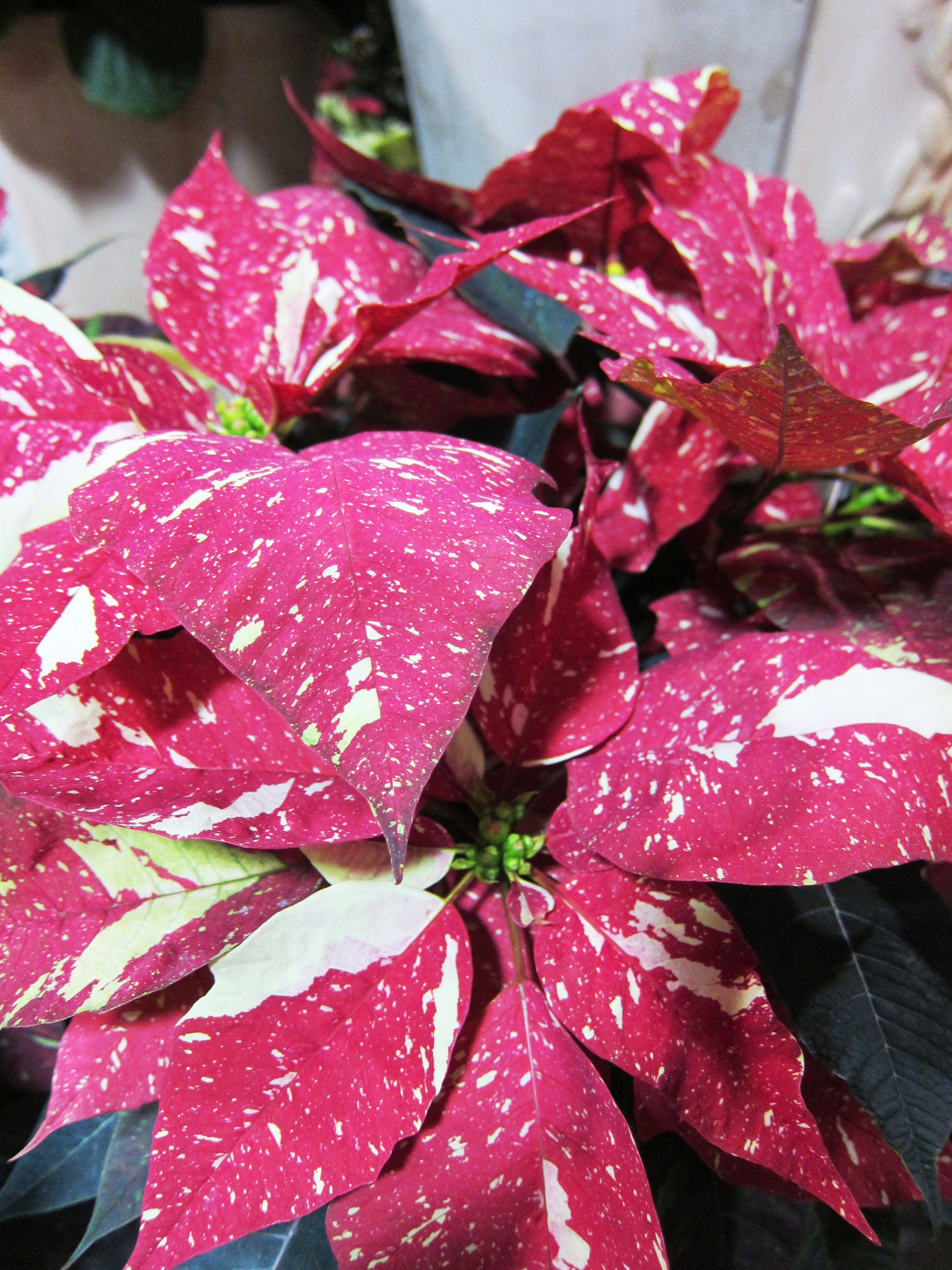
  • Red and white speckled!

The yellow center is actually the flower and the leaves are red! Don't the flowers look like Venus Flytraps?

Poinsettias are considered blushing plants; no they don’t turn red when embarrassed, but that would be funny. Their green leaves turn dark purple to red as the days get shorter. Neat!

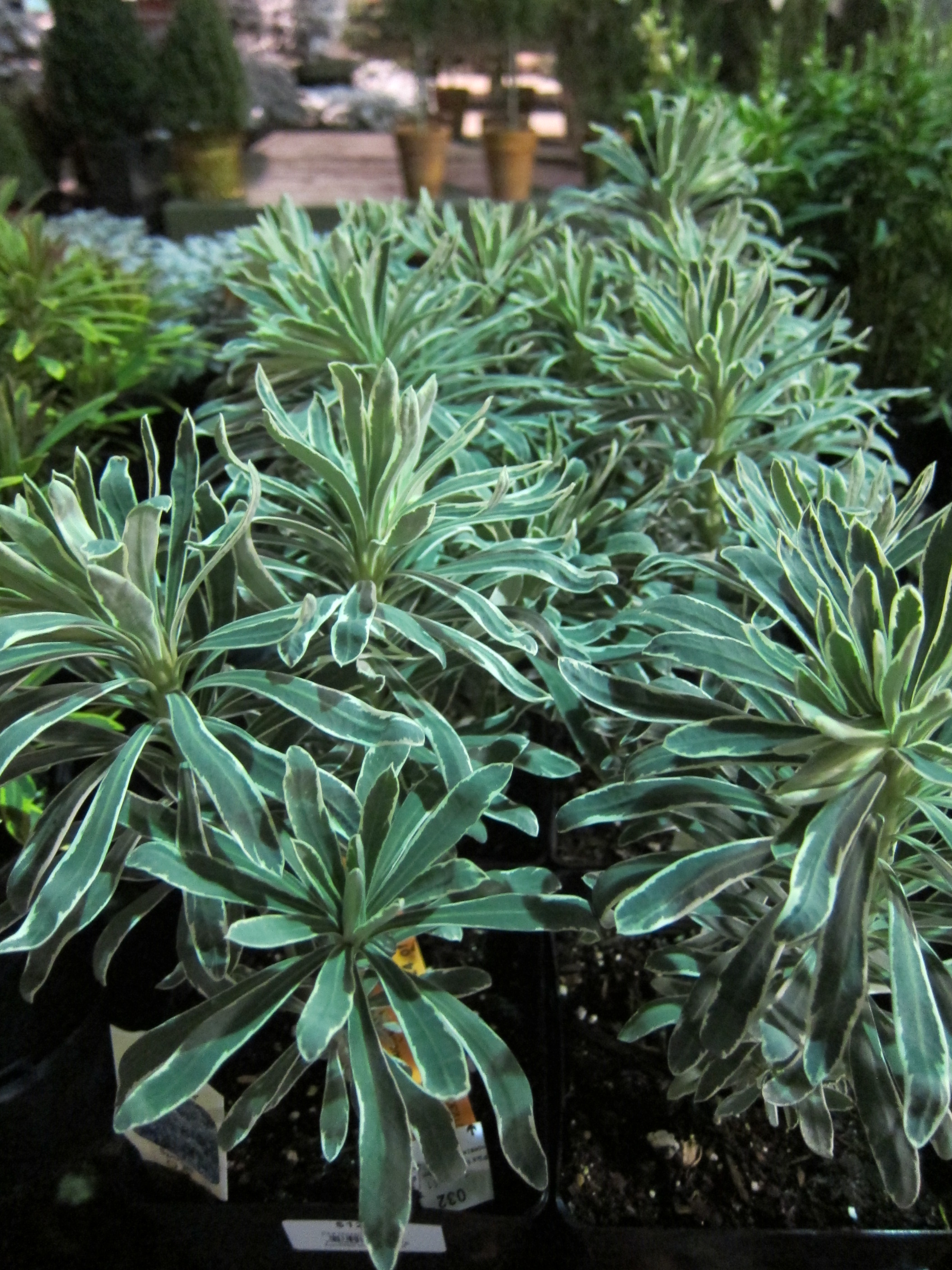
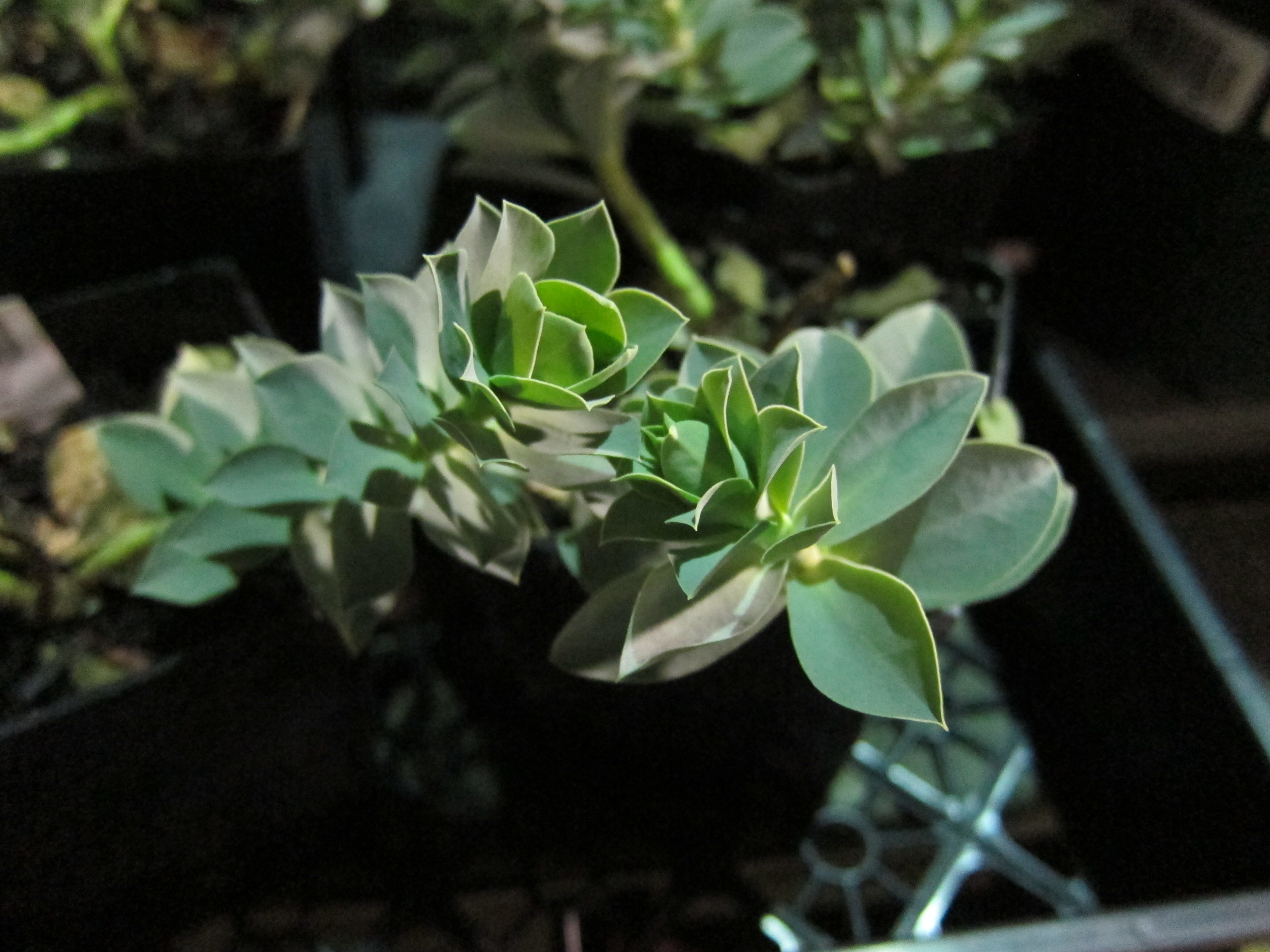
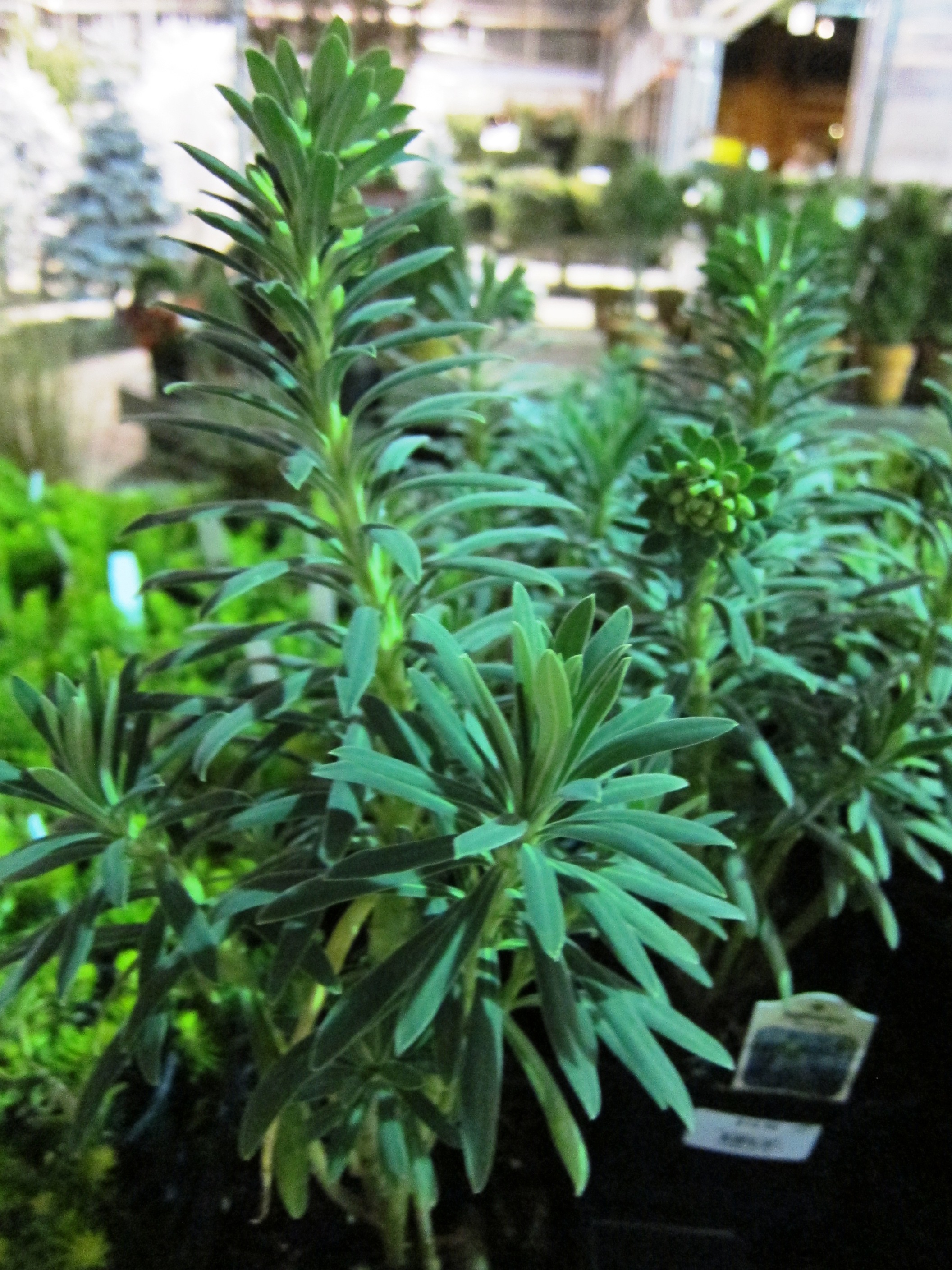
Did you also know that poinsettias are members of the succulent family? Succulent plants retain water in their leaves and roots and are adapted to live in tropical to desert environments. You may be familiar with cactus, also members of the succulent family! The succulent family of plants is very large and diverse! We found these relatives of the poinsettia at the nursery! They’re called Euphorbia, funny name, pretty plants!

Euphorbia! We thought they look like little palm trees!

More Euphorbia! These kind of look like cactus!

One more type of Euphorbia!

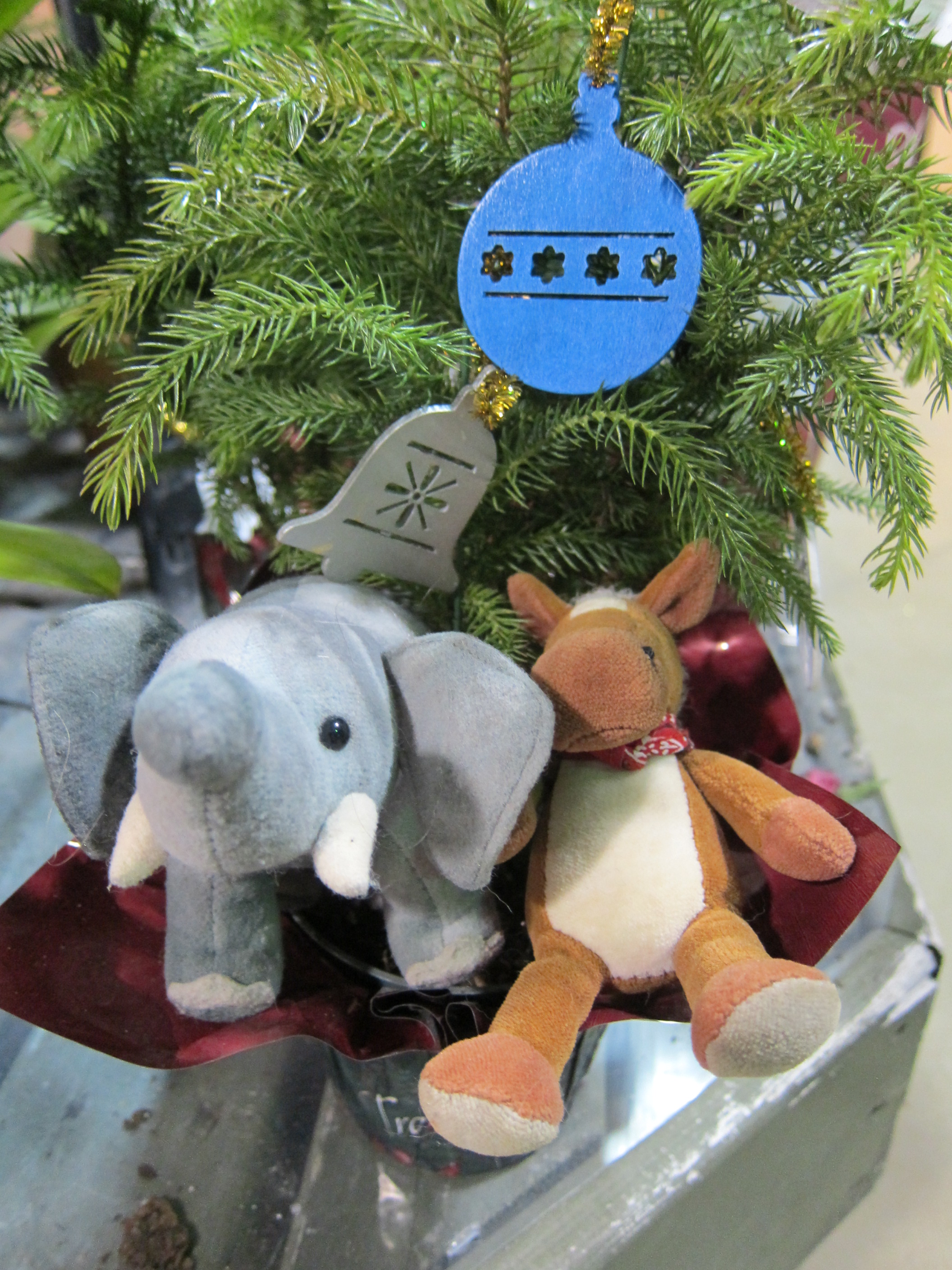
Our new friend showed us the Norfolk Island pine tree! They are a neat little tree that is native to the Pacific Island of Norfolk Island. They are also called the Star pine, because their branches are in a star pattern. These trees do well as house plants, but will not survive outside because they’re tropical! They make great Ellie and Edmond sized Christmas trees too!

Here we are with an Ellie and Edmond sized Norfolk Island Pine!

Norfolk Island Pine!

We also stumbled upon some topiaries! They use ivy to grow around the shape underneath. Edmond especially loved the reindeer topiary!

Edmond loved the reindeer topiary!

The next plant we discovered was the cyclamen! These flowers grown inside out and they smell like crayons! So fun! Each leaf of this plant is looks a little different.  Ellie loved the pink ones!

Ellie with the cyclamen! It smells like crayons!

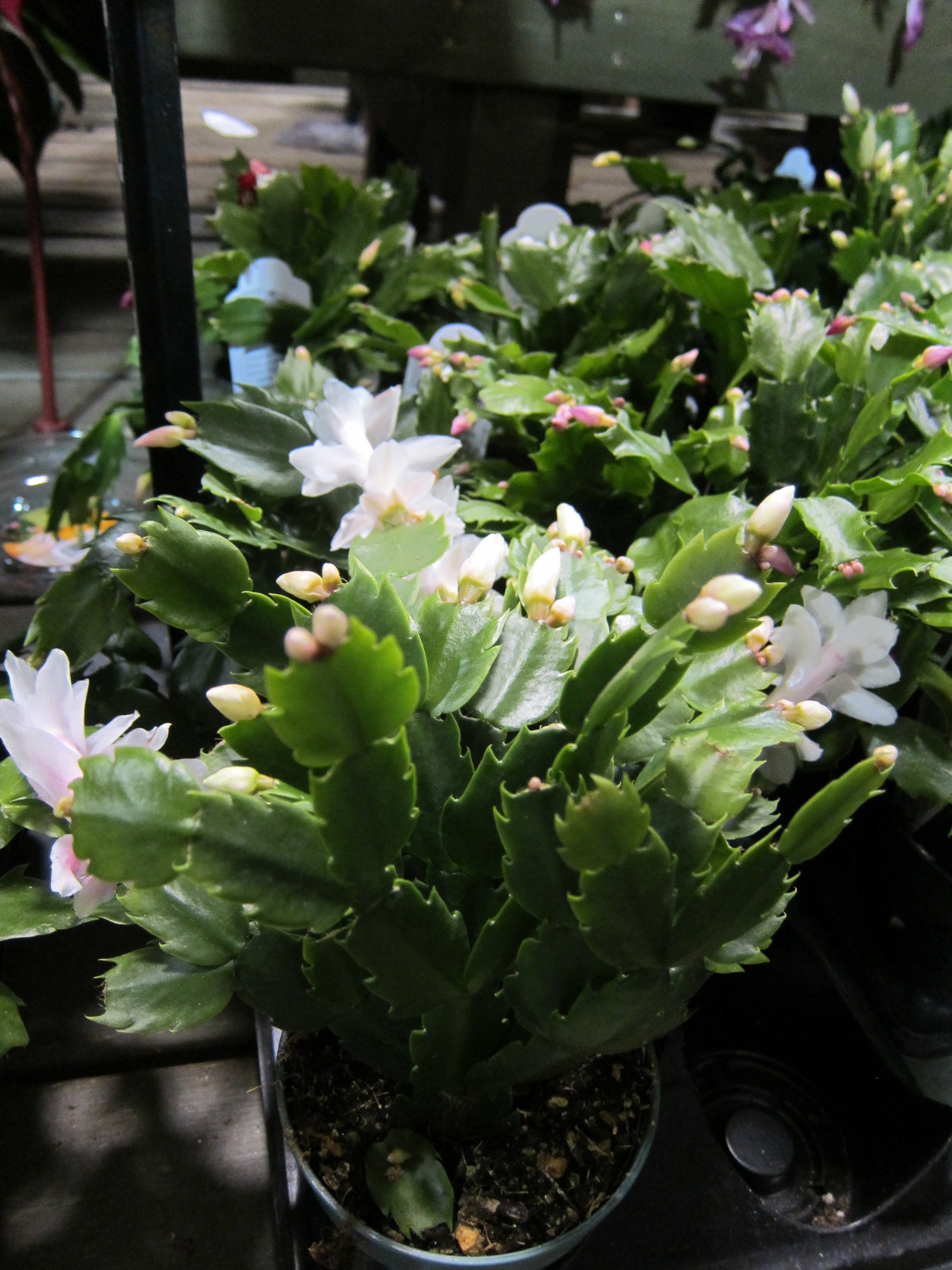
The last plant we found was the Christmas cactus. They are a tropical plant from South America! The flowers of the Christmas cactus come in white, yellow, red, pink and other colors! These plants also bloom when the days get shorter! We have fun with these!

Christmas cactus with white buds!

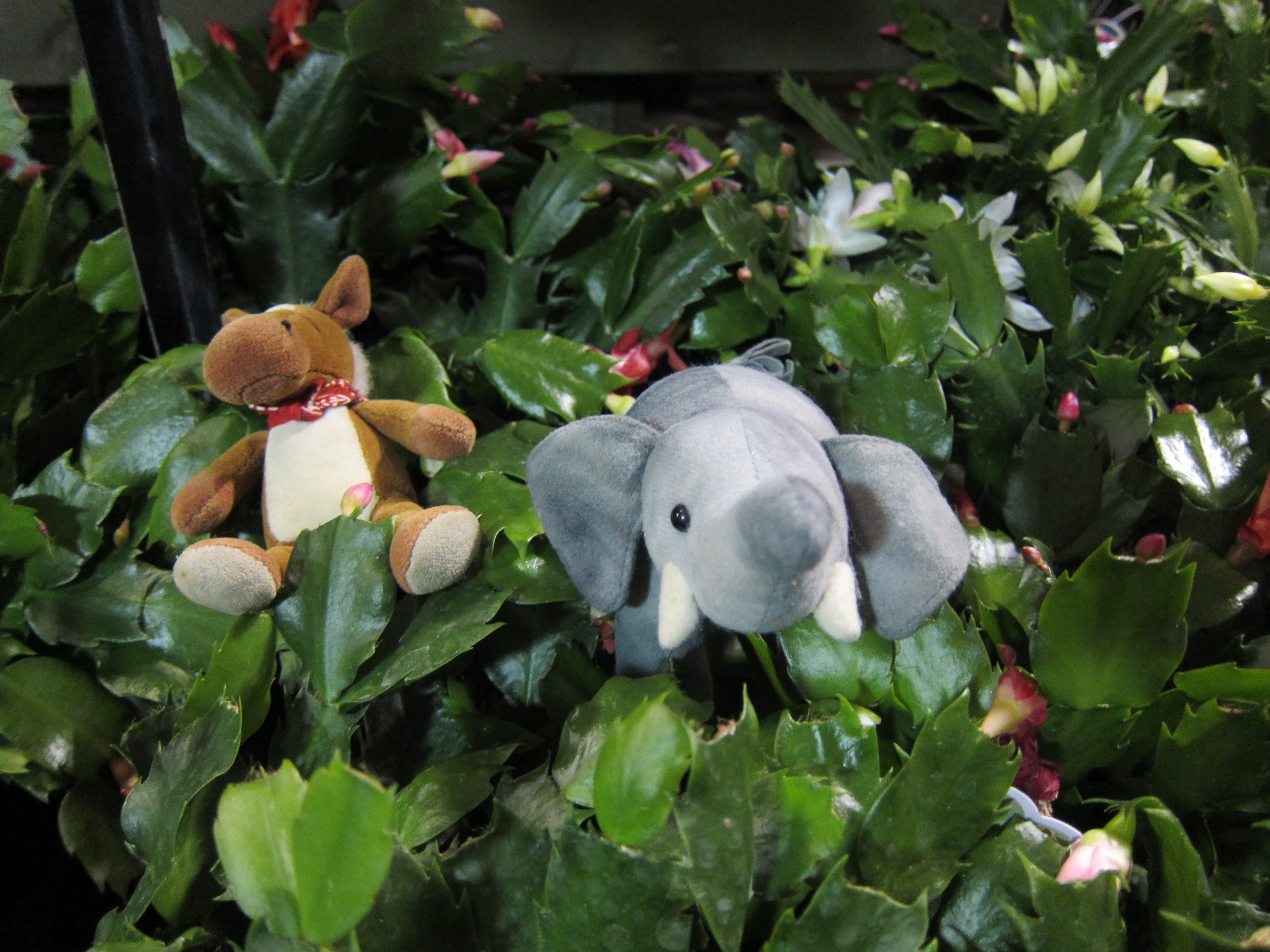
We decided to relax among the Christmas cactus! Not all cactus are pointy!

Pike’s has so many beautiful plants and we could have stayed all evening to learn about all them! Alison was a great teacher! You should definitely go and find yourselves some beautiful holiday plants to brighten your home. Remember to do your homework though when getting a plant if you have small pets or children, they can often be toxic, including the poinsettia. Cats especially like to chew on plants, we know, the cat we live with eats plants all the time! We actually eat plants to being herbivores and all!

Check out of some of the other pictures we took as we explored the store!

They had loads of bird seed! You should stop by and get the wild birds in your neightborhood a little Christmas gift :)!


Here we are hiding in some poinsettias! Fun!

Beautiful lit trees!

Categories: Atlanta, Children, education, Environment, Local, nature | Tags: , , , , , | Leave a comment

FEATHERY FRIDAY # 16

FEATHERY FRIDAY# 16

This Feathery Friday brings you a king of bird! They’re not big or on the top of the food chain, but they are called kings! Who wants to meet this royal bird? We do!

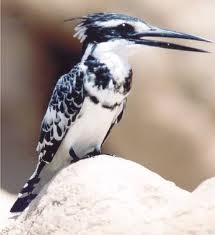
MEET THE PIED KINGFISHER!

Range/Habitat: Africa-Southwest Asia/near water- fresh and ocean

Diet: Carnivore: fish

Length/Weight: 10”/ 3 ¼ oz

Conservation Status: Common


Fun Facts:

  • Pied Kingfishers are fluffy bird with feathery crests on their heads.
  • They are speedy fliers.
  • Pied kingfishers can hover over water before diving to catch their prey.
  • Male and female pied kingfishers help rear chicks. Young adult birds act as helpers in rearing chicks too.


Pied kingfishers are neat birds! They make a great sound too! Check it out!

http://www.junglewalk.com/popup.asp?type=a&AnimalAudioID=12818


Categories: Animals, birds, Children, education, Environment, nature | Tags: , , , , , | Leave a comment

Blog at WordPress.com.