Posts Tagged With: environment

Meet a Megamouth!

Meet a Megamouth!

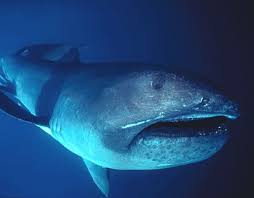
Who’s excited for our last week of Camp E&E at the beach!? We are- because it’s SHARK WEEK!! Woohoo! We’re going to meet some super cool shark friends and have a nifty shark craft this week as we wrap things up on the coast! So let’s head off to meet our first super large shark friend- megamouth!

megamouth2

Megamouth Shark Fun Facts:

  •  Megamouth sharks live in the Atlantic and Pacific oceans.
  • They are carnivores. They are filter feeders and eat krill and plankton.
  • They can grow up to 18 feet long and weigh up to 1,740 lbs.
  • Their status is listed as unknown by the IUCN.
  •  Megamouth sharks were discovered in 1976.
  •  Humans have only seen about 61 individuals.
  •  They live in deep waters!
  •   Megamouth sharks have small dorsal fins.
  •   They feed at the surface at night.
  •   They have a luminescent stripe around their mouth to attract prey.
  •   Megamouth shark mouths can reach a width of up to 4 feet across.

megamouth

Megamouth sharks are amazing! Can you imagine that we’ve only known about them in the last 30 years? The oceans are full of so many animals that we haven’t even discovered! Oceans- the last frontier!


Categories: adventure, Animals, Children, conservation, education, Environment, nature, science, sharks, wildlife | Tags: , , , , , , , , , , | Leave a comment

SHELL ANIMALS CRAFT!

SHELL ANIMALS CRAFT!

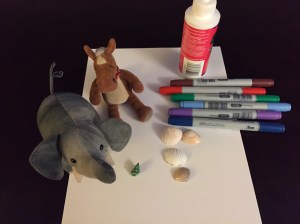
Happy craft day campers! We’re going to make shell animals today! Let’s get started!

IMG_0347

Materials:

Shells

Markers/paint

Glue

Cardstock

Instructions:

  • Glue your shells on the paper. You can arrange them in a pattern or put them all around.

IMG_0348

  • Draw your animal using the shells as bodies, head or feet- hehe!

IMG_0349

  • You can make a whole scene or a bunch of random animals! Use your imagination!

IMG_0351

Share your crafts with us on Facebook and Twitter!

Categories: adventure, Animals, Children, conservation, crafts, education, Environment, nature, science, wildlife | Tags: , , , , , , , , , , | 2 Comments

CAMP NUDIBRANCH!

CAMP NUDIBRANCH!

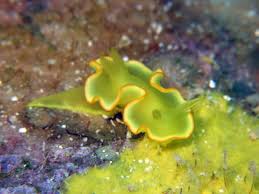
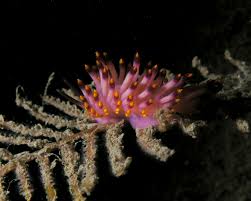
We have some colorful friends join us at camp- sea slugs! So let’s meet our nudibranch friends!

nudibranch

  • Nudibranchs are mollusks.
  • They are members of the sea slug family.
  • There are more than 3,000 species of nudibranchs.

nudibranch3

  • Nudibranchs can be anywhere from .25″ to 12″ long.
  • Nudibranchs are carnivores.
  • They get their bright warning coloration from the food they eat.

nudibranch2

  • Some nudibranchs are poisonous. They retain the toxins from their prey.
  • The tentacles on their heads are sensitive to taste, touch and smell.
  • Some nudibranchs store algae in their tissues. They live off sugar produced by that algae during photosynthesis.
  • Nudibranch can only detect light.

nudibranch4

nudibranch5


These little campers sure are bright and colorful! When you’re done meeting them- head over to the craft tent and get out the crayons and color the nudibranch coloring sheet.

IMG_0151


Categories: adventure, Animals, Children, conservation, education, Environment, nature, oceans, science, wildlife | Tags: , , , , , , , , , | Leave a comment

SHOREBIRDS ROCK!

SHOREBIRDS ROCK!

We’re off to meet some of the birds that live near camp! So let’s get started!

FullSizeRender(55)

Brown Pelican Facts:

They live in Coastal North America.
They are listed as threatened.
They nest in colonies.
Pelicans dive to get their fish.
They are the only pelican to dive head first for prey.

FullSizeRender(56)

Sanderling Sandpiper Fun Facts:
They breed in the Arctic.
Sanderlings spend their winter in the south.
They run back & forth with the waves.
They eat worms, mollusks & crustaceans.
They are very territorial.

FullSizeRender(57)

Herring gulls Fun Facts:
They prefer to drink freshwater- but will drink sea water because they can excrete the salt from nostrils.
Herring gulls have been seen using tools to catch fish (bread as bait).
Herring gulls eat mussels, clams, worms.
They are loud & gregarious.
They are large with pink legs.

FullSizeRender(58)

Piping Plover Fun Facts:
They are a small shorebird.
They have yellow legs.
They have orange bills with black tips.
They are listed as near threatened.
Piping plovers eat insects and small invertebrates.

These are just some of the our bird friends that live by the sea side! We have some worms to share with them at camp!

Do you have any favorite shore bird friends?

Categories: adventure, Animals, birds, Children, conservation, education, Environment, nature, science, wildlife | Tags: , , , , , , , , , , | Leave a comment

That’s Not My Horseshoe!

That’s Not My Horseshoe!

horseshoe crab

Every May and June when it’s a full moon, creatures from the ocean climb out of the waters and on to the beach to find a mate. Who are these creatures? Why it is the horseshoe crab campers! It’s the full moon in June, so we thought we might learn more about them!

  • Horseshoe crabs are found along the coast of the U.S. and along the Gulf coast.
  • They are carnivores. They eat worms, algae and mollusks.
  • Horseshoe crabs are listed as Near Threatened by the IUCN.
  • Horseshoe crabs and their relatives have been around for 450 million years ago .

IMG_0006

  • They are not true crabs. They are related to spiders.
  • Horseshoe crabs have hard carapaces that cover their bodies.
  • Horseshoe crabs have six pair of legs.
  • They have one long tail to help right themselves if they are flipped upside down.

IMG_0007(2)

  • Those eyes are extremely sensitive to light. They have the largest rods and cones of any animal on the planet.
  • Their mouths are located in the middle of their legs on the underside.


Horseshoe crabs have blue blood that is full  of copper. Their blood is used to help with medical issues with human medical research. Who knew that these ocean dwellers were living fossils?

Categories: adventure, Animals, Children, conservation, education, Environment, nature, science, Uncategorized, wildlife | Tags: , , , , , , , , , | 1 Comment

World Sea Turtle Day!


World Sea Turtle Day!

Come learn some cool facts about sea turtles and then meet four turtles! Woohoo- it’s all about the turtles at camp today!

  • Sea turtles have been around for 65 million years.
  • Most sea turtles travel many miles to lay their nest of eggs one the beach where they were born.
  • Most sea turtle species are listed as threatened or endangered.
  • Sea turtles come ashore at night to lay their eggs in nests at the edge of sand dunes.
  • Sea turtles can not pull their heads and fins in to their shells.
  • Baby sea turtles use the full moon  to guide them to the ocean after they hatch.

Keeping our beaches & oceans sea turtle friendly:

  • Keep all trash off the beach- especially plastic bags.
  • Turn off all beach lights at night so turtles are not confused.
  • Keep noise levels down at night.
  • If you are walking on the beach and need a light, use a flashlight with a red lens.

Now it’s time to meet our sea turtle friends!

image

image

Categories: adventure, Animals, Children, conservation, education, endangered species, Environment, nature, oceans, science, turtles, wildlife | Tags: , , , , , , , , , , , , | 1 Comment

Who You Calling a Cow?

Who You Calling A Cow?

e e boat

Going exploring on the Camp E&E boat! You never know what we’ll see!

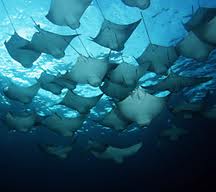
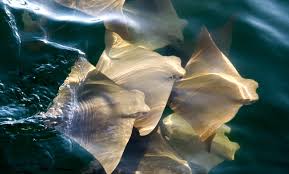
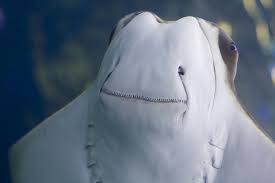
We’re meeting an awesome ocean animal today at Camp E&E! Let’s meet a member of elasmobranch  (sharks and rays) family that’s been named after a familiar farm animal!

cownose3

  • They can be found in the western Atlantic & Caribbean Ocean from Brazil to New England.
  • Cownose rays can grow up to 7ft across but the average wingspan is 2 1/2ft and they can weigh up 26 lbs.
  • Cownose rays are carnivores. They eat clams, mussels & other invertebrates.  They use their  specialized fins on their heads to help suck prey in to their mouths.
  • They are listed as near threatened by the IUCN.

cownose

Cownose Ray Fun Facts:

  • Cownose rays have a unique indentation on their head.
  • They are known to swim in schools.
  • Cownose rays have a flat ridge of bony teeth help them chomp through those delicious prey and then they spit out the shells.
  • They often use their fins to disturb the sea floor and find food. When hundreds of them do this at once it is quiet the site to see.
  • Like other rays- they have a barb near the base of their tail with toxic venom. Cownose Rays toxin is not very strong.
  • Cownose rays are a member of the eagle ray family.
  • They are cartilaginous fish!
  • Unlike some other rays, they rarely rest on the bottom of the ocean floor!
  • Their eyes are on the sides of their cownose shaped head.
  • Cownose rays’ spiracles (helps them push water over their gills) are on top of their body.
  • Females give birth to one pup at a time.

cownose2


These super cool members of the ray family are one of our favorites! They are so graceful to watch swim near the surface of the ocean! And we can’t help but think they look a bit like they are smiling!

Categories: adventure, Animals, Children, conservation, education, Environment, nature, oceans, science, wildlife | Tags: , , , , , , , , , | 1 Comment

The Lonely Anglerfish

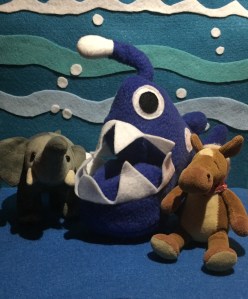
Deep in the depths of the dark ocean lives an angler fish, a lonely one! We’ve written a poem about her!

image

We challenge our campers to try an write a poem about one of their favorite ocean dwelling animals!

The Lonely Anglerfish

There was once was an lonely anglerfish
Who only had just one wish

She wished and she wished
She wished that she had little friend fish

Down in the deep dark ocean so black
You don’t find many fish, not a worm or a jack.

She swam all around in the darkness of night
Her only comfort being her little head light

When other fish would see her big sharp teeth
They’d swim away with lightening speed

Oh what a sad lonely fish she was
She pondered and wondered and paused

Wait! Was that a new friend she spied in dark?
She turned on her lure with one little spark!

As the darkness grew brighter with her spotlight
She spotted a fish just off to the right

She stayed very still, as still as can be…
She didn’t want her new friend to flee

Oh here he comes towards her bright glowing lure
She knew they’d be friends for sure

Then as he got very close- so very close…
She lunged with excitement and
CHOMP!

Oh there once was a lonely anglerfish.
She wished and wished for a little friend fish.

Categories: adventure, Animals, Children, conservation, education, Environment, nature, poetry, science, wildlife | Tags: , , , , , , , , , , | 1 Comment

We See the Light- Bioluminescence!

We See the Light- Bioluminescence!

Today we’re going to learn about bioluminescence and to tell you the story of a young seahorse who wanted to glow! Let’s start this week off at camp with some bright lights!
biolum4

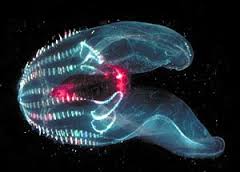
  • Bioluminescence is a reaction of chemicals inside a living organism.
  • Most marine animals that are bioluminescent produce a blue/green color.
  • It produces little to no heat, just the glow.
  • Most bioluminescent animals are found in the oceans – lightening bugs are another (we’ll meet them at Lake camp).
biolum2

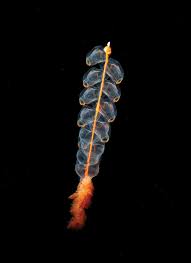
  • Some animals produce the chemicals that give off the bilouminescent glow.
  • Some animals get their bioluminescence from the food they eat.
  • Some animals house bacteria that are bioluminscent.
biolum3

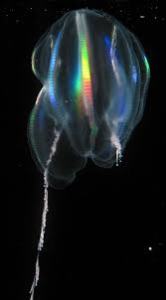
  • Bioluminescence is used to help the animal hunt for prey, as defense from predators or to attract a mate.
  • Vampire squid do not have ink they instead eject a bioluminescent substance to throw off predators and escape!
  • Milky seas or mareel is when large areas of the ocean glow a brilliant bright blue (it looks white from satellite images)! The glow is so bright it can be seen from space. Scientists think that bioluminescent bacteria or phytoplankton  causes this amazing phenomenon.

biolum

Well, we’re not sure what’s cooler than an animal that can give off it’s own glow! Read the story of Sylvia the Seahorse who wanted to be bioluminescent!

image


Young Sylvia the seahorse loved being a seahorse. She loved her curly tail and her teeny tiny fins. Sylvia didn’t mind that she wasn’t so fast. It gave her time to make friends as she passed.
Sylvia loved all her brightly colored fish friends! There was Bill who was aqua and Faith who was pink and Neal who was blue and even her urchin pal Pat had a purple hue!

But oh, Sylvia was just a plain green color. Just a boring old color to help blend in! But she wanted fantastically bright colored fins!

She especially wished she looked like Sarah the squid or Cary the comb jelly who had bright glowing lights! How Sylvia wished she glowed and lit up the night!

One day she wanted to learn how they glowed and if she could too. So she went to oldest and wisest in all of the reef.  Great Giant Clam, the one they called Chief!
Great Giant Clam was wise and was bold and over a hundred years old! He knew all the animals and had all the knowledge, even though Chief had not gone to college!

“Great Giant Clam,” she asked ever so gently. “How did the comb jellies learn to glow?” He laughed and he laughed. “Oh Sylvia, you silly seahorse! Glowing is not something you learn how to do! It’s just how you grow!”

Oh she hoped he was wrong! “I’m just a plain boring green. Bright colored fins are all I desire,” she said. “And why would you want to look like some other fish?” Great Giant Clam inquired.

Great Giant Clam looked at her plainly and said “We’re all different colors here on the reef. That’s what makes us all unique. My dear if we all glowed like our dear friends the squid, we’d want all that glow to be undid.”

She giggled and thought, he might have a point. Her green wasn’t so bad, it was actually quiet pretty! “Oh my dear Sylvia, our bioluminescent friends, use their glow to fend off foe. Your green keeps you hidden, as you would be eaten if you gave off that glow!”

“You’re right Great Giant Clam,” she exclaimed! And dear little Sylvia swam back to her spot on the reef! She hid in the grass as she watched all her friends. Oh it’s wonderful to be green like a leaf!


Categories: adventure, Animals, Children, conservation, education, Environment, nature, oceans, science, wildlife | Tags: , , , , , , , , , | 1 Comment

Ocean Animal Magnets!

Ocean Animal Magnets!

It’s craft time at Camp E&E and we’re excited for today’s craft!

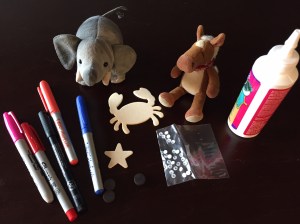
Here are the materials you’ll need:

IMG_1998

  1. markers
  2. glue
  3. small magnets
  4. googly eyes
  5. wood animal cutouts (we found them at our local craft store)


Color your wood cutout with marker! Use whatever colors you like!

Color your wood cutout with marker! Use whatever colors you like!


Nice job coloring Edmond!

Nice job coloring Edmond!


Next glue on the googly eyes and draw any other facial features- we have a happy crab!

Next glue on the googly eyes and draw any other facial features- we have a happy crab!


Glue a magnet to the back of your animal! Make sure to let it dry!

Glue a magnet to the back of your animal! Make sure to let it dry!


Hang your magnets on the fridge, on your bike or your recycling bin :)!

Hang your magnets on the fridge, on your bike or your recycling bin :)!


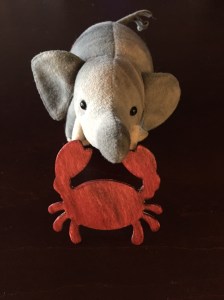
When you make this craft- make sure to send us a picture and you’ll earn the Crafty Crabby camp badge!

Thanks for being such crafty campers :)!


Categories: adventure, Animals, camp, Children, conservation, crafts, education, Environment, nature, science, wildlife | Tags: , , , , , , , , , , , | 1 Comment

Blog at WordPress.com.