Posts Tagged With: environment

FEATHERY FRIDAY # 42

FEATHERY FRIDAY #42

Today’s little bird lives all over the northern hemisphere, so we’re putting on our coats and going to Greenland. We’ve never been to this big island nation, but this little bird was a good excuse to go! Grab your coat and let’s head out!

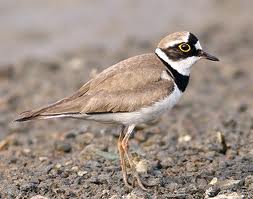
MEET THE RINGED PLOVER!
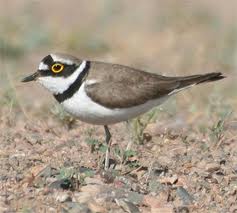
   Range/Habitat: Greenland-N Europe-Asia/ wetlands, coast lines, arctic

   Diet: Carnivore: invertebrates

   Length/Weight: 7-8”/ 1 ¾-2 ½ oz

   Conservation Status: common


Fun Facts:

  • Ringed plovers have a collar of white feathers around their neck.
  • They forage for food at night.
  • Ringed plovers have excellent eyesight.
  • They spend their winters on land in wetland habitats.
  • Male and female ringed plovers take care of the chicks.
  • Ringed plovers perform a “broken wing” behavior to distract predators from the nest.

These neat little shore birds are such fun to watch! They’re cute too with their patterns and collar!
Categories: adventure, Animals, birds, Children, conservation, education, Environment, nature, science, wildlife | Tags: , , , , , , , | Leave a comment

SUPER SURPRISE THURDSDAY # 42

SUPER SURPRISE #42

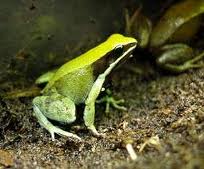
We’re hopping off to the rainforests of Madagascar to find today’s animal! They’re small and green, so everyone keep your eyes peeled and let’s head off on today’s adventure!

MEET THE GREEN MANTELLA!

   Range/Habitat: Madagascar/ rainforest

   Diet: Carnivore: insects, invertebrates

   Length/Weight: ¾-1 ¼ “

   Conservation Status: Endangered


Fun Facts:

  • Green Mantellas are small yellow or pale green frogs with black on their sides.
  • They are diurnal (active during the night).
  • Green mantellas have adhesive disks on their toes.
  • They secrete toxins, similar to poison dart frogs.
  • Male green mantellas use a series of clicks to attract females!

These tiny frogs are gorgeous! They are losing their rainforest homes though, remember you may not think that  recycling cans or paper helps, but it makes a big impact! So keep up the good work!


Categories: adventure, amphibians, Animals, Children, conservation, education, Environment, frogs, nature, rainforests, science, wildlife | Tags: , , , , , , , , | 1 Comment

WATERY WEDNESDAY # 42

WATERY WENESDAY # 42

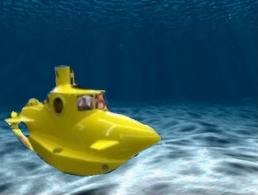
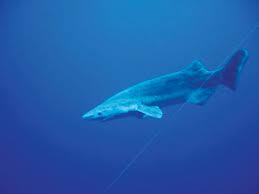
We’re taking the E & E sub down to the bottom of the ocean floor to find a strange and rare member of the shark family! These sharks are harmless to humans, but their skin definitely makes them not snuggly! Come on aboard and let’s go!

MEET THE BRAMBLE SHARK!

   Range/Habitat: Indo-Pacific & W Atlantic/ deep water ocean

   Diet: Carnivore: sharks, fish, rays

   Length/Weight: up to 13 ft/ up t 490 lbs

   Conservation Status: unknown


Fun Facts:

  • Bramble sharks are deep water, bottom dwelling sharks.
  • They are considered rare.
  • Bramble sharks have thorny denticles all over there body.
  • They get their name because the thorny denticles resemble the thorns on bramble bushes.
  • Bramble sharks are a purplish-brown color.
  • Bramble sharks are slow moving.

Wow! These sharks are amazing! We really think they are kind of creepy and cool! The ocean floor has so much for us to explore and see!

Categories: adventure, Animals, Children, conservation, education, Environment, fish, oceans, science, sharks, wildlife | Tags: , , , , , , , , | Leave a comment

REPTILIAN TUESDAY # 42

REPTILIAN TUESDAY #42

We’re going to the pine forests near our backyard to meet a useful snake! Get your walking stick out and put your hiking boots on! Let’s do this!

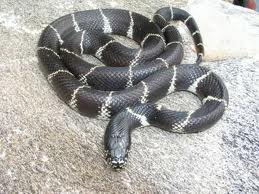
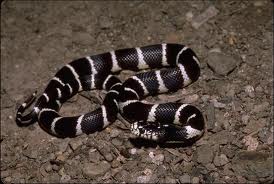
MEET THE COMMON KINGSNAKE!

   Range/Habitat: Western-Eastern Southern US/ forests, scrub, suburbs

   Diet: Carnivore: snakes, birds, rodents

   Length: 3 ¼-6 ½ ft

   Conservation Status: common


Fun Facts:

  • Common Kingsnakes are powerful constrictors.
  • They are excellent swimmers!
  • Common kingsnakes vary in color and pattern depending on where they live.
  • They can live up to 25 years.
  • Common kingsnakes give off a smelly, musky odor when threatened.
  • Common kingsnakes eat venomous snakes. They are immune to the venom!

Snakes shouldn’t be feared. They are an important part of the ecosystem! Kingsnakes even eat venomous snakes, so if you see one, just wave from a distance and let him go on about his merry way!


Categories: adventure, Animals, Children, conservation, education, Environment, nature, reptiles, science, wildlife | Tags: , , , , , , , | Leave a comment

MAMMAL MONDAY # 42

MAMMAL MONDAY #42!

We sure hope everyone enjoyed meeting some amazing Olympic Athletes last week! We’re back to our regular Mammal Monday and we’re off to South Asia today to meet one lazy mammal! Ok, they’re not really lazy, but they are named after a lazy animal! Are you ready?

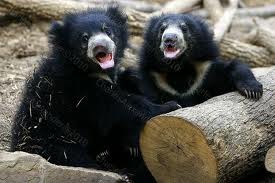
MEET THE SLOTH BEAR!

   Range/Habitat: South Asia/ forests, rainforests, scrub

   Diet: Omnivore: ants, termites, fruits

   Length/Weight: 4 ½-6 ft/120-420 lb

   Conservation Status: vulnerable


Fun Facts:

  • Sloth bears have shaggy fur with a white V pattern on their chest.
  • Sloth bears are nocturnal (active at night).
  • They have non-retraceable claws used for digging up prey.
  • Sloth bears close their nostrils and suck up ants and termites!
  • You can hear a sloth bear suck up bugs up to 100 meters away.
  • They have an excellent sense of smell to locate food!
  • Sloth bears often stand up on their hind legs to look for danger.

Sloth bears are funny looking with their shaggy fur-dos! Can you imagine having to suck up termites for your dinner? Yuck!


Categories: adventure, Animals, Children, conservation, education, Environment, mammals, nature, science, wildlife | Tags: , , , , , , , | Leave a comment

OLYMPIC ANIMALS DAY # 5

OLYMPIC ANIMALS DAY #5

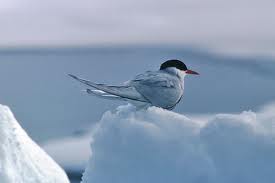
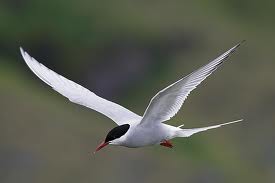
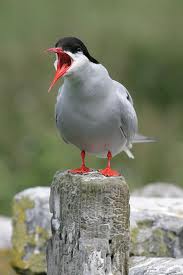
It’s the last day of our Olympic Animals Week and we’re off to the Arctic to meet a bird who knows how to fly! We’ll need a plane to keep up with these birds, because they migrate from one end of the earth to the other! Whew! Are you ready?

MEET THE ARCTIC TERN!

   Range/Habitat: Arctic-Antarctica/ oceans

   Diet: Carnivore: fish, crustaceans

   Length/Weight: 13-14”/ 3 3/8- 4 oz

   Conservation Status: common

Fun Facts:

  • Arctic terns have one of the longest migrations of any bird on the planet.
  • They can fly 10,000-12,000 miles twice a year.
  • Arctic terns spend most of their lives in daylight.
  • They nest in Antarctica in the summer.
  • Arctic terns dive for their food.
  • When they are molting, they cannot fly.
  • They can live up to 20-30 years.

Wowzers! We get tired just thinking about all the flying these amazing birds do in a year! Can you imagine? Arctic terns definitely deserve the gold medal in long distance flying! We hope you’ve enjoyed Olympic Animals Week! Please tell your friends and family about our blog :)!


Categories: adventure, Animals, birds, Children, education, Environment, nature, oceans, Olympics, science, wildlife | Tags: , , , , , , , , | 1 Comment

OLYMPIC ANIMALS DAY # 4

OLYMPIC ANIMALS DAY #4

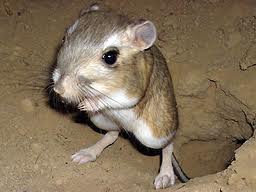
Day four of our Olympic animal week takes us to deserts of the Southwestern U.S. We’re looking for a small rodent that will take on the long jump! Let’s all practice our hoping skills and meet…

MEET THE MERRIAN KANGAROO RAT!

   Range/Habitat: Southwestern U.S.-Northern Mexico/deserts-scrubs

   Diet: Herbivores: seeds, vegetation

   Length/Weight: 3 ¼-5 ½”/ 7/16- 1 5/8 oz

   Conservation Status: Common


Fun Facts:

  • Merrian Kangaroo rats are the smallest member of the kangaroo rat family.
  • They have large back legs and feet.
  • Merrian kangaroo rats have long slender tails that help them balance when they hop or stand!
  • They move much like a kangaroo.
  • Merrian kangaroo rats can jump 7-8ft in one leap!
  • They are neither kangaroos nor rats!
  • Merrian kangaroo rats live in burrows.
  • They’re adapted to survive on little water.


Kangaroo rats are just so cute, with their fat bodies and their kangaroo like features. And man can they leap! We’re going to practice our hopping skills today. Edmond is much better than Ellie for sure!


Categories: adventure, Animals, Children, education, entertainment, mammals, nature, Olympics, science, wildlife | Tags: , , , , , , , | 6 Comments

We’re on a Mission! Code Name: Conservation! Starts Today!

IT’S HERE! IT’S HERE!! GET THOSE PHOTOS IN! WE’RE SO EXCITED!!

We’re on a Mission!

Code name: Conservation!

That’s right we’re on a mission to catch you in the act of conservation! Here at the Ellie and Edmond headquarters we talk about the small ways you can help animals, such as recycling!

Now we want to see you doing great things for the planet!

So we’re having a Photo Contest! Starting on Wednesday August 1st and ending Friday August 31st,we’re asking our fans and friends to post your pictures of you participating in conservation!

We want to see you recycling, growing a butterfly garden, going to a zoo or aquarium and reading about conservation, making your own green cleaning products, filling a bird feeder or reusing an item.

These are just some of the many things you can catch on film! Be creative and make it fun!

You can post the photos on our Facebook wall or

tweet it to us @EllieandEdmond.


We’ll pick 3 winners and announce them on Monday September 3rd

You can enter up to 3 pictures. Prizes to be determined!

We are soooo excited to see your pictures! We’ll be posting them once a week on our blog, so you can see all the fun! Please share this with all your friends and family, the more pictures we get the better!

Categories: adventure, Animals, conservation, contest, education, Environment, nature, photography, wildlife | Tags: , , , , , | 1 Comment

OLYMPIC ANIMALS WEEK DAY # 3

OLYMPIC ANIMALS DAY # 3

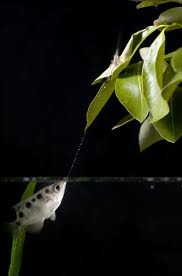
We’re off to Southeast Asia to find a little fish with amazing archery skills! Don’t worry they don’t have a crossbow and arrow, they spit water! Grab your wellies and let’s head out to meet today’s Olympic worthy animal!

MEET THE ARCHERFISH!

   Range/Habitat: Indo-Pacific/ brackish waters & freshwater habitats

   Diet: Carnivore: insects

   Length/Weight: up to 16”/ up to 2 ¼ lbs

   Conservation Status: Common


Fun Facts:

  • Archerfish are silver and black.
  • They have excellent eyesight!
  • Archerfish shoot jets of water out of their mouths. They can shoot it up to 5ft away.
  • They shoot insects off of low hanging vegetation and leaves.
  • Archerfish are very accurate.
  • Young archerfish must practice their shooting skills.


Archerfish have amazing skills! Adults rarely miss their targets! We bet these fish could win any Olympic archery competition, fins down!


Categories: adventure, Animals, Children, education, Environment, fish, nature, Olympics, rivers, science, wildlife | Tags: , , , , , , , , , | Leave a comment

OLYMPIC ANIMALS WEEK DAY #2

OLYMPIC ANIMALS DAY #2

We’re taking the Ellie and Edmond sub down to depths of the ocean to meet one amazing reptile! These turtles can dive deep and swim great distances! There’s plenty of room in the sub for everyone to meet these big reptiles! Let’s go!

MEET THE LEATHERBACK TURTLES!

   Range/Habitat: Tropical-Subtropical-temperate oceans worldwide

   Diet: Carnivore: jellies, fish

   Length/Weight: 4 ½-6ft/ up to 2000lbs

   Conservation Status: critically endangered


Fun Facts:

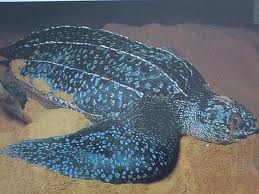
  • Leatherback turtles are the largest of all marine turtles.
  • They have the longest migration of any marine turtle, up to 3,700 miles one way!
  • Leatherback turtles can dive down to depths of 1,300 ft!
  • They can hold their breath for up 80 minutes!
  • Leatherback turtles do not have hard carapaces (top shells); instead they have leathery ones.
  • They have large flippers to help them swim.
  • Relatives of the leatherback turtle date back 100 million years!

Wow! We love leatherback turtles! Can you believe that they swim 3,700 miles to get to their feeding & breeding grounds? You thought the 800 meter relay was hard! These turtles can do that in a blink!


Categories: adventure, Animals, Children, education, Environment, nature, oceans, Olympics, reptiles, science, wildlife | Tags: , , , , , , , , | Leave a comment

Blog at WordPress.com.