Posts Tagged With: mammals

MAMMAL MONDAY # 35

MAMMAL MONDAY # 35

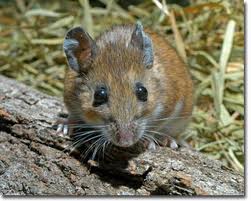
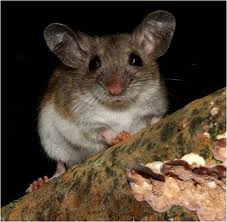
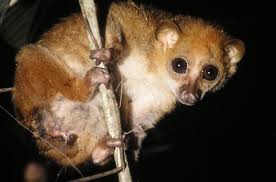
We’ve found a cute teeny tiny little mammal from North America for Mammal Monday! Ssssshh… be very quiet and step lightly. Grab your night vision goggles because we’re going on a night hike!

MEET THE WHITE FOOTED MOUSE!

   Range/Habitat: Southeast Canada-Mexico/forests, grasslands

   Diet: Omnivore: fruit, berries, seeds, insects

   Length/Weight: 3 ½-4 ½ “/ ½-1 oz

  Conservation Status: common


Fun Facts:

  • White footed mice have white feet and long tails.
  • They are nocturnal (active at night).
  • White footed mice live in pairs or alone.
  • White footed mice live in dens under rocks or near tree roots.
  • They are excellent climbers and swimmers.
  • White footed mice drum their feet when they are alarmed.

Aren’t these little mammals just the cutest? There are so many members of the rodent family and each one has their own niche in the habitat. Cool, huh?


Categories: Animals, Children, education, Environment, mammals, nature, science, wildlife | Tags: , , , , , , , | 2 Comments

ENDANGERED SPECIES DAY!

ENDANGERED SPECIES DAY!

 Today is a day to celebrate the Endangered Species Act here in America! It was enacted in 1973 and was set up to protect animal and plant species! There are also two international organizations that work to protect animals, CITES and IUCN.

We’re celebrating Endangered Species Day, by picking a few organizations that are working to save endangered animals!


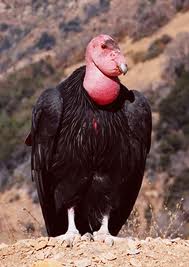
First up: The San Diego Global Wildlife Conservancy. They work in the wild and with the San Diego Zoo and Safari Park to actively protect wildlife. They’ve even reintroduced more than 30 species back into the wild! Our pal on twitter @ZooKeeperRick shared this video with us all about their efforts! They’ve had success with iguanas, pandas and California condors!



Next up: Is the Georgia Sea Turtle Center. The staff and volunteers at the center work hard to rehabilitate and reintroduce all species of sea turtles! They have a hospital and education center. They also keep track of all the sea turtle nests each season on the Georgia coast! Check out our post on when we visited!


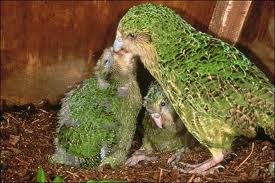
Last up: The Kakapo Parrot! These critically endangered parrots are the largest of all parrots! They are also flightless, which is one reason they have declined in the wild. These amazing birds live in New Zealand, where rescue organizations are working very hard to save them! Check out the Kakapo Recovery website!

 

The National Wildlife Federation has a great page with more success stories!


We all can work to help endangered species all around the world, even with small steps! A huge problem is habitat loss for many animals. One way to combat this is by recycling glass, paper, plastic & aluminum. You can find a local recycling center near you- here! You can also help endangered animals by educating yourself and joining organizations like the National Wildlife Federation, World Wildlife Fund or the Nature Conservancy.  You can also pay a visit to your local zoo, aquarium or nature center; often they are helping support animals in the wild and in their facilities with research and education! And one last thing you can do is to share your love of animals and wild places with others! Often your passion will spark that in other people! We’re going to leave you today with some adorable photos of some endangered species and hopefully they will inspire you to act!



Categories: Animals, apes, birds, Children, education, Environment, lizards, mammals, nature, oceans, orangutans, reptiles, science, wildlife | Tags: , , , , , , , , , , | 4 Comments

SUPER SURPRISE THURSDAY # 34

SUPER SURPRISE THURSDAY# 34

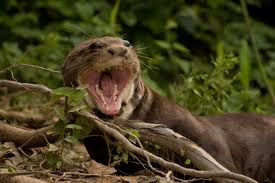
We’re going down to the banks of the Amazon River today to meet a very special mammal on this Super Surprise Thursday! Grab your bug spray, sunglasses and cameras and let’s set out to find and meet these giant animals! (*A reader asked for more pictures- so starting today we will be posting more pics with the posts! Enjoy!)

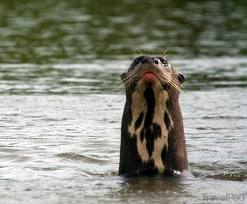
MEET THE GIANT RIVER OTTER!

   Range/Habitat: South America/ rivers, wetlands

   Diet: Carnivores: fish, crabs

   Length/Weight:  3 ¼-6 ft/49- 71 lb

   Conservation Status: Endangered


Fun Facts:

  • Giant River otters are the largest of all freshwater otters.
  • They have webbed feet and flat wide tails to help them swim.
  • Giant river otters can close their ears and nostrils underwater.
  • Their large whiskers help them find prey in murky waters.
  • Giant river otters eat 6-9 lbs of food a day.
  • They live in small family groups that consist of 2 parents and their offspring.
  • They are very social and vocal. They use all kinds of chirps!
  • Giant river otters are diurnal (active during the day).
  • They live in dens on the banks of rivers.

Giant river otters are just the cutest! They each have a unique pattern on their throats that makes them easy to identify. Who wants to stay in the Amazon with us and study these amazing animals!


Categories: Animals, Children, education, Environment, mammals, nature, rivers, science, wildlife | Tags: , , , , , , , , | 1 Comment

MAMMAL MONDAY # 34

MAMMAL MONDAY # 34

We’re back to regular schedule today! We hope you enjoyed Moms week! We’re off to the savannas of Africa today to meet a sturdy little mammal! These social mammals are full of personality and spunk! Grab your safari outfit and your sunscreen and let’s head out!

MEET THE BANDED MONGOOSE!

   Range/Habitat: Central-South Africa/ grasslands

   Diet: Carnivore: beetles, eggs, termites

   Length/Weight: 12-18”/ 3 ¼-5 ½ lb

   Conservation Status: common


Fun Facts:


  • Banded Mongooses have coarse fur with tan bands down their back.
  • They live in social groups of 15-20 individuals.
  • They live in dens or abandoned termite mounds. They change dens every few days.
  • Banded mongooses forage for food in groups at dawn and dusk.
  • Clans of banded mongooses are territorial.
  • They are known to live among troops of baboons, foraging together.
  • Banded mongooses have also been seen cleaning bugs off warthogs!

Wow! Banded mongooses are really neat little animals! They are very social and smart!  There’s a really cool banded mongoose research project too! Check out their website!


Categories: africa, Animals, Children, education, Environment, mammals, nature, science, wildlife | Tags: , , , , , , , , | 2 Comments

MOMS SUPER SURPRISE THURSDAY

MOMS SUPER SURPRISE  THURSDAY

We’re going to Southeast Asia today to meet a primate mother who spends years teaching their young! Get your climbing gear on, because these moms spend most of their lives in the canopy of rainforests.  Be on the lookout for their orange-red hair!

MEET THE ORANGUTAN!

   Range/Habitat: Southeast Asia- Borneo/Sumatra/ rainforest

   Diet: Fruigivore: fruit

   Length/Weight:  3 ½-4 ½ ft/ 80-175 lbs

   Conservation Status: Endangered

Fun Facts:

  • Orangutans are members of the great ape family.
  • They are highly intelligent and mostly solitary.
  • Orangutans are arboreal (spend most of their lives in trees).
  • Mother orangutans give birth in the trees.
  • The babies hang on to their mom’s bellies when they are first born.
  • Orangutan babies stay with their moms for about 8 years.
  • Orangutan moms must teach their young how to find fruit, build nests and how to survive a life in the trees.
  • Young orangutans must learn a mental map of the forest. They have to know where the fruit is and when it is ripe!
  • Even after orangutans leave their moms; it is not uncommon for them to meet up in the rainforest to secure a meal.

Orangutans are very patient mothers. They have much to teach their babies.  We bet you thought it was just human children that take a long time to learn! Orangutans must to attend school and learn, their school is just in the rainforest! These special apes are critically endangered and there are some amazing groups working to save them and their habitat! Check out Save the Orangutan!

Categories: Animals, Children, education, Environment, mammals, moms, nature, science, wildlife | Tags: , , , , , , , , | 2 Comments

MOMS MAMMAL MONDAY

MOMS MAMMAL MONDAY

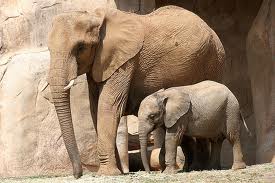
We’re honoring all those moms out there this week by showcasing some amazing animal moms! Who’s excited? We sure are! There are so many cool animal and human moms out there! We’re starting off the week with the world’s largest land mom out there! That’s right folks; we are focusing on Ellie’s family today! Are you ready to meet a giant mammal mom? Grab your gear we’re going to Africa to meet the Ellie’s relatives!

MEET THE AFRICAN ELEPHANT!

   Range/Habitat: Africa/ grasslands, savannas

   Diet: Herbivores: grass, leaves, roots, bark

   Length/Weight: 13-16 ft/ 4 ½-7 6/8 tons

   Conservation Status: threatened

Fun Facts:

  • African elephants are the largest of all elephant species and are the largest land animal on earth!
  • Both female and male African elephants have tusks!
  • African elephants have two opposable tips on the end of their trunks.
  • African elephants live in herds, led by the oldest female. The herd consists of related females and their offspring. Adult male African elephants are solitary.
  • An elephant’s gestation period (how long the mom is pregnant) is around 22 months! The is the longest pregnancy period of any mammal.
  • Newborn elephants weigh around 200 lbs. Man that is one big baby!
  • Newborn elephants drink around 3 gallons of milk a day!
  • Calves are totally dependent on their moms for the up to the first 3 years of life.
  • Elephants stay with their moms for around 16 years; they spend of most of that time learning to be an elephant!

WOW! Aren’t elephant moms amazing! Can you imagine being pregnant for almost 2 years of your life? It takes loads of hard work to raise a baby elephant! Luckily moms have help from the other females in the herd! It takes a herd to raise a baby elephant! Ellie salutes all the elephant moms out there!

Categories: Animals, Children, education, Environment, mammals, nature, science, wildlife | Tags: , , , , , , | 4 Comments

MAMMAL MONDAY # 33

MAMMAL MONDAY # 33

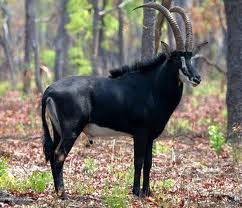
We’re off to the grasslands of Africa today to meet a most noble ungulate! These hoofed beauties have a lush dark coat of fur and long sharp horns for protection against predators! Do you have on your safari outfit yet? Let’s head out to meet these mammals!
MEET THE SABLE ANTELOPE!

   Range/Habitat: Eastern Africa

   Diet: Herbivores: grass, leaves

   Length/Weight: 6 ¼-8 ¾ ft/ 330-660 lbs

   Conservation Status: common


Fun Facts:

  • Male Sable Antelopes have beautiful black coats and females have lovely chestnut brown coats.
  • They live in herds led by a dominant male.
  • Sable antelopes have long ringed horns that point backward.
  • They use the horns for protection against predators.
  • Sable antelopes never stray too far from water.
  • Calves are also chestnut in color when born and spend the first few weeks of life hidden away from the herd.
  • Male sable antelopes leave the herd when they are mature and form bachelor groups before forming a herd of their own.


These antelopes are just spectacular with their long horns and shiny black coats! It is rare for an adult to be attacked by predators because of those horns! We wouldn’t want to be on the wrong end of them either! Ouch!


Categories: Animals, Children, education, Environment, mammals, nature, science, wildlife | Tags: , , , , , , , | Leave a comment

MAMMAL MONDAY # 32

MAMMAL MONDAY # 32

Happy Happy Monday! Monday is everyone least favorite day of the week, but it is one of our favorites, because we get to meet a new mammal! We’re traveling to Southeast Asia today to meet a very handsome bear with a funny long tongue! Grab your gear we’re heading into the rainforest!

MEET THE SUN BEAR!

    Range/Habitat: Southeast Asia/ rainforest

    Diet: Omnivore: fruit, shoots, eggs, honey, termites

    Length/Weight: 3 ½-4 ½ ft/ 110-145 lbs

    Conservation Status: endangered


Fun Facts:

  • Sun bears are also called the dog bear or honey bear.
  • They have sleek, smooth brown-black fur with a white-orangeish “sun” patch on their chest.
  • They have very loose skin around their neck.
  • Sun bears are the smallest member of the bear family.
  • They have very long claws for climbing and digging for insects and honey.
  • Sun bears have very long tongues that they can extend up to 10”. They use these tongues to get termites and honey.
  • Sun bears are nocturnal (active at night).
  • They spend most of their time in trees.


Sun bears are just so adorable. They are endangered mainly due to habitat loss. There are lots of things that we can do to ensure our rainforests are kept intact. We love The Rainforest Site, because all you have to do is click once a day and money goes to save habitat for great animals such as our Sun Bear pal!

Categories: Animals, Children, education, Environment, mammals, nature, science, wildlife | Tags: , , , , , , , | 2 Comments

MAMMAL MONDAY # 31

MAMMAL MONDAY # 31

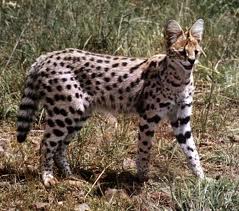
Who loves cats? We love cats! We’re heading to the grasslands of Africa to meet today’s mammal! We’ll need our night vision goggles, because these cats are active at night! Don’t worry, these cats aren’t big enough to pounce on us!
MEET THE SERVAL!

   Range/Habitat: Africa/ grasslands, wetlands

   Diet: Carnivore: rats, rodents, frogs & birds

   Length/Weight: 23-39”/ 20-40 lbs

   Conservation Status: common

Fun Facts:

  • Servals are covered in spots.
  • Servals are solitary and nocturnal (active at night).
  • They have very long legs.
  • Servals also have very large ears and excellent hearing.
  • Servals can leap up to 13 ft horizontally; we bet they’d win the long jump competition. They can also jump about 3 ½ ft high.
  • They are considered to be very intelligent.
  • Servals can purr.

Servals are beautiful and graceful predators. They are considered to be very beneficial to local farmers because they are excellent are rodent control. Servals are now part of the pet trade. These cats can be large, wild and destructive and do not make good pets, because they aren’t domestic cats. Remember, to do your homework before getting any pet :)!

Categories: Animals, Children, education, Environment, mammals, nature, science, wildlife | Tags: , , , , , , , , | 4 Comments

MAMMAL MONDAY #30

MAMMAL MONDAY # 30

We’re back to our regularly scheduled programming and you know what that means- it’s Mammal Monday! We’re traveling to the rainforests of Central Africa to find a primate that lives high in the trees! Grab your binoculars and let’s hop into a hot air balloon to see if we can spot this little guy!

MEET THE POTTO!

   Range/Habitat: West-Central Africa/ rainforests

   Diet: Omnivore: fruit, sap, insects

   Length/Weight: 12-16”/1 ¾-3 lbs

   Conservation Status: common


Fun Facts:

  • Pottos are primates. They are members of the prosimian family that includes loris and lemurs.
  • Pottos are nocturnal (active at night).
  • They are arboreal (live in the trees). They spend most of their lives in the canopy of the rainforests!
  • Pottos have pointy neck vertebrates that are covered by spiny skin on the back of their necks. This may be for protection, but scientists are unsure.
  • They have very thick fur.
  • They remain immobile in the trees to avoid predators.
  • Pottos have a life span of up to 25 years.


Pottos are so super cute! These little primates have very unusual hands that help them grip the branches very high in the trees! Did you know that the canopy of the rainforests contain the most life? Scientists haven’t even found all the species that live there! Wow! Recycling paper is a great way to preserve the trees of the rainforests!



Categories: Animals, Children, education, Environment, mammals, nature, science, wildlife | Tags: , , , , , , , | 2 Comments

Blog at WordPress.com.