adventure

MONKEY WEEK DAY # 2

MONKEY WEEK DAY #2!

Woohoo for Day #2 of Monkey Week! We’re going to the rainforests of Northern South America to find a very cute, small monkey who lives high in the trees! Get your gear and let’s get ready to zip line through the rainforest!

e & e rainforest2

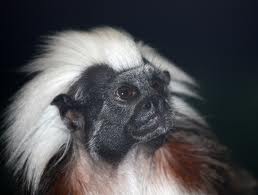
MEET THE COTTONTOP TAMARIN!

cotton top tamarin   Range/Habitat: Northwest South America/ rainforest

   Diet: Omnivore: fruit, buds, insects

   Length/Weight: 8-10”/ 14-16 oz

   Conservation Status endangered


Fun Facts:

  •          Cottontop Tamarins are arboreal.
  •          They have a crown of white fluffy fur on their head.
  •          Cottontop tamarins have long tails for balance.
  •          Cottontop tamarins live in small family troops with one breeding pair.
  •         Four out of five births are twins.
  •          Cottontop tamarins family members help take care of the offspring.

Cottontop tamarins are so cute with their crazy hairdos! There are more of these special monkeys in captivity than there are in the wild. We must really work to help protect these amazing animals.
cotton top tamarin2   cotton top tamarin3

Categories: adventure, Animals, Children, conservation, education, Environment, mammals, nature, science, wildlife | Tags: , , , , , , , , , , | Leave a comment

MONKEY WEEK!

MONKEY WEEK!

It’s theme week here at headquarters and we’re celebrating monkeys! These primates vary in size, habitat and behavior. There are Old World monkeys, that live in Africa and Asia and New World monkeys, which live in South and Central America. We’re going to South Asia today to meet the week’s first monkey! Grab your plane ticket and travel gear and let’s go meet…

e e temple

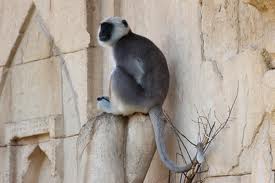
MEET THE HANUMAN LANGUR!

hanuman langur   Range/Habitat: South Asia/ forests, suburbs, mountains

   Diet: Herbivore: fruits, buds, shoots

   Length/Weight: 20-31”/ 23-44 lbs

   Conservation Status: common


Fun Facts:

  •          Hanuman Langurs are considered sacred by Hindus.
  •          They are the most widespread of all langur species in South Asia.
  •          Hanuman langurs are also called Gray Langurs.
  •          Hanuman langurs color varies by their habitat.
  •          They are diurnal.
  •          Male Hanuman langurs are larger than females.
  •          Hanuman langurs live in troops led by one or two males.

Hanuman langurs are fascinating monkeys. They often live near humans. Can you imagine considered being sacred? We think all animals are considered sacred 🙂 !

hanuman langur2hanuman langur4

Categories: adventure, Animals, Children, conservation, education, Environment, mammals, nature, science, wildlife | Tags: , , , , , , , , , | Leave a comment

FEATHERY FRIDAY # 76

FEATHERY FRIDAY #76

It’s Friday! It’s Friday! It’s Feathery Friday! We’re going right out our back door for today’s adventure in search of a really cool little feathery friend!

e e woods

MEET THE NORTHERN FLICKER!

northern flicker   Range/Habitat: North-Central America/ woodlands-suburbs

   Diet: carnivore: insects

   Length/Weight: 30-35”/ 100-175 g

   Conservation Status: common 


Fun Facts:

  •         Northern Flickers are members of the woodpecker family.
  •          They have long pointed bills.
  •          Northern flickers often feed on the ground.
  •          Northern flickers long bills are used for pecking in to the ground.
  •          They have spotted undersides.
  •          Northern flickers have long tails.

We love it when we find a Northern Flicker pecking on the ground in our neighborhood. Who knew there were woodpeckers who didn’t just peck on trees for their dinner?

northern flicker2  northern flicker3

Categories: adventure, Animals, birds, Children, conservation, education, Environment, nature, science, wildlife | Tags: , , , , , , , , , | 2 Comments

SUPER SURPRISE THURSDAY # 76

SUPER SURPRISE THURSDAY # 76

WHO AM I? Look at the picture, read the clues and take a guess!

snowy owl

  • I live in the Arctic.
  • I am a carnivore.
  • I am active during the day, unlike most of my relatives.

WHO AM I?

Categories: adventure, Animals, birds, Children, conservation, education, Environment, nature, science, wildlife | Tags: , , , , , , , , , | 2 Comments

WATERY WEDNESDAY # 76

WATERY WEDNESDAY # 76

 It’s time to take plunge in the wondrous ocean of our earth to meet today’s little fish who lives in a dangerous habitat! We’re taking the E & E sub out to avoid stinging tentacles!  

e e deep sea

MEET THE MAN OF WAR FISH!

man o war fish   Range/Habitat: Tropical Oceans Worldwide

   Diet: Carnivore: small fish

   Length: up to 10”

   Conservation Status: common


Fun Facts:

  •          Man of War Fish live in the tentacles of the Portuguese Man-of-war jelly!
  •          They avoid the tentacles by agile swimming.
  •          Man of War Fish are not immune to the stings of the jelly.
  •          They have deeply forked tail fins.

Wow! We knew about clownfish living with anemones, but a fish who lives among the tentacles of a giant jelly fish! The ocean is full of crazy animals!

man o war fish2

Categories: adventure, Animals, Children, conservation, education, Environment, fish, nature, science, wildlife | Tags: , , , , , , , , , , | Leave a comment

AMPHIBIAN TUESDAY #76

AMPHIBIAN TUESDAY # 76

It’s Amphibian Tuesday and we’re going to South America to meet one cool frog! Get your backpack and rainforest adventure gear and let’s go find today’s animal!

e & e rainforest

MEET THE MOUNTAIN MARSUPIAL FROG!

mountain marsupial frog   Range/Habitat: North-West South America/ rainforest

   Diet: Carnivore: insects

   Length: 1 ½-2 ¼”

   Conservation Status: common


Fun Facts:

  •          Mountain Marsupial Frogs have broad heads.
  •          They are nocturnal.
  •          Mountain marsupial frogs have long toes.
  •          Female mountain marsupial frogs have a pouch on their back where they incubate their eggs.
  •          Mountain marsupial frogs eggs are connected to the female’s blood system, when the eggs hatch they put the tadpoles in a pool of water.

These cool frogs have such a neat way of incubating their young. That must be why they are called the marsupial frog! We think the kangaroo frog would have been a good name too!


mountain marsupial frog2

Categories: adventure, amphibians, Animals, Children, conservation, education, Environment, nature, science, wildlife | Tags: , , , , , , , , , | Leave a comment

MAMMAL MONDAY # 76

MAMMAL MONDAY # 76

Hello! We hope everyone had a fabulous weekend! We’re ready to go on another fun adventure this Mammal Monday! Grab your gear and get ready to go to Africa!

e & e rainforest

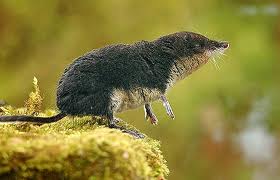
MEET THE ARMORED SHREW!

armored shrew   Range/Habitat: Central-East Africa/ rainforest

   Diet: Carnivore: worms, insects, carrion

   Length/Weight: 4-6”/ 2 1/2 -4 oz

   Conservation Status: common


Fun Facts:

  •          Armored Shrews are also known as the Hero Shrew.
  •          They have very strong backs.
  •          Armored shrews vertebrae have interlocking spines on the side on bottom of each vertebrate.
  •          They are solitary.
  •          Armored shrews are excellent climbers.
  •          Armored shrews have wooly gray fur.

These armored shrews are super cool. They have those crazy backbones that make them super strong. We wonder if they have capes hidden since they are called the Hero Shrew :)?

armored shrew2

Categories: adventure, Animals, Children, conservation, education, Environment, mammals, nature, science, wildlife | Tags: , , , , , , , , , | Leave a comment

Happy 4th of July- Guess the Animal!

HAPPY 4th of July!!

e & e 4th of july

Happy 4th of July to our American pals and Happy Thursday to our pals across the globe!

We have special Super Surprise Animal for you to guess! We’re just showing the picture and the only clue you get is America! Tell us who you think it is?

bald eagle2

Have a safe and wonderful holiday everyone!

We’re taking this Friday off! We’ll see you for Mammal Monday!

Categories: adventure, Animals, Children, conservation, education, Environment, nature, science, wildlife | Tags: , , , , , , , , | 4 Comments

WATERY WEDNESDAY # 75

WATERY WEDNESDAY # 75

 All aboard the E & E submarine! We’re going to the deep depths of the ocean to find one of the most elusive fish in the ocean. Even though they are large they are hard to spot!

e e deep sea

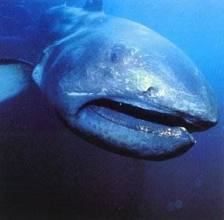
MEET THE MEGAMOUTH SHARK!

megamouth shark2   Range/Habitat: Atlantic/Pacific/Indian Oceans (limited spots)

   Diet: Carnivore: krill and plankton

   Length/Weight: up to 18 ft/ up to 1,740 lbs

   Conservation Status: unknown


Fun Facts:

  •          Megamouth sharks were discovered in 1976.
  •          Humans have only seen about 13 individuals.
  •          They are filter feeders and eat very small animals.

  •          Megamouth sharks have small dorsal fins.
  •          Megamouth sharks surface at night to eat.
  •          They have a luminescent stripe around their mouth to attract prey.  

Megamouth sharks are amazing! Can you imagine that we’ve only known about them in the last 30 years? The oceans are full of so many animals that we haven’t even discovered! It’s crazy! We need to explore more!

megamouth shark  megamouth shark3


Categories: adventure, Animals, Children, conservation, education, Environment, fish, nature, science, sharks, wildlife | Tags: , , , , , , , , , , | Leave a comment

REPTILIAN TUESDAY # 75

REPTILIAN TUESDAY # 75

We’re going to Asia to meet today’s reptile! We’ll be going in the woods, so step carefully because these guys know how to camouflage in with the leaves!

e & e wetlands

MEET THE ASIAN LEAF TURTLE!

asian leaf turtle   Range/Habitat: Southeast Asia/ wetlands

   Diet: Omnivore: invertebrates, tadpoles, plants

   Length:  6-9 1/2”

   Conservation Status: common


Fun Facts:

  •          Asian leaf turtles have an oval shape carapace (top shell).
  •          Their plastron (bottom shell) is hinged.
  •          Asian leaf turtles hide in the mud in creeks and rivers when threatened.
  •          Male Asian leaf turtles are smaller than the females.
  •          Asian leaf turtles have serrated shells that help them blend in.

Asian leaf turtles are cute! There are so many kinds of turtles out there! We love each and every one of them!


asian leaf turtle2

Categories: adventure, Animals, Children, conservation, education, Environment, nature, reptiles, science, wildlife | Tags: , , , , , , , , , | Leave a comment

Blog at WordPress.com.