birds

FASTEST RAPTOR IN THE WEST!

FASTEST RAPTOR IN THE WEST!

We’re off to meet the fastest raptor in the west- actually in all of the world! This falcon can reach unimaginable speeds! So let’s meet them before they fly off!

peregrin falcon3

Peregrine Falcon Fun Facts:

  • Peregrine falcons are found on every continent except Antarctica.  They can be found in varying habitats including coasts, deserts and urban areas.
  • They can grow up to 19 inches long with a 3 1/2 foot wingspan. They can up to 3 1/2 lbs.
  • Peregrine falcons are carnivores. They eat other birds like pigeons and shorebirds.
  • Peregrine falcons are known for their agile acrobatic flying skills. They can go in to steep dives called stoops to catch their prey.
  • They can reach speeds of up to 200 mph. Their average speed is 23-34 mph.

IMG_6601

  • Some peregrine falcons migrate from the Arctic tundra all the way to South America, up to 15,500 miles in a year.
  • Peregrine falcons nest up high on cliffs, towers and skyscrapers.
  • You can even watch a peregrine falcons in their nest during season at The Peregrine Fund.

peregrin falcon2peregrin falcon


Peregrine falcons were severely threatened in the U.S. many years ago do to the DDT use and habitat loss. Like our friend the bald eagle, they are now listed as least concern after making a big come back!

Categories: adventure, Animals, birds, Children, conservation, education, Environment, nature, science, wildlife | Tags: , , , , , , , , , | 2 Comments

BALD EAGLE APPRECIATION DAY!

BALD EAGLE APPRECIATION DAY!

IMG_4395

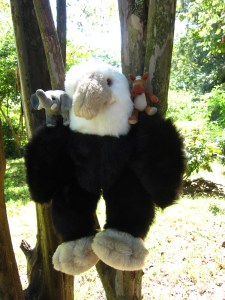
We’re so excited to celebrate the amazing symbol of the United States. These amazing raptors are one of our favorite birds! Come learn more about the Bald Eagle!

bald eagle2

Fun Facts:

  • Bald eagles habitat range is North America in woodlands, marshes and bodies of water.
  • Bald eagles are carnivores. They eat fish, small birds and carrion.
  • They can grow up to 38″ and weigh up to 14lbs.
  • They are listed as least concern.
  • They have a wingspan of up to 8 ¼ feet.
  • Bald Eagles mate for life. They reinforce their pair bonds with spectacular flights that they do together.
  • Bonded pairs build their large nests. Both female and male eagles rear the chicks.

IMG_6600(1)

  • Bald Eagles have excellent eyesight.
  • They can live for up to 28 years!
  • Bald eagles don’t develop their white head feathers until around the age of 5!
  • Bald Eagles have been the National Bird of the U.S.  since 1782.

bald eagle3bald eagle


We just love Bald Eagles and think they make a fine national bird! They are so regal. Unfortunately we almost lost these birds to pollution and habitat loss and they were near extinction in the mid 1900s. After much human effort to save them they are now living in almost every state! YAY!!!

Categories: adventure, Animals, birds, Children, conservation, education, Environment, nature, science, wildlife | Tags: , , , , , , , , , | 1 Comment

Raptor Down Under

Raptor Down Under

e e coast

As you learned yesterday we are talking about raptors this week! Today is also Australia Day, so we decided to combine our celebrations and meet a gorgeous bird of prey from Australia!

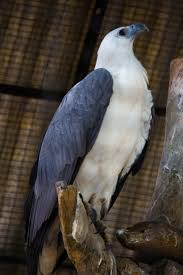
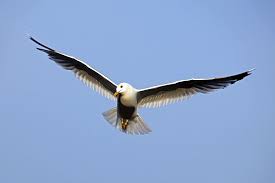
white bellied sea hawk

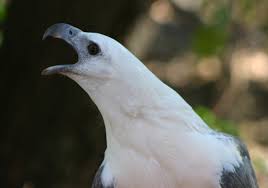
  • White-bellied sea eagle can be 35 inches long, weight 10 lbs with a wingspan of over 7 ft.
  • They are carnivores. They eat sea snakes, fish and turtles and carrion. They are known to steal prey from other birds.
  • White-bellied sea eagles live in coastal areas.
  • They mate for life.
  • Before mating, a pair does amazing acrobatic displays while flying together.
  • They can be territorial.
  • White-bellied sea eagles holds it wings in a v shape when flying.

IMG_6597

  • They are known for their loud honking call that sounds like a goose.
  • White-bellied sea eagles can live for up to 30 years.


white bellied sea hawk2white bellied sea hawk3

These gorgeous eagles are so fun to watch fly and catch fish! We have a special little Australia Day Bonus for you too- a koala coloring sheet!

koala coloring sheet

Categories: adventure, Animals, birds, Children, conservation, education, Environment, nature, science, wildlife | Tags: , , , , , , , , , | 1 Comment

Penguin Appreciation Day!


PENGUIN APPRECIATION DAY!


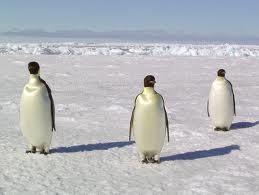
  • There are 18 species of penguins in the world.
  • All penguins live in the Southern Hemisphere.
  • Only 8 species of penguins actually live in cold climates.

penguin1

    • Fossilized penguins have been found that are 58 million years old.
    • Penguins do not have teeth. They have barbs on their tongue and throat.
    • Penguin wings are called flippers.

penguin5

    • The Emperor Penguin is the largest species.
    • The Fairy Penguin is the smallest species.
    • Penguins live in colonies.
    • Penguins are marine birds. They spend 75% of their life at sea.
    • Penguins have up to 70 feathers per square inch.
    • Penguins have excellent hearing.
    • Emperor Penguins can stay under water for up to 15 minutes.

penguin8   penguin7

penguin2

penguin4


Categories: adventure, Animals, birds, Children, conservation, education, Environment, nature, science, wildlife | Tags: , , , , , , , , , | 3 Comments

BIRDING BASICS

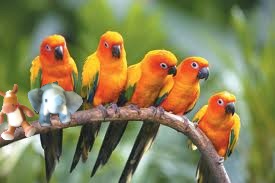
All of us at the university decided that we wanted to learn more about birds, bird watching and bird photography! We found two lovely people on Twitter who know quite a bit about all of things and they were nice enough to do an interview with us and share their amazing photos!  The best part about Curtis & Norma is that they are from our home state of Georgia! Let’s all learn about how to find some of our feathery friends!
 e e birds


E & E: Tell us a little bit about yourself.

Curtis & Norma: We are writers and photographers who live in a rural area in Georgia where they enjoy photographing birds, nature and landscapes.


E & E:  Excellent! How long have you been bird watching and taking bird photos?

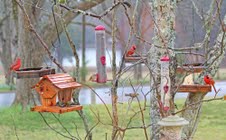
Curtis & Norma: Our bird photography started accidentally over three years ago when Curtis photographed a Yellow-Bellied Sapsucker drilling holes into a pecan tree in our front yard.  We have both enjoyed nature photography for many years; however, our bird photography became more serious over a year ago when we participated in Cornell University’s 2012 Backyard Bird Count.  We went to Lowe’s and bought some bird feeders and bird seed, and then placed the feeders in our trees near our kitchen window.  We were amazed at the different species of birds that came to the feeders.
cardinals

Cardinals!

E & E: We’ve heard doing the Backyard Bird count is fun! When did your love of birds begin?

Curtis & Norma: We have always loved nature and enjoyed photographing coastal scenes and shore birds, but we really became more serious about bird photography during the 2012 Cornell University Backyard Bird Count.

E & E: Great! We love birds, but are complete novices when it comes to bird watching. Where should we get started?

Curtis & Norma: It always helps to purchase a bird identification book so that you can identify the different species of birds who visit the feeders.  Also, visit places like Lowe’s, Walmart or Wild Birds Unlimited to see the many different bird feeders and bird seed.  Keep it simple.  One open bird feeder and a small bag of mixed seed featuring black oil sunflower, white millet and safflower will produce exciting results.  Be patient…… because sometimes it takes up to two weeks for birds to find the feeders.

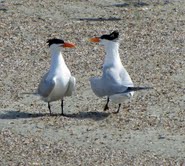
caspian terns

Caspian Terns


E & E: Those are some great tips! What guides do you recommend for first time bird watchers? 

Curtis & Norma: Some of the following books are written for Georgia residents, but they are excellent guides for learning about birds in the South.
Birds of Georgia  – Dr. John Parrish, Giff Beaton and Gregory Kennedy

Birding Georgia – Giff Beaton

Birds of Georgia Field Guide – Stan Tekiela

The Sibley Guide to Birds – David Allen Sibley

For the Birds – Anne Schmauss, Mary Schmauss and Geni Krolick

The Backyard Bird Feeder’s Bible – Sally Roth

great white egret

Great White Egret!

E & E: We’ll be hitting up the bookstore! Our HQs is a condo so we can’t have bird feeders. What is another good way to find birds?
Curtis & Norma: We always love to go to the beach to see the many shore birds, such as Ring-Billed Gulls, Laughing Gulls, Brown Pelicans, Boat-Tailed Grackles and many more.  There are always many fascinating shore birds near a coastal area.

Plus, anywhere near a lake or a pond usually has beautiful birds.  At local ponds, many times you will see Canadian Geese, Mallards, Great Egrets and Great Blue Herons.

If you live near a state park or a wildlife management area, you will also see birds, squirrels and deer.  A state park is a great place to see nature and wildlife, and especially birds.  Georgia has many wonderful state parks and wildlife management areas.   The National Wildlife Refuge System also provides an opportunity to see many species of birds.  Here are links to Georgia State Parks, Georgia Wildlife Management Areas and the National Wildlife Refuge System.

goldfinches

Goldfinches

E & E: Those are some great places to check out! Luckily we have a pond across the street from us! Tell us some great ways to attract birds to your yard?
Curtis & Norma: A very popular way to attract birds to your yard is to have a birdbath.  The birdbath should never be over two inches deep so that the birds will not drown.  Birds love a birdbath.  They need to drink water and they also enjoy taking a long bath, especially the Eastern Bluebirds.
Another way to attract birds is to hang bird feeders on a tree and place bird seed in the feeder.  The most popular seeds for songbirds are:  black oil sunflower, white millet, safflower and unsalted peanuts.  It’s best to not feed red millet because most birds do not like red millet or red milo.

American Goldfinches and Pine Siskins enjoy thistle seed.  They especially enjoy the thistle socks.

Woodpeckers enjoy the suets and the woodpecker treats that are available in places like Lowe’s or Walmart.  Blue Jays and Red-Bellied Woodpeckers enjoy unsalted peanuts and are famous for coming to the feeders, grabbing peanuts and storing them for the winter.  It is very entertaining to watch them.  The unsalted peanuts will need to be cut into smaller pieces.
titmouse

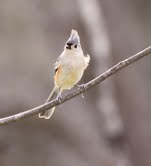
Titmouse


E & E: We had no idea there were so many kinds of birds seed! What are some good basic tips for first time bird photographers?

Curtis & Norma: When attempting to photograph a bird outside and not through a window, always be very still.  Birds notice the slightest movement and will fly away if they see you move.

2.  Try to photograph when the sun is not too harsh because very bright sunlight can cause a picture to look really fuzzy or unclear.

3.  If your birdbath or bird feeders are outside your kitchen or living room window, you can still get great pictures.  Have plenty of their favorite seeds in the feeders and be sure that your birdbath has fresh water.  Then, clean your windows inside and out with White Distilled Vinegar.  This is the best product to use to guard against spots and streaks.

4.  Birds seem to be very active during migration and during cool, rainy days.  Northern Flickers, Pileated Woodpeckers, Red-Bellied Woodpeckers, Red-Winged Blackbirds, American Robins and Common Grackles are very active on rainy or overcast days.  Sometimes you can get some nice pictures on a cloudy day.

5.  To get really good close-up photos, we use a Canon EF 70 – 300mm f/4-5.6 IS USM Lens.

We photograph in the backyard, through the kitchen window, in a pecan orchard, near cotton fields, at state parks, wildlife management areas, ponds, lakes and at the beach.

Robin

Robin

E & E: WOW! We will be taking our camera out this spring! What kind of habitats are good for finding migratory birds?
Curtis & Norma: Actually, your backyard can be a great place to bird watch during Spring Migration.  Plus, birds are always active near lakes, ponds, rivers or the ocean.  A body of water attracts many species of birds.

Another area where birds are usually abundant are rural, wooded areas.  Birds enjoy the space of a rural area and they enjoy the pine trees and pecan trees.  Pecan orchards attract many woodpeckers and warblers.

Cardinal Eating Millet

Cardinal Eating Millet

We have so many places to go explore and see if we can find birds! Thank you so much for taking the time to answer our questions! We hope our readers will be as inspired as we are to go out and meet some bird friends!

Categories: adventure, Animals, birds, Children, conservation, education, Environment, nature, science, wildlife | Tags: , , , , , , , , , | 2 Comments

National Bird Day!

National Bird Day!

e e birds

Professor Baxter is super excited to talk about birds today! He’s going to give you some bird basics, some fun facts and share a great coloring sheet with you!

IMG_6285

Now that you know some of the bird basics; here are some more fun bird facts!

bird6

  • There are 9865 species of birds in the world! Wow! There sure are a bunch of us!
  • There are around 30 families that these 9865 species are divided in to.
  • The first bird live during the Jurassic period, 150 million years ago.
  • It is widely believed that birds are related to a group of dinosaurs known as theropods.
  • Feathers are made of keratin, the same protein that makes up human hair and nails.

bird

  • That same protein makes up our bill or beak! We birds have no teeth!
  • Not all of us can fly, including my penguin and ostrich friends!
  • Bird lungs take up about 1/5 of their body! We must use air efficiently in order to fly!
  • Most bird knees are hidden under our feathers. You see our ankles!
  • Birds live on every continent in the world! There is no escaping us!

bird5bird3


Well I sure have enjoyed sharing some fun stuff about myself and the other birds in the world! Tomorrow we’ll be taking about bird feet! Some feet are made for swimming, some are made for perching and some (like mine) are made for dancing!

Enjoy this coloring sheet of me!
Image

Categories: adventure, Animals, birds, Children, conservation, education, Environment, nature, science, wildlife | Tags: , , , , , , , , , , | 2 Comments

SCIENCE WORD OF THE WEEK!
SCIENCE WORD OF THE WEEK!

swow ornithologists

Hello everyone! Welcome back to class after the holiday break! I hope you have on your learning caps and are ready for a great week!

Today’s word is Ornithologists: ornithologists are scientists who study birds. 

Tomorrow is World Bird Day! Ellie and Edmond and Professor Baxter will share all kinds of fun stuff about birds! They will be introducing you to a few species during the week too! So let’s all learn to be ornithologists this week!

Categories: adventure, Animals, birds, Children, conservation, education, Environment, nature, science, wildlife | Tags: , , , , , , , , , | 1 Comment

WHOOOOOO IS HANGING IN THE SNOW?

WHOOOOO IS HANGING IN THE SNOW?

e e arctic

We headed out to South Canada to find this owl! We sat around at dusk with our binoculars, a thermos full of hot tea and our cameras! We were lucky this trip and spotted the Snowy owl!

owl

      Their range/habitat: Arctic Circle/ tundra-open land

      Their length/weight: 22- 28”/ 2 ¼-5 ½ lbs  Conservation Status: Common

      Their diet: Carnivore: lemmings, rabbits, waterfowl

owl3

  • Snowy owls are covered in long white feathers. The feathers cover every part of them including their feet and beak.
  • They are most active at dusk and dawn, but are diurnal (active during the day) during the summer when there is little darkness.
  • Females are larger than males and have molted or spotted brown colors on their feathers. This helps them blend in with the ground.
  • Snowy owls nest on the ground.
  • They have excellent hearing and eyesight.
  • Snowy owls mate for life and both the male and female take care of the chicks.
  • Snowy owls are ambush predators!

 owl2

These gorgeous owls are so amazing! They are built for the cold!

Categories: adventure, Animals, birds, Children, conservation, education, Environment, nature, science, wildlife | Tags: , , , , , , , , , | Leave a comment

PARROTS OF THE SEA!

PARROT OF THE SEA

This week we are meeting some cold weather loving animal friends! We’re off today to meet one adorable bird who lives up in the cold near the arctic circle.

e e ear muffs

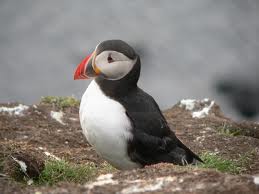
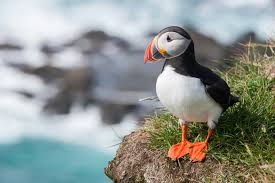
MEET THE ATLANTIC PUFFIN!

Range/Habitat: North Atlantic and Arctic Oceans from Northern Europe-Iceleand-Newfoundland / ocean and rocky coasts

Diet:  Carnivore: fish, mollusks, crustaceans

Length/Weight: 11-12”/ 1 lb

Conservation Status: Vulnerable


Fun Facts:

  • The Atlantic Puffin is a highly social bird that lives in large colonies on rocky coasts and islands.
  • They have bright orange beaks that are brighter during mating season. They also have bright orange feet. They’ve been called the “sea parrot” because of their bright coloration.
  • Male and female Atlantic Puffins incubate eggs.
  • Atlantic Puffins spend their winters out in the open ocean.
  • They are excellent swimmers and divers. They can dive up to 200 ft deep
  • Atlantic Puffins can fly unlike penguins.

IMG_5870

  • They can catch several fish at one time.
  • Atlantic Puffins are the Provincial (official) bird of Newfoundland, Canada.
  • Although they look like those flightless birds the penguin, puffins are not related to them.

puffin2puffin


Atlantic Puffins sure are snappy looking birds with their bright orange beaks and feet! And they can fly and swim! We wish we could fly and swim!

Categories: adventure, Animals, birds, Children, conservation, education, Environment, nature, science, wildlife | Tags: , , , , , , , , | Leave a comment

GOING THE DISTANCE!

GOING THE DISTANCE

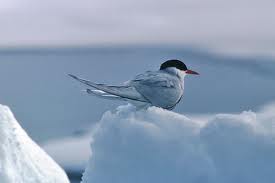
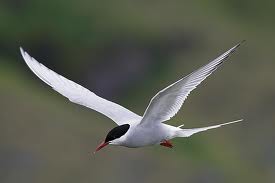
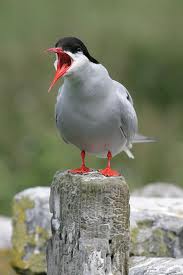
We’re off to the Arctic circle to meet one of the most amazing birds on the planet! These birds have one of the longest migrations on earth! Grab your coat and let’s meet this long distance flyer!

MEET THE ARCTIC TERN!


Fun Facts:

  • Arctic terns have one of the longest migrations of any bird on the planet.
  • Arctic terns are listed as common by the IUCN. They live in the Arctic and Antarctica near or over the oceans.

IMG_0213

  • They can fly 10,000-12,000 miles twice a year.
  • They are 13-14″ long and weigh 3-4 oz.
  • Arctic terns spend most of their lives in daylight.
  • They nest in Antarctica in the summer.

IMG_5531

  • Arctic terns dive for their food, fish and crustaceans.
  • They can live up to 20-30 years.

Wowzers! We get tired just thinking about all the flying these amazing birds do in a year! Can you imagine? Our legs are tired just thinking about it!


Categories: adventure, Animals, birds, Children, conservation, education, Environment, nature, science, wildlife | Tags: , , , , , , , , , | Leave a comment

Blog at WordPress.com.