education

SEA OTTER AWARENESS WEEK!

SEA OTTER AWARENESS WEEK!

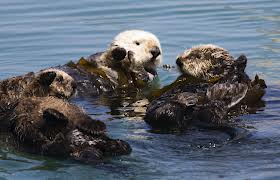
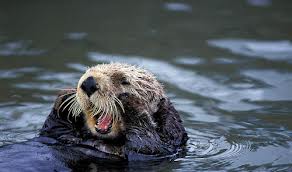
We’re celebrating the largest member of the otter family all this week! That’s right we’re giving a shout out to those adorable marine mammals the Sea Otter!
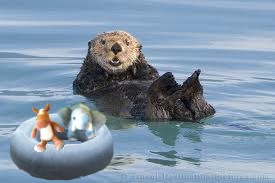
We’re sharing some cute photos, fun facts and resources to celebrate these fur balls!

  • Sea Otters are members of the weasel family!
  • Sea Otters live in the Pacific ocean along the North American shore and the Northern Asian shore.
  • Sea Otters spend most of their time in water. They will occasionally come ashore to rest.
  • Sea Otters’ fur is water repellant and very thick. They can have up to 1 million furs per square inch.
  • Sea Otters role in order to trap air bubbles in their fur. The air bubbles help keep them warm.
  • Sea Otters are often found floating on the surface of kelp forests. They will even wrap the kelp around themselves to keep anchored while sleeping
  • Sea Otters groom themselves constantly. This helps keep their fur clean and waterproof. 
  • Sea Otters use rocks to break some of their prey, including crabs and sea urchins.
  • Sea Otters help keep the balance in a kelp forest. One of their favorite prey, sea urchins eat kelp; and without the otters to keep the urchin population in check, the kelp would be gone!

There are so many reasons to love sea otters and to protect them! There are many organizations that are working hard to make sure otters have a future in our oceans! Monterey Bay Aquarium has a great sea otter program. There is a new movie going around the country called Otter 501 all about the rescue of an orphaned otter! We are hoping to see it this week!

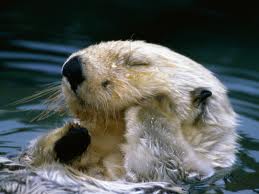


Tell us what you love about Sea Otters!
Categories: adventure, Animals, Children, conservation, education, Environment, mammals, nature, oceans, science, sea otters, wildlife | Tags: , , , , , , , , , , | Leave a comment

INTERNATIONAL RHINO DAY!

INTERNATIONAL RHINO DAY!

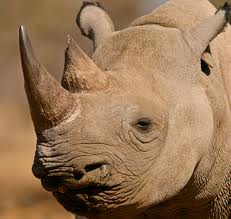
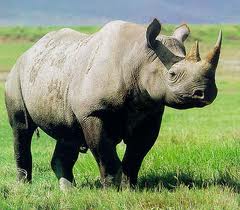
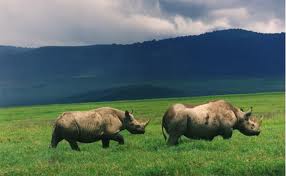
We’re celebrating our friends the rhinoceros today! These magnificent animals are one of our very favorites, with their large bodies, hairy ears and fabulous horns!
We’re going to give you some fun rhino facts, a coloring sheet and some great resources to help our friends!
RHINO FUN FACTS:

  • There are 5 species of rhinos, the Black Rhino, the White Rhino (the African species), the Northern India Rhino, the Sumatran Rhino and the Javan Rhino (the Asian species).
  • Rhinoceros is Greek for nose and horn!
  • All rhinos have poor eyesight.
  • White rhinos have a large broad mouth for grazing grass.
  • Black rhinos have a narrow prehensile lip to help them grasp leaves.
  • Rhino horns are made of keratin, the same protein that makes up your hair and fingernails.
  • Rhinos’ ears can move and rotate independently of each other. This adaptation helps the rhino hear.
  • Rhinos are herbivores.
  • Rhinos are related to horses, tapirs and zebras! Woohoo!
  • The Sumatran Rhino is the smallest rhino weighing around 1,700 lbs and the White rhino is the largest weighing around 5,000 lbs.
  • A group of rhinos is called a crash!
  • All rhinos are endangered. Many organizations, like World Wildlife Fund and Saving Rhinos are working very hard to save and protect these amazing animals. Check them out and see how you can help!


We have a cute rhino for you to color! As always, remember to share your pictures when you color them!


Categories: adventure, africa, Animals, Children, conservation, education, Environment, mammals, nature, rhinos, science, wildlife | Tags: , , , , , , , , , | 3 Comments

FEATHERY FRIDAY # 45

FEATHERY FRIDAY #45

We’re going to Europe to meet a shy and often heard but not seen bird. We’re taking a nice stroll to see if we can find these feathery friends. Do you have your walking stick? Let’s head out!

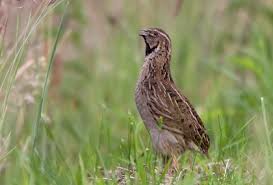
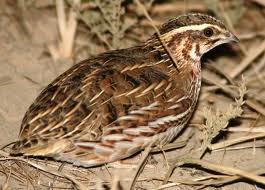
MEET THE COMMON QUAIL!

    Range/Habitat: Europe-Asia-Africa/ grasslands

    Diet: Omnivore: seeds, fruits, leaves, insects

   Length/Weight: 7”/ 2 ½-5 oz

   Conservation Status: common


Fun Facts:

  • Common quails are often heard but not seen.
  • They use calls to find their mates.
  • They are members of the pheasant family.
  • Common quails roost on the ground in groups.
  • They do migrate.
  • Common quails have a lifespan of about 11 years.

We could sit around and listen to these little quails all night! They are so cute and their feathers are perfect for camouflaging in with their habitat!


Categories: adventure, Animals, birds, Children, conservation, education, Environment, nature, science, wildlife | Tags: , , , , , , , , | 2 Comments

SUPER SURPRISE THURSDAY # 45

SUPER SURPRISE THURSDAY #45

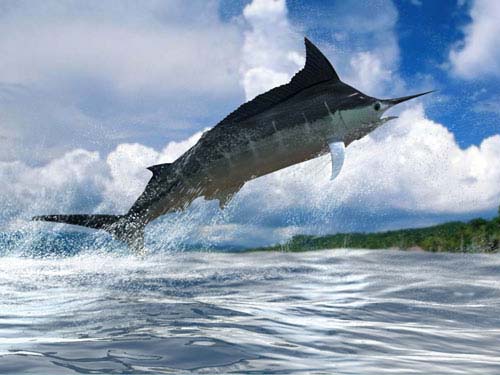
We’re taking the E & E sub down into the deep blue today! We’re off to find one fast, large and crazy looking fish! There’s always plenty of room in the sub for you! So let’s zoom off to meet…

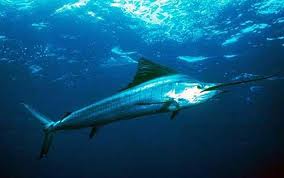
MEET THE SWORDFISH!

   Range/Habitat: Tropical-Sub tropical oceans worldwide

   Diet: Carnivore: fish, squid

   Length/Weight: up to 15 ft/ up to 1,300 lbs

   Conservation Status: common


Fun Facts:

  • Swordfish have a broad, flat sword.
  • They are very fast swimmers.
  • Swordfish use their sword snouts to impale fish and squid.
  • Swordfish are generally solitary as adults.
  • They have large dorsal (top) fins.
  • Swordfish have no teeth.
  • Female swordfish are larger than the males.

These fish are so fast and gorgeous! And man, are those sword snouts crazy! The ocean never ceases to amaze us with its inhabitants! It sure would be fun to watch these swordfish fence!


Categories: adventure, Animals, Children, conservation, education, Environment, fish, nature, oceans, science, wildlife | Tags: , , , , , , , , , | 1 Comment

WATERY WEDNESDAY # 45

WATERY WEDNESDAY # 45

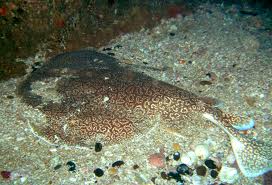
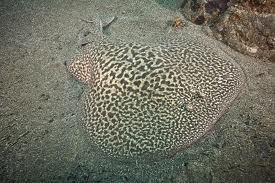
Today we’re taking the E & E sub to the Mediterranean Sea to find a creature who hides in the sand of the ocean floor and has a charge! Are you ready? We’ve got plenty of room in the sub!

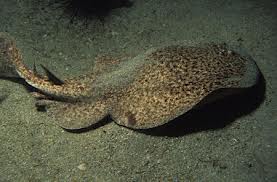
MEET THE MARBLED ELECTRIC RAY!

   Range/Habitat: Eastern Atlantic-Mediterranean Ocean

   Diet: Carnivore: fish

   Length/Weight: up to 23 ½”/ 22- 29 lbs

   Conservation Status: common


Fun Facts:

  • Marbled electric rays are brownish gray in color. Their coloration helps them camouflage in their habitat.
  • They rest in sand on the ocean floor.
  • Their skeletons are made of cartilage (the same tissue that makes up your ears and nose).
  • Marbled electric rays use an electrical charge to kill their prey.
  • Marbled electric rays can be harmful to humans.
  • They are diurnal (active during the day).


Wow, these rays actually use their own electrical charges to catch prey! Isn’t that cool? We just want to know where they plug themselves into to charge up at the bottom of the ocean J!


Categories: adventure, Animals, Children, conservation, education, Environment, fish, nature, oceans, science, wildlife | Tags: , , , , , , , , , | 2 Comments

REPTILIAN TUESDAY # 45

REPTILIAN TUESDAY #44

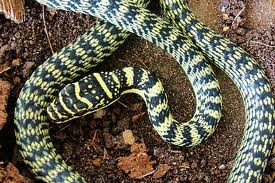
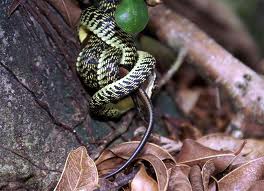
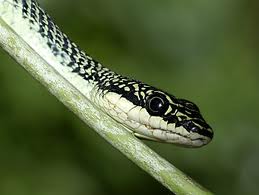
Reptilian Tuesday is taking us to the rainforests of Southeast Asia! We’re off to find a gorgeous reptile in the trees! So grab your climbing gear and your binoculars and let’s head out on today’s adventure!

MEET THE GOLDEN TREE SNAKE!

   Range/Habitat: South-Southeast Asia/ rainforest, parks

   Diet: Carnivore: rodents

   Length: 3 ¼-4 ¼ ft

   Conservation Status: common


Fun Facts:

  • Golden tree snakes are also known as the Flying snake.
  • They can glide among the trees.
  • Golden tree snakes are arboreal (spend their lives in trees).
  • They have slender bodies.
  • They have green scales with black on the tips.
  • Golden tree snakes are venomous, but not harmful to humans.

We know snakes don’t get much love, but they are such an important part of the environment and without them we would all be in trouble!


Categories: adventure, Animals, Children, conservation, education, Environment, nature, reptiles, wildlife | Tags: , , , , , , , , | Leave a comment

MAMMAL MONDAY # 45

MAMMAL MONDAY #45!

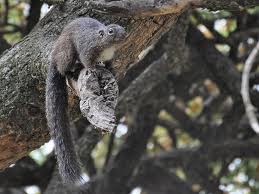
We’re off to the rainforests of Central Africa to meet one cute rodent! That’s right folks, we said cute rodent! Grab your gear and let’s head out!

MEET THE GAMBIAN SUN SQUIRREL!

   Range/Habitat: Central Africa/ rainforest, grasslands

   Diet: Omnivore: eggs, insects, seeds

   Length/Weight: 6-8”/ 9-13 oz

   Conservation Status: common


Fun Facts:

  • Gambian Sun Squirrels have olive-brown-yellow banded fur.
  • They have 14 rings down their tail.
  • Gambian Sun Squirrels bask in the sun (that’s where they get their name).
  • Gambian sun squirrels are primarily arboreal (spend most of their time in the trees.
  • They reline their nests with new leaves each night.

Gambian sun squirrels are adorable. We love that they spend their time basking in the sun to keep warm! We wonder if they use sunscreen.


Categories: adventure, africa, Animals, Children, conservation, education, Environment, mammals, nature, science, wildlife | Tags: , , , , , , , , | Leave a comment

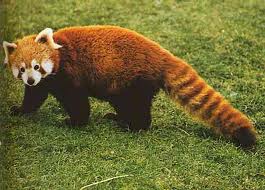
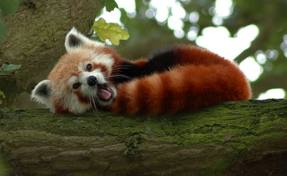
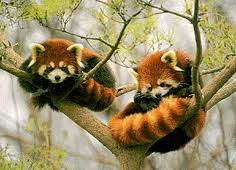
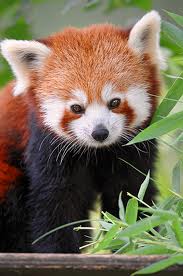
INTERNATIONAL RED PANDA DAY!

INTERNATIONAL RED PANDA DAY!

We’re celebrating the adorable and furry red panda today with a few fun facts and pictures!

  • Red Pandas are arboreal (they spend most of their lives in the trees).
  • They are nocturnal (active at night).
  • Red Pandas live in high altitude, cold climates in China and Nepal.
  • They are covered in a thick red fur. It even covers the pads of their feet.
  • Red Pandas have a pseudo thumb (fake thumb) on their wrists to help them hold bamboo.
  • They eat bamboo, fruit, nuts and eggs.
  • Red pandas nickname is the Fire Fox!
  • Recent studies show they are not related to bears or racoons! They are a member of their own family! Neat!

Red Pandas are so adorable and they endangered as their habit is disappearing. To find some cool ways to help these cuties, check out the Red Panda Network website!  You can even adopt your own panda! Woohoo!


Categories: adventure, Animals, Children, conservation, education, Environment, mammals, nature, science, wildlife | Tags: , , , , , , , | 2 Comments

FEATHERY FRIDAY # 44

FEATHERY FRIDAY #44

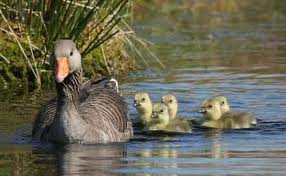
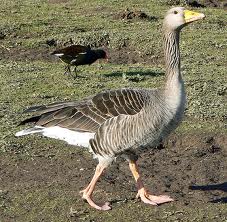
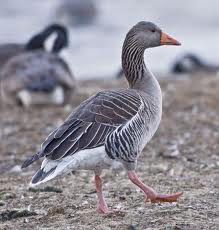
We’re off to the UK to meet the ancestor of all domestic geese! These gorgeous birds are large and in charge! So let’s out together to meet this fine feathery friend!

MEET THE GRAYLAG GOOSE!

   Range/Habitat: Europe-Asia/ wetlands, lakes

   Diet: Herbivore: grains, vegetation

   Length/Weight: 30-35”/ 6 ½-8 ¾ lbs

   Conservation Status: common


Fun Facts:

  • Graylag geese are the wild ancestor of domestic geese.
  • They get their name because they migrate late in the year or lag behind other birds.
  • Graylag geese are large birds; in fact they are the largest goose species in Europe.
  • They live in large flocks and are very social.
  • Graylag geese are very vocal. Check out their calls!
  • Graylag geese mate for life.
  • Male and females raise the chicks.

We just love geese and these Graylag geese are gorgeous with their gray and brown feathers. It is cool to meet the wild cousins of our domestic friends too! Can you make a goose sound? Honk! Honk!

Categories: adventure, Animals, birds, Children, conservation, education, Environment, nature, science, wildlife | Tags: , , , , , , , , | 1 Comment

SUPER SURPRISE THURSDAY # 44

SUPER SURPRISE THURSDAY  #44

We’re jetting to Central Africa today to meet one gorgeous feathery friend. These very social birds can be found in large flocks and are named after a mammal. Grab your binoculars and let’s head out on the savanna!

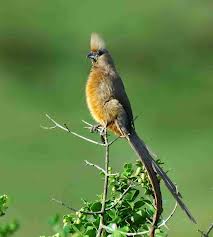
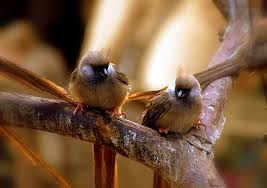
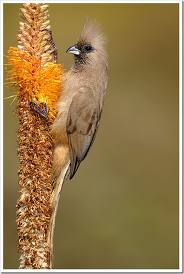
MEET THE SPECKLED MOUSEBIRD!

   Range/Habitat: Central-Eastern Africa/ savannas, grasslands

   Diet: Frugivore: fruits, seeds

   Length/Weight: 12-16”/ 1 5/8- 2 5/8 oz

   Conservation Status: common


Fun Facts:

  • Speckled Mousebirds are considered living fossils and are related to long line of ancient birds.
  • They get the name mousebird from their long tails and furry like feathers.
  • Speckled Mousebirds have a crest of feathers on their head.
  • Speckled Mousebirds are very social and live in family flocks of 4-20 individuals.
  • They sleep in a cluster at night to keep warm.
  • Male and female speckled mousebirds take care of chicks, as do older offspring.
  • They are very flexible and acrobatic and can be seen eating upside down!

Wow, these funny looking birds sure are fun! They are so social! You can see them puff up their feathers and get a little sun bath too to warm themselves during the day! Now that is our kind of bird!


Categories: adventure, africa, Animals, birds, Children, conservation, education, Environment, nature, science, wildlife | Tags: , , , , , , , , | 2 Comments

Blog at WordPress.com.