mammals

MONKEY WEEK DAY #5

MONKEY WEEK DAY #5

It’s the last day of Monkey Week and we’ve had a blast meeting all these great primates! We’re going back the rainforests of South America to meet today’s monkey! There is a good chance we’ll hear them before we see them! Let’s head out on today’s adventure!

e & e rainforest2

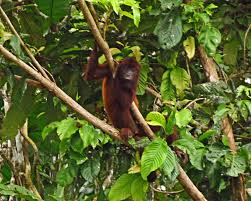
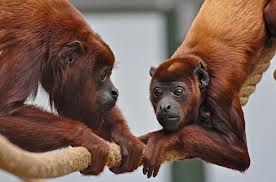
MEET THE RED HOWLER MONKEY!

red howler

   Range/Habitat: Northwest South America/ rainforests-mangroves

   Diet: Herbivores: fruit, leaves

   Length/Weight: 20-25”/15-21 lbs

   Conservation Status: common


Fun Facts:

  •          Red Howler monkeys are the largest of the howler monkey species.
  •          They are arboreal.
  •          Red howler monkeys use howls, whoops and calls to communicate with each other.
  •         Those calls can be heard up to 1 ¼ miles away.
  •     Red howler monkeys live in troops of one male with 3-4 females.
  •          Red howler monkeys have a prehensile tail that they use to hang from branches.

Red howler monkeys are amazing! We wished we had prehensile tails. Did you know that only new world monkeys have prehensile tails?
red howler2  howler monkey3

Categories: adventure, Animals, Children, conservation, education, Environment, mammals, nature, science, wildlife | Tags: , , , , , , , , , , | Leave a comment

MONKEY WEEK DAY #4

MONKEY WEEK DAY #4

GUESS THE MONKEY!!

glt

  • I live in the rainforests of Brazil.
  • I am about the size of a squirrel.
  • I am named after the king of the jungle.

WHO AM I?

Categories: adventure, Animals, Children, conservation, education, Environment, mammals, nature, science, wildlife | Tags: , , , , , , , , , , | Leave a comment

MONKEY WEEK DAY #3

MONKEY WEEK DAY #3!

We’re off to Japan to meet today’s monkey! These primates live in very cold climates and are very adaptive to that climate! Grab your coats and let’s head off to meet…

e e arctic

MEET THE JAPANESE MACAQUE!

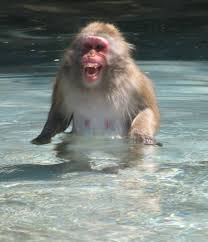
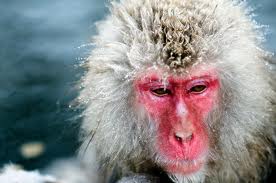
japanese macaque   Range/Habitat: Japan/mountains-forests

   Diet: Omnivore: fruit, leaves, insects

   Length/Weight: 18-23”/ 17-24 lb

   Conservation Status common


Fun Facts:

  •          Japanese macaques are also known as the snow monkey.
  •          They live in the most northerly habitat of any monkey.
  •          Japanese macaques live in troops of around 40 individuals.
  •          Japanese macaques sit in hot springs to keep warm.
  •          They have a “culture”. They teach younger generations adaptive skills. These skills vary by troop.

Japanese macaques are really cute with their fluffy grey coats of fur and their little red faces. We think it is super cool that they have their own hot tubs!

japanese macaque2   japanese macaque3

Categories: adventure, Animals, Children, conservation, education, Environment, mammals, nature, science, wildlife | Tags: , , , , , , , , , , | Leave a comment

MONKEY WEEK DAY # 2

MONKEY WEEK DAY #2!

Woohoo for Day #2 of Monkey Week! We’re going to the rainforests of Northern South America to find a very cute, small monkey who lives high in the trees! Get your gear and let’s get ready to zip line through the rainforest!

e & e rainforest2

MEET THE COTTONTOP TAMARIN!

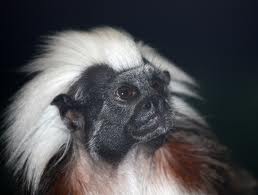
cotton top tamarin   Range/Habitat: Northwest South America/ rainforest

   Diet: Omnivore: fruit, buds, insects

   Length/Weight: 8-10”/ 14-16 oz

   Conservation Status endangered


Fun Facts:

  •          Cottontop Tamarins are arboreal.
  •          They have a crown of white fluffy fur on their head.
  •          Cottontop tamarins have long tails for balance.
  •          Cottontop tamarins live in small family troops with one breeding pair.
  •         Four out of five births are twins.
  •          Cottontop tamarins family members help take care of the offspring.

Cottontop tamarins are so cute with their crazy hairdos! There are more of these special monkeys in captivity than there are in the wild. We must really work to help protect these amazing animals.

cotton top tamarin2   cotton top tamarin3

Categories: adventure, Animals, Children, conservation, education, Environment, mammals, nature, science, wildlife | Tags: , , , , , , , , , , | Leave a comment

MONKEY WEEK!

MONKEY WEEK!

It’s theme week here at headquarters and we’re celebrating monkeys! These primates vary in size, habitat and behavior. There are Old World monkeys, that live in Africa and Asia and New World monkeys, which live in South and Central America. We’re going to South Asia today to meet the week’s first monkey! Grab your plane ticket and travel gear and let’s go meet…

e e temple

MEET THE HANUMAN LANGUR!

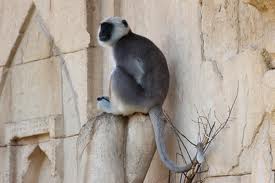
hanuman langur   Range/Habitat: South Asia/ forests, suburbs, mountains

   Diet: Herbivore: fruits, buds, shoots

   Length/Weight: 20-31”/ 23-44 lbs

   Conservation Status: common


Fun Facts:

  •          Hanuman Langurs are considered sacred by Hindus.
  •          They are the most widespread of all langur species in South Asia.
  •          Hanuman langurs are also called Gray Langurs.
  •          Hanuman langurs color varies by their habitat.
  •          They are diurnal.
  •          Male Hanuman langurs are larger than females.
  •          Hanuman langurs live in troops led by one or two males.

Hanuman langurs are fascinating monkeys. They often live near humans. Can you imagine considered being sacred? We think all animals are considered sacred 🙂 !

hanuman langur2hanuman langur4

Categories: adventure, Animals, Children, conservation, education, Environment, mammals, nature, science, wildlife | Tags: , , , , , , , , , | Leave a comment

MAMMAL MONDAY # 76

MAMMAL MONDAY # 76

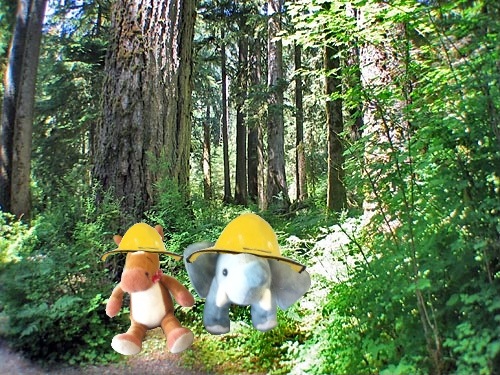
Hello! We hope everyone had a fabulous weekend! We’re ready to go on another fun adventure this Mammal Monday! Grab your gear and get ready to go to Africa!

e & e rainforest

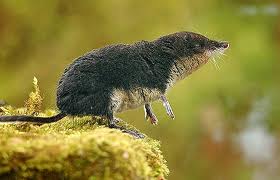
MEET THE ARMORED SHREW!

armored shrew   Range/Habitat: Central-East Africa/ rainforest

   Diet: Carnivore: worms, insects, carrion

   Length/Weight: 4-6”/ 2 1/2 -4 oz

   Conservation Status: common


Fun Facts:

  •          Armored Shrews are also known as the Hero Shrew.
  •          They have very strong backs.
  •          Armored shrews vertebrae have interlocking spines on the side on bottom of each vertebrate.
  •          They are solitary.
  •          Armored shrews are excellent climbers.
  •          Armored shrews have wooly gray fur.

These armored shrews are super cool. They have those crazy backbones that make them super strong. We wonder if they have capes hidden since they are called the Hero Shrew :)?

armored shrew2

Categories: adventure, Animals, Children, conservation, education, Environment, mammals, nature, science, wildlife | Tags: , , , , , , , , , | Leave a comment

MAMMAL MONDAY # 74

MAMMAL MONDAY # 74

It’s just another Mammal Monday and we sure are happy about that! We’re hoping a plane and heading to that one of kind island, Madagascar! Grab your luggage, snacks and night goggles and let’s go meet…

e & e night rainforest

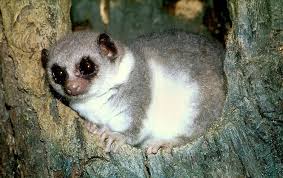
MEET THE FAT TAILED LEMUR!

fat tailed lemur   Range/Habitat: Madagascar/ rainforest

   Diet: Omnivore: insects, flowers, fruits

   Length/Weight: 7-10”/ 6 oz

   Conservation Status: common


Fun Facts:

  •          Fat tailed lemurs store fat in their body and tails.
  •          Fat tailed lemurs go into a torpid state (period of slower metabolism and activity) during the dry season.
  •          They are arboreal (spend most of their time in trees).
  •          Fat tailed lemurs are one of the smallest members of the lemur family.
  •          They are nocturnal.
  •          They have a 15-20 year life span.

Fat tailed lemurs are so cute. It is so cool that they spend up to 6 months in an inactive state during the dry season. They live off the fat in their tails! Neat!

fat tailed lemur2

Categories: adventure, Animals, Children, conservation, education, Environment, mammals, nature, science, wildlife | Tags: , , , , , , , , , | 2 Comments

HUG YOUR CAT DAY!

HUG YOUR CAT DAY!

Today is hug your cat day! We live with a cat named Moe and he is rather large and squishy! Occasionally he tries to eat us, but we’ve made peace and now we’re pals!

moe relaxing

He loves a good nap in the sun!

We also thought Hug Your Cat Day would be a good day to give a virtual hug to all the big cats out there! World wide wild cat populations are dwindling! There are several organizations that are working hard to protect these majestic creatures in the wild and protect them from becoming pets or living in captive situations that are unhealthy!

First Up:

PANTHERA! This amazing group works tirelessly to protect habitat for big cats all around the world and to help to stop poaching and the wild animal black market! We’ve actually been to a lecture given by their president and he was great! Be sure to check out their website and learn more about this great group!

Next Up:

BIG CAT RESCUE! Big Cat Rescue Rescue in Florida is a sanctuary that takes in big cats of all sizes. They work with animals who have often suffered abuse and neglect and give them an amazing place to live out their lives. We love sharing headquarters with Moe, but he is a domestic cat that we found at the local Humane Society. He makes a great companion. Large wild cats on the other hand never make good pets. They are large predators with big teeth and claws and belong in the wild or in accredited zoos. Check out Big Cat Rescue’s website. They have beautiful pictures and fun videos!

Now, we’re going to end Hug Your Cat Day with some great photos of big cats who deserve our love and respect!

cheetah   clouded leopard

panther

liontiger

leopard

Moe is given a high paws to all the cats out there!

Moe is given a high paws to all the cats out there!

Categories: adventure, animal rescue, Animals, Children, conservation, education, Environment, mammals, nature, science, wildlife | Tags: , , , , , , , , , , | 6 Comments

MAMMAL MONDAY # 72

MAMMAL MONDAY # 72

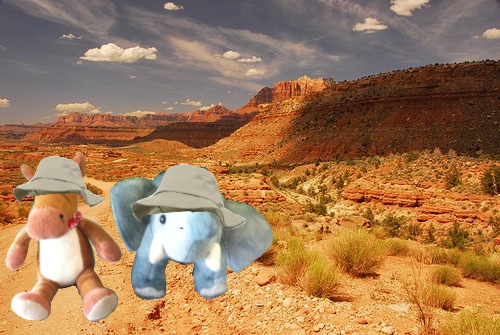
It’s Mammal Monday and we’re going to South Africa to meet a member of the rodent family. We’re heading in to the desert so grab your hat, your mud sunscreen and your sunglasses and let’s goooooo…

e e desert

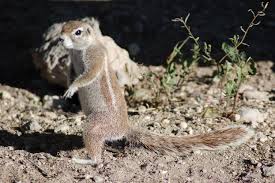
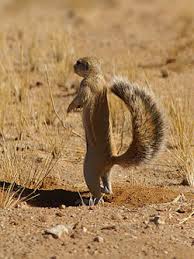
MEET THE CAPE GROUND SQUIRREL!

cape ground squirrel   Range/Habitat: Southern Africa/ desert

   Diet: Omnivore: seeds, bulbs, insects

   Length/Weight: 8-12”/ 12 oz

   Conservation Status: common


Fun Facts:

  •          Cape Ground squirrels live in small colonies.
  •          They have large claws.
  •          Cape ground squirrels burrow underground.
  •          Cape ground squirrels forage for food daily.
  •          They have different calls for predators.

These little rodents are cute! We just love all the squirrels of the world. Do you have a favorite squirrel?

 cape ground squirrel2

Categories: adventure, Animals, Children, conservation, education, Environment, mammals, nature, science, wildlife | Tags: , , , , , , , , , | 1 Comment

WE ARE FANIMALY!!

WE ARE FANIMALY!!!

It’s another installment of We Are Fanimaly! Come learn who’s related to who!

ImageThat’s right everyone- hippos and whales are related to each other. This is recent discovery thanks to DNA. Scientist don’t have a full understanding of this relationship and it’s evolutionary timeline, but we think it is super cool! 

HIPPO FUN FACTS!

  • Hippopotamus means river horse.
  • Hippos have clear membranes that help them see under water.
  • Hippos can not swim. They actually walk along riverbeds.
  • Hippos “sweat” a red/pink mucus that helps keep their skin moist.
  • Hippos spend most of their day in water and their nights on land grazing.
  • Hippos are social animals and live in herds.
  • Hippos have large canine and incisor teeth.
  • Scientist have discovered in recent years that hippos sing songs underwater.

WHALE FUN FACTS!

  • Whales are marine mammals.
  • Blue whales are the largest mammal on earth.
  • Orcas or Killer whales are actually the largest member of the dolphin family.
  • Whales are carnivores.
  • There are toothed whales and baleen whales.
  • Toothed whales are smaller than baleen whales.
  • Some whales, like the humpback sing songs to communicate with each other.
  • Some whales use echolocation to find food.
  • Many whales and dolphins are social animals.
Categories: adventure, Animals, Children, conservation, education, endangered species, Environment, mammals, nature, science, wildlife | Tags: , , , , , , , , , , | 2 Comments

Blog at WordPress.com.