oceans

Built for Speed

Built for Speed

We’ll be meeting some excellent species and of course our friend Chompy will stop by! Make sure you check out our Instagram for some fun videos and extra pictures! Today we are meeting one of the fastest sharks in the ocean- the shortfin mako! Let’s learn more about this speed demon!

F2815DB5-D3C4-4614-BCF3-D9689798D7BD

SHORTFIN MAKO FUN FACTS:

  • These sleek sharks are found in temperate and tropical oceans worldwide.
  • They can grow up to 12 feet and weigh up to 1,200 lbs.
  • Shortfin makos can swim up 45 mph, making them the fastest shark in the oceans.
  • They are also known for their ability to leap out of water.
  • These carnivores primarily eat boney fish- like tuna. They are apex predators and have no natural predators.
  • Makos are migratory and some individuals are known to make year long migrations.
  • They have a special blood vessel system that helps them keep their body temperature higher than the surrounding water- allowing them to hunt in cold waters.
  • Makos give birth to live young, but they are ovoviviparous- the eggs incubate inside the female and the young feed off any unfertilized eggs.

F76BAF15-CA4A-44FC-88E2-C950535D9433

These fast predators are listed at VULNERABLE by the IUCN. They are fished for their meat and for their fins. When an apex predator such as the mako is removed from its ecosystem it can be disastrous. To learn how you can help sharks like the mako, check out Shark Savers. 


Categories: adventure, Animals, camp, Children, conservation, education, endangered species, Environment, fish, nature, oceans, science, sharks, Today's Post, wildlife | Tags: , , , , , , , , , , , , , , | Leave a comment

KNOW YOUR SHARKS

KNOW YOUR SHARKS

We enjoyed meeting our cephalopod friends last week- did you? This week we’re partying with the elasmobranchs – that’s right it’s Shark Week! Come learn more about these cartilaginous fish with us.

90869A18-7E9E-43A0-B362-BC3D6AE947D2


SHARK FUN FACTS: 

  • Shark skeletons are made of cartilage, the same tissue that makes up human noses and ears. Their teeth do have enamel, which is why they fossilize.
  •  Sharks have a special organ called the Ampullae of Lorenzini. This organ is compromised of small gel filled spots around the shark’s mouth, eyes and nose. The ampullae Of Lorenzini helps the shark detect electromagnetic fields and water temperature.
  • Most sharks have excellent eyesight. They can see in color and in low light.
  • Sharks have called the oceans home for 500 million years.
  • The largest fish in the ocean is a shark! It’s the Whale Shark!
  • Some sharks, like great whites, must swim continually to live. They must swim to move water over their gills. Other sharks, like nurse sharks, have spiracles that move the water over their gills. Spiracles allow the shark to lay still on the ocean floor.
  • Some sharks can go through 35,000 teeth in a lifetime. Those teeth are in rows similar to a conveyer belt; when one falls out, the new one moves forward.
  • Not all sharks have teeth though- those large whale sharks eat plankton that they filter.
  • Giving birth is different for different species of sharks! Some sharks lay eggs (oviparous) called mermaid purses. Some sharks incubate the eggs inside their bodies and give live birth (ovoviviparity). And some sharks have a placental organ that attached to the egg and they give live birth (viviparity).


1826F5DF-1469-4A0E-BB53-D73E9095A96F


Wow! Sharks are such diverse and amazing creatures- you could spend a whole summer at camp just talking about these fantastic fish, sadly we only have a week! Any guess on some of the species will meet in the next few days?

Categories: adventure, Animals, camp, Children, conservation, education, Environment, fish, nature, oceans, science, sharks, Today's Post, wildlife | Tags: , , , , , , , , , , | Leave a comment

BOO!

BOO!

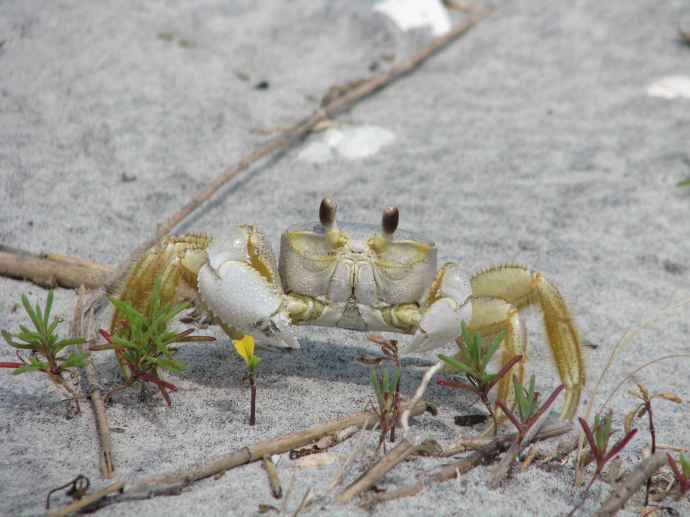
We’re meeting a fantastic little crustacean today! They are almost as much fun to watch on the beach as the birds. Come learn about the little crabs who say BOO! Hehehe!

FF84CDC3-4575-426C-BE3C-27F1BB3751F4

GHOST CRAB FUN FACTS: 

  • Ghost crabs are found in burrows they dig in the sand.
  • Their burrows entrances are dug at angle to allow air to flow in. They can be as deep as 4 ft.
  • These omnivores eat insects, clams and other small crabs.
  • They have 360 degree vision- so they can spot predators.
  • They are mostly nocturnal, but they can be spotted during the day- cleaning out their burrows.
  • Ghost crabs are solitary and do not share their burrows.
  • They do need to keep their gills moist and can be found at the water’s edge sometimes just buried in the sand.

F51CD65D-BB7B-41DB-A518-E76087C99977

When a little ghost crab comes up behind you and says BOO! Don’t be afraid- they are just playing!

Categories: adventure, Animals, camp, Children, conservation, Environment, nature, oceans, science, Today's Post, wildlife | Tags: , , , , , , , , , , , , , | Leave a comment

Suzi and the Sand Dunes

Suzi and the Sand Dunes

We haven’t had a camp fire story this whole summer! We’re sharing a story we’ve shared before!


Suzi and Sand Dune Nightmare:

On an evening just like tonight a camper named Suzi, decided to go explore the beach during the night. She wanted to watch a sea turtle come ashore. She wasn’t sure she should go exploring by herself as it was against the rules, but the thought of seeing a mom sea turtle laying her eggs was so exciting that she couldn’t contain herself. She gathered her red flashlight and quietly left her tent.

Suzi walked quietly up the beach as not to disturb any turtles or any of the campers. It was hard to see in the dark night and Suzi was not feeling as brave as she wandered father from camp. She was getting cold and she didn’t see a single turtle in the dark of night. She heard a noise from the dunes and she decided to walk back to camp as quickly as possible.  As she walked back she noticed a red glow coming from the sand dunes. She stopped; camp counselors had told everyone that the dunes were off limits, day or night and any camper that went in to them would be sent home. Suzi wanted to investigate where the red light was coming from, but she didn’t want to get in trouble. No one had noticed that she was gone so far, so what would a few more minutes hurt. She couldn’t think of animal that would give off a red glow like that. What if she were to discover a new species? Then no one would be mad at her for going into the dunes, even at night. Her fears slipped away as curiosity and excitement led her in the direction of the dunes and the red glow.

Suzi headed into the dunes with some trepidation. There were predators that lived in these dunes and it was darker back here.  As she walked farther from the sounds of the ocean and deeper in to the dunes; the tall, sharp blades of sea grass cut Suzi on her arms and legs. She could barely see movement of small animals around her in the pitch black night. Those were just regular old ghost crabs and mice Suzi thought. No need to fear them. Suddenly, there was a noise to her right, something much larger! This was no ghost crab coming out of its burrow.  Suzi was beginning to get scared and wanted to go back to her safe tent at camp. As her fear grew, she realized she had lost the red glowing light she’d seen earlier. She looked around and all she could see were sand dunes, sea grass and dark of night. Her heart began to race as the noise grew louder and closer. It’s too big to be a fox, but it could be a coyote she thought.  Suzi knew she did not want to encounter a coyote.  She was lost in the middle of the dunes and she was beginning to panic. The noise from the large animal grew louder and closer yet again! Suzi started to run, but the dunes are no place to run- there were crabs and birds’ nests and all of those sharp sea grass blades. She felt as if she were running in place. As the noise grew closer, Suzi stopped. Instinct told her to get low, so she squatted down as she shook with fear. She was covered in sweat and cuts from the sea grass. Quietly she sat in the dunes with the ghost crabs crawling all around her. For a moment the steps had stopped. Maybe the animal had given up and left. But as soon as Suzi decided to stand up, she could her the footsteps coming closer and closer…


Uh oh! What happened to Suzi? Do you think a coyote got her? Or maybe a secret sand dune monster! We’ll tell you the answer if you ask us on Twitter or Facebook! Time for lights out campers! And stay out of the dunes! Hahahaha!


Categories: adventure, Animals, camp, Children, conservation, education, Environment, nature, oceans, science, Today's Post, wildlife | Tags: , , , , , , , , , , , | Leave a comment

Sand Dunes

Sand Dunes

219104B6-4EB9-4EED-B8BE-4C0648D82AC2.jpeg

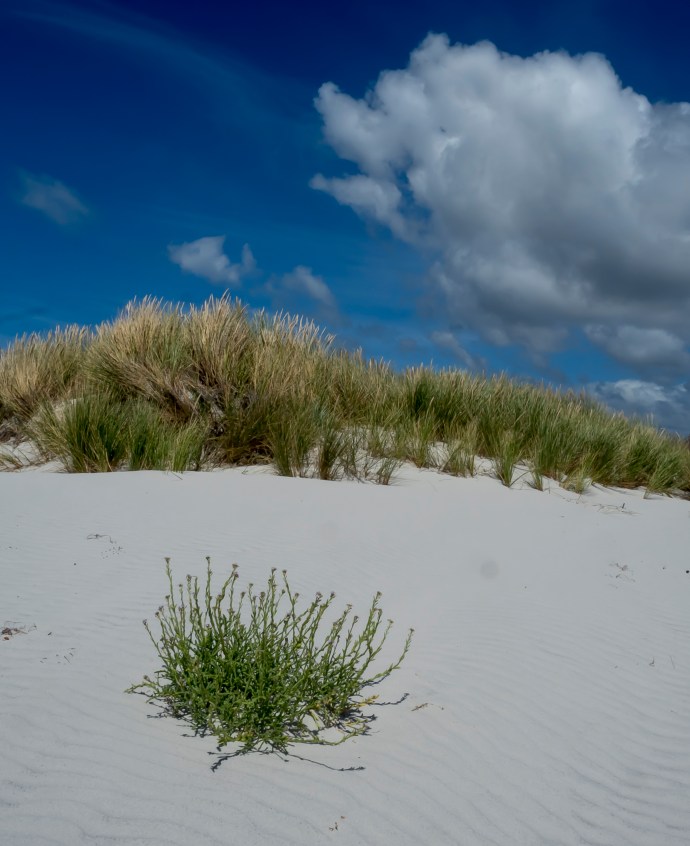
Sand dunes fun facts:

  • Dunes are formed from wind and the tides. They are constantly changing and moving.
  • They protect the inland from storms and high winds.
  • Dunes are home to many animals including, reptiles, birds, mammals and invertebrates.
  • They provide good protection for animal nurseries. Babies are well camouflaged and hidden away from the open beach.
  • Just at the edge of the dunes is where female sea turtles lay their eggs.
  • Grasses that grow in the dunes, protect them from erosion. They have very shallow root systems though and walking on the dunes for even a few feet can destroy an entire grass colony.

You can find birds, insects, invertebrates, mammals and birds throughout the dunes. You can also usually spot wildflowers and other plants along with the grass. These are some of the animals you can see on the dunes:

Marsh Rabbit!

Marsh Rabbit!

Eastern Diamondback Rattle Snake (found on the south eastern coast of the U.S.)

Eastern Diamondback Rattle Snake (found on the south eastern coast of the U.S.)


Piping plovers are shore birds. They lay their nests near or in the dunes.

Piping plovers are shore birds. They lay their nests near or in the dunes.


You can often spot ghost crabs and the holes that lead to their burrows in the dunes!

You can often spot ghost crabs and the holes that lead to their burrows in the dunes!

Purple sandpipers are another bird you'll find!

Purple sandpipers are another bird you’ll find!


Categories: adventure, Animals, camp, Children, conservation, education, endangered species, Environment, nature, oceans, science, Today's Post, wildlife | Tags: , , , , , , , , , , | Leave a comment

Finding Tiny Crabs

Finding Tiny Crabs

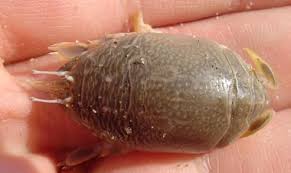
We’re spending this week down on the beach looking for animals that are not easy to spot. Today we’re looking for a tiny crab called the sand or mole crab. Let’s get to exploring!

index

MOLE CRAB FUN FACTS:

  • These little crabs are found in the sand where the tide rolls in. They bury themselves just below the surface.
  • They can bury themselves in under 2 seconds! Good luck finding these speed demons.
  • Mole crabs have feathery antenna that filter plankton from the water.
  • Birds and fish like to dine on these little crustaceans.
  • They molt when they grow and must wait for their new shell to harden.
  • Mole crabs can swim or tread water – an unusual adaptation for crabs.
  • Females can produce up to 45,000 eggs!


Have you ever spotted these crazy crabs on the beach? They aren’t easy to see, but they are an important part of the food web of the beach!

Categories: adventure, Animals, camp, Children, conservation, education, Environment, nature, oceans, science, Today's Post, wildlife | Tags: , , , , , , , , , , | Leave a comment

Pipe Up for Sandpipers

Pipe Up for Sandpipers

Another popular bird that we love to watch run up and down the beach is the sandpiper. They are so funny with their little legs and high speed running! Let’s learn more about them.

index


SPOTTED SANDPIPER FUN FACTS:

  • These funny little birds have an usual mating style. The females actually establish territory for nests.
  • The males incubate the eggs and raise the young. Sometimes females will help.
  • Females can actually lay several clutches of eggs in a season- often from different males. Each male that fathered the clutch will rear those chicks.
  • Sandpipers are known for their teetering motion. It is not known why they do this.
  • These little carnivores eat insects – including flying ones and crustaceans buried in the sand.
  • They are listed as Least Concern by the IUCN.


Who knew these little birds have such neat role reversals? Lady sandpipers are pretty cool as are the busy males!

Categories: adventure, Animals, birds, camp, Children, conservation, education, nature, oceans, science, Today's Post, wildlife | Tags: , , , , , , , , , , | Leave a comment

Knot Birdy

Knot Birdy

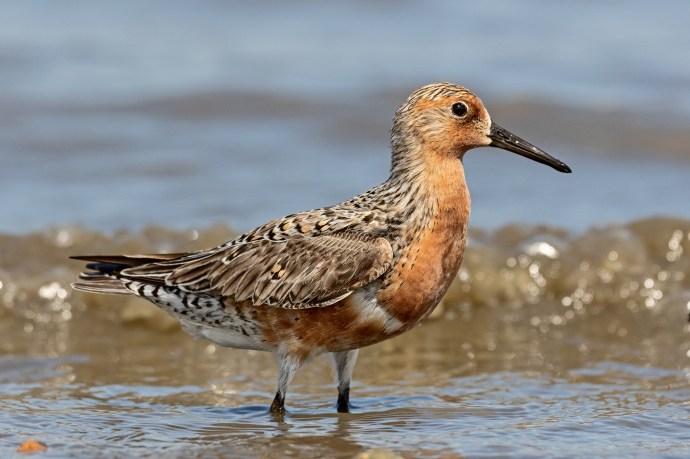
It’s another day of watching birds and we’re meeting the Red Knot. Anyone have a guess how they got that name? Let’s find out!


A77429A8-4F53-4C78-A5B6-8BF440FBCC51.jpeg


RED KNOT FUN FACTS:

  • These red birds are actually more grey most of the year. They develop that color during mating season.
  • They are found on every continent except Antartica.
  • It is thought that they get their name from the grunting noise they make.
  • Their numbers have fallen in North America due to population declines of one of their favorite prey- horseshoe crabs eggs.
  • These carnivores have special receptors in their beaks that help them detect pressure. These receptors help them find crustaceans buried in the sand.
  • Egrets eat their crustacean prey whole- shell and all. They crush the shells in their gizzard (a muscular part of their stomach), In fact, they have the largest gizzard of any shore bird.
  • They are listed as Near Threatened by the IUCN.


These adorable birds remind us of plovers a bit. It’s important that scientists are following population numbers as we are seeing a decline.  Remember to keep our shores clean of any trash, as plastics and other trash can harm our shore bird friends.


Categories: adventure, Animals, birds, camp, Children, conservation, education, endangered species, Environment, nature, oceans, science, Today's Post, wildlife | Tags: , , , , , , , , , , , , , | Leave a comment

Hello Heron!

Hello Heron!

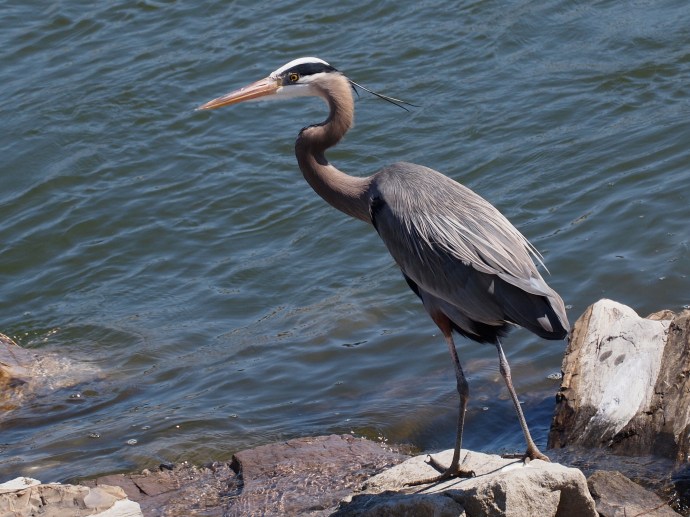
We are excited to meet some shore birds this week! There may be no better activity then to sit on the beach and watch the birds, especially the ones who run with the waves. Today we’re meeting a bird you’ll see in fresh, salt and brackish waters.

OLYMPUS DIGITAL CAMERA

MEET THE GREAT BLUE HERON:

  • Great blue herons call marshes, lakes, rivers and coast lines home.
  • These majestic birds are always fun to spot with their long necks and long legs.
  • They can stand 4 ft tall and have a 6 ft wing span.
  • They actually only weigh around 6 lbs! It sure helps to have hollow bones.
  • You can find herons hunting day or night. They have excellent night vision.
  • These carnivores wade in the water and wait for fish to grab, amphibians and crustaceans. They are surprisingly fast.
  • Their neck vertebrae are specially shaped to allow them to strike fast.


We love these amazing gorgeous birds. We never tire of seeing them whether on an hike or at the near by lake or here at Camp E&E by the Sea.

Categories: adventure, Animals, birds, camp, Children, conservation, education, Environment, nature, oceans, science, Today's Post, wildlife | Tags: , , , , , , , , , , , | Leave a comment

This is Urchin!

This is Urchin!

Hehehe! We love a good pun! Ok, well maybe learning about our last echinoderm the sea urchin, isn’t so urgent, but it is cool!

97FA3D2B-8B23-49F8-A0CC-63B00A668C79


SEA FUN FACTS:

  • Like their other echinoderm relatives, sea urchins are divided in to equal parts- being 5.
  • They have 5 rows of tube feet with suckers on the end that they use to move and then attach to rocks or the ocean floor.
  • All urchins have spines, but not all of them are venomous.
  • These omnivores eat plankton and algae. In turn they are prey for other animals including otters and sun stars.
  • The sea urchin’s mouth is on the bottom of their body and their bum is on the top.
  • Urchin is an old word for hedgehog. Named after the spiny mammal, you could technically call them sea hedgehogs!
  • Sand dollars are actually a type of urchin!
  • Sea urchins also have tiny claws in between their spines. They use these to help protect them and to hold shells and other objects to help them camouflage.

99FDF924-DE52-4A52-AD17-DA05BFCDF6A1


Sea urchins are really cool for an animal that looks just like a colorful pin cushion! These amazing creatures can live up to 30 years and the Red Sea urchin is known to live up to 200 years. Crazy!!!

Categories: adventure, Animals, camp, Children, conservation, education, Environment, nature, oceans, science, Today's Post, wildlife | Tags: , , , , , , , , , , | Leave a comment

Blog at WordPress.com.