reptiles

One Tiny Lizard!

One Tiny Lizard!

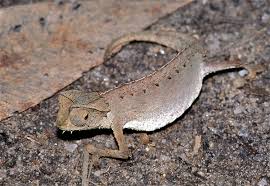
We headed into the forest to look for one of smallest lizards in the world! Madagascar is home to many species of chameleons. We wanted to find some of the smaller ones- the brown leaf chameleon. It takes a good eye, some nice binoculars and a great guide to find these cute reptiles!

chameleon2

IMG_3008


Date: 3/20

Location: Madagascar

Brown Leaf Chameleon Fun Facts:

  • Brown leaf chameleons resemble dried up leaves on the forest floor.

IMG_3011

  • When threatened, they curl up their legs and tail and roll over on their side and stay perfectly still.
  • Like other chameleons their eyes move independently of each other.
  • Male brown leaf chameleons attract a female by rocking their body and nodding their head.
  • Professor Carl is showing us how long the brown leaf chameleon is!
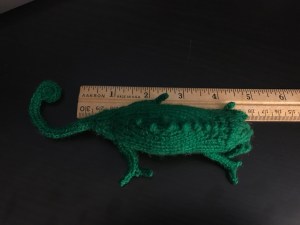
IMG_3019

  • Brown leaf chameleons are not always brown! They can be olive, green, beige or red!
  • They have a stiff ridge running down their spine.
  • Brown leaf chameleons are diurnal.

chameleon

We had a lovely day exploring the forest. We had to walk carefully to watch for these small reptile predators. We love chameleons and their crazy eyeballs and funny feet!


Categories: adventure, Animals, Children, conservation, Environment, nature, reptiles, science, Today's Post, wildlife | Tags: , , , , , , , , , , | 1 Comment

We’re Monitoring a Monitor

We’re Monitoring a Monitor

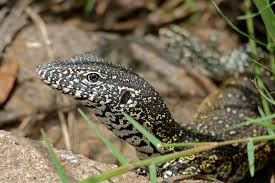
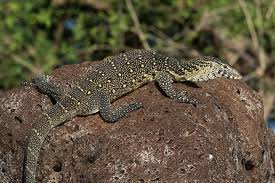
We’re spent our day looking for a large lizard that calls the Serengeti home. The monitor family includes the famous Komodo dragon! The lizard we were searching for does not get to be as big as a komodo, but they are just as cool!

nile-monitor3

img_2025


Date: 2/6

Location: Serengeti

Nile Monitor Fun Facts:

  • Nile monitor lizards are known by many names including the African small grain lizard.
  • Nile monitor lizards have long sharp claws for climbing, digging and ripping apart prey.
  • They have a range of colors from olive to to brown.
  • Nile monitors are the largest lizard in Africa.
  • They have a stout strong tail to help ward off predators.

img_2026

  • Those forked tongues give the Nile monitor a keen sense of smell.
  • They are known to hunt cooperatively. One monitor will lead a crocodile away from the  nest, while another eats the eggs.
  • Nile monitors are excellent swimmers and will take to water to escape a predator.

nile-monitor2

nile-monitor


We watched a monitor for quiet a while. These amazing lizards are intimidating to see in the wild. They are often kept as pets. As with all exotic pets, it is important to do your homework before getting a pet that will grow large and possibly unruly. There are now populations of Nile monitors in California and Florida. These lizards can be harmful to the local wildlife.

Categories: adventure, africa, Animals, Children, conservation, education, Environment, nature, reptiles, science, Today's Post, wildlife | Tags: , , , , , , , , , , | 1 Comment

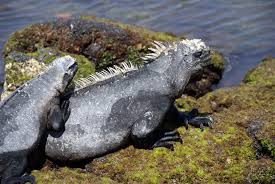
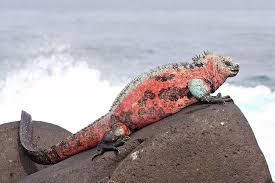
Is That an Iguana in the Ocean?

Is That an Iguana in the Ocean?

iguanaimg_2531


ellie_edmund_professors-chameleon(1)


Date: 10/11

Location: Galapagos Islands

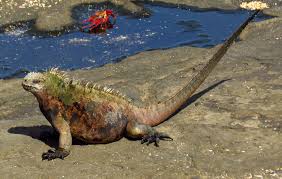
  • Marine Iguanas colors vary by the island they live on.
  • The iguanas on Espanola are nicknamed “Christmas Iguanas” because of their red coloration.
  • They have large flat tails to help them swim along the rocky coasts.
  • Only the largest iguanas swim often. They do not lose body heat as much.
  • Marine Iguanas have razor sharp teeth that they use to scrape off algae and eat seaweed.

img_2532

  • They sun themselves on lava rocks after being the cold ocean waters.
  • During years when food is in shortage, marine iguanas actually get smaller. They are the only known vertebrate to be able to shrink.
  • Marine iguanas can live up to 60 years.

iguana2iguana3


We woke up a little late after our evening excursion looking for the rice rats. Once we were up, we headed back on the island to meet it’s little dinosaur looking iguanas! Marine iguanas may not be the cutest, but they are spectacular! We love their knobby heads and spiky spines. Watching them sneeze, is so funny too!

Categories: adventure, Animals, Children, conservation, education, Environment, nature, reptiles, science, Today's Post, wildlife | Tags: , , , , , , , , , , | Leave a comment

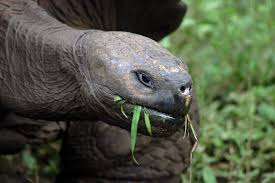
That is One Big Tortoise

That is One Big Tortoise

gal-tortoiseimg_2393


ellie_edmund_professors-chameleon(1)


Date: 10/3

Location:  Galapagos Islands

  • Galapagos tortoises are the largest tortoise species on earth.

img_2394

  • These large reptiles can spend up to 16 hours a day sleeping.
  • They can also go up to a year without food or water, due to slow metabolisms.
  • The Galapagos Islands were actually  named after these gentle giants. Galapago is Spanish for tortoise!
  • There are 11 subspecies of Galapagos tortoise. They can be found on the different islands.
  • Galapagos finches are known to “clean” the tortoises by eating parasites off their skin. This mutual symbiotic relationship benefits the birds and the tortoise.

img_2395gal-tortoise3

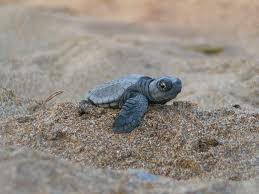
We found a guide to help us through our tour of these special islands. Most of the Galapagos are now protected and people and horse & elephant adventurers can not just go exploring around on their own. These magnificent animals, were once hunted to near extinction with only 3,000 of them left. Conservationists have worked with captive breeding programs to bring those numbers up to around 19,000. Thank goodness we have such great people to protect these old reptiles!

We can not wait to go on to our next island to see an insect! We’ll need to get Edmond some sea sickness medicine first!
Categories: adventure, Animals, Children, conservation, education, endangered species, Environment, nature, reptiles, science, Today's Post, wildlife | Tags: , , , , , , , , , , | Leave a comment

Walks on Water!

Walks on Water!

basilisk3img_2144


ellie_edmund_professors-chameleon(1)


Date: 9/19

Location: Amazon rainforest


  • Common basilisks are also called the Jesus lizard for their ability to run on water.
  • Common basilisks can run up to 7 mph. The average is 5 mph.
  • They stand erect and run on their back feet. Younger, lighter lizards can run longer distances than adults.
  • They are also excellent swimmers and can stay in the water for up to a 1/2 hour.

img_2145

  • Common basilisks have large crests down their backs.
  • The males have crests on their heads and tails.
  • Commons basilisks are excellent climbers too.
  • These carnivores have a mouth full of sharp teeth.

img_2158basilisk

We happened upon a basilisk escaping from a predator as we walking around today. It ran so fast over the water before taking a swim. These lizards are amazing and those fast feet are a great adaptation to get away from predators.


Categories: adventure, Animals, Children, conservation, education, Environment, nature, reptiles, science, Today's Post, wildlife | Tags: , , , , , , , , , | Leave a comment

Don’t Let Them Get the Squeeze on You!

Don’t Let Them Get the Squeeze on You!

green-anaconda2img_1860


ellie_edmund_professors-chameleon(1)


Date: 9/13

Location: Amazon River

  • Green anacondas are members of the boa constrictor family.
  • They love swamps and marshes and spend most of their time in the water. They are very slow on land due to heavy bodies.

img_1880

  • They can swallow their prey whole, due to flexible ligaments in their jaws.
  • They can go weeks without eating.
  • Females incubate eggs inside and then give birth to live young.
  • Babies are almost 2 feet long when born and can take care of themselves.
  • Females can be 5x as big as the males.
  • They are nocturnal.
  • Their scientific name means “good swimmer” in Greek.

green-anaconda

We barely spotted this anaconda- hehehe- we rhymed! They are nocturnal and we were out during the day on our boat trip! We just caught a glimpse of its nostrils! These giants are amazing creatures, but we’ll stay away if they ask for a hug!

Categories: adventure, Animals, Children, conservation, education, Environment, nature, reptiles, science, Today's Post, wildlife | Tags: , , , , , , , , , | Leave a comment

An Alligator of a Different Name

An Alligator of a Different Name

e & e river boat

We’re meeting our last Brazilian animal today! This reptile has some nice chompers and can get to be one big dude! Are you ready to meet this caiman?

caiman2

Black Caiman Fun Facts:

  • Black caiman are found in the Amazon Basin and other part of South America in rivers, lakes and marshes.
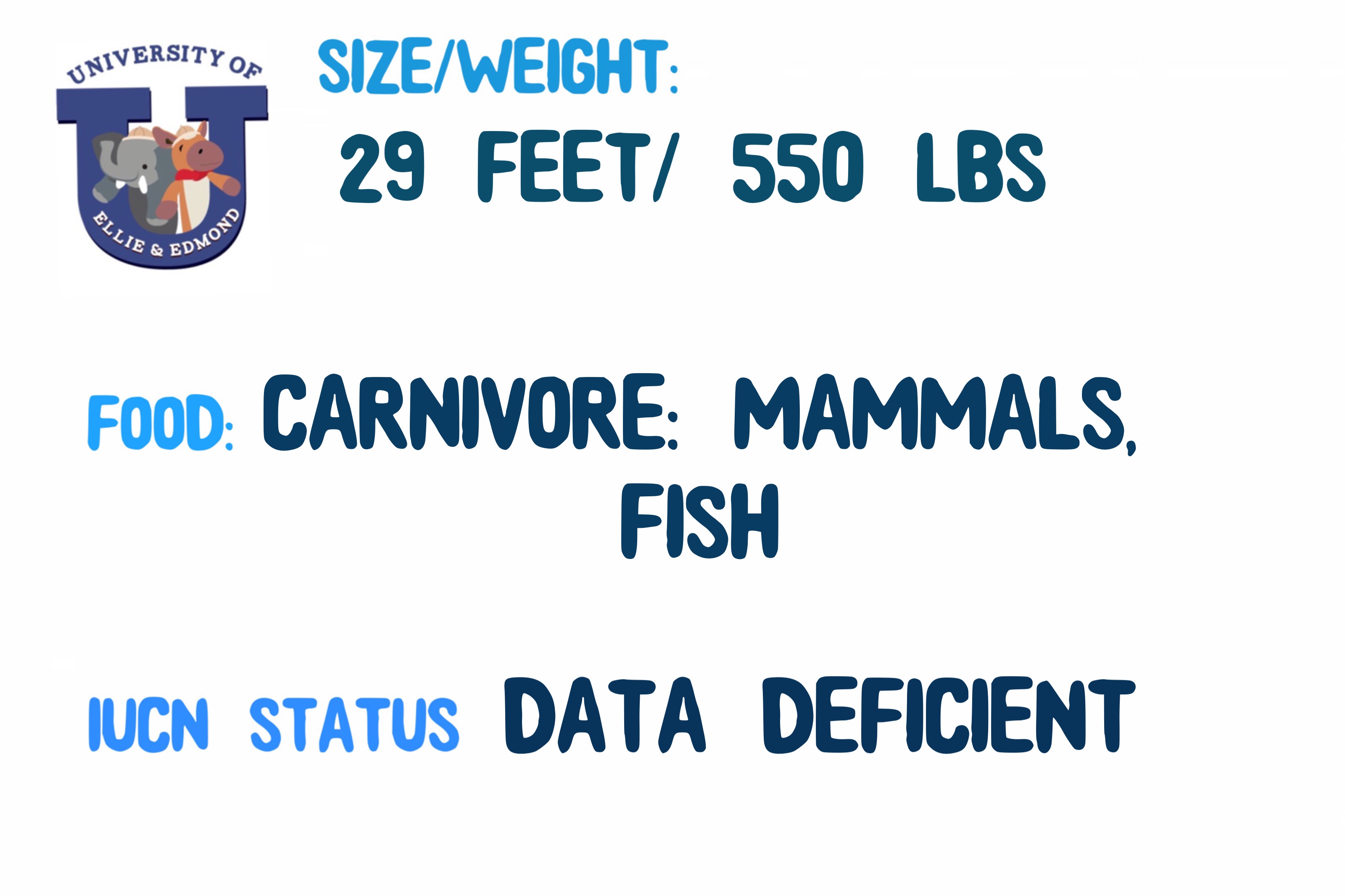
  • They can grow up to 16 feet long and weigh up to 600 lbs. They are the largest member of the alligator family in South America.
  • Black caiman are carnivores. They eat fish, mammals and other large prey.
  • Black caiman are listed as least concern by the IUCN.
  • Caiman are a subfamily of the alligator family. Black caiman are bigger than their cousins the American Alligator.
  • The black caiman is the largest predator in its habitat.

caiman

  • They are also ambush predators.
  • They have dark, almost black scales.
  • Black caiman are nocturnal.
  • Caiman have a bony ridge down their eyes to their snout.
  • Like other members of the alligator and caiman family, females protect their nests and their hatchlings.

caiman3 These relatives of the American alligator definitely look like their cousins. As apex predators we definitely will just visit from a distance!

Categories: adventure, Animals, Children, conservation, education, Environment, nature, reptiles, science, wildlife | Tags: , , , , , , , , , | Leave a comment

Meet the King of the Woods!

Meet the King of the Woods

We’re going to meet a snake today who is the king of the woods! So let’s get to it campers! We also have a fun cartoon for you!

kingsnake2

Categories: adventure, Animals, Children, conservation, education, Environment, nature, reptiles, science, wildlife | Tags: , , , , , , , , , | Leave a comment

Flat as a Pancake!

Flat as a Pancake!

Since it was World Turtle Day yesterday, we decided to meet a one today! These flatties live in the deserts of Africa! So let’s find the pancake tortoise!

e e desert

MEET THE PANCAKE TORTOISE!

   Range/Habitat: E Africa (Tanzania/Kenya)/rocky outcrops and savannas

   Diet: Herbivore: grasses, leaves, fruit

   Length/Weight: 5 ½”-7”/ 1 lb

   Conservation Status: Vulnerable


Fun Facts:

  • Pancake tortoises live in East Africa in rocky outcrops and savannas.
  • They are herbivores. They eat grasses, leaves and fruit.
  • Pancake tortoises can grow up to 7″ long and weigh up to 1 lb.
  • They are listed as Vulnerable by the IUCN.

pancake tortoise2

  • Pancake Tortoises have flat carapaces (top shell) that are flexible. This is a very unusual adaptation.
  • Pancake tortoises can squeeze into narrow crevices. This helps protect them from predators.
  • They don’t move to far from their shelter.

IMG_1865

  • They live in small colonies and share their shelters.
  • They can live up to 25 years old.
  • Pancake tortoises are crepuscular (most active at dusk and dawn).

Pancake tortoises are really neat little tortoises with their flat shells and ability to climb. And they have pancake in their name and who doesn’t love pancakes!

pancake tortoise

Categories: adventure, Animals, Children, conservation, education, Environment, nature, reptiles, science, turtles, wildlife | Tags: , , , , , , , , , , | 1 Comment

Happy World Turtle Day!

Happy World Turtle Day!

Let’s Shellabrate!

002

It’s World Turtle Day and we’re having a Shellabration with fun facts and photos! Tell us what you love about turtles and tortoises!

  • Turtles have been on the earth for about 200 million years.
  • Box turtles can live to be over a 100 years old.
  • Turtles live on every continent except Antarctica.
  • There are around 300 species of turtle and tortoises in the world. 

turtle

  • There are seven species of sea turtles. The Leatherback is the largest.
  • The top shell is called the carapace and the bottom shell is the called the plastron.

turtle2

  • Turtles and tortoises are attached to their shells.
  • The shells are part of their skeleton.

IMG_1850

  • Scutes are made up of keratin, the same protein that makes up human hair and nails.turtle4
  • Turtles don’t have ears.
  • There are about 250 species of turtles.
  • Some sea turtles can dive as deep as 3,000 feet.
  • Turtles are reptiles.turtle7
  • Turtles lay eggs.
  • Hatchlings have a special tooth that they use to crack open their eggs.

IMG_1851

We think turtles are just the coolest! It’s fun to find them when you are walking around ponds, lakes and rivers! One day we’ll travel to Professor Baxter Bird’s home islands- the Galapagos to meet their esteemed tortoise residents!


turtle6

turtle5

Categories: adventure, Animals, Children, conservation, education, Environment, nature, reptiles, science, wildlife | Tags: , , , , , , , , , , | 1 Comment

Blog at WordPress.com.