reptiles

REPTILIAN TUESDAY # 50

REPTILIAN TUESDAY #50

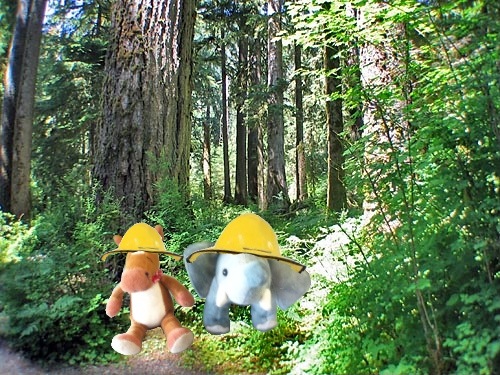
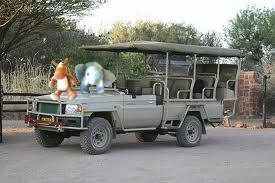
We’re going to Africa today to meet a large and ferocious reptile! These big guys inhabit watery spots and are definitely not an animal to mess with! Let’s load up on the E & E safari truck and head out!
 

MEET THE NILE CROCODILE!

    Range/Habitat: Africa/ rivers, lakes, wetlands

    Diet: Carnivore: fish, antelope, zebra

    Length: 11-16 ft/500-1,000 lbs

   Conservation Status: common


Fun Facts:

  • Nile Crocodiles are the largest crocodile species in Africa.
  • They are dark olive in coloration.
  • Nile crocodiles have long jaws. Their teeth are exposed when their mouth is closed.
  • The males are very territorial.
  • Nile crocodiles are ambush predators.
  • They cannot chew their prey and must swallow chunks whole.
  • Nile crocodile females lay their eggs in a nest. They use the same nest throughout their lifetime.

Nile crocodiles are very fierce! Their ancestors have been on the planet for millions of years. Despite their bad dispositions we really like these predators and give them loads of respect!


Categories: adventure, africa, Animals, Children, conservation, education, Environment, nature, reptiles, science, wildlife | Tags: , , , , , , , , , | Leave a comment

REALLY SCARY REPTILIAN TUESDAY!

HALLOWEEN WEEK!

REALLY SCARY REPTILIAN TUESDAY!

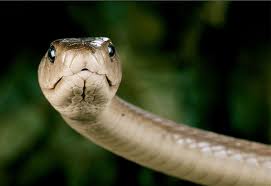
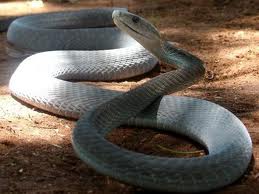
We’re staying in the grasslands of Africa on this Really Scary Reptilian Tuesday to meet one of the most deadly snakes in the world. We’ll be looking for this reptile from the safari truck so everyone stays safe! Are you ready?


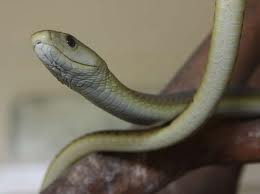
MEET THE BLACK MAMBA!

   Range/Habitat: East-South Africa/ forests-grasslands

   Diet: Carnivore: birds, small mammals

   Length: 8 ¼-11 ft

   Conservation Status: common


Fun Facts:

  • Black Mambas are very fast, they can reach speeds of 12 ½ mph.
  • Black mambas are extremely venomous.
  • They are a brown/gray color. They get their name from the color of the inside of their mouths.
  • Black mambas are very territorial.
  • They are diurnal (active during the day).
  • Black mambas can be fatal to humans.

Black mambas are very dangerous and should be watched from a distance for sure! These fast snakes are definitely best left alone!


Categories: adventure, africa, Animals, Children, conservation, education, entertainment, nature, reptiles, science, wildlife | Tags: , , , , , , , , , | 2 Comments

REPTILIAN TUESDAY # 49

REPTILIAN TUESDAY #49

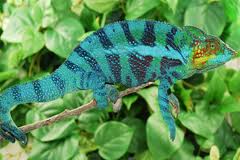
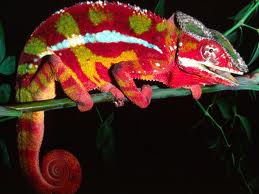
We’re jetting off to the island of Madagascar today to find one of their many species of chameleons! They may be using their camouflage super powers, so we will have to use our expert observation skills! You ready? Let’s do this!

MEET THE PANTHER CHAMELEONS!


   Range/Habitat: Madagascar/ rainforests

   Diet: Carnivore: insects, small animals

   Length: 16-20”

  Conservation Status: common


Fun Facts:

  • Male Panther Chameleons are the most colorful of all chameleons.
  • They can change color to blend in with their habitat.
  • Male Panther Chameleons also change their colors to attract females.
  • Each Panther Chameleon eye moves independently of each other. They can point them in two different directions at the same time!
  • They have long sticky tongues that they use to capture their prey!
  • Panther Chameleon tongues can be longer than their bodies!
  • They are slow movers.

Panther Chameleons are gorgeous with their bright colors. Did you know that even a blind chameleon could still blend in with its habitat? Cool, huh? We just love chameleons; how about you?


Categories: adventure, Animals, Children, conservation, education, Environment, rainforests, reptiles, science, wildlife | Tags: , , , , , , , , , | Leave a comment

REPTILIAN TUESDAY # 48

REPTILIAN TUESDAY #48

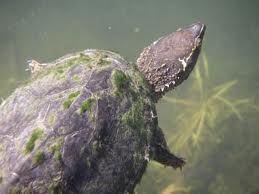
We’re going on a short road trip today to meet one cute but stinky reptile! These turtles inhabit our local area and we’ve even met a few on twitter! So let’s get on our hiking shoes and go looking for these great reptiles!

MEET THE STINKPOT!

   Range/Habitat: Southeastern United States/ wetlands, ponds

   Diet: Omnivore: plants, insects, mollusks

   Length: 3 ¼-5”

   Conservation Status: common


Fun Facts:

  • Stinkpots are also known as the Common Musk Turtle.
  • They expel a foul musk odor as a defense mechanism.
  • Stinkpots spend most of the lives in water.
  • They are often covered in algae.
  • Stinkpot males have longer tails than females.
  • They have barbells on their chin that help them find food.
  • Stinkpots use their tongues to breathe underwater.

Stinkpots are such cute little turtles! So many animals use the defense of emitting a stinky smell, so it must work! The best part of these little turtles is their fun name- Stinkpots! Try saying it without smiling!


Categories: adventure, Animals, Children, conservation, education, Environment, reptiles, science, turtles, wildlife | Tags: , , , , , , , , , | 2 Comments

REPTILIAN TUESDAY # 47

REPTILIAN TUESDAY #47

We docked the boat from our trip off the coast of South America and jumped on a plane to the northern part of the continent. We’re going on the wetlands to find one cool reptile. Grab your hats and let’s go!

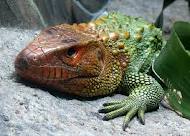
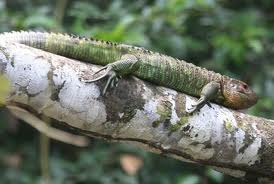
MEET THE CAIMAN LIZARD!

   Range/Habitat: Northern South America/rainforest-wetlands

   Diet: Carnivore: snails, crabs

   Length: 3- 3 ½ ft

   Conservation Status: not listed


Fun Facts:

  • Caiman lizards have large cone shaped scales on their backs and tails.
  • Male Caiman lizards have green bodies and orange throats and females have gray throats.
  • Caiman lizards have strong jaws for crushing snail shells.
  • They are excellent swimmers.
  • Caiman lizards spend most of their time in or near water.

Caiman lizards are so colorful and cool! They look like little dinosaurs, well if they had feathers they would! If you could color a lizard any color, what colors would you use?


Categories: adventure, Animals, Children, conservation, education, Environment, nature, rainforests, reptiles, science, wildlife | Tags: , , , , , , , , | 1 Comment

REPTILIAN TUESDAY # 46

REPTILIAN TUESDAY #46

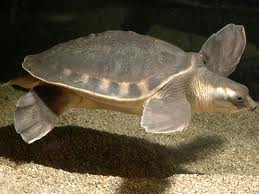
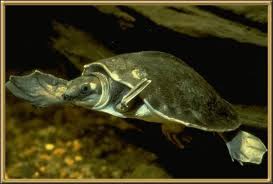
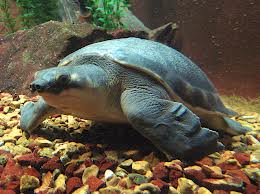
We’re jetting off to New Guinea to find one odd looking reptile! Grab your wellies and a snack because we’re taking a walk in some freshwater rivers! Let’s do this!

MEET THE PIG NOSED RIVER TURTLE!

   Range/Habitat: S New Guinea-North Australia/rivers-lakes

   Diet: Omnivore: fruits, fish, snails

   Length: 28-30”

   Conservation Status: vulnerable


Fun Facts:

  • Pig nosed river turtles have a pig like snout. This helps them breathe when they are submerged in water.
  • Pig nosed river turtles are also known the Fly River turtles.
  • They have flipper like limbs that resemble a sea turtle more than a freshwater turtle.
  • Pig nosed river turtles have a soft, leathery skin on top of their carapace (top shell).
  • They are unlike any other freshwater turtle alive today.
  • Pig nosed river turtles are territorial.

We think these crazy looking turtles are so cool! They look like a pig, a sea turtle and a freshwater turtle all meshed in to one animal! If you could make a mixed up animal what you would make?


Categories: adventure, Animals, Children, conservation, education, Environment, nature, reptiles, rivers, science, turtles, wildlife | Tags: , , , , , , , , , | Leave a comment

REPTILIAN TUESDAY # 45

REPTILIAN TUESDAY #44

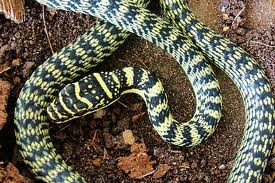
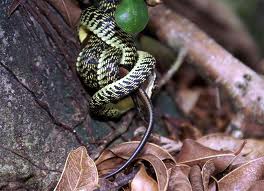
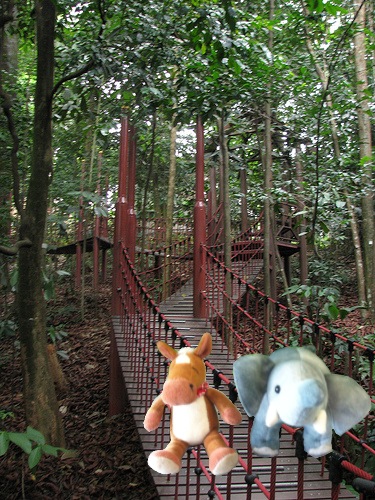
Reptilian Tuesday is taking us to the rainforests of Southeast Asia! We’re off to find a gorgeous reptile in the trees! So grab your climbing gear and your binoculars and let’s head out on today’s adventure!

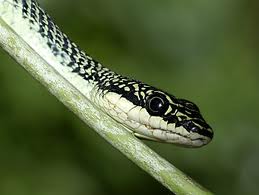
MEET THE GOLDEN TREE SNAKE!

   Range/Habitat: South-Southeast Asia/ rainforest, parks

   Diet: Carnivore: rodents

   Length: 3 ¼-4 ¼ ft

   Conservation Status: common


Fun Facts:

  • Golden tree snakes are also known as the Flying snake.
  • They can glide among the trees.
  • Golden tree snakes are arboreal (spend their lives in trees).
  • They have slender bodies.
  • They have green scales with black on the tips.
  • Golden tree snakes are venomous, but not harmful to humans.

We know snakes don’t get much love, but they are such an important part of the environment and without them we would all be in trouble!


Categories: adventure, Animals, Children, conservation, education, Environment, nature, reptiles, wildlife | Tags: , , , , , , , , | Leave a comment

REPTILIAN TUESDAY # 44

REPTILIAN TUESDAY #44

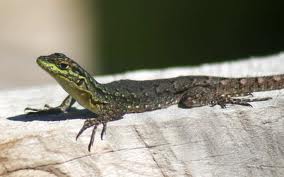
We’re off to the Southwestern area of South America to today to find a small reptile up in the trees! Let’s get on our tree climbing gear and head up to find this lizard!

MEET THE CHILEAN SWIFT LIZARD!

   Range/Habitat: Southwestern South America/ forests, suburbs

   Diet: Insectivore: flies, insects

   Length: 7 ½-12”

   Conservation Status: common


Fun Facts:

  • Chilean Swift Lizards are arboreal (spend most of their time in trees).
  • They are also known as the Thin Lizard.
  • Chilean swift lizards have scales that overlap one another.
  • They are often found in higher elevations.
  • Chilean swift lizards live in small groups that are made up of one male and several females in one tree.

These cute little lizards sure are neat! We wish would could spend some time at the tops of the trees, there are so many cool creatures living up here!

 

Categories: adventure, Animals, Children, conservation, education, Environment, lizards, nature, reptiles, science, wildlife | Tags: , , , , , , , , | 1 Comment

REPTILIAN TUESDAY GREATEST HITS!

REPTILIAN TUESDAY GREATEST HITS!

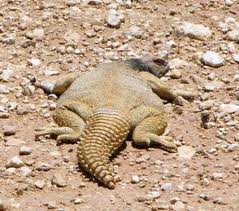
We went to North Africa to meet a great lizard on this past Reptilian Tuesday! We’re off to the desert to meet one cool lizard! Grab your sunscreen and hat and let’s head out!

MEET THE SPINY DAB LIZARD!

   Range/Habitat: N Africa/deserts

   Diet: Omnivore: insects/plants

   Length: 12-16”

   Conservation Status: Common


Fun Facts:

  • Spiny Dab Lizards is also known as the Spiny tailed lizard or Uromastyx.
  • Their tales are covered with spiny scales.
  • Spiny Dab lizards are often found in burrows in the desert. They will stick their tails out of the entrance of the burrow to protect it.
  • Males are very territorial.
  • They hibernate during the winter months.
  • Spiny dab lizards change their color according to the temperature of the environment. They are yellowish/gray during the winter and orange/green or red during the warmer months!
  • Spiny dab lizards come out during the day to warm themselves in the sun. They are more active during warmer periods.

Animals have some great adaptations! These awesome lizards not only have spiny tails but they can change their color! We wish we could change colors! What color would you want to be? Ellie wants to be purple :)!


Categories: adventure, africa, Animals, Children, conservation, education, Environment, lizards, nature, reptiles, science, wildlife | Tags: , , , , , , , , , | Leave a comment

REPTILIAN TUESDAY GREATEST HITS!

REPTILIAN TUESDAY GREATEST HITS!

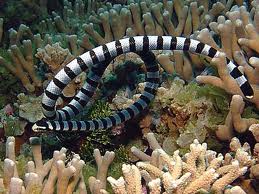
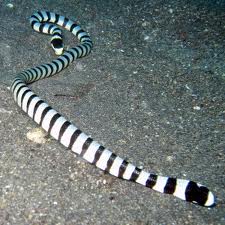
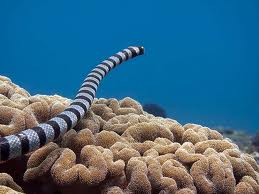
We’re going to a coral reef today to meet a very cool reptile! Let’s get our snorkel gear and take a dip! We’re off to find a reptile who lives in the ocean!

MEET THE BANDED SEA KRAIT!

   Range/Habitat: Southern-South Eastern Asia/ tropical oceans-coral reefs

   Diet: Carnivore: fish, eels

   Length: 3 ¼-6 ½ ft

   Conservation Status: Common


Fun Facts:

  • Banded Sea Kraits are members of the sea snake families. They spend most of their lives in the ocean.
  • Banded sea kraits are highly venomous. They are more deadly than most land snakes.
  • They are not harmful to humans, because they have short fangs and are very docile.
  • Banded sea kraits have paddle shaped tails that help them swim.
  • They come on shore to lay their eggs.

Sea kraits are incredible snakes! Did you know there were snakes that lived in the ocean? We saw one while we snorkeling in Indonesia! It was awesome! If you could go snorkeling what animals would you like to see?


Categories: adventure, Animals, Children, conservation, education, Environment, nature, oceans, reptiles, science, wildlife | Tags: , , , , , , , , | Leave a comment

Blog at WordPress.com.