Posts Tagged With: adventure

MAMMAL MONDAY # 51

MAMMAL MONDAY #51

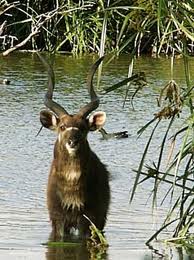
We’re going to West Africa today to meet a member of the cattle family who lives in marshes! That’s right everyone, these guys can swim! So let’s grab our wellies and head out into the marshland to meet…

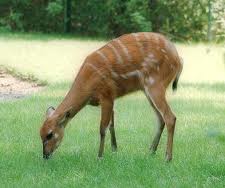
MEET THE SITATUNGA!

   Range/Habitat: West-Central Africa/ wetlands-swamps

   Diet: Herbivore: aquatic plants

   Length/Weight: 4-5 ½ ft/ 110-280 lbs

   Conservation Status: common


Fun Facts:

  • Sitatungas are also called the Marshbuck.
  • They have hooves that are made for walking on muddy ground.
  • Sitatungas are excellent swimmers.
  • Male Sitatungas have long pointed horns.
  • They are crepuscular (active at dawn and dusk).
  • Female Sitatungas live in small herds.

Sitatungas are really handsome! It is so cool that spend so much of their time in marshes. They have such neat feet that are built for living in a squishy habitat! Would you ever want to live in a marsh?


Categories: adventure, africa, Animals, Children, conservation, education, Environment, mammals, nature, science, wetlands, wildlife | Tags: , , , , , , , , | Leave a comment

SUPER HORSE TO THE WILDLIFE RESCUE!!

SUPER HORSE TO THE WILDLIFE RESCUE!

Edmond was inspired by his Super Horse super hero costume that he wore this Halloween! He wanted to showcase the super heroes that help out wild animals all around the world! He’ll be flying high and low to find those people who rehabilitate, rehab and rescue wildlife! His first stop will be at a local wildlife rescue, but we want our readers and fans input! If you know a wildlife rehabilitator or a wildlife center; we want their names and contact info! Super Horse’s Wildlife Heroes will be a monthly interview to start with, but we may do more if we meet loads of excellent heroes!

So we need your help! Tell us who you know and how we can contact them! Send Super Horse to your local wildlife rescue! We look forward to this exciting new addition to The Adventures of Ellie and Edmond!

*We wanted to start this announcement with how you can help be an animal hero immediately! Hurricane Sandy damaged several animal shelters and The New York Aquarium. We’re posting how you can donate to them and help ensure that the caregivers and keepers have what they need to keep the animals safe!

First up: Woodbridge Animal Center needs donations, as their center suffered damage. The animals are all safe, but they need supplies and donations.

Next up: Jersey Shore Animal Center was hit hard by the storm too. Again, their animals are safe, but they need supplies and donations.

Last but not least: The New York Aquarium suffered flooding and damage to their life support systems. Keepers have been on grounds since before the storm to ensure that the animals are safe. They may have to move them if they can not secure the systems. These dedicated keepers have been working around the clock to make sure the animals are safe! A BIG SHOUT OUT to those dedicated folks!
We look forward to your suggestions and we hope you can help these animals and people in need :)! We have the greatest readers and fans!

Categories: adventure, Animals, Children, conservation, education, Environment, nature, shelters, wildlife | Tags: , , , , , , , , , | Leave a comment

FEATHERY FRIDAY # 50

FEATHERY FRIDAY #50

Woohoo, we’ve made it to Friday and that means it time to meet a new bird friend! We’re off to the island country of New Zealand today to meet a member of the pigeon family! So let’s head out on today’s adventure!

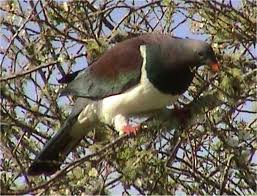
MEET THE NEW ZEALAND PIGEON!


   Range/Habitat: New Zealand/ forest-woodlands

   Diet: Frugivores: fruits, plants

   Length/Weight: 18-20”/ 21-29 oz

   Conservation Status: near threatened


Fun Facts:

  • New Zealand Pigeons are the largest species of pigeons in New Zealand.
  • They are the only native pigeon species.
  • They are also called the Kereru in New Zealand.
  • New Zealand pigeons have dark and iridescent feathers on the top of their bodies and white bellies.
  • They can eat very large fruit.
  • New Zealand pigeons are important seed dispersers. They poop out seed of the fruit they eat and in turn help to grow new fruit trees.

Pigeons often get such a bad rap, but we just love these birds. New Zealand pigeons are so very important for the growth of new trees too. Without seed dispersers like these birds, forests would often have little new growth! Way to go pigeons!!


Categories: adventure, Animals, birds, Children, conservation, education, Environment, science, wildlife | Tags: , , , , , , , , , | Leave a comment

SUPER SURPRISE THURSDAY # 50

SUPER SURPRISE THURSDAY #50

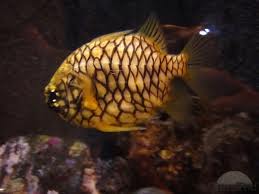
We’re taking the E & E sub out today to find a fish who looks like a fruit! Whaaaaat you ask! Well, we are in search of a cool and amazing fish who is yellow and black! We have room for everyone, so let’s head out to meet…

MEET THE PINEAPPLE FISH!

   Range/Habitat: Indo-Pacific Oceans

   Diet: Carnivore: fish, invertebrates

   Length/Weight: up to 11”/ up to 18 oz

   Conservation Status: common


Fun Facts:

  • Pineapple Fish get their name from their shape and color.
  • They have sharp spines on their dorsal and pelvic fins.
  • Pineapple fish have a bioluminescent organ on their lower jaw that they use to attract prey.
  • Pineapple fish are nocturnal (active at night).
  • They are found in deeper waters.
  • Pineapple fish have armor-like scaled covering their bodies.

Pineapple fish are really cute, but our favorite thing about them is their bioluminescent organ! How neat it is that they have their own build in glow stick :)!


Categories: adventure, Animals, Children, conservation, education, Environment, fish, nature, oceans, science, wildlife | Tags: , , , , , , , , , , | Leave a comment

REPTILIAN TUESDAY # 50

REPTILIAN TUESDAY #50

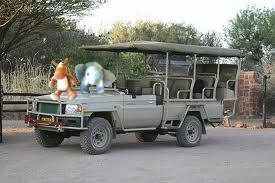
We’re going to Africa today to meet a large and ferocious reptile! These big guys inhabit watery spots and are definitely not an animal to mess with! Let’s load up on the E & E safari truck and head out!


MEET THE NILE CROCODILE!

    Range/Habitat: Africa/ rivers, lakes, wetlands

    Diet: Carnivore: fish, antelope, zebra

    Length: 11-16 ft/500-1,000 lbs

   Conservation Status: common


Fun Facts:

  • Nile Crocodiles are the largest crocodile species in Africa.
  • They are dark olive in coloration.
  • Nile crocodiles have long jaws. Their teeth are exposed when their mouth is closed.
  • The males are very territorial.
  • Nile crocodiles are ambush predators.
  • They cannot chew their prey and must swallow chunks whole.
  • Nile crocodile females lay their eggs in a nest. They use the same nest throughout their lifetime.

Nile crocodiles are very fierce! Their ancestors have been on the planet for millions of years. Despite their bad dispositions we really like these predators and give them loads of respect!


Categories: adventure, africa, Animals, Children, conservation, education, Environment, nature, reptiles, science, wildlife | Tags: , , , , , , , , , | Leave a comment

MAMMAL MONDAY # 50

MAMMAL MONDAY #50

We hope you enjoyed Halloween Week last week, we have one last surprise up our sleeves (we don’t actually have sleeves) on Wednesday for you! Today though we are off to Europe to meet one of the most beloved and adorable native animals there. Grab a flashlight and let’s head out into an English garden to meet today’s animal.

MEET THE EUROPEAN HEDGEHOG!

   Range/Habitat: Europe/ gardens, forests, woodland

   Diet: Omnivore: worms, spiders, slugs

   Length/Weight: 26”/ 20 lbs

   Conservation Status: common


Fun Facts:

  • European Hedgehogs are a favorite resident of gardens of Europe.
  • They are covered in pointy spines that help protect them.
  • When threatened European Hedgehogs roll into balls, exposing only their spiny covered backs.
  • European Hedgehogs are nocturnal.
  • They are generally solitary.
  • European hedgehogs hide under bushes and logs during the day.
  • Some European hedgehogs hibernate during the winter.
  • Baby hedgehogs (hoglets) are born with their spines just under the skin.

Hedgehogs are so iconic and adorable. There are so many people who love these spiny mammals. We know we do, just don’t try and pet one!

Categories: adventure, Animals, backyard, Children, conservation, education, Environment, mammals, nature, science, wildlife | Tags: , , , , , , , , , | 2 Comments

HALLOWEEN WEEK- FRIGHTENING FEATHERY FRIDAY!

HALLOWEEN WEEK!

FRIGHTENING FEATHERY FRIDAY!

It is Frightening Feathery Friday and we’re going to Europe to meet one of the world’s largest owls! Get your night vision goggles and let’s go exploring! Whooooooo do you think we’re looking for?

MEET THE EURASIAN EAGLE OWL!

   Range/Habitat: Europe-Asia/ forests, deserts, mountains, grasslands

   Diet: Carnivore: hares, rats, birds

   Length/Weight: 22-30”/ 3.3- 9.3 lbs

   Conservation Status: common

Fun Facts:

  • Eurasian Eagle Owls are one of the world’s largest owls.
  • They have bright orange eyes.
  • Eurasian Eagle Owls are nocturnal (active at night).
  • Eurasian eagle owls have large ear tufts.
  • They have powerful talons and fully feathered legs.
  • They nest in cliffs and caves.
  • Eurasian eagle owls live up to 20 years.

WOW! These big owls are so awesome! Do you think it’s creepy when you hear an owl hoot at night or do you wish you could see these creatures of the night? Check out this video of one calling!  We always want to go find them!

Categories: adventure, Animals, birds, Children, conservation, education, Environment, nature, owls, science, wildlife | Tags: , , , , , , , , , | Leave a comment

SCARY SURPRISE THURSDAY!!

HALLOWEEN WEEK!
SCARY SURPRISE THURSDAY!

This Scary Surprise Thursday takes us Central America to meet an usually large amphibian! These big guys have a very yucky defensive system! Put on your wellies on and let’s in to the wetlands!

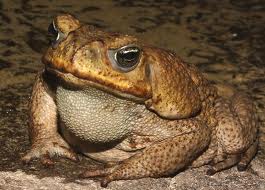
MEET THE MARINE TOAD!

   Range/Habitat: Central-South America/ wetlands, rivers, lakes

   Diet: Carnivore: ants, beetles, invertebrates

   Length: 4-6”

  Conservation Status: common

Fun Facts:

  • Marine toads are also known as cane toads.
  • Marine toads are world’s largest toads.
  • They have a tough warty skin.
  • Marine toads are nocturnal (active at night).
  • They are very hardy and can survive in many different habitats.
  • Marine toads have large glands that secret a very toxic poison.

Marine toads are big bad dudes! They will eat almost anything too! We do think it’s best if we just let them hang out by themselves, you know with their toxic skin and all!

Categories: adventure, amphibians, Animals, Children, conservation, education, Environment, nature, science, wildlife | Tags: , , , , , , , , , | Leave a comment

REALLY SCARY REPTILIAN TUESDAY!

HALLOWEEN WEEK!

REALLY SCARY REPTILIAN TUESDAY!

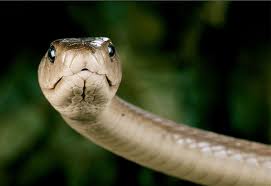
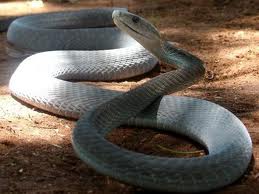
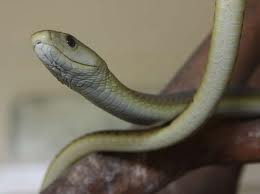
We’re staying in the grasslands of Africa on this Really Scary Reptilian Tuesday to meet one of the most deadly snakes in the world. We’ll be looking for this reptile from the safari truck so everyone stays safe! Are you ready?


MEET THE BLACK MAMBA!

   Range/Habitat: East-South Africa/ forests-grasslands

   Diet: Carnivore: birds, small mammals

   Length: 8 ¼-11 ft

   Conservation Status: common


Fun Facts:

  • Black Mambas are very fast, they can reach speeds of 12 ½ mph.
  • Black mambas are extremely venomous.
  • They are a brown/gray color. They get their name from the color of the inside of their mouths.
  • Black mambas are very territorial.
  • They are diurnal (active during the day).
  • Black mambas can be fatal to humans.

Black mambas are very dangerous and should be watched from a distance for sure! These fast snakes are definitely best left alone!


Categories: adventure, africa, Animals, Children, conservation, education, entertainment, nature, reptiles, science, wildlife | Tags: , , , , , , , , , | 2 Comments

HALLOWEEN WEEK! MONSTOROUS MAMMAL MONDAY!

HALLOWEEN WEEK!

MONSTROUS  MAMMAL MONDAY!

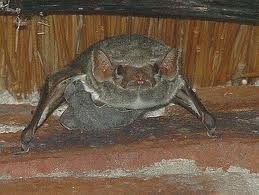
We’re celebrating weird, creepy and feared animals this week as Halloween approaches! These animals haunt your dreams and make you have goose bumps! Ok, these animals are not that bad, but they often have bad reputations! First up we’re off to meet a flying mammal that comes out at night! Grab your night vision goggles and let’s do this!

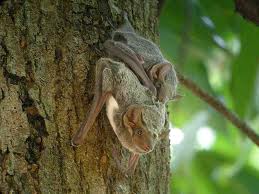
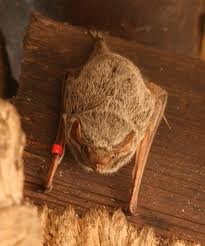
MEET THE MAURITIAN TOMB BAT!

   Range/Habitat: Central- South Africa/ scrub-savannas

   Diet: Insectivore: insects

   Length/Weight: 2 ¾-3 ½”/ 1 1/16 oz

  Conservation Status: common


Fun Facts:

  • Mauritian Tomb Bats make a variety of vocalizations (not all audible are to humans).
  • They use echolocation to find prey.
  • Mauritian Tomb Bats roosts in trees and buildings.
  • They roost in small groups instead of large colonies.
  • Mauritian Tomb Bats have good eyesight.
  • They are nocturnal (active at night).

Mauritian Tomb Bats are really cool. Well, all bats are really cool if you ask us. Most bats eat insects, some eat fruit and yes there are a few who drink blood! Wow! What’s your favorite thing about bats?

Categories: adventure, Animals, bats, Children, conservation, education, Environment, mammals, nature, rainforests, science, wildlife | Tags: , , , , , , , , , , | Leave a comment

Blog at WordPress.com.