Posts Tagged With: adventure

Back to School 2017

Back to School 2017

ellie_edmund_professors-U-logo

Hellooooo! Welcome back everyone! We trust you had a wonderful summer, we know we enjoyed camp! It’s time to get back to the books and adventure though! This month we are kicking off school with a Back to Basics month! We’ll be go over some things you know and hopefully some things you don’t!

Come October we are heading off on our trip around the world just like last year, except where we go will be a secret. On the first day of each month, we’ll describe where we will be going and you will have to guess. We’ll have a prize each month for the first person to guess where we will be going!

As usual we’ll be meeting all kinds of new animal friends along the way! We hope you are excited for this wonderful new school year! Tomorrow we start with the bird basics!

Categories: adventure, Animals, Children, conservation, education, Environment, nature, science, Today's Post, wildlife | Tags: , , , , , , , , , | 1 Comment

Last Day of Camp

Last Day of Camp

686ED16E-4D0A-4357-B118-C7877422A3BC

Well pals it is the last day of Camp Ellie & Edmond. It’s always sad to say goodbye to summer and our pals. We will be taking the next three weeks off to move our site and work on a few improvements!

Then we’ll be back for a whole new year at the University of Ellie & Edmond! We will be getting back to basics for a month and then a we have an exciting year.

We are introducing Where Will The Next E&E Adventure Be? Each month we will be going to a new place. On the first day you will get a chance to guess where we are and there will be a prize for the person who guesses it correctly first! We know we are excited for all that is coming!

Let’s end this amazing summer with the Camp E&E song:

On the shores of Lake Salamander, among the old live oak…

We enjoy Camp Ellie and Edmond and the frogs that croak.

We salute you Camp E & E and all your animal friends…

All our days are each a gem.

While we sit next to the campfire, telling stories of old…

We laugh and sing and watch the stars of gold.

We love you Camp E &E and all our memories of our days…

We hold Camp E & E close to our hearts and we’ll never stray!


We will see all our campers during the school year!

FullSizeRender

Categories: A, Animals, camp, Children, conservation, education, Environment, nature, science, Today's Post, wildlife | Tags: , , , , , , , , , | 1 Comment

Eel Bookmarks

Eel Bookmark!

IMG_5033

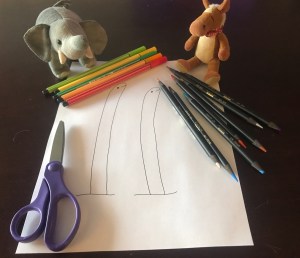
The Crafty Crab has come up with a great craft for us today! Woohoo!

IMG_0311

Materials: 

  • Cardstock
  • Crayons, markers or colored pencils
  • scissors
  • eel pattern

Instructions: 

  • Print out pattern on card stock
  • Color to your hearts desire
  • Cut out eels

IMG_0312


Today’s craft is an easy one- but these little guys sure are cute! Pattern below!


IMG_0310

Categories: adventure, Animals, camp, Children, conservation, crafts, education, Environment, fish, nature, science, Today's Post, wildlife | Tags: , , , , , , , , , | 2 Comments

Thorny Sea Star

Thorny Sea Star

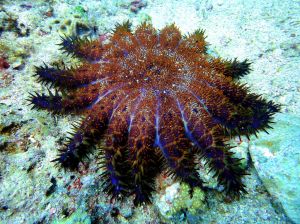
We are meeting our last sea star of the week!  This one is best to be observed but not to touch! Ouch- watch out for the crown-of-thorns sea star.

Crown of Thorns

Crown-of-thorn sea star fun facts: 

  • The thorns on this sea star are venomous.
  • These indimidating looking sea stars predate on coral!
  • They have only one predator- giant triton sea snail.
  • As you can see they have more than five arms.
  • They do have tube feet to move them along the reefs.
  • Unfortunately these predators have grown in numbers. Too many of them and that can mean trouble for a reef. They can destroy large areas.
  • Scientists and conservationists now will actively remove them when there is population boom.

IMG_0302

We love sea stars of all kinds, but this one might have gone to the dark side. Keeping a balance in habitats is crucial for all the animals that live there.

Categories: adventure, Animals, camp, Children, conservation, education, Environment, nature, oceans, sea stars, Today's Post, wildlife | Tags: , , , , , , , , , , , , | 1 Comment

Here Comes the Sun!

To Here Comes the Sun!

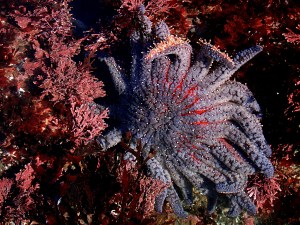
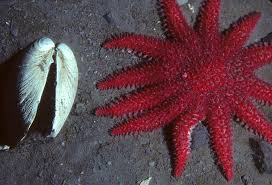
We are meeting another sea star family member here at camp! We are meeting the sunflowers sea star today! They may not have the crazy arms like a basket star, but they do have more than five!

OLYMPUS DIGITAL CAMERA


Sunflower sea star Fun Facts:

  • They have a large central disc.
  • Sunflowers sea stars have can numerous arms. One species has 24 arms.
  • They can reach 3 feet across.
  • They have up to 15,000 tube feet on the bottom of their bodies.
  • Sunflower sea stars can move over 40 inches per minute- a record speed for sea stars.
  • They are voracious predators! They eat snails, clams and sea cucumbers.
  • Sunflower sea stars star out with 5 arms and quickly grow the others.
  • They can shed their arms and grow them back.

IMG_0300


Who doesn’t love a sea star? And now there is more to love with the sunflower sea star and all those arms!

Categories: adventure, Animals, camp, Children, conservation, education, Environment, nature, sea stars, Today's Post, wildlife | Tags: , , , , , , , , , | 1 Comment

Bring Your Basket- Star!

Bring Your Basket – Star!

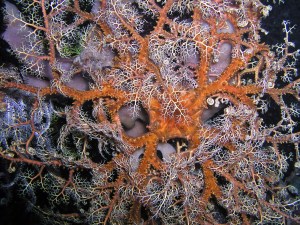
We are so excited to see everyone here! It’s Sea Star week here at camp! You may know these amazing echinoderms as starfish, but scientists are now using sea star as these animals are not fish! We bet you’d like to know what an echinoderm is though– it’s an animal that has radial symmetry (arms radiating from a central body) and a hard covering. Other echinoderms include sea urchins, sea cucumbers and sand dollars.

Today, we are meeting one of the craziest enchinoderms around the basket star. Woohoo!

IMG_0297

Basket Star Fun Facts: 

  • Basket stars belong to the brittle star family.
  • Most Basket stars are found in deep waters.
  • They can reach up to 28 inches across. The central disk is around 5 1/2 inches across.
  • They have 5 arms. Those 5 arms then have many many branches.
  • They have calcium carbonate structures called ossicles. These give all those arms flexibility and stability.
  • Some basket stars feed on plankton or small crustaceans.
  • They use spines and hooks to move food up their mouths on the central disk.
  • Basket stars also have tube feet to move them around.

OLYMPUS DIGITAL CAMERA

These amazing creatures have no brain, but they do have a complex nervous system. The oceans house the craziest critters on the planet!

Categories: adventure, Animals, camp, Children, conservation, education, Environment, nature, oceans, science, sea stars, Today's Post, wildlife | Tags: , , , , , , , , , , , | 1 Comment

Camp E&E by the Sea

Camp E&E by the Sea

FullSizeRender

Welcome back to camp everyone! We trust that you had a lovely holiday! We know we did! We have set up Camp E&E by the sea for the month of July and in to August! The cabins are ready and this year they are spiffy! We will also have some great tents for those that want to sleep by the ocean and hear the waves at night.

We will be meeting the animals that call the shore and ocean home! We have set up the craft cabin and here at the shore it’s run by Carl the Crafty Crab! We’ll also be enjoy a whole we dedicated to our cartilaginous friends- sharks and rays!

So back up your trunks (the box not the elephant nose) and get your cabin assisngment and let’s get ready to enjoy all the Camp E&E by the Sea brings us!

Dont’ forget your water shoes, surfboards, stand up boards, extra sunsuncreen, bug repellant (the gnats can be terrible), a flashlight with a red lens (must not disturb sea turtles) and your beach towels!


We will see you on Monday for Sea Star Week!

EA012875-DEEE-4FB5-8E0F-6B9F24E96EA1


Categories: adventure, Animals, camp, Children, conservation, education, Environment, nature, oceans, science, sea stars, Today's Post, wildlife | Tags: , , , , , , , , , | 1 Comment

Awesome Opossum!

Awesome Opossum!

This week- we are staying up late and meeting the critters who are nocturnal and one of our favorite camp nocturnal residents is the opossum! These marsupials get a bad rap, but they are truly amazing! We invited our friend Ophelia Opossum to come and share some neat facts with us here at camp!

IMG_4724

Hi everyone! I’m here to share with you more about me! Yay!!!

  • I am the only marsupial in North America! That’s right- I have a pouch where my babies grow as they develop!
  • The name is Opossum- true possums live all the way around the other side of the world in Australia and New Guinea! So- remember the O!
  • We are mostly immune to venomous snakes! That’s right- we ain’t afraid of those legless reptiles!
  • I love to eat snails, slugs, beetles and most importantly – ticks! Yep- I can eat around 4,000 ticks a week! That’s good because those nasty bugs can transmit some dangerous diseases.
  • You primates think you are the only ones with opposable toes, well I am here to tell you- I have them too! They help me climb!
  • I also have a prehensile tail! I can hang from it, but only for short periods. I can also carry things like grass with it.
  • I have 50 teeth in my mouth! Say cheese!
  • Finally- I do play dead when I am threatened. It is an involuntary response- I can not control it. I can stay in this state for up to 4 hours!


opossum

People say we aren’t cute, but I totally disagree! Look at that pink nose and cute ears! We are much more helpful than you realized! Let’s all give the opossums out there some love and respect! Now, who wants to go play opossum with me down by Lake Salamander?

Categories: adventure, Animals, camp, Children, conservation, education, Environment, mammals, marsupial, nature, science, Today's Post, wildlife | Tags: , , , , , , , , , | 1 Comment

Bat Fun Facts

Bat Fun Facts

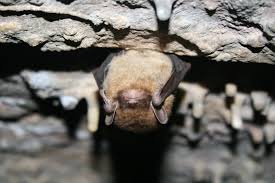
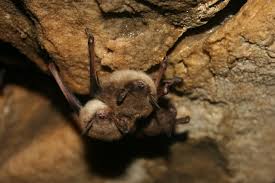
We love our bat friends! They come out every night by camp searching for mosquitoes.   Brown bats are the ones we see the most at camp! They live just inside the caves on the other side of the lake. These little buddies can eat up to 1000 mosquitoes an hour! Yay! Let’s learn more about bats!

brown bat3


  • Bats are the only true flying mammal on earth!
  • There are around 1,200 different species.
  • Bats have specialized wings that help them fly- bat wings have five appendages- including a thumb on top to help them climbs.
  • Bat wings are covered in a thin membrane called the patagium.
  • Scientists believe that bats evolved around 100 million years ago.

brown bats

  • Bats are nocturnal.
  • Bats use echolocation to detect prey, especially flying insects.
  • Most bats are very social and live in large groups.
  • Some bats do sleep upside down.
  • When a bat’s feet are gripped around a branch upside down they are in a relaxed position. When humans make a fist, their muscles are rigid. That is the opposite with bat feet! Pretty neat huh? 

brown bats2

These beneficial little critters don’t spend all of their lives in caves, they must come out to find food every night! We just love them!!


Categories: adventure, Animals, bats, camp, Children, conservation, education, Environment, mammals, nature, science, Today's Post, wildlife | Tags: , , , , , , , , , , | 1 Comment

The Caves at Lake Salamander

The Caves at Lake Salamander

We’re spending this week at camp learning more about the caves just on the other side of the Lake. There are many stories of the ghosts that inhabitant the local caves, but we know they are just the home to some super amazing animals! We are so excited to go exploring and learn more about the caves.

cave

Cave Basics:

  • Caves are underground caverns created by the weathering of rock by water.
  • Water containing chemicals erodes at limestone and other kinds of rock to form the large caverns.
  • Some caves are formed by lava and some are formed by the sea near cliffs.
  • Stalactites are mineral deposits on the ceilings of the cave. You can remember them by saying stalactites hold tight to the ceiling.
  • Stalagmites are formed by the same mineral deposits form pillars on the ground. You can remember them by saying stalagmites push up with all their might.
  • Stalactites and stalagmites grow around an inch every 100 years.
  • Troglobites are animals that live in caves and never leave their cave home.

FullSizeRender

Caves are so neat! Do you know people who explore caves are called spelunkers? Hehehe! That is an excellent name!

Categories: adventure, Animals, camp, Children, conservation, education, Environment, nature, science, Today's Post, wildlife | Tags: , , , , , , , , , | 1 Comment

Blog at WordPress.com.