Posts Tagged With: animals

Back to Basics- Mammals

Back to Basics- Mammals

We are excited to talk the group of animals we belong to- mammals! Our professor of mammals- Bertie Bear will give us the low down.

ellie_edmund_professors-bear

Number of mammal species- 4475. They occupy every kind of habitat on earth including oceans and the icy poles.

Mammal traits:

  • They have fur and/or hair. Even cetaceans have hair, generally a few chin hairs when they are born that fall out. Mammal fur/hair is made of the protein keratin, including whiskers, spines and rhino horns.
  • Mammals give birth to live young- except the platypus and echidna, who lay eggs.
  • They give milk to their young through mammary glands.
  • They are endothermic (warm blooded). They have sweat glands for regulating temperature. They must eat often to keep their body temperature regulated.
  • Mammals are vertebrates.  


Mammals have two layers of skin. The top layer is the epidermis that is made up of dead skin cell. The inner layer is the dermis, which contains glands. Some mammals use these glands to communicate with each other, by marking territory or giving off scents to attract mates, etc…

Mammals have three types of teeth and a jaw that is attached to the skull. The three types of teeth include molars, incisors and canines. Baleen whales have teeth that are made of keratin and are like brooms.
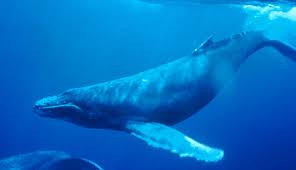
whale

Mammals give birth to live young, except for the monotremes- the platypus and the echinda lay eggs. Most mammals develop in a mother’s uterus, but the marsupials give birth to underdeveloped young that grow in a pouch- like kangaroos.

Mammals have several types of locomotion, including walking on all four feet- quadrupeds, walking on two feet- bipeds, flight- only bats and swimming with fins.

Many mammals are social and intelligent. In mammals, like the great apes,they even share culture with each other. Some mammals are known to be tool makers and tool users.

orangutan

Mammals make up the largest animals on the planet- the elephant is the largest land animal and the blue whale is the largest animal on earth! Mammals include you humans too!
 

Categories: adventure, Animals, Children, conservation, education, Environment, nature, science, Today's Post, wildlife | Tags: , , , , , , , , | 1 Comment

Back to Basics- Insects

Back to Basics- Insects

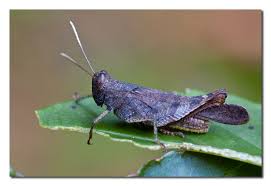
We are day number 3 of our back to basics month. Today we are learning about insects with our professor of insects Gracie Grasshopper!

ellie_edmund_professors-grasshopper

Number of species- nearly 1 million, that’s right we insects account for about 97% of all known species on earth. We arthropods outnumber all other animals on earth.

Insect traits:

  • Insects have a segmented body. It’s divided into 3 sections; the head, the thorax and the abdomen.
  • Insects are invertebrates. We do not have endoskeletons, like the mammals, birds, fish and reptiles. We have an exoskeleton! Our bodies are covered in hard coverings made of chitin.
  • We have two antennae and 6 legs. Each leg has five parts.
  • We hatch from eggs.

Insects are generally divided into two groups, insects with wings and insects without wings. I myself have wings.

insect

We either have compound eyes or simple eyes and there are some of us with both types.

We do not have true ears, but we have organs that help us listen to vibrations in our environment.

We do not have lungs or gills to breathe. Instead we have a series of tubes to “breathe” oxygen and expel carbon dioxide.

Yes, we insects have brains. They are tiny and we don’t quiet use them the way other animals do.

insect2

There you have the basics of being an insect!

Categories: adventure, Animals, Children, conservation, education, Environment, insects, nature, science, Today's Post, wildlife | Tags: , , , , , , , , , | 1 Comment

Back to Basics- Fish

Back to Basics- Fish

Time to brush up on your fish knowledge with professor Sylvia the Seahorse!

ellie_edmund_professors-seahorse


Number of fish species- 24,000 and growing! Scientists discover new species all the time! We fish were the first vertebrate animals on the earth! We occupy the world’s oceans and fresh water bodies of water; including lakes, rivers and ponds.

Fish traits:

  • Fish have gills that we use to extract oxygen from water and expel carbon dioxide. They serve the same function as a mammal’s lungs.
  • Fish have scales. Our scales are different, some are smooth and some are rough. Sharks’ scales are called dermal denticles. Some fish like hagfish have no scales.
  • Fish have fins for swimming. Fins are shaped for the type of swimming a fish does- some are built for speed and some are small (like mine).
  • We fish are vertebrates, we all have back bones.
  • Most fish are exothermic, cold blooded.

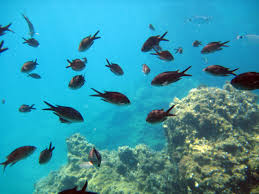
Fish are classified in three groups; jawless fish (hagfish and lamprey- they also have no scales), cartilaginous (sharks and rays) and bony.

fish2

Some fish lay eggs, some incubate their eggs in a womb and some incubate their young in wombs similar to mammals.

We fish can detect chemicals and vibrations. We often have keen eyesight and a great sense of smell.

Fish do have ears! Not big goofy ones like some mammals, but internal ones.

fish

We also have an extra “organ” to help us “hear” and detect vibrations. This is called the lateral-line. This line of cells runs the length of our bodies and helps us detect motion. Schooling fish who swim in synchronized groups use their lateral line to swim in these formations.

Sharks and rays have yet another “organ” that helps them detect electrical fields. It’s called the ampullae of Lorenzini, gel filled cells that help our cartilaginous cousins detect even the faintest of electrical fields. This is something no other animal can do!

We also have a swim bladder that keeps us buoyant in the water. Fresh water fish have a bigger swim bladder than salt water fish. Bony fish swim bladders are filled with a gas that is less dense than water. In cartilaginous fish, their swim bladder is a large oil rich liver that is less dense than water! 


Categories: adventure, Animals, Children, conservation, education, Environment, fish, nature, oceans, science, Today's Post, wildlife | Tags: , , , , , , , , , , | 1 Comment

Back to Basics- Birds

Back to Basics- Birds

Our professor of birds is Professor Baxter and he is a Blue footed Booby! He’s going to share some basics about about birds!

ellie_edmund_professors-bfbooby

There are around 9,000 species of birds in the world. We are in every habitat on earth. Because we are so adaptable, we are considered the most successful animal on the planet. The earliest birds were descendants of the dinosaurs. Fossils of my long lost relatives have been found that are 150 million years old.

 first bird

What makes a bird a bird?

  • We have feathers. Our feathers are made from keratin.
  • We are endothermic (warm blooded).
  • We lay eggs.
  • We are vertebrates.
  • We have hollow bones. This helps us fly.
  • We have no teeth.

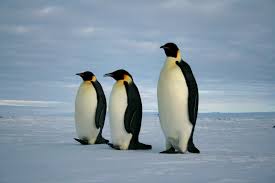
Feathers are our most distinctive feature. Feathers are made of keratin (the same protein that makes up human hair and nails). We have flight feathers on our wings. We have down feathers close to our body to keep us warm. Our tail feathers are made to help us fly. We must preen (clean) our feathers to keep them healthy. There are some birds who cannot fly including; kiwi, kakapo (the heaviest parrot on earth), penguins and ostrich.

kakapo

peguin

Our beaks/bills are also covered in keratin and they are shaped for what type of food we eat.

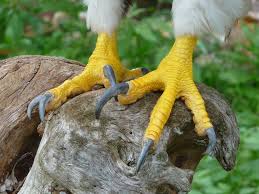
Instead of paws, we have feet. Our feet have 2 to 4 toes. Most of us have 4 toes, 3 that face forward and one that faces backward. This is perfect for sitting on tree branches. Those birds that spend time in water have webbed feet.

bird feet

We must keep our body temperature at 104 degrees. It is important that we control our heat loss.

Lastly, we lay eggs. Our mating rituals include dancing, songs and plumage displays. Our eggs are made of calcium carbonate. We lay eggs in nests, on rocks, on the beach and even on the ground. Some of us are born without feathers and our eyes closed. Some of us are, like ducks, are born with down feathers and our eyes open.

duck


Categories: adventure, Animals, birds, Children, conservation, education, Environment, nature, science, Today's Post, wildlife | Tags: , , , , , , , , , , | 1 Comment

Last Day of Camp

Last Day of Camp

686ED16E-4D0A-4357-B118-C7877422A3BC

Well pals it is the last day of Camp Ellie & Edmond. It’s always sad to say goodbye to summer and our pals. We will be taking the next three weeks off to move our site and work on a few improvements!

Then we’ll be back for a whole new year at the University of Ellie & Edmond! We will be getting back to basics for a month and then a we have an exciting year.

We are introducing Where Will The Next E&E Adventure Be? Each month we will be going to a new place. On the first day you will get a chance to guess where we are and there will be a prize for the person who guesses it correctly first! We know we are excited for all that is coming!

Let’s end this amazing summer with the Camp E&E song:

On the shores of Lake Salamander, among the old live oak…

We enjoy Camp Ellie and Edmond and the frogs that croak.

We salute you Camp E & E and all your animal friends…

All our days are each a gem.

While we sit next to the campfire, telling stories of old…

We laugh and sing and watch the stars of gold.

We love you Camp E &E and all our memories of our days…

We hold Camp E & E close to our hearts and we’ll never stray!


We will see all our campers during the school year!

FullSizeRender

Categories: A, Animals, camp, Children, conservation, education, Environment, nature, science, Today's Post, wildlife | Tags: , , , , , , , , , | 1 Comment

Catching Oysters with an Oystercatcher

Catching Oysters with an Oystercatcher

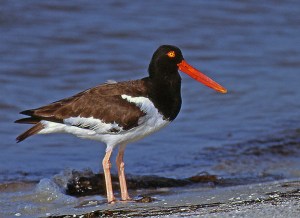
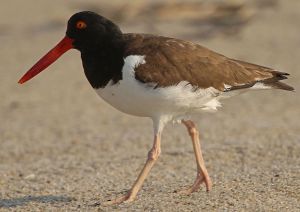
It’s the last week of Camp E&E by the Sea! Can you believe it? This week we’re hanging by the beach to meet shore birds. First up is the American Oystercatcher! This neat bird is easy to spot with its bright orange beak. So let’s head out to spot some campers!

IMG_0334

American Oystercatcher Fun Facts: 

  • These brightly colored birds call salt marshes and shores their home.
  • They feed on shellfish, mussels, clams, oysters and sea stars.
  • American oystercatchers tend to spend more time on the ground than flying.
  • They often grab the shellfish inside the shell before it can close. They severe the muscle and swallow the meat whole.
  • They nest in higher areas away from the high tide line.

IMG_0335

We could sit on the beach and watch shore birds all day! These funny birds with their long legs are one of our favorites. What’s your favorite shorebird?

Categories: adventure, Animals, birds, camp, Children, conservation, education, Environment, nature, oceans, science, Today's Post, wildlife | Tags: , , , , , , , , , , | 3 Comments

Wear Your Bonnet

Wear Your Bonnet

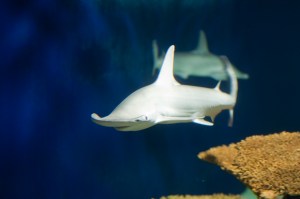
Can you imagine a shark wearing a bonnet? That would be funny looking- not to mention hard to swim with- hahaha! Today we are meeting a relative of the hammerhead- the bonnethead shark!!

IMG_0317

Bonnethead Shark Fun Facts: 

  • Bonnetheads are smaller sharks- they can grow up to 59 inches- about the length of a refrigerator.
  • They call estuaries, bays and sandy bottoms their home.
  • Their heads are more rounded than that of the larger hammerhead species.
  • Like all other sharks they are carnivores.
  • Bonnethead sharks live in small groups.
  • They can live up to 15 years.


IMG_0324

These smaller hammerheads are so cool. A recent study by scientists may suggest that they eat sea grass, which would make them omnivores! Wow! That would be super cool!

Categories: adventure, aliens, Animals, camp, Children, conservation, education, endangered species, Environment, fish, oceans, science, Today's Post, wildlife | Tags: , , , , , , , , , , , | 1 Comment

Know Your Sharks

Know Your Sharks

Today we have four coloring sheets for you in our continued series- know your sharks! So head on over to the craft cabin and grab something to color with and get to know your sharks!

FullSizeRender

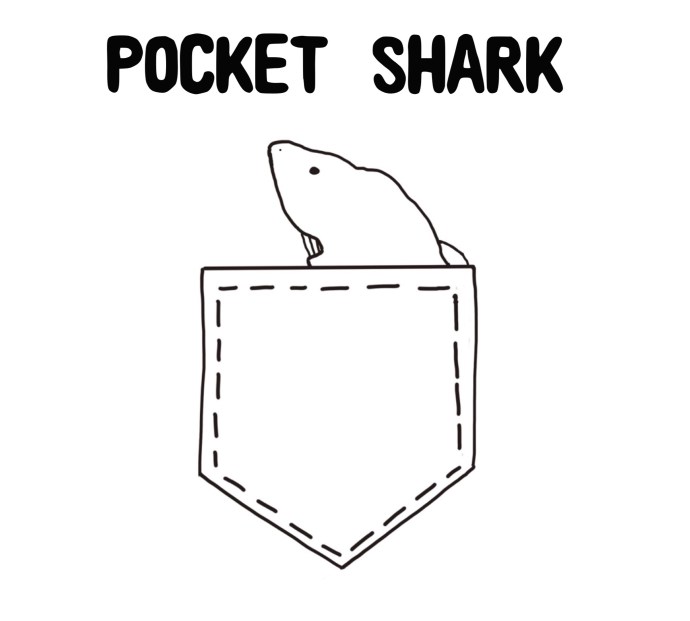
Pocket Sharks have two pouches or pockets, one on each side of their body in front of their fins. Scientists are unsure of their purpose.


FullSizeRender

Bamboo Sharks are mostly nocturnal and only grow up to 37 inches long. 


FullSizeRender

Zebra sharks lose their stripes as they grow. Adults are actually covered in spots!

FullSizeRender


These large sharks (up to 14 ft) often rest on the ocean floor. They pump water over their gills using spiracles to pull in water. 


FullSizeRenderFullSizeRender


Categories: adventure, Animals, camp, Children, conservation, education, endangered species, Environment, fish, nature, oceans, science, Today's Post, wildlife | Tags: , , , , , , , , , , , , , | 1 Comment

Rocking with the Guitar

HRocking with the Guitar

It’s SHARK WEEK here at Camp E&E by the Sea! We love our cartilaginous friends and we are so excited for our campers to meet a few sharks and one of their relatives in the ray family. These creatures have been calling the world’s oceans home for over 400 million years. Today we’re going to meet a member of the ray family- the shovelnose guitarfish.

IMG_0316


Shovelnose Guitarfish Fun Facts: 

  • Shovelnose guitarfish are members of the ray family.
  • They look like you combined a ray and shark all in one.
  • They range in color from olive to grey to tan.
  • Females are larger than males.
  • These bottom dwellers eat mollusks, crustaceans and fish.
  • Shovelnose guitarfish are listed as Near Threatened by the IUCN.
  • They have a row of spines along their back near the tail.


IMG_0318

These amazing fish are so neat! Can you guess why they are called guitarfish? They are shaped like a guitar, but they have no strings attached! Hahaha!!

Categories: adventure, Animals, Children, conservation, education, endangered species, Environment, fish, nature, oceans, science, Today's Post, wildlife | Tags: , , , , , , , , , , , | 1 Comment

Thorny Sea Star

Thorny Sea Star

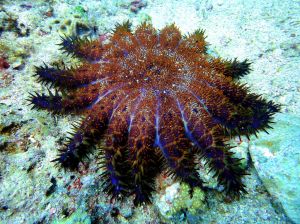
We are meeting our last sea star of the week!  This one is best to be observed but not to touch! Ouch- watch out for the crown-of-thorns sea star.

Crown of Thorns

Crown-of-thorn sea star fun facts: 

  • The thorns on this sea star are venomous.
  • These indimidating looking sea stars predate on coral!
  • They have only one predator- giant triton sea snail.
  • As you can see they have more than five arms.
  • They do have tube feet to move them along the reefs.
  • Unfortunately these predators have grown in numbers. Too many of them and that can mean trouble for a reef. They can destroy large areas.
  • Scientists and conservationists now will actively remove them when there is population boom.

IMG_0302

We love sea stars of all kinds, but this one might have gone to the dark side. Keeping a balance in habitats is crucial for all the animals that live there.

Categories: adventure, Animals, camp, Children, conservation, education, Environment, nature, oceans, sea stars, Today's Post, wildlife | Tags: , , , , , , , , , , , , | 1 Comment

Blog at WordPress.com.