Posts Tagged With: mammals

BLUBBER WEEK DAY 2

BLUBBER WEEK- DAY #2

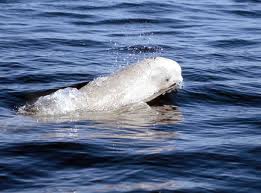
We’ve staying in the E&E sub in the cold Arctic waters for day 2 of blubber week! Today’s marine mammal has quiet the melon!!  Are you ready to meet the white whale? Let’s go…

MEET THE BELUGA WHALE!

   Range/Habitat: Arctic Ocean

   Diet: Carnivore: fish, mollusks, crustaceans

   Length/Weight: 13-18ft/ 1-1 ½ tons

   Conservation Status: Threatened


Fun Facts:

  • Beluga whales are white to ivory in color. This helps them blend in with the arctic ice.
  • Beluga whales are highly social and can be seen in groups called pods.
  • They are very vocal too. They make all kinds of sounds, including clicks, whistles, and squeaks.
  • They are often called the sea canary because they are so vocal.
  • Beluga whales use echolocation to find prey. Echolocation is when an animal sends out a sound wave and it come back (echoes) to the animal giving them the distance and size of the object.
  • Beluga whales have large melons on top of their head that is full of oils, tissue and fats. It is thought that the melons help them with echolocation and sound production.
  • Baby beluga whales are gray when they are born and turn white by the age of 5.
  • Beluga whales can swim backwards and turn their heads, unlike most other whales.
  • They have a mouth full of teeth used to eat their prey, but they also use suction to suck up their prey.

Beluga whales are a very special member of the whale family! Their closest relative is the narwhal. Want to hear some of the sounds they can make? You should try out your Beluga whale impression after you watch the video! Edmond will be trying his all day, much to the dismay of Ellie J!

Listen here.
beluga whalebeluga whale2

Categories: adventure, Animals, Children, conservation, education, Environment, mammals, nature, science, wildlife | Tags: , , , , , , , , , | 2 Comments

BLUBBER WEEK!!

BLUBBER WEEK!!

For the past two years in December we’ve featured animals who live in the North Pole! This year we’ve decided to feature animals who have blubber! Blubber is found in marine mammals. This layer of fat between the skin and muscle keeps the animal warm in cold waters. Since we don’t have blubber, we’ll be taking the E & E sub out on today’s adventure! Are you read to meet the unicorn of the sea! A unicorn you say, but unicorns aren’t real! You’re right, unicorns aren’t real, but this wild looking whale is real! Come find out more about…

MEET THE NARWHAL!

   Range/Habitat: Arctic/Arctic Ocean

   Diet:  Carnivore: cod, mollusks, crustaceans

   Length/Weight: 13-20 ft/ 2000-3,500 lbs

   Conservation Status: Near Threatened


Fun facts:

  • The Narwhal is often called the unicorn of the sea.
  • They have the most northerly range of any mammal on the planet.
  • Narwhals have a modified upper incisor tooth that grows up to 9ft long.
  • This tooth looks like a horn. It grows through the upper mouth and is seen mostly in male Narwhals, but females can have small tusks.  Scientists aren’t completely sure what the purpose of the tusk is, but think it might be for attracting females.
  • The long tusk is made of ivory, just like an elephants tusks! Tusks are spiraled.
  • Narwhals have a thick layer of blubber, like other arctic animals that help keep them warm in the cold water.
  • Narwhals swim in groups called pods. Pods can include as many as 1000 individuals.
  • Narwhals are very communicative and use a wide range sounds, including clicks and whistles.
  • They suck food through their powerful lips and tongue.

Narwhals are amazing animals! They survive in very cold waters and grow this awesome long tusk that makes them look unique!  If you could pick a crazy adaptation like tusks what would it be? We’re still deciding on what we would like! Look for our narwhal Christmas ornament craft later this week too!

narwhal  narwhal2

Categories: adventure, Animals, Children, conservation, education, Environment, mammals, nature, science, wildlife | Tags: , , , , , , , , , , | 1 Comment

MAMMAL MONDAY # 88

MAMMAL MONDAY #88

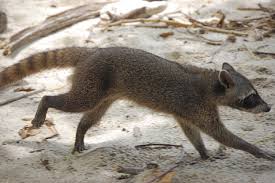
We’re hitting the road to Central America on this fine Mammal Monday! We’re on the lookout for a raccoon who likes to eat shellfish! Pack you backpacks and let’s head in to the forests for an adventure!

e & e night rainforest

MEET THE CRAB EATING RACCOON!

crab eating raccoon   Range/Habitat: Central-South America/ forest, mountains,

   mangroves

   Diet: Carnivore: shellfish, fish, insects

   Length/Weight: 18-35”/ 4 ½-26 lbs

   Conservation Status: common


Fun Facts:

  •          Crab eating raccoons are also called mapache.
  •          They are nocturnal.
  •          Crab eating raccoons have long, slender bodies.
  •          Crab eating raccoons have nimble paws.
  •          They have bushy ringed tails and black masks on their faces.

Crab eating raccoons look similar to their cousins the common raccoon (we know those guys)!  There long snouts and brown fur make them stand out. These raccoons aren’t as adapted to urban environments as their common cousins!

 crab eating raccoon2   crab eating raccoon3

Categories: adventure, Animals, Children, conservation, education, Environment, mammals, nature, science, wildlife | Tags: , , , , , , , , , | Leave a comment

MAMMAL MONDAY #87

MAMMAL MONDAY #87

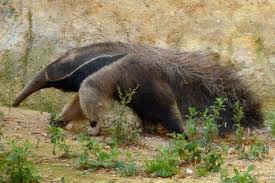
It’s off to South America for us today! Are you packed and ready to join us? We’re off to find a large mammal with an extraordinarily looooong tongue! Do you have a guess on who it might be? Grab your gear and let’s head out on today’s adventure!

e e grasslands2

MEET THE GIANT ANTEATER!

giant anteater    Range/Habitat: Central- South America/ grasslands, forests,

   swamps

   Diet: Insectivore: termites, ants

   Length/Weight: 5 ½-7 ¼ ft/ 60-90 lbs

   Conservation Status: vulnerable


Fun Facts:

  •          Giant anteaters have long tubular snouts with tiny mouths.
  •          They have 2 ft long tongues.
  •          Giant anteaters have poor eyesight.
  •          Giant anteaters have an excellent sense of smell.
  •          They have large front claws to dig in termite mounds.
  •          Giant anteaters are excellent swimmers.

Giant anteaters are such great creatures! They are related to sloths! Who knew that? When baby anteaters are born, they ride on their mothers backs!

giant anteater2    giant anteater3

Categories: adventure, Animals, Children, conservation, education, Environment, mammals, nature, science, wildlife | Tags: , , , , , , , , , | Leave a comment

ORANGUTAN AWARENESS WEEK!!

ORANGUTAN AWARENESS WEEK!

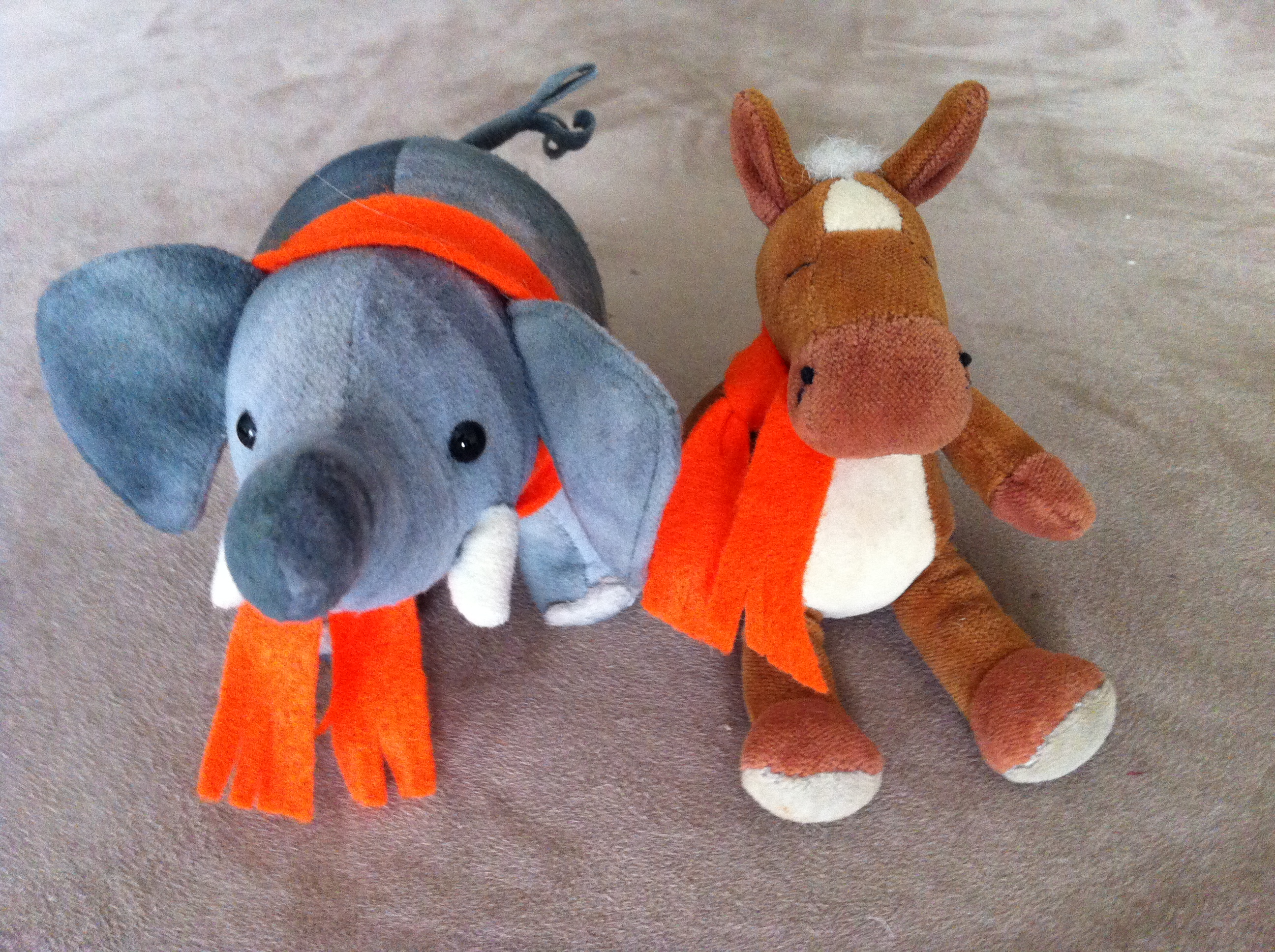
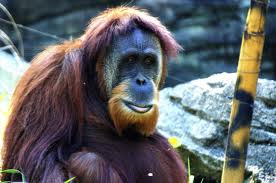
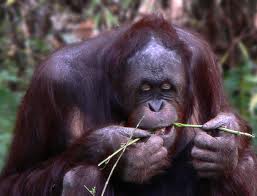
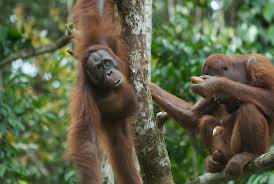
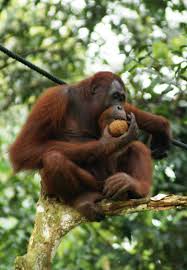
We’re celebrating Orangutans this week! Come learn more about these amazing apes with us! Be sure to sport some orange this week and let them know you support orangutans!

e e orange scarves

  • Orangutans are the largest fruit eating ape on earth.
  • They are arboreal.
  • There are two species of orangutans- Bornean and Sumantran, both of which are found in Indonesia.
  • Orangutans are excellent climbers.
  • Orangutans are intelligent.
  • Offspring stay with their mothers for around 8 years.
  • Orangutans are generally solitary.
  • Both species are critically endangered- mainly due to habitat loss.
  • Orangutans can live up to 50 years.
  • Orangutans have long arms- up to 8 feet in males.
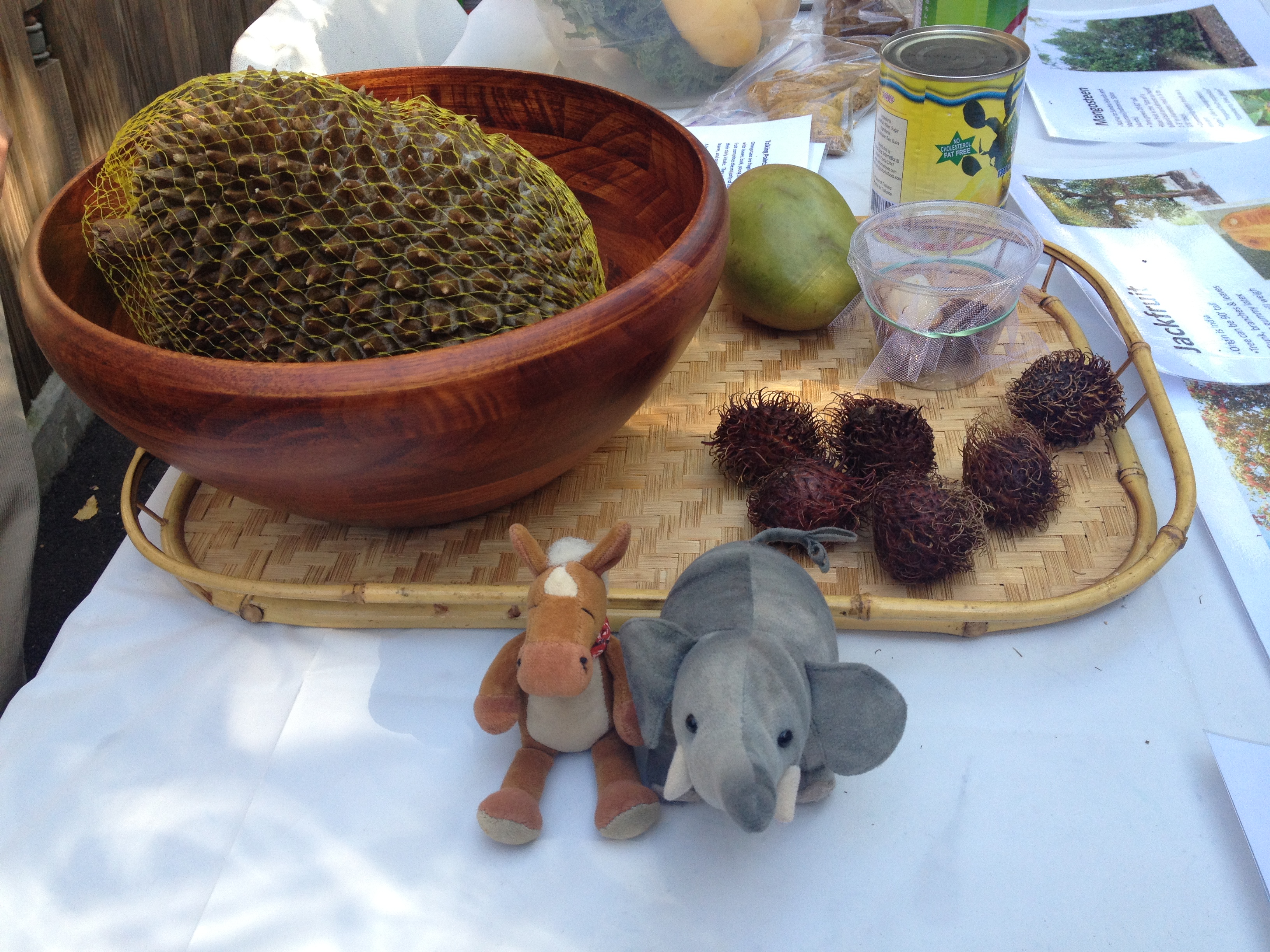
Durian fruit is just one of foods that orangutans like to eat! Durian fruit is SUPER STINKY!

Durian fruit is just one of foods that orangutans like to eat! Durian fruit is SUPER STINKY!

orang6   orang5


orang2orang3orang4


Unfortunately orangutans are losing their homes to palm oil plantations. Palm oil is used in products of all kinds from lotions, to shampoos to food products. There are several groups and zoos that are working to make sure that the palm oil that we use is sustainable. They work with companies so that they are not using products that destroy the orangutan homes. You can read more about it on the Cheyenne Mountain Zoo’s website. Learn how you can help these amazing and wonderful apes!

Categories: adventure, Animals, Children, conservation, education, Environment, mammals, nature, orangutans, science, wildlife | Tags: , , , , , , , , , | Leave a comment

MAMMAL MONDAY #85

MAMMAL MONDAY #85

We’ve packed our bags for today’s adventure to Northern Australian to meet a really cool little mammal. Has everyone practicing saying mate? Pack your hiking boots and walking stick and let’s head out into the forests of the land down under!

e & e rainforest

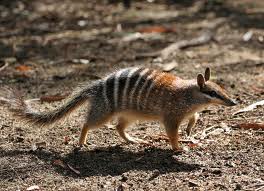
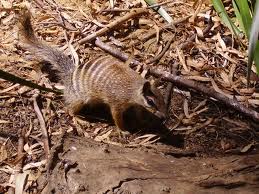
MEET THE NUMBAT!

numbat   Range/Habitat: Northwest Australia/ forests

   Diet: Insectivore: termites

   Length/Weight: 8-11”/ 11-26 oz

   Conservation Status: endangered


Fun Facts:

  •          Numbats have long bushy tails.
  •          Numbats are also known as the banded anteater.
  •          They have 4” long sticky tongues.
  •          Numbats have large claws on forefeet to help them dig in termite mounds.
  •          They are marsupials.
  •          Numbats have 53 teeth, the most of any mammal on earth.

Numbats are amazing little creatures. Their numbers dropped dramatically, but thanks to some great conservation programs their numbers are climbing back up! We love to hear how people are helping animals!

numbat2    numbat3

Categories: adventure, Animals, Children, conservation, education, Environment, mammals, nature, science, wildlife | Tags: , , , , , , , , , | 4 Comments

CREEPY ANIMALS WEEK!

CREEPY ANIMALS WEEK!!

We’re featuring animals this week that are considered creepy or scary in honor of Halloween. People often get so scared of our animal friends and they get a bad reputation.  Sometimes they may even be a little scary, but we love all animals! Sometimes we just love them from a distance! Today’s animal is a bat with sharp pointy teeth and a really bad reputation! Let’s meet them! And by the way they’re not monsters!

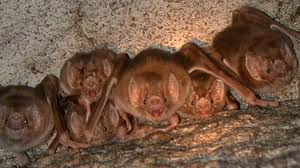
MEET THE COMMON VAMPIRE BAT!

   Range/Habitat: Mexico-South America/roost in caves, mines, trees

   Diet: Hematophagy: blood of mammals such as cattle, pigs and tapirs

   Length/Weight: 2 ¾”-3 ¾”/ around 1 oz

   Conservation Status: common


Fun Facts:

  • Common Vampire Bats are one of three bats that’s only source of food is the blood of other animals.
  • They have sharp thin-pointed teeth they use to bite animals.
  • Their teeth are so sharp that often the animals do not feel the bite.
  • Common vampire bats are strong fliers.
  • They have strong forelimbs and legs that help them get around on the ground. In fact they are very agile and speedy.
  • Common vampire bats have heat seeking receptors in their nose to help them locate veins closest to the skin.
  • Common vampire bats are nocturnal (active at night).
  • Common vampire bats live in large groups of usually several hundred individuals. They are known to have strong family bonds. There is even evidence of females adopting young bats that are orphaned.

We’ll admit these bats are a little creepy. But all animals have a place in this world. So we respect them all, again from a distance!

vampire bat   vampire bat2

Categories: adventure, Animals, Children, conservation, education, Environment, mammals, nature, science, wildlife | Tags: , , , , , , , , , , | Leave a comment

SUPER SURPRISE THURSDAY #84

SUPER SURPRISE THURSDAY #84

It’s time to guess the animal! You guys know how this works! You ready, set, go!!!

mountain gorilla

  • I live in the mountains of East Africa.
  • I am a large ape.
  • I am endangered.

WHO AM I?

Categories: adventure, Animals, Children, conservation, education, Environment, mammals, nature, science, wildlife | Tags: , , , , , , , , , | 1 Comment

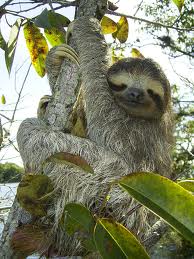
INTERNATIONAL SLOTH DAY!

INTERNATIONAL SLOTH DAY!!!

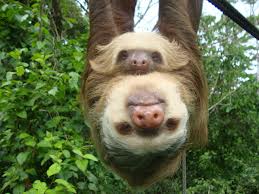
sloth

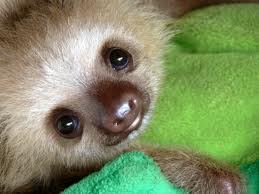
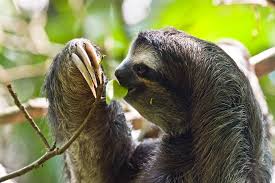
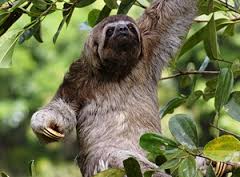
Happy International Sloth Day! It’s a great day to celebrate these super special animals! Come learn some fun facts and check out these super cute sloth faces!

  • Sloths sleep up to 20 hours a day.
  • Sloths live in the rainforests of South and Central America.
  • Sloths are related to armadillos and anteaters.
  • Sloths have algae that grow on their fur; it helps them camouflage in the trees.
  • There are two main species- two toed and three toed sloths.
  • They are herbivores.
  • Sloths only go on the ground about once a week and they do that to poop and pee.
  • Sloths are great swimmers!


Check out the Sloth Sanctuary of Costa Rica for more information about these amazing animals and how you can help!


sloth6  sloth5


sloth4

sloth3   sloth2


sloth8

Categories: adventure, Animals, Children, conservation, education, Environment, mammals, nature, science, Uncategorized, wildlife | Tags: , , , , , , , , , | 4 Comments

MAMMAL MONDAY #83

MAMMAL MONDAY  #83

Happy Mammal Monday! We’re traveling to the land down under-Australia to find today’s animal! Australia is a large continent with wild and strange animals that are found no other place on earth and today’s mammal is no exception! In fact this mammal is a rare exception to the rule, instead of giving birth to live young it lays eggs! WHAAAAT? You heard right, this mammal lays eggs! Let’s meet…

e e woods

MEET THE PLATYPUS!

   Range/Habitat: Eastern Australia-Tasmania/rivers-streams-rainforest

   Diet: Carnivore: worms, shrimp, crayfish

   Length/Weight: 16-23 ½”/ 1 ¾-5 ½ lbs

   Conservation Status: common


Fun Facts:

  • Platypus are strange looking mammals, with long slender bodies, webbed feet and a duck-like bill for a mouth.
  • They have long tails that look like beaver tails.
  • Platypus are built for water. They are excellent swimmers and can dive to deep depths looking for prey.
  • They eat about 20% of their body weight a day (about 2lbs), so they can spend up to 12 hours a day feeding.
  • Platypus have no teeth!
  • Male platypus have venomous spurs in the back feet. The venom is not fatal to humans, but can be very painful.
  • Platypus can detect the electrical fields of other animals. They use this extra sense to find their prey!
  • They are one of two mammals on earth that lay eggs. Do you know the other one?
  • Platypus moms to provide milk to their offspring.

Platypus are one of our favorites, with their crazy looking bill mouths and their webbed feet! They are much loved in Australia too! You can find a platypus on the back of their 20 cent coins! Neat! Edmond wants to be on a coin! Ellie told him he’d have to learn to lay eggs first!

platypusplatypus2

Categories: adventure, Animals, Children, conservation, education, Environment, mammals, nature, science, wildlife | Tags: , , , , , , , , , | 2 Comments

Blog at WordPress.com.