Posts Tagged With: nature blog

Golden Bird

Golden Bird

We went on an excursion today to look for a native bird of China. These birds are hard to miss with their bright colors and golden heads.

Golden Pheasant, Tangjiahe Nature Reserve, Sichuan, China


Golden Pheasant Fun Facts: 

  • Golden pheasants can grow up to 41” long. Two-thirds of that length is tail.
  • The males are much more colorful than the females. Females are typically more brown in color.
  • These diurnal birds are omnivores. They eat leaves, grains and insects.
  • Golden pheasants spend most of their time on the ground.
  • They will roost in trees at night.
  • While they can fly, they only do so in short bursts.
  • They are listed as Least Concern by the IUCN.

6776D9B1-DAD6-436F-AD22-2AA3FFD70D95

We enjoyed seeing this bird in the wild. You often spot them in zoos too!

Categories: adventure, Animals, birds, Children, conservation, education, Environment, nature, science, Today's Post, wildlife | Tags: , , , , , , , , | 1 Comment

Where Will the Next E&E Adventure Be?

Where Will the Next E&E Adventure Be?


51F1B905-6346-4DAC-B184-3A911F47CB8E

We are off on another adventure tomorrow. Can you guess where we are going from the clues?

  • We are off to a large continent in the East.
  • This land is large with many types of habitats – from mountains, to sandy desserts to dense forests.
  • The national animal is black & white.
  • There were many dynasties in this great land.
  • The border of this country has the tallest mountain on land in the world! 


Can you guess where we are going? 


Categories: adventure, Animals, Children, conservation, education, endangered species, Environment, nature, science, Today's Post, wildlife | Tags: , , , , , , , , | 1 Comment

Monk Seal

Monk Seal

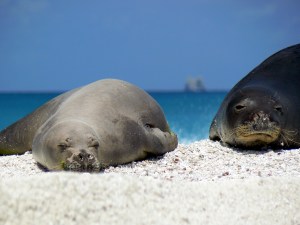
We hung out on the beach to meet one of Hawaii’s most endangered animals- the Hawaiian Monk Seal.  We took the SS Ellie and Edmond up to the northern islands for the week to spend some time in the reefs and among areas where there are few humans. This is where we met these special marine mammals.

48FC030E-0B88-4D81-9F93-CF2B9E5959D4

Hawaiian Monk Seal Fun Facts: 

  • These tropical seals can grow up to 7 ft long and weigh up to 600 lbs.
  • They are carnivores. They eat fish, lobsters, octopus and eels.
  • Monk seals got their name from the fold of skin that resembles a monk’s robe’s cowl. Their Hawaiian name -Ilio holo I ka uaua- means dog that runs in rough water.
  • Females are slightly larger than males.
  • They shed their hair and outer layer of skin once a year. This is called a catrostrophic molt. During this molt, they spend their days on the beach.
  • Hawaiian monk seals are the state mammal of Hawaii.
  • They are listed as Endangered by the IUCN. There around 1,500 individuals.

FD9E9BDB-A107-4DFD-80A2-DB66120DA4BD

We had a blast seeing these seals sunning themselves on the beach. They are just the cutest. They have some great organizations working to save them too! Check out Save Monk Seals website for more info!

Categories: adventure, Animals, Children, conservation, education, endangered species, entertainment, Environment, mammals, oceans, science, Today's Post, wildlife | Tags: , , , , , , , , | 1 Comment

Bat Time!

Bat Time!

We headed out on a nighttime adventure looking for some flying mammals of Hawaii. We found these furry fliers and couldn’t have been more excited.

A10D078C-3DF9-42EE-B539-581568CF8386

Hoary Bat Fun Facts: 

  • The little bats grow up to 6 inches long and weigh just under a pound.
  • Females weigh almost double what the males do.
  • They get their name from the their white tipped fur. Hoary means grayish-white.
  • They have no fur on the underside of their wings.
  • These insectivores use echolocation to find their prey. Their echolocation can be heard by the human ear.
  • Hoary bats are the only native Hawaiian island mammal. All other native mammals are marine mammals.
  • These mostly solitary bats roost in dense trees.
  • Hoary bats are listed as Least Concern by the IUCN.


We love bats, especially these little guys. Some people think bats are ugly, but we can’t disagree more! These moth eaters are the cutest. Don’t you agree?

Categories: adventure, Animals, bats, Children, conservation, education, Environment, nature, science, Today's Post, wildlife | Tags: , , , , , , , , | 1 Comment

Birding Fun

Birding Fun!

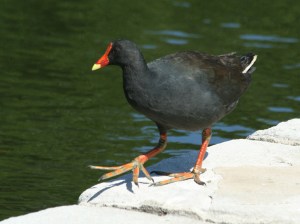
We slept in after our big snorkeling trip yesterday! We hoped a plane to the island of O‘ahu for a few days in the late morning. We were on a mission to find one of Hawaii’s native birds in the wetlands! We were super lucky to spot some! Come learn about them with us!

59F6E868-22A6-4250-8599-99E3DAACE257

Hawaiian Gallinule Fun Facts: 

  • Hawaiian Gallinule are also known as the Hawaiian moorhen.
  • They can grow up to 12 inches long and weigh up 3/4 lbs.
  • They are omnivores. They eat grass, algae and insects.
  • These wetland birds do not have webbed feet. They are excellent swimmers though.
  • They molt once a year in the summer. The molt takes 25 days or so.
  • Hawaiian gallinule are known to be very secretive.
  • Nesting parents are very territorial. They both help incubate the eggs and protect the young chicks.
  • They are listed as Endangered by the IUCN.

0962979D-C220-4006-B1E7-3BC7457AA0D5

It was neat to see these shy water loving birds. We love their funny long legs and feet!

Categories: adventure, Animals, birds, Children, conservation, education, endangered species, Environment, nature, science, Today's Post, wildlife | Tags: , , , , , , , , , , , | 1 Comment

Swimming with Greens

Snorkeling with Greens

We decided to go snorkeling for our first time in Hawaii. The water is so gorgeous and inviting. We were excited to see what animals we would find! And wow- we met some green sea turtles grazing in the shallows!

EC9627EB-BC7C-45DD-A1A5-276328059D02

Green Sea Turtle Fun Facts: 

  • Green Sea Turtles have a smooth carapace.
  • They can grow up to 5 ft long and weigh up to 600 lbs.
  • The carapace (top shell) is a brown-olive color.
  • Green sea turtles have small heads, but strong flippers.
  • They are the only sea turtle that can be seen occasionally sunbathing on the beach.
  • Green sea turtles lay eggs on the beach.
  • They are herbivores. They eat sea grass, roots and algae. Young turtles are known to eat crabs and jellies.
  • They are listed as Endangered by IUCN.

C4275114-7C8C-4332-93C6-0EC165D0F670

We enjoyed seeing these majestic reptiles in the oceans. Green sea turtles get their name from their greenish skin color. It was so excited to snorkel with these sea turtles. They are known to come ashore and sun themselves on certain beaches around Hawaii- if you visit- wave quietly and from a distance!

Categories: adventure, Animals, Children, conservation, education, endangered species, Environment, nature, oceans, reptiles, Today's Post, wildlife | Tags: , , , , , , , , , , , | 1 Comment

That is a Falcon!

That is a Falcon!

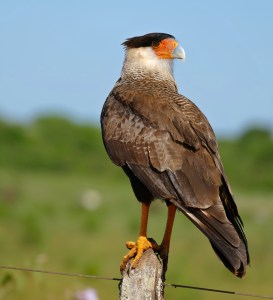
We met one gorgeous bird today! This big member of the falcon family is known to hang with vultures and look more like a hawk!

P1550106

Southern Crested Caracara Fun Facts: 

  • Crested caracaras can grow up to 22 inches and weigh up to 3 lbs.
  • Their wing span is almost 50 inches.
  • These carnivores eat incsects, small reptiles and fish. They are also known to push vultures away from carion.
  • They have long thin legs.
  • They are mostly solitary.
  • It is listed as Least Concern by the IUCN.

4EDC5F66-5C00-46DF-9D59-17EA4FDF0B10

These gorgeous birds have a northern cousin that lives in Mexico and in Arizona and Texas. We love these raptors!

Categories: adventure, Animals, birds, Children, conservation, education, Environment, nature, science, Today's Post, wildlife | Tags: , , , , , , , , , , , | 1 Comment

Otter Otter

Otter Otter

We set out to meet one of the rarer animals of the Pantanal today! We located a few having a snack. These amazing members of the mustelid family are soooo cool!

12F8B7B6-41B6-47DF-B029-8742CDB04E23

Giant Otter Fun Facts: 

  • These large carnivores can get up to 6 ft long and weigh up to 75 lbs.
  • They have powerful tails and webbed feet for a life in the water.
  • These territorial giants live in small family groups.
  • Giant otters can eat up to 9lbs of fish a day.
  • They live in dens in the banks of the rivers they call home.
  • Giant otters are very vocal and use a variety of squeaks and screams. They are considered to be the most vocal otter species on earth.
  • They are often called the river wolf.
  • They are diurnal.
  • Giant river otters are listed as Endangered by the IUCN.

C9E6BD45-B421-4DC5-85BE-4F5B39DBF54E


We enjoyed seeing these amazing animals. They are now protected from the poaching that led to their decline. They are becoming important for tourism in the areas they call home.


Categories: adventure, Animals, Children, conservation, education, endangered species, Environment, nature, science, Today's Post, wildlife | Tags: , , , , , , , , , , , | 1 Comment

Blog at WordPress.com.