Posts Tagged With: nature blogs

Where Will the Next E&E Adventure Be?

Where Will the Next E&E Adventure Be?

We are packed and ready to go on our next adventure. We are giving you clues to where we are heading as this habitat is not as well known as others for sure!

  • We’re going to South America.
  • It’s not the rainforest, but it is in Brazil.
  • There are giant areas of flood plains.
  • This habitat has a specific name.
  • It is a very biodiverse habitat.

Can you guess where we are going?

Categories: adventure, Animals, Children, conservation, education, endangered species, Environment, nature, science, Today's Post, wildlife | Tags: , , , , , , , , , , | 2 Comments

Meet the King!

Meet the King!

We met the king of Antarctica today! Most people think that all penguins call the South Pole home, but only 8 species live in this harsh environment. Today though we are meeting the King penguins. Sadly they don’t wear crowns.

9AC1C665-9EC2-4BAE-8EBF-EFE050F2647A


King Penguins Fun Facts: 

  • These birds are the 2nd largest penguin species in the world. Do you remember the largest?
  • Kings are easy to spot with their oranges spots on their heads and beaks and chests.
  • Both parents incubate the egg on their feet and brooding pouch, switching the egg every few weeks.
  • These efficient carnivores can dive as deep as 950 feet. More commonly they go around to 164 feet deep.
  • The chicks look very different than the adults. They are fluffy and brown! Scientists first thought they were a separate species when they first saw them.
  • Chicks stay with their parents and the colony for almost a year. This means king penguins only have one to two chicks every two-three years.
  • They are currently listed as Least Concern by the IUCN.

2149577C-1885-4B58-87A8-A5B30BD29353


We love these gregarious birds and their bright orange colorations. They always make us and laugh and of course we always practice our waddling after seeing them.

Categories: adventure, Animals, birds, Children, conservation, education, Environment, nature, science, Today's Post, wildlife | Tags: , , , , , , , , , , , | 1 Comment

Whale Watching

Whale Watching

Today we hoped on a boat to go whale watching. There are several species of whales that call these icy waters home- at least for part of the year. We found the big marine mammals we were looking for- YAY!

4A2039B2-6445-4EC1-85F9-B864ACF4DA44

Southern Right Whale Fun Facts: 

  • These baleen whales can grow up to 59 ft and weigh up to 99 tons.
  • There baleen plates grow out of the upper jaw and are over 9 feet long.
  • They have white callusites on their heads and mouths. These are home to whale lice- which are related to shrimp.
  • These whales never leave the Southern Hemisphere.
  • They have large heads. The head makes up a 1/4 of their body length.
  • Southern right whales are also most identical to their Northern right whale cousins.
  • Southern right whales are more acrobatic. They are known to do “head stands” in the water and wave their flukes.

672E055F-377A-47E3-A3AD-94811E6FCBA0

We had fun spotting the whales. They are often seen near boats and ships. Unfortunately that can lead to run ins, so it is important for boats to watch for them.

Categories: adventure, Animals, Children, conservation, education, endangered species, Environment, mammals, nature, oceans, science, Today's Post, whales, wildlife | Tags: , , , , , , , , , , | 1 Comment

Flying Snowbird

Flying Snowbird

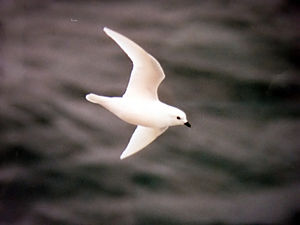
After meeting two marine loving animals, we wanted to find one that calls the air and ocean home. We were so excited to find the Snow Petrel.

15327A9D-DB94-4DC6-8ED8-D060819DF51E

Snow Petrels Fun Facts: 

  • Snow petrels can vary in size, but can grow up to 1 lb.
  • They spend most of their lives alone, they come together in early November to breed in large colonies.
  • They are carnivores. They eat krill, fish and carrion.
  • They are highly territorial during breeding season.
  • Snow petrels spit an waxy stomach oil at predators to keep them away.
  • They have small dark beaks and eyes.
  • Snow petrels prefer packed ice and icebergs when they land. They nest on rocky areas where they make their nests of small pebbles.

380652B8-233B-4117-8717-D0A807CFDBE0

These gorgeous birds are so neat. When you think of Antarctica- you usually only think of penguins, but other birds call these cold islands home too.

Categories: adventure, Animals, birds, Children, conservation, education, Environment, nature, science, Today's Post, wildlife | Tags: , , , , , , , , , , | 1 Comment

Emperors of the South Pole

Emperors of the South Pole

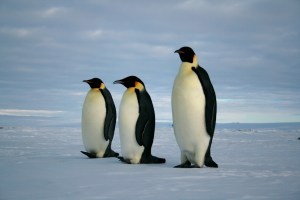
We put on our warmest coats, gloves, hats and boots and headed out to the meet one of Antarcticas most iconic animals- the Emperor Penguin. These tall flightless birds live in a harsh climate, but they are built to survive.

787B4882-1C52-4FCD-A012-F2F8B5ABE4FA


Emperor Fun Facts: 

  • These penguins can grow up to 45 inches and weigh up to 85 lbs! They are the largest penguins on earth.
  • These birds huddle together for warmth. The birds rotate from the interior of the group to the center.
  • They can dive 1,800 ft deep and stay under water for up to 20 minutes. They can dive deeper than any bird on the planet.
  • Females lay one egg. The males incubate the eggs on top of their feet. They cover the eggs with their brood pouch.
  • Females head out to the open ocean to gorge on food while the eggs are incubating.
  • When the chicks hatch, the females and males switch duties.
  • These big gorgeous birds are listed as Near Threatened by the IUCN.

04BAD5D3-74B9-42E4-9A2A-FF86B9843646

We had fun watching these birds. They are very curious. We can not imagine living in the frigid temps though or swimming so much time in that cold ocean. This horse & elephant miss the warm weather.

Categories: adventure, Animals, birds, Children, conservation, education, endangered species, Environment, nature, science, Today's Post, wildlife | Tags: , , , , , , , , , , , | 1 Comment

Where are E&E?

Where are E&E?

antartica3

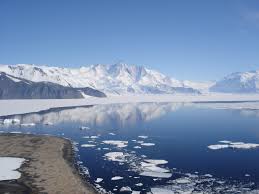
We have arrived in our new base camp for our next adventure! Did you guess where we were going? If you guessed Antarctica- you are right! We arrived a day late after a few travel issues, you know getting to the south pole isn’t that easy.

We have a nice camp and a boat that we will use to explore one of the harshest environments in the world. Today we are going to learn some fun facts about the south pole.

Antarctica Fun Facts:

  • Antarctica is the southern most continent on the planet.
  • It is surrounded by the Southern Ocean.
  • The continent itself is about double the size of Australia.
  • It is covered in ice that is 1 mile thick!
  • Is it a high and dry habitat. It receives very little rain.
  • Antarctica is uninhabited. A few thousand people call it their temporary home where they do research.
  • There are no reptiles, amphibians or insects in Antarctica.
  • Explorers did not first reach the continent until 1911.
  • The continent is controlled through international treaties. It is not it’s own country.
 

antartica2

We were lucky to score a bunk or two in one of the research stations. It is currently summer here! Woohoo! Still- we could freeze our bums off.


Categories: adventure, Animals, Children, conservation, education, Environment, nature, science, Today's Post, wildlife | Tags: , , , , , , , , | 1 Comment

Where will the next E&E adventure be?

Where will the next E&E adventure be?

We heading towards the south, but not to tropical shores.

It is quiet a rugged place so it will not bore.

Get ready to put on your cold weather gear,

As we head to the place at the bottom of the sphere. 

Can you guess where we are? 

Share your answer on our social media sites! 


Categories: adventure, Animals, Children, conservation, education, endangered species, Environment, nature, science, Today's Post, wildlife | Tags: , , , , , , , , , | 1 Comment

Warning! Frog!

Warning! Frog!

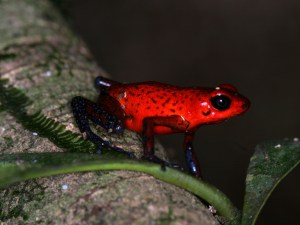
We went looking for one neat little frog on our last day here in Costa Rica. Costa Rica has sooooo many amphibians! We found one of the famous poison dart frogs- the Strawberry flavored one- hahaha!

C47B76BD-0A29-4C4F-9029-41899248C708

Strawberry Poison Dart Frog: 

  • These little frogs have warning coloration. Their colors vary on where they live.
  • They eat ants and termites give them their toxicity.
  • Strawberry dart frogs only grow up to around 3/4 of inch to an inch.
  • They are diurnal and tetestrial.
  • They are very territorial.
  • Strawberry poison dart frogs are listed as Least Concern by the IUCN.


We loved spotting these little frogs. They are definitely a look but don’t touch species.

Categories: adventure, amphibians, Animals, Children, conservation, education, nature, Today's Post, wildlife | Tags: , , , , , , , , , , | 1 Comment

Toucan Toucan!

Toucan Toucan!

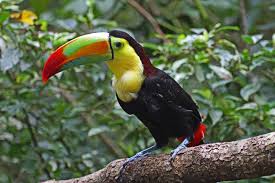
What better animal to meet in the rainforest than the iconic toucan! These bright beaked birds were on our list and we were thrilled to find a few! Come meet them with us!

6CC3517B-DBF2-4740-B832-8C9466446845


Keel-billed Toucan Fun Facts: 

  • Those large colorful bills make up a 1/3 of their body length. The bills are not heavy as they are made up of hollow bone.
  • The bills are covered in keratin- the protein that makes up your hair & nails.
  • These jazzy looking birds have blue feet! Those feet have two toes facing front and two facing backwards to help them grip on branches.
  • Keel-billed toucans are very social. They live in family groups of around 12 individuals.
  • They are omnivores. Fruit makes up most of their diet, but they occasionally eat insects and eggs.
  • Both females and males help rear the chicks. They are born with no feathers and can not see til they’re around 3 weeks old.
  • They are listed as Least Concern by the IUCN.

B34FB569-C8DA-4AE9-9160-9DF65AF019B4

It is so fun to watch the toucans eat fruit they find. They may dissect the fruit first, but often they throw it back whole! They are even known to play ball with fruit- throwing to each other. And just like those howler monkeys- they weren’t sharing! Bummer.


Categories: adventure, Animals, birds, Children, conservation, education, Environment, nature, science, Today's Post, wildlife | Tags: , , , , , , , , , , | 1 Comment

Howling Good Time

Howling Good Time!

Today we are meeting one loud and awesome mammal today! These tree dwellers know how to make a ruckus! We love it!

Mantled Howler Monkey (Alouatta palliata) howling, in Tortuguero, Costa Rica

Mantled Howler Monkey Fun Facts: 

  • They have long guard hairs on their face. That is where they get their name.
  • These monkeys are large. Males get up to 22 lbs. ‘
  • They are folivores- leaf eaters. They also eat fruit.
  • They are important for the rainforest, as they disperse seeds when they poop.
  • Mantled howler monkeys live in groups of mostly unrelated adults.
  • They have prehensile tails.
  • These diurnal monkeys are built for life in the trees.
  • They can be heard for a few miles away.
  • Mantled howlers are listed as Least Concern by IUCN.

SONY DSC

We had a blast watching these monkeys. They are fairly lazy though. They spend most of their energy eating. Those leaves did look delicious. We were glad we had snacks, because we’re sure they wouldn’t share.

Categories: adventure, Animals, Children, conservation, education, endangered species, Environment, mammals, nature, science, Today's Post, wildlife | Tags: , , , , , , , , , , | 1 Comment

Blog at WordPress.com.